


Google Pixel 2 rumor roundup

What do we want from the Google Pixel 2?
It’s June, which means that we’re only a couple of months away from a new, delicious version of Android, and if history is any indicator, 4 to 5 months away from brand new Pixel phones.
Up until recently, we thought this year’s crop was to be a fairly predictable update to last year’s — two devices built by HTC with improved specs and a newer version of Android. But things change.
Walleye and Muskie

After the Pixel and Pixel XL were released in October, the rumor mill reformed to contribute some logical and some less logical propositions.
The first rumor that made sense was that HTC would once again be the manufacturer of two Pixel 2 models in 2017 and that perhaps the company had signed a multi-year contract with Google for the privilege.
The second rumor somewhat corroborated the code naming trend of previous years: references to devices named “walleye” and “muskie”, two freshwater fish native to parts of the U.S. and Canada, continued the aquatic animal-based naming conventions of many Nexus devices as well as the Pixel and Pixel XL. Those devices were codenamed “sailfish” and “marlin”, while the Nexus 5X was “bullhead” and the Nexus 6P “angler”.
Both “walleye” and “muskie” were expected to be HTC-built devices, with updated designs similar to that of the original Pixels.
And until March, that’s how we left things, until “taimen”.
Taimen
 A Taimen in the wild
In March, it came out that a third potential Pixel device was being produced, codenamed “taimen”, likely bigger than both “walleye” and “muskie”.
At the time, we didn’t know much about the device, but in recent weeks it’s come out that “taimen” would be built by LG, not HTC, and would be larger than the “XL” version of HTC’s Pixel sequel, “muskie.” It was then revealed that Google in fact cancelled the “muskie,” the larger of HTC’s Pixels, for “taimen,” leaving one HTC- and one LG-built Pixel phone for 2017.
We still know very little about what this LG-built Pixel looks like, or its specs, but we can speculate as to why Google added LG to the equation this year.
A long history of collaboration

Google and LG have a long history of collaborating, all the way back to 2012 with the Nexus 4. LG has built three Nexus devices over the years (Nexus 4, Nexus 5, Nexus 5X) and was the first manufacturer to boast a new phone running Android 7.0 Nougat in 2016 with the LG V20.
So the relationships are there, and the comfort is there. And with LG reaffirming its dedication to quality control — Google was also affected by the bootloop issues on the Nexus 5X — with the LG G6, Google probably feels more comfortable letting the Korean company take another stab at the project.
LG Display

Earlier this year, it was revealed that Google wants to spend nearly a billion dollars with LG Display to secure OLED panels for its upcoming Pixel phones.
LG Display is a separate company from LG Electronics, which creates phones, but the two are connected, and it stands to reason that Google would give the latter a manufacturing contract to ensure the success of the former.
OLED displays are the future of screens, and Google wants a piece of the market.
OLED displays are the future of mobile optics, and LG is ramping up production for its own devices and to compete with Samsung Display, which largely has the market cornered. The first Pixel phones were affected by enormous and frustrating manufacturing delays, and though Google never specifically pointed to a shortage in OLED displays, experts believe that is exactly what was keeping the phone off the market for so long. With its sequels, Google wants to avoid that problem, and giving LG the rights to manufacture one of its Pixels goes a long way to making sure that happens.
Design

Right now, we know almost nothing of the Pixel 2’s design(s). One GFXBench listing implies that at least the smaller “walleye” will sport a 5.6-inch QHD display with a 2:1 aspect ratio — the same as the LG G6 — so it’s expected that both units will have a low-bezel design, likely with a fingerprint sensor on the back of the phone.
That larger screen should address the main design criticism of the original Pixels: their large bezels, which look even sillier now that the Galaxy S8 and LG G6 are on the market.
Whether the new Pixels will be waterproof, have wireless charging, or possess dual cameras remain to be seen, but it would not be too off-base to assume that waterproofing would be on the table this year, given that both the HTC U11 and LG G6 are at least nominally water-resistant.
Specs

Expect at least a Snapdragon 835, if not something newer.
As for specs, we know a few things about the phones: that they’ll run at least the Snapdragon 835 SoC — it’s possible a newer Snapdragon 836 will be on the market by then — and have 4GB of RAM, which the market has settled on as the norm for most flagship smartphones.
It’s also safe to assume that the camera will be another point of pride for Google this year — even with two different manufacturers, it’s likely the “walleye” and “taimen” models will sport the same camera sensor, or sensors, and be optimized using Google’s increasingly good HDR+ algorithms.
And given that the phones will have larger screens this year — the smaller Pixel 2 is expected to be 5.6-inches at a 2:1 aspect ratio, so expect a larger 5.9- or 6-inch “taimen” model of the same shape — it’s possible they’ll have larger batteries. The Snapdragon 835 has already shown itself to have considerably better efficiency than the 821 found in the original Pixels, so even with the same-sized batteries the new Pixels should have improved uptime, but we should also see slightly larger cells as well.
As for storage breakdown, it’s expected that Google will keep the default size at 32GB, offering a 128GB model for $100 more. Last year’s Pixel XL costs $120 more than the smaller version, and that difference isn’t likely to go down this year, especially given the change in manufacturers. Expect the “taimen” version of the Pixel 2 XL to be $120 to $150 more than the “walleye.”
Software

Like last year, the Pixel 2 series should launch with Android 8.1, a version that will remain exclusive to the phones for some time.
That strategy allowed Google to roll out some great new features for all phones running Android 7.0 Nougat while keeping some exclusive features for the Pixels, which ran Android 7.1 when they launched a few months later. At the same time, Google’s excellent Pixel Launcher remains unique to the lineup, as does Project Fi support, which should fall over to the phones, too.
We don’t know anything specific about what we’ll see in Android 8.1 right now, but we’re keeping our ear to the ground and will update this as we know more.
Pricing and availability
Another piece of the puzzle for which we’re waiting to hear more is pricing and availability. It wouldn’t be out of order to think that the Pixel 2 lineup will debut towards the end of October or the beginning of November, and will maintain a $649 / $749 price point for the smaller and larger phones, respectively.
We’re hoping that Google ups the default storage to 64GB and that all of our spec wishes come true, but we only have a few more months to wait before we find it all out.
Google Pixel + Pixel XL
- Google Pixel and Pixel XL review
- Google Pixel XL review: A U.S. perspective
- Google Pixel FAQ: Should you upgrade?
- Pixel + Pixel XL specs
- Understanding Android 7.1 Nougat
- Join the discussion in the forums!
Google Store
Verizon
Project Fi’s latest offer gives you a free Google Home if you buy a Pixel
The offer is good through July 29.
Who doesn’t like free stuff? And who doesn’t like smart little virtual assistants you can talk to? Google Home is both, and you can get one in your own home if you purchase a brand new Pixel or Pixel XL smartphone through Project Fi.

You can read up on the terms for the free Google Home promotion here. The Pixel starts at $649 at Project Fi’s online storefront. You can buy one outright or pay for it over the course of 24 months.
Project Fi is a phone carrier offering from Google. It offers mobile data service on three mobile networks, and it uses Wi-Fi to make calls and send texts. It’s also a prepaid carrier, and you pay ahead for the month of use rather than after — as is common with a standard mobile operator.
If you’re wondering if Project Fi is something worth subscribing to yourself, be sure to take the Fi Fit Quiz.
See at ProjectFi
Google Project Fi
- What is Project Fi?
- Get the latest Project Fi news
- Discuss Project Fi in our forums
- Phones: Google Pixel | Nexus 6P | Nexus 5X | Nexus 6
- Sign up for Project Fi

HTC’s vibrantly colored Solar Red U11 will be on sale beginning tonight
The company is kicking off its summer sale with a new color for the U11 and deals on a bunch of other stuff, too.
As if almost perfectly timed with the rampant heat waves rolling through the greater part of North America, HTC has announced that the extremely attractive (the author’s own opinion) Solar Red U11 will be on sale starting tonight.
HTC has been slowly teasing the sale of the highly coveted, almost fire-like variant of the U11 on Twitter for the past few days:
We’ve heard you and your wait is almost over… #HTCU11 pic.twitter.com/jj7ATMcS9r
— HTC USA (@HTCUSA) June 18, 2017
You spoke, we listened — We’re happy to announce that you’ll be able to pre-order the Solar Red #HTCU11 starting tonight at 12:00am EST. pic.twitter.com/SgPnf4lFFj
— HTC USA (@HTCUSA) June 19, 2017
The new Solar Red color morphs ever-so-slightly from a bright, bustling orange to a fiery, reddish-gold, depending from which angle you look at it. It utilizes the same “liquid glass” surface as the rest of its brethren, including the cool-as-a-cucumber “amazing silver” model we reviewed earlier this month.

If you’re on the fence about whether to log on and join the rest of the gang in purchasing HTC’s latest device, take a gander at our review. Android Central’s own Andrew Martonik was particularly impressed with the phone’s responsiveness:
HTC continues to offer the smoothest, most consistent software performance outside of a Pixel or Nexus. Through what is surely a combination of obsessive software engineers and plenty of licensed technology, the U11’s interface performance is immaculate. It’s a sort of subconscious fluidity that’s tough to describe. Touch response is perfect, scrolling feels just right and apps are blisteringly fast. No stutters, no hiccups, no issues at any point — no matter how smooth my other phones are sometimes, they’re never this consistently perfect.
HTC is also launching its “Kick off to Summer” sale. There will be discounts for the HTC U Ultra, HTC 10, and HTC Bolt. Accessories such as JBL’s Reflect Aware Type-C headphones will also be on sale for half-off with the purchase of a new device. Check it out.
See at HTC
HTC U11
- HTC U11 review
- HTC U11 specs
- Manufacturing the U11: Behind the scenes
- Join our U11 forums
- HTC U11 vs Galaxy S8
- HTC U11 vs LG G6
Amazon
Sprint
HTC
Google selling select Pixel and Pixel XL cases at half-off
Save 50% on the “Pixel case” models from Google for either size Pixel while supplies last.
One of the first things you’ll notice when you take a new Google Pixel out of the box is that there’s a lot of glass involved. Unless you’re super careful and lucky, that means there’s a good chance you’ll scratch things up. Or even have a phone that looks like it stormed a beach during a war or something. Seriously, I don’t even.
Regardless, even tiny scratches that normal users can create are no fun. Because of this, most people want to put a case on their new Pixel. Google’s making this easier by putting the really nice “Pixel case” line on sale for half-off.
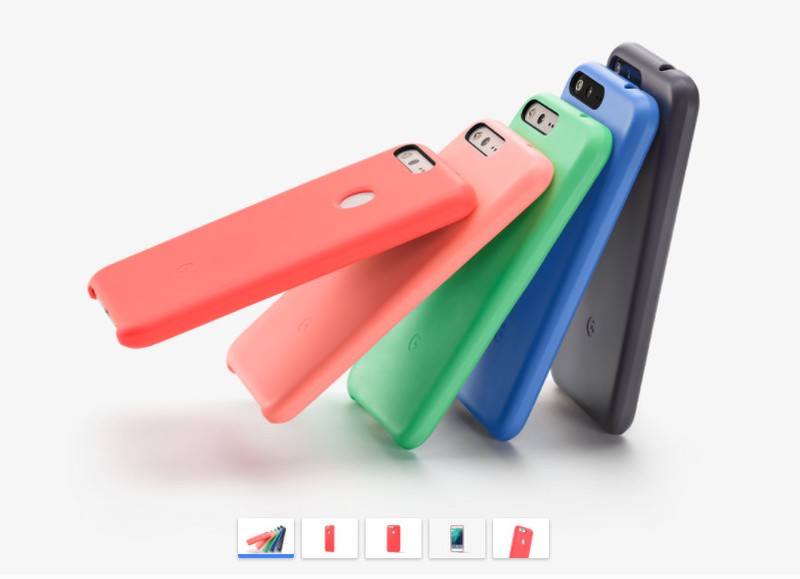
This is only for the Pixel case line. Not any live cases or Otterbox cases or anything else. It’s for both the regular Pixel and the Pixel XL, and the cases will set you back $17.50 each in either size. The available colors are gray, blue, green, peach, coral and clear. This only lasts until they run out, so hit the Google Store up right away to make sure you get the color you want.
See the Pixel case at Google
See the Pixel XL case at Google
Supreme Court rules sex offenders can use social networks
It’s understandable why governments would want to keep sex offenders away from social networks — you don’t want predators messaging their potential targets. Is an outright ban taking things a step too far, though? The US Supreme Court thinks so. As part of a ruling in a case where a college student preyed on an underage girl, the court has struck down a North Carolina law preventing sex offenders from visiting social internet sites that children might frequent. Simply speaking, the law was so broad that it violated free speech rights, disconnecting offenders from modern life.
If you aren’t on social networks, the court says, you frequently can’t interact with society in perfectly innocuous ways. You may chat with friends on Facebook, for example, or look for a new job on LinkedIn. Deny those to someone and you’re hindering their ability to exercise their First Amendment rights. How is an offender supposed to rehabilitate if you prevent them from accessing crucial websites for decades after they leave prison? It’s deliberate acts (such as looking up or contacting a target) that are the real crimes, not existing in the same virtual space.
The court adds that North Carolina’s law could easily be misinterpreted to include just about any commercial site with a social element and access for minors, such as Amazon or WebMD. However well-intentioned the law may be, it would be all too easy to toss an offender back into prison simply because they went shopping or researched symptoms.
The judges are aware that safety still has to be taken into consideration. Judge Samuel Alito is concerned that treating all sites as platforms for free speech risks making it difficult to block access to any site. Would you want a creep getting access to a teen dating site or a children-only forum, for example? It’s much harder to monitor kids online than it is at a playground or school, so some kind of restriction might help. However, both Alito and the court at large agree that any laws need to be specific enough that they address the actual threats, not just day-to-day internet use.
Via: AP (Business Insider)
Source: Supreme Court (PDF)
Google Play’s new feature for Samsung phones isn’t so exclusive
Google Play Music and Samsung have a history of exclusives, and now they may have debuted their best one yet. Android Authority reports that Google Play Music’s playlist New Release Radio, which is a personalized playlist of new release music with daily updates, has been made available exclusively to Samsung device owners over the last day or two.
Spotify’s personalized Discover playlists are incredibly popular; as of last year, over 40 million users had listened to almost 5 billion Discover Weekly songs. While this is a great new feature, it’s a little puzzling why Google wouldn’t want to make this playlist available to all subscribers, using it as a lure to bring in more listeners who currently use other services. It seems like a bad idea to make such a potentially popular feature exclusive only to a small percentage of Google Play listeners.
Or is it? There are reports on Reddit that users have been able to add the New Release Radio station to their libraries when using the Google Play web interface. One of our own Engadget editors tried this trick and was able to access the playlist on an iPhone, Android device and on the web. We’ve reached out to Google and Samsung on the exclusivity of this deal and will update when we have a comment.
It’s unclear what exactly is happening here, and whether the ability to access the playlist from non-Samsung devices is a bug or an intentional workaround for Google Play listeners. However, anything that helps users wade through the countless new music releases every week is welcome news, so here’s hoping that this playlist isn’t, in fact, a Samsung exclusive.
Via: The Verge
Source: Android Authority, Reddit
Time Warner is the latest broadcaster to ride Snapchat’s coattails
Snap seems to have no trouble scoring giant media deals. The social app creator has forged a $100 million, 2-year agreement that will have Time Warner making short-form original shows (around 3 to 5 minutes per episode) for Snapchat viewers. While it’s still too early to know what those shows will entail besides a variety of genres, Time Warner will make as many as ten shows per year. You can also expect to see a lot of related ads: the company has promised to buy promos for HBO, Turner and Warner Bros. content.
This isn’t Snap’s first major video deal by any stretch. It has arrangements with ABC, ESPN, NBC and numerous other networks. However, the sheer volume of shows could help. As Variety notes, Snap wants to go from premiering one new original episode per day to three by the end of 2017. It won’t get there through the Time Warner deal alone, but this is an important step. And there’s certainly motivation to hurry — Facebook is preparing originals that could compete directly for the attention of Snapchat’s young audience.
Source: Variety
Outlook for Mac adds features Office 365 already has
Outlook 2016 for Mac users are about to get a big update with some of the most requested features for the venerable Microsoft email program. You can now send your emails when you want with a new Send Later feature, use delivery and read receipts to make sure your emails are received and even create calendar events and tasks from your emails. You can also save your oft-repeated emails as templates to make sending them much faster, and Microsoft has simplified the account setup process.

The Send Later function is hidden under the little down arrow by the Send Email button and will be available to Office Insider Fast members now and Office 365 subscribers in July. All other new features should be ready for Office 365 subscribers right away, including the easier onboarding process, which automatically detects your email settings from your address so you don’t have to, and read receipts, which may be the bane of our existence, but seem to make business users pretty happy.

This brings Outlook 2016 for Mac up to parity with Outlook 2016 for Windows, which already has these features. In addition, Gmail users can so similar things with extensions and built-in features, as well. Goog’es business-flavored G Suite allows administrators to enable read receipts, third-party Boomerang can let you schedule your emails and the even your basic Gmail account can create Google Calendar events on the fly. Still, it’s got to be great to finally be able to schedule your emails or find out if they’ve been received when you’re using Outlook on the Mac.
Source: Office Blogs
Armani is the latest designer to take a chance on Android Wear
Emporio Armani is the latest fashion house to jump onboard the Android Wear bandwagon. The company unveiled its first touchscreen smartwatch collection at Milan Fashion Week recently, with singer Shawn Mendes as the spokesperson for the line. The new series is part of Fossil Group’s 300 smartwatch models slated for release this year, and will be available on September 24 through Armani’s website, stores and participating retailers.
Like the Fossil Group’s other fashion-focused Android Wear smartwatches, the Emporio Armani collection will have its own customizable watch faces to complement the brand’s physical aesthetic. Armani will also offer eight interchangeable straps to go with the timepiece. Otherwise, the watch seems like a typical Android Wear 2.0 device, meaning it will track your activity, alert you to your smartphone notifications and let you summon Google Assistant. It uses a Snapdragon Wear 2100 processor, which is also common among the latest crop of Android smartwatches, as well as a round AMOLED display.
Emporio Armani doesn’t have pricing to share for the touchscreen smartwatches just yet, but given its existing hybrid smartwatches (non-touchscreen) cost between $200 and $375, it’s likely the new range will cost more. Whether the watches will be worth the price will depend on how well they’re built, and we’ll have to wait till they’re available to know for sure.
Source: Emporio Armani
Sony taps crowdfunding to deliver its kid-friendly coding kit
Sony’s answer to Lego Mindstorms is a robot-building kit called Koov. It’s the first product from Sony’s Global Education division, and it’s meant to help kids learn to code while they have fun building robots. The company has put the design kit on Indiegogo to gather some $100,000 in crowd-sourced funding while getting valuable feedback on the kits, which include more than 30 hours of kid-friendly coding instruction and multi-colored blocks with sensors and actuators. The project currently sits at almost $5,000 in funding; kits are set to ship out to backers in November.
Like Lego’s Mindstorms and WeDo, the Koov project aims to help kids develop “21st Century Skills” like creativity, critical thinking, collaboration and communication in science, technology, engineering and math (STEM) curriculum areas. Experiential projects like these help children learn the processes behind things like building robots so they can learn while they interact with physical and digital systems.
The Indigogo kits — which come in variously-sized packages — come with colored blocks in seven different shapes, along with cool sensors and actuators like an accelerometer, infrared sensor, push switches, LEDs, motors and more. Kids will use the Koov app on iPad, Windows or Mac to manage the whole process. Once kids have learned how to build robots and code in fun behaviors, they can share them in a secure social space. The little coders can check out other robots and download the code, enabling them to remix ideas, which will extend the learning even more. According to Sony, there are already thousands of people sharing and remaking robot recipes in Japan and China.
Source: Indiegogo
 AIVAnet