


Facebook reveals its camera-centric AR future
As it told us last year, Facebook is convinced that folks are going to ply the world with cameras that can enhance your reality. This year at F8 in San Francisco, it has launched the “Camera Effects Platform,” the first developer system for augmented reality. The idea is to let developers build apps that can show you multiple things laid on top of reality: Information, digital objects and enhanced effects, all interacting with real-world objects like your home or face.
Zuckerberg showed a few examples of what apps may look like. In a basic example, there’s a screen-based Facebook Stories app that lets you overlays camera effects on your selfies. Another is called 3D effects, a sort of portable CGI that lets you capture and interact with 3D scenes with high levels of precision, something akin to what Microsoft has done with Hololens. (By the way, Snapchat just launched something called 3D objects, literally today, which might have ticked off the Facebook team.
Click here to catch up on the latest news from F8 2017!
Galaxy S8 Reviews: Full-Front Display Scores Top Marks, But Rear Fingerprint Scanner is Awkwardly Positioned
Reviews of Samsung’s new Galaxy S8 and Galaxy S8+ hit the web today, and given each smartphone’s potential similarities to Apple’s rumored iPhone with an OLED display, we have rounded up some of the impressions below.
Galaxy S8’s Infinity Display (Image: The Verge)
The vast majority of reviews praised Samsung’s so-called Infinity Display, which takes up over 80 percent of the front of the smartphones. The design results in smartphones with large 5.8-inch or 6.2-inch screens that are still easy to hold in one hand or put in your pocket, according to reviews.
Dan Seifert, reporting for The Verge:
… I’m a fan of the new shape and the fact that it lets me have a much larger display without making the Galaxy S8 too unwieldy to use. On top of that, the Quad HD Super AMOLED panel is wonderfully vibrant and sharp, and it’s very bright, even outdoors under direct sunlight. It’s no exaggeration to say this is the best smartphone display I’ve ever seen.
Brian Heater, reporting for TechCrunch:
I’ve been carrying the Galaxy S8+ around for a few days now, and it fits in my pocket every bit as comfortably as the 5.5-inch iPhone 7 Plus. And you’re able to operate that phone with a single hand, so this device will be no problem.
Steve Kovach, reporting for Business Insider:
It’s an impressive feat of engineering. At 5.8 inches, the Galaxy S8’s screen is larger than the iPhone 7 Plus screen, but packed on a slimmer and more attractive body. The iPhone looks chunky and outdated by comparison. We’re getting closer and closer to the dream of having a phone that’s all display on the front.
Lance Ulanoff, reporting for Mashable:
A 6.2-inch smartphone sounds comically large. However, the Galaxy S8+ is unusually narrow, with a screen aspect ratio of 18.5:9. Plus, the edges are tapered — front and back — much in the same way the Galaxy S7’s back edge was. The result is a phone that looks a bit long but is comfortable to hold and, at least to my hands, doesn’t feel large at all.
Walt Mossberg, reporting for Recode:
Samsung has drastically altered the rule that big screens mean huge phones. Even this smaller of the new Galaxy S models has a larger screen than the biggest iPhone, but it’s much narrower and easier to hold and to slip into a pocket.
In order to achieve the larger display without significantly increasing the physical size of the smartphone, Samsung removed the home button from the front of the Galaxy S8. Samsung then relocated the fingerprint scanner to the back of the phone, positioning it next to the camera.
 Galaxy S8’s rear fingerprint sensor (Image: The Verge)
Unfortunately, many reviews found the fingerprint scanner to be hard to reach and awkwardly positioned next to the camera.
Nicole Nguyen, reporting for BuzzFeed News:
The fingerprint unlock feature has traditionally been programmed into the device’s home button. Seeing as the S8 ditched the button, it’s now on the back of the phone. The S8’s fingerprint sensor and the camera feel basically the same, which means I kept smudging the camera lens and unlocking the phone at the same time.
Dan Seifert, reporting for The Verge:
The high placement of the scanner makes it difficult and awkward to reach with my index finger, even on the smaller Galaxy S8. I have to practically perform finger stretches before I can reach it with any sort of regularity on the Galaxy S8+. Second, because it is right next to the camera and has a similar shape and feel to the camera module, I frequently touch the camera lens instead of the fingerprint scanner, smearing the lens with all of my lovely finger oils.
Apple is rumored to be working on a completely overhauled iPhone, and a display taking up nearly the entire front of the smartphone is a widely expected feature. Apple is also expected to remove the Home button, so it may too relocate Touch ID to the rear if it can’t integrate it under the display.
Tags: Samsung, reviews, Galaxy S8
Discuss this article in our forums
Apple Employees to Celebrate Earth Day With Green Shirts Starting April 20
In honor of Earth Day, which takes place on Saturday, April 22, Apple employees will transition from their standard blue shirts to green Earth Day shirts starting on Thursday, April 20.
Apple also celebrates Earth Day by updating the logos on its retail stores around the world, adding a green leaf accent to the traditional white Apple. Earth Day represents one of the few days a year Apple alters its logo.
Apple employees on Earth Day 2016, via Angela Ahrendts
Apple often uses Earth Day as a way to highlight its environmental efforts and reaffirm its commitment to recycling, renewable energy, and other initiatives. According to a recent interview with Apple’s VP of Environment, Policy, and Social Initiatives Lisa Jackson, 96 percent of the energy Apple uses around the world now comes from renewable sources like wind and solar.
Last year, Apple released a host of earth-inspired Apple Music playlists, launched a “Siri and Liam” ad outlining its recycling practices, and launched an “Apps for Earth” promotion, with proceeds donated to the World Wildlife Fund. Similar promotions could take place this year, with announcements coming this week ahead of April 22.
Tags: Apple retail, Earth Day, environment
Discuss this article in our forums
Best app deals of the day! 6 paid iPhone apps for free for a limited time
Everyone likes apps, but sometimes the best ones are a bit expensive. Now and then, developers make paid apps free for a limited time, but you have to snatch them up while you have the chance. Here are the latest and greatest apps on sale in the iOS App Store.
These apps normally cost money, and this sale lasts for a limited time only. If you go to the App Store and it says the app costs money, that means the deal has expired and you will be charged.
More: 200 Awesome iPhone Apps | The best Android apps for almost any occasion
nvNotes

nvNotes is the quick, easy way to create and organize notes. It takes just one tap to get a new, blank draft ready for your text. Whether you are writing personal notes, blog posts, to-do lists or even a novel.
Available on:
iOS
Wallz

Wallz has the best Retina HD Wallpapers for your iPhone with over 100,000 HD retina wallpapers and backgrounds.
Available on:
iOS
BusyBox

BusyBox lets you track the time you spend on all your activities. Visualize your activities for the current day. Track the total time you spend on each activity.
Available on:
iOS
Smart PDF Scanner

Just snap a photo of your document, and get a PDF file you can instantly send to your colleagues, all from your phone or iPad.
Available on:
iOS
Easy Spending

Easy Spending is the way to go easy on your spending, reduce debt, and grow your wealth. Easy Spending is an easy way to grow your wealth on a daily basis, by improving your spending habits.
Available on:
iOS
OrgChart

Simplify organization chart maintenance, presentation, synchronization, and sharing, without the complexity of drawing hassles — OrgChart will help to draw the shapes and lay out the items automatically.
Available on:
iOS
MSI outs five more gaming motherboards based on AMD’s new AM4 processor socket
Why it matters to you
Customers wanting to build a new desktop based on AMD’s new lineup of Ryzen processors now have five options for laying the foundation.
Just recently, MSI listed a batch of new motherboards based on AMD’s just-launched AM4 processor socket (seat). There are five in all, packing support for DDR4 memory clocked at 3,200MHz, USB 3.1 Gen2 (10Gbps) connectivity, Military Class 4 components, premium audio, and loads more. All five are compatible with the new Ryzen processors, seventh-generation A-Series APUs, and seventh-gen Athlon chips.
Here are the hardware highlights of each motherboard:

X370 Gaming Pro Carbon AC
Form factor:
ATX
Chipset:
AMD X370
DDR4 memory speeds (MHz):
1,866/2,133/2,667(OC)/2,933(OC)/3,200(OC)
Memory channel:
Dual
DIMM slots:
4
Max memory amount (GB):
64GB
PCIe x16 slots:
3
PCIe x1 slots:
3
SATA 3 connections:
6
M.2 slots:
2
Built-in LAN:
1x gigabit
Ports (Front):
4x USB 3.1 Gen1 Type-A
4x USB 2.0 Type-A
Ports (Back):
1x USB 3.1 Gen2 Type-C
1x USB 3.1 Gen2 Type-A
4x USB 3.1 Gen1 Type-A
2x USB 2.0 Type-A
5x jacks + optical S/PDIF
1x DVI-D
1x HDMI
Nvidia SLI compatible:
Yes
AMD CrossFire compatible:
Yes
Other goodies:
Included Intel Wireless AC adapter
Mystic Light RGB I/O cover and heatsink
Golden audio jacks
Intel Gaming LAN
PCIe Steel Armor graphics card protection
Gaming heatsinks
MSI Audio Boost
Gamer-focused BIOS
Product page:
Link

X370 Gaming Plus
Form factor:
ATX
Chipset:
AMD X370
DDR4 memory speeds (MHz):
1,866/2,133/2,400/2,667(OC)/2,933(OC)/3,200(OC)
Memory channel:
Dual
DIMM slots:
4
Max memory amount (GB):
64GB
PCIe x16 slots:
3
PCIe x1 slots:
3
SATA 3 connections:
6
M.2 slots:
1
Built-in LAN:
1x gigabit
Ports (Front):
4x USB 3.1 Gen1 Type-A
4x USB 2.0 Type-A
1x Serial port
Ports (Back):
1x USB 3.1 Gen2 Type-C
1x USB 3.1 Gen2 Type-A
4x USB 3.1 Gen1 Type-A
2x USB 2.0 Type-A
6x audio ports
1x DVI-D
1x HDMI
Nvidia SLI compatible:
Yes
AMD CrossFire compatible:
Yes
Other goodies:
Golden audio jacks
Intel Gaming LAN
PCIe Steel Armor graphics card protection
Gaming heatsinks
MSI Audio Boost
Gamer-focused BIOS
Supports RGB Mystic Light
Product page:
Link

B350 Gaming Pro Carbon AC
Form factor:
ATX
Chipset:
AMD B350
DDR4 memory speeds (MHz):
1,866/2,133/2,667(OC)/2,933(OC)/3,200(OC)
Memory channel:
Dual
DIMM slots:
4
Max memory amount (GB):
64GB
PCIe x16 slots:
2
PCIe x1 slots:
3
SATA 3 connections:
4
M.2 slots:
2
Built-in LAN:
1x gigabit
Ports (Front):
4x USB 3.1 Gen1 Type-A
4x USB 2.0 Type-A
Ports (Back):
1x USB 3.1 Gen2 Type-C
1x USB 3.1 Gen2 Type-A
4x USB 3.1 Gen1 Type-A
2x USB 2.0 Type-A
5x jacks + optical S/PDIF
1x DVI-D
1x HDMI
Nvidia SLI compatible:
No
AMD CrossFire compatible:
Yes
Other goodies:
Mystic Light RGB I/O cover
Golden audio jacks
Intel Gaming LAN
PCIe Steel Armor graphics card protection
Gaming heatsinks
MSI Audio Boost
Gamer-focused BIOS
Product page:
Link

B350 Gaming Plus
Form factor:
ATX
Chipset:
AMD B350
DDR4 memory speeds (MHz):
1,866/2,133/2,400/2,667(OC)/2,933(OC)/3,200(OC)
Memory channel:
Dual
DIMM slots:
4
Max memory amount (GB):
64GB
PCIe x16 slots:
2
PCIe x1 slots:
2
PCI slots:
2
SATA 3 connections:
4
M.2 slots:
1
Built-in LAN:
1x gigabit
Ports (Front):
4x USB 3.1 Gen1 Type-A
4x USB 2.0 Type-A
1x Serial port
Ports (Back):
3x USB 3.1 Gen1 Type-A
1x USB 3.1 Gen1 Type-C
2x USB 2.0
6x audio ports
1x DVI-D
1x VGA
1x HDMI
Nvidia SLI compatible:
No
AMD CrossFire compatible:
Yes
Other goodies:
Golden audio jacks
Intel Gaming LAN
PCIe Steel Armor graphics card protection
Gaming red heatsinks
MSI Audio Boost
Gamer-focused BIOS
Supports RGB Mystic Light
Product page:
Link

B350 Krait Gaming
Form factor:
ATX
Chipset:
AMD B350
DDR4 memory speeds (MHz):
1,866/2,133/2,400/2,667(OC)/2,933(OC)/3,200(OC)
Memory channel:
Dual
DIMM slots:
4
Max memory amount (GB):
64GB
PCIe x16 slots:
2
PCIe x1 slots:
3
SATA 3 connections:
4
M.2 slots:
1
Built-in LAN:
1x gigabit
Ports (Front):
4x USB 3.1 Gen1 Type-A
4x USB 2.0 Type-A
1x Serial port
Ports (Back):
1x USB 3.1 Gen2 Type-A
1x USB 3.1 Gen2 Type-C
4x USB 3.1 Gen1 Type-A
2x USB 2.0
6x audio ports
1x DVI-D
1x HDMI
Nvidia SLI compatible:
No
AMD CrossFire compatible:
Yes
Other goodies:
Black and white gaming I/O cover and heatsinks
Golden audio jacks
Intel Gaming LAN
PCIe Steel Armor graphics card protection
Gaming red heatsinks
MSI Audio Boost
Gamer-focused BIOS
Supports RGB Mystic Light
Product page:
Link
That’s everything in a nutshell. Unfortunately, we have no idea when the five motherboards will hit the market, or for how much. However, MSI currently offers a large number of other motherboards based on AMD’s new AM4 processor socket that customers can buy through Newegg right here. These include the X370 Xpower Gaming Titanium ($300), the X370 SLI Plus ($150), the X370 Gaming Pro Carbon ($180), and many, many more.
Asus Strix Radeon RX 570 OC 4GB Review

Research Center:
Asus Strix Radeon RX 570 OC 4G
AMD’s Radeon RX 480 made a big splash when it landed last year, and for good reason. At just $200, the card pumped out a reliable 60 frame per second at 1080p, and even reached that in some titles at 1440p. The RX 470, which was just $20 cheaper, didn’t produce quite the same value.
Now, AMD has introduced the RX 500 series, and it is trying to make the RX 570 more relevant than its predecessor. While the Asus Strix RX 570 with 4GB of memory which received for review retails at $190, the base MSRP for the basic RX 570 is only $170. Yet AMD says the card can defeat both the RX 480 and, more importantly, Nvidia’s GTX 1060.
Does the red team’s new budget-friendly GPU conquer its predecessors, or leave users hungry for more power?
Strix makes a difference
AMD previous Radeon RX series GPUs blew us away with their price per performance, but the RX 470 didn’t distance itself enough from the RX 480. With a slim price difference between the cards, the noticeable performance boost by moving to the higher-end card was too good to pass up.
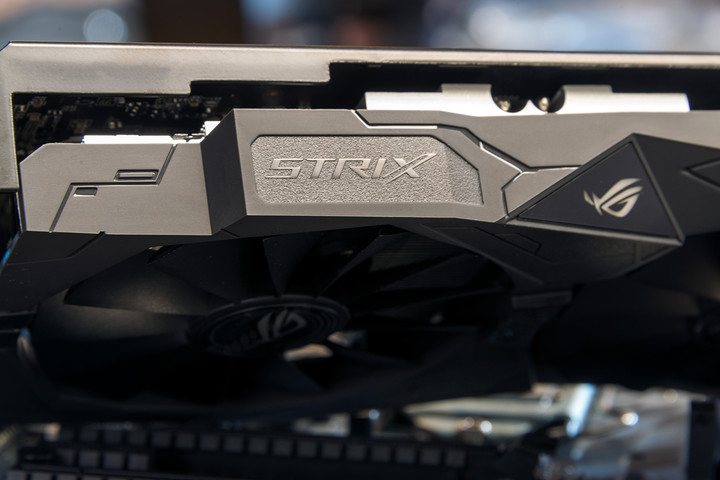
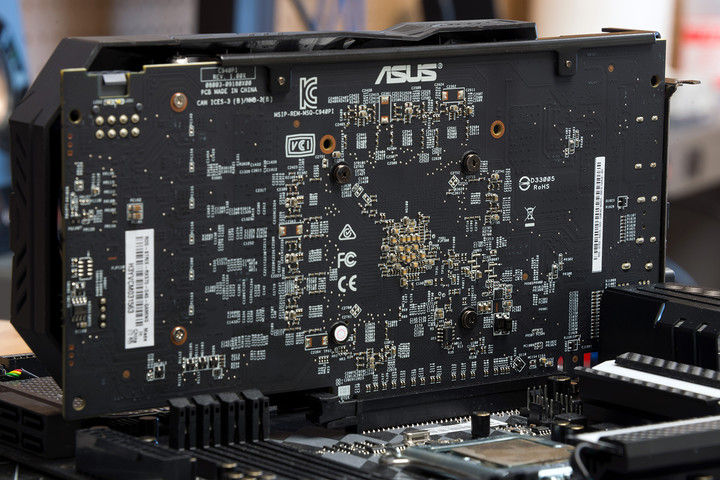
On paper, the RX 570 does look strikingly familiar to the RX 470. AMD has bumped the base clock from 926MHz to 1,168MHz, and the boost clock from 1,206MHz to 1,244MHz, but left the card with the same 2,048 stream processors and 32 compute units. Our Asus Strix unit had a moderate overclock that pumps the maximum boost clock up to 1,278MHz. The thermal design power was up to 150 Watts from 120 Watts, at least on the reference design, but board partners may raise or lower that as needed.
 Bill Roberson/Digital Trends
 Bill Roberson/Digital Trends
 Bill Roberson/Digital Trends
 Bill Roberson/Digital Trends
While connectivity can vary across different models as well, our Asus Strix offered what might be considered a typical selection. It had an HDMI 2.0 port, DisplayPort, and a pair of DVI inputs. Currently, it would be nice to see two of the former, and only one of the latter, but it’s hard to nitpick too much over that. Asus also bumped the boost clock to 1,300MHz, and the memory clock to 1,750MHz up from 1,650MHz. A modest overclock on both counts, but enough to warrant the price bump.
All said and done, the Asus’ Strix offering offers some solid improvements on the reference design for just $20. It has RGBLED lighting, a four-pin fan header, overclocking, and a long warranty, which should draw the eyes of users looking for a premium SKU on the RX 570.
In the lab
Before we cracked into gaming tests, we ran the Asus Strix RX 570 through a set of synthetic 3DMark benchmarks. The tests stressed the GPU to its maximum potential, and gave us a very clean data set to compare.
Importantly, the RX 570 beat out the previous generation RX 480 in every one of the 3DMark tests. That’s no small feat, but it does make sense, considering the RX 570’s bump up to a 150-watt Thermal Design Power, the same as the RX 480 last year.
The RX 570 just barely fell short of the GTX 1060, although it’s worth noting our review unit was a $240 Zotac Amp! edition with 6GB of memory and a modest overclock. GeForce GTX 1060 models closer to reference will likely trade blows with the RX 570, which is good news indeed for Radeon. Nvidia may be forced to respond with a price drop.
On the open road
3DMark is just part of the story, however. Our game test suite tells the rest of the story. It includes four games – Battlefield 1, For Honor, Deus Ex: Mankind Divided, and Civilization VI. The first two were tested in DirectX 11, while the latter two were tested in DirectX 12.
There’s more good news for Radeon here. The RX 570 managed to pump out at least a pleasing 60 frame per second in every test except for Deus Ex: Mankind Divided, which did not surprise us, because it’s by far the most demanding game in our test suite. That game pushes even high-end cards to their limits, and a score of 47 FPS at 1080p and the ultra-quality preset is a very strong score for a $190 video card.
However, the card did behind the RX 480, although just barely. It won by a few frames per second in Battlefield 1, but at over 100 average FPS, it’s unlikely anyone will notice. All the cards we tested, including the Nvidia GeForce GTX 1060, fall very close to each other in terms of raw frame rate, which makes it tough to recommend any one of these cards over the other, except when it comes to price. The RX 570 has a strong lead there, making it the value champion.
Asus Strix Radeon RX 570 OC 4G Compared To
MSI GeForce GTX 1050 2G OC

AMD Radeon RX 480
AMD Radeon R9 380X
NVIDIA GeForce GTX 950
Nvidia GeForce GTX Titan X

Nvidia GeForce GTX 960

Nvidia GeForce GTX 980

AMD Radeon R9 295X2
NVIDIA DualTV MCE

ATI All-In-Wonder X1900
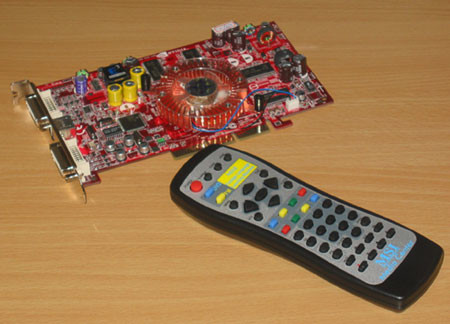
MSI RX800 XT
MSI GeForce FX5700-VT2DR256
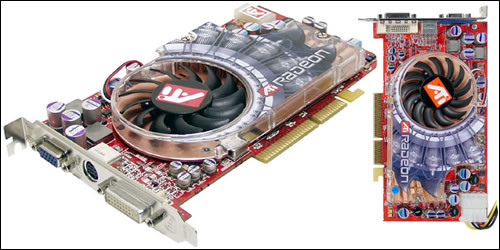
ATI Radeon 9800 XT 256MB
ATI All-In-Wonder Radeon 9800 Pro

Matrox Parhelia 128mb
Warranty information
Asus covers the Strix RX 570 for a full three years after purchase. That’s a strong warranty for a GPU, particularly a mid-range model, and it’s the standard for the Asus ROG Strix series cards. It doesn’t cover damage from overclocking or maintenance by hand, so think twice before you swap out the cooler.
Our Take
The RX 570 rivals both the AMD Radeon RX 480 and the Nvidia GeForce GTX 1060 in performance. There’s no reason to reach for the RX 400 series cards now, unless there’s an insane deal on one. At $190, our Asus Strix review unit falls very close to the RX 580’s $200 starting price point, which could hurt the RX 570’s value proposition. We’ll make sure to update this review once we have a proper RX 580 review unit.
The DT Accessory Pack
Das Keyboard 4 Ultimate Clicky MX
$165.99
LG 34UC79G-B 34-Inch Gaming Monitor
$673.85
Logitech MX Master Wireless Mouse
$
Is there a better alternative?
With a bump to its clock speed, the Asus Strix RX 570 competes directly with Nvidia’s GeForce GTX 1060, although the Zotac Amp! version we tested still edged out a victory. The GTX 1060 will use less power, but we’re not sure that matters for most gaming rigs. The AMD Radeon RX 580, which starts at $200, is also a good option, though upgrading to it from the RX 570 is not necessary to enjoy modern games at 1080p and 60 frames per second.
How long will it last?
While it would be easy to say the performance alone is enough to last you a few years, it’s worth noting here that the RX 570 is a second-generation Polaris chip, and as such, doesn’t have any new features to boast about. A three-year warranty certainly sweetens the pot, if you choose Asus’ Strix card. It produces solid 1080p gaming performance, which is enough for most users now, but that may change with time. Anyone who want the latest feature set will have to wait for AMD’s upcoming Vega architecture, which has no release date.
Should you buy it?
Yes. The RX 570 improves on the RX 480’s performance at a lower price point, and that is enough to recommend it. It breaks 60 FPS in almost every game we threw at it, at least at 1080p, something other cards under $200 struggle to do. It may use a bit more power, but the RX 570 continues AMD’s high-pressure pace in the mid-range category, in a way that should have the green team shaking in its boots.
AMD reveals the wallet-friendly Radeon RX 500 video card family with RX 580/570 launch
Why it matters to you
The AMD RX 580 and 570 are available now, while the RX 560 and RX 550 come in May. The series targets budget gaming and delivers strong 1080p performance.
AMD has officially launched its new Radeon RX 500 series of graphics cards that will replace the existing RX 400 Series threesome currently on the market. The new units are based on AMD’s revised Polaris graphics chip architecture, promising slightly better clock speeds in part due to using the latest version of the 14nm FinFET LPP process technology.
As with the older RX 400 Series generation, AMD is addressing the mainstream customer who needs to upgrade an outdated graphics card to support HD gaming and high-quality VR. The cards also target customers relying on integrated graphics components, which don’t meet the minimum requirements for the Oculus Rift and HTC Vive.
So let’s dive in and check each one out versus the RX 400 Series card they will replace:
Radeon RX 580
RX 580
RX 480
Graphics core:
Polaris 20 XTX
Polaris 10 XT
Compute units:
36
36
Stream processors:
2,304
2,304
Base speed:
1,257MHz
1,120MHz
Boost speed:
1,340MHz
1,266MHz
Memory:
4GB/8GB GDDR5
4GB/8GB GDDR5
Memory interface:
256-bit
256-bit
Memory bandwidth:
256GB/s
256GB/s
Memory speed:
8GHz
8GHz
Peak performance:
Up to 6.17 TFLOPS
Up to 5.83 TFLOPS
Maximum power:
180 watts
150 watts
Power connector:
1x 8-pin
1x 6-pin
Target market:
Beyond smooth HD gaming
Premium VR Experiences
Starting price:
$199/$229
$199/$229
Availability:
April 18
June 2016
As previously revealed in photos of an engineering sample, the RX 580 is based on an entirely new board design (C940) backed by a new 8-pin power connector. This indicates that the card can be overclocked at the expense of a higher power requirement. Even AMD says that the RX 580 supports “aggressive tuning for higher clocks.”
According to AMD, the RX 580 can crank out 78 frames per second in Doom using a 1440p resolution and “High” settings. The Strix GTX 970 with the same settings can only manage 58 frames per second, while the Radeon R9 380X can only generate 52 frames per second. In other words, the RX 580 is somewhat of a large leap compared to the older GPUs.
Radeon RX 570
RX 570
RX 470
Graphics core:
Polaris 20 Pro
Polaris 10 Pro
Compute units:
32
32
Stream processors:
2,048
2,048
Base speed:
1,168MHz
926MHz
Boost speed:
1.244MHz
1,206MHz
Memory:
4GB/8GB GDDR5
4GB/8GB GDDR5
Memory interface:
256-bit
256-bit
Memory bandwidth:
224GB/s
224GB/s
Memory speed:
7GHz
7GHz
Peak performance:
Up to 5.10 TFLOPS
Up to 4.94 TFLOPS
Maximum power:
150 watts
110 watts
Power connector:
1x 6-pin
1x 6-pin
Target market:
Max 1080P Gaming
High visuals
Starting price:
$169/TBA
$149/$179
Availability:
April 18
June 2016
Circling back to Doom, AMD says that this card manages 92 frames per second with a 1080p resolution and “Ultra” settings. Meanwhile, the EVGA GTX 960 only churns out 59 frames per second and the Radeon R7 370 only does 40 frames per second. The 570 also beats out those two older cards in Resident Evil 7 too, with 103 frames per second versus 68 frames per second and 38 frames per second, respectively.
Radeon RX 560
RX 560
RX 460
Graphics core:
Polaris 21
Polaris 11
Compute units:
16
14
Stream processors:
1,024
896
Base speed:
1,175MHz
1,090MHz
Boost speed:
1,275MHz
1,200MHz
Memory:
2GB/4GB GDDR5
2GB/4GB GDDR5
Memory interface:
128-bit
128-bit
Memory bandwidth:
112GB/s
112GB/s
Memory speed:
7GHz
7GHz
Peak performance:
Up to 2.93 TFLOPS
Up to 2.2 TFLOPS
Maximum power:
?
75 watts
Power connector:
1x 6-pin
1x 6-pin
Target market:
Efficient 1080p Gaming
Efficient 1080p Gaming
Starting price:
$99/unknown
$99/$199
Availability:
Early May
June 2016
Based on AMD’s numbers, this card does rather well in Doom, with 67 frames per second at a 1080p resolution. The GTX 750 Ti manages only 33 frames per second, while the Radeon R7 360 is capable of 35 frames per second.
Radeon RX 550
RX 550
Graphics core:
Polaris 12
Compute units:
8
Stream processors:
512
Base speed:
Unknown
Boost speed:
1.183MHz
Memory:
2GB/4GB GDDR5
Memory interface:
128-bit
Memory bandwidth:
112GB/s
Target market:
4K Home Theater
Starting price:
$79
Availability:
May 20
AMD doesn’t provide a Doom benchmark with this card, but does throw out numbers regarding Rocket League and Overwatch. Check out the comparisons:
Overwatch
Counter-Strike: GO
Radeon RX 550:
98 FPS
97 FPS
Radeon R7 250:
44 FPS
59 FPS
Intel HD 530:
18 FPS
24 FPS
Finally, here are some of the cards sold by third-party manufacturers based on the new Radeon RX 500 Series family. Remember, models based on the RX 560 and RX 550 won’t hit the market until next month (May):
Asus
Gigabyte
MSI
Sapphire
TUL
RX 570
STRIX OC 4GB
($189)
——
RX 580
Aorus OC 8GB
($259)
——
RX 580
Gaming 8G
($245)
——
RX 580
Nitro+ Limited Edition 8GB
($275)
——
RX 580 8GB
Red Devil Golden Sample
($269)
——
RX 570
STRIX 4GB
($179)
RX 580
Aorus 8GB
($229)
——
RX 580
ARMOR 8G
($229)
——
RX 580
Nitro+ 8GB
($249)
——
RX 580 8GB
Red Devil
($249)
——
RX 580
Gaming 8GB
($219)
——
RX 580
ARMOR 4G
($199)
——
RX 580
Pulse 8GB
($229)
——
RX 580 8GB
Red Dragon
($229)
——
RX 580
Aorus 4GB
($199)
——
RX 570
ARMOR 4G
($175)
RX 580
Pulse 4GB
($209)
——
RX 580 4GB
Red Dragon
($199)
——
RX 580
Gaming 4GB
($189)
——
RX 570
Nitro+ 4GB
($199)
——
RX 570 4GB
Red Dragon
($175)
RX 570
Aorus 4GB
($179)
——
RX 570
Pulse 4GB
($169)
RX 570
Gaming 4GB
($169)
Palit GameRock GTX 1080 Ti cards are cooled by four counter-spinning fans
Why it matters to you
Palit has a more powerful GTX 1080 Ti solution which lets you have top-tier performance, with quiet operation and fancy lighting.
Palit uses an advanced air cooling system for its new GameRock GTX 1080 Ti graphics cards, having two pairs of fans spinning in opposite directions, which we’re told, eliminates the vortex effect and provides a “high-centralized air volume” to aid cooling. The cards also come with factory overclocks and an option for RGB lighting.
With the Nvidia Titan Xp now the undisputed king of graphics cards, third-party manufacturers are doing their damnedest to differentiate their high-end offerings from the pack and bridge the gap in price between the 1080 Ti Founders Edition and the Xp. Palit’s attempt is certainly different to look at and should offer impressive performance, too.
The GameRock GTX 1080 Ti comes in two guises, the standard version and the Premium edition. Both feature the extra large shroud and quad-fan configuration and have overclocked boost cores running at 1,632Mhz and 1,708Mhz, respectively. That’s 50Mhz and 126MHz more than the Founders Edition.
They both feature the same 11GB of GDDR5X memory and require twin eight-pin PCIExpress power connectors to run. Each card can also be set to one of three different modes: OC, Gaming, and Silence, offering high performance, quiet power, and silent operation, respectively.
Other features include a 12+2 phase PWM, which gives reduced choke noise and electromagnetic interference (EMI) and a dual BIOS, so should your overclock go awry, the card isn’t in danger of being bricked. Alongside the usual three DisplayPort and HDMI connector, Palit has added a DVI-D connector to the GameRock GTX 1080 Ti’s.
The addition of RGB lighting will be a boon for those who like to color-code their system internals, too. Though for those who don’t want it, it could be an added, unneeded expense.
We don’t have any pricing or availability information as of yet, but finding these cards in the U.S. may prove near impossible anyway. As TechReport highlights, very few Palit branded GTX graphics cards are sold in America, with even big collective storefronts like Amazon offering only a handful of options for the brand.
Scientists wants this CRISPR pill to one day replace antibiotics
Why it matters to you
Antibiotic resistance is a huge problem in hospitals. By targeting specific bacteria — instead of all of them — this CRISPR pill may eliminate antibiotic resistance.
Scientists from the University of Wisconsin-Madison want to stamp out antibiotic-resistant bacteria. Their weapons of choice are deception and a powerful gene-editing tool called CRISPR.
CRISPR has been making waves over the past few years, leading to what some are calling the “CRISPR Revolution,” impacting industries from healthcare to agriculture. Initially borrowed from bacteria, which use CRISPR as an immune defense against viruses, the gene-editing tool works by recording snippets of the attacker’s DNA, so that the bacteria can recognize and eliminate future invaders.
In his lab at the University of Wisconsin-Madison, Jan-Peter Van Pijkeren hopes to use CRISPR to deceive a nasty germ called Clostridium difficile. It may sound unfamiliar to most people but it’s nonetheless a risk to hospital patients. Studies have shown C. difficile to be the cause of almost half a million infections and 15,000 deaths in the United States, topping the U.S. Centers for Disease Control and Prevention’s list of drug-resistant threats.
Van Pijkeren’s plan is to develop a virus that can carry a customized CRISPR message into the human body by packaging it into a swallowable probiotic pill. When the pill passes into a person’s intestinal tract, the virus would exit and infect any C. difficile in the area, delivering a false message that causes the bacteria to self-destruct. Though the pill hasn’t yet been tested in animals, previous studies have shown that similar methods work, reports MIT Technology Review.
Sweeping antibiotic use — which kills off both good and bad bacteria — sets the stage for drug-resistant bacteria. As such, C. difficile will be a persistent problem, according to Herbert DuPont, director of the Center for Infectious Diseases at the University of Texas. “As long as we house patients together in a hospital or in a nursing home and we give a lot of them antibiotics we’re going to have a problem with C. difficile,” he told Technology Review. Research into other methods to eliminate harmful bacteria are desired, even if it may take years before they replace today’s antibiotics.
Steelseries’ latest gaming peripherals are designed with Evil Geniuses in mind
Why it matters to you
If you game for a living or aspire to, then the new Steelseries Evil Geniuses line of gaming peripherals was designed just for you.
If you’re a professional gamer or juts an amateur who is aspiring to start making money from your passion, then you demand the best equipment. That means you go beyond a focus on the performance you can squeeze out of your gaming PC4, and look hard at the peripherals that are connected to it as well.
For such users, the keyboard and mouse take on extra importance, with precision and mechanical responsiveness leading the way. Steelseries announced its newest line of professional input peripherals that were co-developed with esports team Evil Geniuses and laser-focused on providing the best possible experience to the most exacting gamers.

In fact, the new line is branded Evil Geniuses and as Steelseries CEO Ehtisham Rabbani puts it, “For years, Steelseries has collaborated with Evil Geniuses to test and improve our products to ensure they are tournament ready. Their winning culture and pursuit of excellence in esports aligns with SteelSeries’ commitment to supporting esports professionals with products that help them rise to the challenge.”
That commitment is apparent in the new Evil Geniuses Edition, which includes a keyboard, mouse, and mousepad that not only carries the esports team’s moniker but also promise performance that should make any esports professional happy.
First up is the Rival 300 Evil Geniuses Edition mouse, which is guaranteed to last for at least 30 million clicks. With its Pixart PMW3310 optical sensor, six programmable buttons, and RGB lighting, the Rival 300 is dubbed the “mouse of choice” by Evil Geniuses player Ludwig “zai” Wahlberg.

Next is the Apex M500 Evil Geniuses keyboard, which was co-designed with the esports team. The keyboard utilizes Cherry MX Red switches, features full anti-ghosting technology, and is compatible with the SteelSeries Engine.

Finally, the QcK Evil Geniuses Edition mousepad completes the triumvirate with a nearly frictionless surface for superior tracking accuracy. The non-slip rubber base and 4mm thickness make for a surface that should be comfortable and consistent for long-term gaming sessions.

The Evil Geniuses Signature Line can be purchased directly from Steelseries. The Rival 300 mouse retails for $60, the Apex M500 keyboard for $100, and the QcK mousepad for a cool $20.
 AIVAnet