


Gear Up: Unitek charging and productivity accessories

Do you live in a house with multiple smartphone users? Or, maybe you own a handful of devices that need charged via USB. It’s not uncommon to have a tablet, smartwatch, digital camera, Fire TV remote, phone, Kindle, etc. It isn’t hard to find yourself with more than a few things fighting for the plus and outlets. Ever considered a charging station or dock?
Unitek has a couple of options to choose from which could be of value to those of you who need to plug a variety of devices in on a regular basis. Moreover, if you’ve got one place that everyone in the house goes to for charging, these are something you might want to purchase. All of the products listed below come with a two-year warranty.
96W/2.4A 10-Port USB Charging Station with Quick Charge 3.0

Why you’ll want it: Charge up to ten devices at one time, including two of them using Qualcomm’s Quick Charge 3.0. Move the dividers around to fit your needs; space them out for wider items like backup batteries or put them closer together for that skinny tablet. It’s the perfect office companion for those of you who have keyboards and mice that need the occasional charge on top of the various phones and headphones. About $70
36W/2.4A Detachable 4 Port USB Charging Station Dock
 Why you’ll want it: An excellent option for the nightstand, it lets you plug in your phone, tablet, and two other products at once. Although it charges four things at once, the dock has room for six devices so feel free to put other tech in there, too. The cord is long enough to tuck behind the bed or dresser; provides up to 5V 7.2A and one power port up to 2.4A. About $28
Aluminum Type C 3-Port Data Hub with SD/Micro SD/TF Card Reader

Why you’ll want it: If you own a Chromebook or laptop with a USB Type-C port, this unit adds a number of ports and functionality to it. Give your device three extra USB 3.0 ports on one side and adds a card reader that supports a variety of formats on the other: SD, SDHC, SDXC, MMC, RS-MMC, Micro SD, and Mini SD. Aluminum build ensures it will stand up to moderate abuse; it looks great next to any hardware. About $20
Portable USB 3.0 4-Port Ultra Slim Data hub

Why you’ll want it: Inexpensive but flexible, this portable unit converts one USB port into four. Moreover, there’s an extra microUSB output that can be used to power your phone or tablet. Backward compatible with USB 2.0 / 1.1, the USB 3.0 ports deliver charging and fast data transfer speeds. The built-in clasp keeps the cord from flopping around while the small footprint allows for portability. About $10
Editor Note: These items were provided to AndroidGuys for promotional consideration. Morever, they were offered to us at no cost and with no expectation of review or coverage.
Stormtrooper tower: Asus unveils a gaming desktop under the Strix brand
Why it matters to you
PC gamers wanting a new desktop rig now have several options under the Republic of Gamers’ Strix brand.
The Republic of Gamers division at Asus is expanding its family of Strix-branded products once again. The company currently offers laptops, motherboards, graphics cards, and wireless headsets in is Strix portfolio and recently added a monitor, microphone, and gaming mouse. Now, Asus is cramming a powerful gaming desktop into that list in the form of the ROG Strix GD30 packing seventh-generation Intel Core processors and Nvidia GeForce graphics.
Let’s get to the meat of the hardware first:
Operating system:
Windows 10
Processor:
Intel Core i5-7400
Intel Core i7-7700
Graphics:
Nvidia GeForce GTX 1050 2GB
Nvidia GeForce GTX 1060 6GB
Nvidia GeForce GTX 1070 8GB
Nvidia GeForce GTX 1080 8GB
Memory:
Up to 32GB DDR4
Storage:
Up to 3TB 7,200 RPM SATA 3 HDD
Up to 512GB SATA 3 SSD
Up to 512GB PCIe M.2 SSD
Up to 512GB SATA 3 M.2 SSD
Optical storage:
DVD-ROM drive
DVD-RW drive
Audio:
Sonic Studio III HD 7.1 Channel sound
Connectivity:
Wireless AC
Bluetooth 4.1
Ports (front):
2x USB 2.0
2x USB 3.1 Gen1 Type-A
1x Microphone jack
1x Headphone jack
1x 6-in-1 SD card reader
Ports (back):
2x USB 2.0
4x USB 3.1 Gen1 Type-A
1x USB 3.1 Gen2 Type-C
1x Ethernet
1x 7.1 channel audio
Up to 2x HDMI (depends on GPU)
1x DVI port
Up to 2x DisplayPort (depends on GPU)
Dimensions:
9.055 x 21.65 x 21.25 inches
Weight:
37.47 pounds
As the specs show, this is no small form factor machine you can easily lug across town. It’s a gaming beast living up to the ROG Strix name that sits like a beautiful, futuristic tower on a desktop or flat surface next to the living room’s HDTV. The two Storm Trooper-style front panels are removable as well, enabling owners to rearrange these panels to create six different visual styles. There is also a matching white LED strip stretching horizontally between the upper and lower panels to indicate that the PC is running.
“Transparent side panels that show off the tech inside are now ubiquitous, but the GD30 adds an iron screen with a honeycomb design,” the company said in a blog post. “While the result looks great aesthetically, it also serves a functional purpose by reducing EMI (electromagnetic interference). The results from the ASUS EMI testing lab show that the system’s Radiated Spurious Emissions are lower than not only international safety standards but also internal ASUS regulations, which are among the strictest in the industry.”
Other notable features packed into the new Strix desktop include support for more than 8 million colors and multiple lighting effects on the motherboard, enough space for liquid cooling and a dual-fan radiator, large front and bottom air intakes for superb out-of-the-box cooling, a 120mm red LED-lit export fan on the back, and more. The included Aegis III software keeps tabs on the temperature and performance while giving users complete control over the PC’s cool Aura RGB lighting and fan speeds.
The Asus ROG Strix GD30 is presumably available now in multiple configurations for unspecified prices. The system’s press release says to, “Please contact your local ASUS representative for further information.”
Dell Latitude E5470 review

Research Center:
Dell Latitude E5470
The Dell Latitude has been a business mainstay for years. It’s built a reputation for understated reliability, to the point that the sleek black laptop is now ubiquitous. At this point, it’s as much an office fixture as a coffee machine.
But if it’s that common, how can the new Latitude E5470 stand out in a crowded market? At first, it’s hard to tell. With specifications including a 6th-generation Intel Core i5 processor, 8GB of RAM, a 500GB HDD, and a price tag of $1,241, the Latitude doesn’t look like much. You won’t find any groundbreaking new features here, but it does have a few tricks up its tasteful, well-pressed sleeves.
Business class
The Latitude E5470 isn’t going to win any industrial design awards, but it has a certain quiet elegance. Black, rectangular, laptop-shaped, at first glance there’s not much to talk about. But that’s the key to the Latitude’s design. It’s quiet, understated, and as classy as an everyday button-down and slacks.
More: Lenovo’s Yoga 720 packs gaming-grade graphics into a 2-in-1
On the back, the Dell logo is the only glossy accent in a tasteful sea of matte black. The trackpad is similarly matte, black, and just a bit sparkly. There’s enough design language here, in the black-on-black scheme and port placement, to suggest that even the most unassuming accents were well considered and placed with care.
 Bill Roberson/Digital Trends
 Bill Roberson/Digital Trends
 Bill Roberson/Digital Trends
 Bill Roberson/Digital Trends
Even minor details serve a purpose. Where the display meets the body, Dell opted to fortify the Latitude’s durability by using metal to mount the hinge to the chassis. It’s an attractive design element, but it also makes sure the display remains firmly affixed to the body. There’s very minimal flex here. This is a notebook built for the rigors of everyday use.
Throw away those dongles
The Latitude’s business pedigree informs every aspect of its design — including the layout and sheer number of ports. Normally, this is the part where we’d list every available connection, and given recent trends, lament the lack of one or more ports.
The Latitude is a different story entirely. This is a notebook with every port you could possibly need, and they’re placed right where you need them.
The Latitude E5470 isn’t going to win any industrial design awards, but it has a certain quiet elegance.
Starting with the back-side of the notebook, where most manufacturers stick a few exhaust vents and call it a day, the Dell Latitude E5470 features the following: one USB port, an Ethernet port, the AC adapter port, an HDMI port, and a microSD slot. Oh, and just in case that wasn’t enough, there’s also an old-school VGA port back there.
On the left side, the Latitude features a large exhaust vent, a USB port, and a smart card slot. The right-side features yet another USB port, an SD card slot, a headphone jack, and a Kensington lock.
In other words, the Latitude has more ports on its back-side than some laptops have on their entire chassis. With this notebook, you won’t need any dongles, splitters, or adapters. It’s a welcome change, given recent trends toward eliminating variety, and requiring users to rely on external adapters to plug in their devices.
A tale of two trackpads
Business laptops aren’t just defined by their ports, their design, or their software. There’s one other feature a notebook really needs to be taken seriously as a business laptop: a TrackPoint nub in the center of the keyboard. The Dell Latitude has one, as it should.
More: Vkansee’s under-glass fingerprint sensors to debut in laptops before smartphones
When you’re doing data entry for several hours at a time, a TrackPoint-style pointer can be a life saver. No need to take your hands off the keyboard, just make your adjustments with the nub, and keep going.
It’s not exactly a headline feature, but it works well. It’s accurate enough for small adjustments to the position of your cursor, but not quite sensitive enough to replace the track pad in most cases. Just below the space bar, you’ll find a left, right, and middle button to accompany the TrackPoint-style pointer.
 Bill Roberson/Digital Trends
 Bill Roberson/Digital Trends
The actual trackpad is a bit small by current standards, but it gets the job done. It’s fast and accurate no matter how high or low you adjust the sensitivity. If you buy this laptop, though, you should do yourself a favor and get acquainted with the TrackPoint.
The Latitude’s keyboard features surprisingly deep key travel for a notebook, and the keys are solid and springy without feeling mushy when you’re typing for long periods. Underneath, you’ll find a stock-standard white LED backlight, which shines through the key caps and around the keys. It’s not exactly Razer Chroma lighting, but it gets the job done. It’s easy enough to find the right function keys when typing in the dark.
Bright and colorful
The Latitude E5470 doesn’t need to have a great display, and it could get by with just a decent or mediocre screen. After all, it’s destined for a life of spreadsheets, PowerPoint presentations, and the occasional in-flight movie — nothing that would require a lush and colorful screen.
Nevertheless, the Latitude has a surprisingly capable display. The IPS panel has excellent viewing angles, and a contrast ratio that beats out one of Dell’s own gaming systems, the Inspiron 15 7000 Gaming. That laptop suffers very poor quality display with a contrast ratio of 140:1, while the Latitude — a business laptop — features a sharp display capable of hitting 830:1 contrast at max brightness.
Taking a look at the closest competition, the Lenovo Thinkpad X260, and the Dell XPS 13, the Latitude manages to hold its own. The Thinkpad, another business notebook, pushes past the XPS and Latitude when it comes to contrast, delivering deeper darks and brighter highlights, but the Latitude pulls ahead of both in raw color accuracy.
The Latitude’s expansive storage size is appreciated, but it comes at too high a cost.
The Latitude’s display is not only bright and colorful, but the colors are remarkably accurate. With an average color error of 1.69, the Latitude delivers color accuracy good enough for a bit of photo editing on-the-go, if not quite good enough to replace a dedicated, professional monitor.
Moving on to display gamut, the Latitude can reproduce 73 percent of the demanding AdobeRGB spectrum, while the Thinkpad only manages 53 percent. That’s a big difference, and it shows in everyday use. The XPS pulls ahead of both the Latitude and Thinkpad, however, with a display capable of reproducing 76 percent of the AdobeRGB spectrum.
Laptop displays are almost always a mixed bag, but that’s not the case here. With the Latitude, you get solid scores across the board, despite a few dips here and there, most notably in display gamut. Still, it’s a very capable display, and it would be just as at home on a gaming notebook as it is on a business notebook.
Quick, but not the quickest
The Dell Latitude 5470 features a dual core Intel Core i5-6300U processor, clocked at 2.4GHz, and it does well in most use-cases. Single and multi-core performance are both mid-range, and that’s appropriate for a 6th-generation Skylake dual core processor, but let’s look at the competition.
More: Motorola’s crazy concept Moto Mods include a photo printer, and more
The XPS 13 with its 7th-generation Intel Core i7 processor is the clear winner here, but the Latitude keeps up admirably. Both the Latitude and the Thinkpad featured last-gen Intel Core i5 processors when we reviewed them, and they perform well within acceptable margins. The 6th-generation Intel Core i5 is a solid CPU and won’t slow you down during daily computing tasks.
Looking at the Geekbench scores and Handbrake benchmarks, you can see how the Latitude sits comfortably between the Thinkpad and XPS 13. It’s not the fastest notebook, but a solid, reliable CPU keeps it within striking distance of the top-end XPS 13. The only time we really noticed the Latitude struggling to keep up was when we pushed multi-tasking well beyond reasonable extremes — dozens of browser tabs, opening several applications all at once.
During daily use, the Latitude kept up beautifully but did chug a little when launching more than one app at a time. That’s likely the result of its hard disk.
Large and lumbering
The Latitude has ample space, with a 500GB hard disk, but the speed leaves much to be desired. It’s just not fast enough, and looking at the competition, both of which feature mid-range SSDs, you can see how the Latitude could feel sluggish performing hard disk sensitive tasks.
There’s just no comparison. The XPS features a quick SSD which performs about ten times faster than the Latitude’s large-but-slow hard disk. Even the Thinkpad pulls ahead here, delivering acceptable if not lightning-quick results.
Unfortunately for the Latitude, these speed discrepancies are felt in everyday use. Boot times are surprisingly long, and read/write speeds make moving files around a huge pain. The Latitude’s expansive storage size is appreciated, but it comes at too high a cost.
Not playing around, at all
It should come as little surprise that the Latitude isn’t exactly meant for gaming. Without a discrete GPU, it struggled during the least demanding of our benchmarks. The Thinkpad and XPS 13 also feature onboard Intel HD graphics, and neither one does particularly well in the 3DMark benchmarks.
You’re not going to get passable gaming performance out of the Latitude in anything but the least demanding games. We managed to run Hearthstone well enough, but there was noticeable frame-loss when big effects were triggered.
It’s not a surprise given the Latitude’s pedigree as a business laptop, but it’s something to keep in mind if you need something to keep you entertained on long flights.
Dell Latitude E5470 Compared To

Dell Inspiron 15 7000 (2017)

Lenovo ThinkPad P50s 20FL000NUS

Lenovo Yoga 910

Microsoft Surface Book with…

Asus Zenbook 3 UX390UA

Lenovo ThinkPad X260

Dell Precision 15 3510

Lenovo Ideapad 710S

HP Spectre

Acer Aspire S 13 S5-371-52JR

Dell Latitude 12

LG Gram 15 Z960

Samsung Notebook 9 Pro…

Asus Zenbook UX501VW-DS71T

Lenovo IdeaPad V460
Compact carry-on
This laptop was designed for a life on the road and it shows. It’s small and light, fits comfortably in a shoulder bag, and weighing in at just 3.88 pounds, it won’t bog you down on a daily commute.
It features a 62 watt-hour built-in battery, which is not hot-swappable or easily user replaceable, so be sure to pack the included charger if you’re going on the road. The Latitude’s battery life is good enough to get through most of a workday of mixed use, about six and a half hours anecdotally speaking.
When it comes to formal benchmarks, the battery life falls a bit short of its nearest competitors. On the Peacekeeper battery test the Latitude managed just over four and a half hours, while the Thinkpad, which features hot-swappable batteries, managed about four hours and fifty minutes, with the XPS 13 lasting about six minutes longer.
That’s good, but not groundbreaking. The Latitude managed between five and six hours of battery life on our other two tests — a video loop and a browser macro loop. These tests really push battery life to the limit, so in everyday use the Latitude would absolutely be able to get you through most of a workday on a single charge.
With a small, sleek form-factor and modest battery life, the Latitude is a very portable machine for business travelers or anyone who needs to spend most of their workday without being tethered to a desk.
Slim and light
The included software never pushed past the realm of necessary utilities, and that’s appreciated. There were a few Dell-branded applications included, but they’re not overbearing and beyond asking you to register once or twice, they never get in the way. You won’t have to clean house when you get this notebook, scouring every corner for clinging bits of bloatware.
 Bill Roberson/Digital Trends
 Bill Roberson/Digital Trends
In fact, the only out-of-the-box bloatware present on the Latitude was included with Windows 10. There were a few Windows Store apps we didn’t really need, and more than a handful of Microsoft trial apps that deserved a swift and just removal.
Warranty information
The Dell Latitude E5470 includes a standard one-year warranty against manufacturer defects, including a year of hardware service, with in-home and on-site service after remote diagnosis. Essentially, the Latitude is covered if anything goes wrong in the first year, but you’re on your own after that.
Our Take
The Dell Latitude E5470 is a capable business notebook with a high-quality display, and rock-solid build quality. Compared to some of Dell’s other offerings, it stands on its own as a reliable mid-range performer, and has a few features you’re only likely to find on a dedicated business laptop.
Smart card support, a variety of cleverly placed ports, and robust battery life make a good case for the Latitude, but there’s a problem: the price. Retailing for $1,241, the Latitude is in competition with Dell’s top-end offerings from the XPS lineup, and Lenovo’s business notebook offerings.
Is there a better alternative?
Unfortunately for the Latitude there are better alternatives in the same price range, including offerings from Dell. The XPS lineup continues to impress, and you can get in on the 13-inch line starting at $800, or the 15-inch line starting at $900.
The DT Accessory Pack
Microsoft 3500 wireless mobile mouse
$30
Verifi P2000 fingerprint reader
$60
Dell E-Port Plus port replicator
$100
You can also spec either one just beyond the Latitude, and come in at about the same price with a handful of premium features, including one of the most attractive chassis on the market today, and the latest 7th-generation Intel Core processors.
How long will it last?
Despite having a mostly plastic body, the Latitude E5470 is built like a small, plastic tank. The body doesn’t flex, or give in any troubling way, and it would absolutely survive several years of being hauled in and out of a messenger bag, facing the rigors of daily use.
The hardware is another story. The Latitude is quick enough today, and might keep up for about a year, but it will very quickly start to show its age. With a dual-core 6th-generation Intel Core processor, it’s good at single tasking and small-scale multi-tasking, but not quite quick enough to keep up if you have too many applications running at once.
The hard disk will probably have you pulling your hair out before the end of 2017. It’s just not fast enough for anything other than long-term and infrequent storage. You’re much better off investing in an SSD of half the size.
Should you buy it?
For most users, the answer will be no. But if you need a laptop with a smart card slot — as some business users will — and if you can’t live without a TrackPoint-style pointer, then the Latitude isn’t a bad choice. Just make sure you get it when it’s on sale, or make sure your company picks up the tab.
Science brought us a breakthrough: A wine bottle that doesn’t drip
Why it matters to you
Hate red wine stains on your white tablecloth or wooden dinner tables? This drip-free wine bottle is here to help.
Sometimes scientists focus their gray matter on solving massive problems like creating sources of sustainable energy able to help feed, clothe, and connect humanity for the next 1,000 years or so. Other times, they harness their superior knowledge of chemistry, materials science, and physics to invent a new type of wine bottle that doesn’t drip.
Sure, the first one is the most important but… well, who wouldn’t benefit just a little bit from the second?
Fortunately, that is where Brandeis University biophysicist Daniel Perlman. A research scientist at the university for the past 30 years, Perlman has used some of his extracurricular time to pursue something of a passion project.
“This research project grew out of my love of wine, and my experience of watching red wine bottles stain tablecloths and wooden surfaces,” he told Digital Trends. “I started wondering whether there was a remedy that could be found in the design of the bottle.”
More: Vivino Market gives personalized wine recommendations
It turned out to be a more complex problem than you might think, which is presumably why no one had previously cracked it without needing an additional add-on to the wine bottle itself.
“It involved thinking about some of the chemical interactions between wine and glass, and analyzing slow-motion video showing the pouring that takes place from a standard wine bottle,” Perlman said. “What wine has a tendency to do is to cling to the glass surface as it leaves the bottle. Particularly if you’re pouring from a full or nearly full bottle, the flow of wine actually hooks backwards, so that when you tilt the bottle upright this backwards flow is what causes the drips that run down the neck. By introducing a channel or groove, which acts a bit like the moat around a castle, we were able to create a barrier that interrupts the tendency of the liquid to flow down underneath the lip.”
Got that? Perlman’s colleagues at Brandeis certainly have, since they’ve rushed to file a patent application and are now in conversations with several wine bottle manufacturers.
“We’ve tested both red and white wines, and both behave in a very similar way — although red wine is the more problematic one in terms of having the ability to stain tablecloths and the like,” Perlman continued. “However, the design is applicable to both, as well as different styles of wine bottle. We originally developed this for bottles with cork closures, but this design could be introduced into a screwtop-style wine bottle neck as well.”
Alcatel’s new A30 costs just $60 after discount, can be pre-ordered from Amazon
Why it matters to you
Looking for a super low-cost device? The Alcatel A30 has just been unveiled, and can be purchased with a subsidy from Amazon Prime for $60 after discount.
Smartphone manufacturer Alcatel is having quite a year. The company launched a number of phones at Mobile World Congress 2017, and now its back with another device — the Alcatel A30.
The device is decidedly budget, and comes in at less than $100. Not only that, but it also has gesture controls like flip to mute, and runs Android 7.0 Nougat. It’s set to be released in April, and it’s currently available for pre-order on Amazon Prime — where you can get it at a $40 discount, which brings the price to $60.
More: Alcatel’s new Plus 12 Windows 2-in-1 tablet can be your “office on the go”
So what kind of specs can you expect on the device? Well, as mentioned, it is a low-cost phone, so don’t expect anything mind-blowing. For the price, however, it’s certainly not bad.


Under the hood, you’ll find a 1.1GHz Qualcomm Snapdragon 210 processor, along with 2GB of RAM and 16GB of storage. The device also has a microSD card slot, so you can expand that storage by up to 32GB. On the back of the phone, you’ll find an 8MP rear-facing camera, while on the front, there’s a 5MP front-facing camera. The display sits at 5 inches and has a 720p display.
When it comes to the design, the phone looks pretty basic — but that’s not necessarily a bad thing. It just looks like a normal smartphone.
As mentioned, the phone is currently available for pre-order as an Amazon Prime exclusive, as is the Moto G5 Plus, and as part of that deal, you’ll get a subsidy. Of course, there is a tradeoff — in exchange for the subsidy, you’ll have to deal with a few extra ads and promotional offers every now and then. You can, thankfully, also get it without the ads and promotional offers, but you won’t get the $40 Amazon Prime discount, which comes in the form of an Amazon Prime gift card.
The Alcatel A30 is set to be released April 19.
Pre-order now from:
Amazon
Weekly Rewind: Chuck Berry’s legacy, Apple’s (RED) iPhone, Lexus’ new yacht

A lot can happen in a week when it comes to tech. The constant onslaught of news makes it nigh impossible for mere mortals with real lives to keep track of everything. That’s why we’ve compiled a quick and dirty list of this week’s top 10 tech stories, from Apple’s highly anticipated red iPhone to Lexus’ new luxury yacht — it’s all here.
Apple has finally taken the wraps off the new ruby red ‘iPhone (RED)’

On Tuesday, in partnership with nonprofit Product (RED), Apple added a brand new, ruby red iPhone model to its roster: the iPhone (RED). Like the company’s (RED) iPod Nano, Beats headphones, and Smart Battery cases, the launch promotes Product (RED)’s ongoing effort to combat HIV and AIDS, which remain among the globe’s worst health problems. More than 35 million people have died of the virus, and 37 million are infected each year, according to Product (RED).
Read the full story here.
Diets are not equal for all people; ancestral homelands can make a difference

Proponents of specific food class-centric diets such as paleo, vegan, gluten-free, ketogenic, or the Mediterranean diet often tend to prescribe their plans for everyone. Not so fast, says a group from the University of California, Berkeley. Biologists at UC Berkeley and other institutions around the world have published research that shows genetic differences from natural selection based on dietary changes in Europe, Ars Technica reports.
Read the full story here.
Lexus floats a new brand idea: The high-performance Lexus Sports Yacht

What is it with big-name carmakers and luxury sports yachts? Mercedes-Benz, Aston Martin, and Bugatti have all launched or shown concepts of yachts that are slick, fast, and extremely pricey. Now we can add Lexus to the gang with the Lexus Sports Yacht, which was recently introduced at the Miami International Boat Show.
Read the full story here.
What’s in a Name? Meet Bixby — the smart sidekick who’ll help you use your digital gear

There’s a new name in artificial assistants, but Samsung argues this one won’t tell you dumb jokes or a weather forecast, nor will it look up facts for you online. This bright assistant is meant to improve your interactions with your digital life — not just with your smartphone, but with your washing machine, thermostat, vacuum cleaner, and more. It’s nothing less than a rethink of how we use our stuff.
“Philosophically, what we’re looking at is revolutionizing the interface,” Injong Rhee, head of research and development at Samsung Mobile Communications Business Group, told Digital Trends.
Read the full story here.
Novel braille smartwatch enables the blind to read notifications

The Dot is a smartwatch with a unique interface that is able to translate basic notifications for blind users by dynamically reproducing braille on its specialized surface. It has been in development for the past couple of years, but mass production has finally begun, with the first orders set to ship out in April. Although braille has been a useful tool for those with limited vision for close to 200 years, in an age of touchscreens and smart devices, many of the world’s millions of visually impaired can be left out of the loop.
Read the full story here.
Studying brain waves while watching trailers can help predict a film’s success

As an industry built around making money by guessing what the general population wants to watch, Hollywood has been trying to get into our minds for years. An experiment at Northwestern University’s Kellogg School of Management may have cracked the best way to do this: by literally reading moviegoers’ brain waves.
Read the full story here.
Five legendary bands whose music wouldn’t sound the same without the late Chuck Berry

We lost one of popular music’s most important and influential musical architects on Saturday, as Chuck Berry died at the age of 90. Berry’s profound lyrics, melodies, and guitar stylings are the very bedrock of all rock-influenced music made in the past six decades. Without the iconic St. Louis-born musician, the sounds coming out of your radio, streaming service, or record player would be profoundly different.
Read the full story here.
Osprey’s affordable new anti-gravity packs save your back without injuring your wallet

Osprey set the standard in backpacking comfort when it introduced its cutting-edge Anti-Gravity suspension and back panel in 2015. The Atmos and Aura Backpacks were the first models to be equipped with Osprey’s AG technology, and were lauded for their ability to distribute the weight of the pack and make you feel like you were carrying less weight.
Now this revolutionary suspension system is making its way to other backpacks in Osprey’s lineup — new for the spring 2017 hiking season are AG versions of the popular Aether and Ariel line of long distance backpacks.
Read the full story here.
How Celebrity Cruises is using smartphones to put power in passengers’ hands

Whether by plane, train, or automobile, our standard modes of travel are getting more connected. As each becomes another “device” within the Internet of Things, they are able to provide real-time information and personalization that wasn’t possible before. We can now add cruises into the mix.
Carnival revealed its connected Medallion technology, which helps passengers tailor experiences to their needs. And now Celebrity Cruises is following suit, and it’s using the smartphone as the starting point. We recently visited Celebrity’s Innovation Lab, in Miami, to look at some of the things the company has in store.
Read the full story here.
Hackers demand Apple pay up or millions of iCloud accounts will be wiped

A group of hackers is allegedly trying to extort Apple by holding its customers’ data for ransom and threatening to remotely wipe iCloud accounts connected to both iPhones and iPads if the demands are not met. The group self-identifies as the “Turkish Crime Family,” and is demanding either $75,000 in Ethereum or Bitcoin or $100,000 in iTunes gift cards, according to a report from Motherboard. Not only that, but the hackers gave Apple an April 7 deadline to meet the demands — or else they will start wiping both phones and iCloud accounts.
Read the full story here.
Weekly Rewind: Chuck Berry’s legacy, Apple’s (RED) iPhone, Lexus’ new yacht

A lot can happen in a week when it comes to tech. The constant onslaught of news makes it nigh impossible for mere mortals with real lives to keep track of everything. That’s why we’ve compiled a quick and dirty list of this week’s top 10 tech stories, from Apple’s highly anticipated red iPhone to Lexus’ new luxury yacht — it’s all here.
Apple has finally taken the wraps off the new ruby red ‘iPhone (RED)’

On Tuesday, in partnership with nonprofit Product (RED), Apple added a brand new, ruby red iPhone model to its roster: the iPhone (RED). Like the company’s (RED) iPod Nano, Beats headphones, and Smart Battery cases, the launch promotes Product (RED)’s ongoing effort to combat HIV and AIDS, which remain among the globe’s worst health problems. More than 35 million people have died of the virus, and 37 million are infected each year, according to Product (RED).
Read the full story here.
Diets are not equal for all people; ancestral homelands can make a difference

Proponents of specific food class-centric diets such as paleo, vegan, gluten-free, ketogenic, or the Mediterranean diet often tend to prescribe their plans for everyone. Not so fast, says a group from the University of California, Berkeley. Biologists at UC Berkeley and other institutions around the world have published research that shows genetic differences from natural selection based on dietary changes in Europe, Ars Technica reports.
Read the full story here.
Lexus floats a new brand idea: The high-performance Lexus Sports Yacht
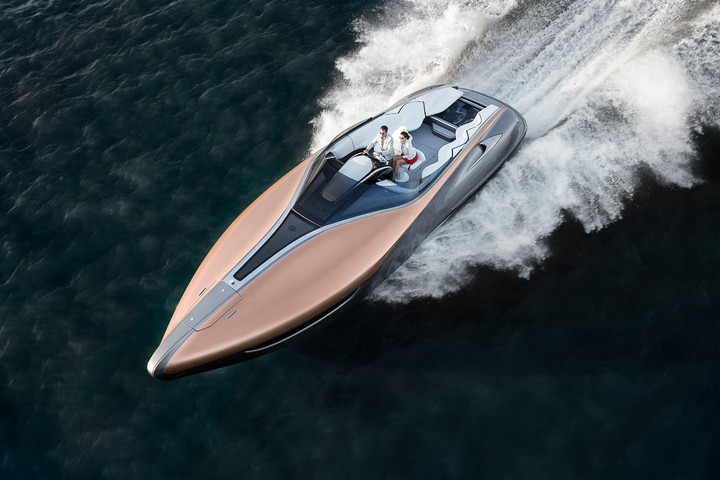
What is it with big-name carmakers and luxury sports yachts? Mercedes-Benz, Aston Martin, and Bugatti have all launched or shown concepts of yachts that are slick, fast, and extremely pricey. Now we can add Lexus to the gang with the Lexus Sports Yacht, which was recently introduced at the Miami International Boat Show.
Read the full story here.
What’s in a Name? Meet Bixby — the smart sidekick who’ll help you use your digital gear

There’s a new name in artificial assistants, but Samsung argues this one won’t tell you dumb jokes or a weather forecast, nor will it look up facts for you online. This bright assistant is meant to improve your interactions with your digital life — not just with your smartphone, but with your washing machine, thermostat, vacuum cleaner, and more. It’s nothing less than a rethink of how we use our stuff.
“Philosophically, what we’re looking at is revolutionizing the interface,” Injong Rhee, head of research and development at Samsung Mobile Communications Business Group, told Digital Trends.
Read the full story here.
Novel braille smartwatch enables the blind to read notifications
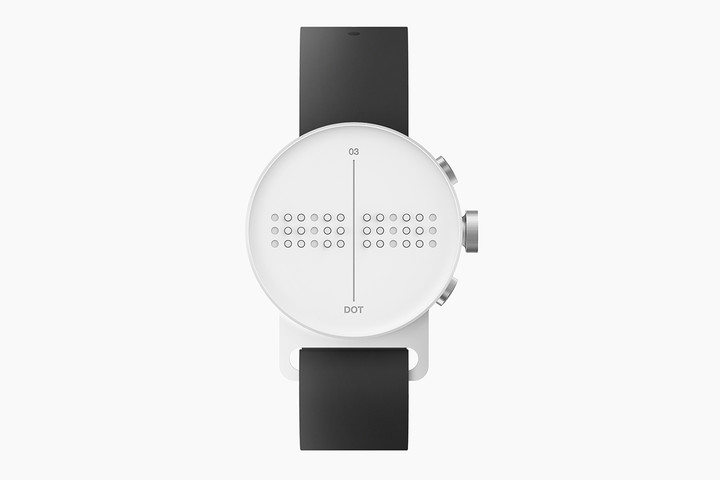
The Dot is a smartwatch with a unique interface that is able to translate basic notifications for blind users by dynamically reproducing braille on its specialized surface. It has been in development for the past couple of years, but mass production has finally begun, with the first orders set to ship out in April. Although braille has been a useful tool for those with limited vision for close to 200 years, in an age of touchscreens and smart devices, many of the world’s millions of visually impaired can be left out of the loop.
Read the full story here.
Studying brain waves while watching trailers can help predict a film’s success

As an industry built around making money by guessing what the general population wants to watch, Hollywood has been trying to get into our minds for years. An experiment at Northwestern University’s Kellogg School of Management may have cracked the best way to do this: by literally reading moviegoers’ brain waves.
Read the full story here.
Five legendary bands whose music wouldn’t sound the same without the late Chuck Berry

We lost one of popular music’s most important and influential musical architects on Saturday, as Chuck Berry died at the age of 90. Berry’s profound lyrics, melodies, and guitar stylings are the very bedrock of all rock-influenced music made in the past six decades. Without the iconic St. Louis-born musician, the sounds coming out of your radio, streaming service, or record player would be profoundly different.
Read the full story here.
Osprey’s affordable new anti-gravity packs save your back without injuring your wallet

Osprey set the standard in backpacking comfort when it introduced its cutting-edge Anti-Gravity suspension and back panel in 2015. The Atmos and Aura Backpacks were the first models to be equipped with Osprey’s AG technology, and were lauded for their ability to distribute the weight of the pack and make you feel like you were carrying less weight.
Now this revolutionary suspension system is making its way to other backpacks in Osprey’s lineup — new for the spring 2017 hiking season are AG versions of the popular Aether and Ariel line of long distance backpacks.
Read the full story here.
How Celebrity Cruises is using smartphones to put power in passengers’ hands

Whether by plane, train, or automobile, our standard modes of travel are getting more connected. As each becomes another “device” within the Internet of Things, they are able to provide real-time information and personalization that wasn’t possible before. We can now add cruises into the mix.
Carnival revealed its connected Medallion technology, which helps passengers tailor experiences to their needs. And now Celebrity Cruises is following suit, and it’s using the smartphone as the starting point. We recently visited Celebrity’s Innovation Lab, in Miami, to look at some of the things the company has in store.
Read the full story here.
Hackers demand Apple pay up or millions of iCloud accounts will be wiped

A group of hackers is allegedly trying to extort Apple by holding its customers’ data for ransom and threatening to remotely wipe iCloud accounts connected to both iPhones and iPads if the demands are not met. The group self-identifies as the “Turkish Crime Family,” and is demanding either $75,000 in Ethereum or Bitcoin or $100,000 in iTunes gift cards, according to a report from Motherboard. Not only that, but the hackers gave Apple an April 7 deadline to meet the demands — or else they will start wiping both phones and iCloud accounts.
Read the full story here.
Google retires SMS support in Hangouts, axes experimental Gmail features
Why it matters to you
If you use Hangouts to send and receive SMS messages, it’s time to switch: Google is doing away with support soon.
At the Google’s HQ in San Francisco, it’s that time of year again: Spring cleaning. On Friday, Google detailed features that will be going away in the coming weeks as part of the company’s perennial efforts toward “streamlining” its products.
First to get the ax is text message support in Google’s Hangouts messaging app. In the next few weeks, holdouts will get a Hangouts notification to switch to another app. And starting on May 22, Hangouts will cease to send and receive carrier SMS messages.
More: Attack on Slack: Google beefs up its Hangouts services, meet and chat
Google is suggesting that users migrate to its text-focused Android Messages app. “We want to provide a consistent and easy-to-use SMS experience for Android users right out of the box,” a spokesperson said. “We’re focusing on making Android Messages the primary place to access SMS and are working with carriers and device manufacturers to include Android Messages natively in Android devices.”
Google notes that the shutdown won’t impact Google Voice users and Google Fi subscribers who use Hangouts for messaging. It has published a helpful resource with more information.
Meanwhile, Google Talk — the precursor to Hangouts — is shutting down entirely. Google said it will prompt Gmail users who haven’t switched to Hangouts to do so, and that the legacy Google Talk Android app, which Google replaced with Hangouts in 2013, will stop functioning by late April.
More: Hangouts may lose SMS support as Google overhauls it to take on Slack
Google is also retiring a few features in Labs, mail service’s experimental collection of apps and settings. Authentication Icons, which identified verified (i.e., legitimate) senders with a “key” icon, are going the way of the dodo. So will the Google Voice Player, which provided an audio preview of incoming voice mails. The next to go are previews of Picasa photos and chat pictures; Quick Links, which provided fast access to emails and folders; the ability to quote selected text; Smart Labels, which automatically categorized newsletters, promotions, receipts, and notifications; and Yelp review snippets.
Finally, Google is retiring Google+ functionality in Gmail. Beginning sometime in April, you’ll no longer be able to email Google+ profiles or use Google+ Circles.
More: Google launches business-friendly video-calling version of Hangouts called Meet
Canning old products and features — even popular ones — is nothing new for Google. In 2013, the Mountain View giant caused a minor uproar when it shut down Google Reader, an web service that consolidated articles from around the web. And it shut down Google Flu Vaccine Finder, a mapping app that showed nearby vaccination places across the United States, in 2012.
Still, the shutdowns will no doubt catch some users by surprise, but Google is pledging to minimize the disruption wherever possible. “We realize these updates may be an inconvenience,” a spokesperson said. “These updates will help us to focus and prioritize features that will improve the entire G Suite user experience for everyone.”
Adata’s XPG SD700X is an external SSD for gamers that’s both rugged and fast
Why it matters to you
Your Xbox One or PS4 probably needs some additional fast storage, and Adata has made a gaming-themed SSD that can also work for anyone who needs a rugged external drive.
Solid-state disks (SSDs) are slowly taking over the world, beating out spinning-disk hard disk drives (HDDs) for any application where speed and durability matter. SSDs are significantly faster than HDDs, and because they have no moving parts that can be susceptible to shocks and movement, they’re also more reliable.
Of course, SSDs are also significantly more expensive than HDDs, and so they’re not the most economical solution for high-volume storage and for backup. That usually rules out SSDs as external drives, but ADATA wants to change all of that with its new XPG SD700X 1TB — which is also aimed directly at gamers looking to add storage to their consoles.
More: Micron stacks memory with 3D NAND technology for mobile, increasing capacity
Adata is using 3D NAND in the XPG SD700X, which offers some advantages over older 2D NAND. First, because it stacks storage cells vertically and not just horizontally, 3D NAND promises to keep SSD capacities on the rise. Second, it brings advantages in cost and power efficiency while also offering high performance. Thus, Adata’s newest external drive offers up enhanced performance and reduce power consumption in a relatively small package.
The XPG SD700X also offers enhanced reliability via its U.S. Army MIL-STD-810G certification for being shot and drop resistant. In addition, the SSD meets IEC IP68 specs for being both waterproof up to an hour of immersion in 1.5m deep water and totally dust-tight. This makes the XPG SD700X a particularly good option as an external drive for anyone who needs to carry their storage into harsh conditions.
In terms of performance, the XPG SD700X utilizes a USB 3.1 Gen 1 connection, so it’s legacy-compatible while offering up to to 5GB/s transfer rates. The drive itself offers 440MB/s read and 430MB/s write speeds, making it not only many times faster than an HDD but also compatible with fast internal SSDs. The drive comes in a bright red case that gives an obvious nod to gamers.
Adata describes the device as follows:
“The XPG SD700X is the first gaming-styled IP68 external SSD designed to expand console storage. It’s completely dust-tight and highly waterproof, delivering up to 1TB in plug n play for Xbox One and PS4. With quality 3D NAND plus DRAM cache and SLC mode, the SD700X reaches 440MB/s read and write – over 4X faster than internal Xbox One/PS4 HDDs. That means games load faster and run smoother, giving gamers the double benefit of space and speed. Plus, it’s PC and Android compatible as a bonus.”
If you’re looking for a ton of storage in a robust, reliable, and high-performance external drive, then you’ll still have to wait a while for the XPG SD700 to show up in various retail outlets. When it does arrive, it will be available in 256GB, 512GB and 1TB versions complete with USB Type-A cable and a 3-year limited warranty.
Genome 10K wants to sequence the genes of endangered species
Why it matters to you
Sequencing the genome of 10,000 different animal species can help reveal vital information about which ones are endangered and maybe even teach us a bit about our own history, too.
You’ve quite possibly heard of the Human Genome Project, the massive international science research project dedicated to sequencing the human DNA. A less well-known project called Genome 10K has a not-unrelated mission — but instead of mapping just the human genome, it’s dedicated to sequencing the genome of thousands of animal species, including those most at risk of extinction.
“The purpose of the Genome 10K project is to assemble a genomic zoo of DNA sequences representing the full diversity of vertebrate animals, including at least 10,000 different vertebrate species,” David Haussler, the Genome 10K trustee and scientific director at the University of California Santa Cruz Genomics Institute, told Digital Trends. “Establishing the genetic diversity of vertebrate species would create a priceless resource for the life sciences and worldwide conservation efforts. We have only just begun to understand our natural environment. Because virtually all the biology of an animal is encoded in its genome, the Genome 10K project will provide a great leap forward.”
More: Hybrid woolly mammoths could soon walk the Earth, thanks to Harvard scientists
A genome, Haussler said, can help us calculate how endangered a particular species is by the effects of population size reductions that lead to inbreeding. This information is vital for prioritizing conservation efforts and helping plan efforts to conserve, and, via outbreeding, increase diversity within a species.

Members of the Genome 10K Community of Scientists gathered at its first meeting in April 2009 at the Seymour Center in Santa Cruz, California.
“The genomes of different vertebrates also tell us a great deal about ourselves: How we became human and what makes us uniquely human genetically,” Haussler continued. “By sequencing thousands of vertebrate genomes we will have an unprecedented evolutionary microscope for peering into our natural history, allowing us to understand our story over the last several hundred million years, and helping us better predict which genetic variations that are in our genomes today cause disease.”
Scientists involved with Genome 10K have developed new methodologies for genome sequencing and analysis. These have been proved on hundreds of cases, including many endangered species.
“Anyone can help assemble this genomic zoo by making a donation on our website,” Haussler said. “By donating now, you can help create a shared resource that will inform and guide our understanding of animal life for generations to come.”
 AIVAnet