


Step up your game with our favorite Razer deals on Amazon in March
Razer remains a dominant force in the world of PC gaming peripherals thanks to its wide-ranging lineup of popular mice, keyboards, headsets, and mouse pads. If you’re looking to take your gaming to the next level, we’ve handpicked some of the best Razer deals on Amazon right now, including some of our all-time favorite accessories that are currently available for discounts of up to 27 percent off.
Razer Firefly Chroma mouse pad

Mouse pads are generally treated as an afterthought, but a good one can make a big difference when you’re gaming for extended periods of time. Not only does the Razer Firefly look great thanks to its built-in, customizable LEDs, it also features a micro-textured surface for increased comfort and mouse accuracy. The LEDs on the sides and bottom of the Firefly offer a wide array of customized lighting effects and can sync with your other Razer Chroma peripherals to create a brilliant desktop ambiance.
Normally $60, the Razer Firefly mouse pad is now $50 on Amazon. This price is for both the soft and hard versions of the Firefly.
Buy it on Amazon for $50
Razer Naga Chroma MMO mouse

Although designed with MMO players in mind, the Razer Naga will please gamers of all stripes who want extra inputs built right into their mouse. The older Naga was one of our favorite gaming mice and the current model is even better, with an upgraded and more precise 16,000 DPI sensor. Nineteen programmable buttons – including a 12-button thumb grid – give you plenty of inputs for a customized setup suitable for virtually any game, from arena-style shooters to MMOs and Mobas. Chroma LEDs offers a myriad of built-in lighting options, and the mouse connects with other Chroma-enabled devices for a desktop setup that reflects your unique style.
A $20 discount on Amazon brings the Razer Naga wired gaming mouse down to just $60.
Buy it on Amazon for $60
Razer Mamba Tournament Edition mouse

If the Naga has a little more than you need button-wise and a simpler gaming mouse is more your speed, the Razer Mamba Tournament Edition is a solid and highl rated alternative that earned an enthusiastic score of 8.0 from our review team. The Mamba sports an ultra-precise 16,000 DPI sensor that’s similar to the Naga’s, placing it among the most sensitive and accurate mice on the market. Rubberized side panels provide a secure grip for extended gaming sessions, and the Mamba also features nine programmable button inputs and a tilt-click scrolling wheel.
The Razer Mamba Tournament Edition normally goes for $90, but a $20 discount brings the price down to $70 on Amazon.
Buy it on Amazon for $70
Razer BlackWidow Ultimate mechanical keyboard

Serious gamers know the importance of a good keyboard, with many favoring the accuracy and tactile feedback that mechanical keys provide. The Razer Blackwidow Ultimate is an excellent and affordable option if you are looking to take the plunge into the world of mechanical keyboards. Razer’s own highly rated mechanical switches provide increased speed and precision over standard rubber dome keyboards, and are rated for up to 80 million keystrokes during its life span. The keys are fully programmable, and customizable green backlighting adds to the keyboard’s distinctive Razer look.
The Razer BlackWidow Ultimate mechanical keyboard comes in at just $80 on Amazon after a tidy $30 discount. If the audible clicking sound of mechanical keys is an annoyance, the Stealth model with silent switches is also available for the same price.
Buy it on Amazon for $80
Razer BlackWidow Chroma mechanical keyboard

For a slightly larger and more feature-laden alternative to the BlackWidow Ultimate, consider the best-selling Razer BlackWidow Chroma. This fully programmable keyboard boasts the same durable and accurate Razer mechanical switches, along with five additional macro keys you can set on the fly. This model also adds the Chroma lighting feature with 16.8 million possible color options, making it a must-have for gamers who want to sync their keyboards with other Razer Chroma accessories for a totally custom desktop lighting environment.
The current Amazon discount shaves $37 off the Razer BlackWidow Chroma, bringing the price of this best-selling mechanical keyboard down to $133 for a limited time.
Buy it on Amazon for $133
Razer ManO’War wireless headset

The final entry on our list — and another one of our favorites — is the Razer ManO’War headset. The ManO’War offers latency-free 7.1 virtual surround sound via 2.4GHz wireless connectivity and 50mm neodymium magnet drivers that help you can hear every in-game detail without lag. The digital microphone is retractable and thick padded ear cups provide maximum comfort during extended gaming sessions. Programmable Chroma LEDs add custom lighting options to the sleek appearance of the ManO’War headphones as well.
The wired version of the Razer ManO’War gaming headset earned a great score of 8.0 in our review, and you can now get the wireless model for $140 on Amazon after a $30 discount.
Buy it on Amazon for $140
Google unveils new site to highlight open source projects and processes
Learn about Google’s commitment to open source projects and communities.
Google has been a long time supporter of open source projects — the core software on your Android phone, for example, is open source and available for developers looking for a flexible, mobile OS.
Google has released millions of lines of open source code over the years and helped support thousands of open source projects, but until now there was no place to find all these projects under one umbrella website. Google announced today it has created a new website for Google Open Source projects.

The new site, opensource.google.com, offers a wealth of information, from Google’s open source programs like Google Summer of Code and Google Code-In to a comprehensive list of open source projects Google has released.
But it goes even deeper than that, as Google has also included its internal documentation for how Google does open source projects.
From the blog post:
These docs explain the process we follow for releasing new open source projects, submitting patches to others’ projects, and how we manage the open source code that we bring into the company and use ourselves. But in addition to the how, it outlines why we do things the way we do, such as why we only use code under certain licenses or why we require contributor license agreements for all patches we receive.
If you’re a developer looking for inspiration for a new project based on open source code, or simply curious to know the processes behind how communities come together to develop open source projects, this site is an absolute goldmine of information.
Super Mario Run is too repetitive to justify its premium price
Super Mario Run is fun, but not worth the premium price.

When Shigeru Miyamoto took to the stage at Apple’s September 2016 event to announce that iOS would be getting the first Super Mario game developed for mobile (excluding Nintendo’s own handhelds of course) the hype was off the charts. I mean, come on. It’s Mario on your phone at long last! How could you mess that up, right?
Now, after a three-month wait, the hype has sufficiently died down and we finally get a chance to see how Super Mario Run plays on Android devices. While the game is surely fun to play and features most of the familiar elements that make up Super Mario platformer game, it’s really hard to justify the cost to unlock the game given the limited content that you’re required to play over and over (and over again) just to unlock new characters, mini-games and decorative features.
READ: Super Mario Run for Android: Everything you need to know!
Gameplay

The full game features 24 levels spread out over 6 worlds in World Tour mode. The level designs are full of nostalgic elements which long-time Mario fans are sure to appreciate, but the difficulty level is way too low. That makes this a great game for kids, but any competent gamer should be able to beat the main game comfortably in a single afternoon. Each level also features three tiers of Challenge Coins to collect, which do ramp up in difficulty. But ultimately it’s just another way the game gets you to replay the same levels over and over (and over) again.
The controls are easy to learn but tough to master right away, and things get slightly more interesting once you’ve unlocked new characters such as Yoshi and Princess Peach.
Control-wise, Super Mario Run was designed to be played with one hand, inspired by the idea of making it comfortable to play in crowded Japanese subway trains. As such, your controls are limited and dead simple: tap to jump. Meanwhile Mario will run across the screen automatically, vault over enemies and low obstacles until he runs into a wall or falls into a pit. This essentially renders most ground enemies harmless — another knock against the overall game difficulty.
On the positive side, the controls are easy to learn but tough to master right away, and things get slightly more interesting once you’ve unlocked new characters such as Yoshi and Princess Peach. Their special jump abilities certainly add a wrinkle to the standard gameplay along with some much-needed variety when playing Toad Rally.
Play, collect coins, repeat

Ah, Toad Rally. The most divisive mode in the game.
The ‘multiplayer’ mode for Super Mario Run is where you’re likely to spend most of your play time. You race against ghost versions of other players, with the goal of impressing Toads and luring them to your kingdom. To win a Toad Rally, you must collect more coins than your opponent, while simultaneously completing skillful jumps to win over the Toad audience for bonus points.
Whether you love or hate the Toad Rally mode, you will need to play constantly it to collect different color Toads, which in turn allow you to level up and unlock new characters, mini-games, and decorations for your kingdom. Unfortunately, this means you’re also stuck replaying looped versions of the same levels over and over again, but for a different purpose this time.
It sort of feels like Toad Tickets were included in the game simply because Nintendo figured mobile games always have two types of in-game currency for players to collect.
It makes the ‘multiplayer’ mode feel more like an afterthought, and it’s akin to racing against a ghost car in Forza; Sure, there are two cars on the track, but there’s no interaction with your opponent whatsoever. Hell, there’s no way to even be certain the ghost character is even a recording of the player you’re supposedly racing against even. Considering the great way Nintendo added simultaneous multiplayer in the New Super Mario Bros. games for Wii, it’s more than a bit of a letdown.
To play Toad Rally, you also need to collect Toad Tickets — but you quickly learn that running out of tickets is never really an issue. It’s too easy to collect them throughout the game, whether you’re going back and collecting Challenge Coins in World Tour or winning them in mini-game huts in your kingdom. Once you’ve maxed out your Toad Ticket collection at 99, you really begin to question the point of including them at all.
In fact, it sort of feels like they were included in the game simply because Nintendo figured mobile games always have two types of in-game currency for players to collect. They’re common enough to be essentially valueless. Besides, I really don’t think there ought to be any limitations on gameplay in a $10 paid game.
Final thoughts

For a company that’s known for innovating and taking risks, Nintendo played things really safe with Super Mario Run. Too safe. The game is only challenging when you’re specifically going after a challenge coin goal but otherwise it plays like a nerfed version of the Super Mario platforming fun we all grew up with. Boss Battles, which we’ve seen Nintendo showcase some great variety from in past Super Mario titles, are a huge letdown in Super Mario Run. Minor spoiler alert, but once you’ve played through the first two bosses you’ve essentially played them all. I imagine it’s mostly due to the controls limiting the developer’s options. Classic Super Mario games were always about skillfully controlling Mario; Super Mario Run is more about timing your jumps and little else.
For a company that’s known for innovating and taking risks, Nintendo played things really safe with Super Mario Run.
This pains me to say, but I would almost be more inclined to recommend Super Mario Run if it were a free-to-play game that pressured you into in-app purchases. And I guess, in a way, it is just that. But there’s just no way, in my mind, that this game is worth spending $10 to play the same levels over and over (and over) again.
Should you check it out? Absolutely. You can download the app for free, play through the first few levels, check out Toad Rally mode, and add some decorations for your kingdom. And if you really fall in love with the gameplay and kingdom building aspects, you’ll enjoy everything else included in the full game. Otherwise, you’re bound to become bored due to the lack of variety and repetitive gameplay.
Download: Super Mario Run (Free, $9.99 to unlock full game)
Should you get the Galaxy S8 or wait for the Pixel 2?

Lots to talk about. Let’s chat in the forums!
Android Central is two things (well, it’s many things, but it’s also two things): the feed, and all the great content that comes out of it; and the forums, which are incredibly popular and frequented by millions of people a month.
In the past, we haven’t always done a great job showcasing some of the amazing conversations happening in the forums, and I think with a phone like the Galaxy S8 — and all the discussion it’s prompting — we should change that. Comments are great (sometimes), but forums are essential.
So one such discussion happening right now is around two phones that aren’t even out yet, but it’s getting a lot of attention: Should you get the Galaxy S8, or wait until the Pixel 2?
chefmorry
02-22-2017 04:47 AM“
I’ve been a Samsung guy since the S2. I’ve upgrade each year to the latest Galaxy and currently have the S7 edge.
The S8 sounds like it’s going to be an amazing phone based on the leaks thus far. Do I get it, or wait for the Pixel 2? It’s the first time since the S2 I’ve thought about waiting.
All over Android Central is “The Pixel is the Best Phone” available now. I don’t believe…
Reply
A lot of the conversation stems around whether Google’s second-generation Pixel hardware will stand up to what we’ve seen from the S8, since we know the software will be spare and simple, but also the latest of what Google has to offer.
js2ykl
03-27-2017 05:02 PM“
One of the only advantage of the Pixel was Google Assistant.
With it rolling out to all latest devices, what’s left ?
Hardware? It’s hard to beat Samsung on this
Software? Unless you’re fond of Vanilla, Touchwiz has actually gotten better and LIGHTER.Plus, I don’t trust Google for making a good looking and just because (a phone) is utilitarian does not mean it should be ugly…(IMO)
Reply
What do you think? Should you jump on the GS8 or wait a few months for the Pixel 2?
Jump into the forums
Google Pixel + Pixel XL
- Google Pixel and Pixel XL review
- Google Pixel XL review: A U.S. perspective
- Google Pixel FAQ: Should you upgrade?
- Pixel + Pixel XL specs
- Understanding Android 7.1 Nougat
- Join the discussion in the forums!
Google Store
Verizon
Samsung Galaxy S7 and S7 edge
- Galaxy S7 review
- Galaxy S7 edge review
- U.S. unlocked Galaxy S7
- Should you upgrade to the Galaxy S7?
- Best SD cards for Galaxy S7
- Join our Galaxy S7 forums
Unlocked
AT&T
Sprint
T-Mobile
Verizon
Google announces new smart home integrations for Google Assistant
Best Buy Insignia, LIFX, TP-Link and Wink are the latest brands to become compatible with Google Assistant.
Looking to get more home automation uses out of your Google Home? Google has announced a new wave of smart home product integration for Google Assistant, available either through its Google Home speaker or any Android smartphone with Google Assistant.

The new brands/products include:
- Best Buy Insignia Wi-Fi Smart Plug
- LIFX Smart Lights
- TP-Link Smart Home products
- Wink Hub automation
- Vivint Home Security
- Rachio Sprinklers
- Logitech Harmony
- Geeni Connected Tech
- August Smart Locks
- Electrolux Smart Appliances
These new products bolster the crop of connected home devices already compatible with Google Home, giving you more options for adding smart home products within your home. Perhaps you already built out some home automation around a Wink Hub — now all you need to do is add the Wink Hub to your Google Home app or in the Home Control panel in the Google Assistant settings on your Pixel or Android phone.
Earlier today, Google announced that Google Home will be coming to the UK in April. All these latest product integrations will of course be available for new UK users as well.
What do you think of these new integrations for Google Assistant? Have you had a chance to use Google Home to control things around your home? Let us know in the comments!
Google Home
- Google Home review
- These services work with Google Home
- Google Home vs. Amazon Echo
- Join our Google Home forums!
Google Store Best Buy Target
Google is doing a great job showing everyone why slow app rollouts suck
You probably have no location sharing tools from Google right now.
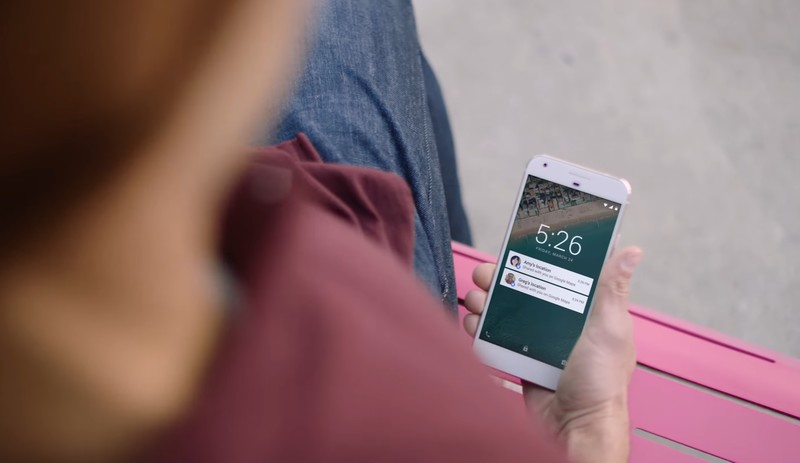
Unless you’ve received the most recent Google Maps update, with all of the fun new integrated location sharing features baked right in, you’re kind of screwed right now. Instead of waiting until the Maps update was totally pushed out to every Android user, Google flipped the switch and killed location sharing on Google+ for just about everyone.
That means you have no Google-based location sharing option until the Maps update finishes rolling out, because staged rollouts are awful.
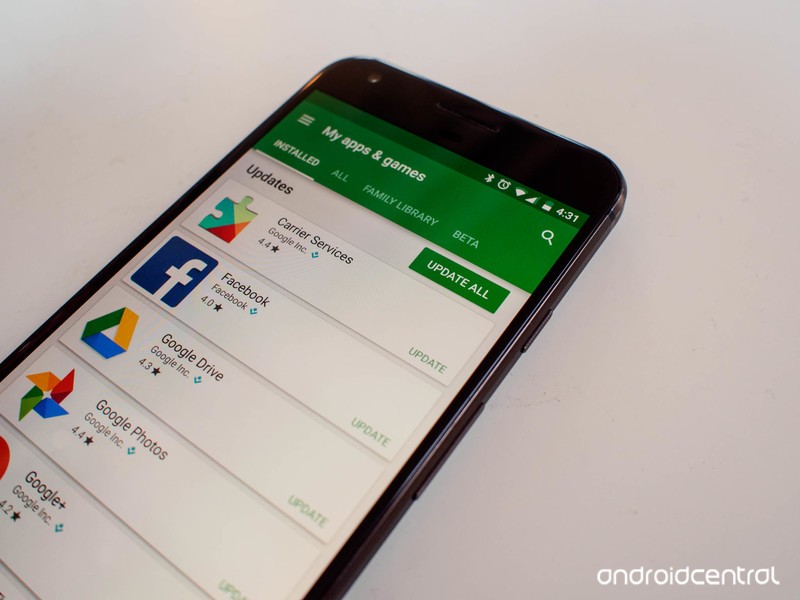
Updating an app for the entirety of Android is hard. There are a lot of us in the world, and to make that download available to everyone at the same time is expensive in several ways. What’s worse, if you send out an update and there’s a bug discovered out in the wild that you didn’t know about, you have to send the update all over again once you fix it.
Google’s solution allows anyone to only send out updates to a small percentage of users at first, and slowly increasing that release group until it reaches 100%. It’s not only a good way to make sure you don’t make your entire userbase angry if something is broken, it’s significantly less expensive to deliver those updates over a longer period of time.
It’s entirely likely this update will finish rolling out by this evening.
But miscommunications like this are the natural consequence of this behavior. I know several people in my immediate social circle with the Maps update already. In fact, my Dad emailed me this morning with a link to add me to his location sharing group on Maps. Because I don’t have the update yet, if I click that link I get redirected to a Maps support page telling me to update the app. Which, obviously, I can’t do yet because the app hasn’t been fully rolled out top everyone yet.
So if you lost location sharing on G+ and don’t have the Maps update yet, the official answer from Google is to be patient. It’s entirely likely this update will finish rolling out by this evening. But that’s never going to be where this stops for some people. Just like when Pokemon Go wasn’t available and people started sideloading dangerous versions of the APK that were available on some random shady website, this is the perfect opportunity for someone to tap that “Install from Unknown Sources” checkbox and leave it unchecked just so they can have this new update.
That’s bad for everyone, and Google not only can but should do better.
HTC might unveil HTC U flagship with ‘touch-sensitive frame’ in April
One day before Samsung announces its next flagship, the rumour mill has spit out a report on that phone’s upcoming, fierce rival: HTC U.
HTC may be struggling when compared to Samsung, but that’s not stopping it from releasing more standout handsets this year. According to Evan Blass of Venture Beat, HTC will soon expand its lineup with the HTC U flagship. The company plans to give the phone an innovative input method called Edge Sense. Located on the device’s frame, it will allow you to use touch gestures to control different actions.
Apart from the “touch-sensitive frame”, HTC U, which also goes by the codename HTC Ocean, is expected to feature a 5.5-inch WQHD (2560×1440) display, Qualcomm Snapdragon 835 chip, 12-megapixel rear camera, 16-megapixel front camera, 64GB or 128GB of storage, and a microSD card port. And it will run Android Nougat 7.1 with HTC’s Sense 9. See what else it’s expected to feature in our round-up:
- HTC Ocean: What’s the story on HTC’s next flagship?
HTC U is the phone’s rumoured retail name. It will actually be the third handset in the U lineup, following the HTC U Play and HTC U Ultra, which debuted in January. We’ll know more about how this phone will compare to the new Samsung Galaxy S8 soon, as Samsung is set to announce its device on 28 March, while HTC will show off its HTC U sometime in mid to late April, according to Blass.
HTC U should have a global retail release in early May.
Waze’s ‘Order Ahead’ is a quicker way to grab food on the go
Waze is a valuable travel buddy because of the many ways it can assist you on the road. The navigation app helps drivers avoid traffic, it integrates with Spotify, and it has a growing ride-sharing platform. In an effort to aid users in all commute-related endeavors, drivers can now place a Dunkin’ Donuts order right from the Waze app.
Dunkin’ is the first eatery included in Waze’s new “Order Ahead” feature, which made its debut as part of a software update made available today. The ordering process seems clunky initially, but easy enough to use once it’s set up. First, users pick their favorite items via the Dunkin’ Donuts app, using the existing on-the-go ordering feature. Then, the Waze app will locate the nearest Dunkin’ and allow users to place their preset order with one tap.

Google, which owns Waze, says that more companies will be added to Order Ahead soon. As The Verge notes, restaurants like McDonald’s, Taco Bell and Starbucks have mobile ordering capabilities in their apps, so it seems likely Waze will integrate with them at some point. Order Ahead is meant to be used before you hit the road for obvious safety reasons, but as The Verge points out, the feature could be particularly valuable in self-driving cars. Autonomous vehicle technology is quickly evolving, so adding features like these could make Waze more versatile in situations when operating a car doesn’t require as much of our attention.
Order Ahead is a promising addition to Waze, but it could also be a storage nightmare if apps for each supported restaurant need to be installed on your phone. If Waze eventually manages true integration with all of your favorite dining destinations, though, it could become a killer all-in-one driving app.
Images: Mike Mozart via Flickr (Dunkin’ Donuts sign, lead); Waze via Dunkin Donuts (App screenshot)
Via: The Verge
Source: Dunkin’ Donuts
Uber is just as white and male as every other tech company
Uber is aware that its culture needs to change, and that means understanding what its culture is. To that end, the ridesharing giant has posted its first-ever diversity report… and it’s clear that the company suffers from the same homogeneity problems as its tech industry peers. Women represent 36.1 percent of its global workforce, and that number plunges to 15.4 percent when you look at technical roles. And not surprisingly, there’s not a lot of cultural variety. In the US, just under half (49.8 percent) of Uber employees are white, while 30.9 percent are Asian. And those figures are exaggerated at the top — 22 percent of executives are women, and 76.7 percent of them are white.
Our TechCrunch colleagues note that the figures put Uber squarely in the middle of the pack. It has a higher ratio of women than Apple and Facebook (both 32 percent), but it’s well behind Airbnb and Pinterest (43 and 44 percent). There’s a similar issue with race: although Uber easily trounces Airbnb, Facebook and Pinterest in terms of cultural representation (roughly 10 percent of their workers are non-white/non-Asian), Apple can point to its 21 percent figure.
Uber is also continuing to jab the White House by pointing out that 15 percent of its American employees are relying on work visas. As a whole, Uber’s US team represents 71 countries.
There aren’t any concrete plans to improve ratios at Uber, but CEO Travis Kalanick is quick to characterize this as a “first step.” You need data to take action, after all. And the company is definitely doing something. It’s pledging $3 million over the next 3 years toward groups that support women and minorities in tech, and it’ll cooperate with external diversity experts to help effect change. The question is whether or not this is enough. There’s already skepticism that Uber will properly address reports of rampant sexism in its ranks, let alone shift its hiring practices.
Via: TechCrunch
Source: Uber (1), (2)
Trump rolls back Obama-era climate change policies
President Donald Trump has signed an executive order that rolls back policies designed to combat climate change implemented by former President Barack Obama. The order is a broad stroke, touching everything from federal policy-making to Energy Star regulations on home appliances. Today’s move targets the Clean Power Plan, allowing the Trump administration to rewrite carbon emission rules for new and existing power plants. It also restarts the federal coal leasing program, enabling energy companies to once again buy the rights to mine on federal lands.
The government no longer has to consider how federal actions might impact climate change when conducting reviews under the National Environmental Policy Act — this includes construction like the Keystone XL oil pipeline. The Obama administration introduced the “social cost of carbon” metric, which gauged how global warming affected everyday life for American citizens, but today’s executive order repeals this measurement.
Trump says the order is meant to foster job growth in the US energy market. During his campaign, he repeatedly promised to revitalize the coal industry specifically. As he signed the executive order at the headquarters of the EPA today, Trump again said he would “end the war on coal and have clean coal, really clean coal.”
In 2016, 1.1 million people worked to generate power in the traditional oil, coal and gas industries, while 800,000 people worked in low carbon emission fields, including renewable and nuclear power, according to an annual report from the Department of Energy.
However, the market for clean energy is growing: As of May 2015, solar employed 260,000 people in the US, compared with 70,000 coal industry jobs, according to the Bureau of Labor Statistics. Meanwhile, the US solar energy workforce increased by 25 percent and wind employment rose by 32 percent last year, the DOE reports.
Environmental groups, activists and scientists have opposed Trump’s plans to ignore climate change as federal policy, and today the World Wildlife Fund issued a statement urging the president to reconsider his executive order.
“This decision ignores the sweeping actions already being taken by companies, states, cities and communities across America, who are creating a future powered by clean energy, and who must now pick up the mantle of US climate leadership without the support of our federal government,” the WWF writes.
Trump has historically called global warming a hoax and his pick to lead the EPA, Scott Pruitt, this month suggested carbon emissions weren’t a primary contributor to climate change, despite overwhelming scientific evidence to the contrary. Trump additionally wants to gut the EPA.
Source: Associated Press
 AIVAnet