


JavaScript-Based Safari Ransomware Exploit Patched in iOS 10.3
iOS 10.3, released to the public this morning, fixes a bug that allowed scammers to attempt to extort money from iOS users through a JavaScript pop-up in Safari.
As explained by mobile security firm Lookout (via Ars Technica), the scammers targeted iOS users viewing pornographic material and abused JavaScript pop-ups to create an endless pop-up loop that essentially locked the browser if the user didn’t know how to bypass it.
Using “scareware” messages and posing as law enforcement, the scammers used the pop-ups to extort money in the form of iTunes gift cards from the victim, promising to unlock the browser for a sum of money.
The scammers abused the handling of pop-ups in Mobile Safari in such a way that a person would be “locked” out from using Safari unless they paid a fee — or knew they could simply clear Safari’s cache (see next section). The attack was contained within the app sandbox of the Safari browser; no exploit code was used in this campaign, unlike an advanced attack like Pegasus that breaks out of the app sandbox to install malware on the device.
The scammers registered domains and launched the attack from the domains they owned, such as police-pay[.]com, which the attackers apparently named with the intent of scaring users looking for certain types of material on the Internet into paying money.
The endless pop-up issue could be fixed by clearing the Safari cache, but many users likely did not know they didn’t need to shell out money to regain access to their browsers.
Pop-up scams are no longer possible with iOS 10.3, as Apple has changed the way pop-up dialogs work. Pop-ups are now per-tab and no longer take over the entire Safari app.
Related Roundup: iOS 10
Discuss this article in our forums
What’s on TV: ‘Planet Earth II,’ ‘Review,’ ‘Legion’ and ‘Walking Dead’ finale
This week it’s time to pick up some new demo material for your Ultra HD television, since Planet Earth II is available in 4K and HDR. Other than that it’s a big week for finales, with Legion and The Walking Dead wrapping up their most recent seasons and my personal favorite Review calls it a series. For gamers, MLB The Show 17 arrives, along with new DLC for Mafia III.
On streaming, critically acclaimed film Hidden Figures is available on video on-demand and the last two Fast & Furious movies are available on Ultra HD Blu-ray. Hulu and Netflix also have new series, with Harlots, 13 Reasons Why, Bordertown, Five Came Back and Trailer Park Boys between them. Look after the break to check out each day’s highlights, including trailers and let us know what you think (or what we missed).
Blu-ray & Games & Streaming
- Hidden Figures (VOD)
- Planet Earth II (4K)
- Fantastic Beasts and Where to Find Them (4K, 3D)
- Patriots Day (4K)
- Silence
- The Handmaiden
- Furious 7 (4K)
- Fast & Furious 6 (4K)
- A Monster Calls
- The Smurfs (4K)
- Blow-Up (Criterion)
- Why Him?
- The Walking Dead: The Telltale Series – A New Frontier, Episode 3 (PC, PS4, Xbox One)
- Mafia III: Faster, Baby DLC (PC, PS4)
- MLB The Show 17 (PS4)
- APB Reloaded (PS4 – 3/31)
- Anoxemia (PS4, Xbox One)
- RBI Baseball 17 (Xbox One, PS4)
- Fated: The Silent Oath (PS VR)
- Kingdom Hearts HD 1.5 + 2.5 Remix (PS4)
- Punch Club (PS4, Xbox One)
Monday
- The Voice, NBC, 8PM
- 24: Legacy, Fox, 8PM
- Dancing With The Stars, ABC, 8PM
- Kevin Can Wait, CBS, 8PM
- WWE Raw, USA, 8PM
- Young & Hungry, Freeform, 8PM
- Man With a Plan, CBS, 8:30PM
- Baby Daddy, Freeform, 8:30PM
- Superior Donuts, CBS, 9PM
- Jane the Virgin, CW, 9PM
- APB, Fox, 9PM
- Cold Case Files, A&E, 9PM
- The Twins, Freeform, 9PM
- The Great Indoors, CBS, 9:30PM
- Rock and a Hard Place, HBO, 10PM
- Scorpion, CBS, 10PM
- The Breaks, VH1, 10PM
- Bates Motel, A&E, 10PM
- Taken, NBC, 10PM
- Quantico, ABC, 10PM
- Desus & Mero, Viceland, 11PM
Tuesday
- The Mindy Project, Hulu, 3AM
- Jo Koy: Live from Seattle, Netflix, 3AM
- The Voice, NBC, 8PM
- The Flash, CW, 8PM
- New Girl, Fox, 8PM
- The Game of Dating (season finale), TV One, 8PM
- WWE Smackdown, USA, 8PM
- The Fosters, Freeform, 8PM
- The Mick, Fox, 8:30PM
- Bones (series finale), Fox, 9PM
- DC’s Legends of Tomorrow, CW, 9PM
- The Challenge, MTV, 9PM
- Switched at Birth, Freeform, 9PM
- Face Off, Syfy, 9PM
- Outsiders, WGN, 9PM
- Trial & Error, NBC, 9 & 9:30PM
- The Americans, FX, 10PM
- The Partner, CNBC, 10PM
- People Icons (season finale), ABC, 10PM
- Rebel (series premiere), BET, 10PM
- The Detour, TBS, 10PM
- Cosplay Melee, Syfy, 10PM
- Stranded with a Million Dollars, MTV, 10PM
- Tosh.0, Comedy Central, 10PM
- Imposters, Bravo, 10PM
- Detroiters, Comedy Central, 10:30PM
- Desus & Mero, Viceland, 11PM
Wednesday
- The Path, Hulu, 3AM
- Harlots (series premiere), Hulu, 3AM
- Shots Fired, Fox, 8PM
- Blindspot, NBC, 8PM
- Catfish, MTV, 8PM
- The Goldbergs, ABC, 8PM
- Arrow, CW, 8PM
- Survivor, CBS, 8PM
- Imaginary Mary (series premiere), ABC, 8:30PM
- Are You the One: All Star Challenge, MTV, 9PM
- Empire, Fox, 9PM
- Criminal Minds, CBS, 9PM
- Law & Order, NBC, 9PM
- The 100, CW, 9PM
- The Magicians, Syfy, 9PM
- Major Crimes, TNT, 9PM
- The Comedy Jam, Comedy Central, 10PM
- Designated Survivor, ABC, 10PM
- Chicago Justice, NBC, 10PM
- Criminal Minds: Beyond Borders, CBS, 10PM
- The Expanse, Syfy, 10PM
- Nobodies (series premiere), TV Land, 10PM
- Legion (season finale), FX, 10PM
- The Quad, BET, 10PM
- Suits, USA, 10PM
- Time: The Kalief Browder Story, Spike TV, 10PM
- Ripper Street, BBC America, 11PM
- Desus & Mero, Viceland, 11PM
Thursday
- Grey’s Anatomy, ABC, 8PM
- The Big Bang Theory, CBS, 8PM
- Supernatural, CW, 8PM
- Powerless, NBC, 8:30PM
- The Great Indoors, CBS, 8:30PM
- Riverdale, CW, 9PM
- Mom, CBS, 9PM
- Chicago Med, NBC, 9PM
- Kicking & Screaming, Fox, 9PM
- Scandal, ABC, 9PM
- Life in Pieces, CBS, 9:30PM
- The Amazing Race (season premiere), CBS, 10PM
- Review with Forrest Macneil (series finale), Comedy Central, 10PM
- The Catch, ABC, 10PM
- The Blacklist: Redemption, NBC, 10PM
- Colony, USA, 10PM
- Desus & Mero, Viceland, 11PM
Friday
- 13 Reasons Why (S1), Netflix, 3AM
- Five Came Back (S1), Netflix, 3AM
- Bordertown (S1), Netflix, 3AM
- Trailer Park Boys (S11), Netflix, 3AM
- Dinotrux (S4), Netflix, 3AM
- The Discovery, Netflix, 3AM
- Tangled: The Series, Disney, 7:30PM
- The Originals, CW, 8PM
- Grimm (series finale), NBC, 8PM
- Dr. Ken (season finale), ABC, 8:30PM
- Disgraced, Showtime, 9PM
- Tattoo Age, Viceland, 9PM
- Sleepy Hollow (season finale), Fox, 9PM
- Robert Klein Still Can’t Stop His Leg, Starz, 10PM
- Vice, HBO, 11PM
- Animals., HBO, 11:30PM
Saturday
- NCAA Men’s Basketball Tournament Final Four: South Carolina vs. Georgia, CBS, 7PM
- NCAA Men’s Basketball Tournament Final Four: Oregon vs. North Carolina, CBS, 8:49PM
- Fatal Defense, Lifetime, 8PM
- Samurai Jack, Cartoon Network, 11PM
Sunday
- The Good Fight, CBS All Access, 3AM
- The Circus: Inside the Greatest Political Show on Earth, Showtime, 8PM
- Top Gear, BBC America, 8PM
- Once Upon a Time, ABC, 8PM
- The Missing (season finale), Starz, 8PM
- NCIS: LA, CBS, 8PM
- Sunday Night Baseball: Cubs/Cardinals, ESPN, 8:30PM
- Making History, Fox, 8:30PM
- Home Fires (season premiere), PBS, 9PM
- Family Guy, Fox, 9PM
- Time After Time, ABC 9PM
- Big Little Lies (season finale), HBO, 9PM
- Madam Secretary, CBS, 9PM
- The Walking Dead (season finale), AMC, 9PM
- Black Sails (series finale), Starz, 9PM
- Homeland, Showtime, 9PM
- The Last Man on Earth, Fox, 9:30PM
- Into the Badlands, AMC, 10PM
- American Crime, ABC, 10PM
- Feud: Bette and Joan , FX, 10PM
- Shades of Blue, NBC, 10PM
- Billions, Showtime, 10PM
- Trapped, Viceland, 10PM
- Girls, HBO, 10PM
- Talking Dead (season finale), AMC, 11PM
- Crashing, HBO, 10:30PM
The Apple TV Remote app is finally optimized for iPads
No, we still don’t have an iPad version of the Instagram app, but another longtime holdout has gotten some big(ger) screen love. Apple has finally given its Apple TV Remote app a refresh tailored for the slate’s display. The iTunes listing says that in addition to the expected visual improvements, there’s also lyrics and “playlists for music and chapters.” That’s in addition to captions section for movies and TV shows.
Last February, Apple’s Eddie Cue and Craig Federighi said that with the then-forthcoming app that it would be a “full replacement” for the Apple TV remote. At the time, he was speaking directly about how an iPhone armed with the app can be a second controller for games. Now, the same functionality (with Siri voice commands, no less) on a more substantial screen is a reality. Don’t have an iPad? Well, then you’ll have to settle for the usual “general performance and stability improvements.”

Source: iTunes
These are the five coolest things we saw at the 2017 Luxury Technology Show
Last week’s Luxury Technology Show in New York’s Metropolitan Pavilion showcased the very best of high-end tech. In case the $65,000 light therapy bed and $18,000 ultra-secure phone in the foyer weren’t enough to give it away, most everything on display was extremely expensive.
But not everything was priced sky high. Affordable instant cameras and headphones were alos on display, as were apps that cost no more than the price of a couple of Starbucks lattes.
More: Contemplate your lobster via the camera in Dacor’s luxury fridges
Here’s some of the coolest tech we saw.
Lomo’Instant

There’s a burgeoning market for Polaroid-like instant cameras, and Lomography’s Lomo’Instant Automat Glass is one of the best yet. It’s the first full-frame model with a six-element, 38mm wide-angle glass lens and two apertures (f/4.5 and 4/22) — tech that in tandem delivers “unparalleled” low-light performance. An intuitive click-and-stop zoom system and 0.3m focusing distance helps with macro photography, and a built-in flash illuminates dimly lit subjects. Perhaps best of all is the Auto Mode that brings it all together: When enabled, the Automat Glass intelligently tailors the shutter speed, aperture, and flash output to current conditions.
The first available version of the Automat Glass, the Magellan Edition, features a faux-leather cover and geometric design inspired by “pioneering voyages and stargazing observatories that paved the way for new discoveries.” It starts at $189, and ships bundled with a 0.1m close-up lens attachment, a multi-exposure lens, a remote control lens cap, and a colored gel filter.
LightStim LED Bed

LightStim sells a whole range of pricey therapeutic products, but the company’s flagship is a bed outfitted with 18,240 LED lights — the first and only LED bed to gain over-the-counter clearance with the Food and Drug Administration. It packs individual temperature-controlled modules that “help encourage the release of nitric oxide and ATP,” which ostensibly “increase [overall] stamina and performance.” The company’s advertising paints it as the pain-reducing, wrinkle-removing holy grail of wellness.
So what’s it feel like, exactly? Basically a warm bed. It’s not as toasty as a tanning bed, but you’ll emerge from the LightStim’s glass surface flushed and thirsty. LightStim claims the discomfort is worth it, pointing to more than 200 medical and university studies showing that LED light therapy protects against UV damage, cardiovascular disease, heart attacks, and strokes. Testimonials from customers claim that it enhances post-exercise recovery and muscle regeneration. For the base price of $60,000 base price, that’s the least it could do.
Vinci Smart Hearable

Headphones generally aren’t the most interesting gizmos in the room, but Vinci Smart Hearable wants to change that. The Indiegogo-backed cans pack a touchscreen computer running a full-blown operating system, including apps like Spotify and SoundCloud. Amazon’s Alexa assistant is built in — you can ask the Vinci to play a song, answer an incoming call, or read a text message with a simple voice command. An integrated heart rate monitor, meanwhile, adjusts the tempo of your tunes on the fly.
There’s more to the Vinci than meets the eye. A proximity sensor automatically pauses the music when you take the headphones off, and a SIM card slot lets you stream music without Wi-Fi. There’s 16GB of storage for apps, music, and more. And a special mode taps the Vinci’s twin microphones to create binaural 3D audio recordings.
The $100 Vinci is nothing if not ambitious, but there’s work to be done — in our brief time with the headphones, we couldn’t get Alexa to work properly. Company reps assure us, though, that the software is a work in progress.
Ono 3D printer

3D printers are a category of products with boundless potential, but they’re not known for being the most portable gadgets around. Enter the Ono 3D, a 3D printer that aims to squeeze the guts of a 3D printer into a compact, lightweight accessory that’s compatible with any smartphone.
It’s impressively intuitive. Fire up the Ono app, pick a 3D model, and pour resin into the Ono’s reservoir, and you’re well on your way. Once you close the cover and affix your smartphone, the printing process begins, using the white light from the display of your phone to harden the photosensitive resin into a 3D model. The entire process takes about two hours.
The Ono 3D printer starts at $100, and began shipping to Kickstarter backers earlier this month after a lengthy delay.
DropCar

Trying to find parking in a city as congested as New York is an exercise in futility most days. That’s where DropCar comes in: For a monthly fee, you get an on-demand valet who can meet you at a specified address, take your car, and bring it back when you need it.
On-demand valet costs $15 an hour and up, and monthly parking services start at $350. For a little more, you get extras like a full tank of gas and a car wash.
If the idea of leaving your car with a relative stranger is off-putting, DropCar assures us that its drivers and valets are carefully screened and undergo “rigorous” training. They’re also monitored by Zendrive, a technology that uses sensors on a smartphone to measure and improve driving behavior.
DropCar is a New York-only affair for now, but the company is planning an expansion to other metro areas in the coming months.
These are the five coolest things we saw at the 2017 Luxury Technology Show
Last week’s Luxury Technology Show in New York’s Metropolitan Pavilion showcased the very best of high-end tech. In case the $65,000 light therapy bed and $18,000 ultra-secure phone in the foyer weren’t enough to give it away, most everything on display was extremely expensive.
But not everything was priced sky high. Affordable instant cameras and headphones were alos on display, as were apps that cost no more than the price of a couple of Starbucks lattes.
More: Contemplate your lobster via the camera in Dacor’s luxury fridges
Here’s some of the coolest tech we saw.
Lomo’Instant

There’s a burgeoning market for Polaroid-like instant cameras, and Lomography’s Lomo’Instant Automat Glass is one of the best yet. It’s the first full-frame model with a six-element, 38mm wide-angle glass lens and two apertures (f/4.5 and 4/22) — tech that in tandem delivers “unparalleled” low-light performance. An intuitive click-and-stop zoom system and 0.3m focusing distance helps with macro photography, and a built-in flash illuminates dimly lit subjects. Perhaps best of all is the Auto Mode that brings it all together: When enabled, the Automat Glass intelligently tailors the shutter speed, aperture, and flash output to current conditions.
The first available version of the Automat Glass, the Magellan Edition, features a faux-leather cover and geometric design inspired by “pioneering voyages and stargazing observatories that paved the way for new discoveries.” It starts at $189, and ships bundled with a 0.1m close-up lens attachment, a multi-exposure lens, a remote control lens cap, and a colored gel filter.
LightStim LED Bed

LightStim sells a whole range of pricey therapeutic products, but the company’s flagship is a bed outfitted with 18,240 LED lights — the first and only LED bed to gain over-the-counter clearance with the Food and Drug Administration. It packs individual temperature-controlled modules that “help encourage the release of nitric oxide and ATP,” which ostensibly “increase [overall] stamina and performance.” The company’s advertising paints it as the pain-reducing, wrinkle-removing holy grail of wellness.
So what’s it feel like, exactly? Basically a warm bed. It’s not as toasty as a tanning bed, but you’ll emerge from the LightStim’s glass surface flushed and thirsty. LightStim claims the discomfort is worth it, pointing to more than 200 medical and university studies showing that LED light therapy protects against UV damage, cardiovascular disease, heart attacks, and strokes. Testimonials from customers claim that it enhances post-exercise recovery and muscle regeneration. For the base price of $60,000 base price, that’s the least it could do.
Vinci Smart Hearable

Headphones generally aren’t the most interesting gizmos in the room, but Vinci Smart Hearable wants to change that. The Indiegogo-backed cans pack a touchscreen computer running a full-blown operating system, including apps like Spotify and SoundCloud. Amazon’s Alexa assistant is built in — you can ask the Vinci to play a song, answer an incoming call, or read a text message with a simple voice command. An integrated heart rate monitor, meanwhile, adjusts the tempo of your tunes on the fly.
There’s more to the Vinci than meets the eye. A proximity sensor automatically pauses the music when you take the headphones off, and a SIM card slot lets you stream music without Wi-Fi. There’s 16GB of storage for apps, music, and more. And a special mode taps the Vinci’s twin microphones to create binaural 3D audio recordings.
The $100 Vinci is nothing if not ambitious, but there’s work to be done — in our brief time with the headphones, we couldn’t get Alexa to work properly. Company reps assure us, though, that the software is a work in progress.
Ono 3D printer

3D printers are a category of products with boundless potential, but they’re not known for being the most portable gadgets around. Enter the Ono 3D, a 3D printer that aims to squeeze the guts of a 3D printer into a compact, lightweight accessory that’s compatible with any smartphone.
It’s impressively intuitive. Fire up the Ono app, pick a 3D model, and pour resin into the Ono’s reservoir, and you’re well on your way. Once you close the cover and affix your smartphone, the printing process begins, using the white light from the display of your phone to harden the photosensitive resin into a 3D model. The entire process takes about two hours.
The Ono 3D printer starts at $100, and began shipping to Kickstarter backers earlier this month after a lengthy delay.
DropCar

Trying to find parking in a city as congested as New York is an exercise in futility most days. That’s where DropCar comes in: For a monthly fee, you get an on-demand valet who can meet you at a specified address, take your car, and bring it back when you need it.
On-demand valet costs $15 an hour and up, and monthly parking services start at $350. For a little more, you get extras like a full tank of gas and a car wash.
If the idea of leaving your car with a relative stranger is off-putting, DropCar assures us that its drivers and valets are carefully screened and undergo “rigorous” training. They’re also monitored by Zendrive, a technology that uses sensors on a smartphone to measure and improve driving behavior.
DropCar is a New York-only affair for now, but the company is planning an expansion to other metro areas in the coming months.
Wearable fingerprint sensor uses whole hand to control multiple smart devices
Why it matters to you
Tapdo makes performing a function as easy as tapping your finger.
Unless you are a few years behind in upgrading your smartphone, chances are that you’ve used a fingerprint sensor. If you have, then you will no doubt have had the revelation about how much quicker it is than tapping in a PIN code or password to unlock your device or purchase an item.
While it’s possible to get your iPhone or Samsung Galaxy to recognize different fingers to carry out the same task, a neat new piece of hardware wants to take things up a level. Called Tapdo, it’s a wearable fingerprint reader that lets you map a variety of shortcuts for your different smart devices to various parts of your hand.
It’s available on Kickstarter starting at $100. Backers will receive their devices, including a battery and rubber wristband, in September.
More: Ingenious accelerometer hack could allow existing smartwatches to identify any object that you grab
“One of our founders developed the innovative interaction concept through his Ph.D. studies in human-computer interaction,” Irina Reimer, Tapdo campaign manager, told Digital Trends. “People are using so many apps on their smartphone every day, but there is no way to control them simultaneously. This is the problem that Tapdo solves. Using different parts of your hand makes interaction fast, intuitive, and discreet.”
For example, imagine controlling your smart home by manipulating, say, your Philips Hue Lights with one finger, your music player with another, and your smart lock with another. In all, there are about 20 functions available, along with If This Then That integration.
Sure, it will take a bit of memorization if you’re mapping the maximum number of shortcuts to your hand, but it’s certainly a smart concept — provided the touch sensor works as well as more established offerings.

The Tapdo button connects to both Android and iOS mobile devices, via Bluetooth LE. Like the fingerprint sensors you’re used to, it boasts haptic feedback to let you know of successful or unsuccessful attempts at reading biometrics — but unlike the fingerprint sensors you’ll have used previously, it is worn in the form of a wristband or as a clipped-on button.
“[The Kickstarter] campaign has the aim to start with the first mass-production batch,” Reimer said. “The plan is to start with the production in the spring months after the Kickstarter campaign, so that initial shipping for pre-orders can start in summer. At the beginning, the product will be available in Europe and the U.S.”
The $100 price tag includes a wristband and clip for the button. Now you just need to remember which finger part you set up for PayPal authentication.
Article originally published in December 2016. Updated on 03-27-2016 by Kyle Wiggers: Added Kickstarter pricing and availability information.
Wearable fingerprint sensor uses whole hand to control multiple smart devices
Why it matters to you
Tapdo makes performing a function as easy as tapping your finger.
Unless you are a few years behind in upgrading your smartphone, chances are that you’ve used a fingerprint sensor. If you have, then you will no doubt have had the revelation about how much quicker it is than tapping in a PIN code or password to unlock your device or purchase an item.
While it’s possible to get your iPhone or Samsung Galaxy to recognize different fingers to carry out the same task, a neat new piece of hardware wants to take things up a level. Called Tapdo, it’s a wearable fingerprint reader that lets you map a variety of shortcuts for your different smart devices to various parts of your hand.
It’s available on Kickstarter starting at $100. Backers will receive their devices, including a battery and rubber wristband, in September.
More: Ingenious accelerometer hack could allow existing smartwatches to identify any object that you grab
“One of our founders developed the innovative interaction concept through his Ph.D. studies in human-computer interaction,” Irina Reimer, Tapdo campaign manager, told Digital Trends. “People are using so many apps on their smartphone every day, but there is no way to control them simultaneously. This is the problem that Tapdo solves. Using different parts of your hand makes interaction fast, intuitive, and discreet.”
For example, imagine controlling your smart home by manipulating, say, your Philips Hue Lights with one finger, your music player with another, and your smart lock with another. In all, there are about 20 functions available, along with If This Then That integration.
Sure, it will take a bit of memorization if you’re mapping the maximum number of shortcuts to your hand, but it’s certainly a smart concept — provided the touch sensor works as well as more established offerings.
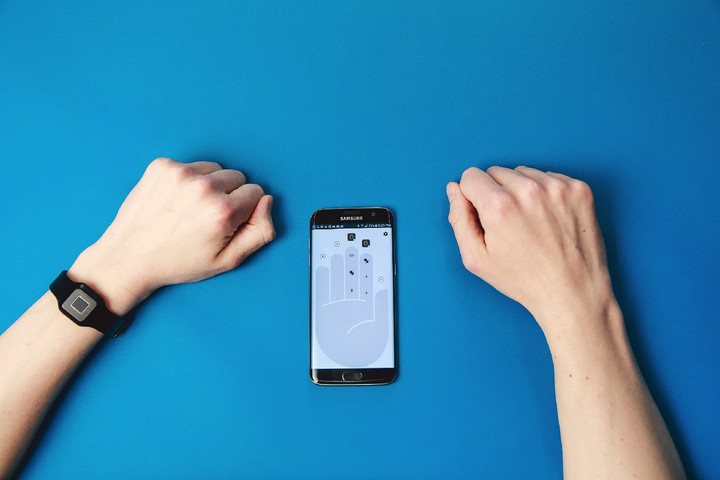
The Tapdo button connects to both Android and iOS mobile devices, via Bluetooth LE. Like the fingerprint sensors you’re used to, it boasts haptic feedback to let you know of successful or unsuccessful attempts at reading biometrics — but unlike the fingerprint sensors you’ll have used previously, it is worn in the form of a wristband or as a clipped-on button.
“[The Kickstarter] campaign has the aim to start with the first mass-production batch,” Reimer said. “The plan is to start with the production in the spring months after the Kickstarter campaign, so that initial shipping for pre-orders can start in summer. At the beginning, the product will be available in Europe and the U.S.”
The $100 price tag includes a wristband and clip for the button. Now you just need to remember which finger part you set up for PayPal authentication.
Article originally published in December 2016. Updated on 03-27-2016 by Kyle Wiggers: Added Kickstarter pricing and availability information.
Smart home system uses predictive algorithms to warn of impending disasters
Why it matters to you
Predictive machine analytics can help keep you and your family safe from possible threats in the home. OnePrevent is the latest example of how.
Thanks to machine learning, connected devices, and the growing range of available sensors, our homes are getting smarter all the time.
But OneEvent Technologies’ new OnePrevent system goes in another direction from optional extra home automation setups by giving you a system that promises to act like one of those Final Destination premonitions and warn you of impending dangers before they strike.
“The OnePrevent system is the first real-world offering of a powerful, predictive analytics engine we’ve developed called OneEvent,” Kurt Wedig, co-founder and CEO for OneEvent Technologies, told Digital Trends.
“The OnePrevent system leverages our cloud-based predictive analytic engine, along with data collected by wireless environmental sensors that are constantly measuring critical data points such as motion, smoke, water, moisture, humidity, temperature, and light to learn what’s ‘normal’ within an environment — and then predict disasters before they transpire by alerting homeowners or building managers when those environmental factors become abnormal.”
More: Halt! A new home security system deploys a drone to patrol your property
According to its creators, in research testing the OnePredict system was able to accurately anticipate fires up to 20 minutes before a regular smoke alarm went off: Providing valuable extra time to act on that information. It promises to be able to make similarly early warnings in events like a flood.

Best of all, despite its tendency to be constantly vigilant, the system’s predictive smarts mean that it won’t file a ton of false positive reports all the time.
“As the system begins to collect more and more data, unique signatures can be assigned to specific events that then trigger decisions to be made within the cloud,” Wedig continued. “By monitoring and collecting data from a multitude of data points, the system is able to learn over time and understand say the difference between you burning a piece of toast, or the building being on fire.”
At $299 for the kit, and $25 per month subscription, OnePrevent certainly isn’t the cheapest option. However, given that the system could quite genuinely save the life of yourself or a family member, maybe this is one time it’s worth splashing out!
Scientists get 3D-bioprinted human cells to grow inside live mice
Why it matters to you
In an important advance on the road to 3D-printed body parts, scientists have shown how bioprinted human cartilage cells can grow inside a mouse.
In what represents an exciting advance for those hoping for 3D-printed body parts, researchers at Sweden’s Chalmers University of Technology and Sahlgrenska Academy have demonstrated the successful implantation of 3D-bioprinted human cartilage in mice.
The printing was carried out using Swedish company CellInk’s Inkredible bioprinter.
“This work involved the bioprinting of human stem cells and human chondrocytes in a biocompatible bioink with the aim to engineer cartilage tissue,” Héctor Martínez, chief technology and scientific officer of CellInk, told Digital Trends. “The engineered grafts were then implanted in a mice model to aid and study their maturation and development.”
3D-printed implants themselves are nothing new. What is new, and potentially transformative, about this work is that the human cartilage grew inside the mice, while blood vessels formed around the lattice-shaped 3D-printed material. After 60 days, what had developed looked a lot like cartilage, which was then stimulated through the addition of stem cells — thereby prompting further cell division.
More: Scientist say this protein could be key to reversing aging process
“What makes this research exciting is the hope, one day, to overcome the limitations of conventional surgery and move closer to a future in which it will be possible to improve the health of people worldwide,” Matteo Amoroso, a consultant plastic surgeon who co-authored a paper on the work, told us. “Our results represent a small step forward, advancing the knowledge in this field, and we are happy for the contribution.”
As to what’s next, Héctor Martínez noted that extensive in-vitro and preclinical studies must now be carried out to assess the development of such engineered tissues, as well as what’s needed to control the tissue development. “That is, we must understand the efficacy and safety of the engineered tissue before it is translated to the clinic,” he said.
We may still be years away from this technology being available for humans, but there’s every reason to be cautiously optimistic.
Apple’s iOS 10.3 update is finally rolling out to the iPhone, iPad, and more
Why it matters to you
Apple’s iOS 10.3 update packs loads of improvements for all your related devices.
After months of anticipation, the newest version of Apple’s iOS operating system — iOS 10.3 — is finally here. In tow with the upgrade is Find My AirPods, a new filesystem, CarPlay improvements, and more.
Here is what you can expect.
Find My AirPods
One of the most significant additions is Find My AirPods, a feature which makes tracking down a pair of Apple’s wireless AirPod earbuds easier than ever.
Unlike Find My iPhone, which uses a missing handset’s GPS, Find my AirPods by querying the device to which your AirPods were last paired (if they were connected to a Mac, for instance, it will request the computer’s location). It will use that to log the earbuds’ location and serve up the info in the Find My iPhone app.
A new file system
The new version of iOS boasts an entirely new file system: Apple File System (APFS). Announced at the company’s Worldwide Developer Conference in 2016, it is designed to scale across devices like the iPhone, iPad, Apple Watch, and more.
Apple File System replaces the 31-year-old hierarchical file system (HFS) for iOS devices — a file system originally designed for floppy and hard disks. It packs better encryption, efficient compression, and a native screenshot feature that can restore files on a Mac or iOS device.
More: Apple’s Find My AirPods features makes it nearly impossible to lose your ‘buds
APFS is also designed to be low latency, which should translate to improved read and write speeds. At WWDC last year, Apple showed how APFS saved time on a file copy compared to HFS.
Thanks to the way APFS calculates available storage, some users might see a slight bump in available storage.
Verizon iCloud calling, Apple ID, and CarPlay improvements
If you’re on Verizon, you will be happy to hear that iOS 10.3 supports iCloud calling features. Once you have installed the update, you will be able to make and receive voice calls on your Mac, iPad, iPod touch, and even Apple Watch.
In the Settings app, there is a new section for Apple ID profiles. You will see your contact information, security settings, payment information, App Store settings, Family Sharing settings, and more on a single page. You will also see every Apple device where you are signed in.
More: When iOS 10.3 ships, developers will gain ability to respond to App Store reviews
CarPlay users get an improved interface. Now, they will see three of the most recent apps in a dock aligned with the left-hand side of the screen — previously, CarPlay users had to return to the home screen to switch applications.
Miscellaneous improvements
That is not all that’s in tow with iOS 10.3. A new section at the top of the iCloud settings page makes it easier to see how your storage space is being used. A new weather layer in Apple’s Maps apps shows the local forecast. Transition animations have been spruced and sped up. And a podcast widget helps keep track of new and existing subscriptions.
Other improvements include the ability to play movies you rented on one iOS device on another device and a tool that allows app developers to respond to user reviews on the app store.
The new version of iOS is rolling to supported iPhones (iPhone 7 and 7 Plus, iPhone 6S and 6S Plus, iPhone 6 and 6 Plus, iPhone SE, iPhone 5S, and iPhone 5C), iPads (iPad Pro 12.9-inch, iPad Pro 9.7-inch, iPad Air 2, iPad Air, iPad 4th generation, iPad mini 4, iPad mini 3, iPad mini 3), iPod touch (sixth generation), Apple TV, and Apple Watch devices gradually. But if you’re the impatient type, check our guide on how to install iOS 10.
 AIVAnet