


Surprise! Biofuels reduce jet engine pollution in the atmosphere, NASA says
Why it matters to you
We’re flying in airplanes more than ever today, so finding a way to cut down on the associated pollution is key. Luckily, NASA has shown that biofuels can help us do just that.
In news that ought to be news for absolutely no one, a new NASA study has confirmed what you probably already knew, or certainly could’ve guessed. As it turns out, when jet engines use biofuels, they emit fewer particle emissions in their exhaust trails. So yes, biofuels are, in fact, better for the environment than their fossil fuel alternatives.
“Using biofuels to help power jet engines reduces particle emissions in their exhaust by as much as 50 to 70 percent, in a new study conclusion that bodes well for airline economics and Earth’s environment,” NASA wrote in a press release this week.
The study involved test flights in 2013 and 2014, in which scientists collected data on engine performance, emissions, and aircraft-generated contrails at altitudes frequented by commercial planes. Contrails are those white plumes you often see in the air left in a plane’s wake — they are, in fact, the result of hot aircraft engine exhaust mixing with the cold air at that altitude.
More: Scientists just found a new way to farm biofuel-producing algae, and it’s 10x faster than before
As it turns out, though, those contrails “create long-lasting, and sometimes extensive, clouds that would not normally form in the atmosphere, and are believed to be a factor in influencing Earth’s environment,” according to NASA. And a major driver of those contrails is soot emissions, which often come from fossil fuels.
” … The observed particle reductions we’ve measured during [this study] should directly translate into reduced ice crystal concentrations in contrails, which in turn should help minimize their impact on Earth’s environment,” said Bruce Anderson, ACCESS project scientist at NASA’s Langley Research Center in Hampton, Virginia.
Planes that participated in the study used a 50-50 blend of traditional aviation fuel and a renewable alternative biofuel. “This was the first time we have quantified the amount of soot particles emitted by jet engines while burning a 50-50 blend of biofuel in flight,” said Rich Moore, lead author of the Nature report.
So rejoice, jetsetters. Soon, you may no longer have to feel as guilty for flying.
DARPA is calling for proposals to detect minuscule magnetic forces in the body
Why it matters to you
Poker tables may need special shielding when pocket-size wands can detect thoughts and intentions.
Uncle Sam’s intrepid scientists are looking for help creating technologies for low-cost devices that can detect the tiniest biological magnetic forces. Researchers at DARPA, the U.S. military’s Defense Advanced Research Projects Agency, have put out a call for proposals to detect the superweak magnetic fields in humans and other biologic objects.
The goal is to open doors to technology that will work outside heavily magnetic-shielded environments to produce sensor systems that could, for example, detect spinal signals, diagnose concussions, and be used in brain-machine interfaces (BMIs) for controlling prosthetics and external machines by thought. The devices must work just about anywhere.
Keep in mind that DARPA’s overall mission is to find solutions to seemingly impossible challenges — what Google might call a “moonshot” is breakfast food for DARPA. The research organization eschews taking the next step, preferring giant leaps such as cardboard drones that deliver payload then disappear, cameras that can see around corners, and building materials that grow on command.
More: If you’re not ready to ‘invent the internet,’ don’t look for a job at DARPA
The agency’s new AMBIENT program (Atomic Magnetometer for Biological Imaging in Earth’s Native Terrain) is “all about ushering magnetic field sensing into a new era in which MEGs (magnetoencephalography), MCGs (magnetocardiography), and an assortment of other wish-list magnetic field sensing techniques become practical realities for a wide range of applications.”
According to DARPA, “Planet Earth has been the biggest buzz kill” holding back biomagnetic sensing. The earth’s magnetic field is a million to a billion times stronger than biology’s “faint magnetic fields” that emanate from human bodies.
Even the latest magnetic field sensors such as Superconducting Quantum Interference Devices (SQUIDs) have a limited range and aren’t reliable when other, much stronger magnetic fields are present, says DARPA. As the agency’s news release states, “Without intense shielding, those magnetic whispers from biology would be lost amidst the blaring din of Earth’s magnetism, even with the best available sensors in play.”
DARPA will host a Proposers Day in Arlington, Virgina, at the DARPA Conference Center on April 3, 2017. Advanced registration is necessary to attend. If you’re interested in submitting a proposal, you can find more information here.
Xperia XZ Premium vs. Xperia XZs: Which slow-mo Sony phone is superior?
At Mobile World Congress in Barcelona, Sony unveiled not one, not two, but four new additions to their Xperia smartphone line. In addition to cheaper models like the XA1 and XA1 Ultra, the much-anticipated XZ Premium was revealed, boasting the powerful Qualcomm Snapdragon 835 processor.
More: Sony Xperia XZ Premium, XZs, XA1 Ultra, XA1: Our first take
The chip’s not the only difference, though; several new features are sure to catch your eye. Keep reading to find out how the Xperia XZ Premium stacks up against its little brother, the Xperia XZs.
Sony Xperia XZ Premium

Sony Xperia XZs

Size
6.1 x 3.0 x 0.3 inches (154.9 x 76.2 x 7.62 millimeters)
5.8 x 2.8 x 0.3 inches (146 x 72 x 8.1 millimeters)
Weight
6.8 ounces (192.8 grams)
5.7 ounces (161 grams)
Screen
5.5-inch IPS LCD capacitive touchscreen
5.2-inch IPS LCD capacitive touchscreen
Resolution
2,160 x 3,840 pixels (807 ppi)
1,080 x 1,920 pixels (424 ppi)
OS
Android 7 Nougat
Android 7 Nougat
Storage
64GB
32/64GB
MicroSD card slot
Yes
Yes
NFC support
Yes
Yes
Processor
Qualcomm Snapdragon 835
Qualcomm Snapdragon 820
RAM
4GB
4GB
Connectivity
Miracast, A-GNSS, CDMA, DLNA, HPSA+, 802.11a/b/g/n/ac Wi-Fi
Miracast, A-GNSS, CDMA, DLNA, HPSA+, 802.11a/b/g/n/ac Wi-Fi
Camera
19MP Motion-Eye rear + 13MP wide angle front
19MP Motion-Eye rear + 13MP front
Video
4K video recording
4k at 30fps, 720p at 960fps, HDR
Bluetooth
Yes, version 5.0
Yes, version 4.2
Fingerprint sensor
Yes
Yes
Other sensors
Accelerometer, gyroscope, proximity sensor, barometer, compass, color spectrum
Accelerometer, gyroscope, proximity sensor, barometer, compass, color spectrum
Water resistant
IP65/68
IP65/68
Battery
3,230mAh
2,900mAh
Ports
USB-C, headphone
USB-C, headphone
Marketplace
Google Play Store
Google Play Store
Color offerings
Luminous chrome, deepsea black
Ice blue, black, warm silver
Availability
Spring 2017
April 5
Price
Unknown
$700
DT review
Coming Soon
Coming Soon
Power and productivity

It’s almost unfair to compare these two phones. The XZ Premium, equipped with a Qualcomm Snapdragon 835 processor (not in any currently available smartphone), is miles faster than the XZs, which is stuck with a that’s-so-last-year Snapdragon 820.
The Premium comes with 64GB of onboard storage, while the XZs includes 32GB or 64GB, depending upon whether you’re rocking a single or dual-SIM setup. Both phones’ capacities can be upgraded via SD cards, and both come with a relatively standard 4GB of RAM.
Neither phone boasts a notable advantage in connectivity, though the Premium uses Bluetooth 5.0, while the XZs uses 4.2. The XZ Premium’s 3,230mAh battery is also superior to the 2,900mAh battery in its sibling, though it does have a bigger, higher resolution screen to power.
Winner: Sony Xperia XZ Premium
Design and display

Julian Chokkattu/Digital Trends
There can be no debate about this: The XZ Premium is bigger, badder, and better looking than the XZs. Wrapped in durable Corning Gorilla Glass 5 and diamond-cut at the edges, the Premium — especially its chrome variant — is a joy to behold. Both phones feature curved edges, though this is more pronounced on the sides of the XZ Premium (which almost feels like one of those old iPod Nanos… you remember those).
Even though large bezels may be out of style, Sony managed to make it work with the XZ Premium — it’s a handsome piece of tech, despite its fatal attraction to fingerprints. When placed side-by-side, the XZs definitely isn’t as eye-catching, but it’s not too shabby. The ice blue model, in particular, is a nice departure from the traditional smartphone hues.
The XZ Premium’s 4K HDR display is absolutely stunning, though it’s likely that the device only runs at 4K when displaying 4K video content, while usually running at a standard 1080-pixel resolution. The “HDR” tag means colors will be more vibrant and blacks will be, well, blacker. The XZs’ 5.2-inch Full HD screen simply can’t compare.
Winner: Sony Xperia XZ Premium
Software

Julian Chokkattu/Digital Trends
Both phones are part of the same Xperia family, and there are literally zero differences between the XZ Premium and XZs in terms of software.
Both phones run Android 7 Nougat, and both come equipped with Sony’s Xperia Actions adaptive software, which learns your behavior over time and makes suggestions (turning down your brightness after dark, for example) to help make your life easier. Technically, all the software on the XZ Premium probably runs a bit faster (because of the processor), but the features are all the same.
Winner: Tie
Camera

This is where the Xperia XZ-series truly shines. Both phones boast 19-megapixel cameras in the rear, with Sony’s Motion-Eye predictive capture technology, which automatically buffers images before they’re taken, so if you time an action shot wrong, you can simply go back and choose from one of four pre-selected frames.
Motion-Eye also allows the XZ Premium and XZs to capture slow-motion footage at 960 frames-per-second. The cameras feature intelligent exposure control, improving image quality in low-light settings, and anti-distortion technology to smooth out photos of moving subjects.
Both phones also boast 13-megapixel front selfie cameras, though the XZ Premium’s has a 22mm wide-angle lens. The only other difference between the models’ cameras is the Premium’s predictive hybrid autofocus, which works with Motion-Eye to improve action shot clarity.
Winner: Sony Xperia XZ Premium
Price and availability

Right now, only the XZs has a set release date: April 5. It’ll cost $700 retail, which means that the Premium — slated for a Spring release, though that’s all we know — is certain to be even pricier.
Unless you’re big into photography (especially of moving subjects), neither of these phones seem like incredible value. If you’re looking to acquire one of the Xperia phones ASAP, you’ll have to go with the XZs, but a little patience will pay off, as the XZ Premium is simply better.
Winner: Tie
Overall winner: Sony Xperia XZ Premium
There are literally zero categories where the Sony Xperia XZs outshines its bigger sibling. Though impatient customers might decide to snag a XZs when it hits shelves on April 5, there’s little other reason to make that choice.
Both phones look to be rather expensive considering their capabilities, but if you’re looking for a big-brand phone that takes amazing photos and 4K video, the XZ Premium is a solid choice.
Germany looks to transform an old coal mine into a new renewable energy source
Why it matters to you
As the world looks for more ways to implement renewable energy, one coal mine in Germany is proving that you can repurpose old technology in new ways.
A coal mine in Germany is entering the 21st century and reinventing itself in the process. The Prosper-Haniel hard coal mine, founded in 1863, once provided fossil fuels that drove German industry for nearly five decades. But now, it’s getting a brand new identity and becoming what Bloomberg calls “a giant battery that stores excess solar and wind energy.”
When it closes in 2018, the coal mine will become a 200 megawatt pumped-storage hydroelectric reservoir, which means it’ll behave as a battery and have the energy to power more than 400,000 homes, according to North-Rhine Westaphalia state governor Hannelore Kraft. So while the mine is remaining true to its roots of providing power to the people, it’s doing so in a new way.
More: Harvard creates a renewable battery that can last for 10 years
Moreover, the same town whose populace has historically worked in the mine will continue to play an integral role in its new function. Kraft noted that those in Bottrop will maintain their livelihoods, helping to provide uninterrupted power for Germany.
“We have a very sympathetic ear” to sustainable and cost-effective storage, Kraft said last week, noting that other mines may also enter a new phase of their lives following the Prosper-Haniel conversion. The goal is to give North-Rhine Westaphalia the industrial-scale storage it needs as it makes headway in its plan to double the share of renewables in its power portfolio to 30 percent by 2025. And as this state begins to go green, so too will the rest of Germany, it seems.
After all, North-Rhine Westphalia is responsible for about a third of Germany’s power, and as the country’s most populous state, is responsible for 20 percent of Germany’s economic output. It also houses utilities — RWE AG, EON SE, Steag GmbH, Uniper SE and Innogy SE — underscoring its (coal-dependent) role as one of Germany’s main power suppliers.
But change is clearly possible, and for the Prosper-Haniel coal mine, it’s on the horizon. And with a bit of work, it looks like the same may be true for the rest of the state, and the country, as well.
Intel’s Optane DC 4800X blurs the line between RAM and solid state storage
Why it matters to you
Intel’s Optane is targeting servers to start, but if it works, it could make tomorrow’s desktop PCs much faster.
We’ve been hearing about Intel’s new Optane storage technology for quite some time, and the included support on Intel’s Seventh Generation Core processor line was all the confirmation we needed it was right around the corner. Now, the first real Optane component has arrived, the SSD DC P4800X Series. But don’t get too excited just yet, as this drive isn’t aimed at home users.
Instead, the first Optane drives are built with enterprise use cases in mind. Intel says the consumer versions will come later, but for now, the DC P4800X is bound for all work and no play. Data centers will be able to leverage the much faster storage solution to handle larger amounts of data without spending a fortune on dedicated RAM.
Still, the technology is worth attention. It holds the potential to dramatically outpace other SSD solutions and reduce latency to speeds more similar to RAM.
What is it?
In a few words, Optane sits somewhere between RAM and a high-end SSD in terms of read, write, and latency. Like SSDs, and unlike RAM, it’s non-volatile, so cutting its power will retain the data. However, it’s capable of producing high speeds and low latency that even NVMe drives would drool over. It’s also far more durable than NAND-based SSDs, although only extensive testing can say for sure exactly how much longer they’ll last.

That’s thank to a combination of Intel’s XPoint technology, and a series of hardware controllers and driver optimizations that allow the drive to communicate at lightning fast speeds over PCIe. It’s a completely different architecture and construction than 3D NAND, which powers Intel’s current enterprise SSD, the P3700.
Business users and server administrators can actually install the DC P4800X, which is available first as a PCIe add-in-card, and later as a 2.5-inch U.2 drive, and then use Intel’s Rapid Storage Technology software to label the drive as memory. Intel’s data relating to the improvements don’t just show nominally increased speed. Depending on what metric you’re using, the drives often break the benchmarks entirely.

That’s a distinct change from the way data centers already leverage SSDs, and Intel is acutely aware of that fact. As such, the chip maker is asking us to change the way we think about storage, and how we measure it, and it comes down to a little-discussed factor known as the queue depth.
Cutting in line
Put simply, queue depth is the number of tasks currently waiting in line to read or write to the drive. On spinning disk drives, these tasks can pile up quickly, leading to a queue depth in the hundreds. During benchmarking, that means the drive is constantly running at its top speed, reading and writing as quickly as possible to push through tasks in its queue.

But according to Intel, modern SSDs aren’t actually stressed in that way. They’re fast enough to chew through their queue rather quickly, and at least in Intel’s testing, most workloads actually keep the queue depth at 32 or lower, so that’s where Optane SSDs are at their fastest. That means they fit into their role as addressable memory quite well, where the queue isn’t as stacked as it might be with a server.
Who is it for?
But the real question a lot of you may be having is why this matters. The drives are insanely expensive, and even if you managed to get Intel to ship you one — or a few dozen, as the case may be — it’s not like any personal software is built to leverage an SSD with a fraction the latency and multiple times the speed of the fastest PCIe NVMe drives on the market.
More: Intel Optane-branded solid-state drive for data centers spotted in leaked specs
Which means its a great fit for servers that need a lot of addressable memory, like RAM, without spending a lot of extra cash on 64 and 128GB DIMMs, which are insanely expensive. It’s not quite as fast as memory, but in a lot of data center situations, the increased speed is enough to come close, depending on the workload.
In these situations, latency becomes a major factor, and that’s another area where the PC 4800X excels. Not only is the latency much lower as stress levels rise, but it’s also more consistent, an added bonus for the people who need to keep these servers running.
It also allows server administrators to push past the typical maximum DRAM limits for Xeon processors, with an effective increase of 8X more capacity on x2 Xeon chips, up to 24TB of total addressable memory from just 3TB.

That means enterprise users driving thousands of systems, or sending and receiving millions of calls from around the world, can reduce their dependence on both traditional SSDs and RAM, lowering costs while providing impressive performance. From universities and chat clients, to Microsoft and MySQL, major players are already gearing up for the DC P4800X release.
What does it mean for you, really?
What we’re seeing here could be the first step towards a new type of storage, and a change in the way systems are built. Major advancements in storage technology like XPoint are going to enable us to start moving away from the sort of tiered storage we’re used to seeing in systems, where lower access times demand smaller storage amounts.
Obviously, Optane isn’t going to have much impact on even PC enthusiasts right out of the gate. Its initial launch is targeting enterprise only. Even if you did decide to buy one, it would be prohibitively expensive, with the 375GB PCIe AIC model carrying a $1,520 MSRP, where a 512GB Samsung SM951 would only cost you about $300. You may also struggle to see real benefit, since the drivers will be designed with enterprise use in mind.
Still, it’s time to start getting excited for a big shift in how system builders approach memory and storage. This technology is new and, if successful, it could actually lead to a future where computers no longer have RAM at all, but instead use a single pool for both long-term and short-term memory allocation.
Before that can happen, though, Optane has to prove that it works, delivers on what it promises, and is reliable enough to last years. Enterprise should prove a good test bed for the technology. If it can pass muster there, then it should be good enough for your home desktop — once the price comes down.
This $15 desk toy will help you regain your focus and destress
Are you a pen clicker? Desk drummer? Toe tapper?
There’s limitless ways people can fidget around when they’re stressed out at work. While fidgeting about at your desk or in your chair has been shown to be pretty good for your own heath, it sure can be annoying for your co-workers. So you need to find a new, discreet, and more efficient way to keep your hands busy so you can stay focused on your work or the meeting you’re sitting in on.
Get your own Stress Block for only $15 Learn more
One of the latest trends out there are little stress toys, which are designed to give your brain a bunch of little buttons, dials, knobs, and wheels to spin. They’re designed to look cool enough to leave on display at your desk, while remaining small enough to slip in your pocket so you can take it anywhere.
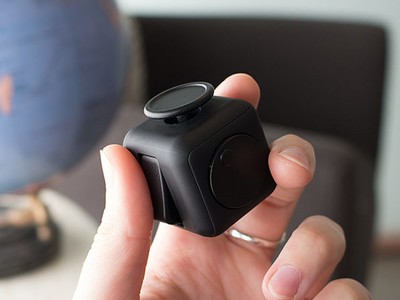
Introducing The Stress Block, a cube that’s loaded with six different sides covered with little distractions for your fingers to explore and play with while the rest of your brain focuses on work. It’s a wonderful way to destress in little moments throughout the day.
You can get one Stress Block for $15 or two for only $28 , which means you could keep one for yourself and gift the second to a friend, family member, or co-worker that you know would love this.
Made of plastic and available in black, each side of this cube has a theme: click, glide, flip, breathe, roll, and spin. You can rotate through all the sides or focus on the ones you love to play with the most — the choice is yours.
Get two Stress Blocks for only $28 Learn more
How to use an Elgato to stream video from your PlayStation 4

Elgato makes streaming more versatile, no matter which service you prefer using.
Sharing your gameplay by streaming is pretty easy and baked into PlayStation 4 if you want to stream to Twitch. If your prefer a different service then you may have taken a look at using an Elgato to help facilitate your gaming. While the initial setup of using an Elgato can seem a bit daunting, it’s actually pretty easy to do. Just give yourself a bit of extra time the first few streams, and you’ll have the entire thing handled in no time flat.
Read more at VRHeads.com
New Galaxy S8 leak reveals colors and pricing
Three colors shown by veteran leaker, alongside euro pricing for phones, desktop dock, 360 camera and new Gear VR.
Veteran leaker Evan Blass has kicked off what might otherwise have been a lazy Sunday with fresh revelations surrounding Samsung’s upcoming Galaxy S8 and S8 Plus. First, Blass gives us a closer look at three of the GS8’s color options — “black sky, orchid grey and arctic silver.”
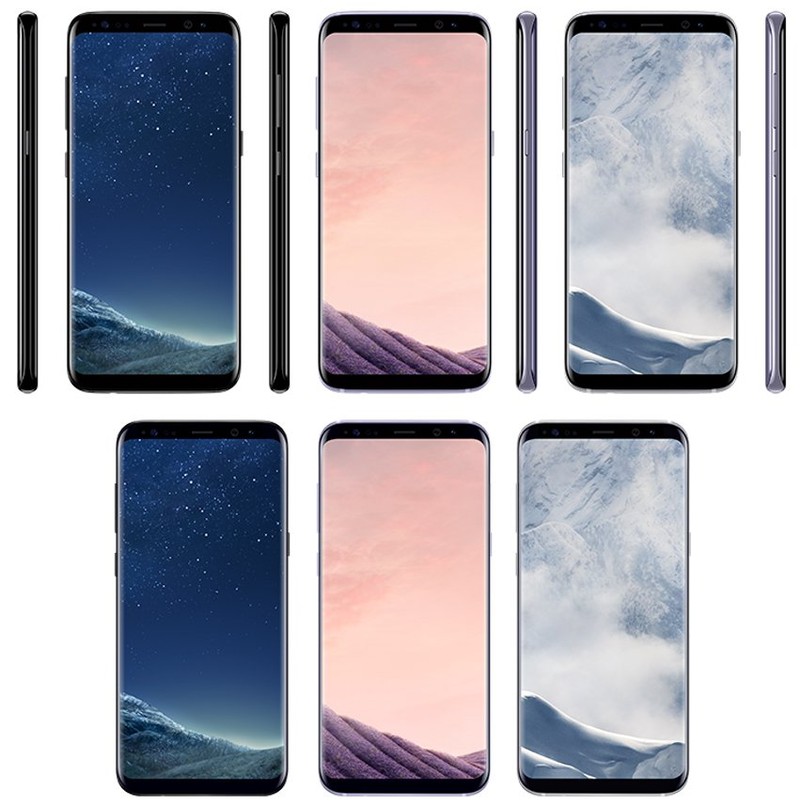
Notably, all three of these colors feature the same black front face, an understandable move given the sheer number of sensors and other cutouts up top. (As we’ve previously seen in this leak of the gold version.) The “black sky” variant is the murdered-out black model we’ve seen in many other leaks, with its pitch-black anodized metal frame. Meanwhile the “arctic silver” model seems to be the version shown in one of the first live leaks back in January. And the grey model, as far as we can tell, is somewhere in between.
It’s unclear how these colors — and others which have been rumored — will be split between various carriers and regions. Samsung has fielded a broad palette of colors in the past, but not all of them have had widespread availability.
Blass has also given us European pricing details for the two phones, along with the DeX desktop dock, the new Gear VR with motion controller and what will presumably be a new Gear 360 camera.
S8 – 799€S8+ – 899€DeX – 150€GearVR – 129€Gear360 – 229€ https://t.co/vVm6DRMkX5
— Evan Blass (@evleaks) March 19, 2017
The prices for the phones are in line with earlier leaks, and pre-order listings (since pulled) from UK retailer MobileFun. As for U.S. prices, expect them to line up right around those same numbers (after tax), on account of the current near parity between the dollar and the euro.
Between the two new phones, rumored new facial recognition features, a new Gear VR and Gear 360, and that intriguing new desktop dock, the March 29 press conference in New York is shaping up to be a bumper event.
Samsung Galaxy S8 and S8 Plus
- Latest Galaxy S8 rumors!
- Galaxy S8 announcement coming March 29 in NYC
- Galaxy S8 release date set for April 28
- Join our Galaxy S8 forums
All LG Watch Style colors are down to $180 at Best Buy
Excellent Style at a stylish price.
The LG Watch Style has seen its first major price cut, not even two months into its retail life. The watch isn’t even available in Canada yet, and already Best buy is cutting the price down to $179.99 for all three colors.
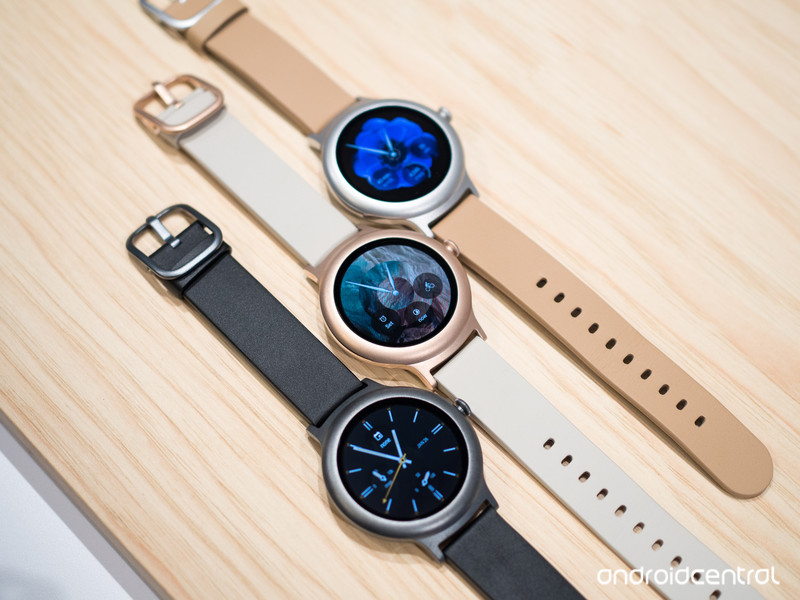
The LG Watch Style isn’t the most future-proofed Android 2.0 watch on the market, but it’s small, comfortable, and runs Wear 2.0 smoothly for your entire day. There’s regrettably no NFC, heart-rate monitoring, or GPS, but the Style is sleek and easily blends into both business casual and everyday outfits easily.
In short, it’s not ugly as sin and will get the job done for most of us who don’t have wrists the size of coffee mugs. And with its first sale, it’s finally down to a price that I’m willing to pay for one. $180 isn’t cheap by any stretch of the imagination, but for a watch without all the bells and whistles that still practically brand-new, it’s quite reasonable.
See at Best Buy
Android Wear
- Everything you need to know about Android Wear 2.0
- LG Watch Sport review
- LG Watch Style review
- These watches will get Android Wear 2.0
- Discuss Android Wear in the forums!
After Math: Potpurri
It’s been a bountiful week for tech news. Google developed an algorithm that can shrink jpeg files by 35 percent, Lyft settled a California lawsuit to the tune of $27 million, NASA has some thoughts on biofuels and a team of researchers have used laser light to dramatically speed up computers. Numbers, because reasons.
 AIVAnet