


LG G6 review

Research Center:
LG G6
Is bigger better? When it comes to screens on our smartphones, yes. But when it comes to the body of the phone that contains it, not so much. It’s the reason why we don’t all carry around a tablet every day. It’s also why so-called phablets often split opinion. The LG G6 laughs in the face of such concerns. It’s the phablet’s worst nightmare, because it puts a massive screen inside a truly compact body, redefining the genre and daring big-screen haters to get over their prejudices.
It’s also LG’s follow-up to the G5, a phone that similarly attempted to redefine smartphones with its modular construction, but didn’t manage to do so. The G6 isn’t as bold or as risky as the G5, so has LG played it too safe this time? We’ve been using the phone for a week or so, and have plenty to say about it.
Making the phablet manageable
Many people struggle to believe the G6 has a 5.7-inch screen, because it feels so small in your hand. It’s easy to stretch your thumb across to the other side of the phone when holding it in one hand, and it remains usable at all times. Try that with any phone with a 5.5-inch screen, and it’s a struggle.
More: LG G6 video teardown, and safety testing lab tour
How has LG achieved this feat? It minimized the size of the bezels and chose an 18:9 aspect ratio, making it longer and thinner than the 16:9 aspect ratio screens found on most other phones. Get used to the look, as the G6 almost certainly won’t be the only 18:9 ratio phone we’ll see in 2017.
The front of the G6 looks very modern, thanks to the rounded corners of the screen. It’s the screen that’s rounded, too, rather than a bezel over the top to give it the look. Combined with the rounded corners of the phone, it helps absorb impacts and lessens the likelihood of catastrophic screen damage. The thin top and bottom bezels make the screen stand out even more, and enhance the minimalist style of the phone. This is a glass and metal phone, with Gorilla Glass 3 on the front, and Gorilla Glass 5 on the back. We are worried that it will break and be expensive to replace, so we highly recommend you buy a G6 case.
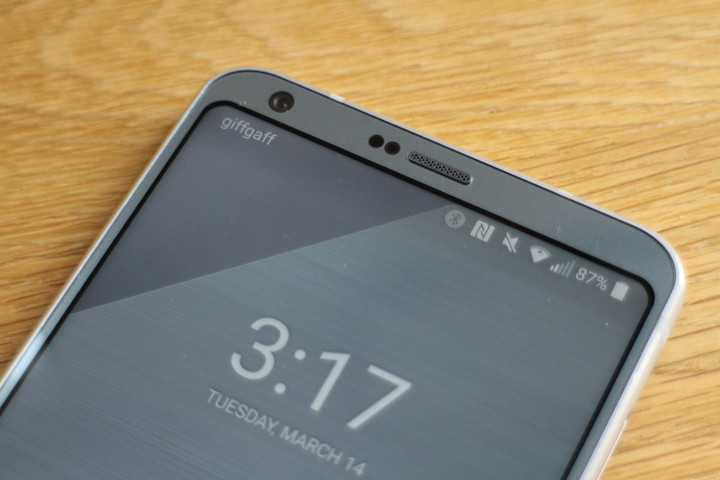
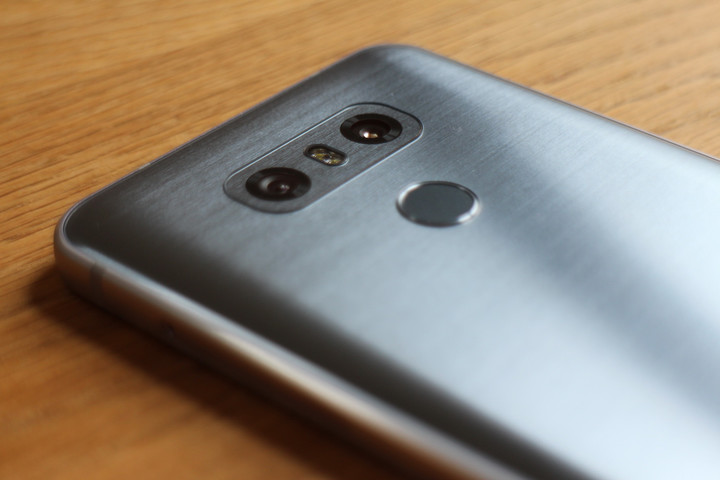
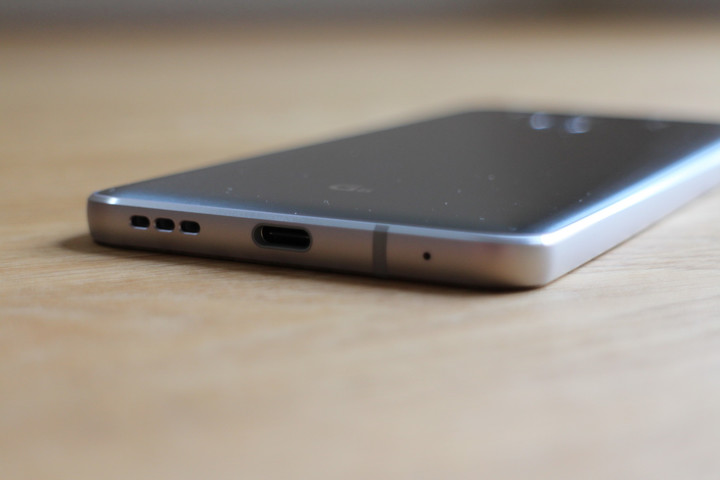

Flip it over, and the rear has LG’s trademark fingerprint sensor which doubles as a power button below the dual-lens camera and flash unit. Apart from a subtle G6 logo, that’s it. Our review model is platinum, which looks fantastic, and isn’t the fingerprint magnet you may expect. The phone also comes in black or white. The G6 is thicker than many phones, but not by much, and it gives you a lot more phone to hold on to.
More: Keep your shiny new LG G6 safe from damage with the best cases and covers
Is the G6 the perfect size and shape for a smartphone? At the moment, yes it is. It combines everything we love about big-screen phones and removes everything we hate about them. There’s no longer a reason to compromise and buy a smaller phone, and no reason to get one bigger than the G6, either. You won’t be prying the G6 out of our hands for a while.
There’s a new screen shape in town
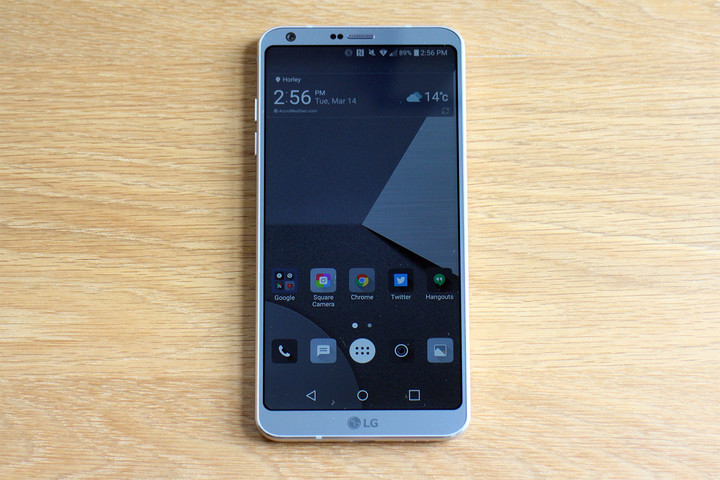
Measuring 5.7-inches and boasting an impressive 2,880 x 1,440-pixel resolution, the G6 has envious screen specs; but those cool rounded edges and overall size of the G6’s screen isn’t what makes it so special. It’s the 18:9 aspect ratio. This also equates to a 2:1 ratio, which means two perfect squares fit next to each other on it, something that LG exploits in the user interface.
Why should you care about the aspect ratio? Isn’t that sort of thing just for cine-geeks? It’s actually the movie industry that may end up making-or-breaking the 18:9 screen. Some filmmakers consider it to be the happy medium between cinema and TV aspect ratios, meaning regardless of what screen a video is watched on, it will retain the same look — no cropping to fit — and stay the same as the director and cinematographer intended. More and more video is being watched on smartphones, so this is a major consideration.
The LG G6 is the phablet’s worst nightmare, because it puts a massive screen inside a truly compact body.
For now, there’s a limited amount of 18:9 content online, mostly streamed through Netflix. We watched Daredevil and Marco Polo on the G6, and both looked superb; filling the screen entirely after tapping a special button in a drop down menu. There’s something very special about seeing a video fill the screen this way. It’s more immersive, more cinematic, and genuinely impactful.
The aspect ratio isn’t the only feature that makes the video experience on the G6 special. It’s the first phone to come with both Dolby Vision and HDR 10 support. This technology previously only seen on televisions is designed to make the image more lifelike with better colors, more accurate contrast levels, and wider viewing angles. There’s not much content out there that takes advantage of it at the moment — it doesn’t make any difference to regular YouTube videos, or the operating system — so it’s only Netflix or Amazon Prime subscribers that may see the benefit.
There’s also the problem with video content that’s not formatted for an 18:9 screen. That content has black bars running down the sides of the video in landscape orientation. If 18:9 video catches on like LG and others hope, this will eventually become less of a problem, but for now, you’ll have to put up with them in most cases. Size oddities aside, the G6’s display is stunning. It’s full of color, detail, and warmth, and a true pleasure to watch.
Andy Boxall/Digital Trends
Although the screen is technically 5.7-inches in size, it doesn’t really look like any other 5.7-inch screen, and some may see the G6’s screen size as a con, due to the taller, thinner aspect ratio. For example, put the G6 alongside the 5.5-inch iPhone 7 Plus and open an app such as Twitter, and the iPhone will display more text and information on one screen than the G6. It’s still a big-screen experience, just unlike those we’re used to.
Slick software and fun apps
Android 7.0 Nougat is installed on the LG G6, and our pre-production review model had the March 2017 security patch installed, making it right up to date. LG’s user interface is placed over Android and has a few additions to make better use of the 18:9 aspect ratio screen. Android purists will note changes to the notification shade, the Settings menu, and the option to enable to app tray, or spread apps across multiple home screens. LG also provides various themes to match the color scheme of your G6, which change backgrounds, wallpapers, and icons.
The G6 is ideally suited to multi-window app use, providing a perfect square for two apps to live in, and it’s easy to activate using a long press of the Android menu key. LG only installs a few of its own apps, such as QuickMemo+, which handily syncs with Google Drive, LG Health, a Tasks app, and its own messaging, music, file manager, and calendar apps. Additionally, there’s an FM radio app, and an audio recorder. Many of LG’s own apps make use of the 18:9 aspect ratio. The Gallery app takes up the whole screen, for example.
It’s LG’s Square Camera that’s the most interesting. It splits the screen into two, with the top half for square format pictures, and the lower half for previews, or custom shots. It’s a shame Square Camera’s functionality wasn’t built into the main camera app, because many people will miss it.
Grid Shot works especially well. The square is broken down into quarters, each filled with a still image or a three second video clip, which when put together tells a neat little story. There’s plenty of room for creativity here, and best of all, the result can easily be shared on Facebook or Twitter, with videos intact. This is essential, and a problem Apple hasn’t overcome with its similarly fun Live Photos feature. If you can’t share them with your friends, we question whether it’s worth it at all. Other features in Square Camera include Match Shot, which is like Grid Shot but with two pictures instead of four, and Guide Shot for matching photos using a handy transparent overlay, so people can capture the same pose or composition on multiple occasions.
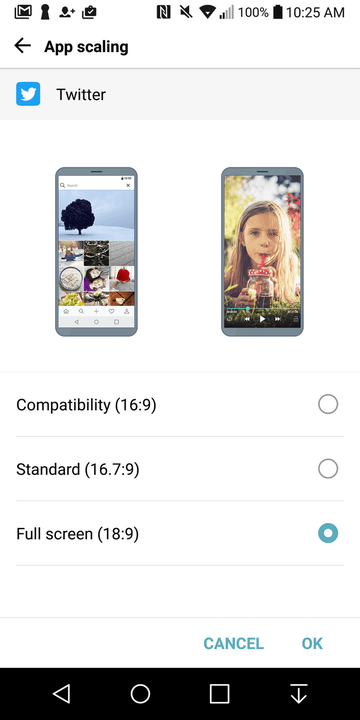
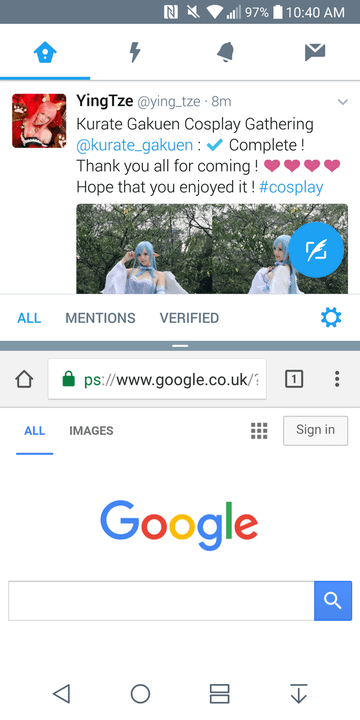
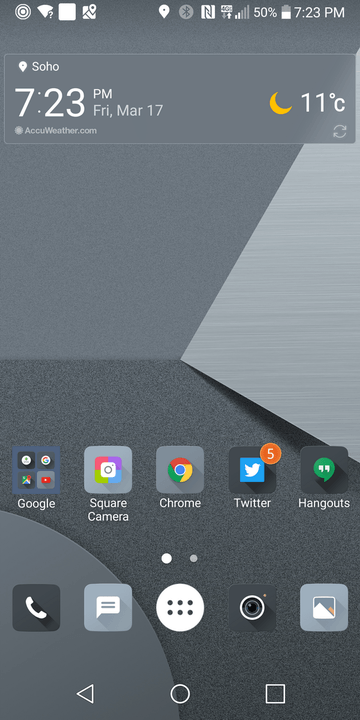
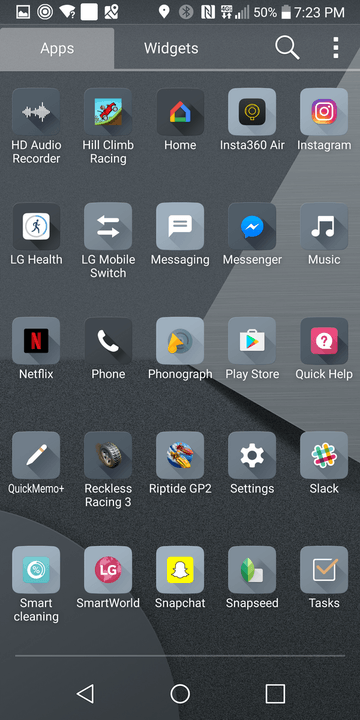
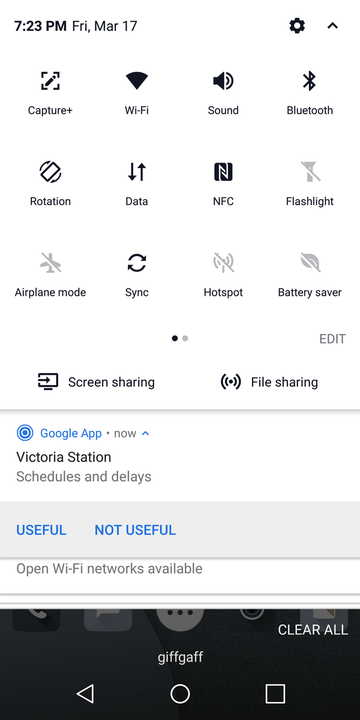
A long press on the home button brings up Google Assistant. The G6 is the first to use the Assistant outside of the Pixel phones, ahead of its wider release on other Android 7.0 Nougat phones. We’ve reviewed a version of the G6 that has software which is 95 percent ready for release, meaning there may be some alterations when the phone goes on sale. However, we experienced no stability or compatibility problems.
More: Feel fly like a G6 with these handy tips and tricks
While LG’s user interface does deviate from standard Android, it’s not unpleasant or slow. Thought and effort has been put into the icon design when you change themes, the color choices that match the body, and the icon curves that match the shape of the screen. LG’s UX 6.0 looks fantastic, and we never felt a desire to change the launcher on the G6. The G6 has up-to-date software now, and we hope that will continue in the future, but that will be down to LG’s update schedule, which unfortunately may lag behind Google’s.
A wonderful wide-angle camera
There are two camera lenses on the back of the G6, both with 13 megapixels. One boasts a wider-angle lens than the other. The 125-degree wide-angle lens doesn’t have optical image stabilization and it has a f/2.4 aperture, while the 71-degree standard lens has OIS and a far better f/1.8 aperture.
You get two different experiences when taking pictures, especially in low light, when the standard angle lens produces pictures with more detail and less noise. However, the G6 can take some fantastic nighttime or evening shots, adding drama and atmosphere in the right environment. Used creatively, and with the right lighting, the wide-angle lens is also more than capable.
LG’s UX 6.0 looks fantastic, and we never felt a desire to change the launcher on the G6.
In daylight, the G6’s camera didn’t enjoy overcast days at the end of British winter time, and struggled to manage contrast — eventually settling on washing out the sky and darkening the landscape. It’s not ideal, and something we’re hoping will be cured when the final software build is released. We also found the screen itself didn’t do the photo justice, and it often ended up looking better than expected when we checked the gallery. Again, something that’s likely to change with a software update. We’re noting it here in case nothing changes.
Show the camera a blue sky, colorful plants, or any close-up material, and it shines. Using the phone in Spain after the launch, we compared the G6 to several other phones including the Pixel XL and the iPhone 7 Plus, and found it produced the best image in several different tests. Most of the time, it came very close to matching the Pixel XL, a highly rated camera phone.
Taking photos with the G6 is enjoyable and addictive, and the wide-angle mode presents new creative opportunities. There’s a manual mode for both stills and video, if you’re confident enough to change settings in search of the perfect picture. LG hasn’t included an editor, though, and you’re given the choice of using Google Photos or a third-party app, such as Snapseed instead.
The G6’s selfie camera has 5 megapixels and a single 100-degree wide angle lens, and like the main camera the two modes are alternated using a button on the screen. There are also several filters to apply, and a chance to manipulate skin tone and artificial lighting sources. While capable enough, selfies taken with the G6 can’t match those of the Huawei P10. The wide-angle lens makes it easy to take great group shots, though, and goes along way to redeeming the front cam’s ability.
LG has also made good use of the extra screen in the camera app, using the top edge (or side edge in landscape) as a preview gallery, showing the last four pictures taken so you don’t have to jump into the gallery app to see them.
Plenty of power and battery life
The LG G6 has a Qualcomm Snapdragon 821 processor inside, plus 4GB of RAM. There will be those who mumble complaints about the Snapdragon 821, whining it’s not a super-new Snapdragon 835. Don’t be one of these people. Ever used the OnePlus 3T or a Google Pixel? There’s more than enough power inside both those phones to keep them fresh for ages, and they both have the 821 inside. LG made the decision to use the 821 in order to get the phone on sale quickly, rather than over the summer, and it shouldn’t put you off at all.
An AnTuTu benchmark result returned a score of 135,032, and 3DMark’s Slingshot Extreme test saw it score 2,102. These are around the same as the scores attained by the Pixel XL, but fall short of the OnePlus 3T. It’s also very close to the LG G5 and the Samsung Galaxy S7.
LG G6 Compared To
Meizu Pro 6 Plus
Xiaomi Mi5S Plus
Xiaomi Mi Mix
Huawei Mate 9
ASUS Zenfone 3 Deluxe Special…
HTC Bolt
Samsung Galaxy Note 7
LG V20
Samsung Galaxy Note 5
Motorola Droid Turbo 2
Huawei Nexus 6P
LG V10
Motorola Moto X Style Pure Edition
Samsung Galaxy Note 4
Samsung Galaxy Note 3
Other complaints will be made about the lack of removable battery on the G6. However, even though the G6 is now a sealed phone, that has given it an IP68 water and dust resistance rating. While having a replaceable battery is great, having to replace the entire phone after you spill a drink all over it isn’t so great. Yes, you’re trading one feature for another, but additional durability protects your purchase instantly, and there are plenty of battery packs out there to buy.
When we first started using the G6, the battery life was poor, barely lasting a mid-to-heavy use day. A software update has improved the situation, where we’re seeing 25 percent of the battery remaining after the same level of use in a single day. That includes photo work, social networking, games, and navigation. Buying the G6 in the U.S. will see your phone come with wireless charging, a feature not included on international versions of the phone. Using the supplied charger and USB Type-C cable charged the 3,200mAh cell reach capacity after about an hour and 30 minutes.
No Hi-Fi audio for most buyers and not enough storage
Watching stunning video is what the G6 is made for, so how about the audio experience? Sadly, it falls short of the video performance. It doesn’t have stereo speakers, just a single one at the base of the phone, and there’s no Dolby Atmos, or even standard Dolby Audio tweaks. The single speaker does a decent job, but it’s overshadowed by the iPhone 7 Plus, Boomsound speakers on any HTC phone, and cheaper hardware like the ZTE Axon 7 and 7 Mini. It’s a shame, when what’s on screen looks so fantastic.
The wide-angle mode presents new creative opportunities.
Additionally, LG has restricted the Quad DAC to devices for sale in South Korea only. LG G6 phones sold in the United states get 32GB of internal storage and a MicroSD card slot as part of the SIM tray, but internationally, larger capacity versions will be sold. LG G6 phones in Europe have neither the Quad DAC or wireless charging.
We’d much rather a single model with all these features inside. LG says the localization is based on buyer preferences, and ensures the price of the phone is kept competitive in different regions.
Price, availability, and warranty
LG hasn’t announced a price for the G6, but carrier partners are slowly revealing their own. Verizon will sell the G6 for $672 from March 17, with release on March 30. We expect it to be widely available elsewhere over the coming weeks. LG traditionally gives you a one-year warranty on smartphones, which covers either repair or replacement, plus any labor charges. You’ll have to send it back to LG if it goes wrong, though.
Our Take
Thanks to the LG G6, having a big, beautiful screen doesn’t mean enduring an oversize phone anymore, and it’s wonderful.
Is there a better alternative?
No. As of the time of writing, the LG G6 is the best Android phone you can currently buy. That may change once Samsung has had it’s say, but only time will tell.
Based on the early price from Verizon, the G6 will cost less than $700, and around the same $650 price point as the G5. This is excellent news, especially as we’re hearing the Galaxy S8 — the G6’s natural challenger — will be up to $850.
The Google Pixel XL is the obvious alternative for stock Android fans who dislike any customization. It costs $750, has a Snapdragon 821 processor, Android Nougat and Google Assistant, plus a highly capable camera. What it doesn’t have is the G6’s sleek body and gorgeous new screen, or a wide-angle camera lens. No other phone offers this combination, and although the Galaxy S8 is likely to have an 18:9 aspect ratio screen, it almost certainly won’t have the wide-angle camera.
The DT Accessory Pack
Olloclip Pivot
$50
LG wireless headset
$70
Motorola Moto 360 Sport
$130
The OnePlus 3T is a strong alternative to the G6 if you want to save a lot of money. It also has a Snapdragon 821 processor, plus 6GB of RAM, and a considerably lower $440 price tag. There aren’t any camera bells and whistles, but it still takes solid shots.
Finally, LG’s own V20 may be considered. It has the same size screen, similar wide-angle camera setup, a degree of durability, and the removable battery. It’s wildly expensive, though.
How long will it last?
LG”s G6 should have a long shelf life of at least two-to-three years. The software is right up to date, and it has Google Assistant already installed, meaning there’s no need to wait for an update. Updates in the future may take longer to arrive than on a Pixel phone, though. That is our only concern and reservation in recommending the G6 over the Pixel XL.
The processor is the only sticking point. We always like to have the latest hardware and software, because it ensures the phone will last many years if we want it to, but the Snapdragon 821 won’t remain Qualcomm’s top chip for much longer. Does it matter? Not really. It won’t suddenly stop working, and you phone won’t suddenly react like it’s pedal-powered. However, if bragging rights are your thing, it’ll soon lose out to the Snapdragon 835. That said, the 821 is tried and tested, unlike the 835.
Should you buy it?
Yes. The G6 is not only the first major flagship smartphone out in 2017 that we really adore, but it’s also a return to what makes us love LG phones — subtle yet beautiful design, a brilliant standout feature, and a cracking camera. The software is good, too, with Google Assistant installed rather than a third-party or untested alternative, ensuring it works cohesively throughout the phone. Best of all, it’s compact and easy to use with one hand, but offers a screen larger than its direct competitors. We love it, and think you will to.
Patagonia’s interactive film experience aims to protect Bears Ears National Monument
Why it matters to you
National Monuments are meant to protect cultural landmarks for generations to come. Patagonia has found a new way to celebrate Bears Ears with a broader audience.
For years, Patagonia worked to protect natural land across the United States. Since 2013, it’s mainly focused on Bears Ears National Monument in Utah and now, its latest initiative is a collection of interactive 360-degree films which highlight the cultural and recreational importance of this threatened region.
This is Bears Ears National Monument is powered by Google’s 360 technology. While anyone has the ability to view it through a web browser, the website is best experienced through a smartphone using a virtual reality headset like Google Cardboard. Through ten short films, users are able to look around and feel immersed as they listen to stories from Native American tribal leaders and outdoor athletes. The experience ends with a call-to-action to the new Interior Secretary, Ryan Zinke, to stand up for public lands.
“Bears Ears National Monument is a sacred home for Native Americans, a world-class location for rock climbers and outdoor enthusiasts, and a mecca for archaeologists,” said Patagonia’s chief executive officer Rose Marcario in the press release. “But it is also a target for looters, mining, and energy companies and elected officials who want to privatize and develop the nation’s public lands. It is our hope that this film will help to defend this national monument by bringing it to life and spurring action to protect this American treasure.”
Anyone who visits the website has the ability to choose how they want to experience it by selecting either a cultural or sports aspect in whichever order they like. During some of the content, viewers explore walls of petroglyphs as they simultaneously learn from a Hopi archaeologist. Additionally, Navajo Elder Willie Grey Eyes tells stories of his ancestors as he journeys through a narrow canyon. For the adventurous, one video even has viewers climbing the North Six Shooter tower with Tommy Caldwell.
More: Two brothers are obsessively filming every national park, with spectacular results
Patagonia founder Yvon Chouinard wrote an open letter to Utah Governor Gary Herbert earlier this year and in it, he demanded Herbert to stand up for public lands. After doing the opposite and signing a document asking President Trump to rescind the Bears Ears National Monument, Patagonia responded by boycotting Outdoor Retailer — a $40 million industry trade show — as long as it was in Utah. Days later, the Outdoor Industry Association followed and is now searching for a new home for the show.
The Android O rumor game has officially started, and here’s what we think

All the things that nobody knows but are fun to guess about. It’s that time!
Everyone has a list of things they hope to see in Android O. Some make a lot of sense and there’s a good chance we’ll see them, others are just pipe dreams. But now that the time for a new version of Android to be announced is getting closer, the guessing games can begin!
9to5 Google has a list of features they say might show up in Android O. They tell us we’ll see a new notification system, badges for application icons, picture-in-picture mode for multi-window, better text selection, and an assortment of other things that sources say are coming. You should go give it a read.
The people who have the answers are the people are keeping quiet.
Some of what they are saying matches what we’ve heard, some is close and gives more insight to our rumors, and some of the supposed features are dead wrong according to what we’ve heard. That’s how the rumor game is played — you get a little bit of good info and a little bit of bad info and mix it up with a whole lot of vague info.
For what it’s worth, our sources tell us that Android O will be about putting Google Assistant to work. Assistant will live as a system aware entity, much like Google Now did in previous builds, and be there to integrate with the things you’re doing and with ways to integrate into other applications that aren’t Google Allo. There may be app badges in a new launcher or even smart text selection and gesturing. But let’s be clear: the only people who actually know anything aren’t talking.
It’s fun to guess and play the game anyway, so we all will play it. Let’s hope that Google tells us what we want to hear at Google I/O 2017 in May. For now, let’s play — what do you think will be in Android O? Your guess is as good as anyone else’s!
Chat all things Android O in the AC forums
Guess the Android O name in our official guessing forum post!
Android Nougat
- Android 7.0 Nougat: Everything you need to know
- Will my phone get Android Nougat?
- Google Pixel + Pixel XL review
- All Android Nougat news
- How to manually update your Nexus or Pixel
- Join the Discussion
Pre-order a Samsung Galaxy Tab S3 and get some great free stuff

A great way to soften the blow to your wallet.
What’s better than a brand new Galaxy Tab S3 and its gorgeous screen? A brand new Galaxy Tab S3 with a free keyboard cover or 64GB SD card!
Folks in the United Kingdom of Great Britain and Northern Ireland who pre-order a Galaxy Tab S3 through Samsung eShop before March 31 will be gifted a fancy keyboard book cover. These keyboard covers are priced at £119, so this is a really great deal and softens the blow that the £600 tablet gives to your wallet.
A good keyboard changes the way you can use a tablet and what used to be just something to consume your media or play a game or two is now a more productive part of your life. When you have to edit a document or work on a spreadsheet while you’re on the go, a good tablet with a good keyboard is the only way to do it.
The Tab S3 keyboard attaches with magnets and while putting things together can be a bit fiddly, once in place, it really becomes a part of the hardware and everything looks — and works — great.
If you’re stateside, the Tab S3 pre-orders start March 17 and it checks in at $599. You’ll also be able to see it in your local Best Buy starting March 24 if you need to hold it and see that screen before you dole out some cash.
When you pre-order, Best Buy has a care package for you that includes a six-month subscription to Webroot software and a 64GB Samsung microSDHC Class 10 UHS-1 Memory Card. That gives you room to store all your photos or a handful of full-length movies or about a gazillion songs. And it’s free, so everything will look or sound a tiny bit better when you remember you didn’t have to buy the SD card.
See at Best Buy
You can see everything you need to know about the Tab S3 in our hands-on preview. Peep the video below!
Facebook videos now auto-play with sound on: Here’s how to stop it
Facebook’s auto-playing videos in the news feed are tolerable – even enjoyable – because they’re muted by default.
But that’s about to change.
Going forward, videos will now automatically play with the sound turned on. Facebook recently announced the change in a blog post, saying that “as people watch more video on phones, they’ve come to expect sound when the volume on their device is turned on.” It’s been testing the sound-on feature and claims to have received “positive feedback”, so it’s decided to slowly roll it out to more users.
Previously, videos in the news feed were silent until you tapped them to listen. Now, unless your phone is on silent, sound will fade in and out as you scroll through videos on your news feed. If you hate that, no worries. We’ve figured out how to disable the new feature so that videos continue to play muted by default in your news feed.
Here’s what you need to do.
How to mute Facebook auto-play videos
If videos are still silent by default, or if you don’t see any of the following settings listed in the instructions below, the update probably hasn’t rolled out to your Facebook app. Be sure to update the app before tinkering around in Facebook settings.
iOS
- Tap More (the button with three horizontal lines – usually it’s near the bottom-right)
- Tap Settings
- Tap Account Settings
- Tap on Sounds
- Disable ‘Videos in News Feed Start With Sound’
Android
- Tap More (the button with three horizontal lines – usually it’s near the top-right)
- Tap App Settings
- Disable ‘Videos in News Feed Start With Sound’
Web
- If you’re on a desktop, you will need to mute your system, or you can use a Google Chrome extension such as AutoMute or Mute Tab.
Is that it?
Yep. Well, if you don’t want any video to autoplay, which could spare you data allowance, follow the instructions on this FAQ page.
LG sweetens its G6 deal with a free TV
LG wants you to take a look at its upcoming G6 smartphone so badly that it’s partnered with Sprint and Verizon to offer a fairly ridiculous deal. When you pre-order the G6, each carrier will give you a free big screen TV. That’s in addition to the free Google Home already on offer.
This isn’t the first time a phone maker has offered a TV with a new smartphone, but the size of the prize has definitely gotten larger. Samsung only offered 32-inch TVs with the purchase of its Galaxy S7 at Best Buy last year.
The new G6 handset will be available on April 7 at all four major US carriers. Prices for the device will range from $650 to $720 with various monthly payment options, depending on which convoluted pricing plan you opt for. Verizon will give you a 43-inch Smart TV with your pre-order, while Sprint super sizes their deal with a 49-inch LG HDTV.
Neither AT&T nor T-Mobile have a television on offer, but AT&T will give you a free LG Watch Sport with your pre-order. T-Mobile will hand you a Home device but no TV — they’ve got the lowest price for the G6 at $650. If you’re looking to add to your gadget pile at home, you can pre-order the LG G6 at AT&T, Sprint and Verizon right now, with T-Mobile pre-orders starting soon.
Via: Mashable
Source: Verizon, Sprint
Owners of bricked G4 and V10 phones sue LG
It’s been years since LG’s G4 and V10 smartphones launched, but the people burned by a flaw that made those devices non-functional haven’t forgotten. Four G4 and V10 owners filed a class-action lawsuit against LG earlier this week, alleging that the company “was aware, or reasonably should have been aware” of a hardware flaw that would force those two smartphones into a “boot loop” — a state of endless rebooting that basically made the devices bricks. The filing (obtained by Ars Technica) goes on to say LG failed to make customers whole again by refusing to perform repairs or offering those customers refurbished units that were as prone to boot loop syndrome as the devices sent in for repair in the first place.
This lawsuit is the latest development in a smartphone odyssey that has lasted almost since the launch of the G4 itself. So far as we can tell, the first reports of bum G4s started surfacing in the tail-end of 2015, mere months after the phone launched. It wasn’t long before YouTube videos on the matter started gaining traction and threads on Android enthusiast forums stretched into hundreds of pages. The problem was undeniable, and LG wasn’t responding fast enough.
The company eventually admitted in January 2016 that the boot loops were caused by a “loose contact between components” — more specifically, G4 owners figured out the phone’s processor was slowly being disconnected from the motherboard, with prolonged periods of lousy performance often preceding the eventual boot loop. And since the LG V10 was more-or-less a hardened version of the G4 with better audio, people reported similar issues with the newer phone, too. At the time of disclosure, LG told its customers to contact the carrier where the phones were purchased or an LG service center for repair. This is when things started to get really dicey.
As mentioned, this lawsuit has multiple plaintiffs, each with a unique story of getting screwed. One person bought a V10 that fell prey to the boot loop issue, sent it off for repair at an LG service center, and received a “fixed” phone that boot looped right out of the box. (The carrier in this case, T-Mobile, eventually swapped that V10 for a refurb.) Another plaintiff bought two G4s prior to LG’s admission — AT&T replaced one G4 twice, and LG refused to repair the other when it failed this year because it was out of warranty. One more: a plaintiff received two G4 replacements from Verizon, contacted LG about it, and was told she would receive neither a refund nor a fully functional phone. More than a year had elapsed since the sale of the original, defective phone, but refusal to handle a known issue is really something.
While subsequent phones like the G5 and V20 were mostly free from the flaw, LG’s handling of the boot loop problem easily eroded some people’s faith in the company and its work. LG hasn’t returned our requests for a comment on the matter, but we’ll keep you posted as things progress. Who knows? Maybe you’ll wind up getting a paltry check in the mail down the road as a result of all this.
Via: Ars Technica
Infrared light could someday deliver super-fast WiFi
WiFi has become essential to our everyday lives, which is why slow speeds piss us all off. Luckily, a PhD student in the Netherlands has come up with a potentially groundbreaking idea: using infrared rays to carry wireless data to your laptop or smartphone.
The capacity of the proposed system is massive, with more than 40 gigabits per second possible per light ray. Contrast that with current 802.11ac, which can transmit up to 1 gigabit per second. This new infrared system can target multiple devices at once, is cheap to set up and doesn’t have any issue with radio interference, unlike traditional WiFi. The research team has only tested download speeds and only across short distances, but the potential is clear.
This new concept won’t simply outstrip current WiFi speeds and provide interference-free connections. There are no moving parts here, making power requirements much lower. “Light antennas” radiate infrared light rays at different angles to accurately target many enabled devices at once without getting congested. Of course, since infrared won’t go through walls, you’ll need an antenna in each room. Infrared light is harmless to the human eye, so you won’t have to avert your gaze, either.
Other light-based WiFi solutions have been limited to slow speeds in the past and relied on LED bulbs. Keeping the lights on all the time seems untenable at best, and it’s pretty easy to block regular light with your hand. This much more robust infrared light concept earned Joanne Oh her PhD at the Eindhoven University of Technology in the Netherlands.
Other PhD students at the university are working on ways to track the location of wireless devices, while still others are figuring out how to connect the light antennas with fiber-optics. Project head Tom Koonen thinks it won’t be too long before we see this technology in stores and in our homes, estimating a short five years until we start seeing light-enabled WiFi devices like laptops and video monitors.
https://phys.org/news/2017-03-wi-fi-rays-light100-faster-overloaded.html#jCp
FBI apprehends troll for seizure-inducing Twitter attack
The perpetrator who tweeted a seizure-inducing image to a journalist has been apprehended by the FBI. In December a troll sent Vanity Fair and Newsweek writer Kurt Eichenwald, who is epileptic, a flashing, auto-playing image. Earlier this morning, Eichenwald tweeted that following three months of research, that the Federal Bureau of Investigation has arrested the suspect. Eichenwald says that the perpetrator faces federal charges and will be indicted by the Dallas district attorney (where Eichnwald lives) on “different charges” over the next few days.
Exactly what those will be aren’t clear. The FBI hasn’t issued a press release regarding the arrest as of publication time, and a spokesperson hasn’t responded with additional information yet either. We will update this post when we receive a response.
Combined with the recent arrest regarding a Twitter prank that brought the 911 emergency service to its knees, this is further proof that what you do and say on Twitter can have real-world consequences. Especially, in this case, where it was used to cause harm to a user.
According to Newsweek, some 40 other trolls have sent strobing images to Eichenwald since December, and those accounts have been submitted to the FBI as well. “We’re very gratified that the government has worked hard and promptly to make sure that the person who was responsible for this attack is held to account,” Eichenwald’s lawyer Steven Lieberman told the publication. “It sends an important message that there is no free shot against journalists in the country.”
Lieberman said that this tweet wasn’t an effort to curb free speech, equating it to sending an envelope of Anthrax spores or a bomb to someone. “It wasn’t the content of the communication that was intended to persuade somebody or make them feel badly about themselves; this was an electronic communication that was designed to have a physical effect.”
I want to thank Dallas Police, Dallas DA, US Attorney in Dallas, the FBI & the Dept of Homeland Security who all played a role in this case.
— Kurt Eichenwald (@kurteichenwald) March 17, 2017
Via: The Verge
Source: Kurt Eichenwald (Twitter), Newsweek, Dallas Morning News
Apple paid Chance the Rapper $500,000 for a two-week exclusive
It’s tough for streaming music services to stand out. Cosmetic differences aside, all of them offer virtually the same thing. Each major platform has the songs listeners want, for the most part. One method that services are using to stand out is exclusive releases — even if they’re only exclusive for a short time.
For instance, Apple Music was the only place to stream Chance The Rapper’s 2016 mixtape Coloring Book for the first two weeks after its release. Apple also struck a similar deal for Frank Ocean’s Boys Don’t Cry last year. We had no idea how much this type of arrangement costs until, as The Fader notes, Chance The Rapper pulled back the curtain today. In a series of tweets, the artist said that in exchange for advertising and two weeks of exclusive streaming rights, he was paid half a million dollars.
“I wanna clear things up,” Chance tweeted before revealing that Apple gave him $500,000 for the two-week exclusive. A couple minutes later, he added, “That was the extent of my deal, after 2 weeks it was on SoundCloud for free. I needed the money and they’re all good people over there.”
Chance prides himself on being an independent artist, so he shared this information to “remain transparent” about his relationship with the streaming giant. He wrote that as long as they’re working with good people, getting paid, and keeping your integrity, artists shouldn’t have to justify partnering with anybody.
Exclusives are a point of contention, since ultimately, they keep music away from listeners. Consumers subscribed to the “wrong” service could miss out on the songs they want. Exclusives are apparently a headache for record labels as well, since Universal Music Group claims to be done with them. Artists have the potential to do well in this situation, though: “I think artist can gain a lot from the streaming wars as long as they remain in control of their own product,” Chance tweeted.
This is the first time we’ve been able to put a dollar amount on timed streaming exclusives, and that’s significant. Coloring Book was the first streaming-only album to chart on the Billboard 200 and be nominated for (and win) a Grammy. We know streaming is a big part of popular music’s future, and now we have a better idea of how much money is involved.
I never felt the need to correct folks on my relationship with @apple but now that more people have tried to discredit my independence..
— Lil Chano From 79th (@chancetherapper) March 17, 2017
I wanna clear things up. @apple gave me half a mil and a commercial to post Coloring Book exclusively on applemusic for 2 weeks https://t.co/dMWwptrHHH
— Lil Chano From 79th (@chancetherapper) March 17, 2017
That was the extent of my deal, after 2 weeks it was on SoundCloud for free. I needed the money and they’re all good people over there https://t.co/5kIhv0YaKS
— Lil Chano From 79th (@chancetherapper) March 17, 2017
I feel like if I didnt clear it up people would keep trying to discredit all the work we did to make Coloring Book what it became https://t.co/05v81I38ur
— Lil Chano From 79th (@chancetherapper) March 17, 2017
I think artist can gain a lot from the streaming wars as long as they remain in control of their own product. https://t.co/6agVO3uIdf
— Lil Chano From 79th (@chancetherapper) March 17, 2017
I just wanna remain transparent. Folks out there without a deal need to know they’re doing everything right just keep at it. https://t.co/5udstMPX62
— Lil Chano From 79th (@chancetherapper) March 17, 2017
If you come across oprtunities to work with good people, pick up cash and keep your integrity I say Do It https://t.co/yF0gBPkLhY
— Lil Chano From 79th (@chancetherapper) March 17, 2017
Via: The Fader
 AIVAnet