


Qualcomm Snapdragon brand changing to reflect its ‘platform’ capabilities
There’s more in that chip than just a CPU.
Most of the phones we know and love run on Qualcomm Snapdragon processors of some sort, and have for many years. But in the time since Snapdragon processors became popular, a lot has changed, and these “processors” aren’t just CPUs — as much as we’re all guilty of simply calling them that.
For that reason, Qualcomm is going to begin changing its branding and messaging in relation to Snapdragon processors to now call them the “Qualcomm Snapdragon platform” instead. It is indeed a subtle change in naming, but it helps Qualcomm explain that there’s more than just a “processor” in there — yup, these are complete system-on-a-chips (SoC, as you may have seen used) that include a cellular modem, GPU, DSP and more.

The announcement sums it up nicely:
With the Snapdragon mobile platform we can now articulate the value that we provide to a device manufacturer — from developing algorithms for great pictures and videos, to making sure that the battery is long lasting. More importantly, the word “platform” will be used to explain the combined key user experiences — camera, connectivity, battery life, security, immersion — that these essential technologies are designed to deliver.
What this signals is Qualcomm’s movement into selling its processors (yes, that’s going to stick for a while) to more than just phone makers — there’s growth in automotive, IoT products and laptops. With a more broad branding approach, Qualcomm hopes that it’ll be easier to sell the benefits of the Snapdragon name.
Snapdragon is going to stay premium, and go beyond just phones and tablets.
As part of this change to pushing Snapdragon to mean more than just “mobile phone processor” in the high end, Qualcomm is also removing the Snapdragon name altogether from its low-end chips. What currently lands in the Snapdragon 200 range will simply be called “Qualcomm Mobile” instead.
The change in branding here is mostly just for Qualcomm to differentiate to companies it’s selling to that there’s far more these “platforms” can do. But over time it means you’re likely to see the Snapdragon name in more places than just your phone.
Galaxy S8 expected to improve camera capabilities with 1000 fps video
More camera details surface prior to the launch.
The soon-to-launch Galaxy S8 will offer ridiculously high frame rate 1000 fps slow motion video capture, according to new reports. That’s over four times the frame rate of the Galaxy S7’s 240 fps video, and even a hair more than Sony’s upcoming Xperia XZ Premium with 960 fps.
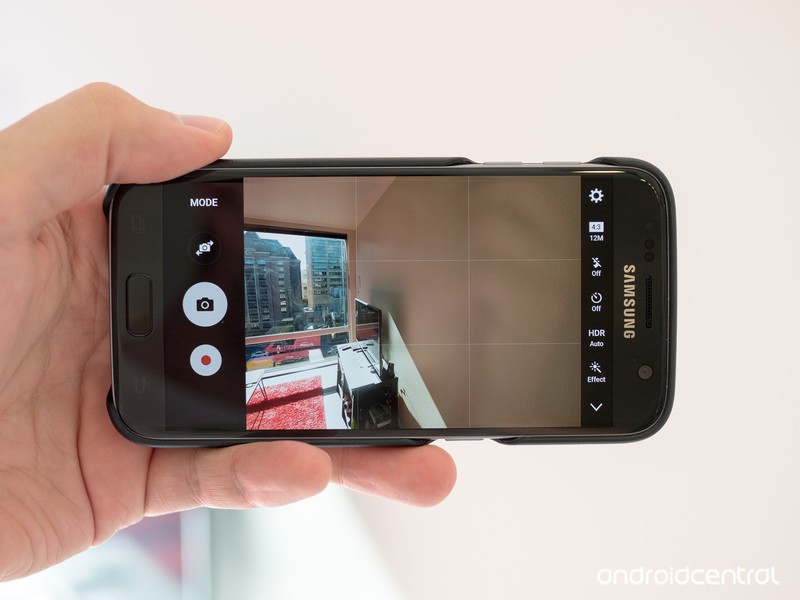
Extra frames per second mean that you can slow down video even more, with just a few seconds of actual recording turning into a very long video of extremely slow movement. It also means there’s simply more flexibility of choosing playback speed overall, with more frames giving you freedom to have smooth video across the range.
The report claims that Samsung is not using the same camera sensor as Sony to accomplish this, but is adding extra DRAM into the camera sensor itself — very neat.
Now we just need to know how the cameras will actually perform.
In slightly more interesting territory for the selfie crowd, the report also points to an upgrade in the front-facing camera on the GS8, moving to an 8MP sensor that has auto-focus — something you don’t see on most phones. Alongside it on the front of the phone will be a 3.7MP camera sensor used just for iris scanning, which is expected to be making a return after first debuting in the Galaxy Note 7.
We’re less than two weeks away from the launch of the Galaxy S8 now, and these little bits of camera information just get us more excited for the announcement!
Samsung Galaxy S8 and S8 Plus
- Latest Galaxy S8 rumors!
- Galaxy S8 announcement coming March 29 in NYC
- Galaxy S8 release date set for April 28
- Join our Galaxy S8 forums
Canada’s new drone laws make flying in urban areas virtually impossible
Avoid getting a fine by knowing where and when you’re allowed to fly your drone in Canada.
If you’re a Canadian who owns a drone for purely recreational purposes, listen up because the Canadian government has just laid down the laws regarding where and when you can fly your drone.
And you’re probably not going to like it.
As reported by CBC, Transportation Minister Marc Garneau announced the new rules along with the penalties for breaking them — a $3000 fine.

These rules greatly restrict where you can fly your drones and essentially rule out any lawful drone flying in urban areas. You may not fly your drone:
- Any higher than 90 meters (just under 300 feet).
- Within 75 meters (250 feet) of buildings, vehicles, vessels, animals or people.
- More than half a kilometre away from you.
- At night, in clouds or somewhere you can’t see it.
- Within nine kilometres of somewhere aircraft takeoff or land, or a forest fire.
- Without your name, address and phone number marked on the drone itself.
- Over forest fires, emergency response scenes or controlled airspace.
So let’s say you live in a fairly busy city and wish to fly your drone around at the local park. Chances are, under these new rules, you won’t be able to do so legally. Most of these rules previously existed as best practise guidelines (see: common sense) for flying drones in public spaces, but until now there was no penalty attached. Intervening police could only penalize someone flying their drone dangerously if they were in violation of the Criminal Code, likely criminal negligence.
But there was clearly a need for stricter rules to be put into place, as Transport Canada has seen a distinct increase in safety incidents involving drones over the past three years: 41 in 2014, 85 in 2015 and 148 in 2016.
By comparison, in the U.S. the FAA rules state that you may not fly your drone higher than 400 feet and must always keep your UAV within sight at all times. There are also rules about flying your drones any place that might be a danger to the public, so flying near other aircraft, near airports, over groups of people, over stadiums or sports events or near emergency response efforts such as fires are all banned. Also, you’re not allowed to fly under the influence, which seems like a bit of a no-brainer.
Transport Canada has seen a distinct increase in safety incidents involving drones over the past three years: 41 in 2014, 85 in 2015 and 148 in 2016.
As Motherboard reported, fines for American drone pilots have typically ranged from $400 to $5,500, with the largest fine falling on SkyPan, a drone-photography company that illegally flew drones over New York City and Chicago and recieved a $200,000 fine from the FAA.
Americans are also required to register their UAVs with the FAA if they’re between .55 and 55 pounds, so if you’ve bought any of the more professional camera drones available out there, you’ll definitely want to make sure they’re registered so you don’t find yourself in hot water.
So what do these new rules mean for Canadians looking to get into drone flying? Well for starters you’ll want to affix a label of some sort to your drones with your name, address and phone number — which is just a good idea for anything with the capability to fly away off into the horizon on its own. And you’ll of course need to be extremely wary of your surroundings wherever you are fly your drone.
If you’re interested in drone racing, your best bet will be finding your local drone enthusiast club who may hold meet ups and other events in sanctioned spaces such as warehouses or gymnasiums. There’s also FPV Canada, a small but growing community of drone pilots from across Canada.
If all else fails, you can always take some time to drive out into the abundant Canadian wilderness and practise your flying far away from any airports, buildings, vehicles and — perhaps most importantly — local authorities.
Littlstar VR might be the best app you can add to your PlayStation VR

Having access to your favorite content is now as simple as using a USB stick.
Littlstar VR isn’t a new app to enter the PlayStation VR sphere. It’s been here for months already, delivering some awesome videos. Now the developers have gone above and beyond to bring you the type of features that are pretty exciting. They’ve increased their versatility in which videos can be played from within the app, along with adding USB support. You read that right, you can now load up your favorite VR movies on a USB stick, and then open and watch them from inside Littlstar VR.
Read more at VRHeads.com
What do the LG G6’s 16:9, 16.7:9 and 18:9 app scaling settings do?

In an ideal world, every Android app would work flawlessly on every phone — unfortunately, we’re not there yet.
The 18:9 aspect ratio display on the LG G6 gives you extra screen without making the phone wider, but that also means the display is a different shape than some apps expect it to be. While Android’s design guidelines let apps automatically resize to a wide range of aspect ratios, there are some issues that can arise — and LG’s “app scaling” settings are where you want to go if you run into issues.
Potential app problems on the LG G6
By default, all apps on the LG G6 run in what’s called “Standard” mode, which means they’re scaled up per standard Android methods to fit a 16.7:9 aspect ratio — that is, 18:9 minus the navigation bar on the bottom and status bar on the top. For most apps, this is completely fine and you won’t see any issues; apps will work just like they do on any other phone with a 16:9 display.
Where you may run into issues on the LG G6 is with games and media apps that want to take up the whole screen — including hiding the navigation and status bars — when in landscape, but are hard-coded to stick to a specific height and width. In this case, by default, you’ll see the navigation and status bars hide themselves, but you will see pillarboxing: small black bars on the left and right of the app’s view. In this case, you have two choices: leave it as-is and live with the black bars, or use the “app scaling” settings to force the app into a “Full screen” mode of 18:9.


When forcing one of these previously-pillarboxed apps to 18:9, the app will expand to fill the entire horizontal width of the landscape display but is basically accomplishing this by just zooming in on the app — that means some assets within the app may not scale properly, and you may have content actually cut off on the top and bottom. For example in a game you may get a properly scaled view of the world when set to 18:9, but the controls or extra interface elements will be squished or overlap.
So what’s the best choice? In most cases, leaving the app at 16.7:9 is the best way to go, despite the pillarboxing black bars. You can always play around with forcing full-screen apps to complete 18:9, but at this early stage in the LG G6’s life you can expect apps to be less functional when forced to this mode. Going forward, app developers will work to support these tall displays specifically and apps should eventually better support these different aspect ratios.
How to adjust LG G6 app scaling settings
Again by default the LG G6 sets every app to run in 16.7:9 mode, but if you want to adjust the settings on a per-app basis you can do so in the settings. Here’s how to get it done.

Open your phone’s Settings
Tap on Display
Tap on App scaling
Tap on the app you want to adjust, and choose between the options
- You can choose Compatibility (16:9), Standard (16.7:9) or Full screen (18:9)
If you run into any issues on the LG G6 when forcing a different aspect ratio, you can always go back into the settings and switch it to 16.7:9, or even 16:9 for the most complete compatibility.
LG G6
- LG G6 review!
- LG G6 specs
- LG G6 vs. Google Pixel: The two best cameras right now
- Everything you need to know about the G6’s cameras
- LG forums
B&H
Documentary to explore what went wrong with ‘Tony Hawk’ games
Back in the late ’90s, the video games bearing the name of legendary skateboarder Tony Hawk weren’t awful. Publisher Activision wasn’t a monolith pushing out uninspired, annual sequels across all its franchises either, and in general, it was a happier time in the world. That’s where documentary Pretending I’m a Superman: The Tony Hawk Game Story begins. Or, it will begin if it can raise $75,000 on IndieGogo.
Helmed by former Neversoft developer Ralph D’Amato, the goal is to document the franchise’s humble beginnings to its ultimate downfall. Some 20 percent of the needed footage has been shot so far, and the production crew needs the crowdfunded goals to finish its work.
A handful of interviews have been performed already, including producer Scott Pease, the guy responsible for pitching the skateboarding game to Tony Hawk. Of course, Hawk himself will also play a big part in the film, along with street skater Rodney Mullen. The production team hasn’t made a lot of other promises, but the pitch page says it’d love to get “the majority” of skaters from the first four games on camera along with other developers.
Ultimately, the documentary should release next fall, and D’Amato hopes to bring it to the festival circuit that summer. Funding tiers are about what you’d expect, but, if you want to get crazy and drop $7,000 you’ll be listed as an associate producer, be interviewed for the doc itself and also get an “EXCLUSIVE SESSION WITH TONY HAWK AT TONY HAWK INC IN VISTA, CA.” Oh, and $1,000 will be donated to Hawk’s charity that puts public skateparks in low-income communities.
However, it’s worth noting that this campaign has a flexible goal, so even if it doesn’t reach $75,000 target, you won’t get a refund.
Source: IndieGogo
ColorWare Launches iPhone 7 Plus Retro Edition With Vintage Mac Design for $1,899
ColorWare today introduced a customized iPhone 7 Plus Retro Edition that resembles the appearance of a vintage 1980s-era Macintosh for $1,899. It is a SIM-Free model with 256GB of storage, which normally retails for $969 in the United States. Orders are currently estimated to ship in 2-3 weeks.
The design includes a multicolored Apple rainbow logo and dark beige edge stripes painted over what is originally a Black colored iPhone 7 Plus. ColorWare said the iPhone 7 Plus Retro Edition will be available for a limited time only, and the first 25 sold will include a number of authenticity.
Details about the customization process:
At ColorWare, the product goes through a labor intensive process of disassembly, cleaning, masking, painting and inspection. Then, the product is buffed and reassembled. The product goes through final inspection and is packaged into the original packaging.
iPhone 7 Plus Retro Edition includes EarPods, a Lightning to USB Cable, a USB Power Adapter, and documentation in the box.
Related Roundup: iPhone 7
Tag: ColorWare
Discuss this article in our forums
Suunto’s first HR sports watch claims to be the most accurate
A Finland-based sports watch maker has launched a new device that it claimed delivers “superior accuracy”.
Dubbed the Spartan Sport Wrist HR, the watch, which is made by Suunto, features a patented biometric measurement technology. Valencell, the US biometric company that develops technologies used by brands like Bose and Samsung, developed this technology, called PerformTek. Suunto said it can deliver data within 5 per cent of tried-and-true chest straps an amazing 89 per cent of the time.
The message here is that Spartan Sport Wrist HR will supposedly sit above all its competitors in terms of accuracy. Apart from monitoring 24/7 heart rate and resting heart rate, it doubles as an activity tracker, letting you track everything from steps to calorie-burn rate. The robust watch serves up data in the form “detailed graphs, sport-specific displays, and power meter integration”.
- Best upcoming smartwatches: Wristwear to look forward to in 2017
Suunto’s Spartan Sport Wrist HR is handmade in Finland. It has a “robust casing, mineral crystal glass, and a stainless steel bezel”. It also offers a durable color touchscreen that’s supposed to be viewable from many angles and in different lighting conditions. Tech specs include a battery life up to 12 hours, GPS/GLONASS tracking, a built-in accelerometer, and access to the Suunto Movescount service.
Suunto’s first wrist-based, heart-rate monitoring sports watch is now available for £399 in all black, blue, and pink colour options. To complement the launch, Suunto said it plans to roll out an update to its full range of Spartan products, which will add interval training and altitude profile navigation.
James Woods is involved in another Twitter lawsuit
If you’ve taken someone to court for something they tweeted about you, then you should probably be familiar with how defamation law works. Apropos of nothing, James Woods, who previously sued a Twitter user for suggesting that the actor had a substance abuse issue, is now being sued for something he tweeted. According to The Hollywood Reporter, Portia Boulger has lodged a suit in Ohio alleging that Woods incorrectly identified her as a “nazi.”
The story begins with a photo taken by The Chicago Tribune during a republican presidential rally on March 11th, 2016. Birgitt Peterson, wearing a Trump T-shirt, raised her arm and hand to a 45-degree angle, an unfriendly gesture that was popular in Germany way back in the ’40s. But Peterson was subsequently, wrongly, identified as Portia Boulger, an Ohio resident who was a grassroots organizer for the Bernie Sanders campaign.
The assertion was shared around Twitter before being picked up by Woods, who previously played the villain in White House Down. Woods is said to have posted a tweet claiming that the “So-called #Trump ‘Nazi’ is a #BernieSanders agitator/operative?” That tweet was subsequently reposted by Donald Trump Jr. and was retweeted around 5,000 more times. Later, Woods would tweet a partial retraction, suggesting that the photo’s subject may have been misidentified.
But Woods didn’t delete his original tweet until Boulger’s legal counsel contacted the actor asking for a deletion, retraction and apology. Woods then deleted the allegedly defamatory tweet and posted three new messages, retracting his claim and saying that Boulger had reached out to him personally to stop the abuse. Boulger says that Woods’ new tweets prompted a fresh wave of hostility to the 64-year-old woman who volunteers for an educational organization.
Boulger says that she has received death threats on Twitter and in the real world, with threatening phone calls at her home. She claims that Woods defamed her by implying that she conducted a false flag operation at the March rally. In addition, Woods placed her in “false light,” harming her reputation and placing her at risk of threats of violence. She is, therefore, asking for $3 million in damages, as well as fees and additional costs at the discretion of the court.
Woods’ representatives have already posted a statement, as reported by both THR and The AV Club, saying that the lawsuit is “patently bogus.” The note adds later that Woods “went out of his way to defend Ms. Boulger against alleged harassment,” before ending with the adage that “no good deed goes unpunished.”
“Mr. Woods tweeted a question seeking clarification. On its face, that is not defamation. In fact, Mr. Woods went out of his way to defend Ms. Boulger against alleged harassment. This case proves the adage ‘no good deed goes unpunished.’”
This is not, however, the first time that the Final Fantasy: The Spirits Within star has engaged in litigation surrounding 140-character microblogs. Last year, he fired a $10 million broadside at an anonymous Twitter user when they said that Woods had a drug problem. That case was never concluded, as the anonymous user, who went by the name of “Abe List,” passed away, leading to the motion being dismissed.
The news comes just a week after British food writer Jack Monroe won a judgment against the conservative columnist Katie Hopkins. Hopkins tweeted a statement that heavily implied that Monroe had defaced a war memorial, or condoned those doing so, during a political protest. The sums of money involved are much smaller, with £24,000 ($29,700) in damages being paid, but the lesson remains the same. Don’t talk smack about other people on Twitter unless you’ve got good legal counsel and a lot of disposable income.
Via: The AV Club
Source: Scribd, THR
Spotify might delay album releases for ‘free’ users
Spotify’s deadlock with three of the largest music labels could soon come to an end. According to the Financial Times, the streaming company has agreed to ‘window’ important album releases to keep them on side. It would mean select records are only available to premium members for a period of time, incentivising subscriptions and boosting the revenue that trickles through to labels. The FT says nothing has been signed just yet, but stress talks have “picked up considerably” since the concession was made.
Spotify’s contracts with Universal, Sony and Warner — which collectively make up the bulk of its library — have been in flux for some time. As the company has grown, and music streaming has played a larger role in the industry, labels have started demanding higher rates. Accepting such terms would threaten Spotify’s business model, which is yet to reach profitability. The service is growing, however, which bodes well for the years ahead. With 50 million paying subscribers, it’s shown it can convert free users and fend off competitors like Tidal, Apple Music and Google Play Music. Losing label support would, of course, be hugely damaging.
It’s all the more important as Spotify inches toward an IPO. Back in February, TechCrunch reported that the company had shifted its public offering plans from 2017 to 2018. The delay, the piece said, was to give the business time to improve its margins. The move would make sense, given its aggressive promotions and podcast experiments recently. Last month, it teamed up with The New York Times to offer a newspaper and music streaming bundle. It’s since unveiled three original podcasts and brought WNYC shows, including Radiolab and 2 Dope Queens, to its platform.
But these are all side-servings. The driving force behind Spotify subscriptions is still music, and how the company is able to leverage that library for smart playlists such as Discover Weekly. As such, nailing new contracts with Universal, Sony and Warner remains a priority.
Source: FT
 AIVAnet