


NVIDIA Shield TV is still the best Android TV box
There are a number of ways to get Android TV into your living room. This one truly is the best, though.
For those who are completely immersed in the Android ecosystem — and, frankly, even for those of us in mixed marriages — Android TV may well be one of the best-kept secrets Google has. The question, then, is how do you get Android TV? If it’s already built into your TV, great. That’s maybe my favorite way to use it.
But if you’re looking for a standalone Android TV box, there’s only one you need to consider. And that’s the NVIDIA Shield TV.
More: Subscribe to Modern Dad on YouTube!
Andrew touched on most of the reasons why in the full Android Central review. And since then the Shield TV has only solidified its place at the top of the Android TV heap. It handles 4K video without a hiccup. It has a pretty vast gaming library. It has access to Amazon Video — one of the only Android TV instances to do so. It’s got USB storage. It’s got a good remote. It’s got ethernet. It’ll work as a Plex server. (Huzzah!)
And, yes, it’s more expensive than other Android TV options. But I’ve used them all. This is the only Android TV box you should consider.
See at Amazon
Modern Dad
- Subscribe on YouTube
- Snapchat
- See the gear
OnePlus 3T colette edition arrives in all black, only 250 made for €479

It’s the same phone you know, now in dramatically limited quantity.
We’re all familiar with stock shortages when it comes to OnePlus phones, but this new collaboration is seriously exclusive. OnePlus has partnered with world-renowed boutique colette to create a special OnePlus 3T colette edition, which is matte black and with 128GB storage and a subtle “colette” engraving on the back.
The phones will also come with OnePlus Bullets headphones, a $20 set that are a really nice for the money.

Just how exclusive are we talking here? OnePlus has only made 250 of these special edition phones to commemorate colette’s 20th anniversary. That’s a seriously small group of people who will get their hands on this slick-looking version of the really solid OnePlus 3T.
Alright, so it all sounds great to you and you want to buy a colette edition … where can you get one of the 250 made? You’ll have to be in Paris on March 21, and head to the colette store, just a short walk from The Louvre, for the 11:00 a.m. launch. First come, first served.
OnePlus 3T and OnePlus 3
- OnePlus 3T review: Rekindling a love story
- OnePlus 3T vs. OnePlus 3: What’s the difference?
- OnePlus 3T specs
- Latest OnePlus 3 news
- Discuss OnePlus 3T and 3 in the forums
OnePlus
Amazon
Press release:
OnePlus Collaborates with colette to Release Limited-edition Black OnePlus 3T
Exclusive OnePlus 3T colette edition combines refined design, powerful performance and Dash Charge to celebrate concept store’s 20th anniversary
PARIS – March 15, 2017 – OnePlus today announced it is partnering with famed concept store colette to release a special all-black edition of its premium flagship smartphone, the OnePlus 3T colette edition. In celebration of colette’s 20th anniversary, OnePlus will host a pop-up shop at the colette store in Paris on March 21. Only 250 of this limited-edition version of the OnePlus 3T will be available for sale at the one-day pop-up shop.
“We are constantly striving to provide OnePlus users with the very best in software and hardware. Now we’re introducing this striking black version of the OnePlus 3T with colette, highlighting our focus on beautiful design and the strictest attention to detail,” said OnePlus founder and CEO Pete Lau. “Our friends at colette understand refinement and good taste better than anybody, so we’re very proud to be partnering with them to offer this special edition of our flagship phone.”
“OnePlus is an exciting brand that is challenging the way people look at smartphones. We’re happy to be partnering with OnePlus to offer this special edition of the OnePlus 3T for colette’s 20th anniversary. The OnePlus 3T colette edition is a gorgeous phone that is sure to draw a lot of attention,” said Sarah Andelman, co-founder of colette.
The OnePlus 3T has widely been regarded as one of the top smartphones of the past year, receiving numerous awards and recognition from media and fans alike. It combines industry-leading features like Dash Charge, which gives users a day’s power in half an hour, with 128 GB of storage, 6 GB of RAM, a Qualcomm® Snapdragon™ 821 processor and the refined Android experience of OxygenOS. Now, OnePlus is offering this limited-edition smartphone for users who have been craving the sleekest and most stunning OnePlus device to date.
To celebrate the 20th anniversary of the world-renowned colette store, OnePlus has teamed up with the iconic fashion boutique to specially engrave 250 units of the all-black OnePlus 3T phones with the colette logo. For fans lucky enough to get their hands on this phone during the pop-up experience at colette’s retail store in Paris on March 21, OnePlus will be offering a free set of the Bullets V2 earphones with each purchase.
Collaboration between OnePlus and colette extends back to 2015, when OnePlus held pop-up experiences at colette upon the highly anticipated launch of the OnePlus 2 and the OnePlus X. Last year they partnered on a pop-up shop for the OnePlus 3 launch. Each pop-up experience at colette has attracted queues of hundreds of fans eager to get their hands on the latest OnePlus smartphone.
The exclusive, colette-engraved black edition of the OnePlus 3T (128 GB) is only available starting at 11:00 am (GMT +1) on March 21 at the colette store at 213 Rue Saint Honoré, 75001 Paris, France. Only 250 units will be available and will retail for EUR 479.
Microsoft’s Arrow Launcher picks up tablet support in latest update

Arrow Launcher, an experimental launcher from Microsoft’s Garage division, has picked up another big update. The biggest feature coming along in this update is tablet support, but there are a number of other little handy additions like more backup and restore options, a horizontal layout option for the apps page, and more wallpapers from Bing.
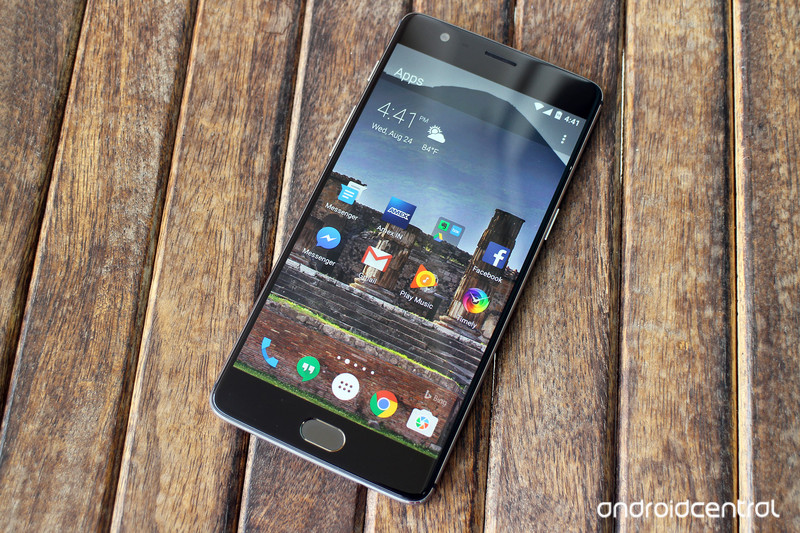
Here’s a full look at what’s new in Arrow Launcher version 3.1:
- Tablet support: a very popular request since Arrow’s first release — and now it’s here!
- Horizontal layout option for the “all apps” page!
- More beautiful Bing wallpapers.
- Backup & restore: more backup options available.
- Ability to hide headers.
- Ability to configure the utility page: show/hide, choose card color (transparent or solid white)
- Carousel scrolling mode.
This follows up from a similarly large update that hit the launcher in late February, which brought big performance gains and a new utility page for pinning your most commonly used functions. To check out all of what’s new in this latest update, you can grab Arrow Launcher version 3.1 from Google Play now.
Google Family Link finally brings broad parental controls to Android phones
Parents will soon have new tools to manage their child’s phone access.
Google is making a huge step toward letting families manage Google accounts and phones of children in the house, moving well beyond Google Play Family Library. Family Link is Google’s new system for parents to create Google accounts for minors (under 13 years old, officially) who technically can’t have their own accounts, and when attached to an Android phone the parents get all sorts of great tools to manage their use.


With an Android phone running Nougat — which is hardly a given right now — and a Family Link account, parents will be able to approve or deny app installs, see how the child is using their phone and even explicitly limit their screen and overall device use time. Parents can set daily screen-on time limits for their child, and even force the phone to be remotely locked at a specific time — for example, disabling the phone overnight from 9 p.m. to 7 a.m. every day. What Family Link doesn’t do, at this point, is provide kid-friendly versions of Google apps, or the ability to lock specific apps (like Hangouts or Chrome).
These are great tools that should have been here a long time ago.
Family Link is currently invite-only and parents can enroll in the early access program to take a look when it comes available. Google says the features are just getting solidified now and parents who participate in the program will be able to offer feedback about how Family Link can improve before a wider launch.
This is a fantastic step in the right direction to making Android far more compatible with families who have young children who want (or honestly, need) phones but really shouldn’t have unfettered access to an Android smartphone just yet. Many parents have simply worked together their own system using “normal” Google accounts, various apps and different software solutions, but going forward Family Link will easily be the go-to solution for parents just starting out giving children their first account and phone.
Android Nougat
- Android 7.0 Nougat: Everything you need to know
- Will my phone get Android Nougat?
- Google Pixel + Pixel XL review
- All Android Nougat news
- How to manually update your Nexus or Pixel
- Join the Discussion
HTC is teasing a March 20 announcement, but don’t get your hopes up
This is almost certainly not the HTC 11 you’re looking for.
HTC is teasing an announcement on its Taiwanese Facebook page for a March 20 announcement, coinciding with the spring equinox.
2017.03.20
HTC will give you an unexpected surprise

While it’s possible that the announcement will be a phone, there’s almost no chance that it will be a worldwide release, and it’s definitely not the rumored HTC 10 successor that is expected to be announced and released sometime in the second quarter.
What’s more likely is that it is the successor to the HTC One X9, rumored to be called the One X10. We’ve already seen leaked photos of the Europe and Asia-only device, and its announcement is already overdue: it was expected in January or February.

The phone will sport a modest spec sheet, including a 5.5-inch 1080p display, 3GB of RAM, 32GB of internal storage and a MediaTek P10 processor.
In the meantime, HTC’s follow-up to the HTC 10 is expected to rock this year’s latest spec sheet, including a Snapdragon 835, which may end up delaying its announcement and release until sometime in May or June.
58 tech companies file amicus brief against revised travel ban
Nearly 60 tech companies have submitted an amicus curiae brief to a Hawaii district court on Wednesday, denouncing the Trump administration’s revised travel ban, which is scheduled to go into effect on tomorrow.
As with the the previous travel ban, these companies are seeking an immediate injunction arguing that the executive order “would inflict significant and irreparable harm on U.S. businesses and their employees.” The revised ban would temporarily bar citizens from six predominantly Muslim nations from entering the country and reduce the number of refugees that the US accepts annually to just 50,000, less than half the number normally accepted.
Curiously, this brief does not enjoy the same broad support as the original, which garnered 127 signatories in all. Plus, a number of major players like Google, Apple, Netflix and Spotify who signed the first amicus brief in response to the original ban are missing from this new court filing.
Source: Verge
Facebook’s Snapchat-like Stories are now available worldwide
Facebook’s quest to clone Snapchat features wherever possible just took its next logical step. Just a couple of months after it started testing Stories in the main Facebook app, the social network has rolled out the feature to many (though currently not all) users worldwide. As with similar efforts in Instagram, Messenger and WhatsApp, you can stitch together photos and videos to share stories that vanish after 24 hours. It won’t be at all shocking if you’ve used any of those apps, but its presence in the core Facebook app is particularly significant.
To date, Facebook’s main Snapchat-like features have been implemented in apps that are a subset of its user base. But as big as Instagram is, it can’t compare to Facebook’s 1.7 billion mobile users — this move puts Stories in front of many, many more eyeballs. This isn’t necessarily going to crush Snapchat’s user base (it certainly has the money to fight back), but it may reduce the temptation to head over to Snapchat when you just want to document your life.
Source: TechCrunch
Denon Heos soundbar and sub take Sonos head-on
Denon’s Heos multiroom audio system has been compared to Sonos often in the past and the latest pair of products are set to continue that trend.
The Heos Bar is a direct rival to the Sonos Playbar, while the wireless Heos Subwoofer will draw comparisons with the Sonos Sub.
We haven’t tried either out yet, so don’t know how they match up in performance, but at £849 the soundbar is pricier thanks to having a range of four 4K-enabled, HDR-compatible HDMI 2.0a ports on the rear. The subwoofer, on the other hand, is actually £100 less than its Sonos equivalent, coming in at £599.
The Heos Bar is compatible with other Heos multiroom products and can stream audio through internet services, including Spotify and Tidal, via Bluetooth and play internet radio stations. It can also stream your own music library from a source on your network.
Its HDMI ports mean that you can feed sources, including 4K Ultra HD Blu-ray players, directly into the back of the Bar (something the Sonos does not do).
It is a three-channel design, with left, right and centre channels. There are nine drivers in a 45-degree configuration to give as wide a soundstage as possible. It also decodes its own surround sound using the same digital signal processing as Denon AV receivers.
It can be paired with two Heos speakers to act as rears for complete 5.1 audio.
The Heos Subwoofer is completely wireless – save for power – and can sync with the Bar to add muscle to soundtracks. It can also work in tandem with other Heos speakers.
It features two custom-made 5 1/4-inch drive units and Class D amplification for deep bass no matter where you put it in the room.
Both devices work with the Heos App for iOS and Android and will be available from April at Denon retailers.
Samsung Galaxy S7 edge retrospective: This is still a fantastic phone
Of all the phones we saw in 2016, it was the Samsung Galaxy S7 edge that had the greatest impact. Arriving alongside a flat Galaxy S7 that was pretty close to the Galaxy S6, the S7 edge made more sense, pulling into a space that made the S6 edge+ more manageable and hit that 5.5-inch sweet spot. It won Best Smartphone at the Pocket-lint Gadget Awards 2016, against fierce rivals, among many other accolades.
The S7 edge made design tweak that lead to a more premium look and a better feel in the hand. Even now, post-Pixel launch, post-iPhone 7 launch, post-LG G6 launch, we still think that Samsung has the edge on design and it’s a year old.
Despite LG’s postulating about one-handed use in the G6, switching the display to a 18:9 aspect, in many ways the S7 edge is already there. Some of the S7 edge’s display flows into those curves, so although it’s 5.5-inch, it doesn’t have the bulk of Google’s Pixel XL or other big devices.
Let’s not take anything away from the Pixel XL – that’s a great phone and at launch there was massive appeal in the exclusive Android features it offered – but there’s an enduring greatness to the Samsung Galaxy S7 edge that still remains and recent software updates have refreshed the experience. Using this phone a year after launch, it doesn’t feel dated.
- Google Pixel XL vs Samsung Galaxy S7 edge: Which should you choose?
Samsung Galaxy S8 improvements
It’s not perfect, of course. Any phone you pick up will have flaws, maybe through design decisions, maybe amplified through personal preferences, and on the Samsung Galaxy S7 edge it’s true that form overtook function in some areas.
Let’s take those display edges for example. They are the defining feature of the phone, not only giving this Samsung handset distinctive looks, but aiding the feel of the phone in the hand. Although Samsung has a range of software features that are designed to take advantage of that design, we’ve never actually used any of them.
Sure, when the phone was new, we used “edge screen” a lot. You can swipe in, thumb through various panels for shortcuts to contacts, apps or other information. But in reality, hitting the home button so often gets you where you want to be anyway. Why swipe when you can click and tap a shortcut?
- Samsung Galaxy S8 Plus: Release date, rumours and everything you need to know
Pocket-lint
In many ways that’s the fun of modern phones: you have so many ways of doing things that you can easily change the setup to your preference – on Android at least.
But on a more serious note, the real flaw we’ve noticed with the edges is responsiveness. Many applications flow the UI elements over the bend. Things like play control or settings controls are often located in corners, out of the way of the real content and it’s these things that expose the slight weakness of this display setup: sometimes you need multiple taps to get a response.
Is that a critical failing? Not at all, but it’s something to target to refine the experience of living with this phone when it’s updated with the Samsung Galaxy S8.
- Samsung Galaxy S8 Plus vs Galaxy S7 edge: What’s the rumoured difference?
Should you buy the Samsung Galaxy S7 edge now?
Buy for £486 from Amazon UK, $591 from Amazon US
It’s a question we get asked a lot. With the prices falling, it’s easy to say yes and we suspect that as soon as the Samsung Galaxy S8 launches, many will be faced with this decision.
The Samsung Galaxy S7 edge doesn’t feel dated, the battery life is good – it could be better, but it’s not the worst – the camera experience is one of the best and the updated software has not only brought the latest of Android (we’re still waiting for Google Assistant mind you), but also a refresh to TouchWiz.
In many ways, the Galaxy S7 edge takes some of the Note 7’s interface goodness and puts it to use, maturing the visuals over this phone’s original 2016 software.
With the Samsung Galaxy S8 due to be announced on 29 March 2017, it’s worth holding on though. This will bring a small design change and certainly a more powerful phone, but you’d be best advised to wait and see what killer feature Samsung introduces and what happens to S7 edge prices.
We feel pretty confident, however, that the Samsung Galaxy S7 edge still has plenty of life left in it.
- Samsung Galaxy S7 edge review: Still a smartphone champion
Land Rover Discovery (2017) review: The best 7-seat SUV money can buy
There are soft-road SUVs. There are fashion SUVs. And then there’s the Land Rover Discovery: a through-and-through SUV with all the proper 4×4 off-road bells and whistles you could wish.
For many, however, that’s not what’s going to sell the 2017 incarnation of this classic. First, the new Discovery looks like an alien race reimagined its exterior, creating a surefire head-turner (viewed from the front, at least, that rear might get looks for the wrong reasons); second, the Disco’s full 7-seat layout means it’s more than adept at karting the whole family around those country roads; and third, the interior is luxe enough so that you’ll never feel like you’re behind the wheel of a tractor.
But with the SUV sector now more competitive than ever – and with the likes of the Audi Q7 and Volvo XC90 perhaps more practical road options, not to mention the just-announced Range Rover Velar arguably cannibalising Jaguar Land Rover’s own range – does the 2017 Discovery earn the crown of 2017 SUV king?
Land Rover Discovery 2017 review: All-new design
If you’ve ever seen a 2009 Discovery 4 on the roads then you won’t need us to tell you the 2017 Discovery has an all-new design, from inside to out.
Some of what you can’t see has a big impact to the design: the new Discovery is bigger than before, but also almost half a tonne lighter thanks to a predominantly aluminium construction. That’s a whole family’s worth of weight right there.
What you can’t miss is the visually impactful exterior. Those squinty s-shaped front lights, the pulled-back nose, downturned bumper and bulging hips that cover the wheel arches but curve back in to give the upper body a more slender frame. Notice those front vents too: these position incoming air over the wheels to deflect surrounding air from causing excessive drag. It’s not just a pretty face, it’s a clever one too.
The side marries sharp lines with soft folds and flexes in the body work, but unlike the Range Rover Velar’s dipped rear the new Discovery maintains its height – as is necessary for its 7-seat arrangement – and the back end, therefore, will be an area of contention for some. It’s a bit broad-shouldered and square. Plus that rear downturned bumper looks a little sad, while the two-piece boot of the previous Discovery 4 has been switched for an all-in-one upward-opening piece (there’s an interior tailgate, though). We don’t mind the overall look, but almost everyone we’ve spoken to says “not sure about the rear”. Each to their own.
Pocket-lint
As we’ve alluded to, the new Discovery is undeniably closer in design language to the Range Rover than ever before, blurring the boundaries more than ever before. That’s not necessarily a bad thing: it depends if you want a 5-seater or a 7-seater to some degree; and if you’re firmly fixated on the latter then we think the Discovery has the visual edge over the rounder Audi Q7’s form and Volvo XC90’s more conventional looks. The Land Rover offers five iosfix points, too, earning extra family points right there.
New Discovery review: True off-road abilities
We’ve tested out Land Rover’s latest in all manner of conditions: up rock faces, through sandy deserts, over rough terrain and across American highways. And this thing is a destroyer: it’ll eat up pretty much anything you care to throw its way, from Tarmac to dirt, mud and sand. It’s not a 4×4 pretender, that’s for sure – this is the confidence-inspiring real deal.
Pocket-lint
When dabbling in off-road the Disco is, well, a wonderful joyride. We could barely fathom the speed at which we went hurtling down desert dirt tracks without feeling the slightest of concern – and those lumps and bumps were munched up with little fuss. That’s thanks to the fully independent double-wishbone suspension system and just how rapidly it can adsorb what’s beneath the wheels.
As a proper 4×4, the Discovery offers special drive modes – general, grass, gravel & snow, mud & ruts, sand, rock crawl – in addition to low-range diff-lock for steep climbs and even all-terrain (ATPC) where the car crawls at a slow pace allowing you to focus on just the steering. These are easily selectable from a pop-up rotational dial or, in the case of the last two, individually assigned buttons to the centre. That suspension can adjust the ride height of the car for clearance too, to get through particularly perilous conditions. All with the tap of a button.
Pocket-lint
Not that, like any car, the Discovery is impervious to all terrain. On the final day of our four-day excursion, having covered hundreds of miles, we part deflated the tyres for some sand dune driving. And we’re not talking special tyres here: just standard on-road ones. We’ve done so before in hardy pick-up trucks, such as the Toyota Hilux, and expected to get stuck in the sand a whole lot more than we did. We rode the throttle hard enough to keep things moving 95 per cent of the time.
Land Rover Discovery review: An everyday car
Back on Blighty’s roads we’re sure that most people aren’t going to give much of a hoot about all that though. From the driveway to school drop-off tends to not be too perilous, right? The important factor to take away is how the new Discovery can transfer those off-road smarts to normal conditions. The suspension, for example, can clatter with a pot hole and you’ll barely notice it up front (it’s stiffer in the middle and back, mind, but still not too bad). This Land Rover is the embodiment of comfort and refinement on the road.
Pocket-lint
That air suspension has other uses too: hit the Elegant Arrival button and the car will lower itself upon coming in to park, making getting in and out easier for those who might struggle to take the big step up. Or, you know, those who like skinny jeans or a stride-limiting dress. Again, taking off-road skills and plying them to on-road ability; a great idea.
Should the weather take a turn for the worse and you live out in the sticks then, well, we’d like to see a VW Sharan get itself out of a sticky situation. No such problems for the Discovery, without the necessity to be an advanced driver: its on-board computer will deliver the necessary power the the correct wheels to avoid skidding on ice and so forth.
2017 Discovery review: Heaps of space and comfort
But it’s the day-to-day driving that’s just so darn easy. Sat behind the wheel, the double sunroof letting in boat loads of light, sunglasses firmly fixed to face and that eight-speed gearbox smoothly taking care of every transition, it’s a calm and almost peaceful place to be.
Pocket-lint
There’s loads of room in the back, too, with the middle three seats almost as comfortable as up front. The far back is a bit tighter, but as the middle row has independently adjustable seats it’s easy to drop the centre one only for added leg space when accommodating six rather than seven adults.
Boot space is up to 2,500 litres if you fold all the seats down – which takes a mere 14 seconds per row via the electronic controls. In doing so there’s enough space to almost lie flat. Just fold the back row down and the 5-seat setup means an ample 1,230 litres of space – or, in practical terms, a dog crate for the family pet.
Land Rover Discovery 2017 review: Engines and efficiency
We drove the 2-litre and 3-litre diesel options for this review, which in their four-cylinder engine arrangements don’t sound especially capacious for such a car. But what they lack in pep – overtaking certainly doesn’t feel of supercar pace, for example, even when in sport mode on the driver’s dial – they make up for in efficiency and torque. That off-roading wouldn’t be plausible without some super-strength in the bag; we even got six adults up relatively perilous desert hill tracks at nighttime without a hitch.
Pocket-lint
The critical part about that engine make-up is that Land Rover has opted for a four-cylinder engine – just like Volvo has in the XC90. That’s important because it returns better mileage and isn’t as environmentally murderous (JLR quotes 47.1mpg for the 2-litre, 44.8mpg for the 3-litre). Real-world mileage will be less, of course, but it’s still good going compared to how poor it could be (the 3-litre V6 diesel and 3-litre petrol are more powerful, but the latter drops to an inconsiderable 26mpg).
2017 Land Rover Discovery review: Tech treats
As part of parent Jaguar Land Rover, the Discovery pulls the company’s InControl Touch Pro system. It’s a 10-inch touchscreen system to the centre column, within easy reach and responds well.
Pocket-lint
It’s no “Blade” system, as per the Range Rover Velar, though. That’s the company’s holy trinity setup, which we didn’t expect to see in the Discovery by any means. Perhaps a future facelift model will take that on board.
As it is, the InControl Touch Pro setup delivers a whole lot to your fingertips. Satnav, media, audio setup, climate control, seat control, rear media control (as applicable), efficiency and driving style data, and connectivity (there’s a slot for a SIM card for on-the-go Wi-Fi). That’s a whole lot of stuff and, frankly, that’s one of the Discovery’s downfalls (as it is in any Jag setup): there’s so much to dig through that it can be a bit complex.
Pocket-lint
However, the Discovery doesn’t force you to control everything through that touchscreen, which is a savvy decision. The presence of physical dials for climate control, heat seating/cooling and media is also just a short reach away. Cruise control, track skip and volume up/down are conveniently positioned on the driver’s wheel – which explains why the physical volume knob is positioned so heavily towards the passenger side.
There are other quirks, too, including an Apple Watch and Android Wear app to allow remote interaction with the Discovery, plus enough USB and 12V sockets to power the techiest of families (and they’re not all up front, they’re positioned throughout ensuring all three rows are serviced).
Pocket-lint
Complexity doesn’t thwart ability, though. Having lived with the Discovery for a couple of days we got used to its setup and learned its ins and outs sufficiently. And if we’re citing this as an apparent negative then we only need to look back to our Volvo XC90 review – a car which more or less lacks any physical input controls and, as such, also can’t be considered 100 per cent perfect.
Verdict
In a world of Audi Q7 and Volvo XC90 the idea of buying a Land Rover might make you think “that’s a bit too off-road, isn’t it?”. Sure, the Discovery is and always has been a capable off-roader, but in its 2017 guise it maintains that extreme capability, yet mixes it up with a striking design and oodles of on-road comfort and interior luxury to boot. Take all three of these 7-seaters side-by-side and, having driven them all, it’s the Land Rover that comes out on top. We think it has the most exciting looks too.
The Discovery’s weaknesses aren’t precisely shortcomings either: the design is increasingly close to the Range Rover so there’s risk of Jaguar Land Rover cannibalising its own market (but both look great); that rear end is going to be brought into question by various people; and the tech, while certainly abundant, can take some digging to get into the depths of it all. Oh, and let’s not forget that with all the extras it might cost a wedge of cash more than the closest competition.
Otherwise the Land Rover Discovery is a fully versatile machine both on- and off-road. It’ll eat Tarmac for breakfast and dirt tracks for dinner, lug the family about in just about any terrain the world happens to throw at it, all the while ensuring you look and feel good sat behind the wheel. It is, in short, the SUV king for 2017.
 AIVAnet