


OPPO’s new F3 Plus has two front-facing cameras for true ‘selfie experts’
Turn the power of a dual-sensor camera on yourself and become a ‘selfie expert!’
Dual camera sensors have become one of those trendy features included on newer phones, but that setup has typically been kept to the back of the phone. Enter OPPO, the Chinese smartphone manufacturer behind the F-series of phones for “selfie experts”. The company’s latest phone, the F3 Plus, features two front-facing camera sensors — a 16MP main-camera and a 8MP sub-camera.
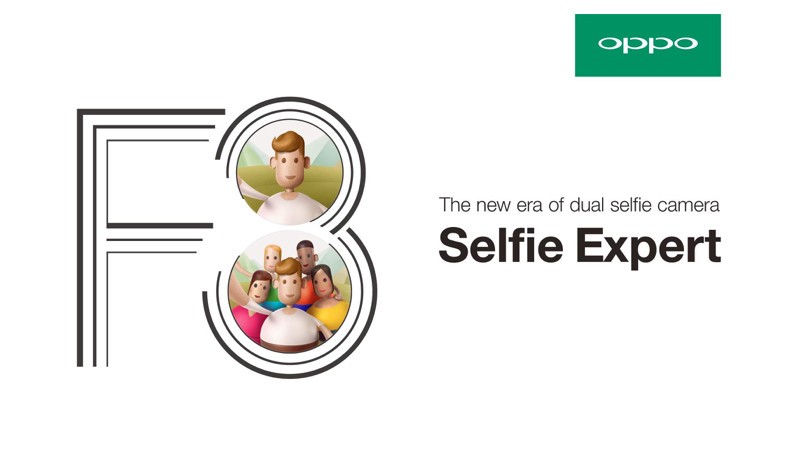
While OPPO didn’t share any other specs in its PR release, according to GSMArena the phone is expected to have a 6-inch screen and 4GB of RAM while running on a Snapdragon 653 chipset. You’ll also find a single 16MP camera sensor on the back.
Both the F3 and the F3 Plus are set to go on sale March 23 in five Southeast Asian countries — India, Indonesia, Myanmar, the Philippines and Vietnam. While those of us in the west might not be too familiar with OPPO, it holds a 13.2% market share in Southeast Asia, and was ranked the fourth-largest smartphone brand globally in 2016 according to IDC, behind only Apple, Samsung and Huawei.
Love them or hate them, selfies have become ingrained within our culture. So when OPPO Vice President and Managing Director of International Mobile Business says the “F3 Series will take selfie technology onto another level” and may “set a standard that others will follow”… it might just happen.
Asian markets do seem to be ahead of the curve when it comes to selfie technology. We’ve seen “beauty mode” included as a camera feature on Samsung devices since the Note 4 and of course there was the meteoric (or mediocre) rise and fall of the Meitu selfie app from China back in January. I didn’t get it either.
Personally, I’d rather have a quality dual camera setup on the back rather than pointed at my dumb face all the time, but to each his own.
Drop your Ford off for service 24/7 using these automated kiosks
The march toward “automated everything” continues apace. Wendy’s is putting thousands of self-ordering machines in its restaurants, and now Ford is trying out a similar strategy, but, you know, for cars. The company announced it has partnered with Panasonic and GoMoto, which specializes in car dealership technologies, to create so-called Smart Service Kiosks.
First, customers enter their contact information into the outdoor kiosk by using the touchscreen and scanning their driver’s license. Then they input certain key vehicle information and create a security PIN for key pick-up. Next, they can request basic maintenance tasks like alignment, oil changes and inspections, among other things. Users also have the option to enter more details about their service needs so technicians aren’t left guessing what they’re looking for. When that’s done, users drop off their keys and pick up keys for a loaner car.
Once the dealership is finished with the vehicle, users will get an email alert. That email contains a QR code customers will need to scan at the kiosk in order to pick up their keys. After also entering the PIN they created earlier, car owners can pay for the service and pick up their keys any time of day.
The service is beginning a 90-day trial at a dealership in Birch Run, Michigan. Tom Hodges, Dealer Connectivity Manager at Ford, says the kiosks could potentially “do for dealership service […] what ATMs did for the banking industry.” Indeed, that sounds like an apt comparison. The kiosks seem capable of handling basic needs, but ultimately, car owners will still need to talk to a real person for bigger or more complicated problems.
Source: Ford
This self-cleaning bag freshens up your smelly gym clothes
At my age it’s important to get to the gym on a regular basis, but it’s hard to find the time. It’s just as difficult to get around to doing laundry, which means I tend to get stuck carrying a bag of sweaty, smelly gym wear. But maybe it wouldn’t be so bad if I owned a Paqsule, a new self-cleaning bag making its debut on Kickstarter today. It uses UV light and activated oxygen to kill off viruses, bacteria and other microorganisms, making your clothes a whole lot fresher — maybe even enough for another go-around on the treadmill.

The Paqsule is a pretty normal-looking bag, with a black-and-gray vinyl exterior studded with pockets and straps. The buckles are all metal, and the surface can be wiped clean in case of spills — no, it doesn’t clean itself. There’s even a place to store your cellphone for easy access, which should come in handy when it’s time to make use of the Paqsule’s self-cleaning feature. The process is controlled via the app, which lets you select the duration, either 15, 25 or 35 minutes depending on the type of item you’re sanitizing and how dirty it is. You can also have it turn on automatically depending on the time, like if you go to the gym at the same hour every day.
Unfortunately, it doesn’t use GPS or any other location tracking, so you can’t have it start cleaning the minute you leave the gym with your sweaty clothes. However, Paqsule CMO Ravid Yosef told me that future iterations may have geolocation, not only so it will start the cleaning cycle when you get to your home or office but also so you can track your bag at the airport.
What it can do right now is pretty impressive though. When you close the bag fully and activate the PaqTech process, the Paqsule shines short-wave ultraviolet light on the contents, then creates and circulates O3 throughout the compartment. Both of these elements have antimicrobial properties: Short-wavelength UV is mutagenic to microorganisms while the activated oxygen damages their cell walls.
Because this process uses no water or detergent, you can leave pretty much anything in the bag with your clothes, like books or device chargers. It’s even food safe, so you don’t have to worry about that sandwich and fruit you packed for lunch. However, you should wait about five minutes after the cleaning cycle ends, as some individuals may have a sensitivity to activated oxygen and it takes a bit for the air to settle down and convert back into regular oxygen (O2).

Paqsule claims the bag will kill 99.99 percent of the organisms inside. I didn’t have a microscope handy to verify these claims — just a stinky pair of jeans I’d been wearing for the past few days to work. Yes, I was planning to throw them in the washer soon, but why not let the Paqsule take a crack first? There was certainly enough sweat and New York subway grime on them. Yosef set the bag up for a 15-minute cycle and let it run. Ideally heavier clothing like denim as well as sports gear and medical braces would get a longer cycle, either 25 or the full 35 minutes.

Even after 15 minutes, though, there was a noticeable difference in how the jeans smelled. The company likes to talk about how the air after a summer rain is loaded with activated oxygen, creating a unique scent — the kind detergent companies try to replicate in their products. And yeah, maybe there was a bit of outdoor freshness in my pants when I inspected them. There was also a faint chemical whiff, probably some lingering ozone. What was absent, however, was the biological stink that they had possessed 20 minutes earlier. It was a definite improvement, and I wouldn’t have minded wearing them again. Still, Paqsule can’t replace a proper machine wash, especially since it doesn’t remove stains.
Gym nuts and anyone else who finds herself carrying around a bag of dirty clothes more often than she’d like will be able to pick up the Paqsule via Kickstarter at an early bird price of $229, a big discount from the projected price of $349.
Apple’s latest hire proves privacy is more important than ever
If you’ve followed iOS security news over the years, there’s a distinct chance you’ve heard of Jonathan Zdziarski. He isn’t always flawless, but he has a knack for both finding Apple device exploits (he even worked on early jailbreaks) and conducting forensics. And Apple has heard of him too, apparently. Zdziarski has confirmed that he’s joining Apple, taking up a position inside the company’s Security Engineering and Architecture team. Just what he’ll do when he’s there isn’t apparent, but he describes this as a “matter of conscience” move where he’ll defend privacy with a like-minded team.
It’s easy to look at this through a cynical lens. Is Apple hiring Zdziarski to keep his very public discoveries under wraps, or to lend extra credibility to its security team with a high-profile name? Even if either of those are true, it’s still an important move. It reflects the company’s increasing focus on privacy, both as a selling point and as a guiding principle. Don’t be surprised if future iOS devices (and likely Macs) become tougher to crack, even for experts who know the platform inside out.
Via: 9to5Mac
Source: Zdziarski’s Blog of Things
‘Fistful of Stars’ lets you experience a stellar birth in VR
There may be no better way to show off the possibilities of virtual reality than by exploring the cosmos. We’ve already seen some early space experiences, like Adr1ft, but expect artists to keep experimenting as the VR ecosystem matures. Fistful of Stars, which debuts this week at SXSW, is an ambitious attempt at pushing VR space experiences forward. It launches you into the heart of the Orion Nebula, where you see a star being born up close. It’s the sort of thing space nerds have always dreamed of, but it’s also intriguing enough for anyone to enjoy (and hopefully learn a thing or two).
Fistful of Stars started out as part of the The Hubble Cantata, a live performance which took place in Brooklyn’s Prospect Park last summer. 6,000 people in the audience wore Google Cardboard headsets and stepped through the Orion Nebula as a way to show how VR, something that’s typically seen as isolating, could also be a social group experience. And while they were on a virtual space trip, they were serenaded by a 20-piece orchestra and a 100-person choir.
The version of Fistful of Stars we’re seeing now has been improved since its initial run, says director Eliza McNitt, and it’s backed by a 3D audio recording of The Hubble Cantata. “I chose the Orion Nebula because it’s the birthplace of stars,” she said. “I wanted to be able to take people on a journey into space.” While this is her first VR film, McNitt is renowned for her work in films and documentaries, including Artemis Falls, a TED-commissioned short about a young astronaut traveling into space. She’s releasing Fistful of Stars together with Vice and Samsung in June for the Gear VR.

It’s a fairly short VR experience, but Fistful of Stars still makes a big impact. You start off orbiting the Earth and end up traveling to the Orion Nebula through the Hubble telescope. The experience is based on Hubble imagery, and it’s rendered with a loving realism. It feels more like you’re drifting through space than staring at a computer rendering. I was lucky enough to sit through Fistful of Stars in a state of the art screening room covered in speakers, which made it feel like I was reliving a scene from 2001. SXSW attendees will get a similar experience in private screening rooms. You can still expect it to sound impressive when you’re experiencing it through headphones, though.
Once I got to the point where I was witnessing the creation of a star in the Orion Nebula, rendered as a fiery marvel, it was hard not to feel a bit emotional. Fistful of Stars is an ideal VR showcase not just because it’s a technical marvel — it also makes you reflect on your own place in the cosmos.
Click here to catch up on the latest news from SXSW 2017.
Samsung promises monthly security updates for unlocked Galaxy devices
While stock Android users are going to get monthly security updates through their respective carriers, owners of unlocked Galaxy headsets have had to settle for less frequent fixes. Thankfully, this won’t be the case much longer. ZDNet reports that Samsung has figured out a way to make monthly security updates a reality.
Updating Android is a complicated process which in some rare cases can brick your phone. That’s why less frequent OS upgrades could be seen as a benefit of unlocked phones. However, security patches are key to keeping your handset free of flaws like Stagefright, which allows malware in via multimedia messages.
Carrier-locked Android devices started getting their Android Nougat upgrades last November, which left unlocked Galaxy devices lacking up-to-date security. Monthly updates should put any apprehension to rest and keep your unlocked Galaxy devices safer.
Samsung confirmed the new release schedule in an email to ZDNet, saying that the March security update will come “soon,” though it’s unclear on exactly when, or whether that update will include Nougat. As the Galaxy S8 is due this month, it’s good to see Samsung commit to protecting all its customers.
Source: ZDNet
Russia finds Apple guilty of fixing iPhone prices
Google isn’t the only American company facing regulatory trouble in Russia. The country’s antitrust body has ruled that Apple is guilty of fixing prices for iPhone 5 and 6 variants at 16 local retailers. Reportedly, the company tracked prices at these stores and would ask them to raise the price if it was ever deemed “unsuitable.” If they didn’t comply, Apple supposedly had the authority to terminate their reseller deals without so much as an explanation.
Apple has 3 months to contest the decision once it’s published in full later in March. It’s not clear what the proposed penalty will be, but Google was hit with a relatively modest 438 million ruble (currently $7.4 million) fine. Execs aren’t likely to lose sleep over the financial side of the ruling, then. Officials add that Apple has mended its ways with a policy that should prevent future trouble.
We’ve asked Apple for comment. However, a spokesperson tells the Financial Times that the company “worked closely” with the antitrust agency and is “glad to put this matter behind us.” Apple isn’t likely to fight this verdict, in other words — unlike in its e-book case, it’s more interested in moving on (and protecting sales in a major market) than fighting to the bitter end.
Via: Financial Times, 9to5Mac
Source: FAS (translated)
Germany: Facebook and Twitter are still failing on hate speech
Facebook and Twitter are being criticized by Germany (again) for their failure to deal with hate speech. Back in December 2015, the social media sites, along with Google, agreed to delete content that violated the country’s strict domestic laws within 24 hours of a complaint. But, a recent study by Germany’s Ministry of Justice found some of them aren’t keeping their promises.
Facebook has actually gotten worse at handling user complaints, according to the study. Last year, the Ministry of Justice claimed the site deleted or blocked 46 percent of flagged criminal content. But, a new survey puts that number at 39 percent. Only a third of the reported content was deleted within 24 hours. Twitter hasn’t improved either. It deleted only one percent of its flagged illegal content — the same as last year — and none of it was removed within 24 hours.
Google, on the other hand, has made significant improvements in policing YouTube content since the tests began. 90 percent of reported criminal violations were removed from the platform, and 82 percent of those deletions happened within 24 hours.
Facebook disagrees with the new study, telling The Associated Press its own tests showed higher removal rates. It’s also training more staff to deal with Germany’s hate speech law, and it expects to have 700 people in Berlin by the end of the year. Twitter didn’t comment on the survey, but noted that it has recently taken steps to prevent abuse on its platform.
The German government is presenting a draft bill that will fine social media sites up to 50 million euros ($53 million) if they don’t remove illegal content swiftly. This includes hate speech and defamatory “fake news.” Under the proposal, companies will have seven days to remove any illegal content. They will also have to publish quarterly reports on their progress and nominate a person to handle complaints. If the site fails to meet the mandatory standards, that person could be fined up to 5 million euros along with the company. Forcing an individual person to take responsibility, instead of a faceless corporation, will likely make future failures harder to swallow.
Source: The Associated Press
Facebook admits its image screening fell short
To say that Facebook has some egg on its face right now would be an understatement. The social network not only didn’t take down some sexualized images of children, but reported the BBC when it drew these images to its attention. However, the company now says it has turned a corner. Facebook’s Simon Milner tells the UK’s Home Affairs Committee that the incident showed the company’s moderation system “was not working.” The offending photos have since been taken down, he says, adding that the process should be fixed.
It’s not clear just what a fix entails, or just how much of an improvement Facebook made. The internet giant has been accused of simultaneously under- and overreacting to content issues, either by leaving it up despite known abuse or taking down material that’s not at all controversial. While it would be difficult or impossible for Facebook to catch absolutely every violation, it’ll have to show make incidents like the BBC investigation a thing of the past.
If there’s any consolation for Facebook, it’s that it isn’t the only one on the hot seat. The Home Affairs Committee also grilled Google (specifically, YouTube) and Twitter over their own troubles fighting online hate speech. Both admitted that they had to do more to keep hate off their services. Google wasn’t specific about its solutions, but Twitter acknowledged that it had to be more communicative when users file abuse reports. These kinds of issues are relatively common among internet giants, in other words — it’s just that Facebook’s latest crisis was more embarrassing than most.
Source: BBC
Chrome for iOS Gains New ‘Read Later’ Feature
Google today updated its Chrome browser for iOS devices to version 57, adding a new “Read Later” function for saving articles to a Reading List so they can be viewed at a later time even when an internet connection is unavailable.
The Chrome Read Later function is similar to the “Reading List” feature that’s available in the Safari web browser for Macs and iOS devices.
Yes, you can take it with you! If you find an interesting article that you want to read later, tap the Share icon and then Read Later to add the page to your Reading List. Articles on your Reading List are saved on your device so you can read them wherever you are, even when you aren’t connected to the web.
Read Later can be accessed by choosing the Share icon when reading a webpage on an iOS device using the Chrome browser. A “Read Later” Chrome icon is displayed, and when tapped, the article is added to the Reading List.
The Reading List interface organizes articles based on what’s unread and what’s already been read, with an Edit tool available for article deletion and management.
Chrome for iOS, with the new Read Later feature, can be downloaded from the App Store for free. [Direct Link]
Tags: Google, Chrome for iOS
Discuss this article in our forums
 AIVAnet