


Samsung Galaxy S8 expected to come with AKG headphones, audio tuning
You just can’t stop the rumors.
We were on hand to watch Samsung unveil its new Galaxy Tab S3 tablet here in Barcelona, which includes audio tuned by AKG. And while we were taking in all of the latest news, an interesting side comment really caught our attention: when talking about the audio tuning and headphones included with the Tab S3, it was mentioned that “our next flagship smartphone” will also have AKG headphones and audio tuning.
Well, that would be the Galaxy S8, wouldn’t it? It sure is.

AKG is an extremely well-known name in audio, and Samsung is clearly going deep in a partnership with the company. The new Galaxy Tab S3 has AKG audio tuning for its quad speaker setup that tweaks based on the orientation of the tablet, and even has prominent AKG branding on the back.
Partnering with a top-end recognizable audio brand isn’t new, but it would be something a bit different from Samsung’s traditional partnerships that usually cross outside of the technology world. Samsung of course a massive manufacturer of headphones and other audio accessories itself, so branching out to bring in AKG for headphones and audio tuning signals a fresh take on these partnerships.
We’ll know this, and so much more when the Galaxy S8 is unveiled March 29 in New York.
Official: Samsung Galaxy S8 lands March 29!
New flagship breaks cover in just over a month.
Samsung’s 2017 flagship phones are about to move beyond mere rumor and speculation — Samsung is teasing the arrival of the Galaxy S8 on March 29 through invites sent out to press, in addiiton to a teaser at the end of its Mobile World Congress 2017 press conference. In it, the company invites customers to “unbox their phones,” an apparent reference to the GS8’s super-slim bezels.
The launch event will take place in New York City, with satellite events likely to take place around the globe.
In any case, the Galaxy S8 just became a whole lot more real.

The teaser leaves a lot to the imagination, besides corners matching up with leaked images of the GS8 which have emerged in recent weeks. That’s the point, of course — however this single image represents Samsung kicking off hype season for the GS8, its first major phone release since the ill-fated Note 7.
We all know what a phone looks like… or do we?On 03.29.2017 #UnboxYourPhone pic.twitter.com/Qm82kmB0Mx
— Samsung Mobile (@SamsungMobile) February 26, 2017
We’ll be live from NYC on March 29 to bring you full coverage of Samsung’s next big thing, which is expected to take the form of a 5.7-inch Galaxy S7 and 6.2-inch Galaxy S8 Plus, in an extra-tall 18.5:9 aspect ratio.
More: What to expect from the Samsung Galaxy S8
Excited for the Galaxy S8? Share your wish list for Samsung’s next big thing down in the comments!
Everything you need to know about the Gear VR Controller
The Samsung Gear VR finally has an official contrtoller.

Through Samsung’s partnership with Oculus, the Gear VR was the first smartphone-based VR headset with controls built right into the side of the body. This design enables a lot of unique control mechanisms, which has turned into hundreds of fun games and apps every user can enjoy.
In much the same way the headset itself has changed and grown from generation to generation, this control mechanism has been improved to keep things interesting. But it still had its limits, most of which have been addressed by buying a separate gamepad to bring with you when you wanted to play. Now Samsung has a more portable alternative called the Gear VR Controller, allowing for even more flexibility in games and apps.
Read more at VR Heads!
Hands on with Nokia’s new Android phones: the 3, 5, and 6
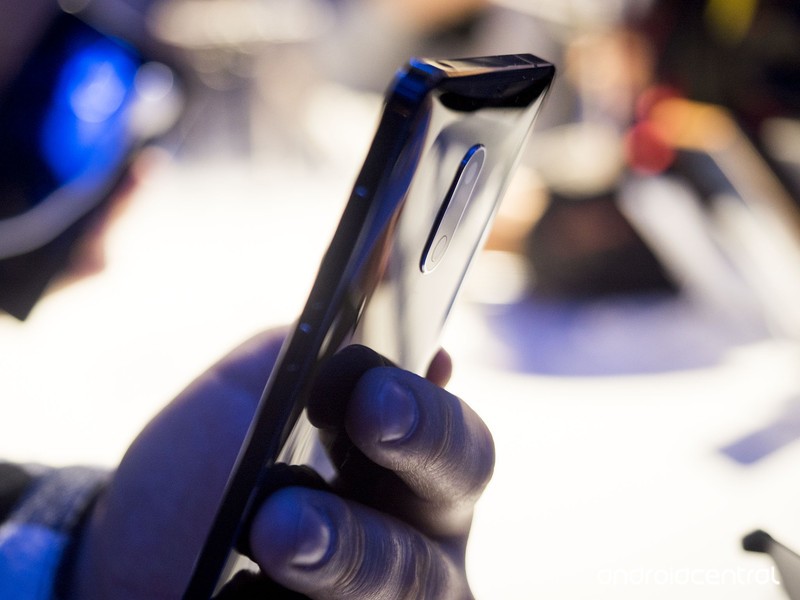
The rebirth of another storied smartphone brand begins. This time it’s Nokia.
Nokia is still a company that is focusing on their core business: networking technology. They’re quite good at it; there’s a good chance you’re using Nokia tech on a regular basis through your cellular network, even if it’s not a Nokia. But the Nokia brand? That’s all about smartphones. And while Nokia knew that, they also sold their phone business to Microsoft in 2015 (which Microsoft has struggled to turn into a successful business as well). So with no phone business of their own and a bunch of disgruntled former Nokia/Microsoft employees, HMD was born.
HMD is licensing the Nokia brand to produce phones bearing the Nokia name, look, and spirit (much as BlackBerry has licensed their brand to TCL and produced the BlackBerry KEYone). Nokia’s new phones are a departure from the old ones in one very important way: gone is Windows, all hail the new Android-powered Nokia.
While Nokia might come out with some higher-end devices in the months and years to come, the Nokia 3, 5, and 6 are decidedly low-end phones. But don’t let the low-end specs or prices fool you — these are shockingly nice phones.
Nokia 3
On the bottom rung of the new Nokia smartphone line-up is the Nokia 3. This 5-inch phone is powered by a lowly MediaTek 6737 processor (a quad-core 1.3GHz chip) and sports 2GB of RAM and 16GB of internal storage, plus microSD expansion support. It’s certainly not a powerhouse phone, nor should you expect it to be. The IPS LCD is a respectable 1280×720 (that’s 294ppi at 5 inches), while the cameras are 8MP on the front and back — both are ƒ/2.0 lenses with 1.12um pixels.
This phone has a two-part construction that will be familiar to most Nokia fans, with an aluminum unibody frame and a polycarbonate back plate. It’s fairly reminiscent of the old Nokia 925. It feels really solid and comes in your choice of a silver+white, black, dark blue, and a sexy copper frame with a white back. There’s no fingerprint reader here, and there’s a trio of capacitive navigation buttons under the display.


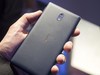
Software-wise, the phone’s running Android 7.0, and aside from the custom camera app is “pure” Android, down to using the same launcher as the Pixel phones. Despite the low-end hardware, in poking around the phone it was actually nicely responsive. Just goes to show what kind of experience you can get on even middling hardware when you don’t load it down with bunches of poorly implemented customizations.
The phone itself measures 8.48mm thick (so not the thinnest, but also not bulky) and packs a Cat. 4 LTE radio and 2650mAh battery. The only real knock against the phone is one that’s somewhat understandable, given the price point, and that’s the Micro-USB port instead of the modern USB-C. But at just €139, there’s only so much you can ask for.
Nokia 5
The Nokia 5 comes in a bit larger and a bit more powerful. It bumps up to a 5.2-inch IPS display, though still with a 1280×720 resolution (that’s 282ppi at this size) and swaps the MediaTek processor for the Qualcomm Snapdragon 430 chipset. It has the same 2GB of RAM, 16GB internal storage, microSD expansion, and Cat. 4 LTE support. The rear camera in the Nokia 5 has seen an upgrade, jumping to 13MP, though still with 1.12um pixels and an ƒ/2 aperture lens. Again, the Micro-USB port makes a sad appearance, providing power to a 3000mAh cell.

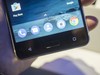
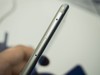


A fingerprint sensor sits front-and-center below the display, taking the place of the home button, though it’s still flanked by capacitive back and multitasking buttons. The body of the phone is a single piece of machine aluminum, coming in silver, black, dark blue, and copper, though all have black glass fronts with lightly curved edges. While it’s hard to do a machined aluminum phone without making it look like an iPhone, HMD set the Nokia 5’s antenna cutouts along the top and bottom of the phone — as if the iPhone 7’s plastic-inlay strips had been shifted slightly off the backside.
The end result is a phone that simply feels and looks great, and at €189 it’s an easy sell.
Nokia 6
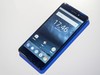
The current top end of HMD’s smartphone line-up is the Nokia 6. This phone was actually launched in early January 2017 in China, but is now making its global debut at the starting price of just €229 in matte black, silver, copper, or “tempered blue”.
For that price, you’re actually getting a really decent phone. Running on top of a Snapdragon 430 CPU with 3GB of RAM and a 32GB internal storage drive (plus microSD expansion) is a 5.5-inch laminated IPS LCD panel with a full HD 1920×1090 resolution. While it looked a little yellow, it was admittedly hard to judge in the blue-hued light of the event venue.
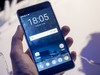


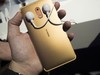
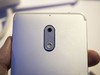

The rear camera’s been bumped up to a 16MP sensor (with smaller 1.0um pixels) behind a ƒ/2 lens, along with a dual-tone LED flash. The machined 6000-series aluminum body is simply beautiful and solidly built (as one would expect from a phone bearing the Nokia name).
Like the Nokia 5, you’re looking at a bottom-front mounted fingerprint sensor flanked by capacitive navigation buttons and antenna cutouts that have been pushed to the very edge. The curved edges of have been swapped for more angled ones, with the front sporting a crisp chamfer.
Nokia 6 Arte Black
You like your black aluminum Nokia Android phones shiny? Then you’ll want Arte Black edition of the phone. They’ve taken the aluminum body and polished it five times over and then anodized it black twice. Oh, and they upped the RAM to 4GB and the internal storage to 64GB. Otherwise, it’s the same phone, just a shiny blank fingerprint magnet.
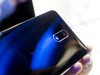


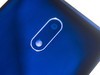
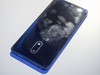
Want one? That’ll be €299.
Android 7
HMD has taken a very spartan approach to the software; the Nokia series of phones is running Android 7 Nougat with barely any customizations — the only visible non-Google app was the camera app, which isn’t a bad thing considering how minimal the Google Camera app is.
They’re committing to staying on top of security and OS updates, which should be made easier by having stayed on the light side for their customizations and standardized as many components between the devices as possible. It’s a question of if they’ll be able to deliver, however. Nokia is merely the brand, and while HMD is full of veterans from Microsoft and Nokia, they’re also a small and new company with limited resources. At least they won’t have to worry about managing an entire manufacturing supply chain as Nokia did — HMD has outsourced their manufacturing to Foxconn — the same company that makes the iPhone (no wonder the Arte Black Nokia 6 looks familiar).
The trio of Nokia phones will be launching globally in the second quarter of 2017, with HMD putting special emphasis on getting the new phones into the developing markets where the price-to-performance ratio will be most appreciated.
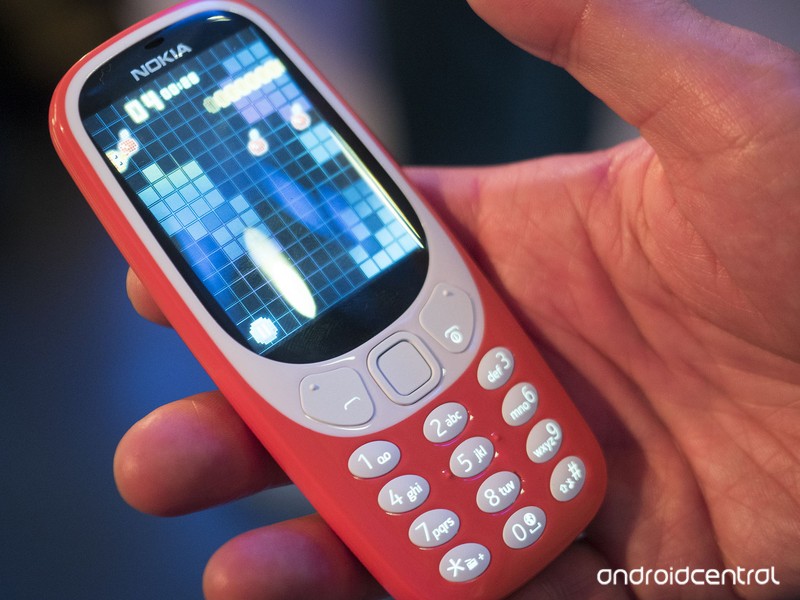
Oh, and there’s a brand-new Nokia 3310 feature phone coming and it’s simply adorable.
Confirmed: Samsung Galaxy S8 launch date is 29 March
Samsung used its Mobile World Congress 2017 press conference to tease the launch date for its forthcoming smartphones, the Samsung Galaxy S8.
Samsung usually uses the Barcelona trade show to launch its annual update to its flagship smartphone, but in 2017, its absence was noted.
Some are putting this down to wanting to stabilise after the Galaxy Note 7 disaster, some are saying it’s to ensure that everything is 100 per cent correct, but it might just because it fits into the company’s plans better.
#UnboxYourPhone 29.03.17. Live at https://t.co/N18H5SqB3Q pic.twitter.com/sMIHgnKIms
— Samsung UK (@SamsungUK) February 26, 2017
The Samsung Galaxy S8 will be launched on 29 March 2017 it has been confirmed, finally putting a date on the perhaps the most anticipated device launch of the year.
- Samsung Galaxy S8: Release date, rumours and everything you need to know
Samsung also dropped in another tiny hint, saying that AKG headphones would soon be available and would be bundled with the upcoming smartphone.
Meanwhile, Mobile World Congress has seen the launch of the Huawei P10, the LG G6, a new Moto G5 and a portfolio of Nokia handsets.
- Mobile World Congress 2017: Nokia, LG, Samsung, Huawei, Sony smartphones and more
The Galaxy S8 launches March 29 in New York
As expected, we didn’t get a Galaxy S8 reveal. Samsung’s MWC showcase centered around a whole lot of tablets and other devices. However, the company did confirm one thing: that March 29 launch rumor is true — and it’ll all go down in New York. Then, like clockwork, our invite to the whole thing arrived.
What do we know about the Galaxy S8 so far? A few things. You can expect a new AI voice assistant, an edge-to-edge display (or at least the option of one), as well as a virtual home button instead of a physical one, baked under the display. Oh, and we may have already seen one in the wild already. Still there’s a whole month left to spill yet more specification beans.
Click here to catch up on the latest news from MWC 2017.
Staedtler and Samsung made an old-school pencil-like S Pen
Along with a pair of new tablets and some 5G equipment, Samsung unveiled a fresh new version of its S Pen stylus that looks incredibly familiar. The new stylus is just like German pencil maker Staedtler’s Noris stylud, except it will most likely do everything Samsung’s pen can. That includes detecting up to 4,096 levels of pressure sensitivity, and working with the new slates to write and store memos even when the screen is off, as well as outline screenshots or annotate PDF documents. Nothing was announced on its price and availability yet, but those looking to mask their digital nativeness should be excited by the new option.
Click here to catch up on the latest news from MWC 2017.
GoPro’s deal with Huawei gives it a foothold in smartphones
Don’t look now, but GoPro just shifted a little toward becoming a mobile app company. The action camera maker has struck a deal with Huawei that will see its intelligent video editor, Quik, integrated with the photo gallery app in the P10, P10 Plus and other smartphones packing newer versions of Huawei’s EMUI interface. The centerpiece is a Highlights feature that uses Quik to automatically whip up a video based on your photos and videos, complete with backing music. Think of it as a more video-focusd spiritual successor to HTC’s Zoe.
Appropriately, GoPro is sprucing up the stand-alone Quik app for Android and iOS users. There’s an easier editing flow with new options to both personalize and stylize videos (similar to what P10 owners get), and it should be easier to pick songs and fine-tune the sound.
The Huawei move certainly doesn’t signal an exit from hardware any time soon — that’s GoPro’s bread and butter. Along with the Karma drone, however, it does signal a further attempt to diversify beyond GoPro’s original camera business. Success with partnerships like this not only puts GoPro’s technology in front of more people, it gives the company a source of revenue that isn’t tied to its device release cycles — it might not have to worry so much about taking its time with a new camera.
Click here to catch up on the latest news from MWC 2017.
Source: GoPro
The Huawei Watch 2 is a strong showcase for Android Wear 2
Android Wear 2.0 just made its debut on a pair of LG-made watches, and as expected, we’re starting to see other companies show off their own takes on the new system. Huawei is unveiling its Watch 2 at MWC 2017, which runs the new Google OS in a sportier body. It will be available in the US starting in April, and in some European countries in March for 349 Euros (about $350). From my brief time with preview versions of the new timepiece, which is also available in a Classic model, I’m already impressed by how comfortably light and sturdy they are.
The classic Watch 2, with its black face and leather band, is very basic-looking — so much so that instead of calling it wrist candy, you’d be better off calling it wrist… salad. But what it lacks in style, it makes up for with comfort and quality. The watch’s round 1.2-inch face (which is the same size as the LG Watch Style’s, by the way) is surrounded by an etched ceramic bezel that, despite somewhat engulfing the otherwise dainty display, adds a premium feel to the device. The hybrid leather band is smooth leather on top and jointed rubber on the underside, making it look good on the outside while feeling comfortably flexible.
The regular model, on the other hand, has a sportier design than its relatively vanilla counterpart. I liked the yellow accents on the grey/yellow one I tried, and I was surprised and pleased at how light the Sport felt without coming off cheap. Other color options of the Watch 2 include black and bright orange bands. If you prefer a strap of your own, you can easily swap one out using the clasp on the underside.
Unlike the LG Watch Style and Watch Sport, the new Huawei wearables don’t offer a rotating crown on the side of their face. That’s a bit of a bummer, since Android Wear 2.0’s new scrolling interface, which can be controlled by the knob on the LG devices, was one of our favorite new features. You can still use your finger to scroll up and down pages of apps or notifications, which isn’t as fast, but is at least an improvement over Android Wear’s originally swipe-heavy navigating system.

Not only is the Watch 2’s look sportier, but its software has some bonuses for fitness fans as well. Huawei has added its own Fit feature that customizes workout plans for specific activities such as running, cycling or hanging out on the treadmill. No worries if the watch gets wet with your sweat or if you are caught in the rain mid-jog: the device meets IP68 industry standards for water resistance and will survive.
The rest of the Huawei Watch 2’s specs aren’t bad, either. You’ll get NFC support for Android Pay and a heart rate sensor on both the regular and Classic versions, which are two features the LG Watch Style did not offer. The regular Watch 2 will also have LTE support in certain regions, although it’s not clear if that will be available in US models. Both editions of the Watch 2 are powered by the same Snapdragon 2100 chipset as is on the LG models. But Huawei has a big lead over LG here in one key area: battery life. By squeezing a 420mAh cell in these devices, Huawei promises up to two days worth of endurance for the new wearables. Plus, with a new feature called Watch Mode, which disables everything except for a watchface and the pedometer, the Watch 2 can last an impressive 25 days.
That’s a pretty lofty claim — one we’re hoping to be able to test out very soon. At just €329 (roughly $350), the Watch 2 is reasonably priced for what it offers. It will be available stateside in April, when we’ll know exactly how much it will retail here for. Meanwhile, those hoping for promising Android Wear 2.0 alternatives to the LG watches have something to look forward to.
Click here to catch up on the latest news from MWC 2017.
Ben Heck makes a Zelda lamp by upcycling laptop screens

Humans by nature can be a little bit wasteful. Recycling helps, of course, but some things are too good to throw away. That’s where upcycling comes in. Karen has the idea to repurpose laptop screens to create a Legend of Zelda-inspired lamp. However, not just any laptop screen will do. As the team rips apart old hardware they soon discover the different types of panels that have been used in various laptops over the years. With the optimal screens identified, Karen gets down to business with Adobe Illustrator and designs suitable laser-cut frames. Watch the episode to find out tips and tricks to make the perfect design. Have you upcycled any old hardware? Think you could enter your project in a design competition? Find out more on the element14 Community.
 AIVAnet