


Vkansee demos its under-glass fingerprint sensor on a Lenovo laptop
Why it matters to you
Keep an eye on the companies behind under-glass fingerprint sensors, as their technology may be utilized in your next smartphone.
The next step for fingerprint sensors on smartphones is for them to sit under the glass, and that’s rumored to be a feature on Apple’s next iPhone. Vkansee, a startup in New York, has already patented an under-glass optical fingerprint sensor — but the company is utilizing it first with Windows laptops.
At Mobile World Congress, the startup is demoing its prototype optical fingerprint reader on a Lenovo laptop utilizing Windows Hello, Microsoft’s face, fingerprint, or iris recognizing software that enables secure sign-in into your computer.
More: Samsung Flow app to let you use phone’s fingerprint sensor to log into Windows
There are varying types of fingerprint sensors, but the most common ones found on smartphones today are capacitive scanners, which use electrical currents to collect data about a fingerprint. Vkansee president Jason Chaikin told Digital Trends that capacitive scanners are “great,” as they are cheap, fit into phones well, and consume very little power.
So why do manufacturers want to ditch them? Smartphone design. Manufacturers always need to cut a hole because it’s incredibly difficult to have a capacitive sensor under glass — they would need to etch the glass to attempt to put the sensor underneath.
Optical scanners have been around for a long time, but until now they have been big and bulky — they’re the sort of scanners used at border crossings and for background checks.
“A small light flashes through glass and it goes through a lens,” Chaikin said. “An optical sensor is a fixed, focal-length camera that captures a picture of your fingerprint.”
More: Apple was just granted a patent for a touchscreen that reads fingerprints
Vkansee’s optical sensor can read through 2mm of glass, making it optimal to be embedded under a smartphone’s glass display. Synaptics also announced an optical fingerprint-sensor for smartphones last year.
Vkansee’s testing its prototype on a Lenovo laptop, and the company claims its “high-resolution sensors are ultra-thin, anti-spoof, water- and sweat-resistant, and read fingerprints at a resolution up to 2,000 pixels per inch.”
The company said its evaluation kits are in testing with various manufacturers, and last year it announced a software licensing partnership with Precise Biometrics, a fingerprint software company that offers fingerprint matching algorithms to the likes of Huawei, Google, Xiaomi, Lenovo, LG, and more.
Chaikin said Vkansee’s technology will debut in laptops this year, and likely on mobile devices at a later time.
MediaTek’s 10-core Helio X30 now official, debuting next quarter
MediaTek’s Helio X30 has 10 cores and a GPU that’s 2.4 times faster than last year’s X20.
At Mobile World Congress, MediaTek has officially kicked off availability of its high-end SoC for 2017, the Helio X30. The chipset is built on a 10nm node, and will be making its debut in phones next quarter.

Like its predecessor, the Helio X30 offers a tri-cluster CPU design that sees two Cortex A73 cores clocked at 2.5GHz to form the high-performance cluster, complemented by four Cortex A53 cores at 2.2GHz and four Cortex A53 at 1.9GHz. MediaTek is touting its intelligent task switcher, CorePilot 4.0, to deliver up to 25% power savings. CorePilot 4.0 pulls data from the device’s thermals and relies on “user experience monitoring technology” to predict which CPU cores should be used for a particular task. The idea is to maximize battery life while ensuring that users don’t notice a drop in performance.
On the GPU front, the Helio X30 fields Imagination’s PowerVR Series7XT Plus clocked at 800MHz, which according to MediaTek is 2.4 times faster than last year’s Helio X20 while consuming up to 60% less power. The SoC accommodates displays up to 2560×1600 in resolution, up to 8GB of LPDDR4X RAM, and eMMC 5.1 or UFS 2.1 flash memory.
Other improvements include a vision processing unit for processing images that uses 10% of the power a regular CPU would for undertaking the same task. The 14-bit Imagiq 2.0 ISP supports 28MP sensors, dual 16MP+16MP sensors, improved EIS for smooth videos and ultra-fast autofocus.
The SoC is also the first to include a hardware-based 4K 10-bit HDR10 decode for 4K video playback at 30fps. Also included is a Category 10 LTE modem with 3x carrier aggregation that has a theoretical peak of 450Mbps.
MediaTek mentions that the first phones powered by the Helio X30 will be available in the second quarter of 2017. Chinese manufacturer Vernee has already announced that its upcoming Apollo 2 will feature the Helio X30, and we’ll likely hear more about other handsets that will be powered by the SoC in the coming weeks.
Netflix wins an Oscar for documentary short ‘The White Helmets’
While we were expecting Amazon to score an Oscar first for Manchester by the Sea, Netflix ended up beating out that film with a Best Documentary (Short Subject) Oscar for The White Helmets. Directed by Orlando von Einsiedel, the film centers on a group of volunteer rescue workers for the Syrian Civil Defense Force, also known as “The White Helmets,” who risk their lives to help civilians in that war-torn country.
The group has saved more than 60,000 lives so far, and they’ve also been nominated for a Nobel Peace Prize. Ava DuVernay’s The 13th, another Netflix film, was also nominated for best documentary, but it lost out to the epic-length O.J.: Made in America. As you might have guessed, The White Helmets is available to watch on Netflix now.
NASA starts wind tunnel tests for its quiet supersonic jet
NASA’s plans for a quiet supersonic jet, the QueSST, just became tangible: the agency and Lockheed Martin have started wind tunnel tests for the future X-plane. It’s a scale model at this stage, but it will be subjected to winds as high as Mach 1.6 (950MPH) to gauge both its aerodynamic performance as well as parts of its propulsion system. The tests should run until the middle of 2017.
Whether or not QueSST moves beyond these tests will depend on funding approval. If it does get the go ahead, though, the next step is making an honest-to-goodness aircraft poised to fly in 2020. That goal is still a long way off, but it now seems more achievable than it did a year ago.
Source: NASA
Here’s our first look at Netflix’s ‘Bright,’ starring Will Smith
Why would Netflix pay $90 million for a single film? Two words: Will Smith. The blockbuster star is teaming back up with David Ayer, the director of Suicide Squad, for Bright, a new fantasy action film. Tonight at the Academy Awards we caught our first glimpse at the movie, which basically looks like a bunch of Suicide Squad deleted scenes. Smith stars as a cop in a world where humans live alongside fantasy creatures, and he partners up with an orc (Joel Edgerton) to track down a superweapon.
Netflix is reportedly aiming to make Bright a franchise, and given the star power involved, there’s a good chance it’ll encourage even more people to sign up for subscriptions. The streaming video company also reportedly paid over $100 million for Martin Scorsese’s next film, The Irishman, with Robert DeNiro, as well as $60 million for the Brad Pitt-starring War Machine.
Fantasy has become reality. Will Smith and Joel Edgerton star in Bright, only on @netflix. pic.twitter.com/FJueEhMFCO
— Bright Film (@BrightNetflix) February 27, 2017
Amazon’s ‘Manchester by the Sea’ wins acting and screenplay Oscars
Amazon’s $10 million bet on Manchester by the Sea has paid off with a few Oscar wins. Casey Affleck won the Academy Award for Best Actor, while writer/director Kenneth Lonergan picked up Best Adapted Screenplay. The film was nominated for seven Oscars, and it notably made Amazon the first streaming video company to earn a Best Picture nod. It was also Amazon’s first Golden Globe winning film, so all in all that $10 million seems pretty well-spent.
Additionally, the company scored an Oscar win for best foreign film with Asghar Farhadi’s The Salesman. The director wasn’t at the ceremony — he remained in Iran in protest of Donald Trump’s travel ban from Mulsim countries — but he pleaded for empathy in a speech read by Iranian astronaut Anousheh Ansari.
Amazon beat out Netflix, which won one Oscar for the short documentary The White Helmets. Netflix was also nominated for Ava DuVernay’s The 13th in the documentary category, but it lost out to the epic-length O.J.: Made in America.
Moto G5 and G5 Plus hands on: bringing premium looks to the mid-range
The Moto G5 and G5 Plus are the G series phones that most clearly aspire to Z series status: they do away with the plastic chassis and adopt some Moto Z range characteristics. But are the Moto G5 and G5 Plus just mid-rangers masquerading as flagships or are they truly attempting to bridge the gap between the G and Z?
These are by far the most premium-looking G series phones Motorola – or should we say Lenovo – have ever made. But looks can be deceiving: are these phones more old school G or new school Z? The answer is they’re a little bit of both. The new Moto G’s deliver everything we know and love from the G series but wrap it all in a frame that resembles the flagship Z series a lot more than ever before.
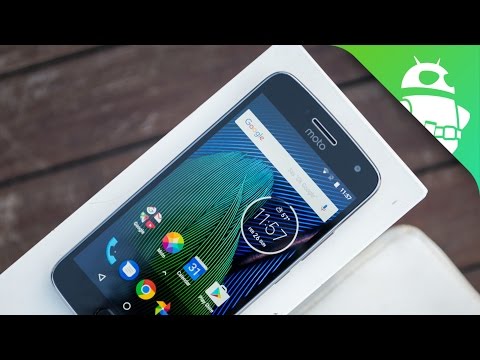
Think about it: the Moto G series has historically been Motorola’s bigger seller. But the Z series is the flagship line. What better way to encourage fans of the mid-range devices to consider stepping up to the top tier than to provide flagship looks in a cheaper device?
We’ve seen a similar “trickling down” of flagship features on other smartphone ranges plenty of times before, and Motorola has taken this attitude as its personal M.O., so there’s nothing particularly new going on here. But what is new is the G series’ design: a full-metal build on a mid-range phone that costs little more than $200 rather than double that.
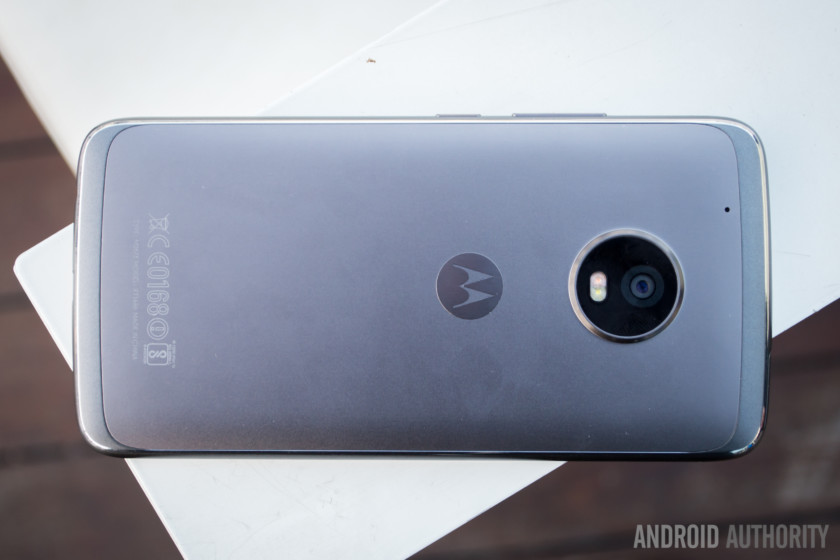
The G5 Plus is the more premium of the two phones: slightly larger and with slightly better specs than the regular G5. But that difference won’t matter much to U.S. customers, as the G5 Plus is the only version making it to that market. Priced at $229 for the base model with 2 GB of RAM and 32 GB of storage (with microSD expansion) and $299 for an additional GB of RAM and 64 GB of storage, the G5 Plus will be available Stateside in March.
Among the many decent features in the new G5’s include a front-facing fingerprint scanner that not only serves a security purpose but can also be converted into a navigation tool. Simply enable a setting to remove the on-screen navigation buttons and use a series of swipe gestures on the finger scanner to move through the interface.
The 12 MP camera on the G5 Plus has Dual Autofocus Pixels for super-fast autofocus – up to 60 percent faster than the G54 Plus – with a 1.4 micron pixel size, on-sensor phase detection and impressive f/1.7 aperture for low light shots. The camera app will be familiar to any G series fan, but the sensor is a major step up from previous G phones. The front-facing camera is a 5 MP shooter with f/2.2 aperture.

On the battery front there’s a 3,000 mAh battery featuring TurboPower charging for six hours of battery life in just 15 minutes. On the display front, the 5.2-inch Full HD IPS LCD is pretty standard mid-range fare but there’s a 3.5 mm headphone jack, unlike the flagship Moto Z. The Moto G5 and G5 Plus run Android 7.0 Nougat out of the box with Moto’s added value software features in the settings.
The G5 Plus is powered by the power-sipping Snapdragon 625, meaning that battery life should last even longer than on a flagship phone with a similar capacity, due to the lower power demands of the chipset. There’s also Google Assistant coming via update, Moto Actions like the familiar wrist-flick to launch the camera and a karate chop gesture to launch the flashlight.

If you’re in a market that will get the G5 as well, things take a step down: to a Snapdragon 430, 5.0-inch Full HD display, 13 MP f/2.0 aperture camera which maxes out at 1080p video (whereas the G5 Plus can shoot 4K), a 2,800 mAh removable battery and 16 GB or 32 GB versions.
The Moto G5 starts at 199 Euro for the 2 GB of RAM and 16 GB ROM version with an upgrade available to 32 GB of storage. Both the G5 and G5 Plus have dual-SIM capabilities but neither come with NFC, so there’ll be no contactless payments in your future if you pick one up.
| Display | 5.0-inch LCD 1920 x 1080 resolution 441ppi |
5.2-inch LCD 1920 x 1080 resolution, 424ppi Gorilla Glass 3 |
| Processor | 1.4GHz octa-core Qualcomm Snapdragon 430 | 2.0GHz octa-core Qualcomm Snapdragon 625 |
| GPU | Adreno 505 | Adreno 506 |
| RAM | 2 or 3GB | 2, 3 or 4GB |
| Storage | 16 or 32GB | 16, 32 or 64GB |
| MicroSD | Yes, up to 128GB | Yes, up to 128GB |
| Cameras | Rear: 13MP sensor with an f/2.0 aperture, PDAF, 1.1μm pixels
Front: 5MP sensor with an f/2.2 aperture, 1.4μm pixels |
Rear: 12MP sensor with an f/1.7 aperture, 1.4μm pixels and “dual autofocus pixels”
Front: 5MP sensor with an f/1.7 aperture, 1.4μm pixels |
| Battery | 2,800mAh Removable |
3,000mAh Removable |
| Connectivity | Wi-Fi 802.11n dual-band Bluetooth 4.2 MicroUSB 3.5mm headphone jack |
Wi-Fi 802.11n dual-band Bluetooth 4.2 MicroUSB 3.5mm headphone jack |
| Sensors | Fingerprint reader Accelerometer Gyroscope Magnetometer Ambient Light Proximity |
Fingerprint reader Accelerometer Gyroscope Magnetometer Ambient Light Proximity |
| Networks | 4G LTE (Cat. 6) CDMA/EVDO Rev A UMTS/HSPA+ GSM/EDGE |
4G LTE (Cat. 6) CDMA/EVDO Rev A UMTS/HSPA+ GSM/EDGE |
| NFC | No | Yes, but not in U.S. |
| Water protection | Water repellent nano-coating | Water repellent nano-coating |
| Software | Android 7.0 Nougat | Android 7.0 Nougat |
| Colors | Fine Gold, Lunar Gray, Sapphire Blue (in some regions) | Fine Gold, Lunar Gray |
| Dimensions and weight | 144.3 x 73 x 9.5mm 144.5g |
150.2 x 74.0 x 7.7 to 9.7mm 155g |
There’s no pretending these phones are anything even close to flagships in specs, but they certainly look the part. Samsung has successfully delivered its premium design to the Galaxy A series and the same approach will likely work wonders for Lenovo too. They deliver the same tried-and-true recipe the Moto G series has become famous for, but they do it in a style typically reserved for flagship phones. And that sounds like a recipe worth repeating.
The Invoxia NX 200 desk phone is an ode to a technologically handicapped past
Why it matters to you
Invoxia’s NX 200 promises to turn your mobile phone into an extraordinary office phone, but it does too little for too much.

If you’re the kind of person who can’t stand sacrificing a desk phone for something mobile, or if you have an inexplicable affection for cubical farms of the early 2000s, then NVX 200 is the product you’ve been searching for. It’s a digital Bluetooth desk phone that offers an “optimized” and “simplified” user experience — presumably because, you know, the calling function on smartphones these days is way too cumbersome to fiddle around with.
Invoxia’s NVX 200 “offers the best of unified communication” with the “comfort” and “style” of a desk phone, according to the company’s press release. It takes calls in hands-free mode just like any old smartphone. Or, if you’d like to feel especially anchored to your desk, you can switch to the NX 200’s handset.
More: Invoxia’s stylish desktop phone puts your mobile device to work
The benefits of the NVX ostensibly include high quality sound, conferences of up to five people, apps like Skype and Hangouts, and programmable speed dial keys. But those aren’t exactly novel. AT&T, Verizon, Sprint, T-Mobile, and others have adopted or are in the process of adopting voice-over-LTE — VoLTE, for short — that sound noticeably clearer and better than your average landline. The iPhone and major mobile networks have supported five-way conference calling as far back as 2008. And it goes without saying that Skype and speed dial have been smartphone hallmarks for nearly a decade.
There’s potentially something of real value to Invoxia’s Vivo Acoustic software, which uses a combination of far-field microphones and software to pick up speech from up to 16 feet away. And there’s the the NVX 200’s standalone mode, which enables it to function as a phone without the need for Wi-Fi or Ethernet connectivity.
But it’s hard to argue any of those features justify the NX 200’s $250 asking price.
More: Forgot your phone charger at home? This desk can help
“In a time when Slack, Workplace by Facebook, and other unified communication networks triumph, the way companies communicate is evolving rapidly towards more mobility,” an Invoxia spokesperson said. “An entire new ecosystem needs to be created and peripheral devices should evolve accordingly to optimize unified communication.”

The firm may have a point about “ecosystems” better suited to modern workplaces, and those may well be coming. Samsung, for example, is reportedly developing a smartphone dock that switches to a desktop interface when plugged into a monitor. Motorola’s Moto Z accessory lineup, meanwhile, includes a pico projector that can throw video calls, text messages, and PowerPoint presentations onto any wall.
The NX 200, then, is ultimately a solution in search of a problem. Its appeal is predicated upon its familiarity, not its usefulness, and we’d have to conclude that there are much better ways to spend $250.
More: Got a dead-end job? You can run in circles with this hamster wheel desk
But if the marketing’s nostalgia moves you, the NX 200 is available now from Amazon and other internet retailers.
The Invoxia NX 200 desk phone is an ode to a technologically handicapped past
Why it matters to you
Invoxia’s NX 200 promises to turn your mobile phone into an extraordinary office phone, but it does too little for too much.

If you’re the kind of person who can’t stand sacrificing a desk phone for something mobile, or if you have an inexplicable affection for cubical farms of the early 2000s, then NVX 200 is the product you’ve been searching for. It’s a digital Bluetooth desk phone that offers an “optimized” and “simplified” user experience — presumably because, you know, the calling function on smartphones these days is way too cumbersome to fiddle around with.
Invoxia’s NVX 200 “offers the best of unified communication” with the “comfort” and “style” of a desk phone, according to the company’s press release. It takes calls in hands-free mode just like any old smartphone. Or, if you’d like to feel especially anchored to your desk, you can switch to the NX 200’s handset.
More: Invoxia’s stylish desktop phone puts your mobile device to work
The benefits of the NVX ostensibly include high quality sound, conferences of up to five people, apps like Skype and Hangouts, and programmable speed dial keys. But those aren’t exactly novel. AT&T, Verizon, Sprint, T-Mobile, and others have adopted or are in the process of adopting voice-over-LTE — VoLTE, for short — that sound noticeably clearer and better than your average landline. The iPhone and major mobile networks have supported five-way conference calling as far back as 2008. And it goes without saying that Skype and speed dial have been smartphone hallmarks for nearly a decade.
There’s potentially something of real value to Invoxia’s Vivo Acoustic software, which uses a combination of far-field microphones and software to pick up speech from up to 16 feet away. And there’s the the NVX 200’s standalone mode, which enables it to function as a phone without the need for Wi-Fi or Ethernet connectivity.
But it’s hard to argue any of those features justify the NX 200’s $250 asking price.
More: Forgot your phone charger at home? This desk can help
“In a time when Slack, Workplace by Facebook, and other unified communication networks triumph, the way companies communicate is evolving rapidly towards more mobility,” an Invoxia spokesperson said. “An entire new ecosystem needs to be created and peripheral devices should evolve accordingly to optimize unified communication.”

The firm may have a point about “ecosystems” better suited to modern workplaces, and those may well be coming. Samsung, for example, is reportedly developing a smartphone dock that switches to a desktop interface when plugged into a monitor. Motorola’s Moto Z accessory lineup, meanwhile, includes a pico projector that can throw video calls, text messages, and PowerPoint presentations onto any wall.
The NX 200, then, is ultimately a solution in search of a problem. Its appeal is predicated upon its familiarity, not its usefulness, and we’d have to conclude that there are much better ways to spend $250.
More: Got a dead-end job? You can run in circles with this hamster wheel desk
But if the marketing’s nostalgia moves you, the NX 200 is available now from Amazon and other internet retailers.
The Invoxia NX 200 desk phone is an ode to a technologically handicapped past
Why it matters to you
Invoxia’s NX 200 promises to turn your mobile phone into an extraordinary office phone, but it does too little for too much.

If you’re the kind of person who can’t stand sacrificing a desk phone for something mobile, or if you have an inexplicable affection for cubical farms of the early 2000s, then NVX 200 is the product you’ve been searching for. It’s a digital Bluetooth desk phone that offers an “optimized” and “simplified” user experience — presumably because, you know, the calling function on smartphones these days is way too cumbersome to fiddle around with.
Invoxia’s NVX 200 “offers the best of unified communication” with the “comfort” and “style” of a desk phone, according to the company’s press release. It takes calls in hands-free mode just like any old smartphone. Or, if you’d like to feel especially anchored to your desk, you can switch to the NX 200’s handset.
More: Invoxia’s stylish desktop phone puts your mobile device to work
The benefits of the NVX ostensibly include high quality sound, conferences of up to five people, apps like Skype and Hangouts, and programmable speed dial keys. But those aren’t exactly novel. AT&T, Verizon, Sprint, T-Mobile, and others have adopted or are in the process of adopting voice-over-LTE — VoLTE, for short — that sound noticeably clearer and better than your average landline. The iPhone and major mobile networks have supported five-way conference calling as far back as 2008. And it goes without saying that Skype and speed dial have been smartphone hallmarks for nearly a decade.
There’s potentially something of real value to Invoxia’s Vivo Acoustic software, which uses a combination of far-field microphones and software to pick up speech from up to 16 feet away. And there’s the the NVX 200’s standalone mode, which enables it to function as a phone without the need for Wi-Fi or Ethernet connectivity.
But it’s hard to argue any of those features justify the NX 200’s $250 asking price.
More: Forgot your phone charger at home? This desk can help
“In a time when Slack, Workplace by Facebook, and other unified communication networks triumph, the way companies communicate is evolving rapidly towards more mobility,” an Invoxia spokesperson said. “An entire new ecosystem needs to be created and peripheral devices should evolve accordingly to optimize unified communication.”

The firm may have a point about “ecosystems” better suited to modern workplaces, and those may well be coming. Samsung, for example, is reportedly developing a smartphone dock that switches to a desktop interface when plugged into a monitor. Motorola’s Moto Z accessory lineup, meanwhile, includes a pico projector that can throw video calls, text messages, and PowerPoint presentations onto any wall.
The NX 200, then, is ultimately a solution in search of a problem. Its appeal is predicated upon its familiarity, not its usefulness, and we’d have to conclude that there are much better ways to spend $250.
More: Got a dead-end job? You can run in circles with this hamster wheel desk
But if the marketing’s nostalgia moves you, the NX 200 is available now from Amazon and other internet retailers.
 AIVAnet