


Apple could be working on ‘exceedingly flexible’ phone screen, patent suggests
Why it matters to you
Rumors of foldable phones and wearables have been all the rage as of late, and Apple’s patent for a bendable screen could indicate it wants to be part of this new trend.
The future looks flexible from Apple’s perspective. Literally.
According to a patent originally discovered by Apple Insider, it appears as though the tech giant is looking to build a mobile device “with an exceedingly flexible display.” The U.S. Patent and Trademark Office on Thursday published a filing for “Electronic Devices With Soft Input-Output Components,” which delves into the idea of fitting LCD or OLED panels into products featuring a bendable design.
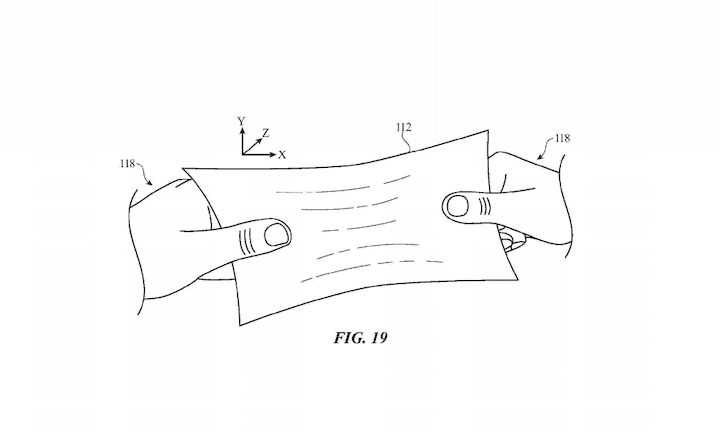
As Apple Insider explains, Apple’s proposal includes a flexible input-output display featuring integrated sensors and haptic feedback mechanisms, which would be comprised of a mesh-esque elastomeric substrate layer. Traditionally, these displays have been made from a sheet of plastic. But Apple wants to place the light-emitting components like LEDs, micro-LEDs, and OLEDs, as well as the input mechanisms and conductive traces, in a grid shape that will allow for more flexibility.
More: Apple iPhone 8 rumors and news
To make it truly bendable, Apple will need to thin out or completely eliminate the underlying polymer substrate layer, and instead keep only the mesh-like structure with individual “electrical units” or “islands.” Sensors such as “touch sensors, force sensors, temperature sensors, accelerometers, and other sensors, and vibrators or other devices for providing haptic feedback” could be added to the stretchable screen, which undermines the need for any sort of top bezels. So the future is not only flexible, but flat as well.
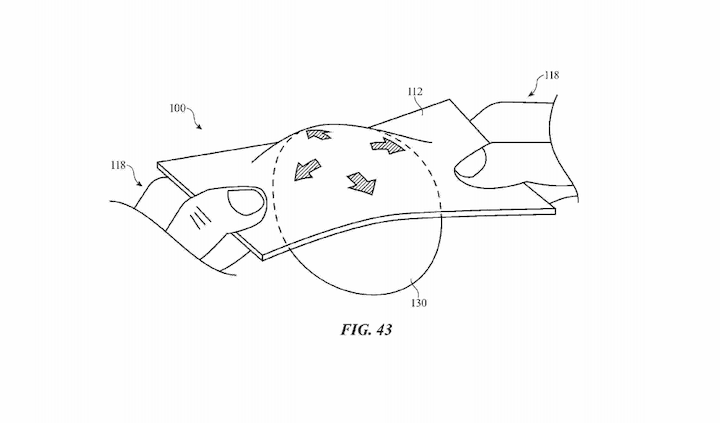
So what would the advantages of a bending screen be? For one, the flip phones of days past could make a resurgence, but with a full-sized screen. Alternatively, we might one day be able to wear our phones around our wrist.
Of course, it’s still unclear as to whether or not Apple will move forward with this design, but it’s certainly some interesting food for thought for us to chew on in the meantime.
Security firm claims Apple was storing ‘deleted’ Safari browsing data in iCloud
Why it matters to you
Apple’s slip-up with Safari data suggests that your browsing history is rarely ever “deleted”
A Russian cybersecurity company has claimed that it can retrieve “deleted” Safari browsing data from iCloud. Elcomsoft, based in Moscow, which makes forensics software, said that it’s possible to find a list of your supposedly deleted Safari browsing habits stored in iCloud for over a year.
According to the firm’s CEO Vladimir Katalov, Apple maintains this data in a file called “tombstone” for the purposes of syncing different devices. Katalov claimed that he made this discovery by accident and used his company’s Phone Breaker software to extract the “deleted” data going back over a year.
“We have found that they stay in the cloud probably forever,” he told Forbes, which also had an independent iOS forensic expert verify the claims. It’s worth pointing out that Apple does not use the term “delete” when it comes to Safari browsing data on your Mac or iPhone. Rather this data is “cleared.”
More: How to delete cookies in Chrome, Firefox, Safari, and IE
But nonetheless, privacy and security experts are not pleased with the revelations. Jay Stanley of the American Civil Liberties Union (ACLU) told Forbes that even if this was just a mistake on Apple’s part, it is worrying as data retention is often done by default.
Browsing history is very sensitive and can reveal a lot of about a person, he said, and users may feel less comfortable knowing that the data isn’t truly deleted. “It’s vital that people are able to trust that they can be in control of that kind of information. It’s one reason we advise using search tools that don’t store your history.”
“Any data that’s supposed to be deleted but can still be extracted is always interesting, especially for law enforcement,” added Per Thorsheim, organizer of security conference PasswordsCon, in Elcomsoft’s press release.
Apple has yet to respond to the allegations but Katalov added that once the news first broke this morning, his browsing data started disappearing from his iCloud so it appears some kind of fix has been put in place.
Security firm claims Apple was storing ‘deleted’ Safari browsing data in iCloud
Why it matters to you
Apple’s slip-up with Safari data suggests that your browsing history is rarely ever “deleted”
A Russian cybersecurity company has claimed that it can retrieve “deleted” Safari browsing data from iCloud. Elcomsoft, based in Moscow, which makes forensics software, said that it’s possible to find a list of your supposedly deleted Safari browsing habits stored in iCloud for over a year.
According to the firm’s CEO Vladimir Katalov, Apple maintains this data in a file called “tombstone” for the purposes of syncing different devices. Katalov claimed that he made this discovery by accident and used his company’s Phone Breaker software to extract the “deleted” data going back over a year.
“We have found that they stay in the cloud probably forever,” he told Forbes, which also had an independent iOS forensic expert verify the claims. It’s worth pointing out that Apple does not use the term “delete” when it comes to Safari browsing data on your Mac or iPhone. Rather this data is “cleared.”
More: How to delete cookies in Chrome, Firefox, Safari, and IE
But nonetheless, privacy and security experts are not pleased with the revelations. Jay Stanley of the American Civil Liberties Union (ACLU) told Forbes that even if this was just a mistake on Apple’s part, it is worrying as data retention is often done by default.
Browsing history is very sensitive and can reveal a lot of about a person, he said, and users may feel less comfortable knowing that the data isn’t truly deleted. “It’s vital that people are able to trust that they can be in control of that kind of information. It’s one reason we advise using search tools that don’t store your history.”
“Any data that’s supposed to be deleted but can still be extracted is always interesting, especially for law enforcement,” added Per Thorsheim, organizer of security conference PasswordsCon, in Elcomsoft’s press release.
Apple has yet to respond to the allegations but Katalov added that once the news first broke this morning, his browsing data started disappearing from his iCloud so it appears some kind of fix has been put in place.
DJI wants Mavic Pro pilots to practice safe flight with its latest accessories
Why it matters to you
Mavic Pro pilots can keep their investment looking a little more like new with accessories designed to protect the drone both during storage and flight.
DJI’s foldable Mavic Pro drone is getting a bit more flair with a slew of new accessories announced Wednesday. The lineup for the Mavic Pro now includes several extras to help keep that $1,000 investment a bit safer.
The new propeller cage is designed for flight newbies to keep the Mavic’s arms and propellers guarded during flight. DJI says the cage is ideal for new pilots learning how to fly through tight spaces. The added weight of the cage will reduce the flight time to a 12-minute maximum, however.
More: Rain, fire, and rogue Barbies can’t stop DJI’s nearly invincible Mavic Pro drone
The propeller guards are a lighter variation of the cage, protecting only the propellers of the drone during flight. To accommodate the extra protection, the guards are used with slightly smaller quick-release folding propellers, also introduced this week. The guards don’t protect the arms like the cage does, but don’t add as much weight or drain the battery quite so fast.
If battery life is a concern, DJI’s new battery hub may come in handy. The charger will re-power four batteries without swapping them out of a single charger, reducing the amount of time necessary to get all the batteries ready for flight again. DJI says the charger automatically recognizes which battery is lowest and charges that one first.
When it comes to keeping the Mavic Pro’s sleek gray body safe from scratches, pilots don’t need a special order sweater — a new $7 aircraft sleeve will do the trick, at least for storage anyways. DJI says the sleeve helps prevent scratches as well as keeping dust off the body.
Along with the new safety gear, the Mavic Pro’s camera has compatible neutral density filters, giving photographers and videographers more control over exposure settings. A new remote controller monitor hood helps block glare from the control screen during flight.
The propeller cage, $159, smaller folding propellers, $9, battery charging hub, $55 and the aircraft sleeve are available from DJI’s online store, while the propeller guard is expected in at a later date for a $15 list price.
Got a Pixel? You can now use it to control your smart home appliances
Why it matters to you
Pixel owners have one fewer to buy a Google Home, now that they can control your smart home appliances with their phones.
With Google Assistant on multiple platforms — such as the Google Pixel, Google Home, Android TV, and Android Wear — you would think the artificially intelligent bot would have the same features. Sadly that’s not the case, but Assistant on the Pixel is gaining some features from Assistant on the Home.
Last month, the search giant added support for Belkin’s WeMo platform and Honeywell’s devices, expanding smart home integration from the services it supported at launch — Nest, Philips Hue, and Samsung SmartThings. The company also said Pixel smartphones would soon be able to control smart home appliances as well, and it looks like the update is rolling out now.
More: Google Assistant adds another 10 skills, including a virtual sommelier
Head over to the Google Assistant’s settings, which you can access by pressing and holding the home button and then tapping the button on the top right. Go to Settings, and you’ll now find “Home Control.” You can see and add your devices and room setups here.
The same voice commands you use for the Google Home should translate over to the Pixel. Google’s goal is to provide a universal Assistant across all your devices, but it seems as though the company just needs time to put it all together.
Still the company has previously told Digital Trends that some features will always be exclusive to certain devices — the emoji game, for example, will only be available on Allo’s text-based Google Assistant.
Adding home control to the Pixel is a welcome addition, as the device can now compete with HomeKit in Apple’s iPhone. As more and more people opt for smart products in their home, the more ways users have to control these devices is always a benefit.
More: Waiting on a Google Pixel? Verizon may treat you to a free Daydream View
At the same time, the Pixel’s ability to control your smart home now diminishes the need to buy a Google Home for Pixel owners.
If you do not see the update yet, you may have to wait for an update to the Google app, or to Google Play Services.
A pill alternative? Natural Cycles app the first to be approved as contraception
Why it matters to you
Technology has continued to play an increasingly important role in medicine, but this is the closest it’s coming to almost replacing it. Natural Cycles could be an alternative to the pill.
On Thursday, Natural Cycles became the first app approved for contraception in Europe. So ladies, forget popping that pill every day or going in for an IUD — you could just head to the App Store. Natural Cycles employs its proprietary algorithm to monitor female fertility, and apparently, it is so accurate that it can now be prescribed along with (or instead of) condoms or the pill. It has been given the official green light by German testing organization Tüv Süd, a certification body used by the Department of Health to determine the safety of emerging drugs and medical devices.
Natural Cycle’s 100,000 users currently input their daily basal body temperature — they can take these measurements precisely using the company’s basal thermometer, which can be calibrated through the app. These data points are compared against Natural Cycle’s datasets to determine users’ fertility (during ovulation, women’s body temperatures rise up to 0.45 degree Celsius).
When it’s safe for users to have sex without the risk of pregnancy, the app shows a green day in its calendar interface. When they will need to use a condom or another form of contraception to prevent pregnancy, the day will show as red.
More: Egg freezing has never been as accessible as it is with Extend Fertility
Natural Cycles’s algorithm was developed by co-founder Elina Berglund, who was part of the team at CERN (the European Organization for Nuclear Research) that helped discover the Higgs boson particle. “I wanted to give my body a break from the pill,” she told Wired, “but I couldn’t find any good forms of natural birth control, so I wrote an algorithm for myself.”
And it looks as though that algorithm really works. In conducting their tests, Tüv Süd found that over the course of a year, 143 unplanned pregnancies occurred, but only 10 occurred on green days. That gave Natural Cycles a 99.5 percent efficacy rating, which is the same as the pill. An efficacy rating, however, is not the same as being 99.5 percent effective.
Co-founder Raoul Scherwitzl also noted to Wired that the firm is already discussing making Natural Cycles free as well (as it stands, users pay 7 pounds a month (just under $9).
While this approval is a huge step forward for the app, which has recently been updated along with a redesigned website, experts warn that Natural Cycles should still be taken with a grain of salt (or perhaps with another form of contraception). “Natural Cycles is not recommended to those who are very young or very keen to avoid a pregnancy since there are other more effective methods,” said Kristina Gemzell Danielsson, from Swedish medical institute Karolinska Institutet. “The efficacy is far below that of intrauterine contraception or implants, but similar to that of the pill when used in real life.”
To learn more about Natural Cycles and its approval, check out the full blog post here.
Strava’s new Android Wear 2.0 app leaves the phone behind
Popular fitness-tracking app Strava hits the ground running with an Android Wear 2.0 update.
Strava has updated their app for watches with Android Wear 2.0 to support the new features that come with the new operating system.
After an initial setup through your phone, the Strava for Android Wear app becomes a complete standalone experience. Track your runs or your rides and share photos and highlights with the Strava community right from the app.

With millions of downloads and a 4.6-star rating in Google Play, Strava is a fan favorite. Grab it at the link below and check out the press release for more information.
Download Strava (free, in-app purchases)
Strava Available Now for Devices Powered by Android Wear 2.0
Athletes can record and upload activities on Strava via Wear 2.0 watches, untethered from their Android and iOS phones.
SAN FRANCISCO – February 9, 2017 – Strava, the social network for athletes, announces its Android Wear 2.0 app. Athletes can now take full advantage of an enhanced, untethered experience that includes built-in GPS and wireless connectivity, as well as the performance analysis Strava athletes desire such as time, distance, pace, laps and split times, and heart rate, all from their wrist.
“We welcome the highly anticipated release of Android Wear 2.0,” said Mateo A. Ortega, Head of Integration for Strava. “Wear 2.0’s standalone model is forward thinking and innovative, and pushes the limits of what we thought was possible. This platform introduces many features that benefit Strava athletes, such as the option to record and upload activities independent of their phone.”
Android Wear 2.0 smartwatches join more than 100 other GPS devices that work seamlessly with Strava. Athletes can install Strava for Android Wear 2.0 by visiting the Google Play store on their Wear device. The athlete only needs their iOS or Android phone for initial setup; they can then record and upload activities to Strava free of their mobile phone.
Strava makes it easy to connect and engage with other athletes. Download Strava for iOS or Android and upgrade to Strava Premium to access the latest features such as Beacon and Live Segments. To learn more about Strava, visit http://www.strava.com.
About Strava
Strava unlocks potential through the power of sport. Designed by athletes, for athletes, Strava’s mobile apps and website connect millions of runners and cyclists every day. For more information visit http://www.strava.com.
Android Wear 2.0 update for the Polar M600 is on the way

Get your fitness ya-yas on.
The Polar M600 is a great fitness watch that runs Android, and today they have announced that the Android Wear 2.0 update should be arriving soon. The Finnish company earned was recently named a CES 2017 Innovation Awards Honoree in the Fitness, Sports and Biotech product category and the sleek design of the M600 certainly sets it apart when it comes to looks.
Additionally, Polar says the M600 includes new ways to track data for indoor swimming activities, including distance, number of strokes and swimming style.
Look for the Android Wear update on your Polar M600 soon.


KEMPELE, FINLAND – Feb. 9, 2017 – Polar, the leader in wearable sports technology, introduces Android Wear™ 2.0 compatibility and indoor swimming metrics to their Polar M600 smartwatch. Available soon, the latest Android Wear update enables both Android and iOS users to access the Google Play store via the watch, download apps and operate them directly on the Polar M600.
A sports watch at its core, Polar M600 now offers new indoor swimming metrics such as distance and pace, as well as strokes per minute and strokes per pool length. Polar M600’s latest metrics will even determine whether a swimmer is swimming freestyle, backstroke, breaststroke or butterfly.
Recently named an International CES 2017 Innovation Awards Honoree in the Fitness, Sports and Biotech product category, Polar M600 is built for serious training while also boasting a sleek design for a connected lifestyle. Polar M600 features Polar’s proprietary 6-LED optical heart rate technology and industry-leading heart rate algorithms. These advanced technologies deliver incredible accuracy, stability and reliability that distinguish Polar from every alternative on the market. Polar M600 also offers integrated GPS, 24/7 activity tracking and Polar Smart Coaching features.
With Android Wear 2.0, Polar M600 has Google Assistant** built-in. Users can access also customize watch faces, receive calendar notifications, read and reply to texts, scroll through social media feeds and access even more apps via Google Play™. The latest update also includes an improved user interface, a newly designed watch face and additional languages including Vietnamese, Turkish, Swedish, Norwegian, Finnish and Danish.
The newest update will be available to all Polar M600 users this Spring. Polar M600 is available now in Charcoal Black and Powder White for $329.95. Interchangeable wristband accessories are available in Red, White, and Black for $29.95.
- Android, Android Wear, Google Play and other marks are trademarks of Google Inc.
**Google Assistant is not available in all languages
About Polar:
Polar is the innovator in heart rate monitoring, activity trackers and training computers. With nearly 40 years of experience and a proud heritage in physiological and sports medical research, we cater to all levels of fitness by offering a comprehensive product range including cycling computers, wearable sports devices and activity trackers, training apps and online services. Our award-winning training computers are the number one choice among consumers worldwide, being sold through over 35,000 retailers globally. Headquartered in Finland, Polar is a privately held company that operates in more than 80 countries including U.S. headquarters in Lake Success, NY. For more information, please visit polar.com.
LG Watch Sport video review!
The newly launched LG Watch Sport is the new head of the Android Wear family, with version 2 of Google’s wearable platform and a loadout of features including LTE, GPS and NFC for Android Pay. It’s also a big, chunky watch that’s going to look out of place on smaller wrists. And, with all that technology ticking away under the hood, it’s a device which won’t last much beyond the one-day mark if you’re using LTE.
On top of that, Android Wear 2.0 (finally) brings a more mature software experience to the wrist, with improved notifications, a re-vamped app drawer, more options for replying to messages and the ability to install apps directly from the Play Store. And naturally for a “Sport” watch, this thing has a bunch of cool features for tracking your workouts through Google Fit.
Andrew has the lowdown on the LG Watch Sport in our video review of the new Android Wear flagship. Check it out above, and be sure to hit the comments and let us know if you’re picking one up!
- Android Central on YouTube
- LG Watch Sport full review
- LG Watch Style review
- Android Wear 2.0 review
- Where to buy the LG Watch Sport
How to enable sidetone volume for PlayStation VR

Hear yourself talk, just like in real life!
We don’t usually think about how isolating headphones are for VR experiences, because the overall goal is to be able to immerse yourself in the virtual world by only hearing that world. For exploring something new in VR, immersive audio can be a powerful way to really feel like you’re in the game, but there are plenty of PlayStation VR games where being able to hear yourself and other is also important.
Fortunately, your PlayStation 4 has a feature that allows you to tweak your microphone so you can enjoy audio immersion and the reality of your own voice. It’s called sidetone volume, and here’s what you need to know!
Read more at VRHeads.com
 AIVAnet