


Qualcomm doubles-down on VR with Snapdragon 835 dev kit and accelerator program
Qualcomm is serious about positioning the Snapdragon 835 as a platform for VR, providing the power needed to have an immersive virtual environment without the need to be tethered to a computer like HTC Vive or Oculus Rift.
With Snapdragon 835 due to power 2017’s leading smartphones, the company is also announcing a new VR development kit, designed to help manufacturers develop and launch VR products.
The Qualcomm Snapdragon 835 VR head mounted display packs in impressive specs:
- 2560 x 1440 pixel AMOLED display, split between both eyes
- Stereo fisheye cameras for motion tracking
- Gyroscope, accelerometer, compass for motion tracking
- Two cameras for eye tracking
- Qualcomm Snapdragon 835, 4GB RAM, 64GB storage
- Wi-Fi, Bluetooth, USB for power
- Trackpad on right-hand side
That’s the spec for a pretty hardcore smartphone right there, now all packed into a headset to give you an untethered VR experience. Qualcomm says that some of the magic comes from the Snapdragon Sensor Core that can process all this information to give you natural and linked physical movements within the virtual world.
Qualcomm has also announced that it is partnering with Leap Motion, leading to the development of bare hands virtual world interaction without the need for a physical controller.
The Qualcomm Snapdragon 835 VR dev kit will be available to developers from Q2 2017, with an aim to seeing products hitting the market in the second half of 2017 based on the platform.
Supporting that aim, Qualcomm has also announced the Qualcomm Technologies HMD Accelerator Program. This will provide OEMs (original equipment manufacturers) with the tools they need to quickly bring VR products to market, by providing not only reference hardware, but all the component parts needed, as well as access to the experience they need to transform the reference design into a final product.
The result could be more VR device hitting the market later in 2017, but they might not all be in the consumer arena – VR is also being put to use in a number of technical, medical and educational sectors.
- Best VR headsets to buy in 2017, whatever your budget
The Morning After: Thursday, 23 February 2017
Good Morning After. NASA’s big announcement could offer us a future among the stars, Apple’s own ‘spaceship’ gets a boring name and another Instagram feature you might never notice.
And they’re relatively close
NASA discovers multiple, possibly inhabitable, Earth-sized planets

At a news conference in Washington, DC, NASA revealed that, using the Spitzer Space Telescope, they’ve found seven new Earth-sized planets orbiting a star just 40 light years away from us. What’s more, three of those exist within the “Goldilocks zone,” which means they could be habitable. This news comes at an exciting time in the search for planets beyond our own solar system. Since the start of just this year, researchers have discovered the presence of water on a planet just 50 light years away, the Keck Observatory’s exoplanet imager has come online and a team of researchers from a compendium of universities has released a trove of observational data from the Keck’s HiRES imager spanning more than two decades.
‘Apple Park’Apple’s spaceship campus will open in April

Steve Jobs announced plans for a second Cupertino campus way back in 2006, and in April, the building will finally open for business. Dubbed Apple Park, the company’s new 175-acre HQ features a 2.8 million-square-foot ring-shaped main building powered entirely by renewable energy. The campus also features the 1,000-seat Steve Jobs Theater, a 20-foot tall glass cylinder with a carbon fiber roof. Employees will move in over the next six months, while the rest of us can plan a stop by the visitor’s center and its requisite Apple Store.
Spoiler: The answer is money
Why YouTube and PewDiePie are stuck with each other

After YouTuber Felix Kjellberg (aka PewDiePie) posted videos with anti-Semitic “jokes,” he quickly lost deals with Maker Studios and YouTube itself. Of course, his channel is still on the service, and serving up ads, just without new episodes of his YouTube Red show or Google Preferred’s promotional push.
So does this mean their relationship will come to an end entirely? Probably not. Without a bigger or more profitable platform to jump to, Kjellberg has carried on uploading videos, and as they continue to pull in millions of views, YouTube will keep letting him do it — for now.
At least it’s not ripping off Snapchat this time?
Instagram’s new feature: slideshows

The latest update for Facebook’s photo service recognizes that sometime it takes more than one picture to properly crush the ‘gram. Seriously, sometimes users want to post everything from an event without spreading photos across their followers’ (algorithmically-sorted) feeds, and the new carousel-style photo sets make that easy, holding up to 10 photos or videos per post.
5G or 5GHz
T-Mobile pushes forward with LTE-U and Verizon plans 5G wireless tests
Faster wireless service is coming one way or another. While we wait for 5G to become a reality, carriers like T-Mobile are planning to roll out LTE-U as a way to get gigabit wireless connections cracking. The FCC just approved the first devices that can tap into the 5GHz frequency band for extra capacity and speed, which T-Mobile plans to launch this spring. Looking further out, Verizon will follow AT&T with next-gen 5G wireless tests in 11 cities by mid-2017.
But wait, there’s more…
- AMD returns to high-end gaming CPUs with Ryzen 7
- Emails obtained by court order show close ties between the oil industry and EPA chief Scott Pruitt
- Apple buys and shuts down Asian social network iCloud.net
- ‘Overwatch’ streamer Kephrii destroys his in-game imposter
- IBM, U of Maryland quantum computers engage in an algorithm-crunching battle
- Tesla: Model 3 production is on track to start in July
Terror threat posted on Whisper leads to arrest
A man from North Carolina was arrested by federal authorities shortly after he submitted a post that sounded like a threat to the anonymous secret-sharing app Whisper. According to the feds’ affidavit, Garrett Grimsley from Cary posted the words “Salam, some of you are alright, don’t go to Cary tomorrow” written on a photo of a bearded man carrying a red flag with a black star in the center. Another user who asked for a clarification through private message contacted authorities after receiving his response:
“For too long the kuffar (non-Muslims) have spit in our faces and trampled our rights. This cannot continue. I cannot speak of anything. Say your dua (prayers), sleep, and watch the news tomorrow. It will only be the beginning, insha’Allah.”
Authorities were able to track Grimsley down and arrest him on the same day he posted by asking Whisper for his IP address and GPS coordinates. After feds got his IP address from Whisper, they were able to get Time Warner Cable to match it with a name, a physical address and a phone number.
The app is supposed to be completely anonymous, but you’ll have to opt out of location services if you don’t want it to receive your geographical coordinates — Grimsley might have left his active. It’s worth noting, however, that a 2014 report by The Guardian accused the company of retaining posts and user information in a searchable database. Whisper CEO Michael Heyward denied those accusations.
Cops found an AK-47, four 30-round magazines and about 340 rounds of ammo in a search of his home. But they also found a Facebook conversation on his laptop that makes his true intentions unclear. In it, he said he “yell(s) all the time about jihad” due to “too much CSGO [Counter Strike: Global Offensive] and nasheeds [Islamic videos of vocal music].” He even jokingly asked the other person: “the FBI will understand I was only reading [an ISIS magazine] for the pictures, right?” Authorities couldn’t connect him with a terror group.
Feds have charged Grimsley with “transmitting a threat to injure a person” as well as with cyberstalking. If he’s convicted, he could end up spending up to five years in prison and paying up to $250,000.
Source: CBS News, ABC 11, WNCN
BT Sport to air ‘FIFA’ eSports tournaments in the UK
One of the top FIFA eSports competitions is going to be shown on BT Sport in the UK. Today, the broadcaster has announced “exclusive” coverage of the FIFA 17 Ultimate Team Championship Series, an EA organised tournament built around ‘FUT Champions,’ a fantasy mode where players build and compete with custom teams. BT will start with the North American regional final in Vancouver on April 8th, followed by the Asia-Pacific heats in Singapore on April 22nd. The channel will then televise the European regional final in Madrid on May 6th, before tackling the all-important Championship Final in Berlin on May 20th and 21st.
FIFA is hugely popular in the UK and should, therefore, tie in nicely with BT’s regular football coverage, which includes Premier League, Champions League and Europa League fixtures. ESPN struck a similar deal with EA earlier this month, grabbing permission to show the Championship Series on ESPN2, ESPN3 and ESPN Deportes. The demand for live, televised FIFA coverage is unclear, however. The game has its audience, of course, with professional tournaments held all around the world, but it’s not on the same level as Dota or League of Legends. On a sports channel, however, the game stands a better chance of attracting a large, mainstream audience.
The competition could be buoyed by traditional football clubs too. Many professional sides — Manchester City, PSG, Roma, Ajax, Monaco and Wolfsburg, to name just a few — have signed their own FIFA stars. If casual fans see a team they recognise (eSports players typically wear their club’s jersey to tournaments), that could help to win them over. Watching a virtual Messi dance his way through a Sevilla defence will, of course, never match the real deal — but for those who love the beautiful game, seeing the best FIFA players duke it out could serve as a pretty close substitute.
New iPhone Patent Suggests Touch ID May Live on in a Different Form
One of the more contentious iPhone 8 rumors we’ve seen recently is the claim that with the removal of the home button, Apple will ditch its Touch ID fingerprint recognition technology and replace it with another form of bio-recognition hardware.
While several possible alternatives have been put forward – such as iris scanning, facial recognition, and even a combination of technologies – each has its pros and cons, while it’s still far from clear how Apple would implement them in a purportedly bezel-free OLED handset.
On the other hand, it’s possible that Apple plans to retain a fingerprint identification system in the context of a wider technology which doesn’t rely on Touch ID as it is currently understood. A new Apple patent application published on Thursday and discovered by AppleInsider offers a case in point.
The patent is called “Acoustic imaging system architecture” and describes a method by which a conventional capacitive sensor like Touch ID is replaced by an array of acoustic transducers laid out beneath an iPhone display or in its protective housing.
Some embodiments describe the transducers as capable of generating acoustic waves, or pulses, which propagate through different substrates, including an iPhone’s coverglass. A sensing mode then monitors reflections, attenuations, and diffractions in the sound waves caused by a foreign body – such as a finger – coming into contact with the responsive substrate.
According to the filing, the ridges in a fingerprint create an identifiable acoustic impedance mismatch. The resulting scan data is transmitted as electric signals which subsequently inform an onboard image resolver to enable it to create a two-dimensional map of the surface. Similar to existing biometric security technology, the digital map is then compared against a database to authenticate the user.
Crucially, the system is capable of being configured to scan for particular body parts like a user’s ear or a skin pattern, in order to determine how the device is being held. Depending on the implementation, the acoustic imaging system might also replace an iPhone’s proximity sensors.
Additionally, the design of the acoustic system allows it to be installed almost anywhere in a device chassis, including directly under the display, around the screen’s perimeter or bezel, around buttons and in other, non-input areas like a rear chassis.
It’s not known if the system just described will find its way into an upcoming iPhone, but the patent suggests Apple may be working on sensor technology capable of various feats, with fingerprint identification being just one of them.
Alternatively, one could envision a scenario in which Apple considers its implementation of fingerprint recognition different enough to warrant a subtle re-definition of Touch ID – as when “Force Touch” on the MacBook became “3D Touch” on the iPhone, for instance. Indeed, at this early stage in the iPhone 8 rumor mill, the uncertainty surrounding the future of Touch ID may come down to a semantic quibble.
Related Roundup: iPhone 8 (2017)
Tags: patent, Touch ID
Discuss this article in our forums
Moov Fitness Coaching Tracker App Receives Major Update
Wearable activity tracking company Moov has issued a major update to its fitness coaching and tracking app, introducing high-intensity workouts and a design overhaul to make tracking data simpler to parse.
Version 4 of the Moov Coaching Tracker brings six new heart-rate based HIT circuit workouts that rely on body weight exercises, and two new high intensity running workouts. The workouts also introduce a new program overview screen that lets users preview the exercises involved before they commence interval training.
In addition, the new live workout screens have been redesigned to present a clearer picture of how users are performing during their workout, with more targeted advice on what they need to do to get the most benefit from the exercises.
New post-workout report cards also feature in the update, with greater granular data, clearer performance measures, and improved highlights.
The Moov Coach app is designed to work with the Moov Now fitness tracker, which senses both motion and 3D form in order to analyze the wearer’s movement, and gives tips to improve physical activities and workouts. It uses 9-axis sensors, including accelerometer, gyroscope, and magnetometer to evaluate form.
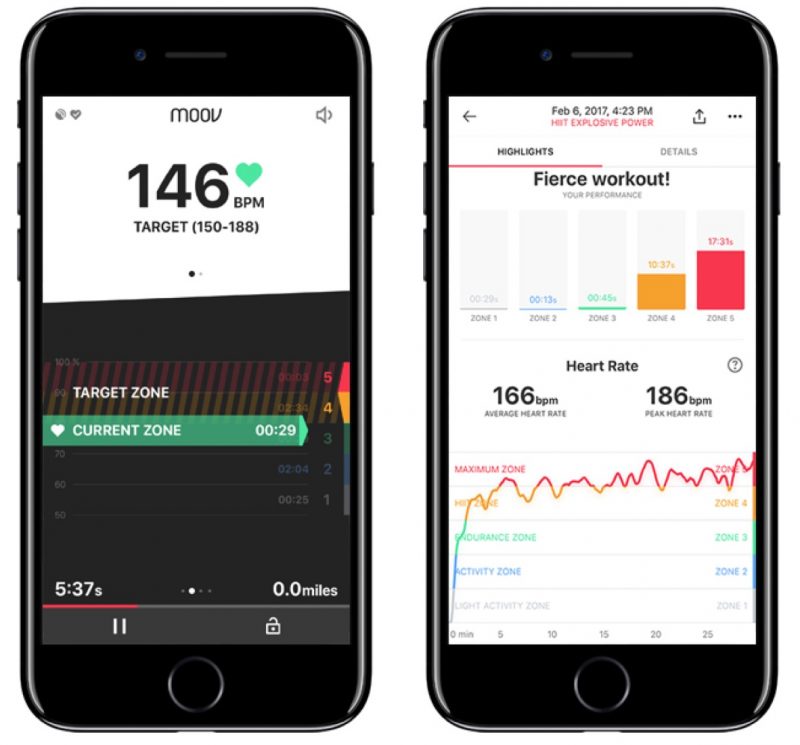
Version 4 of the Moov Coach app also anticipates next week’s release of the company’s HR heart rate-tracking headband, Moov HR Sweat, which combined with the Moov Coaching features, guides wearers through their workouts move by move to keep them in their optimal heart rate zone.
Move Coaching Tracker is a free download for iPhone and iPad from the App Store. [Direct Link]
Discuss this article in our forums
Oppo UDP-203 review: UHD Blu-ray has never looked so good
Look up “legend” in the Blu-ray dictionary and you’ll find pictures of Oppo’s BDP-105. These ultra expensive BD decks became the reference standard for Blu-ray playback across the world. Now Oppo is out to do the same thing for Ultra HD Blu-ray playback with its new UDP-203.
The 203 sets its premium stall out right away thanks to its heavy-duty metal chassis and the fact that it hulks over every other Ultra HD Blu-ray deck we’ve seen so far like some modern-day colossus.
Is it the 4K UHD Blu-ray player to plump for?
Oppo UDP-203 review: Better connected
- 2x HDMI out; 1x HDMI in; 3x USB; LAN & Wi-Fi
- Built-in audio decoder (8x audio line-outs)
- Optical and coaxial digital audio output
As well as looking smart in its brushed black finish, the 203’s front panel handily hosts a large, elegantly illuminated LED, while the rear space is packed with the biggest collection of connections found on any Ultra-HD Blu-ray player to date.
Oppo Digital
These include two HDMI outputs (one for video, one for sound); an HDMI input (so that you can feed external sources through the 203’s processors); a pair of USBs to go with a third on the front; a LAN port as a wired alternative to the integrated Wi-Fi; trigger in and out ports; optical and coaxial digital audio outputs; and a set of eight audio line outs for people who want to use its built-in multi-channel audio decoder.
Oppo UDP-203 UHD BR player review: HDR master
- HDR10 capable; Dolby Vision (due end-of March)
- DVD, Blu-ray, UHD Blu-ray, 3D, CD, SACD, DVD-A discs
The Oppo 203 can also play more disc types than any other deck, including 3D Blu-rays, SACDs and DVD Audio discs.
Its star attraction for many AV enthusiasts, though, is that following an upcoming firmware update (due by the end of March), it will become the first Ultra HD Blu-ray player in the world to support Dolby Vision high dynamic range (HDR) playback alongside the industry standard HDR10 system.
Oppo Digital
Given its self-consciously premium nature, it’s not surprising to find the Oppo 203 sporting some unusual features that should endear it to custom installers and high-end owners.
Oppo 4K Blu-ray player review: Match to display
- Target luminance: instruct player the output display’s max brightness
- Strip metadata HDR: best images for low-brightness displays
Particularly noteworthy and welcome is a “strip metadata HDR” option. This means that people with 4K-capable displays – typically projectors – that aren’t really bright enough to show HDR properly can take HDR out of a 4K Blu-ray image and just benefit from the format’s extra resolution and colour depth.
You may have to do a little re-calibration after activating the strip metadata option, but the bottom line is that it lets you achieve better results on low brightness displays than you can with HDR – or even HDR to SDR conversion – active.
Talking of HDR to SDR conversion, this option is available too. It’s not quite as clever as the same feature on Panasonic’s Ultra HD players, but it has been greatly improved in recent days by the addition of a “target luminance” feature that lets you tell the player how bright the display is that the converted signal is going to be feeding.
Oppo Digital
Also useful for people whose displays may be prone to colour banding when showing HDR is an option to force the signal to output as 10-bit or even 8-bit. Currently Panasonic’s UB900 flagship deck only outputs 12-bit if it thinks a TV can handle it, and this has led to signficant colour striping problems (though Panasonic is introducing a firmware update to fix this soon).
Oppo UHD BRP review: Perfect image quality?
Oppo claims that MediaTek chipset at the 203’s heart has been designed to deliver the best picture quality yet from the new Ultra HD Blu-ray format. And, for once, these claims appear to be true!
The Oppo 203 quite clearly beats all rivals – including the mighty Panasonic UB900 – in all three of the main performance areas that make 4K Blu-ray special. Colours, for instance, look bolder, somehow slightly brighter, but crucially also more natural and subtly defined.
So clear is this improvement that it’ll strike you as soon as you load up a few favourite discs, even without the need to run direct side-by-side comparisons. Of course we did some side-by-sides and these merely confirmed it. The 203 really is the master of image quality.
Oppo Digital
The Oppo 203’s pictures also look more generally dynamic than those of any of its rivals. Blacks look a little deeper, and peak whites and colours look more explosive. In other words, HDR looks more HDR, giving you a new appreciation of what this luminance range technology can do.
The 203 even manages to eke a bit more detail and sharpness out of the best quality Ultra HD Blu-rays. Side-by-side comparisons show the smallest elements of 4K pictures looking clearly crisper and cleaner on the 203 than on any of its rivals.
Oppo UDP-203 review: The downsides
The Oppo 203 doesn’t have things all its own way, however. Panasonic’s UB900 delivers slightly more detail in the very darkest parts of HDR images, and also slightly outguns the 203 when it comes to both upscaling HD Blu-rays and converting HDR to SDR. The UB900’s high-end audio system sounds slightly better too, especially when playing compressed audio files.
We also found that the 203 introduced distracting amounts of audio lag if used to feed external video sources – such as a Sky Q box – through it using its HDMI input.
Finally it’s important to point out that unlike all other UHD Blu-ray players to date, the Oppo 203 doesn’t carry any online app support. So if, for instance, you want to stream from Amazon, Netflix, et al, you’ll have to get a TV or some other external set-top box that offers such services.
Verdict
While it’s not perfect, even as it stands today the Oppo UDP-203’s 4K Blu-ray prowess goes a long way to justifying its premium price.
By the time you’ve added in its upcoming Dolby Vision talents at the end of March 2017 (something even Panasonic’s UB900 won’t be getting), it seems sure to become the deck of choice for the sort of AV fan who considers “compromise” to be a dirty word.
The Oppo 203 is available to buy now, priced £649 on Amazon.co.uk, or priced $729 on Amazon.com
The alternatives to consider…
Pocket-lint
Panasonic UB-900
£449
Considering the Panasonic is a good third cheaper than the Oppo thanks to a price drop, it’s the next-best choice to go for if you’re a high-end AV fan. The audio output is better, too, which is a bonus. Shame there’s no Dolby Vision though.
Read the full review: Panasonic UB-900 review: The UHD Blu-ray master
Pocket-lint
Samsung UBD-K8500
£210
One of the two original UHD Blu-ray players, Samsung’s play is with budget. It doesn’t have the imaging or audio chops of its top-end Panasonic and Oppo competitors, but at near to £200 it’s a relative bargain. So if you’re more about budget than perfection, this is one viable option.
Read the full review: Samsung UBD-K8500 review: Beautiful 4K Blu-ray
Pocket-lint
Xbox One S
£230
Hang on a minute, isn’t this a console? Yes, but it’s the only one that can play UHD Blu-ray discs. It is, therefore, a budget and multi-functional access point if you’re looking for a player that can do a little more.
Read the full review: Xbox One S review: Great console and 4K Blu-ray player, what else?
Google adds voice typing, Doodles and more emoji to gBoard on iOS
Google’s powerful Gboard app might now be on Android, but it’s the iPhone version that is receiving most of the updates. As part of its most recent overhaul, the search giant has extended support to 15 new countries*, and also added a number of new features that make it easier to say what you have to say.
As of now, users have access to all of the latest emoji in iOS 10. If you don’t remember, one of the most useful gBoard features is the ability to search and find the perfect emoji, allowing you to decorate texts and emails without scrolling through endless lists of icons.
By incorporating search into its keyboard, you don’t need to visit Google.com to find what you’re after and share it. Keeping with this theme, the app now also hosts Google Doodles, notifying you of new additions via the animated “G” button. If it’s moving, hit the icon and gBoard will display more information about the Doodle on that particular day.
Perhaps the most useful feature is voice support. Like the native keyboard, all you need to do is press the microphone and talk. If you’ve used Google’s voice services before, you’ll know that they are pretty reliable, so it might come in handy when you have your hands full or need your eyes fixed on something more important.
*Supported languages include: Croatian, Czech, Danish, Dutch, Finnish, Greek, Polish, Romanian, Swedish, Catalan, Hungarian, Malay, Russian, Latin American Spanish and Turkish. They can be selected by opening the Gboard app and choosing “Languages”, then “Add Language.”
Via: Google Blog
Source: gBoard (App Store)
Gboard Update Brings Google Doodle, Voice Typing, iOS 10 Emoji, and Additional Language Support
Google has announced a significant update for Gboard, bringing new emoji, Google Doodles, voice typing, and additional language support to the iOS keyboard app.
Gboard integrates the company’s search capabilities into an iPhone or iPad’s keyboard. Using the Google button in Gboard, users can search for information, send what they find, discover GIFs, emojis, and more, without having to exit a messenger app to visit Safari or Chrome.
The update means Gboard now supports all of the latest emoji from iOS 10. Additionally, Google has added subtle alerts about Google Doodles, which frequently animate the Google logo to honor holidays, anniversaries and notable people. Whenever a new Google Doodle goes live, the “G” button animates, prompting users to find out more about it.
Elsewhere, today’s update adds voice typing, which allows users to dictate messages directly to Gboard. To start a new text, users can now long-press the mic button on the space bar and talk.
The update also brings 15 additional languages to Gboard, including Croatian, Czech, Danish, Dutch, Finnish, Greek, Polish, Romanian, Swedish, Catalan, Hungarian, Malay, Russian, Latin American Spanish and Turkish.
Gboard is a free download for iPhone and iPad available on the App Store. [Direct Link]
Tag: Google
Discuss this article in our forums
Riding with strangers: Google’s Waze is about to expand its Carpool service
Why it matters to you
Cheap and hopefully cheerful, such a carpooling service could be a handy alternative to other ride-sharing services.
Google-owned Waze is gearing up for a major expansion of its carpooling service after a successful run in San Francisco.
Carpool will be launching in more cities in the U.S., as well as in Latin America, in the coming months, Waze boss Noam Bardin told the Wall Street Journal this week.
The rollout will put Waze up against the likes of ride-sharing giants Uber and Lyft, both of whom already offer carpooling options — UberPool and Lyft Line. And with around 80 million users already using the community-based traffic and navigation app on a regular basis, Waze knows it’s perfectly positioned to hit the ground running.
Waze’s system allows drivers to make up to two rides a day — for example, to and from work — and riders pay to cover the cost of gas, plus a little extra.
The downside? A Carpool user has to request a shared ride several hours ahead of time, and then hope someone responds. If no one does, you can always jump in an Uber or Lyft.
More: Get a peek at guest singers for Apple Music’s Carpool Karaoke TV series
Following carpool testing in San Francisco and also in the company’s home nation of Israel, Bardin admitted the biggest hurdle for its service is “[getting] the average person on his way to work to pick someone up and drop them off once in a while.” So far, around 150,000 Waze users in San Francisco and Tel Aviv have signed up to the carpool service since 2015, but only a very small number have so far given rides, according to Bardin.
The CEO added that at the current time his company doesn’t take a percentage of driver revenue but may levy a 15 percent fee of the total cost if the service proves a hit with users.
With Google’s backing and a massive user base, Waze seems well placed to make a go of its Carpool service. Though with both Uber and Google continuing to make progress with their respective autonomous vehicle projects, it may not be too long before empty cars are driving up to collect passengers, giving both companies additional options over the kind of transportation services they offer.
 AIVAnet