


Canon expands its mirrorless lineup with the EOS M6
In case the EOS 77D and Rebel T7i weren’t enough for you, Canon has also announced the EOS M6. The company’s new mirrorless camera is basically an M5 without a built-in electronic viewfinder, since it features the same 24.2-megapixel APS-C CMOS sensor, Digic 7 processor and 100-25,600 ISO. In addition to that, you get Bluetooth, NFC and WiFi for sharing photos or controlling the camera remotely via Canon’s Connect app for iOS and Android. And because selfies are so important, the 3-inch LCD now tilts to help you take some beauty shots of you and your friends — but only if the optional EVF isn’t attached.
As is the case for the other two shooters Canon revealed today, the EOS M6 won’t arrive in stores until April. If you’re interested, it’s going to cost you $780 for the body only, though there will be some bundles that include a lens starting at $900.
Apple Planning to Fight Proposed ‘Right to Repair’ Legislation
Apple is preparing to fight proposed “Right to Repair” legislation proposed in the Nebraska state legislature, reports Motherboard. The legislation aims to make it easier for both customers and indie repair shops to repair electronics, similar to how car repair works.
Nebraska is one of eight states considering such legislation. In addition to Nebraska, New York, Michigan, Minnesota, Kansas and Massachusetts are working on similar bills. Last week, Illinois and Tennessee introduced laws in the same vein. Nebraska, thus far, is the only state to schedule a hearing for the proposed legislation.
A source tells Motherboard that Apple will send either a representative, staffer or lobbyist to argue against the law at the hearing, which is scheduled for March 9 in Lincoln, Nebraska. One of the arguments Apple intends to put forth is that allowing customers to repair their own phones could result in lithium batteries catching fire.
Apple has successfully lobbied against similar bills in the past. Last year, a bill headed through New York’s state legislature was killed due to, in part, lobbying from Apple and IBM.
A “Right to Repair” law would require Apple and other manufacturers to sell repair parts to consumers and independent repair shops and make diagnostic and service manuals available to the public. Currently, Apple runs the Apple Authorized Service Provider Program, which requires businesses to let Apple review their financial records, maintain high levels of customer service, establish a credit line with Apple, and promote AppleCare.
Tag: Right to Repair
Discuss this article in our forums
Starz will let you pay for streaming TV with prepaid cards
Conventional TV networks, as a rule, are very fond of subscriptions. Don’t tell that to Starz CEO Chris Albrecht, though. He told guests at the Code Media conference that the premium channel will soon offer prepaid cards for its streaming service. It’s a matter of accessibility, he argues: there are people who want to watch premium TV shows but can’t justify the cost of a cable subscription (or buying show downloads, for that matter) and don’t have a credit card.
The cards should be available sometime early this year (in other words, soon), and they should work much like the scratch-and-redeem cards you already find at the store. The concept certainly isn’t unusual for streaming services (Netflix has had prepaid cards for a while, as well as Hulu), but it’s not so common for traditional TV outlets. Now, as channels like HBO Now and Starz move beyond the cable bundle, they’re making similar efforts to reach customers directly.
Source: Recode
Climb Mount Everest in VR on your Oculus Rift
You no longer need an HTC Vive to scale Mount Everest in VR on your PC. Sólfar Studios and RVX have released Everest VR for the Oculus Rift, bringing the virtual ascent to Facebook’s headset. It’ll be familiar if you’ve tried the Vive version, but a few things have improved since the original launch. There’s a new sequence (the Lhotse Face), and an expanded God Mode lets you see the Himalayas from perspectives that aren’t possible for a mountaineer. Logically, Oculus Touch support is present if you’d prefer a more hands-on approach.
You can download Everest VR right now for $15. As with most VR titles, though, you’ll need a reasonably modern Windows PC to handle the Oculus Rift experience. The developers recommend at least a 4th-generation quad Core i5 processor, 8GB of RAM and a GeForce GTX 960 to make the most of it. That won’t be too much trouble if you already have a Rift, but it’s something to consider if your PC is on the edge of being VR-ready.
Source: Oculus
Gamalon’s deep learning method improves how fast AI can recognize objects
Why it matters to you
Gamalon’s new deep learning technology should increase how fast artificial intelligence can learn, providing time-saving applications.
Artificial intelligence is getting a boost in its ability to learn. On Tuesday, a company called Gamalon revealed a new technology for machine learning called Bayesian Program Synthesis (BPS). This technology supposedly accelerates the machine learning process by more than 100 times and is available now in two commercialized alpha applications: Gamalon Structure and Gamalon Match.
In a demonstration, the company revealed how BPS learns compared to Google DeepMind’s machine learning. In Google’s “Quick, Draw!” app, the AI can recognize a single object drawn by the user, such as a floor lamp, by comparing it to the same object drawn by other users. But if the user draws a chair next to the floor lamp, the AI gets confused and shows that the user didn’t follow its instructions to draw a floor lamp, but rendered a house or church instead.
More: Artificial intelligence can now predict heart failure, and that may save lives
For BPS, the AI was trained by first defining what makes a line, then what makes specific shapes. After that, the AI was taught how an armchair is built by using rectangles and lines, first starting with the seat and armrests, followed by the armchair’s backrest in a separate element. This method was also used to teach the AI about floor lamps by defining the lamp post, the lamp base, and the lamp shade.
Thus, in a nutshell, Google’s AI got confused because it couldn’t recognize two separate objects. However, the BPS system not only recognizes two separate objects, but it will see and confirm those objects when other unrecognized elements are drawn into the same space. What the BPS system can’t do is recognize heavily altered objects, such as lamps with elements consisting of different sizes and locations. In other words, unless otherwise taught, BPS can’t recognize a table lamp or desk lamp.
“Going beyond this drawing application, we are starting to teach the system to read, first by building up letters, then words, and then sentences. Language is a much more complex setting, but like with drawing, we expect that the system will learn more and more complex concepts made out of simpler ones,” the company said.
Ultimately, the BPS method uses far less training examples than traditional deep machine learning, thus speeding up the overall learning process. As an example, the company said that in one test, DeepMind’s AI required 500 training examples while the BPS system only needed a handful of training examples to meet the same level of accuracy.
The two commercialized applications based on the new BPS learning system target the enterprise sector. Gamalon Structure will convert text paragraphs found in databases or documents into clean, structured data rows. The Gamalon Match application then deduplicates and links these data rows. Typically, these two tasks combined require large teams and years of work to generate the same results.
The two applications are available now as APIs within cloud platforms offered by Amazon, Microsoft, and Google.
Gamalon’s deep learning method improves how fast AI can recognize objects
Why it matters to you
Gamalon’s new deep learning technology should increase how fast artificial intelligence can learn, providing time-saving applications.
Artificial intelligence is getting a boost in its ability to learn. On Tuesday, a company called Gamalon revealed a new technology for machine learning called Bayesian Program Synthesis (BPS). This technology supposedly accelerates the machine learning process by more than 100 times and is available now in two commercialized alpha applications: Gamalon Structure and Gamalon Match.
In a demonstration, the company revealed how BPS learns compared to Google DeepMind’s machine learning. In Google’s “Quick, Draw!” app, the AI can recognize a single object drawn by the user, such as a floor lamp, by comparing it to the same object drawn by other users. But if the user draws a chair next to the floor lamp, the AI gets confused and shows that the user didn’t follow its instructions to draw a floor lamp, but rendered a house or church instead.
More: Artificial intelligence can now predict heart failure, and that may save lives
For BPS, the AI was trained by first defining what makes a line, then what makes specific shapes. After that, the AI was taught how an armchair is built by using rectangles and lines, first starting with the seat and armrests, followed by the armchair’s backrest in a separate element. This method was also used to teach the AI about floor lamps by defining the lamp post, the lamp base, and the lamp shade.
Thus, in a nutshell, Google’s AI got confused because it couldn’t recognize two separate objects. However, the BPS system not only recognizes two separate objects, but it will see and confirm those objects when other unrecognized elements are drawn into the same space. What the BPS system can’t do is recognize heavily altered objects, such as lamps with elements consisting of different sizes and locations. In other words, unless otherwise taught, BPS can’t recognize a table lamp or desk lamp.
“Going beyond this drawing application, we are starting to teach the system to read, first by building up letters, then words, and then sentences. Language is a much more complex setting, but like with drawing, we expect that the system will learn more and more complex concepts made out of simpler ones,” the company said.
Ultimately, the BPS method uses far less training examples than traditional deep machine learning, thus speeding up the overall learning process. As an example, the company said that in one test, DeepMind’s AI required 500 training examples while the BPS system only needed a handful of training examples to meet the same level of accuracy.
The two commercialized applications based on the new BPS learning system target the enterprise sector. Gamalon Structure will convert text paragraphs found in databases or documents into clean, structured data rows. The Gamalon Match application then deduplicates and links these data rows. Typically, these two tasks combined require large teams and years of work to generate the same results.
The two applications are available now as APIs within cloud platforms offered by Amazon, Microsoft, and Google.
Scientists genetically engineer a mouse that is immune to cocaine addiction
Why it matters to you
Genetically engineering a mouse to be immune to cocaine addiction could help reveal the secrets of why some people become hooked on drugs and what we can do about it.
Scientists at the University of British Columbia genetically engineered a mouse that is incapable of becoming addicted to cocaine.
“The purpose of [our] study was to understand a little bit more about the addicted brain — and specifically to understand a little more about what’s going on at the cellular and molecular level,” Dr. Shernaz Bamji, a professor in the Department of Cellular and Physiological Sciences, who worked on the project, told Digital Trends. “Researchers are pretty confident now that addiction is a form of learning that goes a bit haywire in a particular circuit in the brain. To learn you have to strengthen synaptic connections, and this involves adding more ‘glue’ — a protein called cadherin, which holds brain cells together — to the synapse.”
The researchers figured that adding more cadherin to synapses found within the brain circuit involved in addiction would lead to higher levels of addiction, since more glue should mean stronger synapses and more learned behavior, including pathological addiction.
Instead, they found the opposite.
More: Swedish researchers develop breathalyzer that detects pot and cocaine
“We have a cage with three very distinct chambers in it,” Bamji continued. “We take our [mouse] and give it cocaine and let it associate the cocaine ‘high’ with one of the three chambers. We train it this way for a number of days until it’s learned that it always feels the high in that location. When you allow the mice to freely move between the chambers, normal mice will always gravitate towards the chamber where it received the drug, which may indicate it’s looking for that high. [But] the mice which had too much glue or cadherin at synapses didn’t behave this way. They didn’t keep going to the room where they received the cocaine — they seemed to be just as happy exploring all around the cage.”
The study suggests a number of interesting things, including adding to the evidence that repetitive drug use has a lot to do with genetics and biochemistry, rather than just being something which affects “weak-willed” individuals.
It also reveals the possibility of developing possible treatments for addiction although, as lead author Dr. Andrea Globa told Digital Trends, it’s not entirely straightforward.
“Anything we can find out about how these circuits work is exciting and allows us to think about the possibility of being able to target parts of the brain with a particular drug,” Globa said. “One important thing to keep in mind is that cadherin is important in a lot of different types of learning, not just pathological addiction. So to simply target cadherin with a drug might not be the best approach because reducing someone’s ability to remember the rewarding effects of using a drug could also have negative effects on their ability to remember important things in their day-to-day life.”
Still, the more that can be learned about the proteins involved in different reward pathways, the better scientists’ ability to develop solutions to problems like addiction will be.
The work additionally opens up the possibility of one day being able to determine whether a person is predisposed to addiction by looking at their genes.
Stylish and feature-laden Pebble Time Round smartwatch is now $90 on Amazon
Smart technology already dominates the world of phones, and may soon be taking over our wrists as well. No longer a mere novelty, smartwatches are becoming more common as the market for wearables continues to expand. On popular modern manufacturer is Pebble, which offers a variety of affordable models including the Pebble Time Round, which can now be had for as little as $90 on Amazon.
The Pebble Time Round is one of the lightest and slimmest smartwatches available today, and offers a more traditional look with its round case and quick-change leather strap. When in clock mode, the Pebble displays a normal watch face, but you also can download a variety of different digital and analog faces to suit your style. The splash-proof housing is made of stainless steel and features 2.5D Gorilla Glass for added durability, while the internal battery offers up to two days of use. The battery’s quick-charge capability adds a day’s worth of power with a short 15-minute charge.
More: Perfect your workouts with a swimproof Fitbit Flex 2, currently 21 percent off
Along with access to more than 15,000 downloadable apps, the Time Round comes equipped with fitness-focused features such as Smart Activity Tracker, Interactive Health Insights, Pebble Health, and Get Up & Go, which offer activity 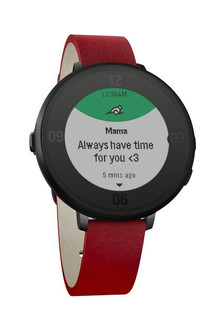 summaries, progress reports, custom coaching, and more to help you get the most out of your workouts. Automatic Sleep Tracking monitors your sleep cycles and gently wakes you up with a vibrating smart alarm. The Pebble Time Round also allows use of voice commands, and you can sync the watch to your smartphone for hands-free control over music playback.
The Pebble Time Round generally goes for around $130, but the attractive silver-and-red model is now just $90 on Amazon. The black-and-red model can also be had for just $10 more. If you’re looking for an affordable smartwatch with a traditional and understated look, then the Pebble Time Round fits the bill without breaking the bank.
$90 on Amazon
Adventurous gamers can climb Mount Everest in the Oculus Rift via ‘Everest VR’
Why it matters to you
Afraid of heights but love the scenery? ‘Climb’ Mount Everest’s summit from the relative safety of your own room.
Adventurous PC gamers wanting to scale Mount Everest but don’t have the resources and/or strength to reach its 29,029-foot peak can now reach its summit through the Oculus Rift in Everest VR. Developed specifically for VR by Solfar Studios, the first-person mountain climbing simulation first hit the HTC Vive in August, and is now offered on the Rift as well ($15) now that the Touch controllers are on the market.
“Experience Everest in five iconic scenes,” the product listing states. “Prepare for your expedition at Basecamp, traverse the terrifying Khumbu Icefalls, scale the vertiginous Lhotse Face to overnight at Camp 4, ascend the perilous Hillary Step, and finally conquer the summit of Everest.”
More: The Oculus Rift unofficially supports modern MacOS machines via a new app
In addition to serving up Everest VR on the Oculus Rift, the studio is also releasing a huge, free update across all platforms. Most of the major changes will be experienced in God Mode, which can be accessed from the lobby. Here players can scale the scene to match the desired experience, whether it’s in a 1:1 confrontation with the bitter cold or becoming a mile-high giant to enjoy the scenery.
The update also inserts photographic material of the 1953 Hillary expedition provided by London’s Royal Geographical Society into the experience. These items will be made available in God Mode and scattered throughout the trip up to Mount Everest’s summit, placed at the actual points where the photographs were originally taken decades ago. There are also now 18 new pathways to the summit that are widely known as the best ways to reach the mountain peak.
For an even bigger and immersive thrill, the update now adds the ascent of Lhotse Face, a “nearly” vertical wall of ice rising 5,000 feet high between Camp 2 and Camp 4. This icy wall requires a roped ascent spanning two phases broken up by spending the night in Camp 3 that’s located on the wall itself. Players will leave Camp 3 and make their journey to Camp 4 with a group of climbers moving in a single row.
“We feel that with this addition, you now have a fairly accurate collection of all the key moments of climbing Everest,” the studio states in a blog. “If you´ve personally made Summit, do let us know whether we captured the most meaningful moments. If not, we think this is as close as most of us will get.”
In addition to requiring the HTC Vive or Oculus Rift, here are the system requirements for Everest VR:
Minimum
Maximum
Operating system:
Windows 7 SP1
Windows 10
Processor:
Intel Core i5-4590
Intel Core i7-4790
Graphics card:
Nvidia GeForce GTX 970
AMD Radeon RX 480
Nvidia GeForce GTX 1060
Memory:
8GB
8GB
Storage:
11GB
11GB
Note that the developer suggests installing the game on a solid-state drive for faster performance. Also, note that God Mode isn’t available until players complete their first summit attempt. Everest VR can be purchased for the HTC Vive via Steam for $15 right here.
Women’s often unsung role in electronic gaming focus of Museum of Play project
Why it matters to you
The contributions of women to electronic gaming have often been underappreciated, but an upcoming exhibit at The Strong National Museum of Play is looking to remedy that.
The Strong National Museum of Play in Rochester, New York, is a collections-based museum focused on the “exploration of play.” It hosts the International Center for the History of Electronic Games (ICHEG) and the World Video Game Hall of Fame — meaning it’s the place to go to experience anything to do with the history of computer gaming.
The museum has announced an upcoming Women in Games project aimed at recognizing the contributions of women in creating electronic games. The initiative will pull together and maintain materials that highlight the impact women have had on the gaming industry.
More: Obama to honor two women who helped shape computer science as we know it
“Women have played major, if often underappreciated, roles in the development of both games and computing, the two streams of cultural and technological development that combined to produce the modern-day video game industry,” said Jon-Paul Dyson, director of ICHEG. “Women have indelibly shaped every aspect of the history of video games, and that story needs to be better documented and told.”
The Women in Games initiative will utilize the Strong Museum’s existing holdings, comprised of prototypes, games, design and marketing documents, correspondence, photographs, and other materials, and will add in new materials as well. Some of the more important collections that will be utilized in the project include the Ken and Roberta Williams Sierra-Online collection, Her Interactive, Inc Collection, and the Atari Coin-Op Division Collection.
The project is being spearheaded by Shannon Symonds, ICHEG associate curator, who describes the effort as follows:
“The Strong’s Women in Games initiative will chronicle the many ways women have shaped the development of games, from design and production, to manufacturing and marketing, to consumption and criticism. We invite anyone with relevant materials, or who would like to help us tell this important story, to collaborate with us in a number of ways — from donating materials to underwriting programs.”
The Women in Games exhibit is schedule to open in September 2018, and will cater to the museum’s more than 2 million on-site and online visitors. To find out more about the Women in Games initiative, or to lend your support, you can contact Symonds.
 AIVAnet