


The Future IRL: Everyone gets an R2D2
If you’ve spent any time on Kickstarter, you’ve already seen those questionable rolling trashcan bots mixed among promising pieces of tech. You might even start thinking truly useful home-based robots have arrived. And, hey, it’s about time! The first domestic robots started cropping up in the ’80s. But, while the Hero-1 might have inspired a generation of roboticists, public perception of robots in the home hasn’t changed much since the Reagan era.
Now a whole slew of bots, like Jibo, Pepper and Kuri are trying to worm their way into our hearts. Nearly all have the ability to broadcast what their on-board camera sees to a companion app. Some can even be programmed to map rooms, execute commands when they ‘see’ certain actions or people, and even complete sentry patrols. If you’ve been waiting for your very own R2D2, reality may finally be catching up with your dreams.
Don’t miss the next episode of Future IRL on February 21st, when we’ll be looking at the future of home delivery.
Logitech turns your car into a Amazon Alexa controller
Amazon’s Alexa platform is no longer confined to the home — Ford, Hyundai and Volkswagen have all announced integration of the voice assistant into their vehicles. That’s great if you’re a die-hard Amazon customer and in the market for a new car. For the rest of us, Logitech’s aftermarket ZeroTouch mounts and companion app bring the same dash-based Alexa experience, but to the car you already own.
The Logitech Zero Touch app-and-dock system already offers a hands-free solution to most smartphone tasks while driving. But starting today, it comes with added support for Alexa. This means that in addition to controlling music, sending texts and setting destinations on the move, the voice-controlled application will listen for Alexa commands (once the feature has been activated).
I tried out the updated ZeroTouch system, and other than a few minor setup issues with the flash briefing skill (which delivers quick news hits from various sources like NPR, Fox news and BBC), it really did feel just like using Alexa at home. There is one big difference though, which is ZeroTouch doesn’t have a wake word. Instead, you either hold or wave your hand over your smartphone to activate it. Once the app is primed, Amazon’s voice assistant responds just like it does at home, which opens up a world of possibilities.

Any IoT devices you own that are linked to Amazon’s assistant are now available from within the car. This means you can control lights, thermometers and door locks while driving down the road, if you wish. Oh and of course, because this is Amazon, you can order items from the online retailer and partners — like Pizza Hut (gross) and Starbucks — right from the driver’s seat, if you must.
What Logitech’s Alexa integration won’t do is tell you about the car itself. That’s a feature the automakers have that the ZeroTouch doesn’t. Understandably, that requires deep integration into the vehicle, so it’s not something we expected.
The voice-activated system uses the Bluetooth hardware dock like a key. Drivers add a slim piece of metal (either via adhesive or underneath a case) to their Android phone. The phone then attaches to magnetic dock and when that happens, the app launches. It’s a slick way of securing your device in the car and getting it ready for the road without forcing the driver to waste time trying to launch anything.
The experience isn’t without its issues, at least in my time with it. For some reason, my flash briefing would only tell me the weather. I added an additional skill to my flash briefing but I was still stuck listening to just the weather. On my Echo and Dot at home, I’ve had no problems hearing about the state of the world via Alexa’s debrief.
There’s also an issue when it comes to navigation. If you try to interact with the system and Google Maps has a voice notification at the same time, it overrides what you’re doing 80 percent of the time. The other 20 percent, the system just seems to get confused. While it doesn’t happen very often during highway driving, on city streets, it can be a pain.

Overall, the core ZeroTouch system and its two available mounts make in-vehicle messaging and app interactions seamless and safer, but pricey at $60 for the air vent mount and $80 for the sturdy windshield/dash mount. But now that Logitech has added Alexa support and all that entails, it’s clearly better value than before.
The key benefit of course is that ZeroTouch brings Alexa to any car in an incredibly simple way. It might not feel exactly like the home experience without the familiar wake word, but it’s close enough. Plus, it’s cheaper than buying a new car — and for Amazon users, it brings just enough Alexa to the driver’s seat to make it worth the price tag. Best of all, it’s available right now.
Source: Logitech
Logitech’s 4K webcam will make your chats more cinematic
If you’ve got a stylist, makeup artist and really fast internet connection, you’re ready for Logitech’s 4K Pro Brio webcam. It not only comes with high-resolution 4K at 30 fps (4,096 x 2,160), but also HDR, a 5X digital zoom and infrared facial detection tech that works with Windows Hello logins. We’re not sure about Logitech’s claim that it’s the first 4K webcam, but it’s certainly one of the best — and it should be, for $200.
Streaming 4K video requires at least a 25-35 Mbps connection, so you’ll likely need at least that (on the upload side) if you want to transmit your face over video chats. Another big issue is that Skype, Google Hangouts and other popular chat apps support a maximum 1080p video, and let’s not even talk about the computing horsepower required for two-way, 4K HDR chat.
Where it could shine right away, however, is for live streaming. YouTube now supports 4K (it recently broadcast the 2016 Game Awards in that format), beating rival Twitch to the punch. And while it’s pricey for a webcam, Logitech’s Brio is a lot cheaper 4K livestreaming option than most video cameras.
Resolution and bandwidth aside, you do get a lot of features. The BestLight 3 HDR engine ensures that there’s plenty of light on your face, even in backlit conditions that would normally render you shady. And the 5X zoom option at 1080p, between 65 and 90 degrees, will ensure folks don’t see every pore on your face. Finally, the built-in infrared sensor supports Microsoft Hello face recognition, making logins easier.
As mentioned, the Brio 4K webcam runs $200 in the US, £200 in the UK and €239 in Europe. It’s now available on Logitech’s website, Amazon or Logitech resellers in those regions.
Source: Logitech
Fitbit Again Accused of Stealing Trade Secrets From Jawbone
Even though Jawbone has confirmed that it’s leaving the consumer wearables market to focus on clinical health products, the company has doubled down on its legal battle with former rival Fitbit, concerning the latter company’s alleged theft of trade secrets (via TechCrunch).
The U.S. International Trade Commission has already let Fitbit off the hook for the original claims, but Jawbone is now arguing that the agency only looked at a “limited number of allegations against Fitbit.” To back up its argument that the issue remains unresolved, Jawbone referenced in a court filing this month that Fitbit is under investigation by a criminal grand jury concerning the trade secret theft, believing “the issue of what was stolen and by whom remains unresolved.”
As of this week, the Justice Department and Department of Homeland Security have been conducting a grand jury probe into Fitbit for five months. Fitbit said that it’s cooperating with the investigation “to demonstrate, once again, that these allegations are without merit,” with a hearing set for February 15 amid the hopes that the case will finally be dismissed.
The battle between the two companies goes back to 2015, when Jawbone claimed that Fitbit hired five Jawbone employees, who in turn brought with them more than 350,000 secret Jawbone files. According to the original lawsuit, Jawbone said “the files included information about materials, sensors and detailed breakdowns of its costs and profit margins.”
Fitbit said that once the files were discovered on a cloud-based backup service of a former Jawbone employee, they were immediately turned over to Jawbone. Ultimately, Fitbit argued that Jawbone’s new investigation is built on the exact same “fictional allegations” already cleared by the ITC.
The criminal investigation “is based on the almost identical fictional allegations that were fully rejected by the International Trade Commission after a nine-day trial on the merits and that Jawbone falsely asserted on the eve of Fitbit’s IPO,” Fitbit said in Monday’s statement. “Jawbone is now attempting to exert leverage against Fitbit in civil litigation pending in the California state court.”
Fitbit had a case against Jawbone of its own that it dropped last December because “there was no need to pursue the case” when Jawbone was no longer making and selling the products at issue in the lawsuit. Fitbit also cited Jawbone’s financial trouble as a reason to end the lengthy court battle. Jawbone said Fitbit’s decision to back out was a “misdirection” on Fitbit’s part.
Tags: Fitbit, Jawbone
Discuss this article in our forums
Lutron’s Whole-Home Systems Will Support HomeKit Next Month
Lutron at ISE 2017 today announced that its whole-home systems HomeWorks QS and GRAFIK RA 2 will support Apple HomeKit in March.
With a HomeKit-enabled Lutron Connect Bridge, part of the systems, homeowners will be able to to control their lights, window shades and blinds, motion sensors, and more using Apple’s new Home app or Siri voice commands on iPhone and iPad. For example, users can ask Siri if the lights are on in the house, and if so, to turn them off.
Lutron’s HomeWorks QS and GRAFIK RA 2 systems are available from authorized dealers throughout Europe.
Tags: HomeKit, Lutron
Discuss this article in our forums
It looks like Xiaomi’s next phone may get a Hatsune Miku special edition
Why it matters to you
Xiaomi doesn’t usually need gimmicks to sell its phones, but a new brand ambassador is coming with the Note 4X, so we doubt it’ll be anything other than spectacular
Xiaomi isn’t that worried about keeping its next phone a secret, and in a post on its official owners forums, announced it will launch the Xiaomi Red Note 4X on February 14. However, while we know the phone is coming, and when; Xiaomi hasn’t simply told us all the other details, meaning there are many more surprises to come.
Those surprises also include a new Xiaomi brand ambassador, and some hints in its teaser imagery may have given away their identity already. Here’s what we think we know about the phone so far:
Brand ambassador
A new Xiaomi brand ambassador will be announced alongside the Redmi Note 4X. This is unusual, and Xiaomi usually has no need for gimmicks to sell out its phones. Does this mean we’re in for something very special? It’s not clear whether the partnership means special edition phones, custom wallpaper, or simply an appearance during the Note 4X’s launch; but we’ve been given some hints about who the ambassador actually is.
More: I never appreciated music until I heard Hatsune Miku’s voice
In a post on Chinese social network Weibo, Xiaomi said, “An unexpected idol” would bring the Note 4X on February 14 as a Valentine’s day gift, after crossing several well-known Chinese actors off the list of possibilities. Who could it be? There’s an excellent chance it’s virtual pop star Hatsune Miku.
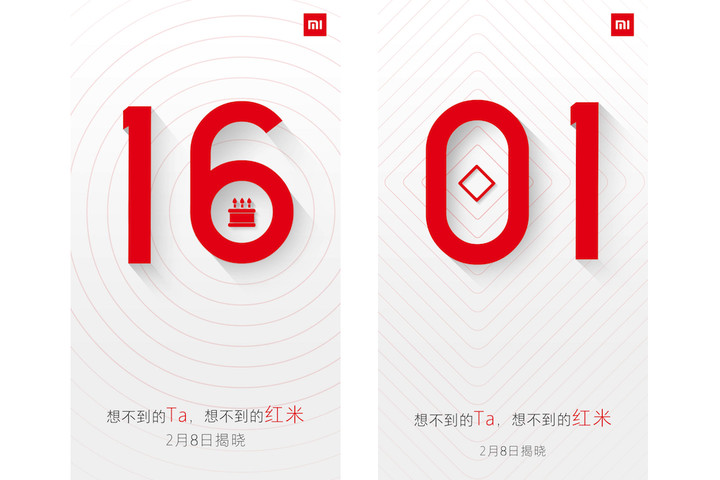
In the same Weibo post, an image with the number sixteen and a birthday cake appear, while over on the official MIUI forums, another similar image has the number 01 on it. Fans will already know Hatsune Miku is forever 16 years-old, and that she has the number 01 stamped on her left arm, referring back to her original codename. This year is Hatsune Miku’s 10th anniversary, and many celebratory events and tie-ins are certain to be planned.
The extent of Xiaomi’s partnership isn’t known, but if a special Miku edition of the Note 4X is going to be released, it won’t be the first. Sony has produced Hatsune Miku Xperia phones for the Japanese market in the past.
Announcement and release
Xiaomi says it will launch the Redmi Note 4X on February 14, while the teaser images include a February 8 date. This suggests the later date will be the day the phone goes on sale, while it will be shown officially for the first time on February 8.
More: Our review of the Xiaomi Mi Mix
Like all Xiaomi smartphones, we don’t expect it to be sold outside China or Xiaomi’s other markets, such as India. However, the company’s phones can often be purchased internationally through importers.
Design
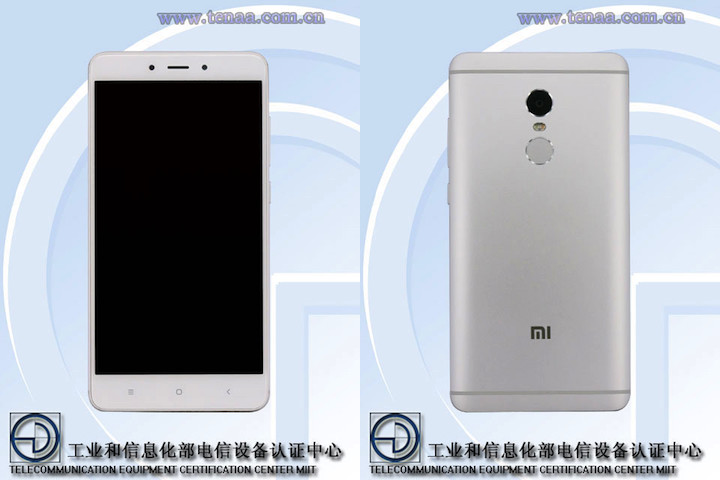
In January, a Xiaomi phone bearing a strong resemblance to the existing Redmi Note 4 appeared on the TENAA regulatory website in China, giving us a look at the phone’s design. It’s business as usual for Xiaomi. The phone has a metal back with a fingerprint sensor below a single camera lens and flash unit. Around the front is a large touchscreen with a slim side bezel, and three Android menu keys below it.
Specification
The Redmi Note 4 is barely six months old, so what will Xiaomi do to make the Note 4X standout, aside from Hatsune Miku’s involvement? When the phone was certified for use by the TENAA regulatory board in China, several specifications were also revealed. A choice of 32GB or 64GB of internal storage will be available, but both phones are likely to have 4GB of RAM.
A leaked picture of the Note 4X’s About Phone screen backed up the claim it will have 4GB of RAM and up to 64GB of storage. It also showed version 8.1 of MIUI installed over the top of Android 6.0.1. The processor is listed as the Qualcomm Snapdragon 653, but there are also rumors the Note 4X will use a MediaTek X20, the same as the Redmi Note 4 from last year.
Further rumors say the camera will have 13 megapixels on the rear, which is also the same as the Note 4. Outside of the slight increase in RAM, we don’t know what changes will Xiaomi make to differentiate the new 4X from the old Note 4.
We’ll bring you all the Xiaomi Redmi Note 4X news and rumors as we get them, so keep checking back.
ZTE’s giving you another reason to buy the Axon 7: Daydream VR
Why it matters to you
The already excellent ZTE Axon 7 with Android 7.0 makes it the cheapest way to enjoy Google’s Daydream VR
We’re about to give you another reason to buy the Axon 7 smartphone. ZTE says Android 7.0 Nougat will be available for the device from February 7, which means not only will it have the latest software version and some great new features; but also support for Google’s Daydream VR. Currently, this is primarily a feature on the Google Pixel phones, which cost several hundred dollars more than the Axon 7. Now, VR fans have a much cheaper way to get in on the Daydream fun.
It’s worth it. Daydream VR is close to the experience offered by Samsung’s Gear VR, and way beyond the Cardboard viewer many will associate with VR on other Android phones. The Axon 7 slips into the front of the Daydream VR headset, but it’s not quite the same perfect fit as a Pixel phone. ZTE initially had some problems here, as the elastic strap securing the front of the headset to the body pressed down the Axon 7’s power button causing it to repeatedly turn on and off. To get round this, the update disables the power button when the Daydream software is running.
More: All the best Android 7.0 Nougat tips and tricks
We tried Daydream using the Axon 7, watching some YouTube VR videos and some games, where the phone’s excellent audio performance really stood out. It’s the stereo, front-facing speakers that do it. Compared to a single, side speaker, it’s a much better experience. The Daydream app itself is easy to use, and the separate laser pointer-style controller makes navigation much more intuitive than the Gear VR’s side touch panel.
Adding Android 7.0 also brings a few other features to the Axon 7. Side-by-side apps, an enhanced battery saver, and new emojis are all included. Also as part of the software update, ZTE will add Hiya’s phone spam protection and caller ID system, ready to get rid of robocalls and let you know who’s calling before you pick up the phone. It’s the first time a phone sold in the U.S. has free spam call protection. Hiya operates from a library of 1.5 billion numbers, and has call blocking and an auto-block system.
All this is great news, but once 7.0 Nougat arrives, the $400 Axon 7 will become the most cost effective way to enjoy Daydream VR — and that’s even better. We already rate the phone highly, so it’s great to see ZTE continue to support it with a crucial software update, that also adds several really desirable features.
Axon 7 owners should be on the lookout for a notification of its arrival, and get in their orders for a Daydream headset.
ZTE integrates Hiya’s spam-blocking technology into the Axon 7 smartphone
Why it matters to you
ZTE is rolling out a call-blocking service on the Axon 7 that will prevent fraudulent callers from reaching their intended targets.
Unsolicited phone calls are bad enough, but few things in life are worse than spammers. They’re annoying, of course, but also costly: In 2014, fraudulent phone calls cost small businesses nearly 20 hours of manpower a year, or roughly half a billion dollars. But phone manufacturers are fighting back. On Monday, ZTE announced a partnership with spam protection service Hiya that will see the spam-blocking technology integrated into the Axon 7 smartphone.
It’s an effort to combat a growing trend that shows no sign of reversing itself. More than 10 billion spam and robocalls were made to phones in the United States in 2016 alone, and complaints to the U.S. Federal Trade Commission rose 30 percent compared to the same period a year earlier.
More: Caller ID is making a comeback on the Samsung Galaxy S7
“ZTE understands this problem and is approaching it head-on by using our tried-and-true solution that has been fighting unwanted calls for nearly 10 years,” Hiya CEO and founder Alex Algard said in a statement.
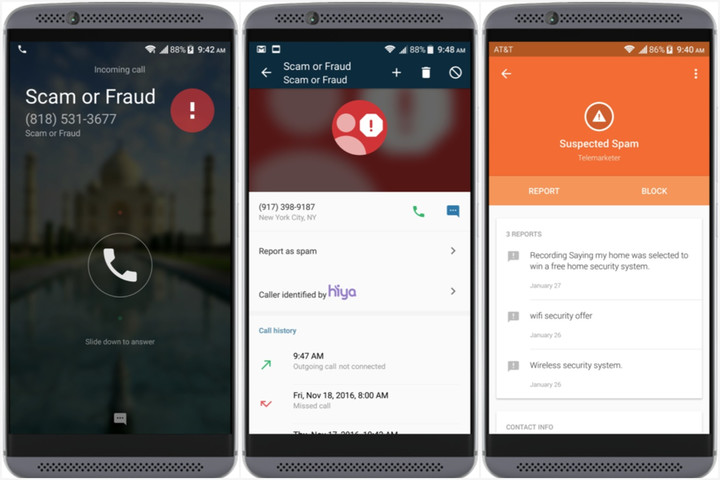
Hiya’s Axon 7 integration will take the form of an enhanced phone app that taps the service’s database of 1.5 billion phone numbers. When an incoming call is matched with a known bad number, an auto-blocking feature will prevent it from coming through. Users will also be able to block numbers manually.
Hiya analyzes more than 3.5 billion calls and text per month, applying “expansive algorithms” to identify unknown calls and texts and to monitor phone-based threats for consumers and businesses. And it provides call-blocking services to AT&T, T-Mobile, and Samsung Galaxy S7 users worldwide.
There’s been a groundswell of support for anti-spam initiatives in the past year. The federal government has imposed more than $1.2 billion in fines on telemarketers, and Senator Charles Schumer, D-N.Y., proposed legislation requiring telecom companies to offer free robocall-blocking technology. The Federal Communications Commission, meanwhile, has hosted two meetings of the Robocall Strike Force, a joint effort across carriers tasked with providing solutions to the problem of robocalls.
By and large, corporations have stepped up to the plate. In September 2016, Sprint expanded a partnership with Cequint to develop “enhanced caller ID solutions” that could be used to prevent spam calls from reaching customers. And in December, AT&T followed suit with Call Protect, a network-level feature that automatically blocks numbers flagged as “fraudulent” and lets customers temporarily block custom numbers for a period of 30 days.
More: AT&T GoPhone customers are getting a hefty data allotment increase
But ZTE believes there’s more to be done. “We’re excited to team up with Hiya to automatically protect our consumers from the nuisance of robocalls,” Jeff Yee, ZTE USA’s vice president of technology planning and partnerships, said in a statement. “Our Axon 7 is the first in the U.S. to offer spam and scam protection along with a natively integrated caller ID solution for free because we are committed to protecting our consumers and giving them the best phone experience.”
Hiya integration will roll out to Axon 7 units in the coming days.
Action Launcher beta update brings Pixel Launcher’s app shortcuts

Action Launcher is getting a major update in the coming weeks.
Action Launcher is one of our favorite third-party launches, and the app is slated to pick up a major update shortly. Version 3.13 — which is now available as a beta — introduces the Pixel Launcher’s styling for app shortcuts, ability to pin shortcuts to the home screen, redesigned icon indicators, and much more.
Here’s what’s new in the update, according to the changelog:
- Pixel Launcher’s UI styling for App Shortcuts (previously known as Quickcuts).
- App Shortcuts can be used in combination with Shutters.
- App Shortcuts can be dragged and placed as shortcuts on a home screen.
- New icon indicators for Covers, Shutters and App Shortcuts.
- Add animated caret indicator when opening/close Pixel style All Apps.
- Lots of polish to ensure the app’s look and feel mimics that of Pixel Launcher.
If you’re interested in taking a look at the upcoming changes right now, you’ll need to join the Digital Ashes Beta group, and become a tester for Action Launcher on the Play Store. Updating to the latest version of the app will switch you over to the beta channel. The stable client is expected to pick up the update in the coming weeks.
Galaxy S8 and S8 Plus 3D renders offer clearest look yet at upcoming flagships

3D renders of the Galaxy S8 and S8 Plus detail Samsung’s design choices for its flagships.
We’ve seen the first live photo of the Galaxy S8 late last month, which pointed to a bezel-less display with an 83% screen-to-body ratio, along with a fingerprint sensor located next to the camera module at the back. Noted leaker OnLeaks has now published detailed 3D renders of the Galaxy S8 and S8 Plus on GearIndia, revealing additional details regarding the design of Samsung’s 2017 flagships.
The renders — which are based on factory computer-aided designs (CADs) — show off dual curved displays on both variants of the Galaxy S8, with the standard version expected to offer a 5.7- or 5.8-inch QHD display while the larger Galaxy S8 Plus rumored with either a 6.1- or 6.2-inch QHD screen. The leak details a USB-C port at the bottom, next to a 3.5mm jack.


The 3D renders also highlight the lack of a home button at the front, and show off the volume buttons on the left of the device along with a dedicated button for Samsung’s virtual assistant, rumored to be called Bixby. The power button is on the left, and an interesting change is the placement of the fingerprint sensor, which is located at the back of the device next to the camera sensor. Rear-mounted fingerprint sensors aren’t new, but Samsung’s decision to place it to the right of the camera could turn out to be a polarising design choice.
Both phones are said to offer iris scanners, a feature that first made its debut on the short-lived Galaxy Note 7. Other specs include a 12MP camera with dual-pixel phase-detection autofocus and f/1.7 lens, 8MP front shooter, Exynos 8895 or Qualcomm Snapdragon 835, 4GB of 6GB of RAM, 64GB storage, microSD slot, 3250mAh battery on the Galaxy S8, and a 3750mAh battery on the S8 Plus.
Samsung
Samsung is a massive South Korea-based multinational company that makes some of the best-selling phones, tablets and mobile accessories, but also spans industries such as televisions, appliances and semiconductors (like memory and processors). Samsung is the largest Android device manufacturer worldwide.
- Best Samsung phones
- Samsung Galaxy S7 edge review
- Best microSD card for Android
 AIVAnet