


Volkswagen agrees to yet another diesel cheating settlement
Volkswagen has agreed to pay at least $1.2 billion to compensate US owners for lying about emissions on 3.0-liter diesel vehicles. Owners of 20,000 model-year 2009-2012 cars — which can’t be fixed to meet legal standards — will be offered a buyback or trade-in and from $7,755 to $13,880 in compensation, depending on the model. Buyers of 58,000 newer cars will have their vehicles repaired and receive up to $16,114. However, if the FTC isn’t satisfied with the fixes, VW could be forced to buy back those cars too, making the settlement as high as $4 billion.
The deal covers 78,000 Audi, Volkswagen and Porsche cars with 3.0 liter TDI engines. The company already agreed on a $14.7 billion settlement for around 500,000 smaller 2.0-liter diesels. With this latest deal, “all of our customers with affected vehicles in the United States will have a resolution available to them,” said Volkswagen Group of America chief Hinrich J. Woebcken.
All of the models were equipped with “defeat devices” that only kicked in emission controls when they detected that pollution tests were underway. Once vehicles hit the road, they were turned off, allowing for driver-pleasing power levels but 20 times the legal amount of nitrogen oxide, an exhaust gas that kills tens of thousands of people a year.
This order completes the FTC’s case against Volkswagen by ensuring that all consumers who purchased a TDI diesel engine vehicle will be fully compensated for their losses.
“This order completes the FTC’s case against Volkswagen by ensuring that all consumers who purchased a TDI diesel engine vehicle will be fully compensated for their losses,” the FTC said in a statement. Volkswagen CEO Volkmar Denner also said that the company is anxious to move on and focus on its next-gen EVs and other projects. However, the company is still dealing with potential fines and penalties in the EU and elsewhere.
Now that it’s all over, how much has VW paid out in the US? While it’s hard to gauge the price of the destruction the cars wrought on the environment and our health, $21.4 billion is far and away the steepest settlement ever paid by a corporation (the company earned $8.3 billion in the first half of 2016). Perhaps more importantly, it should stand as an abject lesson in corporate morality, for anyone who still thinks that self-regulation is a good idea. The following chart details all the settlements.
Source: FTC
PlayStation VR bundles are back
Sony knows that you probably don’t have the camera and Move controllers needed to make use of its PlayStation VR headset, so it’s reviving and expanding its virtual reality bundles to help get you started. On top of the original bundle, which includes the necessary hardware, the PSVR demo disc and PlayStation VR Worlds, there’s a new GameStop/EB Games exclusive bundle that packs in the on-rails shooter Until Dawn: Rush of Blood. Both will cost the same $499 as the previous bundle, and it’s really just a question of when you can get them: the regular bundle will hit stores next week, while the Rush of Blood kit will be available later in February.
Source: PlayStation Blog
‘My Brother’s Keeper’ uses new VR tech to reenact the Civil War
A story about two estranged brothers facing off on a Civil War battlefield might seem like a strange fit for a virtual reality film, but My Brother’s Keeper isn’t your typical VR movie. The PBS film, which premiered at Sundance last week, uses its period setting to show off several new filmmaking techniques, including the first 120FPS slow motion recording in VR and the use of a customized action camera rig. But most importantly, it uses all of that technical wizardry to craft a genuinely moving story.
My Brother’s Keeper is set around the battle of Antietam, which is notorious for being the deadliest single-day fight in American history. Amid the conflict — which involves over 150 Civil War re-enactors — the two brothers find themselves on opposite sides of the fight. At a short running time of just nine minutes, we only get glimpses at their lives, but they’re enough to make an emotional impact. The film, which was written and directed by Connor Hair and Alex Meader and produced by StoryTech Immersive and Perception Squared together with the Technicolor Experience Center, is also partially inspired by the PBS Civil War series Mercy Street.
“We are witnessing the birth of a new medium, so there is a lot for us to learn and invent at every point in the process; from pre-production, production, post-production and distribution, there is a lot of innovation happening,” PBS producer Don Wilcox said in an email to Engadget. “Hardware continues to improve, capabilities expand, and shooting and editing techniques continue to mature. One thing that will help us over time is the development of standard formats — today just about every platform has its own requirements, which creates extra work and inconsistency in what viewers ultimately see, depending on their device.”
There’s no shortage of ways to view My Brother’s Keeper. It’s available on just about every VR video platform, including YouTube, Facebook, VivePort (for HTC’s Vive), Oculus Rift and Samsung Video for the Gear VR. You can also view it in standard 2D 360-degree video on YouTube and Facebook, but those options only match a fraction of the experience. With a VR headset, you get a full stereoscopic 3D view of the film, which offers much more depth and clarity than the flat version.

Based on the VR films I’ve seen so far — which includes Obama’s ode to Yosemite and his farewell tour of the White House — there’s little reason to watch one that isn’t rendered in 3D. The whole point of strapping on a VR headset is to achieve a sense of “presence,” the idea that you’re transported somewhere else and watching it in person. That’s a tough sensation to convey when you’re just watching a 2D video wrapped around your eyes. In My Brother’s Keeper, the 3D filming was particularly striking in its long shots of wheat fields and battle scenes, as well as closeups of the lead actors.
As for the new things the film brings to the table, I particularly enjoyed its implementation of slow motion. The filmmakers were the first to use Jaunt’s VR rig to achieve 120-fps recording, and the result is a silky smooth virtual image. It almost feels like time is slowing down around you a bit. The effect is mostly used during the battle scenes, which gives you time to soak in the detail in the actors’ costumes and the carnage happening around you. Helping out the slow motion is a new action rig, which allows the camera to smoothly flow through space. (Typically VR filmmakers just plop their cameras down in a single spot.)
I wasn’t as big a fan of the film’s use of 180-degree framing, which basically just blurs a large portion of the image to focus on what’s in front of you. It feels a bit like the shallow focus trend we’re seeing in TVs and films today (like how the show Louie is shot), but it’s just needlessly limiting in VR. I actually thought something was wrong with the Daydream headset I was wearing the first time I saw the blurry effect.
And as Wilcox tells us, there are still plenty of challenges for shooting in VR: “There is no ‘fourth wall’ since the camera can see in all directions,” he noted. “This creates challenges for the crew, who need to get out of the shot. This required us to hide behind trees, haystacks and cornfields to stay out of sight.” Actors also have to be more mindful of their own performances, since they can’t be closely monitored by the director.
Wilcox describes VR post-production as “significantly” more complex than traditional films. “Camera rigs must be painted out, visual effects have to be rendered multiple times to fill the surround format and stitching together the different camera views takes skill and precision,” he said.
In My Brother’s Keeper, we can see glimpses of where VR filmmaking is headed. As a medium, VR is still very much in an early stage, and there are bound to be issues as artists explore new technology and techniques. But that just makes the successful attempts that much more exciting.
Kickstarter acquires live streaming company Huzza
Kickstarter today announced that it has purchased Huzza, the live-streaming startup that helped create Kickstarter Live. Like Twitch for creators, Live is a video platform that helps facilitate Q+As and connect people asking for money to people that have it. According to Kickstarter, 74 percent of creators who stream on the platform get funded, with the average viewer spending over 16 minutes watching livestreams.
Founded in 2015 by entrepreneurs Justin Womersely and Nick Smit, Huzza has swiftly struck the big time. The acquisition implies that live video will be a key part of the company’s crowdfunding platform moving forward. Huzza’s co-founders will head up a new Kickstarter office based in Vancouver, Canada, where they’ll lead a team of engineers that will continue to develop Kickstarter Live.
Source: Kickstarter
Bill Nye and Buzz Aldrin do a little turn on the catwalk
Never in a million years did I think I’d see Bill Nye and Buzz Aldrin walk a runway together, but that’s exactly what happened. Both were part of designer Nick Graham’s Fall 2017 fashion show in New York City, where he revealed his new “Life on Mars: F/W 2035” menswear collection. Graham says the event was inspired by our need to explore the Red Planet, as well as his admiration for Aldrin’s space travel accomplishments — like being one of the first humans to land on the moon. That’s why you’ll see garments with prints of rockets and planets, or designs in red that are meant to represent Mars’ famed hues.
As for Nye being the master of ceremony, the “Science Guy” said Graham had designed bow ties for him before. Eventually, they developed a friendship and decided to work on this project, which isn’t surprising considering the motif speaks to Nye’s heart. At the show, Nye gave attendees a talk before the models walked the runway, in which he shared his knowledge on space and expressed how important it is for humans to keep exploring planets.
Let’s take a look at what else happened at this fashion show, which appropriately featured David Bowie’s Life on Mars as its theme song. It was only right.
Tesla drops ‘Motors’ from its name
In a move designed to cement the company as more than just a car maker, Tesla has dropped the “Motors” from its name. The firm posted the necessary SEC paperwork this morning and comes as Elon Musk moves his business well beyond its original mission. After all, with the purchase of Solar City, launch of Powerwall and the solar roof, Tesla is as much of an energy company as it is a car maker.
The obvious, tedious comparison to make is with Apple, which chose to ditch “Computer” from its name way back in 2007. It was the moment that the company signposted that the iPod wasn’t simply a fluke and that it saw its future in consumer electronics. After all, the change was announced on the same day that it announced the first generation iPhone.
Tesla Motors has changed its name to Tesla. https://t.co/u2AENjVoxR
— Alistair Charlton (@AlistairJ90) February 1, 2017
Last summer, Elon Musk unveiled the second part of Tesla’s grand master plan for his transportation business. The document included merging the energy generation and storage businesses he was involved with, as well as widening Tesla’s vehicle portfolio. But beyond that, Musk wants to build super-safe autonomous vehicles and enable people to rent those cars out when they’re not in use.
All of that would turn Tesla into a conglomerate with divisions in car and battery production, energy generation, artificial intelligence and an Uber-style transportation marketplace. You can see why anyone would think having Motors in the name would feel a bit like a straitjacket.
Via: Alistair Charlton (Twitter)
Source: SEC
Mosquitos are beating gene editing with rapid evolution
Gene editing and gene drives have the potential to be a massive scientific breakthrough, letting scientists target and eliminate diseases by modifying genes and disseminating them throughout a population. But it’s also a technique that’s not ready for prime time: There’s a lot of work to be done to quiet critics and ensure that releasing gene-edited organisms into the wild will have the desired effect.
But some scientists caution that there are still a number of hurdles to clear before we even deal with problems that could come with releasing gene-edited organisms into the wild. The biggest of those hurdles is evolution. According to a new report published in Nature, mosquitoes altered by gene drives in labs are showing promise, but researchers believe that in the wild, these creatures will quickly evolve resistance to the genetic modifications before they can be spread throughout the population.
That’s not a terribly surprising development; last year, some scientists observed the HIV virus resisting the CRISPR gene-editing technique. To help simulate real-life conditions as best as possible, a project called Target Malaria has been building elaborate mosquito enclosures that help simulate the real-life environment of Africa as best they can — Nature calls them “the world’s most sophisticated mosquito cages.”
The Target Malaria team plans to release a second generation of gene-driven mosquitoes in the newest of these enclosures in 2017 to see how it responds to the real-world environment. While the scientists expect evolution to keep on throwing up barriers to success, it’s still seen as a viable way to stop the spread of Malaria — if scientists can reduce the population of Malaria-carrying mosquitoes, it could be a major breakthrough.
Via: Scientific American
Source: Nature
Snapchat Testing ‘Smarter Lenses’ That Can Identify and Interact With Real-World Objects
Snap is said to be working on a collection of “smarter lenses” that would let users overlay virtual images and objects onto landscapes in the real world, “not just faces,” and let them interact with the virtual objects similar to augmented reality (via The Information). The smarter lenses are an advancement of the “world lenses” that came to Snapchat last year, which placed various simple animations on top of real world scenes, like clouds and snowstorms.
The difference with the new technology is that it “can identify environmental elements,” subsequently allowing virtual objects to interact with objects in the real world, instead of acting as a simple filter. As with most of Snapchat’s popular camera additions, the smarter lenses are believed to eventually lead to bountiful advertising opportunities for brands on the social media app.
An example of Snapchat’s World Lenses from last year
Currently, the new lenses are only being tested on the company’s internal version of the app, and they are “not on Snap’s near-term product roadmap.” If and when they are released, people familiar with the matter believe users would receive the lenses first, ahead of advertisers, who could then construct campaigns and strategies based on how Snapchat’s user base reacts to the advanced feature.
The addition of new features and a potential boost to advertising support is seen as a keen strategy on Snap’s part, amid news that the company is planning to go public in the coming weeks.
Smarter lenses for its users could also help convince Snapchatters to stick around amid growing competition from Instagram and Facebook. Last summer Instagram launched a copy of Snapchat’s disappearing story idea, called Instagram Stories, and now Facebook plans to extend the feature into the main Facebook app with Facebook Stories. According to Facebook, Instagram has 150 million users posting to Stories every day, roughly mirroring Snapchat’s reported user base.
Tag: Snapchat
Discuss this article in our forums
Epic’s Tim Sweeney isn’t thrilled about the locked nature of Windows 10 Cloud
Why it matters to you
Tim Sweeney raises a good point: the rumored “cloud” version of Windows 10 may prevent customers from installing Steam and traditional PC games.
Epic Games’ co-founder and Unreal Engine creator Tim Sweeney jumped on Twitter to voice his opinion about Microsoft’s rumored “cloud” version of Windows 10. He calls it “Windows 10 Crush Steam Edition” because this version of Microsoft’s platform apparently locks the end user down to the Windows Store, preventing the installation of traditional software sold elsewhere.
“Looks like Microsoft was waiting till after the election to see if they could get away with their lockdown,” he said.
Windows 10 Cloud was originally thought to be a cloud-based version of Windows 10 that would stream to devices of any size and architecture. But sources stated that Microsoft is creating a version of Windows 10 to compete directly with Google’s Chrome OS platform installed on Chromebooks. Windows 10 Cloud would be lightweight, highly responsive, and would only rely on apps distributed through the Windows Store.
More: Epic Games founder Tim Sweeney: Oculus storefront is anything but ‘open’
That has seemingly pushed Sweeney to jump back on his Windows 10 soapbox — he has been very vocal about the Windows Store and how it presents a “walled garden.” Software sold through Microsoft’s embedded storefront must meet specific guidelines, and must use the company’s Universal Windows Platform model. Thus, unlike Steam and Amazon, Windows 10 users browsing through the Windows Store can’t purchase just any piece of software.
To some degree, Microsoft is treating Windows 10 like a hybrid platform. On the one hand, it’s pushing self-contained “mobile” apps through a platform-locked storefront. On the other hand, the company enables Windows 10 users to install (side-load) traditional desktop software that can be purchased anywhere. However, Windows 10 apps sold through the Windows Store take advantage of special features not offered to traditional software developers.
But with the possible introduction of Windows 10 Cloud, customers won’t have the option of installing the Steam client and purchasing traditional PC gaming software. It’s reminiscent of the days when Microsoft sold Surface devices with Windows RT, which was designed for the ARM processor architecture and could not run traditional desktop software (Win32) based on the x86 processor architecture (Intel, AMD).
“The trouble started when Microsoft began shipping some PCs and regular Surfaces that were so locked down that you couldn’t run Win32 apps; you could only run apps that had been bought from their store. That is a complete travesty.” Sweeney said last year.
Sweeney thinks that Microsoft doesn’t believe in the openness the company is preaching with Windows 10. He thinks the company is performing a series of “sneaky maneuvers” with Windows 10 that will make using traditional software difficult on the platform, driving users into the Windows Store.
“Slowly, over the next five years, they will force-patch Windows 10 to make Steam progressively worse and more broken,” he said. “They’ll never completely break it, but will continue to break it until, in five years, people are so fed up that Steam is buggy that the Windows Store seems like an ideal alternative.”
But with Windows 10 Cloud, there won’t be any possibility of using Steam. Is Sweeney’s prophecy coming true?
Best app deals of the day! 6 paid iPhone apps for free for a limited time
Everyone likes apps, but sometimes the best ones are a bit expensive. Now and then, developers put paid apps on sale for free for a limited time, but you have to snatch them up while you have the chance. Here are the latest and greatest apps on sale in the iOS App Store.
These apps normally cost money and this sale lasts for a limited time only. If you go to the App Store and it says the app costs money, that means the deal has expired and you will be charged.
More: 200 Awesome iPhone Apps | The best Android apps for almost any occasion
PDF it All
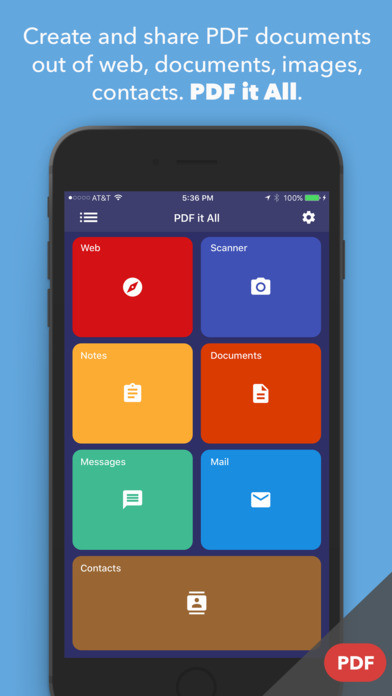
PDF it All is an advanced PDF converter that allows users to convert PDF files out of many sources. Convert Word, Excel, PowerPoint, web pages, Contacts, Messages, Mail to a PDF file in a matter of seconds.
Available on:
iOS
LocalToWeb
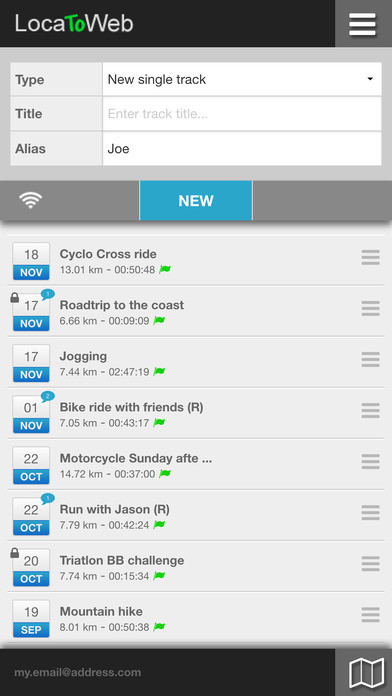
LocaToWeb is a GPS tracker that shares your position to the web in real time. Friends and family can follow you live on a map at http://www.locatoweb.com when a track is running.
Available on:
iOS
5coins

You don’t need to be an accountant in order to track expenses. 5coins is a simple, beautiful, and smart app for tracking your daily expenses. It lets you know how much you are spending, and when and where your money goes.
Available on:
iOS
Face Swapper
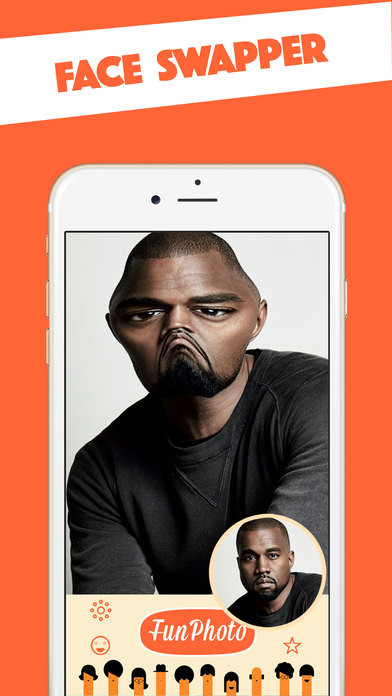
Take hilarious pictures of yourself and your friends with Face Swapper. Touch to tweak your creations in real time and share the laughs with friends on Facebook, Twitter, Tumblr, and email.
Available on:
iOS
50mm

Create charming 50mm Photo-style photographs with real-time Vintage effects. These effects work great on selfies and other portraits but also for many other subjects.
Available on:
iOS
Hands-free Browser

Getting your hands dirty? With this app you can surf the web without touching the screen. It’s fantastic for reading recipes while you cook, following repair instructions with greasy hands, working out, and more.
Available on:
iOS
 AIVAnet