


Lyft will reach 100 more US cities by the end of 2017
Lyft trails Uber when it comes to sheer coverage, but it’s making up for that in style this year. The ridesharing outfit now plans to offer service in 100 more cities by the end of 2017, 40 of which will go live on January 26th. That’s a sharp spike compared to the 40 added in all of 2016. All told, Lyft will cover 300 cities, or a full third more cities than it supported at the end of 2016.
Many of the new cities coming onboard this week are mid-sized urban centers like Baton Rouge and Wichita. You’re particularly well-served if you live in California, the Carolinas, Pennsylvania or Virginia, as Lyft will be available in multiple new cities in each state.
The company will still have smaller coverage than Uber, which hit the 300-city mark in mid-2015. There’s also no word on international expansion, which is Lyft’s historical weak point. The firm has partnerships in other countries, but it’s not nearly as ubiquitous as Uber outside of the US. With that said, the surge in expansion is important. This will increase the chances that you have real ridesharing competition in your corner of the US, and might increase pressure on Uber to match features and offer better compensation to its drivers.
Via: TechCrunch
Source: Business Insider
Scientists prepare their own march against Trump
The Women’s March on Washington might not be the only big protest against Donald Trump’s policies in the near future. Coordination is underway for a Scientists’ March on Washington that, as the name implies, would rally support from anyone who believes that scientific facts should play a role in government policy, regardless of their political leanings. Don’t like that Trump wants to censor climate change data or otherwise attempt to prevent scientific knowledge from reaching the public? This might be your chance to make your voice heard.
The finer points of when and where the protest will take place have yet to be hashed out (organizers are meeting this week), but this is definitely more than a well-meaning petition given the tens of thousands of people registering their support. The question is, just how big will it actually get? It’s doubtful that it’ll compare to the Women’s March (estimated to have been three times the size of Trump’s inauguration in Washington alone), but a large-enough contingent could draw attention to the issue and prevent it from flying under the radar.
Via: Daily Dot
Source: Scientists’ March, Reddit, Twitter
Apple hits Qualcomm with two more antitrust lawsuits
Just days after hitting Qualcomm with a $1 billion lawsuit, Apple is doubling down with two more antitrust lawsuits against the chipmaker. As Reuters reports Wednesday, the latest pair of suits were filed by Apple’s subsidiary in China, alleging Qualcomm “abused its clout” in the industry and that the company never made good on its promise to cheaply license its patents.
The first lawsuit seeks around $145 million in damages from Beijing’s Intellectual Property Court, while the second is asking the court to weigh in on Apple and Qualcomm’s licensing deals. A spokesperson for the chipmaker told Reuters that his company had not yet reviewed the latest complaints, but during a regulatory hearing in China in 2015, Qualcomm accused Apple of using such lawsuits in an attempt to get a discount on Qualcomm’s technology.
Earlier this month, the US Federal Trade Commission also filed a complaint accusing Qualcomm of stifling competition, which led to Apple’s $1 billion lawsuit in California. In that case, Qualcomm has denied Apple’s claims that it “unfairly insisted on charging royalties for technologies [Qualcomm] have nothing to do with.” Qualcomm, for its part, insists Apple gets the same licensing terms as all its other customers and is reportedly planning to countersue.
Via: The Verge, Recode
Source: Reuters
Apple’s LG 5K Display Store Listing Now Accepting Reviews
Last week, a reddit post accusing Apple of removing negative reviews for the LG UltraFine 5K Display started making the rounds, suggesting Apple was hiding negative feedback about the new display in its web store.
MacRumors has learned that reviews were never made available for the LG 5K Display in Apple’s online store, though the reason for that is not clear. It could be that reviews were not activated due to the long delay between when the display was announced and when it became available for purchase.
Whatever the reason behind the lack of reviews, the issue has been fixed. As of this morning, the LG 5K Display listing on Apple’s website does indeed feature a “Ratings & Reviews” section.
Looking back at archived web information from 2016 and early 2017 confirms that the LG 5K Display listing never displayed rating or review details, and if Apple were censoring reviews, the company also likely would have put an end to lukewarm reviews for the 4K LG UltraFine Display. The 4K display store listing has offered reviews since it became available for purchase.
Because Apple didn’t delete the reviews, the premise behind the original reddit post is flawed. While it’s true there’s been some negative feedback about the LG 5K Display on Apple’s Support Communities, there was no secret censoring of information on the store page.
It is not clear if Apple is looking into any of the issues that prompted the reddit post. On Apple’s Support Communities, customers complain of issues with the display suddenly shutting off, flickering, or not connecting to a Mac, ports not working, sound problems, and more.
The LG UltraFine 5K Display has been available for purchase since the middle of December. Apple is currently offering a limited time discount on the display, dropping the price from $1,299 to $974. The special pricing will be available through the end of March.
Related Roundup: Displays
Discuss this article in our forums
Dropcam Co-Founder Greg Duffy Joins Apple
Greg Duffy, the founder and former CEO of security camera company Dropcam, has accepted a role at Apple and will be leaving Google, reports The Information.
An Apple spokesperson confirmed that Duffy has been hired by Apple, but didn’t share details on his role at the company. The Information speculates that he could be leading a special project at Apple, given his background.
Duffy who co-founded Dropcam in 2009, led the company until it was acquired by Google-owned Nest for $555 million in mid-2014. Duffy spent several months working for Nest before departing the company in January of 2015 amid rumors of a culture clash between Nest and Dropcam.
Duffy was reportedly unhappy with the way Nest founder Tony Fadell ran the Alphabet-owned subsidiary, going as far as referring to him as a “tyrant bureaucrat.”
At any given time, Apple has multiple “special projects” going on behind the scenes, so it’s difficult to speculate on what Duffy could be working on at the company. Apple is rumored to have a range of exploratory products in the works, including the Apple Car, an Amazon Echo-style home hub, an AR product, and more.
Tags: Nest, Dropcam, Greg Duffy
Discuss this article in our forums
Huawei Closing in on Apple, Aims to Become World’s Largest Smartphone Maker Within Four Years
Since 2011, the worldwide smartphone market has been dominated by Apple and Samsung. The elusive third-best spot, meanwhile, has failed to be held down by one vendor for an extended period of time, changing hands between Nokia, BlackBerry, Xiaomi, and Huawei over the past six years.
In 2014, it looked like low-priced Chinese vendor Xiaomi had firmly cemented its position as the world’s third-largest smartphone maker, but fewer than three years later, it has fallen out of the top five or even six vendors, according to the latest quarterly data from research firms IDC and TrendForce.
Xiaomi’s recent decline can be attributed to a limited physical retail presence and increased competition from Huawei’s lower-end Honor brand. Xiaomi continues to avoid selling premium smartphones—its most expensive model costs around $400—and some of its Mi smartphones have received mediocre reviews.
Huawei has since dethroned Xiaomi as not only China’s largest smartphone maker, but the world’s third largest. And now, the company has its eyes set on challenging Apple and Samsung for the crown, reports Fortune.
“We want to grow into top two market share, and, in the future, top one by 2021,” Huawei’s consumer head Richard Yu told the publication.
In the first quarter of 2016, Huawei sold ten times as many smartphones as Apple in Finland, according to research firm IDC. In Europe, it is now the top-selling smartphone maker in Portugal and the Netherlands and the second biggest in Italy, Poland, Hungary, and Spain, according to the report.
But if Huawei ever wants to truly challenge Apple and Samsung, it will have to conquer a key market where it has failed to make a dent: the United States. Huawei does not even crack the list of top ten smartphone makers in the country, trailing behind smaller rivals such as BLU and OnePlus.
It doesn’t help that Huawei lacks agreements with the U.S.’s “big four” carriers, namely Verizon, AT&T, T-Mobile, and Sprint. U.S. customers have to resort to retailers such as Best Buy or Walmart, or Huawei’s direct sales website, to purchase one of their devices, reducing the brand’s visibility in the country.
For its sake, Huawei appears to recognize it needs to take a new approach to the American market:
“The past five years we were not taking the right strategy,” Yu says. “We didn’t have the right people.” Huawei recently hired Michelle Xiong, a former Verizon wireless executive with experience negotiating with device makers, to help sell Huawei’s smartphones. But a Huawei staffer cautions that any carrier agreement is at least a year away, pushing meaningful success in the U.S. at least three years down the road.
Apple reported sales of 45.5 million iPhones in the third quarter, while IDC estimates Huawei shipped 33.6 million smartphones on the quarter, so the Chinese company is within striking range. But whether it can continue its momentum, or fall back into obscurity like Xiaomi, is something only time will tell.
Tags: Huawei, Xiaomi
Discuss this article in our forums
Google’s ‘new and improved’ Contributor program is accepting early sign-ups
Welcome back, Contributor. Sort of.
As Google promised when the original Contributor program was entirely erased earlier this month, a replacement is on the way. There aren’t many details yet, and it’s not clear if this will look anything like the original service that killed ads in exchange for a monthly fee from users, but at least we know it’s not dead forever right?

Instead of a dead page, Google’s Contributor site now includes a link to a Google Form where you can ask to be a part of early trials for the “new and improved” Contributor. Amazingly, the URL for this sign up page includes the words “sign up disabled” but the link on the page clearly works. No one outside of Mountain View knows what that means yet, but as long as the core idea remains there’s a good chance this will be perfect for those who can’t stand ads but also want to support the sites they love.
Go forth and sign up for that early access, and be sure to drop us a line if you get to try anything cool before we do!
Google wants all Chromebooks to charge via USB-C, and it’s almost there
USB-C is coming to more Chromebooks with Google’s help.
Google is working with its partners to standardize charging across the entire Chromebook lineup of laptops, 2-in-1s and, eventually, tablets, according to the company.
In a blog post, the company said that it is listening to feedback from educators that despite the unified software experience, investing in Chromebooks from different manufacturers often comes with a set of charging challenges, as many laptops have proprietary charging ports and chargers that cannot be shared between students. “Going forward, all Chromebooks will have standard super-fast USB-C charging, so one Chromebook cart can charge any device quickly,” the company said in response to the feedback.

Google aims to standardize the entire Chromebook lineup to USB-C charging.
Android Central has now confirmed with Google that the company aims to standardize the entire Chromebook lineup — not just for the education market— to USB-C charging, though a timeline was not specified. While Google says “the majority” of Chromebooks launching this year will be USB-C powered, it’s likely that, like Android devices, the market will naturally move in that direction.
This is mainly thanks to the burgeoning USB-PD (Power Delivery) standard, which allows high-powered devices like laptops and tablets to be charged quickly and reliably using the USB-C standard. Google’s Pixel phones are two of the first to take advantage of USB-PD, but Google is actively pushing more companies to eschew proprietary fast charging methods like VOOC and Quick Charge, which can pose safety risks with the wrong adapters or cables.
The best Chromebooks you can buy
Google launched two new education-focused Chromebooks this week, the Acer Chromebook Spin 11 and Asus Chromebook C213, both of which will go on sale in the spring. The Acer has a Wacom overlay on the touch screen to support stylus input, and both are rugged, with 360-hinges for placement in tablet mode.
Tablets are something that Chrome OS fans can look forward to, as well. Google says that “with new apps, stylus and touch capabilities, we expect our partners will continue to build an even wider variety of Chromebooks in the future, including detachables and tablets.”
Chromebooks

- The best Chromebooks
- Should you buy a Chromebook?
- Google Play is coming to Chromebooks
- Acer Chromebook 14 review
- Join our Chromebook forums
How to produce beautiful, artistic photos on Android
Here’s how to edit photos when you’re on the road with just your smartphone (or tablet!).
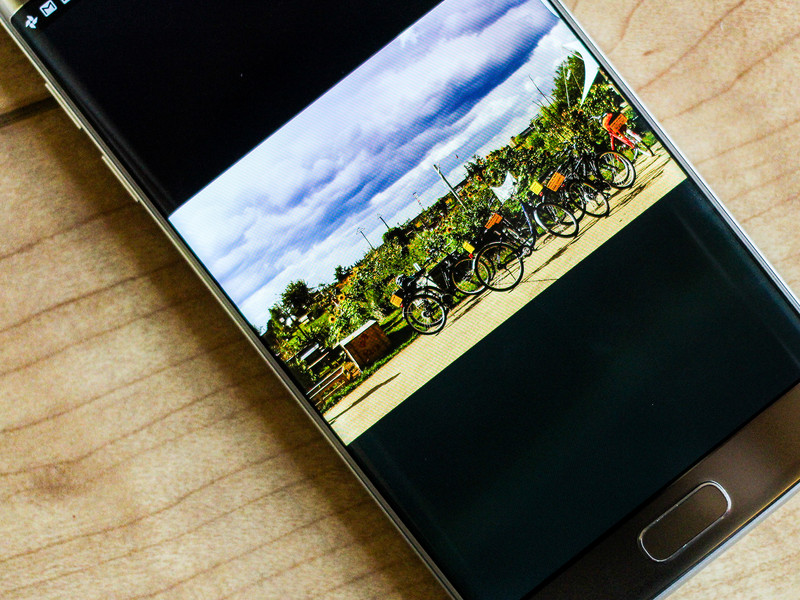
Going somewhere? Packing is tough enough. The last thing you want to do is have to worry about whether you have all the proper hardware to produce well composed, vibrant photography for sharing online. When I travel, I like to reflect on the photos I’ve snapped every few days. It’s my way of appreciating the fact that we live on such a beautiful planet, but I don’t want to have to bust out my laptop to do this.
Enter your smartphone (or tablet!). With displays becoming higher resolution and better able to reproduce colors than your standard wide-screen monitor, there’s really no reason to carry all that hardware with you just to put out a pretty photo. With a couple of adapters and helpful applications, you can edit your photos just as easily on the go.
Figure out your methodology
First thing’s first: how will you shoot your masterpieces? For my vacation in New Zealand, I brought two smartphones: the Galaxy S7 Edge and the Pixel XL. That was really all I needed! Sometimes, I’ll bring my trust little entry-level DSLR or borrow my husband’s professional-grade kit. Regardless of what you have in tow, you’ll want to equip yourself with the proper arsenal of apps.
Shooting with a smartphone

You can shoot with any smartphone, really, but be realistic about the quality of the photos you’ll be posting if you’re shooting with something low-end to mid-range—like the Honor 6X, for instance. If you’re wielding a flagship like the aforementioned devices, however, you can tweak a couple of settings to get the most out of that fixed rear lens.
If you’re serious about adjusting the various hues of a photo, you’ll want to turn on RAW capture if your smartphone allows it. This means every photo will be shot as a DNG file rather than a JPEG. The advantage is that the file type retains more information than the compressed JPEG would, though you’ll have to actively process the photo yourself before it’s shareable with the Internet.
On a device like the Galaxy S7 edge, Samsung saves both the RAW and JPEG file to the device so that you can instantly share one photo and then edit it more thoroughly later on. For the purpose of this column, however, you’ll be able to edit those DNG files with the right Android app.
If you’re serious about adjusting the various hues of a photo, you’ll want to turn on RAW capture.
Be forewarned that on most devices, you’ll have to enter “Pro mode” before you can select the option to shoot in RAW. This requires that you manually adjust elements like the exposure and shutter speed before you can snap a picture. Also, consider investing in a worthy smartphone tripod if you’re headed this route. I did, and though it adds a bit of bulk to packing, landscape shots taken with my smartphone have never looked better.
Shooting with a DSLR

If you’re planning to edit photos taken with your DSLR, check to see if your phone or tablet supports USB On-The-Go (OTG) first by downloading this app. If it turns out your device is compatible, grab a USB-connected card reader from a place like Amazon. You can choose between adapters that are compatible with your device’s charging port or adapters that allow you to connect any USB flash drive or card reader.
Thanks to Android’s “sharing” mechanism, you can open those photos directly in the editing app of your choice.
We’ve also got a helpful primer on how to properly connect USB flash storage to your Android device. The same steps apply to a USB card reader, too. When you’re ready to edit, you can plug in the SD card into your phone and browse through the files like you would on a regular computer. And thanks to Android’s “sharing” mechanism, you can open those photos directly in the editing app of your choice.
See at Amazon
Choose your applications
Adobe Lightroom


If you’ve used the desktop app, you know that Adobe Lightroom is one of the primo titles for making your smartphone photos look their absolute best. Lightroom mobile boasts much of the same functionality as the full suite, including the ability to individually adjust hue, saturation, contrast, brightness, white balance, sharpness, and tone. There are also helpful filters to choose from if you’re feeling creative, including filters that correspond directly to the type of smartphone you’re shooting with.
Lightroom mobile also lets you sign in to your Adobe account, so if you’re already a Creative Cloud subscriber, you can log in to access your archived albums and all the metadata. And if your smartphone doesn’t employ a “Pro mode,” Lightroom mobile comes with the ability to shoot DNG files baked into the camera mode.
Download Adobe Lightroom (Free)
Snapseed

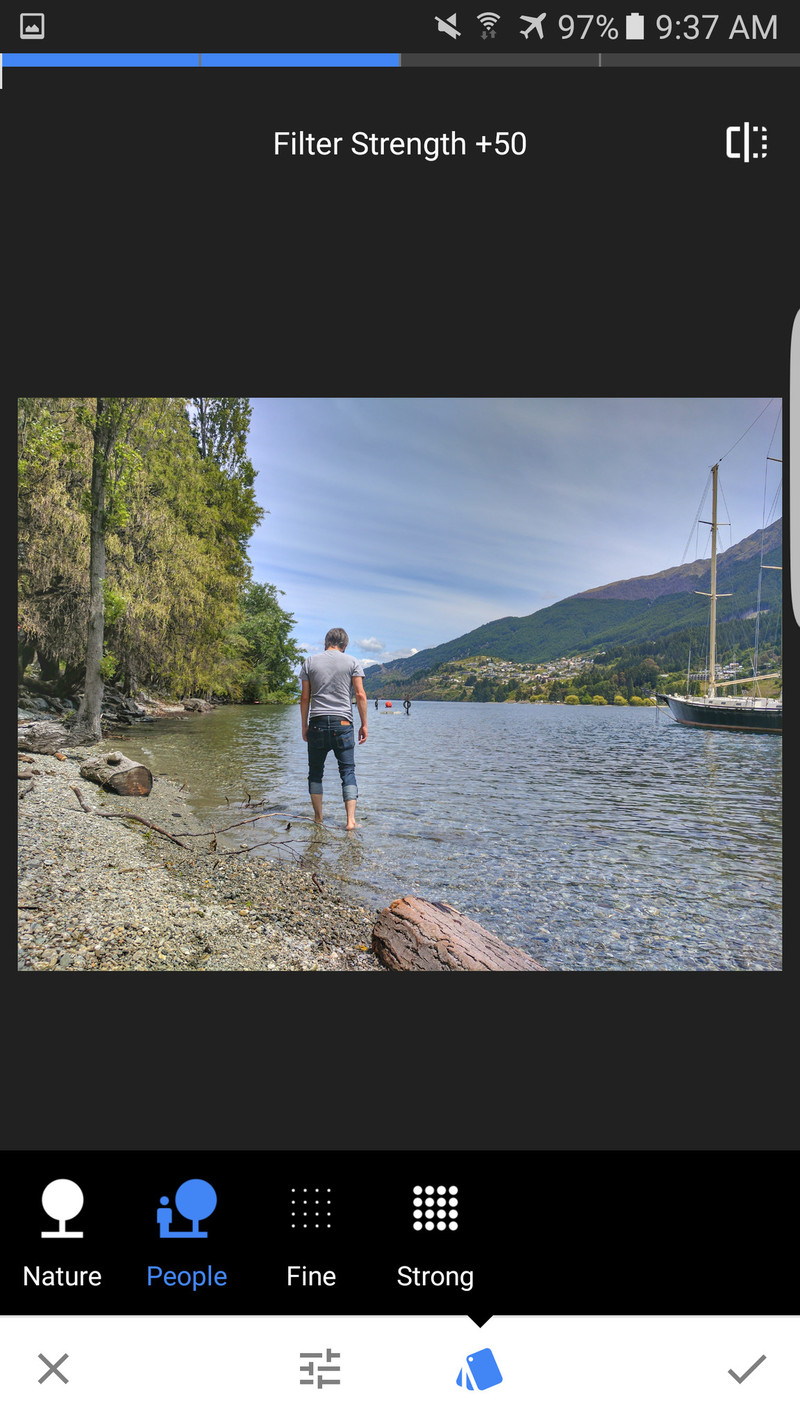

You’re an Android user, so you’re already entrenched in the Google life. Stick with the family by downloading Snapseed, Google’s photo editing suite. The app comes with 25 different tools and filters, including a healing brush and HDR tuner. What’s more: Any time you apply a filter, you can tap an icon in the upper right-hand corner to toggle between the before and after. Snapseed also supports DNG files.
When you’re finished editing, you can easily share to any of your favorite social networks. For a little more flair, choose between the different frames or add a bit of context with a stylized text caption.
Download Snapseed (Free)
Pixlr


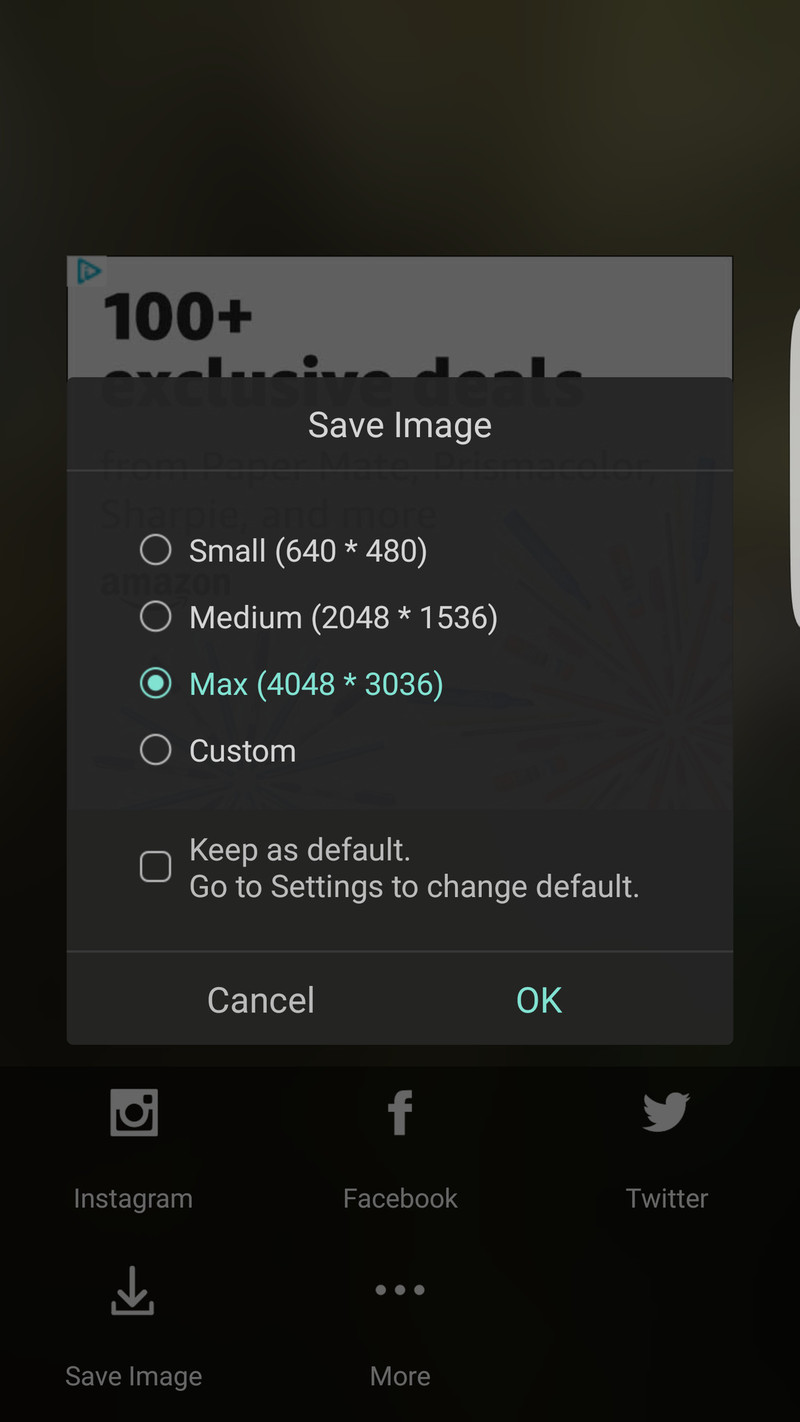
Pixlr claims it offers over 2 million combinations of free effects, overlays, and filters. I can’t personally confirm that, but I can say that, anecdotally, I’m sometimes overwhelmed by Pixlr precisely because of its breadth of features. In addition to the standard filters and adjustments, Pixlr lets you do things like create collages, layer multiple photos, and stylize your images. There’s also a favorites button in case you get into an editing groove and you don’t want to have to recall your steps each time.
When you’re finished editing, you can share externally or save the photo to your device at maximum resolution.
Download Pixlr (Free)
Accept the limitations
For those of you who are new to the concept of editing photos with your smartphone, be aware of the limitations. For one, you can only work on one image at a time, and you’re likely doing so with a sensitive setup — one wrong flick of the SD card adapter and every edit could disappear before you even have the chance to export. Transferring and editing RAW files also drains your battery, so if you’re in the editing process while in transit, for instance, be sure you’re tethered to a high capacity battery pack.
But you’re likely not reading this article if you’re a professional photographer because there’s nothing mentioned here that you don’t already know. Well, I’d ask you to please consider leaving a comment and letting us know of any other tips you might have for editing photos on the go!
UK retailers to start selling Huawei P8 Lite 2017 on Feb 1
Get your buying fingers ready, P8 Lite fans.

Huawei surprised quite a few people last year with the P8 Lite, an unlocked budget phone that felt like it should cost a lot more right until you used the software. While the frustrations with EMUI have very slowly dissipated as updates are released on other phones, it’s easy to ignore the occasional issue when the hardware is this nice at this price range.
The successor to this phone, cleverly dubbed P8 Lite 2017, is now expected to be released in the UK on February 1 with Nougat and EMUI 5.0 on board. The best part of this news, as with its predecessor, is the price. Huawei is selling this phone for only £185.
For those keeping score at home, £185 gets you a Kirin 655 processor with 3GB of RAM, 16GB of onboard storage with a microSD slot, a 3,000mAh battery, fingerprint reader, and a 5.2-inch 1080p IPS display. It’s more than a little impressive on paper at that price, and the 12MP rear camera is expected to deliver an improved experience over the decent quality of P8 Lite photos.
You can expect to find the P8 Lite 2017 in Vodaphone stores and on PAYG for £185 and contract from £16 per month.
 AIVAnet