


Tips and tricks, things to look out for in a phone repair service
You’ve smashed your iPhone. It wasn’t even a big drop but those sidewalks are unforgiving. Now, you have a thin slab of metal and glass splinters. So what’s next?
First, don’t beat yourself up. These things happen. A recent study showed that sports fans are particularly prone to phone accidents – 23 million Americans have damaged their phone while watching a sporting event. Around one in eight threw them across the room because they were excited, elated or furious sports. Just as many dropped them in their beers.
-
iCracked repair service: Anytime. Anywhere
- Don’t Have Insurance? There’s still a way to repair your phone
Holidays are not much better – one in eight damage something electronic during celebrations in the holiday season. And if it wasn’t the sidewalk you dropped it on but, well, in a public bathroom, take comfort from the fact that you are not alone. Just pick it up with a tissue, please.
Men most often break their cell phones in the garage, while women find the bathroom is the most likely place to break their phone.
Pexels
Second, think carefully about what to do next. Of course, you need it repaired, to be working properly and for this whole sorry accident to become a distant memory. But not all repair organisations are equal and, therefore, neither are their repairs.
That repair must be a good one: if it’s done inadequately you’ll find you need a second go to make things ship-shape.
You don’t want the repair to work just fine for three months and a day, and then fail, if the shop then says there’s a 90-day warranty on their work. Such a limited warranty is common, by the way.
A company like iCracked offers a lifetime warranty on all parts and labor. If the company you’ve come across offers less than lifetime, make sure the warranty is for two years at least.
Similarly, you need to know that the company you choose knows its business, and isn’t just buying untested parts. iCracked hand-tests every single part before it sends them to its well-trained engineers, called iTechs, to use them. If the parts are not individually tested they could be faulty, so it’s important to ascertain that before they go into your precious cellphone.
It helps if the repair company uses the best-quality parts (as iCracked does). Cheaper parts save the repair shop money, but you’ll suffer as a result.
The latest smartphones use tough glass, often from US company Corning whose Gorilla Glass is now up to its fifth iteration and the Japanese company Asahi, which makes Dragontrail glass.
Both are great at resisting scratches from keys, for instance. And while neither is unbreakable, the quality is something you’d quickly miss if the repair company gives you a lower-grade replacement.
A low-quality screen may look the same as a better one, but you may find it won’t behave properly. Often, the touch-sensitivity on inferior screens is poor, either unresponsive when you touch it, or going too far the other way and unlocking itself in your pocket.
Few things are more annoying than when an important call comes in and, as you swipe the display, the phone won’t unlock and you miss the call!
That’s before you even get as far as the dead pixels, erratic colours and other faults that can affect phone displays.
Other side effects from lower-quality parts are diminished battery life (and who needs that?), batteries that overheat worryingly and so on. After all, one of the reasons people choose an iPhone, for instance, is that the build quality and components are exceptional – do you really want to put some cheap part into your smartphone?
As well as iCracked, the engineers at the Apple Store use only the best quality parts and deliver a great result, but you do have to stand in line in the store for that service.
In contrast, iCracked comes to you, whether that’s to your home, office or even your favorite coffee bar, so there’s no waiting in line and the repair is done expertly, quickly and before your very eyes.
Once you’ve had your phone repaired, there are two more lessons to consider: first, maybe this is a good time to back everything up, just in case there is another accident one day and, second, this could be the day to buy that protective case you’ve been mulling over all this time!
LG PJ9 levitating speaker preview: The Bluetooth speaker that hovers
Bluetooth speakers come in all shapes and sizes these days, and there are even some that float.
But when you normally talk about floating speakers, you are usually referring to waterproof devices, that you can use in a swimming pool.
The LG PJ9 is a different kind of floating Bluetooth speaker as it floats in the air. That’s right, it levitates, hovering a few inches above a separate base unit, rotating as it does.
Why? We’re not entirely sure. It is mostly a gimmick, but will certainly be the talk at any party.
The top part of the kit is a small, 360-degree speaker, while the “Levitation Station” underneath contains electromagnets to keep it aloft. The base unit also houses a subwoofer, for deeper, more growling bass response.
Pocket-lint
One clever feature is that when the floating speaker requires more battery charge, it slowly descends and the station underneath recharges it through kinetic power transfer. Then it rises again, when enough power has been absorbed.
- CES 2017: All the announcements that matter
- LG Signature OLED W preview: 2.5mm thin wall-mounted “wallpaper” TV is simply stunning
- LG Tone Studio preview: Yep, it’s a speaker for your neck
We didn’t hear the levitating version in action much, considering the only working unit on show at CES 2017 was behind glass. We did hear a non-levitating version though and it was suitably clear and meaty.
The speaker is also weatherproof, so you can even take it outside to wow your neighbours during a barbecue, for example.
There is no word on price or release date at the moment, but we’re sure they will both appear on the horizon soon.
ZTE Blade V8 Pro preview: Dual camera action on a budget
What does ZTE’s latest phone have in common with the Honor 6x and Asus ZenFone 3 Zoom?
Besides being unveiled at this year’s Consumer Electronics Show, they each sport dual cameras, allowing you to capture photos with a a “bokeh” depth-of-field effect. The iPhone 7 Plus made headlines last autumn when it launched with a similar capability, but unlike that premium phone, the ZTE Blade V8 Pro is ultra affordable. For $230, you get two 13-megapixel rear cameras, plus an 8-megapixel front camera.
- CES 2017: All the announcements that matter
We recently played with the phone and found that it delivered detail pictures, but if you want that shallow, blurred background, the Blade let’s you apply bokeh and adjust the intensity of the effect by dragging an aperture slider up or down. Doing so doesn’t physical widen or close the physical lens, but it does apply software magic made possible by a monochrome sensor, ZTE told us during a brief demo.
The Blade V8 Pro’s second camera actually has a monochrome mode that shows your shot in black and white before you even capture it. It can also take 4K videos as well as crisp selfies. If you’re on a tight budget but want a phone that can adequately capture your life in stunning detail and accurate colours, this is the phone for you. It even has a 5.5-inch full-HD display and 32GB of internal storage that’s expandable via microSD.
Another standout feature is the physical home button with an embedded fingerprint sensor, as that’s something hard to find on budget phones. The Blade V8 Pro has metal finish on the front, with a rubbery, textured plate on the back. Inside there is a 3140mAh battery that ZTE says will last longer than the batter found on its flagship Axon 7. However, the phone is decidedly mid-ranger when it comes to power.
Pocket-lint
First Impressions
It has an octa-core Snapdragon 625 processor and 3GB of RAM, which during our demo, seemed adequate. The camera app could speedily load and take shots with minimal lag. We’d have to play with it for an extended time though to fully give a review on not only its processing power but also camera capabilities, so stay tuned.
Keep in mind there will be a regular Blade V8 as well. Unlike the Pro, it has a smooth aluminium finish on the back with horizontally placed shooters (one 13-megapixel camera and one 2-megapixel camera. It also has a 13-megapixel camera on the front with a flash, a 5.2-inch Full HD screen, Snapdragon 435 chip, 2GB or 3GB of RAM, 16GB or 32GB of storage, and a 2,730mAh. No details yet on pricing.
These are the first ZTE Blade smartphones to come to the US. The line has been available in Europe, Asia, and Latin America, with more than 50 million Blade phones worldwide. The Blade V8 Pro is available to pre-order now and will begin shipping 11 January.
Ring Floodlight Cam preview: Smart, bright security system to scare intruders away
Ring has had great success with its camera-enabled doorbell over the last year, so much so that it is expanding its product portfolio to now include a clever security cam and spotlight system that will hopefully keep intruders away.
The Ring Floodlight Cam comprises a camera unit and two decent sized LED spotlights. It is touted as the world’s first security camera with motion sensing and the lights built in, plus a silent alarm and two-way talk.
The latter is a similar feature to the one on Ring’s doorbells, where you can talk through a built-in speaker to someone in the camera’s vicinity. Unlike the doorbells though, this is more likely to be only used to scare off intruders, rather than chat to the postman too.
- CES 2017: All the announcements that matter
- Ring Video Doorbell review: Chime-tastic security for your front door
The camera captures 1080p Full HD video and has night vision. It notifies a phone or tablet through a dedicated app when it detects motion within a 270-degree field of view. There are even facial recognition capabilities, so ensures the face of an intruder is shown clearly.
When motion is detected, you will be notified on your mobile device and can then choose to speak to the intruder and/or start a 110-decibel siren alarm. The 3,000 lumens LED floodlights can be set to go on automatically or you can control them through the app too.
The app is available for iOS, Android, Windows 10 and Mac. It’s the same app as the one that controls a Ring doorbell.
The Floodlight Cam is available in white or black and we can safely tell you, from standing underneath one, that the spotlights are mighty bright.
It’ll be available from April this year, priced at £229, and you can also opt to pay for all captured video to be stored in the cloud at £2.50 a month for a single camera, or £24.99 annually.
Ring is also making its Ring Pro doorbell available in the UK, with units shipping any day now. It also costs £229 and adds 5GHx Wi-Fi and 1080p video to the feature set of the existing Ring. It is also slimmer and you can change the housing to match its surroundings.
Samsung EV battery offers 500km range with 20 minutes of charge
By the time 2021 rolls around, a number of major car makers will have a varied selection of electric cars available. Developments in battery technology will dictate the range and features that these cars can offer, but Samsung wants to give consumers a brief insight into what will be available at the start of the next decade.
Samsung SDI, the Korean conglomerate’s lithium ion and renewable division that provides power for auto giant BMW, today announced a “next generation” battery that offers 600 kilometers (373 miles) of driving and can be “fast charged” in just 20 minutes.
The high density battery is designed to provide 500 kilometers (310 miles) of range or 80 percent of capacity in the time it takes for a quick roadside coffee break. For reference, that’s more than what the average fully-charged Tesla Model S currently offers.
Instead of fitting cars with more battery cells, which in turn adds weight, Samsung hopes that by delivering smartphone-like fast charging, consumers won’t suffer from range anxiety and will be able to drive longer distances without lengthy top-ups.
That wasn’t the only announcement Samsung SDI made today at the North American International Auto Show (NAIAS) 2017. The company also confirmed an improved “21700” cylindrical battery, a large shotgun shell-shaped cell with “improved energy density, power and performance.”
Major EV makers are focusing on the 21700 — named after its 21mm diameter and 70mm length. Tesla confirmed recently that its Gigfactory had begun full production of its own lithium-ion battery cells developed in partnership with Panasonic.
Source: Samsung SDI
US Army wants bullets that turn into plants over time
The US military may not seem like the greenest of organizations, but if rising seas and temperatures produce worldwide chaos, they’re the ones that have to deal with that shit. Now, the Department of Defense is trying to tackle environmental problems caused by spent bullets and casings on its firing ranges by using composite materials laced with seeds.
The military fires hundreds of thousands of rounds during training, ranging from bullets to 155mm artillery shells. While casings are collected, and often recycled, the bullets themselves generally aren’t, and can take “hundreds of years” to break down in the environment. That can pollute the soil and water supply, harm animals, and generally look like crap if you stumble upon them.
To tackle the problem, the DoDo has made a proposal call for a biodegradable composite bullet impregnated with seeds that will survive the initial blast and searing velocities. The seeds should only sprout after being in the ground for several months and be safe for animals to consume.

40 mm grenade round used during a US Marine training exercise (Getty/Stocktrek Images)
At the same time, the military wants the composite materials to be usable in other sectors, like construction or drink containers. For instance, spent building materials could biodegrade and become gardens, or tossed beverage cups could leave their mark as a clump of flowers. As references, the document cites “bamboo reinforced biodegradable plastics” and composites made from “soy-based matrices.”
For the first phase, closing on February 8th, the military is looking for 40-120mm training rounds built with biodegradable composites and remediation seeds that “meet all the performance requirements of existing training rounds.” If that works out, the suppliers will build a “sufficient number of prototypes for the government to perform ballistic tests.” So if you have a good idea, who knows, you might end up being the first-ever environmentally friendly arms dealer.
Via: Gizmodo
Source: Small Business Admininstration
Facebook hopes to run ads in the middle of videos
You may soon have to get used to seeing promos when you’re watching certain videos on Facebook. Recode tipsters claim that the social network will start testing an ad format that runs in the middle of publishers’ videos, starting as soon as 20 seconds after the clip begins. This wouldn’t affect the homemade footage of your cousin’s wedding, to be clear — it’d be intended for pros who expect to make money. Facebook would mirror the revenue split that you see with YouTube, where creators get a 55 percent cut from ad sales.
The company isn’t commenting on the apparent leak, but it had talked about expanding mid-roll clips beyond live footage in early 2017.
You may not relish the thought of having to sit through even more ads, but this could be helpful in the long run. Publishers frequently limit their video selection on Facebook (or even avoid it altogether) because they make little if any profit. They’re allowed to create sponsored videos, but they can’t just inject ad spots and guarantee a relatively steady source of cash. If producers knew they could make an income from Facebook without special partnerships, you could see companies either posting more videos or, in some cases, posting videos for the first time.
And as Recode notes, mid-roll ads may sometimes increase the quality of the video you watch. That 20-second requirement would encourage publishers to create videos good enough to hold your attention for more than a brief moment. You won’t necessarily see hard-hitting documentaries in your news feed, but you might see fewer hit-and-run clips with no real substance.
Source: Recode
The best bathroom scales
By Melanie Pinola
This post was done in partnership with The Sweethome, a buyer’s guide to the best homewares. When readers choose to buy The Sweethome’s independently chosen editorial picks, it may earn affiliate commissions that support its work. Read the full article here.
After more than five months of researching and stepping on and off a dozen scales (a total of 29 hours and 464 weigh-ins), we found the EatSmart Precision CalPal to be the most accurate and precise basic digital bathroom scale with one of the easiest to read displays. If you’d like your scale to sync with your smartphone and estimate your body-fat percentage as well, the Withings Body is the best smart scale available today, with the best smartphone connectivity experience for both iOS and Android.
Who should buy this
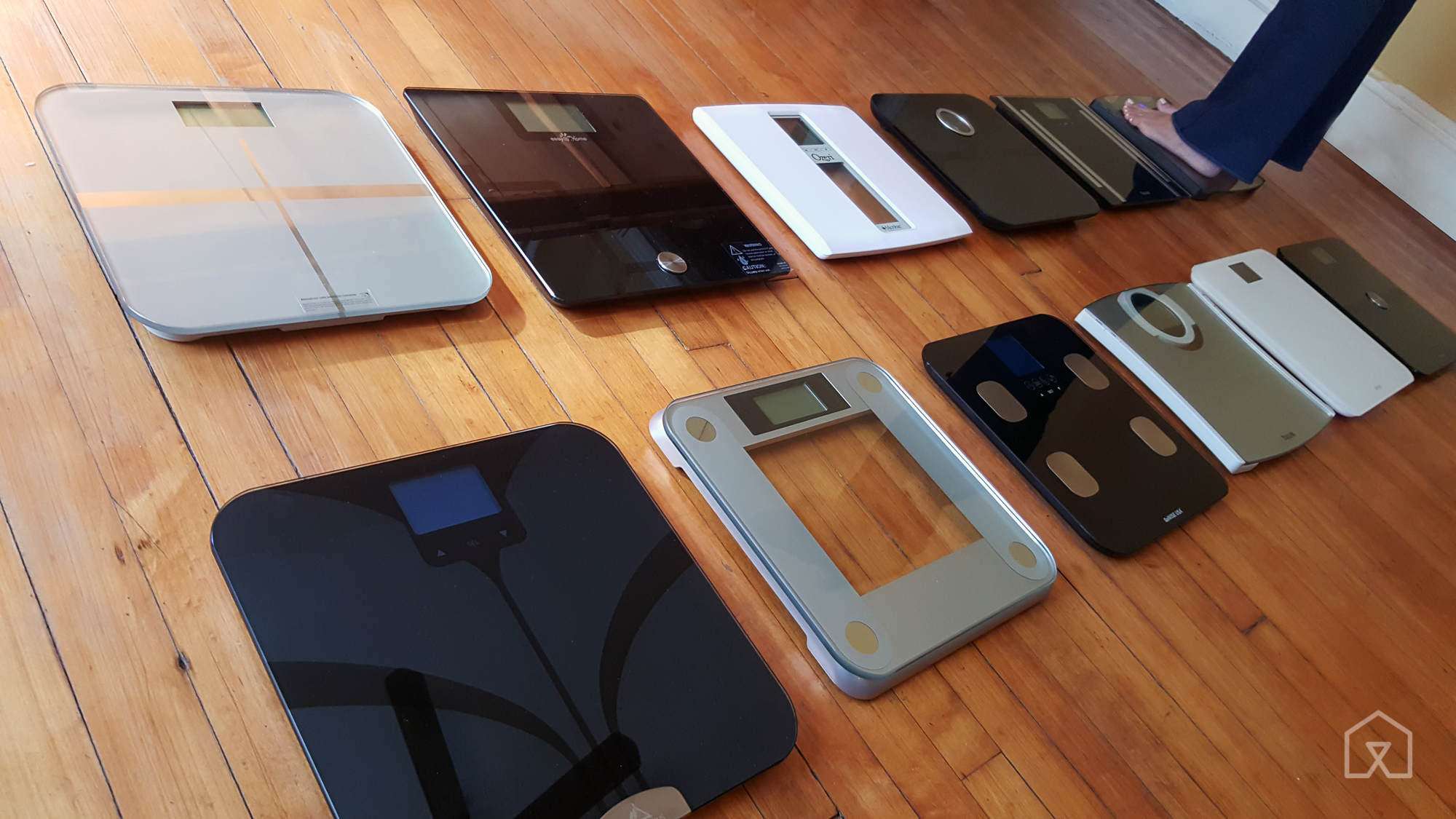
We don’t recommend weighing yourself on 12 scales every day, but using one reliable scale regularly could keep you on track. Photo: Melanie Pinola
Just about everyone could benefit from a good bathroom scale. There’s a reason you’re weighed at every physical exam: Being over or under the healthy weight recommendations is linked to a greater risk for health problems. Significant weight changes can tip you off to health or lifestyle changes that need your attention. Even simply monitoring your weight could be beneficial in the long run: Several studies, including the one done at the comprehensive National Weight Control Registry, have found that one of the most common characteristics of people who lose weight and, most importantly, keep it off for years afterward is regular (at least weekly) weigh-ins. That number on the scale alone, however, isn’t something to obsess over, and is just one metric of many that can inform your understanding of your body.
How we picked and tested
The two most important qualities in a scale are accuracy (the scale correctly reads your exact weight changes) and precision (the scale gives the same reading if you do two or more readings in a row). First and foremost, you want to be able to trust the reading. Precision and accuracy, however, are things we could only measure ourselves through hands-on testing. To narrow down the vast universe of digital bathroom scales, we turned to a reader survey, expert recommendations, editorial and user reviews, and the scales’ price, design, and features. We also eliminated analog and mechanical scales from consideration.
Some scales have advanced features. When considering smart scales to test, we looked at the scale’s ability to track weight history, estimate body-fat percentage, and record weights for multiple people. All the smart scales we considered record your weight in their mobile apps and/or websites for months, making these scales the most user-friendly way to track your weight. For more on the features we looked for, see our full guide.
Our pick for basic scale
The EatSmart Precision CalPal was the most accurate of the six basic scales we tested and could detect when our tester held a 0.4 pound book in all but two of the rounds (within a 0.2 pound margin of error) when other similarly priced scales didn’t. The rest of the scales more often than not ignored that weight change. The EatSmart was also reassuringly precise for each test: When our tester weighed themselves three times in succession, the readings were always the same.

The EatSmart Precision CalPal has a comfortable platform and a display that won’t leave you squinting. Photo: Melanie Pinola
The EatSmart can save up to four user profiles. Once you save your information, the scale will remember you every time you weigh yourself and let you see your last weight with the “memory” button.
Although some people may not like the scale’s glass platform and curved sides that make it seem less sturdy and small, we appreciate that this scale looks nicer than others we tested. Despite the glass platform, this EatSmart maxes out at 440 pounds, far more than most scales’ limits of 400 or even 350 or 300 pounds. Whether you’re near this weight maximum or you want to weigh yourself with your luggage, capacity makes a difference. The scale also has a big, easy-to-read blue backlit display and, with a two-year warranty, double the typical warranty length of most bathroom scales.
The runner-up basic scale
If you want to save a few bucks, the Taylor Glass Digital CalMax is your next best bet. Manufactured by the same company, Taylor, the CalMax offers some features that are identical to those in the Precision CalPal, including 440-pound maximum weight measurement, 0.1-pound weight increments, and a 12-inch platform. But unlike the CalPal, the CalMax cannot recall the last weigh-in, does not have a backlit display, and uses a lithium battery instead of AAAs.
For some people the all-glass design of the EatSmart Precision CalPal can be off-putting. If you don’t like so much glass, note that the CalMax comes in two variants, one with see-through glass (pictured below) and the other with a silver backing that gives the appearance of being more solid from above.

The CalMax display is nearly identical to that of the CalPal except it has no backlight, which makes it difficult to read in low-light situations. Photo: Melanie Pinola
Functionally, in our tests the CalMax was just as precise as the CalPal and nearly as accurate (it didn’t detect weight changes of 0.4 pound in a couple of tests). If you can live without a backlit display and weight tracking, this model is a basic digital scale that’s more accurate than most. It also has an unusually long five-year warranty.
Our pick for smart scale

Smart or not, the Withings Body is one of the more pleasant scales to stand on, though you need to balance yourself properly on the scale to get your final reading (pictured above: the previous model, the Withings WS-50, which is outwardly identical). Photo: Melanie Pinola
If you want more than just your weight reading, want to track your weight via a mobile app or online interface, or simply want the most accurate bathroom scale available now, take a look at the Withings Body.
The Withings Body was the only scale in the group to detect a 0.2-pound weight difference on each test. Some scales accurately detected our tester’s weight change going from just them to them holding a 0.4-pound book, but when our tester switched in the heavier 0.6-pound weight (that is, going from an additional 0.4 pound to an additional 0.6 pound over original weight), those scales wouldn’t detect that. The Body was the only model that recognized each weight change every time.
It is a pricey scale, but you get a lot of features, including a reading for your body-fat percentage and heart-rate measurement, automatic data upload to the Withings app via Wi-Fi tracking for up to eight household members, and integration with Apple’s HealthKit as well as more than 60 other apps. And perhaps most important for a smart scale, you can store and share your data with your other devices and the cloud.
This guide may have been updated by The Sweethome. To see the current recommendation, please go here.
Note from The Sweethome: When readers choose to buy our independently chosen editorial picks, we may earn affiliate commissions that support our work.
The iPhone’s legacy, 10 years later
January 9th, 2017 is a milestone day in the technology world: It’s the 10th anniversary of Apple’s iPhone. Yes, it’s been a full decade since Steve Jobs took to the stage and introduced the device that many credit with defining the modern smartphone. But was it an overnight revolution? Well, no. Despite all the initial hype, the iPhone actually represents a gradual reinvention strung across many years. It wasn’t the first out of the gate with many basic concepts, but its fresh approaches to those concepts helped smartphones escape their niche business-tool status and become the must-have companion devices they are now.
The most conspicuous improvement is the one that’s likely staring you in the face: the touchscreen. While touch-enabled phones were far from a novelty in 2007 (PalmOS and Windows Mobile had supported it for years), Apple was the first to implement a touchscreen you wanted to use. Most touch displays at the time were resistive (pressure-based), with all the precision and sensitivity of a billy club. Complex gestures were out of the question, and you frequently had to use a stylus with interfaces that simply weren’t meant for your fingers. It’s no wonder why many touch-capable phones at the time still had keyboards and directional pads. Why poke at the screen when it was less painful to tap buttons?
The iPhone’s capacitive screen and multi-finger touch interface were revelations in comparison. Not only could you ditch the pen — you could use intuitive gestures like flicks and pinches. You could focus on actually getting things done instead of fighting with controls. Even in 2007, it was clear to many that large capacitive touchscreens were the future. Most big phone makers started shifting away from resistive displays and physical buttons, and those that were slow to change (BlackBerry and Nokia in particular) wound up struggling. Apple definitely wasn’t alone in spurring the adoption of modern touch: Android helped it take off in a big way, particularly when the Motorola Droid arrived in 2009. The iPhone got the ball rolling, though, and it’s safe to say that the shift toward touch wouldn’t have happened so quickly without Apple’s help.

It wasn’t just hardware that made a difference, as the iPhone was also crucial to jumpstarting the market for smartphone apps. Mobile software certainly existed before, but the industry was almost hostile to its very existence. You often had to ‘just know’ where to find apps, and those portals that existed either demanded exorbitant royalties from developers or were controlled by carriers eager to exclude apps that competed with their services. Even installation and updates were awkward. It wasn’t uncommon to find smartphone owners who’d never downloaded a third-party app. Why would they when they didn’t know where to go or what to do, and creators frequently shied away?
Enter Apple’s App Store, introduced alongside the iPhone 3G in 2008. It suddenly gave legions of smartphone owners easy access to third-party software. Moreover, the barriers to making and selling those apps were much lower — when there were straightforward tools, better royalties and millions of potential customers, even tiny teams could make blockbuster hits. Mobile apps quickly became much more popular, and in some cases vital. Would social services like Instagram and Snapchat be as big as they are today if the App Store hadn’t made their concepts practical? Would smart homes or wearables exist if you couldn’t easily get the apps that make them work? The app model that the iPhone pioneered made built-in software stores virtually mandatory on smartphones, and those handsets wouldn’t be as dominant as they are today if there weren’t an abundance of apps to fulfill tasks that would otherwise require a PC.
The iPhone hasn’t always changed the game quite so dramatically. In many cases, it was more about nudging technology forward just enough that it became popular. Take video chat, for instance. The concept certainly existed before FaceTime arrived with the iPhone 4 in 2010 (more than a few phones already had front-facing cameras), but it was Apple’s dead-simple approach that made the difference. If you had someone’s phone number, you could start a video call. There were no special carrier fees or complex video conferencing solutions to fight with. While FaceTime didn’t conquer the world the way the App Store or multi-touch screens did, it spurred demand for video chat services and served as the template for extra-simple apps like Google Duo.

You can even argue that some tech wouldn’t have gotten very far without an iPhone boost. Fingerprint readers are the classic examples. Before the iPhone 5s, fingerprint scanners on phones were frequently more trouble than they were worth (ahem, Motorola Atrix). Touch ID simplified it down to a quick and easy tap, and spawned the surge in fingerprint readers you’re seeing in everything from the latest Samsung Galaxy through to the Google Pixel. Recent efforts to get rid of passwords might not be as feasible if fingerprint readers still required multiple swipes.
Mobile payments got a similar bump. There’s no doubt that the iPhone was late to the tap-to-pay party when Google Wallet and other options were available years earlier, but Apple Pay was the first to really get some traction. It didn’t require carrier support, special apps or other convoluted terms — you just had to keep your thumb on your home button while buying your coffee. Android Pay and Samsung Pay certainly do some things better, but there’s little doubt where they got the basic idea for their fingerprint-based shopping.
And let’s not forget voice recognition. Although Google Assistant and Microsoft’s Cortana have clear advantages, it was Siri on the iPhone 4S that kicked off the concept of a built-in AI-powered assistant. Before then, voice commands were primarily restricted to direct, robot-like instructions. The iPhone introduced plain-language questions, contextual answers and other concepts that many take for granted today.

To be sure, the iPhone has sometimes been (and occasionally, still is) on the trailing edge. It took until 2014 to get an iPhone larger than 4 inches, well after Steve Jobs was convinced nobody would buy one. You can’t use the near-field wireless for anything but payments. You also can’t add removable storage, swap your battery or get a greater-than-1080p screen. And of course, enthusiasts who insist on choice and customization still have a good reason to prefer Android or Windows 10 Mobile.
Even so, it’s evident that the iPhone has created a vast legacy over the past 10 years. One way or another, the smartphone in your pocket owes a small debt to what Apple has done, whether it’s the basic design or a feature you use every day. And the competitive landscape has forever changed. All the rival smartphone platforms from 2007 either died or lost most of their relevance, and you can trace their downfalls back to their inability to adapt to the iPhone’s breakthroughs in a timely way — even if Android was sometimes the one to sound the death knell. The next 10 years probably won’t be nearly as revolutionary given how mature the smartphone market is these days, but that doesn’t diminish the iPhone’s past accomplishments.
Image credits: Kiyoshi Ota/Getty Images; David Paul Morris/Bloomberg via Getty Images; Reuters/Maxim Zmeyev
Of course I took these eerily detailed 3D selfies at CES
I’ve taken, oh, I don’t know, about a million selfies in my life. I’ve even dabbled in 3D portraits. But I’ve never seen a three-dimensional capture of my face as realistic as the one generated by Bellus3D’s Face Camera at CES. The new device is slightly larger than a stick of gum, and houses two monochrome sensors and one that records color, meshing the information together for a highly detailed picture. The camera is still just a prototype, but when it’s available, it can be attached to your phone or tablet. The ring light that you see in the pictures was only included for the demo, and is not actually a part of the Face Camera, but you can easily attach one of your own.
Scanning my CES-beaten face was a simple 15-second process. I lined my face up with the onscreen outline, tapped the button to start recording, and turned my head to the left and right as a company rep kept an eye on the screen and told me when to turn back to the front. About 10 seconds later, a 3D map of my face appeared, and I could move around a virtual bulb to light up my visage from different angles. I was very impressed (and maybe even slightly embarrassed) by the level of detail in the portrait; all of my pores and acne scars were on display, as were the inevitable CES-induced dark circles under my eyes.

Why would anyone want such detailed pictures of themselves? As it happens, the applications are numerous. In addition to letting users çreate more realistic representations of themselves as gaming avatars or to use when shopping online for makeup and glasses, high-quality face scans can also enable more accurate authentication protocols for better security systems. Of course, there are other, naughtier, uses — as one of my colleagues pointed out — including making more lifelike dolls.
A hundred developer units of the camera will be available later this year, and the company tells Engadget that it expects to sell this for less than $1,000. It is not yet in talks with a major manufacturer to embed this technology in other devices, but the company says it hopes to eventually begin those discussions. Meanwhile, until the Face Camera becomes publicly available, we’ll have to resign ourselves to boring old 2D selfies.
Click here to catch up on the latest news from CES 2017.
 AIVAnet