


ZTE Axon 7 hands on
ZTE is well known for their mid-range smartphones that are available at incredibly affordable price points. However, the company did make quite an impression in the high-end market last year with the Axon phone, a worthy flagship smartphone that found the perfect balance between specifications and price, resulting in it being significantly cheaper than the competition.
The Axon phone was followed by Elite, Pro, Mini iteration as well, that once again provided fantastic bang for your buck. ZTE is back again with their latest premium flagship, but does it continue to offer what made its predecessor so great? We find out, as we go hands on with the ZTE Axon 7!
Design
The ZTE Axon 7 retains the design language of previous Axon smartphones for the most part, and once again featuring a full metal unibody construction. The front of the phone remains the same, with dual front-facing speakers to be seen, housed under a distinctive grill pattern, which gives the device a unique design element.
The display dominates the front, and the ultra-thin bezels along the sides of the screen, and the relatively thin speaker grills above and below it, make for a relatively compact smartphone. This results in a smartphone that offers a handling experience that is better than what can be expected from a 5.5-inch device, and helping it is the rounded corners and tapered sides on the back, that help the device nestle comfortably in the palm of your hand. However, the smooth metal backing can be a touch slippery, and can take some getting used.
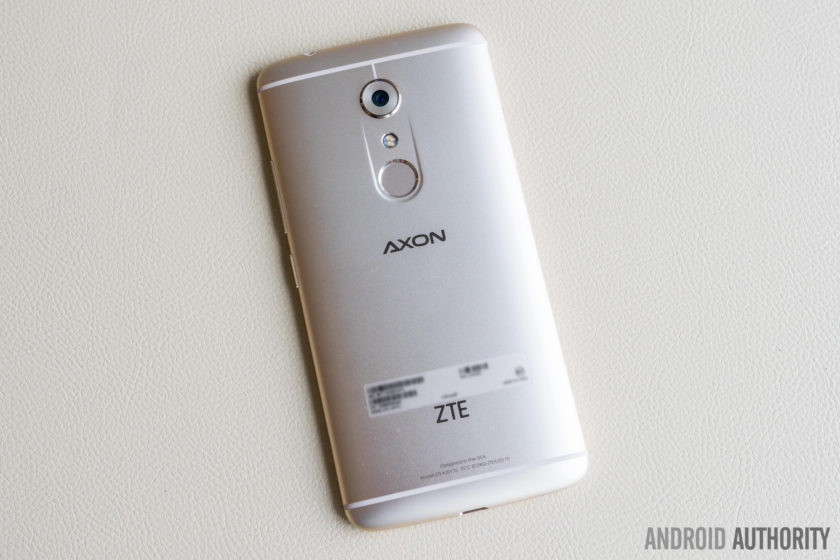
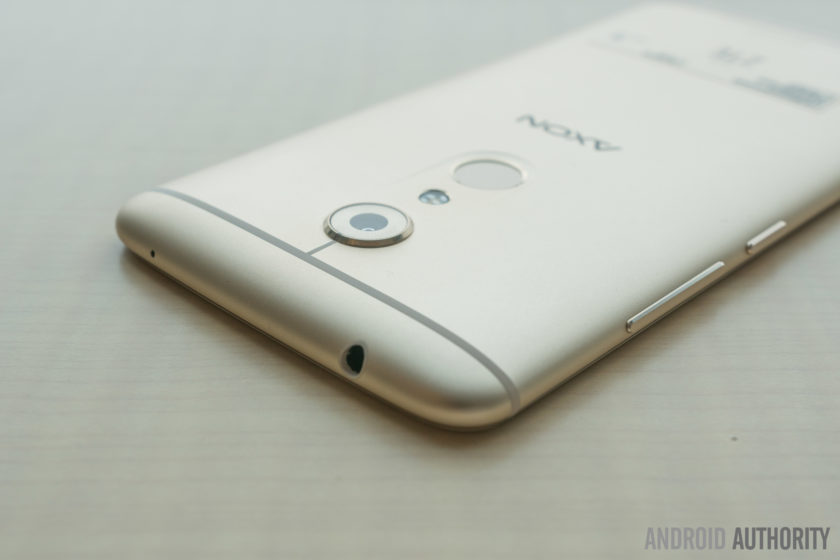
At the back is where the differences in design can be seen. For starters, the dual camera system is gone, but the look is still maintained, with a fingerprint sensor now taking the place where the second rear camera used to be. Also gone is the unique grill pattern that used to be found between the two cameras, with the dual LED flash now occupying this space.
The camera is slightly raised as well, which is kind of disappointing to see, given that the Axon 7 isn’t a particularly thin device. The buttons and ports are found at their usual places, with the volume rocker and and power button found on the right side, and a USB Type C port and headphone jack placed at the bottom and top of the phone respectively. Something that has not been retained is a dedicated camera shutter button.
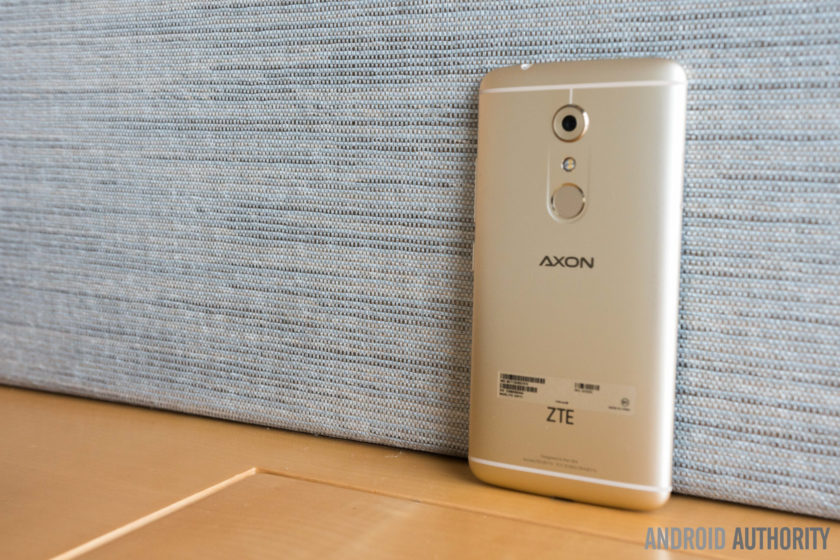
The ZTE Axon 7 is a beautifully designed smartphone and features a premium build quality that can give any current generation flagship a run for its money. If ZTE manages to maintain their aggressive pricing policy, the Axon 7 will definitely have a leg up over the competition, and that starts with the design.
Display

The ZTE Axon 7 comes with a 5.5-inch AMOLED display with a Quad HD resolution, resulting in a pixel density of 538 ppi. This is a Samsung-made AMOLED display, and the company’s display prowess shines through once again here. You get everything you’d expect from an AMOLED screen, including deep, inky blacks, and vibrant, saturated colors, along with high contrast, and good brightness and viewing angles. The Axon 7 will certainly allow for a great viewing experience, and is another big plus for this device.
Performance and hardware
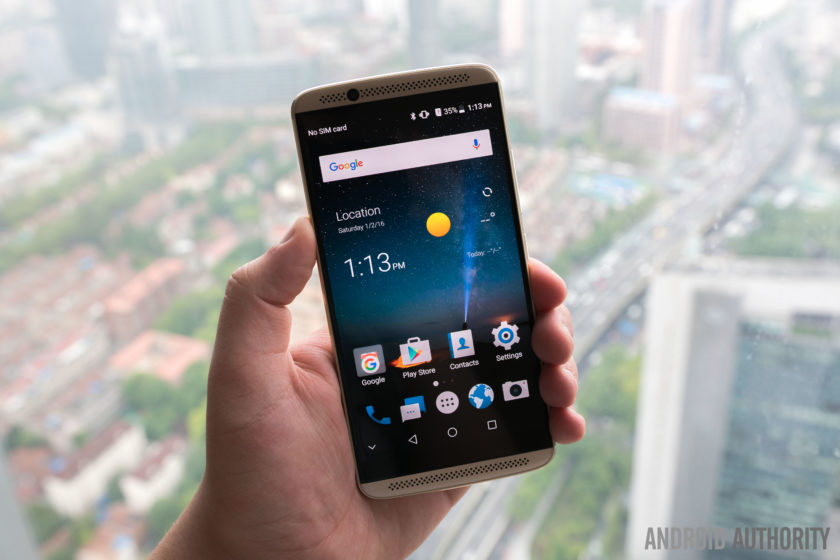
The Axon 7 is a flagship smartphone, and as such, it’s not surprise that the device comes with the latest and greatest processing package currently available. Under the hood is a quad-core Qualcomm Snapdragon 820 processor, clocked at 2.15 GHz, and backed by the Adreno 530 GPU and 4 GB of RAM.
Interestingly, this is just the “standard” version, with their being another iteration that comes with a whopping 6 GB of RAM, making the Axon 7 one of the first smartphones to offer this. The Snapdragon 820 has proven to be a fantastic processing package, as seen with the other flagship devices out there, and we can expect more of the same with the Axon 7.
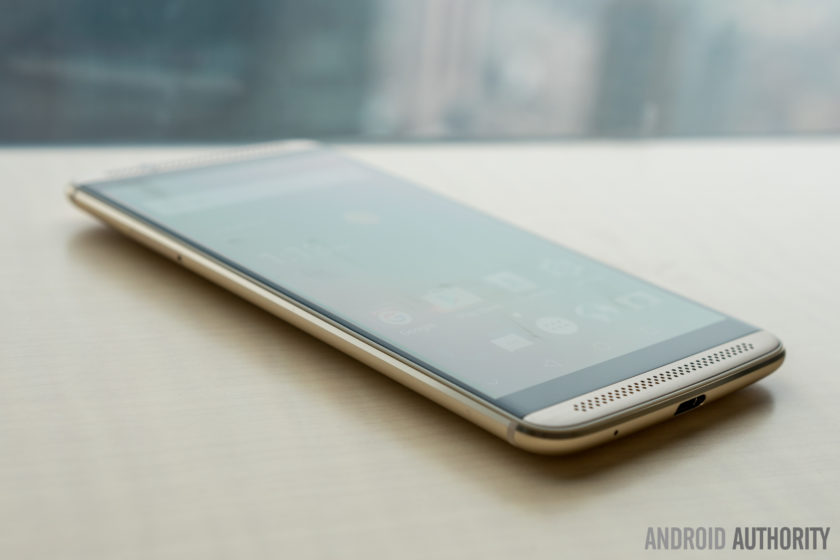
64 GB and 128 GB are the built-in storage options that are available, with the latter coming with 6 GB of RAM. Expandable storage via microSD card, up to an additional 128 GB is also to be found, but this uses the secondary SIM slot, so users will have to make the choice between dual SIM capabilities and expandable storage.
Audio is once again a big focus for ZTE with the Axon line, with the Axon 7 featuring dual front-facing speakers with Hi-Fi audio chipsets, along with Dolby Atmos surround sound features. Its predecessor offered one of the best audio experiences around, from both the speakers and when using good quality headphones, and we can expect that to continue with the Axon 7.
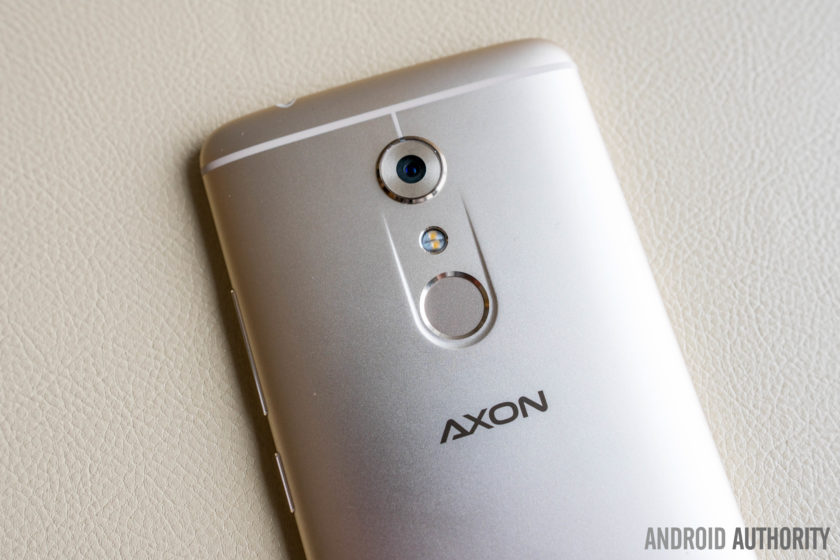
The device comes with a fingerprint scanner on the back, placed to be within comfortable reach of your index finger, and should be as fast and accurate as expected. The Axon 7 also comes with a pressure sensitive touch panel, similar to Apple’s 3D Touch, called Force Touch, which will come only with the 6 GB RAM/128 GB storage version of the device.

On the battery front, the Axon 7 comes with a large 3,140 mAh battery, that should comfortably allow for at least a full day of use, but of course, more testing will be required before we can arrive at a conclusion. The device does come with a USB Type C port (USB 3.0) and support for Qualcomm Quick Charge 3.0, which should get you back up and running in no time. ZTE claims that a charge for half an hour will give you 50% of the battery life back, with a full charge requiring around a 100 minutes.
Camera

The Axon 7 comes with a 20 MP rear shooter with a f/1.8 aperture, OIS and EIS, and phase detection auto focus, and should allow for good low-light photography, and is coupled with an 8 MP front-facing camera. The camera app comes with a slew of features and modes, including a manual mode, various selfie modes, slow motion capture, multi exposure and long exposure modes, and a Super Auto mode. Previous Axon smartphones featured impressive cameras, and we can’t wait to put this camera through its paces.
Software

On the software side of things, the Axon 7 is running the MiFavor UI 4.0 based on Android 6.0.1 Marshmallow. ZTE has had issues with bloated software experiences in the past, but that doesn’t seem to be the case with the Axon 7. What you get here is a mostly stock-like user interface, with ZTE keeping Google’s Material Design elements intact as well. There are a few useful features that have been added, and you also get a Themes engine if you are looking to completely change the look and feel of the UI.
Specifications
| Display | 5.5-inch AMOLED display 2560 x 1440 resolution, 538ppi Gorilla Glass 4 |
| Processor | 2.2GHz quad-core Qualcomm Snapdragon 820 |
| GPU | Adreno 530 |
| RAM | 4/6GB |
| Storage | 64/128GB |
| MicroSD | Yes, up to 128GB |
| Cameras | Rear: 20MP Samsung ISOCELL sensor with sapphire lens, OIS, EIS, PDAF, f/1.8 aperture, dual LED flash Front: 8MP |
| Dual SIM | Yes |
| SIM type | Nano SIM SIM 2 also supports microSD card expansion |
| USB Type | USB Type-C USB 3.0 |
| Connectivity | Bluetooth 4.2 NFC Wi-Fi 802.11 b/g/n/ac 2.4 GHz/ 5 GHz |
| Networks | GSM/EDGE:B2/3/5/8 CDMA BC0/1/10 UMTS/HSPA: B2/B5/B4/B1/B8 LTE: B2/B4/B5/B12/B13/B17/B7/B3/B1/B20/B29/B30/B25/B26/B41 2CA: B2+B4,B2/4+B12,B2/4+B29, B2/4+B5, B41+B41, B25+B25 |
| Fingerprint sensor | Yes |
| Software | Android 6.0.1 Marshmallow with MiFavor UI 4.0 |
| Battery | Non-removable 3,140mAh battery Quick Charge 3.0 |
| Dimensions and weight | 151.8 x 75 x 7.9 mm 185 grams |
| Colors | Ion Gold, Quartz Grey |
Gallery

Conclusion at a glance
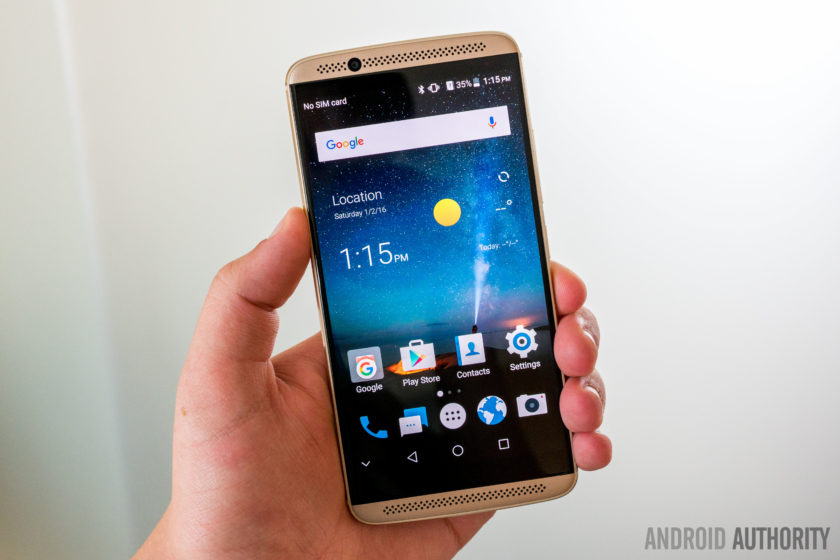
So there you have it for this quick look at the ZTE Axon 7! The Axon 7 does seem to check all the right boxes, and can prove to be a worthy competitor in the flagship space. A beautiful design, fantastic display, great audio experience, and what is expected to be a good camera as well add up to an amazing device.
If ZTE continues to be aggressive with their pricing like their previous devices, the Axon 7 could be an instant hit. Pricing information isn’t currently available, but the device will be launched in China on May 26, with other markets, including the US, to follow shortly thereafter.
What do you think of the Axon 7? Let us know your views in the comments below!
Samsung Galaxy S7 Active hands on
The world turned upside down last year with the introduction of the Samsung Galaxy S6, as the Korean company didn’t hold back from gracing the device with a brand spanking new design that people finally agreed was premium. As much as we were all delighted by this new direction, there was just one major thing that was shed in the process that the Galaxy S5 offered that its successor did not: a water-resistant construction. And that’s arguably what made the eventual Galaxy S6 Active unique from its sibling.
- Samsung Galaxy S7 Review
- Samsung Galaxy S7 Edge Review
- Samsung Galaxy S7 vs S7 Edge
This year, however, they brought back water resistance to the Galaxy S7 – while also retaining the same premium design language that they’ve established. All of this will make anyone wonder what’s in tow for the forthcoming Galaxy S7 Active, that would differentiate it enough from Sammy’s prized flagship. Don’t worry, there’s more than meets the eye with this rugged one, so let’s quickly go over what this new phone in the Galaxy S7 family is all about.
Buy the Galaxy S7 Active now!
Design
The most distinguishable difference here is that the S7 Active features a design that’s substantially more rugged in nature. That shouldn’t surprise anyone, as it largely doesn’t deviate from the designs of previous Active devices. It’s not premium by the imagination – as the glass meets metal bezel design of the standard Galaxy S7 is replaced by one that’s mostly dominated by the same textured rear pattern we’ve seen before – accompanied by soft touch matte bumpers around the sides of the phone to absorb shock.
Speaking of shock, this phone doesn’t have the same fragileness of the Galaxy S7. Rather, the durable materials and tight construction employed here provides the Galaxy S7 Active with MIL-STG-810G specification. Not only is it able to withstand most drops, but the phone is built to withstand numerous environmental conditions – such as extreme temperatures, dust, low pressure/high altitude, and yes, full submersion under water. There’s really no need for a case for something like this, since you know, the phone itself acts like a protective case.
ADVERTISEMENT
While it’s not the prettiest in Sammy’s stable, it’s all about the utility with its design – so with that, most people can understand the reasoning for its particular design. Yes, it’s technically bulkier and heavier, making it a bit tougher to manipulate with one hand, but all of this is necessary in giving it that indestructible nature. How indestructible you ask? Well, we managed to drop it a few times from a height of 4 feet onto the pavement without any major impact to its operation or performance. Still, every phone does have its own breaking point but the S7 Active will survive a lot more than your average smartphone.

Display
The same display in the S7 is present here with the S7 Active, so that’s a 5.1-inch 1440 x 2560 Super AMOLED panel. As usual with AMOLED screens – especially the ones from Samsung – it’s detailed, sharp, produces some very iridescent colors, and offers exceptional wide angles. Everything about it seems to be on the same level as the Galaxy S7, including the new Always On display feature that keeps the time and some other relevant information on display at all times.
What’s different, though, is that the S7 Active benefits from being substantially more resilient to drops – meaning, it won’t crack if it’s dropped. The “shatter resistant screen” definitely holds up over most other screens, but we’re happy to notice that its visibility and clarity isn’t subdued or greatly impacted. Given that Samsung’s AMOLED screens have shown their superiority in terms of color accuracy and brightness potency, the resistance aspect of the display is merely icing on the cake.

Hardware
Before getting down and gritty with the usual hardware specifications, let’s quickly take note about some of the notable hardware additions/changes. The first being the addition of a fingerprint sensor, which is a first for the Active line. It’s something that has become expected amongst high-end phones of late, so the addition of it here gives the phone that contemporary status – enabling it for Samsung Pay – as well as another layer of security. It’s flanked between two other, rather larger sized physical buttons: the back and quick menu keys.
The thicker chassis of the phone isn’t just attributed to the extra cushion it’s packing to give it that almost indestructible nature, but rather, the mammoth 4000 mAh battery that’s stuffed inside. That’s one of the largest (if not largest) capacities Samsung has been able to cram into its smartphones, so that should aid the Active in having more longevity than the regular Galaxy S7. Additionally, you’ll find wireless and rapid charging in tow with the phone.

Now, this wouldn’t be an Active branded smartphone if it didn’t have the “Active” key, which is positioned above the volume controls along the left edge. Just as before, it brings up the “Activity Zone” to deliver on point information at a moment’s notice – they consist of the weather, temperature, barometer, compass, flashlight, stopwatch, and S Health. The button also doubles as a shutter key as well when the camera app is running, which is pretty handy when you’re trying to snap a photo under water.
Helping to power the phone is a quad-core 2.15 GHz Qualcomm Snapdragon 820 SoC coupled with 4GB of RAM and the Adreno 530 GPU. Much like anything brand new, out of the box, the S7 Active performs as you’d expect – snappy and fast. And given that it’s almost unchanged from the Galaxy S7, the S7 Active should perform handsomely when it comes to graphics processing. Storage amounts to 32GB with our particular unit, but it can be supplemented with the available microSD card slot.

Camera
In following tradition, the Galaxy S7 Active borrows the camera from the S7 – so that’s the same 1/2.6” 12-megapixel sensor with an f/1.7 aperture lens, phase detection auto-focus, OIS, and an LED flash. There’s also the quick launch function, too, that allows us to jump right into the camera app by just double pressing on the home button/fingerprint sensor.
 Samsung Galaxy S7 vs Note 5 camera shootout: More Pixels or Bigger Pixels?
Most people are going to be inclined to believe that the camera’s performance will be close, if not the same, as the standard Galaxy S7. As an all-around device, you can absolutely believe that the S7 Active will take some stunning photos and videos. The only other thing worth mentioning here is how there are a few manual controls available now with video recording under “Pro” mode, which is something we haven’t seen before in a Galaxy. Adjusting parameters like shutter speed, white balance, and focus all on the fly are all now possible and it’s likely we’ll see this come to other Galaxy S7 phones in a future update, although it might take a while.
Software
Frankly speaking, there’s not a whole lot different with the TouchWiz experience here with the S7 Active, which is running on top of Android 6.0.1 Marshmallow. The usual visuals are all there, so there’s nothing out of the ordinary. Some will like it, others will hate it, but there’s one thing we can agree about this most streamlined edition of TouchWiz to date – it’s incredibly powerful and comprehensive.
ADVERTISEMENT
Power users will love it, especially with its true multi-tasking experience with multi window, one-handed mode for easier handling, and all the other assorted smart gestures with the experience. Even though TouchWiz remains to be an acquired taste, it’s one of the last remaining few custom Android experiences that offers more depth over the stock experience.
Conclusion so far
Knowing that water resistance and storage expansion has been brought back to the Galaxy S7, some wonder if the Galaxy S7 Active will have some meaningful value over its sibling. That’ll undoubtedly depend on what you want in a phone. Being more ruggedized and all, the S7 Active will remain in working condition for much longer than the standard S7, since it’s been constructed to withstand some serious punishment – whereas the S7 has the premium design, but with more fragileness. Another thing to note is the larger size battery stuffed inside of the phone, which should propel it to last far longer as well.


Sure, the look of the phone won’t appeal to anyone, but if you place utility high on your list over most things, the Galaxy S7 Active will fit the bill – albeit, its price is $100 more than the standard S7 over on AT&T. That means you’ll need to fork over close to $800 to buy it outright, versus $700 for the S7.
- Samsung Galaxy S7 Review
- Samsung Galaxy S7 Edge Review
- Samsung Galaxy S7 vs S7 Edge
The S7 Active is launching on June 10 from AT&T and will be available on AT&T’s new Next plans: for those wanting it on the standard Next plan, it’ll cost you $26.50 per month for 30 months but on the shorter AT&T Next Every Year, it’ll cost $33.13 per month over 24 months. What do you think of the S7 Active and are you going to buy one? Let us know your views in the comments below!
Buy the Galaxy S7 Active now!
Lenovo foldable smartphone and tablet concept hands on
Foldable smartphones and tablets, it looks like they’re coming soon at some point. We’re here at Lenovo Tech World in San Francisco and a lot of cool stuff were announced here, like the Tango-ready PHAB 2 Pro and the shockingly modular Moto Z and Z Force, but the ones we really thought were cool are concepts. Yes, concepts, as in they’re not something we’ll be buying anytime soon – wherein they’ll more than likely incur premium costs when they arrive, due to the new tech they’re employing.
Either way, it really opens the idea of what we’ll potentially see down the road. Now, during a Q & A session with some of the engineers, we got a sneak peek at two foldable devices. The first one being a foldable smartphone, the one shown off during the keynote by YouTuber Meghan McCarthy. When it’s flat, it looks very much like an elongated phone from the front, something that oddly looks out of place if it were placed alongside today’s smartphones.
However, you know something’s up when you look at it from the back. Obviously, there’s more to than just the display being folded, since the chassis itself is bending to match the display. Lenovo’s concept seems practical because as it’s being bent, the interface slowly begins to shift – so that its operation while on your wrist is more appropriate. This isn’t a form factor we’re familiar with, so it’ll be interesting to see how Lenovo will tackle the way various operations we’re familiar with already on something curved.

Lenovo says that folding a display in isn’t a problem, but rather, it’s when you’re bending it out, which is the case here with the smartphone. That’s because of how the glass or whatever is covering the panel itself is being stretched, but from what we can see, it’s using this stretchy plastic looking cover – much like you might see those plastic covers over furniture. You can visibly see that layer, just because it distorts a bit under certain angles.
As for the foldable tablet, it’s pretty neat because it can go from a sizable tablet, to a phablet sized thing by bending it right in the middle. Whereas the phone bends in multiple places throughout the chassis, the tablet simply has its bending points around the middle area. And the same plasticy layer covers the display.

These are some pretty cool concepts, especially when they’re optimized to make them practical when they’re bent – like how the interfaces shift and all. Being concepts, you know that we’re thinking a lot about price, even though we won’t be seeing them anytime soon. We can only imagine them to be pricey, but hey, it’s pretty cool that foldable smartphones and tablets are coming at some point.


Who knows how these concept devices will evolve over time, or whether they’ll come to fruition at some timely manner. Regardless, Lenovo’s concepts provides us with a closer look at what are some of the challenges behind making a foldable smartphone. It’s a solid effort, probably requiring additional refinements, before they can certified for consumer sale. Even then, however, you can certainly expect some pricey figures attached to them.
Moto Z and Moto Z Force hands on
At the end of the keynote, just when it started to seem like the announcement may not even happen at all, Lenovo took the wraps off of the latest Motorola flagships to great dramatic effect. All the rumors and leaks that have led up to this launch have been true for the most part, and there are certainly some aspects to get really excited about.
A new moniker in tow, what do the latest high-end offerings from Motorola bring to the table? We find out, as we go hands on with the Moto Z and the Moto Z Force!
As the name would suggest, the Moto Z takes things a couple of (alphabetical) steps ahead of the previous Moto X flagship line, by bringing modular capabilities into the mix. The great news here is that Motorola has managed to do so in a far simpler and easier to use iteration that what we’ve seen from LG. The very noticeable connectors on the back allow for various components and covers to be magnetically attached to the phone with a snap, and everything is truly plug and play here, without the need for the phone to be restarted, or to remove and swap the battery. Before diving into the various attachments that are currently available, let’s take a look at the phones themselves.

Both smartphones feature 5.5-inch AMOLED displays with Quad HD resolutions, resulting in a pixel density of 535 ppi. This makes the devices quite large, not helped by the distinct top and bottom portions up front that house a multitude of sensors, but the overall footprint isn’t that much more than most other smartphones with similarly-sized displays. The Moto Z is also one of the thinnest smartphones around, with a thickness of just 5.2 mm, while the Moto Z Force does have a little more girth to it, likely to accommodate the additional layers that help make the display shatterproof.

Under the hood, both smartphones come with a quad-core Qualcomm Snapdragon 820 processor, clocked at 2.15 GHz, and backed by the Adreno 530 GPU and 4 GB of RAM. This processing package is the current gold standard when it comes to 2016 flagships, and with the performance of other high-end smartphones this year being very impressive, we can certainly expect more of the same from the Moto Z and Moto Z Force. You also get the usual suite of connectivity options with these devices, including NFC, that can be useful for its application in mobile payment systems.

Given how thin the Moto Z is, it isn’t surprising that the camera module on the back does protrude quite significantly. However, when a cover, or MotoMod, is attached to the phone, the camera ends up sitting flush with the extended body of the phone, which makes for another nice reason to pick up one of the stylish shells that Motorola has on offer.

The additional thickness that is found with the Moto Z Force also allows for more room to pack in a larger 3,400 mAh battery, compared to the 2,600 mAh unit found with the Moto Z. The Moto Z Force also comes with the faster quick charging capabilities, with Motorola claiming that you can get 50% of the battery life back in just 15-20 minutes. Of course, the Moto Z does come with its own fast charging, but it won’t be as fast as what is available with the Z Force.

Other differences between the two include the camera, with the Moto Z Force featuring a 21 MP rear camera, compared to the 13 MP camera of the Moto Z, and of course, the display of the Moto Z Force is also shatterproof. The Moto Z Force does make for a compelling device, but the ultra-thin Moto Z is what you may find more attractive at first glance.

As mentioned, both devices feature different primary shooters, but the camera app remains the same, and is quite intuitive and easy to use. The cameras seem to work well from what we were able to see so far, and we can’t wait to put them through rigorous testing in upcoming reviews and camera shootouts to see whether they manage to stand out from the crowd in this highly competitive aspect of the smartphone experience.

The Moto Z is an extremely thin phone, and the Z Force isn’t that much thicker either, and not unexpectedly, there has to have been some compromises made in order to achieve these aesthetics. In this case, this comes in the form of a lack of the headphone jack. Instead, what you will get is an adapter that plugs into the USB-Type C port, and that is how you will be able to use this device with regular headphones and earphones.

On the software side of things, Motorola keeps everything very simple and familiar, with the devices boasting an almost stock iteration of Android 6.0 Marshmallow. Everything is where you’d expect it to be, and Motorola’s useful additions make a return as well, including Active Display, various motion gestures, and more.

Of course, the big story with the Moto Z and Moto Z Force has to do with their modular capabilities. As mentioned, the implementation is far simpler, and doesn’t require the battery to be removed, or have the phone be rebooted. The peripherals just snap on to the device via the strong magnetic connectors, and you are good to go as soon as they are in place.

For starters, there are a number of stylish covers, or shells, available, and considering how thin the Moto Z is, it almost feels like its needs these covers to really round out the look and feel in the hand. There are covers that bring a little more functionality to the table as well – including battery cases made by Incipio and a pico projector – that does make the devices quite thick, but allows for an easy to way to share information from your phone.
Finally, there is a JBL speaker that can also be snapped into place, and provides for a very enhanced audio experience. The speaker and the projector also come with built-in batteries that are utilized first, before these accessories start drawing any power from the phone itself.

So there you have it for this first look at the Moto Z and Moto Z Force! Overall, we are very impressed by what we’ve seen so far from Motorola’s latest flagships. There have been some trade offs made, such as the removal of a headphone jack in favor of a thinner profile.
The Moto Z and Moto Z Force do have some key differences between them in terms of features and specifications, but both feature the same modular capabilities, and with the execution far better this time around, this may be the innovative step forward that we were looking for.
What do you think of these two handsets and do you plan to buy either? Let us know your views in the comments below!
Amazon might launch a paid music-streaming service that works with Echo
Apple Music and Spotify might soon face heavy competition from Amazon.
According to CNBC, Amazon will announce a standalone music-streaming service. It’ll launch this summer or autumn, offering up a catalogue of songs for $9.99 a month. Amazon, which already offers a music service to Prime subscribers, is apparently still inking deals with labels. But the idea is – with this new service – people might find Amazon’s Echo speaker more appealing.
Echo is loaded with a voice assistant called Alexa and can do things like search the web, place Amazon.com orders, and play tunes from a limited pool for Prime subscribers. By launching a standalone streaming service that not only works with Echo but also has a richer catalogue, Amazon might be able to grow the Echo’s customer base and increase interactions with the speaker.
The New York Post also claimed earlier this year that Amazon was working on an entirely new music-streaming service. Amazon reportedly held meetings to discuss licensing music for a subscription music service that would rival Spotify and Apple Music. Again, that rumoured service was thought to be different from Amazon Music, which offers roughly 1 million songs to customers as part of a $99-per-year Prime subscription.
Steve Boom, Amazon’s vice president of digital music, was apparently helming plans for the all-new service. Keep in mind that Amazon would be making a late entry into this space. Spotify already boasts more than 30 million songs, and Apple launched its service last year with a massive marketing campaign.
It’ll therefore be interesting to see if Amazon’s yet-to-be-named music service manages to carve out a spot for itself.
Gawker Media files for bankruptcy thanks to Hulk Hogan and Peter Thiel
A few weeks ago, it was revealed that Silicon Valley billionaire Peter Thiel, a co-founder of Paypal and current Facebook board member, was bankrolling Hulk Hogan’s lawsuit against Gawker Media. (Got all that?) Despite the fact that Gawker has vowed to appeal the massive $140 million judgement against it, the company today has filed for Chapter 11 bankruptcy protection. The media company is now entertaining bids to buy the company, and Recode reports that publisher Ziff Davis has already put in a bid in the $100 million range.
The ins and outs of this situation are complex and varied. The Hulk Hogan lawsuit came about after the Gawker blog posted Hogan’s sex tape. The wrestler said it was an invasion of his privacy; Gawker’s argument at a very high level is that free speech and Hogan’s status as a public figure should have protected the company from such a lawsuit.
However, things in the case got even weirder following the jury’s $140 million judgement against Gawker Media. It was revealed that Thiel had been bankrolling the entire lawsuit because of a personal vendetta against the blog after it published an article on his sexual orientation way back in 2007.
Today’s Chapter 11 filing is a direct result of the combined efforts of Hogan and Thiel to take the company down. The filing revealed that Gawker has assets between $50 and $100 million, compared to liabilities in the $100 to $500 million range — with the lawsuit being chief among them.
Filing for bankruptcy gives Gawker and its founder Nick Denton time to restructure the company without having to immediately shut down (or pay the jury damages in the Hogan case). That said, it seems unlikely Gawker will be sold off until the lawsuit is resolved in one way or another — it’ll likely be a tough sell while it’s still in the middle of this legal battle.
Another unique aspect of Hogan’s lawsuit is that other tabloid-style blogs like TMZ and Perez Hilton have thus far managed to avoid being singled out because of their sometimes-questionable reporting styles — Gawker, however, happened to cross paths with the wrong billionaire.
Source: CNBC, Recode
France fines Uber for illegal ridesharing
You may love Uber for enabling your wild drunken weekends, but there’s clearly no love lost between the ride-hailing app and the French government. After a slew of suspensions and protests, a French court has slapped Uber with an 800,000 euro fine (about US$900,000), claiming its UberPOP service caused “durable disruption” of the transport sector.
Uber plans to appeal the charges, and said it is “disappointed by this judgment,” as it stopped UberPOP service last summer. The “POP” portion of the company’s app uses cars owned and driven by non-professional drivers, while UberX and UberBlack employ professionals.
An Uber spokesperson said its service in France will not be affected, and that it currently uses more than 12,000 professional drivers to serve 1.5 million passengers there.
The Paris court has ordered Uber to pay 400,000 euros, suspending the other half of the fine barring further incidents. According to Reuters, Uber’s legal officer told the court that the company made a 500,000 euro profit in 2014.
Two Uber executives were also fined between 20,000 and 30,000 Euros each for what the court deemed to be deceptive commercial practices, being accomplices in operating an illegal transportation service, and violating privacy laws.
France isn’t alone in its crackdown on Uber. Cities in Australia, Italy and Spain have already declared the UberPOP service illegal. In London and the Philippines, however, Uber has become legal after facing similar fines and suspensions. Uber clearly still has an uphill battle in many other countries, but its success in those two regions suggest that its challenges are ultimately solvable.
Via: ArsTechnica
Source: Reuters
Engadget moved to HTTPS because we love you
It’s been a long time, we shouldn’t have left you… without a secure site to connect to.
Security is (or at least should be) top of mind for everyone who uses the internet. We can’t go more than a week or two without news of another breach that has compromised customer or user information. In such an environment, securing websites is no longer a luxury — it’s a necessity. Which is why, after over a year of hard work by Engadget’s intrepid product team, we’ve made the switch to HTTPS.
But what does that mean? And, why should you care?
Let’s travel back to a simpler time. You’re in school, daydreaming about your crush sitting two rows in front of you, instead of listening to the insipid historical lecture spouting forth from your teacher’s face. You write a note meant to titillate and entertain that special someone, and have your classmates pass it your crush’s way. Your teacher sees this happening and intercepts the note. But instead of reading your witty and risque words (that would surely get you sent to the principal’s office), all teacher sees is a sheet of gibberish, thanks to the secret code you and the object of your desire share.
If the internet is history class, then you, dear reader are our crush (you look great by the way), and you can think of HTTPS encryption as our secret code. We want to make sure our notes reach you without anybody else being able to read them beforehand.
For a publication that writes a lot about technology, it’s important that we take steps to secure the ways that you connect to us, and HTTPS has really become online security 101. In other words, the least we could do in terms of security is encrypt the information we send and receive from you.
This is especially important to us as we continue to grow our user base. Currently, you can write product reviews, contribute stories to Public Access and comment on our stories. But we’ll be building more features and ways to interact with Engadget in the coming months, and we want to make sure that you can do so using a platform as secure as we can make it.
Twitter is experimenting with adding ‘Moments’ to your timeline
Twitter is testing adding Moments directly to your timeline. The feature that highlights trends and news items on the social network is appearing in a carousel post that can be swiped horizontally. While only an experiment right now, this early exploration of dropping into user feeds shows just how important the trending-topic element is to the company.
A small group of users in countries where Moments is already live (US, Canada, UK, Australia and Brazil), started seeing the test this afternoon on iOS and Android. The carousel of five topics appears similar to how ‘While You Were Away” works. The “Recommended Moments” box can be dismissed with a tap and appears less frequently the more you’re on Twitter. When a news item is tapped it expands to show you the event.

So far, the test has not shown up on Twitter.com.
Both the iOS and the Android apps already have dedicated Moments buttons. By adding the feature to user feeds Twitter is hoping to get more traction out its curated topics. The company is continually adding features hoping to make the service more attractive to new users.
When asked about the test a Twitter spokesperson told Engadget: “Moments are awesome for catching up with the latest stories unfolding on Twitter. Because we’re always working on new ways to bring the best content to our users, we’re experimenting with showing recommended Moments in the timeline.”
World’s first child-sized exoskeleton gets kids on their feet
The Spanish National Research Council, a.k.a. CSIC, has created a kid-sized exoskeleton designed specifically for children suffering from spinal muscular atrophy. Because SMA causes a loss of motor neurons, the patient’s body starts to wither away to the point where many child patients end up bedridden and unable to walk. Built from aluminum and titanium, the 26-pound machine uses five assistive motors in each leg to actually help the child keep active and avoid further complications from immobility.
Those leg motors include sensors to detect “the slightest intention of movement,” and an onboard computer then follows the child’s steps to create the smoothest mechanical gait possible. Because children are constantly growing and moving, the whole setup is designed with telescoping supports that get taller with the patient.
CSIC’s “smart” approach is similar to the algorithm that SRI Ventures recently built into the Superflex soft exosuit, and with a little tweaking the algorithm could probably help extend the CISC suit’s five-hour battery life. Finally, the CISC is currently testing the exoskeleton with three child volunteers in Madrid and Barcelona, but in the U.S., Harvard engineers have teamed up with ReWalk Robotics to test and eventually market a similar, soft exosuit designed for adults with limited mobility.
 AIVAnet