


Best car mounts for the Galaxy S7 and Galaxy S7 edge

Holding your phone while driving is a horrible idea. Get a car mount for your S7!
In many cases, it’s illegal for you to hold your cell phone to your ear while you’re driving, so a car mount is a great alternative. This way, you can throw up a Google Map before you embark and you’ll be able to following your path like you would on any GPS device.
Get yourself a Bluetooth headset (or, better yet, a car with built-in Bluetooth) and you’ll be able to answer calls, since pushing a button on your phone will be no different than pushing the buttons on your console.
If you’ve got the Galaxy S7 or S7 edge, then we’ve got the car mount roundup you’ve been looking for.
- Spigen Air Vent Magnetic Car Mount
- EnergyPal HC84K Car Mount
- Omaker 3-in-1 Universal Car Mount
- iOttie Easy One Touch Car Mount
- Zilu CM001 Universal Car Mount
- Spigen Style Ring
Spigen Air Vent Magnetic Car Mount

Gone are the days of gooey adhesives that muck up the inside of your pristine automobile. Magnets are where it’s at. No, the magnets won’t mess up your phone; you’ll just have easy on and off mounting, which is what we all want, isn’t it?
This Spigen mount has two sizes of slits to fit almost any car air vent and you can pop your S7 or S7 edge on in any orientation. All you do is stick the metal plate to the back of your phone’s case and boom, your phone’s magnetic and good to go any time. You can even take the mount with you and use it as a kickstand for when you’re watching videos on your phone.
Note: you should stick the metal plates to a case and not the back of the phone itself. If you need some help finding cheap cases, we’ve got another round-up with your name on it.
It should also be noted that having the metal plate on the back of your Galaxy S7 or S7 edge’s case will hinder wireless charging, so you’ll have to take it out of the case for that.
See at Amazon
EnergyPal HC84K Car Mount

This particular mount serves a dual purpose: it holds your phone and doubles as a car charger. The end of the mount plugs into your cigarette lighter and looks like most USB car chargers, but an articulating arm extends upward from the unit into a three-sided phone holder. It softly cradles your phone, leaving the bottom open so you can run your charging cable down to the USB ports.
This unit comes equipped with over-charge protection, so you won’t fry your phone if your car decides to short circuit on you. The gooseneck-style end can be rotated to any orientation, so you can view maps in landscape format if you fancy.
The only downside of this particular mount will be where your lighter plug is placed. If it’s kind of hard to get to, then this particular mount may not work out for you, since the neck is only about 5 inches long.
See at Amazon
Omaker 3-in-1 Universal Car Mount

This is perhaps the most versatile mount in our roundup, since it can be clipped to your air vents, mounted on your dashboard, or mounted on your windshield (if that’s legal where you are), with three different attachments.
It’s got a longer arm for your windshield, the classic suction cup base for the dash, and clips for your vents and you can rotate it 360 degrees. It cradles your phone on three sides with a soft grip that won’t damage your Galaxy S7 if you’re a sans-case type of person. A great feature is the one-touch press to release your S7 or S7 edge, so you’re not fiddling with it when you’re jumping out of your car in a rush.
See at Amazon
iOttie Easy One Touch Car Mount

This is one of those mounts with a sticky gel pad that you stick to your dashboard, so if you’re worried about damage, you may want to sit this one out. However, the nice part about it being a gel pad is its ability to stick to uneven and textured surfaces, making this mount ideal for even the most oddly designed vehicle interior.
You’ve got a telescopic arm that extends two inches and bends 180 degrees, to give you versatility in terms of where you stick your mount. It comes with a one-year replacement warranty, so if anything goes wrong, you just contact iOttie and they send you a new one.
If the gel pad on the back gets all dusty and gross and won’t stick anymore, you can just rinse it under warm water, let it dry, and it’ll be good as new.
See at Amazon
Zilu CM001 Universal Car Mount

The Zilu CM001 is a reinforced rubber and harder plastic mount that has a ball that lets you mount your Galaxy S7 or S7 edge in truly any orientation. This is probably the most inconspicuous mount in our round-up, with an arm that cradles each side of your phone, leaving the top and bottom open. So long as you’ve got it snugged up, there’s no worry of your GS7 or S7 edge slipping or sliding out while you’re driving.
This is a suction cup mount, so you’ll want to have it on a flat surface. One flip of the little switch and it comes right off, not greasy residue. Those of you with textured dashboards may want to reconsider.
See at Amazon
Spigen Style Ring

If you want to go as minimal as possible, then the Spigen Style Ring is the only way to go. It’s an adhesive piece, no bigger than an inch, that stick to the back of your phone, with an articulating ring that doubles as a kickstand (bonus!).
Then, there’s another piece, about the same size, that adheres to your dashboard or your console and you just hang the ring on it. That’s it. It takes up about as much space as the volume knob on your radio. If you’re taking some wild turns, it may jostle your phone out of place, but it’s otherwise quite secure, despite how it looks.
Make sure you stick it to your dash during warmer months, since the adhesive won’t really take in the dead of winter.
See at Amazon
Important to consider
Double-check the ol’ law where you are and make sure that it’s not illegal to mount anything on your windshield.
You’ll also want to consider the absorbency of your dashboard, since some adhesives may leave stains.
What’s your favorite?
Which car mount are you presently using for your Galaxy S7 or Galaxy S7 edge? Sound off in the comments below!
Samsung Galaxy S7 and S7 edge
- Galaxy S7 review
- Galaxy S7 edge review
- Here are all four Galaxy S7 colors
- Should you upgrade to the Galaxy S7?
- Learn about the Galaxy S7’s SD card slot
- Join our Galaxy S7 forums
AT&T
Sprint
T-Mobile
Verizon
Amazon Fire tablet’s price cut by $10 to just $39.99 for limited time
Amazon is currently selling its 7-inch Fire tablet for just $39.99, a $10 discount from its normal $49.99 price tag. Most of Amazon’s other tablets have discounts as well.

That price is for the base version of the tablet with 8GB of storage, but the recently launched version with 16GB of storage has also been discounted by $10, from $69.99 down to $59.99. The Amazon Fire HD 6 tablet’s price has been cut as well for a limited time by $30, with the 8GB version selling for $69.99 and the 16GB model selling for $89.99.
The Amazon Fire Kids Edition currently has a discount of $20, down to $79.99 and the Fire HD 6 Kids Edition’s price has been cut by $50, from $169.99 to $119.99. The 10.1-inch Fire HD 10 tablet’s price has been discounted by $50, from $229.99 down to $179.99. Finally, the 8.9-inch Fire HDX 8.9, with 64GB of storage, has a price cut of $80, from $479.99 down to $399.99.
Why you should try the 7-inch Amazon Fire tablet
See at Amazon
Best third-party wristbands for the LG Watch Urbane

You’ve already got sleek and sexy covered with your LG Watch Urbane. Now, accessorize.
We’ve reached a point where we can accessorize our accessories. The LG Watch Urbane is where fashion meets functionality in a big way, so why not continue to amp up the fashion with different bands?
You don’t have to stick to just LG’s bands. If you want to truly personalize your Watch Urbane, then you need to look at some third party options.
We’ve assembled a quick roundup of the best third party LG Watch Urbane straps out there. Strap in!
- MODE Band
- GadgetWraps silicone wristband
- Ritche mesh stainless steel wristband
- Barton
- Yesoo stainless steel wristband
- RaySun genuine leather brown wristband
MODE Band
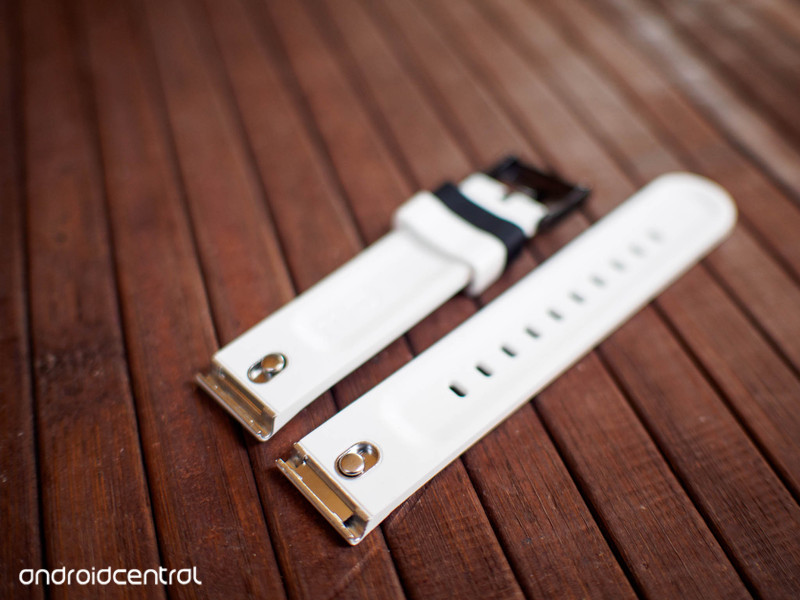
The days of annoying pins and cumbersome tiny tools are over! Google has released its MODE bands (currently only manufactured by Hadley Roma BND) and they might just be the most interchangeable watch bands of all time. At least for Android Wear. There’s a neat video on the MODE site that shows you exactly how these bands connect to your LG Watch Urbane, and we have to say, it’s pretty sweet.
Basically, all you do it remove the original pin that presently in your Urbane, then you add the MODE pin, slide your MODE band over the pin, and lock it shut, kind of like a carabiner. That’s it.
So, once you have 10 different bands (when cheaper ones become available; Hadley Roma’s models start around $50), you’ll be able to make a change on the fly with ease. Just remember that when you go to order yours you need the 22 millimeter band.
See at Google
GadgetWraps silicone wristband
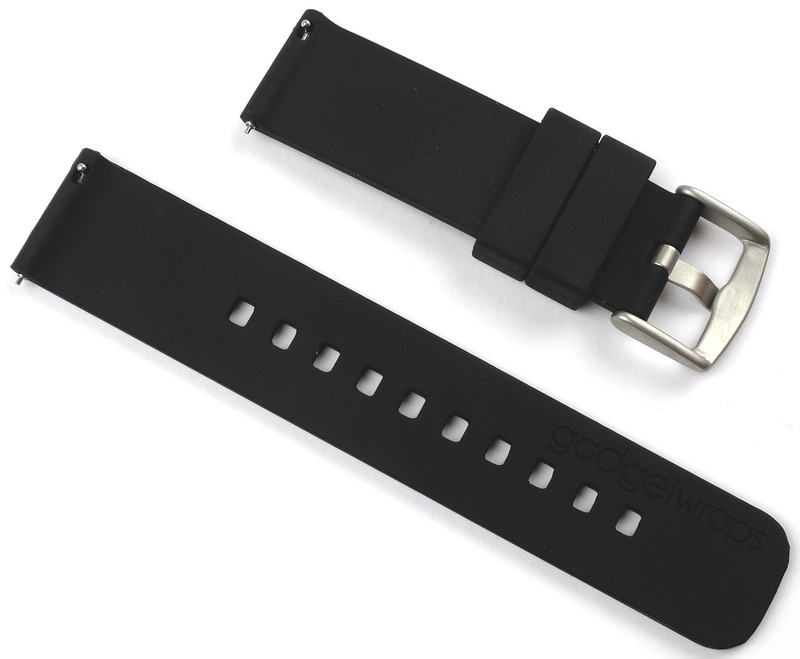
Let’s get things started with the most versatile of the wristbands we’ll discuss: the GadgetWraps silicone wristband. These bands are great for those who put comfort and durability above all else, but still want to maintain the dapper design of the LG Watch Urbane.
GadgetWraps are available in eight colors to match your style and with a price tag starting around $20, they won’t break the bank.
There’s also beauty in the GadgetWraps installation process, since they feature quick-release pins, which means no tool necessary.
Some of the bright colors might not really match the sophistication of the LG Watch Urbane, but, like I said, they’re there to match your style.
See at Amazon
Ritche mesh stainless steel wristband

The problem with many “cheap” mesh wristbands is that they can be incredibly inflexible to the point of not even forming to the contour of your wrist. You just end up with a weird square around your wrist.
No problem with the Ritche mesh band, which is super flexible and surprisingly comfortable. You do need a watch band too, but that’s provided and it means a little more security when you do attach it to the watch unit itself.
You’d probably want to pair this with the silver Urbane, though it may add some funky flair to the gold watch, again, depending on your style.
See at Amazon
Barton Quick Release
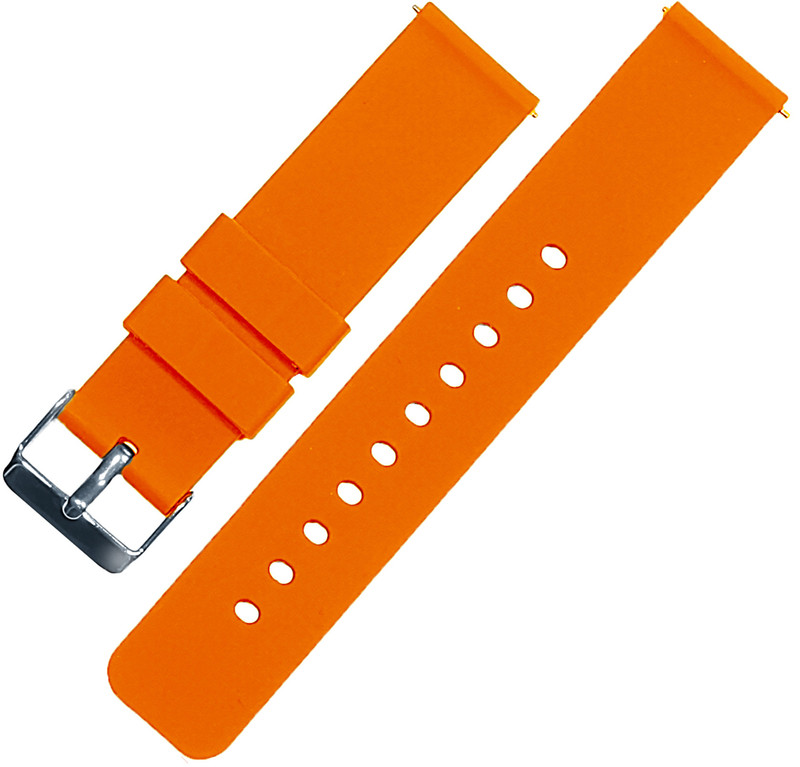
Add a big splash of color to your LG Watch Urbane, with Barton’s line of quick-release watch bands. They’re made of soft silicone, so they’re comfortable and won’t tarnish the way leather or metal bands will.
You can choose from nine colors, ranging from a very punchy bright orange to a more muted charcoal. Starting around $15, you can grab a few and switch them out daily, thanks to the quick-release – no need for annoying tools and tedious installation!
Barton also claims that their bands will fit 95 percent of wearers and that, if you happen to be in the 5 percent their bands does not fit, they’ll gladly refund your purchase.
See at Amazon
Yesoo stainless steel wristband

Getting back to a more traditional steel band, Yesoo offers a flashy band with a quick-release butterfly buckle, making this easy to put on and take off, with none of the painful pinching that can come with some other types of buckles.
The Yesoo band comes with the necessary installation tools and shouldn’t present too much of a hassle in that department, since it’s just like any other metal wristband. You can remove links if it’s initially too big and you’re on your way to shiny urbanity.
See at Amazon
RaySun genuine leather brown wristband

Let’s look at some brown leather, the way leather was meant to be (or so I’ve heard). This offer from RaySun is has an anti-slip texture and it’s waterproof, so it won’t dry and crack like leather generally does.
With the many buckle holes, this strap is designed to fit even the slimmest wrists, which makes it an ideal option for slighter folks. Like all the other bands we’ve discussed that are traditionally installed, RaySun provides all the necessary tools to get this breathable band on your LG Watch Urbane and out where everyone can ogle it.
See at Amazon
The Urbane Professional
Do you have a watch strap that you absolutely love that’s not on our list? Make sure to leave a comment and tell us which band you have and why you think your strap is the best one ever made!
Judge orders woman to unlock iPhone with her fingerprint
It’s still not perfectly clear whether or not law enforcement can force you to unlock your phone with your fingerprint, but an LA court isn’t waiting to find out: for the first time in a federal case, a judge has ordered a person to unlock her smartphone using her digits. The FBI obtained a warrant requiring that identity theft suspect Paytsar Bkhchadzhyan unlock her iPhone through Touch ID just 45 minutes after her arrest. While it’s not certain what the FBI was looking for, Bkhchadzhyan eventually pleaded no contest to the charge.
The authority to do this appears to be based around a blend of legal decisions. The Supreme Court has ruled that police can search your phone if they have a warrant, and that they can order you to produce fingerprints without a judge’s approval. However, it’s not certain that you can combine the two.
As the LA Times explains, there’s a dispute as to whether or not using your fingerprint to unlock your phone is a violation of the Constitution’s 5th Amendment, which protects against self-incrimination. While a fingerprint isn’t the same as testifying, unlocking your phone could be treated that way. Even with precedent from a 2014 Virginia case (which determined that fingerprints are okay, but passcodes aren’t) working in the feds’ favor, there’s no guarantee that police can order fingerprint access going forward.
Via: Christopher Soghoian (Twitter), The Verge
Source: LA Times
Phone call study concludes we can only have five best friends
The Sisterhood of Traveling Pants can only have one more BFF, according to a study by a group of British researchers. They include anthropologist Robin Dunbar, who pinpointed a correlation between a primates’ brain sizes and the sizes of their social circles. Humans, for instance, can only form meaningful relationships with up to 150 people. He believes that five of those make up one’s closest friends, followed by 10 more in the next layer, 35 in the third and 100 in the outermost one. There are some differences between introverts and extroverts, but they have the same number of what’s called the “Dunbar layers.”
For their study, the team analyzed six billion calls made by 35 million people and categorized relationships based on how frequently the subjects called each other. This was back in 2007, just a short while after Facebook opened to the public and Apple released the first iPhone, so phone calls were the most logical choice. They found that their subjects had an average of 4 people in their closest circle, 11 in the next, 30 in their third layer and 129 in their outermost circle of friends. Those numbers aren’t too far off from Dunbar’s estimates, and the team says they’re within the layers’ natural range of variation. So, if you just can’t feel as close to a new friend as BFFs 1 to 5, blame your brain.
Via: Technology Review
Source: Cornell University Library
Audials is a fantastic all-in-one radio app with style

Overview
When I first opened Audials, the first thing that caught my eye was the UI – tiled like Microsoft, with an Android-style hamburger menu; really crisp and easy on the eyes. When I started delving into the features, though, is where I was really blown away.
Features
Here’s the list of features that appears in the aforementioned hamburger menu: Radio (complete with recording), Podcasts, Voice and Video Recorder, Alarm Clock, Sleep Timer, and Equalizer. I’ll go into my thoughts on each of them, below, but just a spoiler alert – they’re all pretty great.
Radio/Podcasts
An app that revolves around audio entertainment better have a radio in it; Audials delivers. It works great on WiFi or data, has nearly 100,000 local and nation-wide channels, and has built-in functionality to record stations when you can’t listen to them live. That last one is big for people like my Dad, who never, ever miss Tom Sullivan (for instance). Podcast-wise, it’s as simple as typing the podcast into the search bar or browsing the genres, then adding it to your list.

Main Screen.

Options. Options everywhere.
Video/Voice Recorder
Exactly what it sounds like. No real bells and whistles here, but it works exactly as you’d expect it would – thumbnails of your recordings show on the main screen under radio and podcasts.
Alarm Clock & Sleep Timer
These are two features that I’ve been looking forever since I made my way to Android on my old MyTouch 3G. Setting an alarm in the Alarm Clock allows you to specify a radio station to start playing at a specified time- a feature that was standard on old clock radios but absent ever since. Sleep Timer could probably be inserted into the Options menu instead of being its own item, but it’s still extremely useful; set a time limit for which the app will automatically close itself when idle. The default is 45 minutes, but any increment of time will do nicely.
 Tweak them bars!
Equalizer
I won’t lie to you, I have no idea how to use an equalizer. I see a series of MHz increments and a series of sliders that correspond to each, but other than that I’m clueless. My go-to move for any equalizer is to play a song and play with the sliders until it sounds awesome – that move worked just fine in Audial.
Conclusion
If you’re in the market for a podcast or radio app, I highly recommend Audials. Other apps have similar functionality, but as far as the combination of features and performance goes, I – personally – prefer it over the competition.
Android N Developer Preview 2 – let’s talk bugs and issues

We’ve had a few weeks with the second Android N Developer Preview under our belt — I’ve been running it on my Nexus 5X using either Project Fi or T-Mobile — and that’s plenty of time to talk about how it’s working out so far. So let’s talk about our bug lists!
Before we go in too deep, remember that what we have from Android N so far is clearly labeled a developer preview. Nobody at Google (or anyone else) is claiming that it’s ready for prime-time, and bugs should be expected. In fact, things that may have worked well on the last preview can be completely broken. That’s what test software is all about — turning ideas into code, building it, and seeing what crashes and burns and what works as expected.
One other thing — if you’re testing, be sure to fill out bug reports! To do that, check the AOSP issue tracker for Android Dev-preview-N here. If you see your bug, star the item. If your bug isn’t listed, fill out the form here to have it added. And please, don’t post things like “PLZ BETA FOR NEXUS 5!!!!!!” or anything that isn’t related to issues with the beta OS. All that does is take time away from the people working on the bugs, who aren’t likely the people deciding which phones and tablets have the software available.
Enough of this, let’s talk about how it works!

In a lot of ways, Preview 2 (and that’s what I’m going to call it for clarity’s sake) is better than the first one was. In other ways, it’s worse. I no longer crash my 5X any time I switch from T-Mobile LTE to WiFi when WiFi calling is enabled. My videos don’t flicker every time I try to play them back (though I do get a black screen sometimes). I get less connectivity errors when using apps that are just a wrapper for a webpage or webapp. Chrome crashes less (but still crashes too often). A big deal to a friend where there were some pretty crazy mathematical errors in fairly simple code that was causing out of bounds exceptions has been fixed. Lots of good stuff there, and it shows that there have been a lot of changes to the existing code outside of any new additions.
I also really dig the new folder style. Call me crazy, but I like the way it looks like a little porthole into the app drawer. Launcher shortcuts are cool, even though I probably wouldn’t use them. Too much on my home screen makes me a little twitchy (I have a folder that holds every app on my Robin, and am so glad the app launcher isn’t going away). Platform-level Vulkan support is also pretty awesome to look forward to.
But to me, it’s still not ready for a daily driver. I’m having three major issues that are show-stoppers and make Preview 2 something I can’t depend on:
-
Most of the time, I can’t make or receive a phone call. The phone rings when one is coming in, it can make outgoing calls just fine, but chances are either there’s is no sound on my end or no sound on the other, or possibly both. I’ve seen some people say this happens to them, some say it doesn’t and some say it was doing it but randomly stopped.
-
I’m getting far too many random restarts. I reach for the phone and I see that I need to enter my PIN to restart Android. That tells me the phone restarted. I can shut that off so it can start back up, but then I won’t know that it restarted. I need a phone that’s dependable, because I’m a dinosaur and still talk on the phone.
-
Crazy lag and overheating when apps that display media crash. I’m not alone here, either. When something like Google Photos or YouTube crashes, I know I’ll have to reboot. If I don’t, things will quickly slow to a crawl and the phone gets hot. Some process is running wild under the hood, and keeping the CPU pegged. A reboot fixes things until the next time an app crashes.
Of course, there are plenty of expected issues with apps, but there’s a good chance the apps themselves are at fault (at least partially). I’ve got no problem if a developer is taking their time and using these previews to be able to release something polished and ready when Android N officially launches.

If you only have one phone (and it happens to be in the Beta program and has an N Developer Preview available) I won’t suggest you install it unless you’ve the time and patience to flash back and set everything up again. Maybe next time.
What about you folks? What bugs are you seeing, which ones have been fixed and are you using Preview 2 as your daily driver? Hit the comments and share your experiences and tell us if it’s working reliable for you. I’m especially interested in what folks using a Sony Xperia Z3 have to say, so be extra sure to holler if that’s you!
LG V10 Versus LG G5 — Which LG phone is the best?

Bigger isn’t necessarily better.
It’s time for a quick comparison between the LG G5 and the LG V10. Two LG smartphones that are fairly different in terms of what features matter most, and armed with great cameras. We’re gonna take a look at them head to head, and see if this year’s G5 can beat out last year’s V10.
Design
While both of these are LG phones, they are dramatically different in terms of design. From the onset the sheer difference in size between the G5 and the V10 is apparent.
| Processor | Snapdragon 808 | Snapdragon 820 |
| Main display | 5.7-inch QHD | 5.3-inch QHD |
| Secondary display | 2.1-inch | None |
| Storage | 64GB + microSD | 32GB + microSD |
| RAM | 4GB | 4GB |
| Rear camera | 16MP | 16MP main, 8MP wide-angle |
| Front camera | 5MP Dual Lens | 8MP |
| Battery | 3,000mAh (removable) | 2,800mAh (removable) |
| Operating system | Android 5.1.1 Lollipop | Android 6.0.1 Marshmallow |
| Size | 159.6 x 79.3 x 8.6mm | 149.4 x 73.9 x 7.7mm |
| Weight | 192 grams | 159 grams |
The LG G5 is the smaller of the two phones by a pretty significant margin in every dimension. It’s 149.4mm tall and 73.9mm across. The V10 is huge comparatively at 159.6mm tall and 79.3mm wide. Likewise the G5 is 7.7mm thick, versus the 8.6mm the V10 is rocking. The V10 is quite a bit heftier as well, weighing in 33 grams heavier than it’s opponent.
When it comes to the feel in your hand the G5 has a comfortable feel, that isn’t slippery in your hand. The V10 doesn’t have nearly as comfortable a fit in your hand, simply because it’s so large. Thankfully the textured back of the V10 makes it easier to keep the phone from slipping out of your grip at in inopportune time.
Software

When it comes to software, you’ll notice a pretty sizable difference between the G5 and the V10. That’s because while the G5 is running Android 6.0 Marshmallow out of the box, V10 launched with Android 5.1.1 Lollipop and is just now starting to see updates. There is a big similarity though, both of them are saddled with a significant amount of carrier added bloatware.
That isn’t their only similarity either. Both the G5 and the V10 have a fingerprint sensor in the back of the phone.It’s placed well, and intuitive to find. There’s been a fairly big disparity between the two, though. The V10 seems to work slightly better in this regard — particularly with the Marshmallow update. But I’ve had issues with the G5 — it still doesn’t recognize the fingerprint about half of the time.

Looking at the G5 you can see the changes that LG has made in the software as well. Most prominently is the lack of an app drawer, which people seem to either be pretty okay with, or hate with a passion. They’ve also added the LG friends manager, which allows you to easily communicate with your LG accessories.
Camera
LG is known for the fantastic camera’s on their smartphones, which of course means that we need to do a camera comparison. The V10 rocks a dual lens 5MP front facing camera, and a 16MP rear camera. Meanwhile the G5 has a 8MP front camera, with a 16MP rear camera and an 8MP wide-angle rear camera. Each of them has their own strengths, and produces great results.
LG G5 left / LG V10 right


In shade in seems like the colors from the V10 seem to wash out just a little bit, but it does produce great pictures in good light. The big difference in photos here is whether you’re a bigger fan of the wide angle lens available on the G5, or the second front facing camera that the V10 has access to. Both of these cameras give you great results, and have access to a full manual mode. The G5 does have the better overall camera set in pure terms of specs though.
Audio
Our last big comparison between these two LG smartphones is the audio quality. That’s because the V10 gives you access to hi-fi audio when you are listening on your headphones. To some people that might not really be a big deal, but if you spend a lot of time listening to music on headphones this can make a serious difference.
The problem being that the experience with hi-fi really depends on a dozen different factors. The type of headphones or earbuds, what you’re listening to, the quality of the music when it was recorded … the list keeps going. While even casual music lovers may be able to discern the clearer sound that the V10 produces over headphones, they’re might not notice it at all. The G5 doesn’t have access to hi-fi audio, but still gives you a good sound that isn’t tinny or muffled.

Which should I buy?
So when it comes down to it, which phone is the better one? Overall it seems like the G5 wins out over the V10. With a better camera, more convenient size, and better overall specs. However, if you’re a real audiophile, or you don’t mind the larger phablet size, the V10 might be in your best interest. As always it comes down to preference, and deciding which features are the ones you want to focus on.
Get the LG G5 at Amazon Get the LG V10 at Amazon
The After Math: What on Earth are you watching?
Big goings-on in the world of broadcast this week. The BBC and Netflix are bringing back Watership Down to scar a whole new generation of children. NBCUniversal bought DreamWorks for $3.8 billion so hopefully both companies will finally be able to afford a space in their names. Sunday Ticket decided that watching football on your phone’s tiny screen is punishment enough and will no longer charge you extra to do so. And Saturday Night Live also decided that watching the show is itself punishment enough and will no longer make you sit through added commercials. Numbers, because otherwise the Nielsen Rating System wouldn’t make any sense.
IMAX’s in-theater spin class is sensory overload
I’ve never been particularly fond of spin classes, as they eschew all the things I enjoy about using a stationary bike: The ability to set my own pace, listen to my music and maybe even dip into a good book while I pedal. But I can understand the appeal of a spin class, as the presence of an instructor can push you out of your comfort zone and ensure that you get a real workout. So it would seem that IMAXShift sits somewhere in the middle, combining an intense audio and visual experience to entertain you while a dedicated instructor gives orders. The problem is, there might have been just little too much going on for me to enjoy any one aspect to the fullest.
There’s been a general trend of consumers moving away from big box, one-size-fits-all gyms toward a more boutique, personalized model of gym exercise. Sometimes boutique means just smaller, but in many cases it means some kind of specialization or gimmick of some sort. IMAXShift looks to draw spin enthusiasts to its debut location near downtown Brooklyn via a 24-by-40-foot curved screen combined with a robust IMAX sound system. Two sub-basses are even buried under the floor for that extra bit of oomph as you pedal. There are 50 stationary bikes across five steps, arrayed in a gentle arc.
Though the gym uses IMAX technology for its audiovisual elements and the company wants to do for fitness what it has done for movies in delivering “larger than life experiences,” you won’t be watching Star Wars or The Jungle Book while you pedal. Instead, each spin program is composed of a series of shorter video segments chosen by each individual instructor. The idea is that each class can be unique and you should never see the same sequence twice. The visuals I was treated to during my session included pulses of bright colors in abstract shapes, shifting black and white lines, and a grand sweep over a lush green forest set to Prince’s “When Doves Cry.” As evidenced by that last example, there wasn’t really a close thematic correlation between the music and visuals.

Even if there was, I might have missed it completely due to being overwhelmed by the sheer number of things going on in the IMAXShift theater. As I hopped on my own bike and began my own class with a group of roughly 20 people, I found myself so preoccupied with my spin routine that it was hard to focus on the images. The instructor for our session, Jesse Alexander, barked out instructions steadily, meaning I was constantly fiddling with the bike’s resistance, checking my revolutions per minute on its built-in console and overall trying not to hurt myself as I peddled faster, slower, stood up, sat down, straddled the seat and whatever else my cycling master demanded of me.
It didn’t help that sometimes the music would occasionally drown out Jesse as he was giving us a new order, meaning I spent a lot of time watching him or the other cyclists to figure out what I was supposed to be doing. Quite a few of them weren’t looking up either; one woman I spoke to the locker room afterward even said she eventually just stopped paying attention to the screen entirely.

As the class wound down to the strains of Hans Zimmer’s “Time” I finally had enough wherewithal to take in a lovely visual of sky lanterns floating upward into the night. It was peaceful, and for a minute there I felt pretty good about having completed the entire workout. But I’m not entirely sure if it’s something I’d want to do again. The price isn’t a huge issue, as a single ride will cost $34, on par with established chains like SoulCycle.
However, replacing the usual mirror with a giant screen might eliminate any shame or other issues you might have with staring at yourself for 30 minutes, it also creates an enormous sense of isolation. There’s so much going on the room that it’s tough to engage with anything: Not the screen, not the instructor and certainly not the other cyclists, who exist as shadows in the corner of your eye when the lights go down. The music sort of blots out everything to the point where it becomes a form of white noise. I might have given my quadriceps, hamstrings and glutes a good workout today, but the part of me that’s most exhausted is my mind. I feel like a kid after a carnival: overstimulated and in serious need of a nap.
 AIVAnet