


Microsoft is using synthetic DNA to store data
Microsoft’s data might be intact for thousands of years to come, now that it’s looking into DNA storage as an option. The company has purchased 10-million-long oligonucleotides (DNA or RNA molecules) from San Francisco startup Twist Bioscience. According to IEEE, Redmond converted a chunk of data into DNA nucleotides — G’s, A’s, C’s and T’s — and had Twist make 10 million synthetic DNA strands with the sequences it specified. The startup doesn’t actually have access to the data, since it doesn’t have the key, and the only way to decode it is through DNA sequencing.
Microsoft partner architect Doug Carmean said the initial test phase “demonstrated that [the company] could encode and recover 100 percent of the digital data from synthetic DNA.” However, he admits that they still have a ways to go to create a commercially viable product. Scientists have been exploring the use of DNA for data storage for years. Back in 2012, Stanford researchers created rewritable DNA storage inside living cells. In the same year, a Harvard team stuffed 704 terabytes into a gram of DNA.
Via: TechCrunch
Source: Twist Bioscience
Plantronics BackBeat GO 3 review: Lose the wires but not the cash
 Wireless earphones are a dime a dozen, but that doesn’t mean that it’s easy to choose one. On the contrary, making sure that you nab a hit instead of a miss can take some know-how. We’re hoping that we can help on that front with our headphone coverage.
I was glad to accept one such promising headset from a company who knows wireless communication – Plantronics. That name may be more recognizable with the Voyager Bluetooth earpieces, but if you weren’t aware, Plantronics also makes some solid headphones.
Today, we’re taking a look at a brand new release, the BackBeat GO 3. Plantronics has had some time to refine the line, so let’s find out if they’re the perfect pair for you.
Design
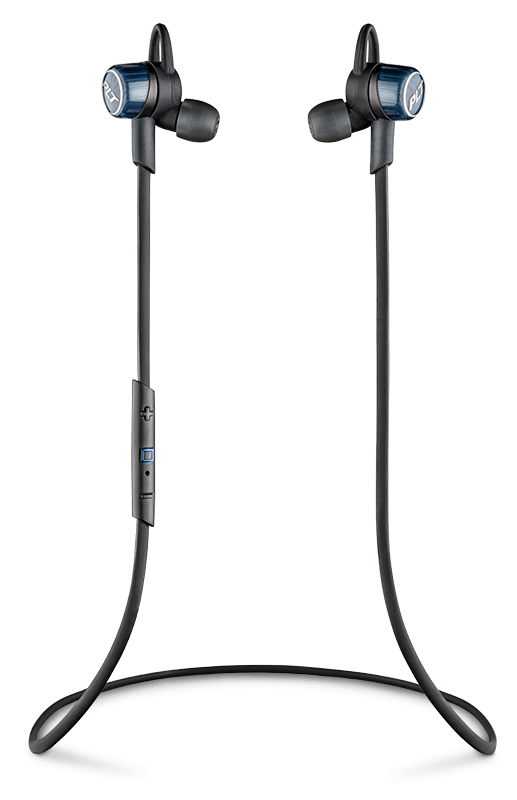
The BackBeat GO 3 isn’t a departure from the typical wireless in-ear method, especially the sport-ready ones. It’s two earpieces bridged by a short cable, which is meant to route around your neck.
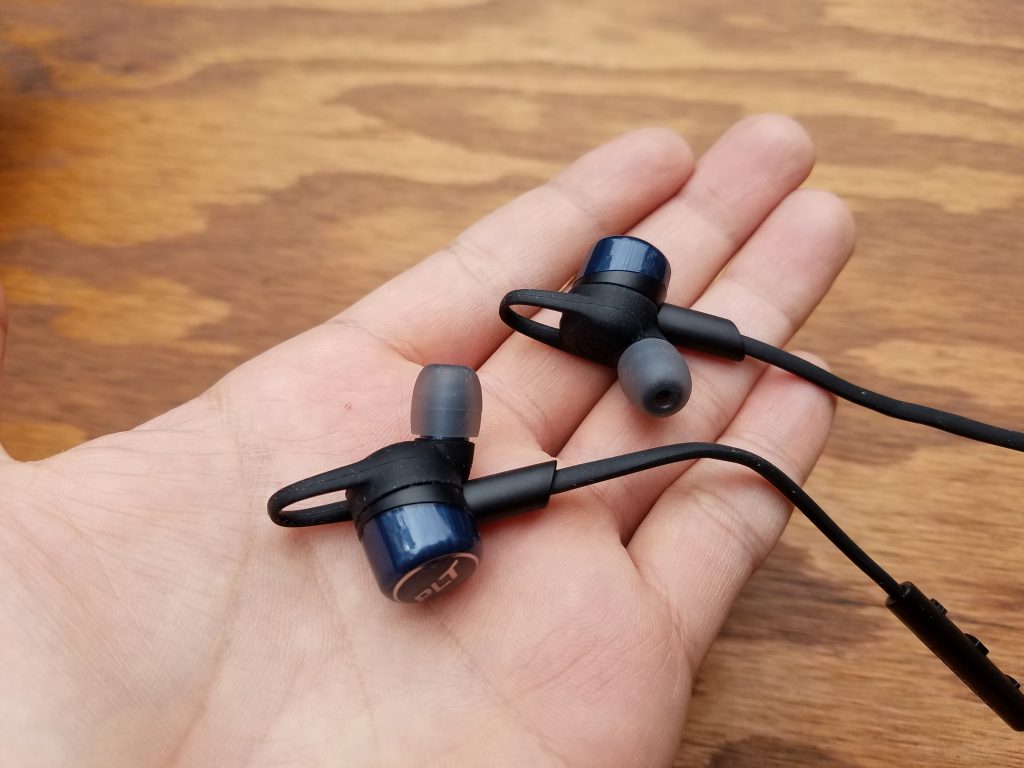
We studied the human ear to create earbuds with a natural stable fit that also seal in bass and block out noise – Plantronics
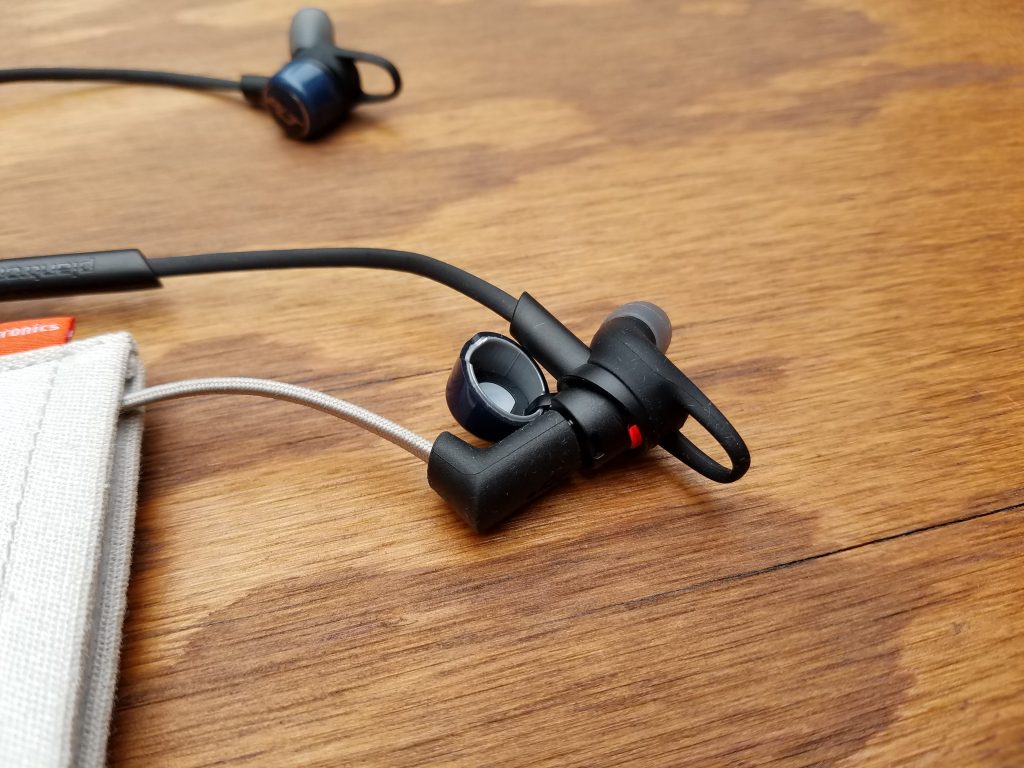
But the similarity ends when you gander at the earpiece design. The housing has the common capsule shape, but the eartips are oriented at a sharp angle. There is also a peculiar loop at the top. This is Plantronics’ method for a better fit. You insert the earpieces at an angle, so that the eartip follows the orientation of your ear canal. The loop (flexible) rests against your inner ear to help support the fit. These are designed with active use in mind, and it would be a shame if they fall out.
The GO 3 have a little more style than their predecessor. We’re still looking at a plastic build, but you’ll get different cap finishes to choose from: Cobalt Black, Copper Grey, Granite Black. Our review unit is the Cobalt Black. The colored part is a smooth glossy finish, while the black portions are a rubbery-like material.

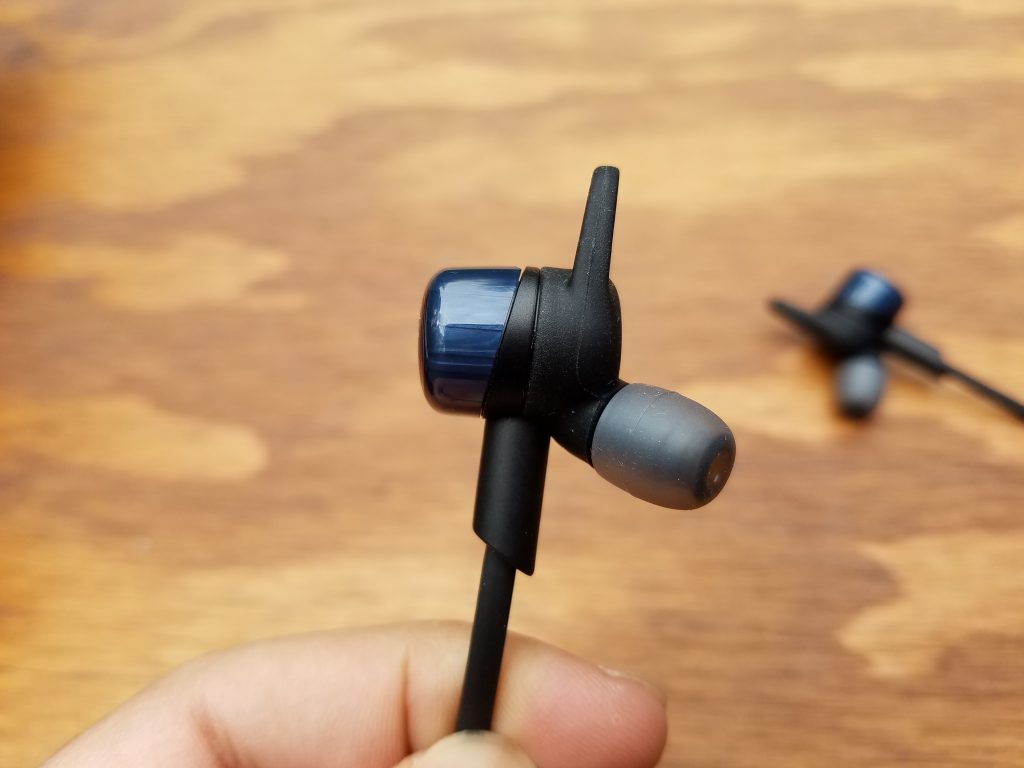
A nice thing is that the GO 3 have a sweatproof nano-coating. But be careful, because this isn’t the same thing as being waterproof. Plantronics says it’s resistant against light rain, humidity, and of course sweat. A drawback is that the finish catches lent like no tomorrow. I tried my best to keep them clean for this review.
The cable is 2 feet in length and has this semi-flat shape. It’s a rubbery material as well, and really nice feeling in hand, but it’s a little on the thick-side for me.
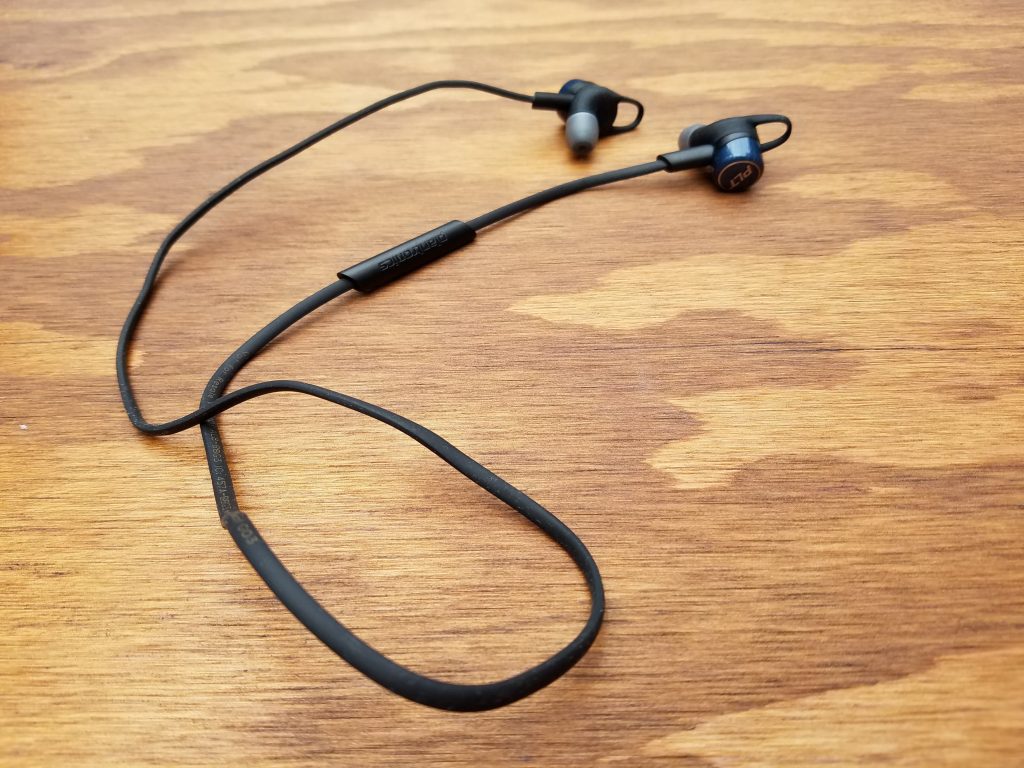
You may be wondering how to charge these little puppies. There’s a notch on the right earpiece’s cap which pops it off. When you plug it in, you’ll see a glowing red LED to indicate that it’s charging.
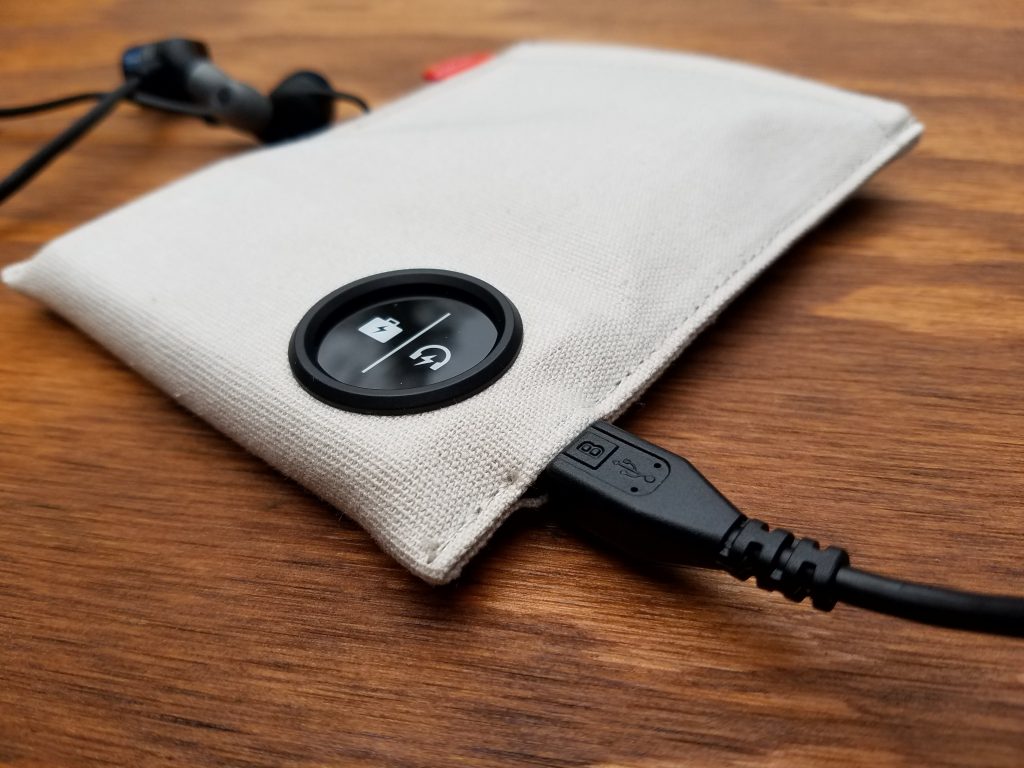
Something neat and unique that Plantronics offers with the BackBeat GO 3 is a charging case. Although, it’s not included and costs an extra $30, but I think it’s pretty valuable. It has a nice, weaved construction and its own charging cable within.

An indicator on the front can tell you how much charge the case and the earphones have left (tap on it to get a three-tick indication). To charge the case’s battery, there’s a microUSB port on the side.
Usability
The BackBeat GO 3 come with a standard array of silicone eartips: small, medium, and large pairs.
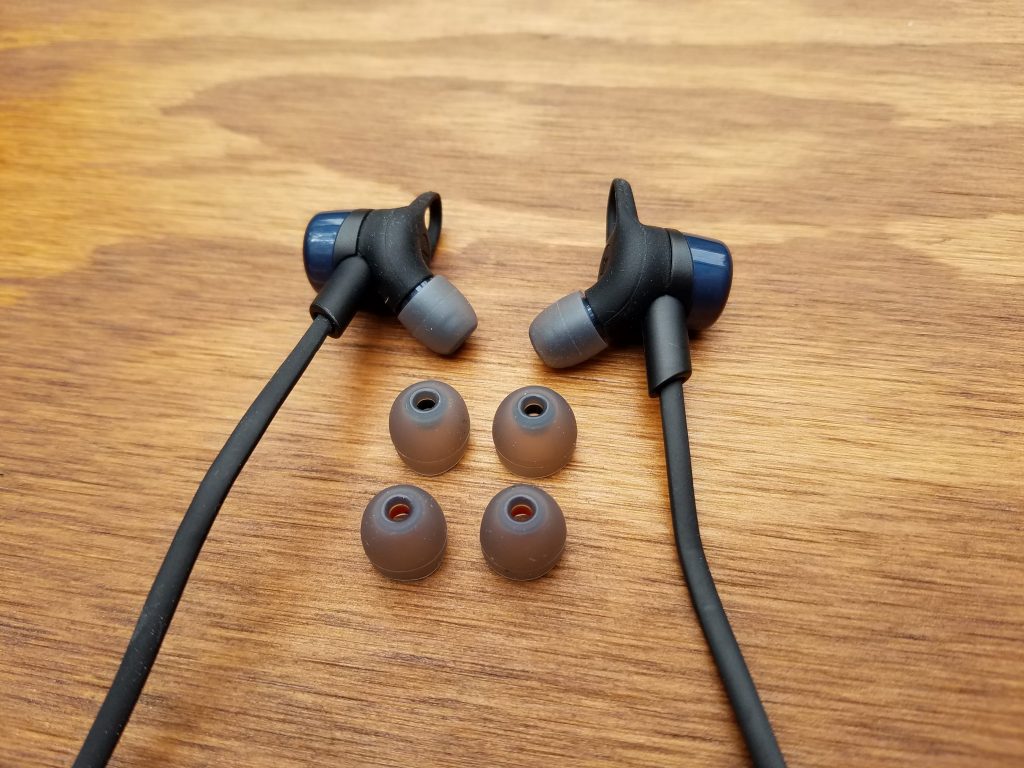
Once you find the right eartips, the earpieces are really easy to don. The angle of the stems guides you and makes the tips go deep in the ear canal. This helps with the seal and sound isolation. I give these guys a thumbs up for fit.
I wasn’t as fond of the cable in use, though. It’s a little stiff/thick, so if there’s slack (like in my case), the cable touches your face when you turn your head. I found that if you can collapse some of the cable together behind your head, then it’s fine. Only thing, Plantronics doesn’t include a clip to do that. Other than this complaint, the fit was secure. The earpieces don’t go anywhere with movement.
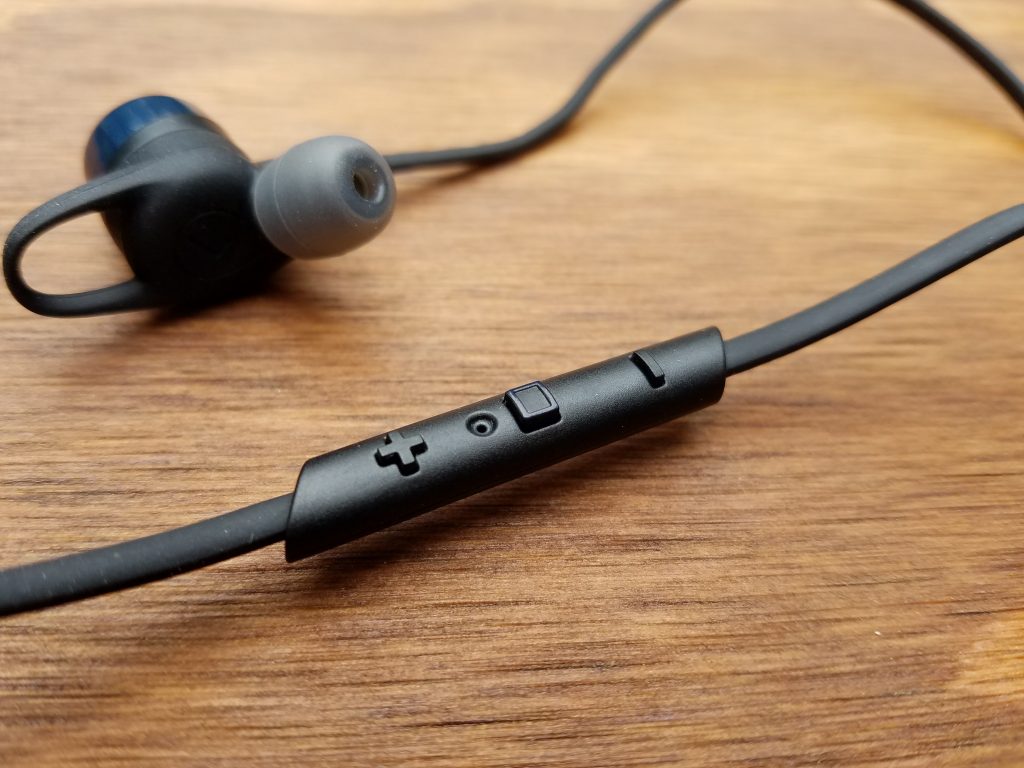
The setup was super easy. Merely power the GO 3 on (by holding on the middle remote button) and it starts up in discover mode. Then just find it in the mobile device’s Bluetooth settings and viola. The remote has your typical volume up/down and play/pause buttons. But you can skip/back the track by holding on the volume buttons, or toggle Google Now with the middle button. There’s also a microphone, to take calls.
Plantronics pegs the GO 3’s battery life about 6.5 hours of playback, which is somewhat average. To compare, the Jaybird X2 (that we also reviewed) bests it with 8 hours. But, if you spring for the charge case, you have an advantage. The case has enough capacity to get the GO 3 through two full charges.
Sound
Plantronics says that the GO 3’s acoustics are delivered by custom dynamic drivers a custom audio codec, resulting in vivid, high-res tunes. Is it as good as it sounds?
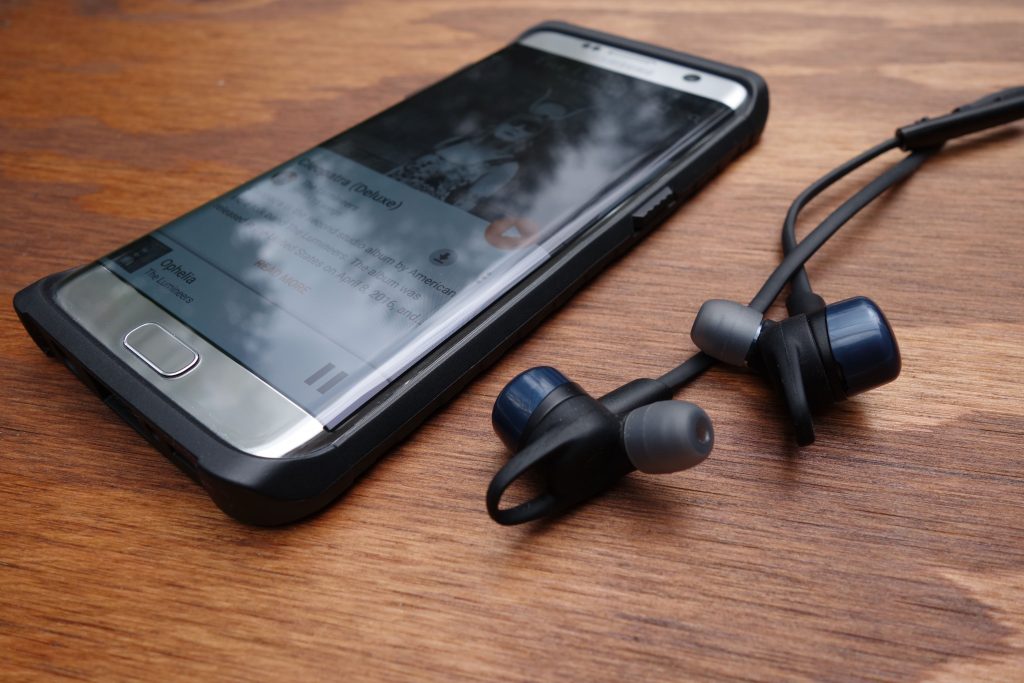
That depends where you’re coming from. Most users, who buy sub-$100 headphones, should be plenty satisfied. As advertised, the GO 3 does pull a good amount of detail. The whole spectrum also has a fantastic balance. All the frequencies play their part and don’t shyly hide from view.
It’s just, when you focus on the details of the delivery, you can nitpick. For instance, there’s a lack of sub-bass (that low frequency, deep bass), so you’re missing some impact when those notes hit. The mid-bass does have a nice delicate punch (if that makes sense) that helps it along. I think the mid-range could use some fullness as well.
But don’t get me wrong, everything certainly sounds good. I was particularly impressed by the soundstage. It satisfyingly surrounds you. I’m just not feeling the music’s impact or depth as much as I would like.
Final Thoughts
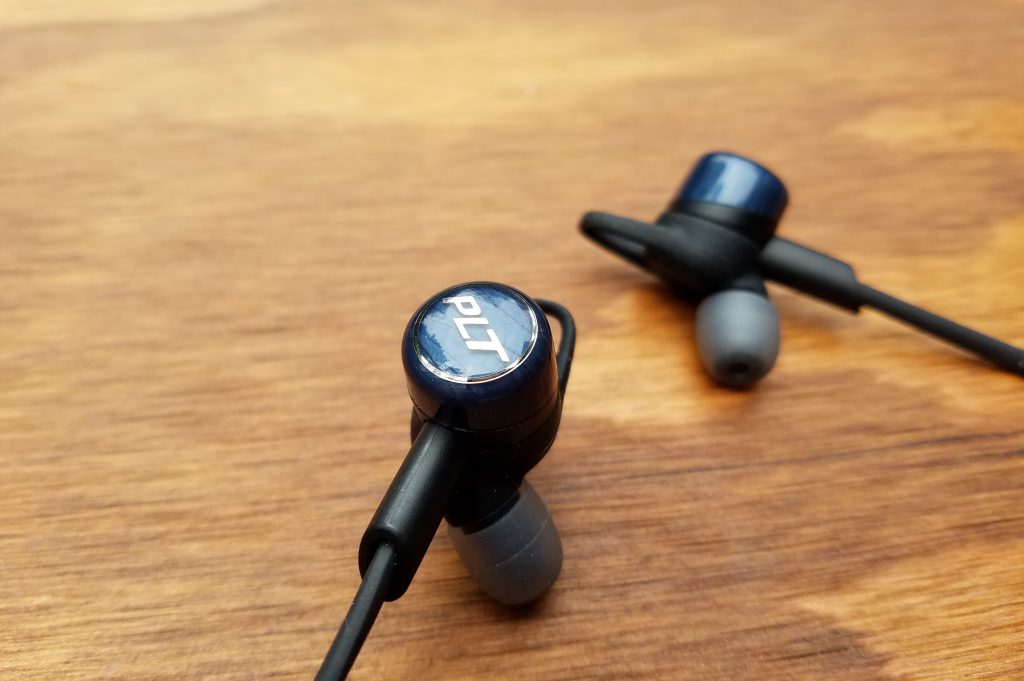
Plantronics certainly built a solid pair of Bluetooth earphones here. They’re not perfect, but I would definitely put them among the top wireless earphones to recommend. A lot of that has to do with the price. The BackBeat GO 3 go for a pretty competitive price of $99 (without the charging case). For what they are, that’s a good value to me – the design/build is great, the fit is impeccable, and battery life is decent. I think that Plantronics can do a bit better in the sound department, but it’s acceptable at the price-point.
Plantronics BackBeat GO 3 product page
Test drive the PC-optimized ‘Forza 6: Apex’ on May 5th
Last September, Microsoft released Forza Motorsport 6 for PC and Xbox One to feed the ultra-realist gamer’s need for meticulously-detailed racing. But back in March, Microsoft announced a re-release of Forza 6 specially crafted to run on Windows 10 (and only Windows 10 — sorry Xbox One owners). On May 5th, Microsoft will unleash Forza Motorsport 6: Apex’s open beta for players to enjoy all summer, with a full release at an undisclosed later date.
So long as your rig can handle the Windows 10 and DirectX 12 system requirements to play, Apex promises stunning graphics in up to 4K resolution. Neither the beta nor the game will feature multiplayer nor can Apex players race with Forza 6 owners, although you can compare your car’s livery with your friends’, if that’s your bag.
Apex will feature 63 cars and 20 track configurations of six locations along with wet and night versions of each. While that’s a paltry number of vehicles compared to Forza 6’s lineup of 450 automobiles, Apex’s beta is free…and neither Microsoft nor Turn 10 Studios have stated when it will end.
Source: Turn 10 Studios
ESPN Classic on-demand videos head to Roku and Apple TV
Sports fans with ESPN Classic on demand might spend the next few weeks glued to their screens. The company is giving them access to over 600 hours of archived programming. That means hundreds of hours of old basketball, football, X Games and other sports you’d usually watch on ESPN — even “classic” ones people still talk about decades later, like Muhammad Ali’s fights — via the WatchESPN app. WatchESPN is available for a bunch of platforms, including Amazon Fire TV, Chromecast and Xbox One. But if you want to watch events you might have only heard from your parents, you’ll have to bust out an Apple TV or a Roku.
Source: ESPN
New Report Says FBI Paid Less Than $1 Million to Unlock San Bernardino Shooter’s iPhone
Last week, FBI director James Comey hinted at how much the agency paid to unlock San Bernardino shooter Syed Farook’s iPhone, saying it cost more than he will make in the next seven years and four months. The number worked out to around $1.3 million, as Comey’s annual salary is $183,000. However, sources now tell Reuters that the amount was actually under $1 million.
Although the FBI says it will keep the technique it used to unlock Farook’s iPhone 5c a secret, sources tell Reuters that the agency can use the method on other iPhone 5c’s running iOS 9. The FBI has physical possession of the mechanism used to unlock the phone and does not need to pay the contractor any more money for further uses.
The contractor responsible for the method is a closely-held secret within the FBI, with Comey being in the dark himself, according to Reuters’ sources. In mid-April, it was reported that the FBI hired “professional hackers,” at least one of which is a gray hat researcher that sells flaws to governments, black market groups or surveillance companies.
Note: Due to the political nature of the discussion regarding this topic, the discussion thread is located in our Politics, Religion, Social Issues forum. All forum members and site visitors are welcome to read and follow the thread, but posting is limited to forum members with at least 100 posts.
Tag: Apple-FBI
Discuss this article in our forums
i.am+ Dial Release Date, Price and Specs – CNET

Hats off to Will.i.am — he’s really mastered the art of getting his wrist into photos.
MIke Nelson/EPA
Will.i.am has released his latest stab at making a gadget. Will.u.buy.it?
The i.am+ Dial is a smartwatch with a phone built in. It’s the second attempt at a wrist-worn, phone-free wearable from the former Black Eyed Peas musician and producer after the abortive Puls, which failed to set hearts racing. Between that, his bizarre Foto.sosho iPhone case, his weird triangular speaker backpack and a collaboration with Gucci that never materialised, you’ll forgive us if we struggle to take Will.i.am’s tech ventures very ser.i.ously.
But let’s give the Dial the benefit of the doubt — it is, after all, probably the closest an i.am device has come to the wrists of the public, going up for preorder in the UK now.

The i.am smartwatch needs no phone to make calls and texts.
Three
Courtesy of British network Three, the Dial starts from £19 (that’s roughly $28 or AU$36) up front, followed by a two-year contract at roughly £25 per month (in the ballpark of $35, or AU$45 per month). Those are just direct conversions of the UK price, by the way — there’s no word yet on when it will be available outside the UK.
Dial up
The Dial has its own 3G SIM card, so you don’t need a phone to call, text and email from your wrist. You can connect to Wi-Fi, but there’s no 4G, which is a bit of a disappointment.
With no phone screen to type on and only a 1.63-inch AMOLED screen on the watch, how do you control the Dial? By chatting to it, using the built-in voice-activated system called AneedA — as in “I need a…”
All the smartwatches and fitness trackers…
See full gallery


1 – 4 of 15
Next
Prev
Maybe you need to play a particular song, or create a custom playlist, or you need to know about the latest news and concerts for your favourite artists. You can also instruct AneedA to tweet, call you a taxi, or take a selfie with the 2-megapixel camera.
Included in the price is an unlimited ad-free music service boasting more than 20 million music tracks. You can stream and download tracks to the 32GB memory without racking up data charges — it’s all included in that monthly fee. The watch comes with a pair of Bluetooth i.am+ EP earphones to listen to your tunes.
Leica M-D (Typ 262) Release Date, Price and Specs – CNET

Leica
I can’t hold back: I have to take out my mockery stick and bash the Leica M-D with it. After all, at $6,000 (£4,650; Australia pricing unavailable, but that’s about AU$7,900) it’s not only more expensive than most other full-frame interchangeable-lens cameras, but it’s a more expensive version of the manual-focus-only Leica M (Typ 262) without a back LCD or the ability to shoot video. Instead, the ISO sensitivity dial takes a prominent place right the the middle of the camera back.
Then there are Leica’s tag lines for it: “A step back to the future.” (Oh, Leica, you had me at “A step back.”) “The joy of anticipation.” (Because nothing’s as fun as waiting till you’re at a computer to find out you’ve missed critical shots.)
But I mock because I don’t subscribe to the theory that being able to view photos on the spot ruins my concentration or that “No LCD screen leads to more freedom for creative photography.” I’m not a purist. And I know you’re out there. Maybe after trying it out, Leica will be able to make a believer out of me.
The basic specs are identical to the two-year-old Leica M, including a 24-megapixel CMOS sensor, reverse Galilean optical viewfinder with framing lines for different focal lengths and three frames-per-second continuous shooting for eight frames.
The camera’s slated to ship in May.
Supreme Court approves feds’ request for greater hacking powers
The FBI found an ally in the Supreme Court in its quest to expand its hacking powers. Today, the highest federal court in the US has agreed to the changes made to Rule 41, giving judges the authority to approve remote access to suspects’ computers outside their jurisdiction. Under the original Rule 41, a judge in, say, New York can only authorize hacking into a suspect’s computer in New York. But the amended rule means that same judge in New York can approve the feds’ request to hack into a computer in Florida, Alaska, or anywhere else, really.
According to the court documents that detail the changes:
“…a magistrate judge with authority in any district where activities related to a crime may have occurred has authority to issue a warrant to use remote access to search electronic storage media and to seize or copy electronically stored information located within or outside that district if: (A) the district where the media or information is located has been concealed through technological means; or (B) in an investigation of a violation of 18 U.S.C. § 1030(a)(5), the media are protected computers that have been damaged without authorization and are located in five or more districts.”
By “concealed through technological means,” the Supreme Court is saying that a warrant will be granted if a suspect uses Tor or any other tool to remain anonymous.
DOJ spokesperson Peter Carr told Motherboard:
“Criminals now have ready access to sophisticated anonymizing technologies to conceal their identity while they engage in crime over the Internet, and the use of remote searches is often the only mechanism available to law enforcement to identify and apprehend them.
This amendment ensures that courts can be asked to review warrant applications in situations where is it currently unclear what judge has that authority. The amendment makes explicit that it does not change the traditional rules governing probable cause and notice.”
Just a few days ago, the court threw out evidence that the feds got through hacking the members of a child porn service on the Tor network. The judge explained that they violated Rule 41’s territorial restrictions. This change would prevent something like that from happening. However, as Google’s Legal Director Richard Salgado said, it could also “have profound implications for the privacy rights and security interests of everyone who uses the Internet.”
The Congress has until December 1st to reject or make more changes to Rule 41, after which the amended version will take effect.
Via: TechCrunch, Reuters, Motherboard
Source: Supreme Court (PDF)
Google’s got a new travel app, but it’s not ready for the masses
Google’s cooking up a new travel app that combines the best of Maps with Now, the company’s prescient personal assistant. Except Trips, as it’s apparently called, is not quite ready for primetime (or the Google Play store) as of yet. News of the app’s existence comes via Dutch site AndroidWorld which obtained screenshots of Trips from Local Guides users, a community-driven offshoot of Google Maps.
The app, which is purportedly in testing at the moment, works by trawling a user’s Gmail to create bundles of travel data. So all of your flight, hotel, dining and sightseeing reservations will be collected in one convenient and shareable package. While Trips is said to automatically scour a user’s email account to build out an archive of past and upcoming travel, it should also allow users to manually build out bundles and itineraries.
Of course, this being a Google app, there’s also a recommendation feature that can offer suggestions for things to do nearby, sights to see, places to eat or even map out directions using various modes of transport. Trips will also allow users to leave feedback and even post photos on places of interest much like a living guidebook. All that said, there’s no official word on when Google will release Trips to the public, if at all. So if you’re really itching to get your hands on the app, your best bet is to sign up for Local Guides and hope for a peek behind the beta curtain.
Via: 9to5Google
Source: AndroidWorld
NY Times sends 300,000 Google Cardboard viewers to subscribers
After last year’s rollout of the NY Times VR app, the 165-year-old paper is sending out another 300,000 Google Cardboard kits to digital subscribers. This year’s promotion coincides with the release of the Times’ new virtual reality film “Seeking Pluto’s Frigid Heart.”
The film actually debuted earlier this month at the Tribeca Film Festival but will hit the NY Times VR app on May 19th. When it lands, users will be able to virtually fly over the “rugged mountains and bright plains,” or stand on the surface of the dwarf planet while the moon Charon hangs in the sky. The film is a joint project between the newspaper, the Lunar and Planetary Institute and the Universities Space Research Association, and the data used to create the virtual Pluto was gathered in 2015 by NASA’s New Horizons spacecraft.
The Times will be selecting Cardboard recipients based on how long they’ve been subscribers, so if you’re just signing up today for a trip to Pluto, chances are you’ll get left behind. Don’t fret, though: You can still catch a modified 360-degree video version when it drops in May.
 AIVAnet