


Where to buy the HTC 10 in the United States
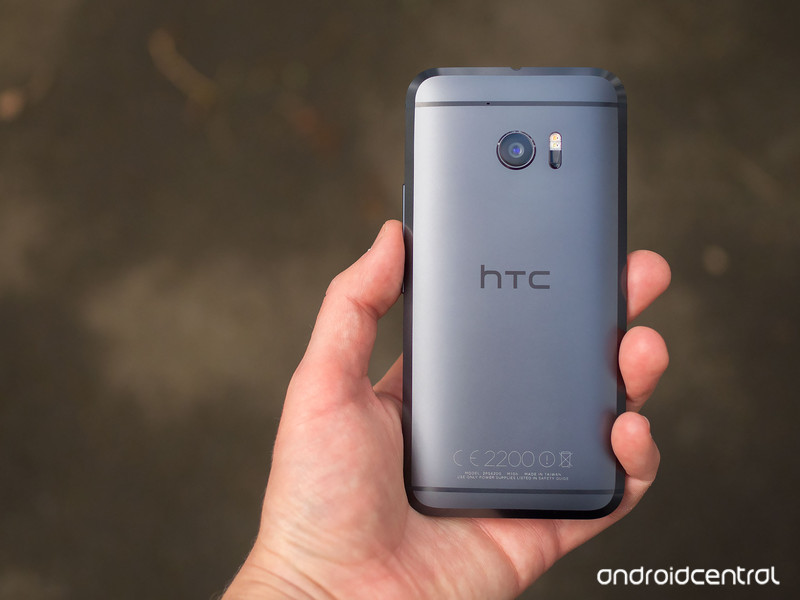
You’ve got a few options for buying the HTC 10 in the United States. And they are …
The HTC 10 is the best smartphone we’ve seen from the manufacturer in years. Of that there is little debate. (It says so in our comprehensive HTC 10 review, after all.)
And so now you’ve got the tough question ahead of you. Where to buy the HTC 10? In the United States, you’ve got a few options. We’ll walk you through ’em.
Buy HTC 10 directly from HTC.com
This may be your best option, for a lot of reasons. First is that if you buy from HTC, you’ll have a SIM-unlocked device that can be used with T-Mobile or AT&T — or any other GSM-compatible operator, actually. No mucking about with unlock codes. Just pop in your SIM and go.
And HTC also is selling the phone with an unlockable bootloader, which is important to those who like to tinker with the software on a phone. Wanna hack on the HTC 10? This is the phone to get.
And if you buy from HTC you’ll also not get saddled with any of that carrier bloatware you’ll find when you get a phone from one of the country’s major operators. That, in our opinion, is probably the biggest factor.
The HTC 10 retails for $699 (though we’ve already seen $100 discounts) and is available in silver or gray. If you’d prefer to finance the phone, HTC.com offers PayPal credit financing for 12 months.
See at HTC
Buy HTC 10 from Verizon
Verizon is the first of the U.S. carriers to offer the HTC 10. (A fact it’s quick to tell you.) And it’ll be available for preorder starting April 29. We don’t yet know exactly when it will be available, and we don’t know the final price.
But we do know that if you switch your service to Verizon they’re throwing in three free months of HBO NOW, and will throw in up to $650 to pay off your old contract.
See at Verizon
Still to come …
We’re still waiting on more information from T-Mobile and Sprint (AT&T won’t be selling the phone) and will update this post when we’ve got it.
HTC 10
- HTC 10 review
- HTC 10 specs
- These are the HTC 10 colors
- Our first photo and video samples
- Meet the Ice View case
- Join our HTC 10 forums
HTC
Verizon
Metallica, Muse manager decries YouTube as ‘the devil’
Once again, a member of the music industry has come out against YouTube, accusing the video site of harming the music industry. Peter Mensch, who manages musical acts such as Metallica, Muse, and Red Hot Chili Peppers, said that the site’s current, ad-based business model, is not sustainable, noting that it’s difficult to get people to pay for content they already get for free on YouTube.

From the BBC:
“YouTube, they’re the devil,” he told a BBC Radio 4 documentary on the music business. “We don’t get paid at all.”
He said the site’s business model, in which artists make money by placing ads around their music, was unsustainable.
Robert Kyncl, YouTube’s Chief Business Officer responded to Mensch’s comments, noting that artists who make agreements with YouTube see better returns. Instead, Kyncl says, maybe detractors should look at contracts between artists and labels.
Responding to Mensch’s comments, YouTube Chief Business Officer Robert Kyncl suggested artists were not seeing YouTube payments because of the agreements they had with their record labels.
“It really depends on what is the flow of the money from us to you,” he said.
All of this comes as part of a new documentary on the music industry, created by BBC 4 in the UK. The rhetoric against services like YouTube and SoundCloud has intensified recently, and it’s thought that YouTube’s licensing agreements with major record labels is up for renegotiation at some point this year.
Art and technology collide in new VR Chrome experiment
The Google Chrome team is always cooking up interesting new experiments, and the latest, called Virtual Art Sessions, is a neat foray into merging art and technology. With Virtual Art Sessions, you can watch six artists compose works inside of a virtual 3D Space. Each piece is interactive, allowing you to pan, rotate and zoom in 360 degrees to get a better look at each work.
As for the tech behind experiment itself, Google says that it makes use of V8 Javascript Engine. From the Chrome Blog:
Virtual Art Sessions makes use of Google Chrome’s V8 Javascript engine for high-performance processing power to render large volumes of data in real time. This includes point cloud data of the artist’s physical form, 3D geometry data of the artwork, and position data of the VR controllers. It also relies on Chrome’s support of WebM video and WebGL to produce the 360° representations of the artists and artwork – the artist portrayals alone require the browser to draw over 200,000 points at 30 times a second.
For more on how the art was created, be sure to check out the “behind the scenes” video above. And to interact with the experiment, head to the Virtual Art Sessions page in Chrome.
What is your favorite new phone of 2016?
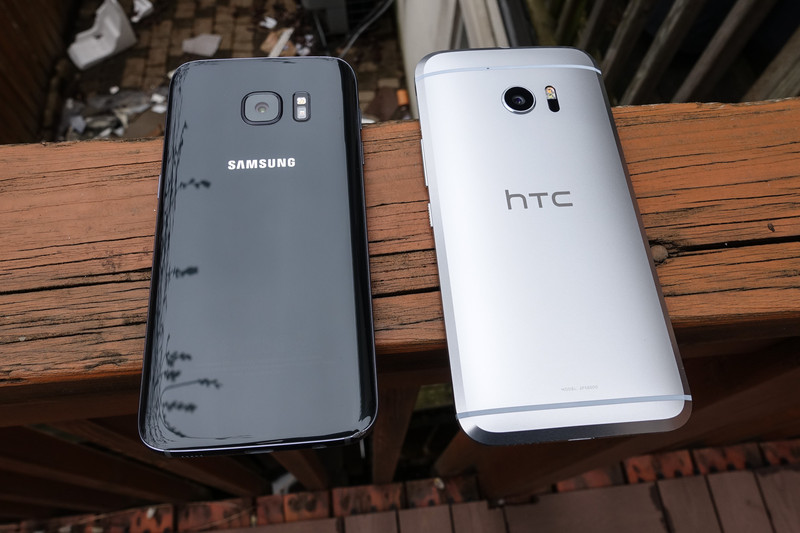
We’re only a couple of months into 2016, and it’s already been a great year for phones so far. Mobile World Congress back in February gave us the Samsung Galaxy S7, and more recently we got to see the launch of the HTC 10. With plenty of shiny new phones for you to play with, it begins to beg the question. Which new phone is your favorite?
Whether you have your eye on specs, taking great photos, or a battery that will keep you going, there is a brand new phone out that can help you out. With so many great options choosing just one can be difficult, but it’s what we’re asking you to do in the poll. This week we’ve got 5 options for you in our poll: “Samsung Galaxy S7”, “LG G5”, “HTC 10”, “Sony Xperia Z5”, and the “Huawei P9.”
What is your favorite new phone?
Are you a diehard fan of a new phone? Not a fan of 2016’s new smartphones? Be sure to pop into the comments and let us know.
WWDC 2016: Apple’s launches, announcements and more
Apple has officially mailed out invites to its annual conference for developers, and that means it’s time to take a closer look at what we expect the company to announce or launch during the main keynote.
Apple used WWDC 2015 to unveil iOS 9, OS X El Capitan, and a new version of watchOS. It also debuted the music-streaming service Apple Music as well as Beats1 Radio. It’s therefore safe to say we’ll see iOS 10 and a new version of OS X this year. We might even see updates to watchOS and tvOS.
Pocket-lint has rounded up all the rumours and speculation in order to paint you a better picture of what to expect, and we’ve added information about WWDC in general, including how you can attend.
Apple
WWDC 2016: What is it?
Apple holds an annual conference in California in order to showcase new software, software updates, and technologies. It calls this conference the Worldwide Developers Conference (WWDC), and it gears announcements toward developers.
WWDC 2016: When is it?
Apple confirmed on 19 April – following a tease through Siri – that WWDC 2016 will take place between 13 June and 17 June at the Moscone West Convention Center in San Francisco, where WWDC has been held for the last decade.
WWDC 2016: How can you attend?
WWDC is a popular event, so because of that, Apple opens ticket sales to developers through a lottery system.
Attendees are chosen randomly from a pool of applicants. Anyone can apply for a ticket between 19 April and 22 April at 10 am PST. Those who have won tickets will be notified by 25 April at 5 pm PST.
Keep in mind winners must still buy their tickets. WWDC tickets for 2016 are priced at $1,599 each. Also, in order to buy tickets, you must be registered members of Apple’s Developer Program.
WWDC 2016: Will Apple live-stream it?
Apple’s main keynote will take place on 13 June in the Bill Graham Civic Auditorium at 10 am PST. You can watch the entire event in real time over at Apple’s WWDC 2016 live stream page.
WWDC 2016: What will Apple announce?
iOS 10
The next update to Apple’s mobile operating system is thought to be called iOS 10. We don’t know much about iOS 10 yet, but it could feature major design changes, as the look and feel of the software powering Apple’s mobile devices hasn’t received a significant overhaul since iOS 7 was introduced in 2013.
While iOS 7 introduced a new design, iOS 8 brought new features like Continuity and Apple Pay, and iOS 9 included more Siri capabilities, improved search, iPad split-screen multitasking, etc. We expect iOS 10 to build upon iOS 9. It might even have an improved Photos app, according to Japanese site Mac Otakara.
Apple will likely preview iOS 10 at WWDC, but it won’t be publicly released until this autumn (alongside new iPhones – so long as Apple remains faithful to its past release schedule).
OS X Fuji
Although Apple just started shipping OS X 10.11 El Capitan last autumn, rumours about the next system update have been surfacing since early 2016. It’ll likely be labelled OS X 10.12, for instance, but it also currently goes by the codename Fuji. Apple may stop referring to its Mac operating system as OS X, however.
Alongside its Earth Day 2016 announcements, Apple updated this FAQ webpage to explain to consumers how it cares about the environment and what it is doing to report carbon emissions, among other things. While that sounds boring at first blush, 9to5Mac noticed something rather interesting buried in the text: Apple used the term “MacOS”.
9to5Mac has also claimed that Apple’s next major system update for Macs will likely arrive this autumn with an impressive expansion of Siri capabilities. Siri, which debuted on the iPhone years ago, has expanded to iPad, Apple Watch, and the Apple TV, so it makes sense that Apple would bring the assistant to desktop machines.
According to Japanese site Mac Otakara, Apple is working on new versions of the Photos app for both iOS 10 and OS X 10.12. The Photos app for iOS and OS X will be updated with features to bring them up to speed with the now-discontinued iPhoto 2.0.1 for iOS and iPhoto 9.6.1 for Mac, respectively.
- Apple OS X 10.12 Fuji: What’s the story on the next Mac system update?
WWDC 2016: Will Apple launch hardware?
It’s not very common, but Apple has used past WWDC keynotes to announce updated hardware (such as 2014’s Mac Pro, AirPort Time Capsule and AirPort Extreme, and new MacBook Air). As for this year, most of Apple’s Mac lineup is due for a refresh. Plus, a second-generation Apple Watch has been rumoured.
WWDC 2016: Want to know more?
Tune into Pocket-lint’s Apple hub for the latest news and analysis.
‘Bastion’ studio’s third game, ‘Pyre,’ prepares to party in 2017
Pyre tells the story of three wanderers living in exile in a vast purgatory called the Downside, fighting for the chance to rejoin their homeland. They travel and battle in the Rites, a secret competition for those in exile who wish to be absolved, fighting together with a blend of magic and dexterity. While much of the game remains cloaked in mystery, it’s due to hit PlayStation 4 and Steam simultaneously in 2017.
We do know a few things about Pyre: It’s a party-based role-playing game and the third title from Supergiant Games. It follows in the footsteps of Supergiant’s Bastion and Transistor, two beautiful and atmospheric experiences, though it seems to have a wonderful Banner Saga undertone. Supergiant will showcase Pyre at PAX East from April 22nd to 24th, in booth #8212. If you’ll be there, get your hands on some of this gorgeousness.
Source: Supergiant Games
Denon outfits Heos speakers with Bluetooth and high-res audio
Denon debuted its Heos line of speakers nearly two years ago, a set of audio gear that looked to rival multi-room setups like Sonos and others. Now Denon is giving the speakers a bit of a boost by adding some new features. The Heos lineup now sports the HS2 label, so you can tell them apart from the group that arrived back in 2014. That’s an important differentiation as the exterior design hasn’t changed. What has changed is the addition of high-res audio and Bluetooth connectivity.
As far as the high-resolution audio is concerned, Heos by Denon HS2 supports uncompressed WAV (PCM), ALAC (Apple Lossless) and FLAC music files up to 24-bit/192-kHz over network or USB. And soon, you’ll be able to play DSD and AIFF tracks, too. High-res playback is made possible by a 1.25GHz ARM A9 processor alongside 512 MB of flash memory and 256 MB of RAM. What’s more, you can add any of the new HS2 gear to first-gen Heos speakers that you already own without having worry about compatibility issues.
Denon is also keeping the pricing the same as the original Heos devices, despite the additional features and upgraded internals. The Heos 5 and Heos 7 are available now for $400/£349 and $600/£499, respectively. In July, you’ll be able to pick up the retooled Heos Amp ($499/£399) and Heos Link ($349/£299) which provide wireless amplifier and pre-amp options for any set of speakers. Last but not least, the Heos 1 and Heos 3 are both expected to arrive in the middle of the year, priced at $200/£199 and $300/£249 each.
Via: CNET
Source: Denon
Android security report shows why you should stick to Google Play
Many security-conscious types will tell you to only grab apps from Google Play if you want to avoid malware, and Google just provided a good reason why. The internet giant has released its second-ever annual Android security report, and it’s clear that how secure you are depends heavily on where you go for software. Attempts to install malware within Google Play dropped significantly between 2014 and 2015, with no more than 0.15 percent of users grabbing some kind of rogue code. However, that figure shoots up to 0.5 percent when you consider all Android users — Google says it saw an uptick in attempts to compromise devices beyond its app store.
A lot of that discrepancy stems from what Google can do to clamp down on malware outside its own walls. Google Play already had screening to prevent hostile apps from getting through, and Google says that it reduced the chances of installing those apps by 40 percent last year alone. There are security measures beyond the store (such as post-install app verification), but they’re limited — the same freedom that lets you use non-Google Play apps also lets people write malicious apps that Google can’t always catch. Many third-party app stores can’t or won’t screen as thoroughly.
Things should get better this year. Google’s monthly security updates are increasing the likelihood that you’ll be safe against attacks, even if the patches don’t always arrive on time or on every device. Also, the rising adoption of newer Android flavors (namely Lollipop and Marshmallow) both gives Google more control over web code and increases the odds of spotting suspicious behavior before it’s too late. You’ll know that these were effective if next year’s security report is all sunshine and roses.
Via: Recode
Source: Google Security Blog
Vizio brings tablet remotes and 4K to lower-cost TVs
You don’t have to splurge on Vizio’s higher-end P-Series TVs to get some of their nicer features. The company is trotting out new M-Series and E-Series sets that bring over some of the nicer features, even if they aren’t quite as eye-catching. Like its pricier counterpart, the M-Series now uses a 6-inch Android tablet remote (running the company’s SmartCast app) and supports Google Cast streaming from other devices in your home. It’s a big step up in quality over last year’s model, too. There are twice as many active LED lighting zones (64) for higher contrast ratios, and you’ll get luxuries like support for HDR video and Dolby Vision. Prices for the soon-to-launch, 4K-only line start at $850 for a 50-inch set, and scale all the way up to $4,000 for an 80-inch behemoth.
And don’t worry if you’re just looking for 4K without the frills — you’re covered as well. The updated E-Series now includes a few 4K models, starting at $470 for a 43-inch version and moving up to $1,700 for a 70-incher. You won’t get a tablet, HDR or Dolby Vision, and there are only 12 active LED zones. However, you’ll find both Google Cast and support for SmartCast through the devices you already have. The sets are rolling out today, so they might be your best bet if you just have to watch that 4K Blu-ray and can’t afford close to a grand for the privilege.

Source: Vizio (PR Newswire 1), (2)
My Miitomo addiction proves social media is just a game
I used to think there was no room for another social network in my life. I already have Twitter for public interactions and jokes, Facebook for connecting with friends and family, Instagram for sharing closeup photos of my dinner and Snapchat for when I feel like goofing around. Upstart social networks like Ello, App.net and Peach never resonated with me. But for the past two weeks, I’ve been flirting with a new contender. It’s called Miitomo, a game from Nintendo that’s really a social network in disguise. And my Miitomo obsession has made me wonder if the social networks I use the most often — Twitter, Facebook and Instagram — aren’t games of a sort too.
Released about a month ago in Japan and then in the US a week or so later, Miitomo is Nintendo’s first-ever smartphone app. Since it comes from the publisher of iconic titles like Super Mario Bros and the Legend of Zelda, you’d be forgiven if you thought Miitomo was a video game too. One of the first things you do in Miitomo is to create your “Mii,” a a cartoon avatar that’s been part of the Nintendo experience since the original Wii. But after tricking out your Mii with cool clothes and funky hairstyles, you don’t play a rousing round of Wii Tennis or go for the perfect strike in Wii Bowling. Instead, you’re supposed to add friends and interact with them.
Of course, Miitomo is not a pure social network like Twitter or Facebook. In it, you’re supposed to answer randomly generated questions: Examples include what you did last week, who your favorite celebrity is and what sort of nightmares you had as a kid. Your friends can then heart your answers or leave comments on them and vice versa. Social interactions are limited to just that. There’s no feed of free-form messages, and you can’t seek out a specific person’s stream of content. Rather, you have to read whatever responses happen to come up.

Despite these limitations, I’m starting to feel addicted to Miitomo. And no, it’s not just because of the cute factor. For one, I feel that I’m learning more about my friends than I would otherwise. Some of the answers I’ve read were their memories as a child or their hopes and dreams — answers to questions that I’d probably never think to ask. Also, I feel compelled to answer the same questions, not only to earn points but also because I wish my friends were this interested in me in real life.
Ultimately, one of the main reasons Miitomo is addictive is that it rewards you for being social. You get coins for each answer, and you get coins for reading answers from your friends. You also get points for sharing Miifotos — posed portraits of your Mii in action. You can then use this in-game currency to buy costumes or try your luck at a drop-chute challenge to see if you can win exclusive outfits. Miitomo feeds both the innate desire to connect with people and the more obvious high of getting points. In short, it’s gamified social interactions.
That got me thinking that using mainstream social networks like Twitter and Facebook is addictive for many of the same reasons. Though it’s not immediately obvious (Twitter doesn’t give you coins, and Facebook doesn’t offer ninja costumes), they offer a distinct feeling of reward just for socializing. There’ve been numerous studies that show we get a dopamine hit every time someone retweets us or likes our post on Facebook. Kristen Lindquist, a professor of psychology at the University of North Carolina, Chapel Hill, told the Financial Times that this sort of interaction feeds the reward center of the brain and is akin to how drug addicts feel when they take yet another cocaine hit. “You end up developing an association between Facebook and goodness, and that sustains the behavior,” she said.

I know this is the case for me. I often take care to construct witty or interesting tweets, hoping for a retweet or a favorite. I carefully compose each shot on Instagram, painstakingly going through each filter to see which one makes my homemade guacamole pop more on the screen. I give myself a little high five whenever more than five people like a post I published on Facebook. I’ll admit that this sort of instantaneous interaction feeds an inner desire for validation, and I’m self-aware enough to acknowledge that I try pretty hard to get it. Pathetic? Maybe. But some of you probably feel this too. Most of us attempt to present our best selves on social media to gain acceptance.
All of this is to say that I think Nintendo has tapped into what makes social networks so addictive. Instead of tweeting for hearts, I’m answering questions for coins. And while retweets and favorites are dependent on the fickle minds of the public, the coins in Miitomo are constant and reliable. Even without the validation of my peers, I still get some kind of reward from interacting with them. Right now, I have 10,900 coins in Miitomo. I’ve never received that many retweets, likes, stars or hearts on any other social network. And I can’t use those to buy a stylin’ pair of cat ears.
 AIVAnet