


FCC introduces rules to prevent 5G price hike
The FCC is planning to regulate wholesale internet rates charged by cable companies, a move that could indirectly affect consumer wireless data prices. Such business internet services, called “special access,” dictate what wireless carriers pay to supply data to cellular data networks. They also determine rates paid by business and government for services like ATMs, health networks and more. Tom Wheeler’s commission already regulates special access for phone companies like AT&T, but now it wants control of cable operators’ wholesale pricing, a move that has companies like Comcast up in arms (again).
The FCC became interested in the subject after looking into special access rates charged by telecoms AT&T, Verizon, CenturyLink and Frontier. It decided to force those companies to change certain tariffs within 30 days, finding them “unjust and unreasonable.” However, the commission has no power over the special access rates charged by cable companies, which only entered that market recently. After concluding its investigation, it elected to include them in the regulation fun for the first time.
The National Cable & Telecommunications Association (NCTA) and cablers like Comcast are (trying) to have none of this. Their main argument is that they just entered the wholesale market, and the FCC traditionally doesn’t regulate prices for newcomers. “In this upside-down new regime, a competitive cable provider that currently holds a 10 percent share in a market would be treated the same as a dominant incumbent provider serving 90 percent of that market,” says Comcast Senior VP David Cohen.

FCC Commissioner Tom Wheeler (Bloomberg via Getty Images)
The FCC, however, wants to ensure that prices don’t spiral out of control in non-competitive markets. In a statement, it said that “competition in this essential market is uneven … [which could] stifle the ability of business customers to innovate and compete.” It pointed out that excessive wholesale prices could have an especially negative effect on future 5G cellular networks, which will eat up a lot more data than LTE. The decision to regulate cable companies’ business data prices was unsurprisingly endorsed by telecoms like Verizon and Sprint, too.
The decision (proceeding 05-25) was, unsurprisingly, passed by a narrow vote, with the Republican commissioners protesting it robustly. The FCC doesn’t plan to regulate all special access markets, however. Rather, it’s coming up with a way to test regional markets, and both cable and telecom operators considered to be in non-competitive areas would see stricter regulations. It will take several months to determine the final rules, and the commission is now taking public comments.
Japan’s most powerful X-ray satellite is dead
JAXA has given up trying to rescue its doomed X-ray satellite. The Japanese space agency has announced that it’s discontinuing Hitomi’s operations. Previously known as Astro-H, the x-ray observatory was designed to study black holes, galaxy clusters and other high-energy phenomena. Unfortunately, it started tumbling and spinning through space shortly after launch, ultimately losing contact with its ground team. JAXA thought the $300 million spacecraft tried to re-establish contact, but in its announcement today, the agency revealed that the signals it received were from another source altogether.
According to Nature, Hitomi might have perished due to a basic engineering error that started a sequence of unfortunate events. Apparently, one of the systems designed to keep it facing the right direction went on the fritz when Hitomi passed the South Atlantic Anomaly. That’s a region over South America that exposes satellites to extra doses of radiation. After that particular system stopped working, the observatory started relying on a set of gyroscopes to face the right direction. The bad news was the gyroscopes weren’t working properly, as well, so the space observatory spun out of control. Hitomi fired a thruster in an effort to right itself, but it fired in the wrong direction, causing the spacecraft to spin even faster.
In the end, Hitomi broke apart and lost its solar array paddles that were supposed to harness energy for a decade of data-gathering in space. Without those paddles, JAXA cannot restore the observatory’s functions. The agency’s biggest lost, however, was the satellite’s impressively accurate X-ray calorimeter, which took three decades and three iterations to perfect. It would take $50 million and three to five years to rebuild it for another mission.
Despite Hitomi’s untimely death, it was able to measure the speed of gas emitted by the Perseus galaxy cluster. That can’t make up for JAXA’s loss, but at least the satellite was still able to contribute to our quest to better understand the universe.
Part of JAXA’s statement reads:
“JAXA expresses the deepest regret for the fact that we had to discontinue the operations of ASTRO-H and extends our most sincere apologies to everyone who has supported ASTRO-H believing in the excellent results ASTRO-H would bring, to all overseas and domestic partners including NASA, and to all foreign and Japanese astrophysicists who were planning to use the observational results from ASTRO-H for their studies.”
Via: PopSci
Source: Nature, JAXA
YouTube is changing Content ID to be kinder to video creators
YouTube’s Content ID was meant to make things easier for rightsholders who wanted to ensure that their work wasn’t stolen and reuploaded. However, it never really worked out like that. The reality is that users, whether they are prominent or not, have repeatedly had their earnings frozen after publishers began issuing monetization requests for using small video clips that are legally covered under fair use. Now, Google has decided it wants to “help fix that frustrating experience,” by developing a new solution that will allow channel owners to continue earning from their creations while they fight a potential dispute.
According to David Rosenstein, Content ID Group Product Manager at YouTube, the Content ID update will recognize when a video creator and a rightsholder want to monetize a video and then siphon any money made from video views into a separate purse. YouTube can determine whether a publisher’s claim is valid and pay that money to the deserving party.
As game critic Jim Sterling recently pointed out, games publishers have been trying to make some extra money by flagging channels that use small clips of in-game footage. However, he found that if he invoked more than one claim from different companies, their requests would cancel each other out. Fair use allows creators to include copyrighted work if it’s used for education, criticism or analysis, but Content ID, before today’s announcement, would immediately award any of the revenue generated to the claimant.
Google intends to deploy the new system “in the coming months,” meaning YouTubers will have to continue tiptoeing around the Content ID algorithms for a little while longer.

Via: The Verge
Source: YouTube Creator Blog
Gfinity’s eSports broadcasts now offer multiple perspectives
While Gfinity is known for its eSports stadium in London, the company is also committed to building an audience online. In addition to streaming on Twitch, the company has now launched a new GTV player in open beta. With this, you can have multiple feeds open and change each window depending on what’s important to you. During a Counter-Strike tournament, for instance, I could switch between the “main stream” shown on Twitch, dedicated feeds for each team, and a few player facecams. In addition, I could change the audio between full broadcast style commentary and strictly in-game music and sound effects.
For the viewer, it’s a more flexible and customisable experience than Twitch and YouTube. If you’re a fan of a particular team, or want to gather tips on how they play, you can have a dedicated player feed as your main window. Or, to make it feel more like an “event,” you might want to switch in a couple of facecams during a knock-out Street Fighter competition like Evo. Gfinity also offers an integrated chat window on the right-hand side, meaning you can comment on the game (or hand out some friendly smack-talk) with some like-minded fans without leaving the action.

Gfinity is gambling at the moment. The company lost £3.6 million (roughly $5.3 million) during its first full year of operations, however its revenues also climbed to £560,828 ($820,587). It’s burning through cash in the hope that it can grow to a size where it’s profitable. That will need to come through physical and digital ticket sales, as well as its partnerships with advertisers, sponsors and league organisers. The arena in Fulham Broadway shows promise, and its ESPN-style commentary is getting better. Along with its new Tournament Builder app for the Xbox One, the company is slowly establishing itself as a premier eSports provider.
Via: MCV
Source: Gfinity
Atari founder Nolan Bushnell is making mobile games
Atari founder Nolan Bushnell has teamed up with a small Amsterdam studio to develop and publish new mobile games. Bushnell created the iconic Atari brand in 1972, and oversaw the release of classic systems such as the Atari 2600. He was ousted from the company six years later and ran a bunch of other businesses before returning to Atari’s board of directors in 2010. Spil Games, meanwhile, is a relatively unknown name that specializes in mobile and browser-based titles. Bushnell has signed on to develop three games with the studio, with the first scheduled for release in early 2017. We’ll soon see if he still has some of that old Atari magic.
Source: Gamasutra
ICYMI: 3D-printed instrument, Humanoid diver and more

Today on In Case You Missed It: Free 3D plans to create your own plastic violin should make the instrument a bit easier to take up; Stanford roboticists created a remotely-operated humanoid diver that can be haptically controlled from afar by its pilots, meaning they can feel what the diver does. And a table tennis projector can coach you on improving your lousy game, so nothing like this ever happens to you.
Sick of those updates popping up during important moments? It can’t be as bad as being live on-air. As always, please share any great tech or science videos you find by using the #ICYMI hashtag on Twitter for @mskerryd.
Sling adds Spanish TV to its multi-stream beta
Sling TV’s service is great for cord-cutters, but not ideal for families who like to watch different stuff at the same time. It recently launched a multi-stream option (in beta) that allows viewing on up to three Sling-TV supported devices at once, but so far content has been limited to Fox and a few other channels. However, Spanish viewers now have a bunch of new options thanks to the company’s Best of Spanish TV-Beta that brings multi-stream viewing of channels like Azteca, beIN SPORTS, beIN SPORTS en Español, Cinelatino, CineSony, De Pelicula, Pasiones, Teleromántica, UniMás and Univision.
The service is among the new “Extras” options, which include Hollywood Extra-Beta, Lifestyle Extra-Beta and World News Extra-Beta. Each of those is $5 per month, while the Cinemax Extra-Beta is $10 and HBO Extra-Beta runs $15 a month. In addition, Viacom channels like Comedy Central will soon come to both the single- and multi-stream options. Those prices are on top of regular subscription prices — both the single and multi-stream options run $20 per month. That might make multi-stream seem like a bargain, but it doesn’t include some important channels like ESPN and Disney. However, the Spanish Extra pack is identical for both single- and multi-streams.
Source: Sling TV
Apple Looks to Streamline Clarification of Awkward Autocorrect Messages in New Patent Application
The United States Patent and Trademark Office recently published a new patent application originally filed by Apple last July, detailing a system in which the receiver of an iMessage could be notified when pieces of the message are scrambled incoherently by the company’s autocorrect system (via AppleInsider). The patent isn’t a proactive solution to enhance the sometimes spotty nature of autocorrect, but simply a way to let the person on the other end of the text know what’s happening, and give each user tools to better explain what they meant.
Apple describes a new user interface that would highlight any words or phrases in a message that have been siphoned through autocorrect. The system wouldn’t be advanced enough to reveal the specifically intentioned words the sender meant, but at least give the receiver a heads up about which parts of the text were corrected.
A design of the sender-side UI
Parts of the patent reveal iterations of the idea that can streamline the clarification process, as well. For example, a description of the sender-side user interface includes a prompt that pops up — after a user taps on the autocorrected word — with an option to “Send clarification” to the receiver. The canned message fills out the phrase, “I sent , but I meant [correct word].” If they want a complete do-over, the user could also just opt to re-send the entire message.
 A design of the receiver-side UI
On the receiver-side user interface, if the sender isn’t opting to fix the issue themselves, the other person can “Request clarification” by tapping on the highlighted autocorrect word or phrase. The automated message is similar to the previous sender-side phrase, asking “You sent . What did you mean?”
If implemented in a future version of iOS, the autocorrect highlight patent could be similar to the way iOS currently underscores vague references to dates and times when users send and receive text messages. Apple’s new patent could be slightly more helpful for most users than that feature, however, especially given the speed with which iPhone users have grown accustomed to texting on the device, and how frustrating it can be to realize autocorrect interfered with your message.
Like most patents, it’s still advised to be wary of how long it’ll take Apple to implement the autocorrect notification system into iOS, if it ever will. Still, it’s easy to see how useful and streamlined such a feature could be, without completely taking out much of the humorous — and sometimes awkward — mishaps for which autocorrect has become famous.
Tag: Patent
Discuss this article in our forums
Grab the Wileyfox Swift for just £99 on Amazon UK today
Amazon UK is selling the Wileyfox Swift for just £99. The deal is valid on the white color variant of the phone, and represents a £30 discount from its usual retail price of £129.
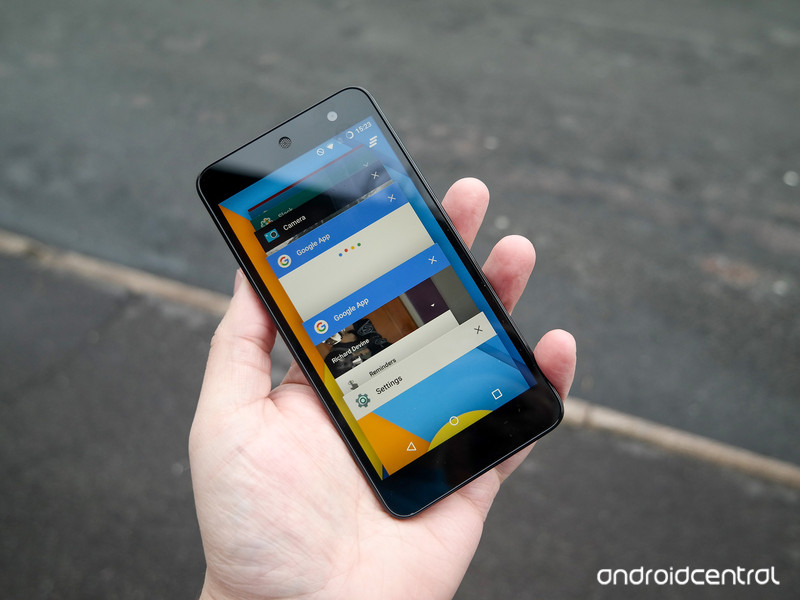
The phone features a 5-inch 720p display, quad-core 1.2GHz Snapdragon 410, 2GB of RAM, 16GB storage, microSD slot, 13MP camera, 5MP front camera, LTE, and a 2500mAh battery. On the software front, there’s Cyanogen OS 12.1 on offer.
The promotion is valid for one day only, so if you’re in the market for a budget unlocked phone with decent hardware, check out the Wileyfox Swift from the link below.
See at Amazon
MORE: Wileyfox Swift review
Huawei Mate 9 could have a 20MP dual camera and blow P9 out of the water
We’ve only recently seen a couple of flagship Huawei phones launched, the Huawei P9 and P9 Plus, but there is talk of another device coming from the Chinese company that could overshadow them – at least where the camera is concerned.
The Huawei Mate 9 could come with 20-megapixel dual camera tech, says industry analyst Pan Jiutang. That would suggest its sensors would be far better than those in the P9, which features 12-megapixel dual cameras.
Considering the company has been shouting from the rooftops about the P9’s photography skills – especially about its partnership with Leica – an enhancement would be more impressive still.
READ: Huawei P9 and P9 Plus camera gallery: This is what the dual-lens smartphones can do
Jiutang also claims that the Mate 9 will be the first handset from the manufacturer to feature the Kirin 960 chipset. The processing unit is rumoured to use ARM Artemis cores for the first time and an octa-core architecture.
It is also expected to support Cat 12 LTE connectivity.
Gizmochina suggests that the Huawei Mate 9 will launch in late 2016, which would make sense considering the Mate 8 was announced late last year. It’s worth noting though that Pan Jiutang is just an analyst and although he might have made several accurate calls in the past, the specs above are only based on his considered opinion.
READ: Huawei Mate 8 review
 AIVAnet