


Google Hangouts for iOS Gains Share Extension and Low Power Mode Support
Google has updated its Hangouts app for iPhone and iPad with a native iOS Share Sheet extension and support for Low Power mode.
Google Hangouts for iOS enables users to send and receive instant messages and group messages, share photos, and make video and voice calls using the company’s cross-platform communication service. Users can also connect up to Google Voice via the service to link their personal phone numbers, enable SMS and activate voice recognition.
The Share extension in version 9.0 of Hangouts means users can now share text, links, images, and video from other apps on their device, while the Low Power support essentially means that the app will now automatically turn off video when the device’s battery is depleted to 20% or lower.
The Share extension can be activated by tapping the Share button within the app, selecting “More” at the end of the Share Sheet, and toggling the switch next to Hangouts to the ON position.
Google Hangouts is a free download on the App Store for iPhone and iPad. [Direct Link]
Tag: Google
Discuss this article in our forums
Deadpool Runs Riot in iTunes Store
Gleefully profane antihero Deadpool has invaded movie pages and posters in the iTunes Store to celebrate the release of his frequently fourth-wall-breaking comedy action film.
The rogue Marvel Comics character’s latest act of defiance appears to involve defacing or photobombing posters and preview pages in the Movie section of the Store, with everything from 127 Hours to Taken getting the snarky Deadpool treatment.

Deadpool stars Ryan Reynolds as the former Special Forces operative turned freakishly self-aware superhero. The movie has set a record for highest-earning R-rated movie ever, earning a total of $746 million globally. A sequel is currently in production.

Deadpool can be purchased on the iTunes Store in HD for $14.99 which includes access to iTunes Extras. The movie will be available to rent from May 10.
Tag: iTunes Store
Discuss this article in our forums
Dyson Supersonic Release Date, Price and Specs – CNET

Luke Westaway/CNET
Dyson is best known for its high-end vacuum cleaners, fans and Airblade blow dryers — so it’s perhaps no surprise that the British company is turning its turbine-centric attention to the humble hairdryer.
The Dyson Supersonic is slimmer, lighter and quieter than just about any hairdryer out there, but expect to splash out — this quirky bedroom accessory will set you back £300 when it goes on sale in June. No US or Australian launch plans have been confirmed, but that sum equates to around $440 or $AU570.
Totally tubular

This demonstration model shows what the inside of the Supersonic looks like.
Luke Westaway/CNET
Most hairdryers see the air-generating tech loaded into the head of the device, but Dyson’s opted to squeeze its own-brand motor into the stalk instead, leaving the Supersonic’s head free to exist as a great big cylinder. Dyson enthusiasts will recognise this look from the company’s range of blade-free desk fans and heaters.
This is another outing for Dyson’s Air Multiplier tech, which sees a torrent of air forced out of the narrow band that surrounds the edge of that circle. As an enthusiastic user of hairdryers, I can testify that the air the Supersonic pushes is really quite impressive, bearing in mind its small size. It’s remarkably quiet too, emitting more of an insistent hiss than the angry roar you get from many hairdryers.

The design is rather striking.
Luke Westaway/CNET
Magnetic attachments

Look on its range of nozzles, ye mighty, and despair.
Luke Westaway/CNET
The Supersonic comes with three nozzles, which stick onto the end of the dryer with the inestimable power of magnets. Those extras include a smoothing nozzle for gentle drying, and a diffuser, which disperses air broadly through your luscious locks.

Buttons provide plenty of control when you’re deep in the style zone.
Luke Westaway/CNET
The Supersonic comes with a healthy number of controls, triggered via a series of buttons on the rear side of its tube-shaped head. With mechanical keys you can choose between four heat settings and three airflow settings, to tailor your blow-dry. There’s a button for a shot of cold air too, if you want a blast of air to lock your styled ‘do in place.
Pricey

This included rubber mat doesn’t make the high price any less terrifying.
Luke Westaway/CNET
If you’re the kind of person who gets excited by hairdryers, then Dyson’s Supersonic should have you on the edge of your seat. In my brief hands-on time it felt like a very capable dryer, but this unusual bit of gadgety comes with a wince-inducing price tag. At £300 (which equates to about $440 or $AU570, though only UK prices have been confirmed so far) it’s drastically more expensive than even high-end rival dryers — a hairdryer from respected brand Parlux can be yours for less than a third of that online.
Whether Dyson’s tech can still be good value at such a high cost remains to be seen, but for those who spend a lot of time fussing over their hair, it’s interesting just to see a new take on an established bit of household tech.
The Dyson Supersonic will be on sale in Japan imminently, with a UK release in June. There’s no word yet on a US or Australian release, but we’ll update this First Take as we learn more.
Moto 360 Sport is now available in India for ₹19,999
Motorola has launched the Moto 360 Sport in India. The fitness-focused smartwatch is now up for sale on Flipkart for ₹19,999.

The watch offers a 1.37-inch screen with a resolution of 360 x 325, with the AnyLight display allowing for outdoors visibility. There’s a 1.2GHz Snapdragon 400 powering the watch, along with 512MB of RAM, 4GB eMMC storage. The Moto 360 Sport also offers a heart rate sensor, along with built-in GPS.
The version that’s up for sale in India comes with a black silicone band. Interested in what’s on offer? Head down to Flipkart to check out the Moto 360 Sport:
See at Flipkart
MORE: Moto 360 Sport review
Xiaomi Redmi Note 3 and Mi 5 open sale kicks off in India
Update: That didn’t last long. All products are now showing out of stock, with the sale lasting a few seconds. We’ll let you know of the next flash sale once we get more details.
Xiaomi’s conducting an open sale of the Redmi Note 3 and the Mi 5, making the phones available for purchase without a registration for the first time. The sale commences later today, April 27, and if you’re in the market for either handset, be sure to head to Mi.com at 2PM IST to get your hands on Xiaomi’s latest.
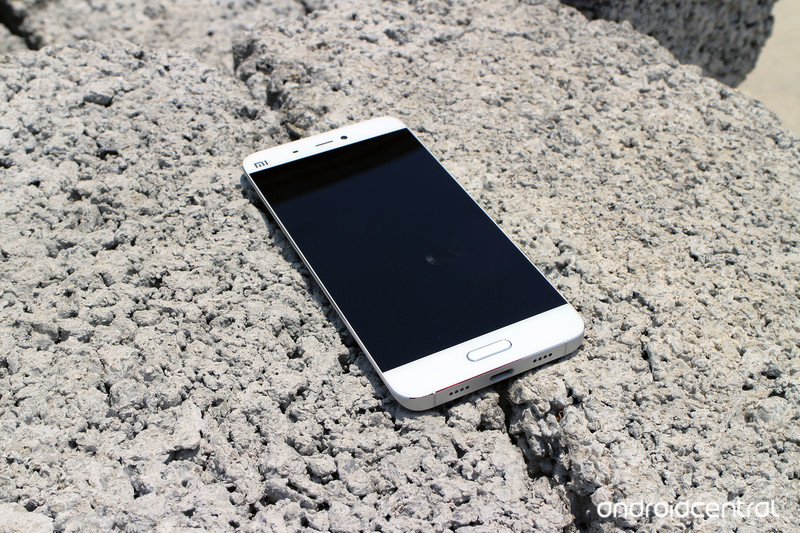
The 20000mAh Mi Power Bank is also up for grabs for those without a registration. The Redmi Note 3 is available for ₹9,999 for the 2GB RAM/16GB storage version, and ₹11,999 for the variant with 3GB RAM.32GB storage. The Mi 5 will set you back ₹24,999, offering 32GB of UFS 2.0 internal memory and a 1.8GHz Snapdragon 820 SoC. The 20000mAh Mi Power Bank is up for grabs at ₹1,699.
Considering the sheer number of users that are attracted to these sales, we suggest you log in to your Mi account a few minutes ahead of the 2PM blitzkrieg. Be sure to check out our Mi 5 review from the link below to see what you’re getting with Xiaomi’s 2016 flagship.
What are you guys interested in picking up?
See at Mi
MORE: Xiaomi Mi 5 review
Nintendo NX release date revealed but won’t be at E3 2016
Nintendo has officially revealed the date it plans to release its next home console. The Nintendo NX will hit stores in March 2017 around the world.
In addition, the company has confirmed that the “NX” name is still just a codename, it might be different when formerly released, and that it is different to other consoles on the market, including its own.
“For our dedicated video game platform business, Nintendo is currently developing a gaming platform codenamed ‘NX’ with a brand-new concept. NX will be launched in March 2017 globally,” said the Japanese gaming giant in its annual financial report.
Nintendo also hints that its forray into mobile games will continue after the five titles it will launch over the next year. It will continue growing its “smart device business so that it is profitable”. It will also continue to enhance “features of our new membership service called My Nintendo”.
It has revealed that the next two mobile games, after the successful launch of Miitomo last month, will be based on its Fire Emblem and Animal Crossing franchises.
READ: Nintendo NX: Release date, specs and everything you need to know
The Nintendo NX console has been rumoured for a while, with some speculation suggesting an E3 launch or even before. However, Nintendo itself has stated that the console will not be at E3 2016 and will instead “be unveiled later this year”.
Nintendo launched Wii U at E3 more than a year before it became available and look what happened to that.
Still no Mario for iOS or Android, Fire Emblem and Animal Crossing instead
Nintendo has revealed what its next two mobile apps will be but there’s still no sign of Mario.
The company has revealed the two games that will follow its first app, Miitomo, and neither of them star the moustachioed plumber.
That’s not to say they won’t be popular in their own right though. The next two apps will be based on the Fire Emblem and Animal Crossing franchises. The latter could certainly prove to be a massive hit on iOS and Android for sure.
Fans of Fire Emblem shouldn’t expect a similar game to Fire Emblem Awakening or the forthcoming Fates on 3DS. Instead, the mobile game will be “more accessible”.
READ: Nintendo NX release date revealed but won’t be at E3 2016
The iOS and Android version of Animal Crossing on the other hand will be intriguing for many as it will be “connected with the world of Animal Crossing for dedicated gaming systems”. That means your actions on one game should directly affect the world in another.
Both games are coming this autumn and represent the second and third releases in Nintendo’s previously announced five mobile apps strategy. There’s still hope for Mario yet.
Nintendo has even hinted it will continue releasing mobile games in future by stating in its annual financial report that it hopes the mobile business will grow and be self-sustaining.
READ: Nintendo NX: Release date, specs and everything you need to know
LG G5 SE is the new alternative to the flagship modular smartphone
The LG G5 is still newly unleashed and already a slightly varied version has appeared, dubbed the LG G5 SE.
The LG G5 SE was reviewed on Russian site Hi-Tech but has otherwise had no official details pushed out.
While the SE is a slightly less high powered version of the G5 it still packs in impressive specs that make it better than a lot of other phones right now. It also looks near identical to the LG G5, USB-C and all. And, of course, it features the G5’s modular ability to swap out accessories.
The LG G5 SE has the same 5.3-inch QHD IPS display as the G5 meaning a 2560 x 1440 resolution. It also has the same 16-megapixel dual camera setup and 2800mAh battery plus it runs Android 6.0.1 Marshmallow.
What’s different in the G5 SE is the processor which is a Qualcomm Snapdragon 652, rather than the 820 found in the G5. The SE also has a lower 3GB of RAM rather than the 4GB found in the flagship. Despite these being small changes the reviewer does mention that while trying to record 4K video the handset did struggle.
The price is listed as 50,000 rubles which is about £518. So it’s up there with the other flagship phones for pricing and is actually more than the £500 G5, leading us to suspect this is a Russia only release, for now.
READ: LG G5 review: Modular misfire?
The Legend of Zelda Wii U delayed until 2017, Nintendo NX version confirmed
After Star Fox Zero, the next (and possibly last) big name Nintendo title for the Wii U is The Legend of Zelda. However, it’s in serious danger of missing the bus, as it has been put back again until 2017.
Originally planned for a 2015 release, the upcoming RPG has already had its release date shifted a few times. First to 2016 and now to 2017.
The latter decision has seemingly been made to make it a launch title for Nintendo NX, with the company confirming that it will be a simultaneous release for Wii U and NX next year.
Both versions are being developed “in tandem” and developers “need more time to polish the game”.
The Nintendo NX has officially been given a March 2017 release date, so we might see The Legend of Zelda on both consoles around that time.
READ: Nintendo NX: Release date, specs and everything you need to know
Better news is that visitors to E3 2016 in Los Angeles in June will get the chance to play the Wii U version of the game for the first time. It will be on Nintendo’s booth at the show.
Strangely, it will be the only game playable on the show floor, with Nintendo revealing that it has changed its E3 strategy.
“It will be the only playable game Nintendo presents at the show, in order to provide attendees a complete immersion,” it said in a statement.
READ: E3 2016: All the launches, games and consoles to expect
Jaguar XE R-Sport review: Everyday superhero?
In this game of ours we can’t help forming an opinion of a car before we’ve driven it. We do that based on how it looks, how the spec shapes up, and even, to a degree, the opinions of some trusted friends and journalists. All of whom have raved about the new Jaguar XE and its star qualities.
The XE is up on a pedestal from the off, then. But there’s also that age-old saying: never meet your heroes. They’ll always disappoint you. Is the same true with cars? We wonder whether the new Jaguar XE could be a case-in-point, or are the raving critics right?
We had a week to find out with the Jaguar XE, but in its go-faster R-sport trim, mixed with the lower power output 2.0 diesel engine.
Jaguar XE review: First impressions count
A good test of a car today is its ability to make you feel at home; for it to be intuitive to use and give you confidence behind the wheel despite any unfamiliarity.
Pocket-lint
With that in mind we collected the XE while out at another event, some 200 miles from home and, therefore, with about 4 hours for it to make a good first impression.
It got off to a good start. There’s little worse than rush hour London traffic. But with the satnav fired up, a full tank of diesel and an 8-speed automatic gearbox the XE is the sort of car that should make a decent fist of tedious stop-start traffic.
We’re sat on jet black leather chairs, too, which in this test car were both heated/cooled and power-adjustable.
The hour we (predictably) spend getting out of central London does little to help us form a driving impression, but provides useful time to drink in the XE’s interior and get to know its new infotainment system.
Jaguar XE review: InControl tech
Following the Land Rover Discovery Sport, the XE was the first car in JLR’s range to receive the company’s new InControl multimedia system. This comes in two versions: InControl Touch (as tested here) with an 8-inch touch screen and a largely analogue gauge cluster; and InControl Touch Pro, with a 10-inch touch screen and, oh, the same cluster.
Pocket-lint
On the XF and F-Pace go with the Pro option and you get a digital, customisable cluster. But the XE’s denied that and sticks with the analogue setup regardless of what screen size you choose.
Given that we’ve repeatedly lambasted JLR’s old touchscreen interface, we were looking forward to trying InControl. And it’s fair to say it’s a massive step forward.
It’s mostly easy-to-use and we like the use of colour within the user interface, which helps when moving between satnav, phone, media and car. On most screens the buttons are much bigger and easier to hit than before and it’s quicker to respond than before and feels more accurate, partly because the screen is capacitive, multitouch technology. The navigation system is easy to enter full UK postcodes into, and you can control most things from the steering wheel.
The display has an 800×480 pixel resolution, which is about the standard for this class now, but move up to InControl Touch Pro and you jump to a decent 1280 x 542 (besting the Audi A4’s MMI Navigation Plus, which runs 1024 x 480px).
With the £500 optional Meridian stereo system fitted to our car, media and radio played out crisply and with very decent bass to a high volume.
Nags? The processor on this lower-level system must be quite low-spec as there’s definite lag when moving between screen menus. And on some screens the graphics get a bit busy and child-like which doesn’t fit the premium vibe. There’s no Google Streetview or Earth overview (hello Audi), or CarPlay/Android Auto to test out, at least on our test car — thought it is coming. The information display in the cluster is still limited in what it shows, and bears the graphics that JLR has had for a long time, so feels like it’s from a different era to the main screen.
Overall, however, the new InControl system is a big and welcome step forward. More importantly, the system from our test car comes as standard. For speed, clarity and premium feel, both BMW’s Pro Media system and Audi’s MMI+ best it and work via a rotary controller which we think is safer and preferable to touchscreen when on the move. But these two competitors cost you at least a grand. (Caveat: On the R Sport model adding InControl Pro is a £1,100 option, bundled with the £500 Meridian Hi-fi upgrade, totalling £1,600).
Pocket-lint
One option our test car came with, which we’d suggest you skip, is the head-up display (HUD). This is a new, laser-based system which projects direct onto the windscreen (rather than a secondary pop-up screen). However, we found the display quality mediocre, and the data — it shows speed, speed limit, gear and sat-nav turn-by-turns — too crammed together. Most annoyingly, we found when driving swiftly that the nav turn arrow — which progressively fills itself in as you approach the actual turn — just didn’t keep up with our real-world turns. It’s a really nice UI idea, it just doesn’t quite work yet.
Jaguar XE review: In the hot seat
Having spent half an hour mostly fiddling with InControl Touch — establishing it paired our iPhone 6 easily and made calls faultlessly — we were still crawling in traffic and our attention turned to the XE’s interior.
Our car was in an all-black colour scheme, which in our view doesn’t do it huge favours. If you’re after airiness, throw some cream or red leather colourways at the XE (£0 cost option) to offer yourself a little in the way of light relief.
Pocket-lint
Despite not sitting as low in the driver’s seat as you feel you do in a BMW 3-Series or Audi A4, there’s a greater sense of being ensconced in the Jag, because the XE has a high waistline accentuated by a tide-line design feature which wraps around the base of the windscreen and onto the doors. The core volume of the dashboard sits below it. What this creates is a sense you’re in quite a small, tight cockpit environment. Which is really nice when you’re on your own or in the mood for a bit of fun driving. There’s plenty of space for 6ft 5 bodies in the driver’s chair and the whole thing makes the car shrink around you.
But it is true this cabin — considered beyond the driver’s seat at least — is smaller than the competition. The relentless black doesn’t help. The plastics and fixtures, with the exception of the chunky aluminium air-vent surrounds in the end of the dash, are a bit low rent, too.
Perhaps the biggest issue for many buyers will be the fact that the boot’s smaller than the German competition. Jaguar has recently said it’s not going to do an estate version of the XE either, so if you need extra family space and want a Jag, for now you might need to look upmarket to the F-Pace.
Jaguar XE review: Ingenium
The XE is Jaguar’s first mid-sized executive saloon since the X-Type. Thankfully, it’s not based on a Ford Mondeo platform like that old car was, but instead JLR’s aluminium-intensive rear drive platform.
The big news for XE is the new “Ingenium” four-cylinder engine range. The diesel options, which over 90 per cent of buyers will choose, comes in two guises: low-power 163-horsepower (as tested here), and higher-output 180-horsepower.
Pocket-lint
The new engine is torquey, well-matched to the brilliant ZF 8-speed auto gearbox and hits 60mph in 7.7 seconds, keeping it competitive. It also chucks out just 106g/km in this R-Sport guise, which is better than an equivalent Audi or BMW.
This is all good news if you’re a company car XE buyer, as for the first time there’s no penalty — actually probably an advantage — tax-wise, in choosing a Jag over a Beemer or Audi.
Sense a “but” coming? Well, it arrives in the form of noise, refinement and some spec-for-spec decisions to no doubt achieve that low CO2 score. Put simply, our biggest issue with the 2.0d engine, and the XE in general as tested here, is noise and lack of refinement.
The engine’s clattery at start-up and when the stop-start does its thing it sends a shudder through the cabin. When you rev it, it gets loud and coarse. It reminds us of Merc’s much older 220 variant diesel in its noise and slightly old-school approach. Which, overall, is a shame for Jag because otherwise the XE is great to drive, decently refined on the motorway, but the engine remains a constant background thrum throughout the experience. It did give us over 51mpg over 600-miles use though.
And it’s all a bit odd, because having tried both the higher-spec 180bhp engine and the Ingenium engine in the XF and Land Rover Discovery Sport, this test XE seemed markedly worse than the others, noise-wise. Potentially just a one-off duff then, but our primary advice would be, if you’ve the extra cash go for the higher-output 180. This might sound like typical journalist “go faster!” speak — but there’s more than just the driving experience at play here.
Firstly, the higher-power engine is rated at the same CO2 level, so there’s only the extra list price to add to your tax penalty, and as a private user, none at all in terms of actual car tax. Of course, the 180 is a little faster but it also opens up some choice options, notably bigger alloys. The 17-inch (no cost option) affairs on our R-Sport look decidedly puny compared to BMW’s M-Sports which many seem to take in 19-inch, and on the lower-power engine you can’t even option 18s, whereas they’re standard on the 180bhp R-Sport.
Pocket-lint
So were it our money, that’s what we’d do: spend the cash on the bigger engine and wheels, because then you’ll have an XE that drives better and looks nicer. The bigger engine is only £700 extra with this particular spec.
Jaguar XE review: In the spotlight
It’s spec-sensitive then? In terms of looks, we’d say so. Drive wise, however, it’s very much about the engine because otherwise the XE is right at the top of its class. Jaguar has consistently produced the best steering cars in their class for a few years now, and the XE is no different. The ride is good too (bear in mind those 17-inch wheels on our car help — but Jag can setup bigger wheel arrangements well, we’ve found).
Being rear-drive, the Jag level-pegs with the BMW 3-Series in the fun-to-drive stakes. The newly refreshed 3-Series feels slightly keener and with its adaptive dampers and big wheels rides impressively. The Jag steers better, rides well without fancy dampers and is neutral-to-oversteer-led if you prat about with it. Neither have quite the refined, cruiser qualities of an Audi A4, with its amazing sound deadening. Think carefully about the sort of driving you do before picking. But ultimately there’s not a dud in this class.
Pocket-lint
Specification-wise, in R-Sport trim the Jag comes well equipped. Even basic SE spec gets you the 8-inch InControl media interface, Navigation and Traffic sign/speed limit recognition, Bluetooth, DAB and rear parking sensors. Prestige spec adds leather and heated front seats; this R-Sport throws in Xenon lamps with the J-blade running lamps, sports suspension and body kit, and (on the higher output engine) the 18-inch wheels.
Options we’d consider? The Meridian sound system at £500 is an excellent buy, although we’ve no normal system to compare it to — the standard setup might be fine. The panoramic sliding roof at £1,020 is expensive but brings needed light into the cabin, while Jet light Taurus (cream) or red leather (£0 cost options) is something we’d definitely do. A parking pack to add front sensors and a rear camera is £545.
Beyond that list the XE doesn’t really need speccing up — with only keyless entry being a real nice-to-have standout on the options list (£515). Note that, especially in R-Sport spec, the XE doesn’t feel de-contented in the way a 3-Series or A4 can. Big thumbs up from us for that, Jaguar.
Verdict
Jaguar has been away from this class of car for some time, and over our week with the XE we established it has made a car that’s a really decent competitor to the German competition. If you like driving, really want to buy British or have been through a series of Audis, Mercs and BMWs and then this is definitely a car we can recommend without much hesitation.
For us, three points pull it down. Despite its newness, InControl isn’t up to the standards set by German infotainment systems and the new tech on this car (like the HUD) doesn’t work that well. The XE is also notably less spacious than an Audi A4 (particularly), but also 3-Series or C-Class, and the cabin doesn’t have any of the specialness we’d like, nee expect in a Jag — especially in all-black.
But the biggest fly in the ointment is this lower-power diesel engine’s refinement, and the small wheels it dictates which spoil the looks. So as tested, the XE makes for a very solid four star car. However, based on other (admittedly brief) experiences, and given that it’s just a £700 extra in R-Sport spec, with the higher-output engine the XE would gain a half star extra.
The Jaguar XE R-Sport doesn’t quite attain superhero status then, but it can hold its head high, because it mostly level-pegs with the much longer-established German competition.
 AIVAnet