


Crashlands is now available on Android; let the crafting and survival begin
(adsbygoogle = window.adsbygoogle || []).push();
For the longest time, we’ve been talking about a game called Crashlands from one of our favourite indie developer studios, 3-man team Butterscotch Shenanigans (BS). The game is a crafting/survival game not unlike Minecraft except that Crashlands adopts a isometric view from above and naturally BS’s iconic art style. And at long last, Crashlands is now available on Android (and iOS), finally giving us a chance to experience the game for ourselves after so much teasing.
The premise of Crashlands is that you are galactic transport specialist Flux Dabes, but all that comes crashing down – literally – when your ship is sabotaged by an alien known as Hewgodooko. Naturally, your hero survives the crash, but is left to fend for himself on an alien planet where you’ll need to scavenge resources and build yourself a home base and weapons to have a chance at surviving. I’ve been playing Crashlands the past week and if you’re a fan of BS or like having fun, then Crashlands is the game for you – like all other BS games, Crashlands doesn’t take itself too seriously, and the game hugely benefits from that. To get on the Crashlands bandwagon, you’ll need to shell out $4.99 USD for the game (link below), but in my opinion it’s well worth it (with an average rating of 4.9 out of 5, I think most people agree with me too).
http://playboard.me/widgets/pb-app-box/1/pb_load_app_box.js
What do you think about Crashlands? Let us know your thoughts in the comments below.
The post Crashlands is now available on Android; let the crafting and survival begin appeared first on AndroidSPIN.
Computers may one day understand sarcasm on Twitter
(adsbygoogle = window.adsbygoogle || []).push();
Languages are fraught with nuances, but the one language technique that gives people problems understanding – let alone computers – is sarcasm. Despite this obvious degree of difficulty, researchers at the Carnegie Mellon University are developing a system that can identify sarcasm on Twitter. As detailed in their paper titled “Contextualized Sarcasm Detection on Twitter”, authors David Bamman and Noah Smith break sarcasm down to its roots, identifying that sarcasm can be better identified if we can understand the context in which it is used in. For instance, the use of the hashtag, #sarcasm, on Twitter is not necessarily an indicator of the use of sarcasm, but a signal to those reading the tweet that what they are reading is the true meaning of the tweet, rather than the implied meaning as is usually the case with sarcasm. Confused? Me too.
Even though this seems like a pretty impossible task for a computer to do, the algorithm used by Bamman and Smith has managed to achieve 75% accuracy when it comes to identifying sarcasm if considering only the tweet. This accuracy rises to 85% if the algorithm is allowed to also consider who the author is, their audience, and the response to the tweet. Obviously it’s not a perfect system yet, but it’s well on its way to being useful. You may be asking why this is even important: the simple answer is this could be extremely useful in determining whether threats made on social media, like Twitter, are genuine threats or simple sarcasm.
What do you think about this research about sarcasm on Twitter? Let us know your thoughts in the comments below.
The post Computers may one day understand sarcasm on Twitter appeared first on AndroidSPIN.
‘Apple Car’ Project Lead Steve Zadesky to Leave Apple
 Apple VP of Product Design Steve Zadesky, who was believed to be leading Apple’s electric vehicle development efforts since 2014, has informed colleagues that he will be leaving the company, according to The Wall Street Journal. He remains at Apple for now.
Zadesky, a former Ford engineer, joined Apple in 1999 and has also worked on the iPod and iPhone during his 16-year career in Cupertino. His departure from Apple is said to be for personal reasons, rather than an indication of his performance at the company.
His impending resignation from Apple could be a setback for Apple’s electric vehicle plans:
Still, the pending departure marks a setback for one of the most talked-about projects in the technology field. Apple has become the most valuable company in the world making consumer electronics products, but moving into the automotive sector poses big new challenges.
Apple has aggressively recruited engineers and other talent from Tesla, Ford, GM, Samsung, A123 Systems, Nvidia and elsewhere to work on the rumored “Apple Car” project, which has allegedly been called “Project Titan” internally.
Last year, Apple also had discussions with a secure Bay Area testing facility for connected and autonomous vehicles, and met with the California DMV to review self-driving vehicle regulations. Apple prompted further speculation when it registered a trio of auto-related domain names, including apple.car, apple.cars and apple.auto, earlier this month.
Apple’s electric vehicle could be approved for production by 2020, but a lack of clear goals for the project has reportedly led some employees to believe that Apple’s internal deadlines are unattainable.
Discuss this article in our forums
The RSA keynotes: a cautionary tale

On Feb. 29th, thousands of cybersecurity professionals will flood San Francisco’s Moscone Center for RSA Conference, one of the security industry’s largest and most authoritative events. This week, RSA announced its 20 keynote speakers, and if you heard a weird noise coming from Twitter, that was the InfoSec community releasing an exasperated collective WTF.
In a plot twist predicted by no one, three of RSA’s coveted keynote spots have gone to two actors and a producer from the TV show CSI: Cyber.
Wait…wait… just…wait. Actors from CSI:Cyber are giving keynotes at RSA? 
— Dave Lewis (@gattaca) Jan. 20th, 2016
One security researcher suggested the decision shows that RSA is out of touch. Another was annoyed that RSA went the route of “I’m not a doctor but I play one on TV” for its keynotes.
From the “are you smoking crack?” files: 3 of the RSA security conference panelists are CSI: Cyber *actors* https://t.co/3RCj2JPUAw
— Dan Lyke (@danlyke) Jan. 20th, 2016
The blowback is understandable when you consider that attendees probably expect keynotes that are indicators of trends, demonstrate insight into industry concerns and are pertinent to the conference’s community.
So maybe RSA is simply trying to be provocative by featuring actors from InfoSec’s most derided TV show. Hey, it’s tough to top Black Hat’s 2013 keynote coup, when it featured NSA Director General Keith Alexander right after the Snowden files hit the news (he was heckled during his speech).
@GalinaAntova @gattaca if they wanted to get celebrity hackers they should gotten Rami Malek and Mr. Robot #celebrityhackers
— James McQuiggan (@James_McQuiggan) Jan. 20th, 2016
And no, none of RSA’s CSI: Cyber keynotes are Patricia Arquette. As we brace ourselves for a peek into RSA’s keynote cabinet of curiosities, if they’d included an actress who happens to be female, it would have actually helped.
InfoSec community members were cranky about the keynote selections last year, too. The 2015 lineup only featured 5 women out of 26 speakers; many felt like the low number didn’t speak to InfoSec’s workforce. Nor did it touch on the year’s impactful work by female researchers. It felt like a gendered pigeonhole that the three women actually talking about cybersecurity were on a mission to “protect the children.”
Even so, Arquette might have been a welcome inclusion this year. There’s only one woman in the 2016 lineup (and she works for host company RSA). It definitely takes balls to make a decision like that.
mouse over CFP submit button, have heart attack, look up at bulletin board, click submit. thank you again @secvalve pic.twitter.com/rIhMEXoB7Y
— wendy knox everette (@wendyck) Jan. 20th, 2016
But let me be the first to applaud this brave decision and these three brave men. After all, InfoSec has had a lot of good times on Twitter, Facebook — and yes, at security conferences — making fun of CSI: Cyber. We practically need a running facepalm counter for the show’s inaccurate portrayals, farfetched and fake hacks, and bare-faced sensationalism. No one will ever know how many laptops were lost to authentic spit-takes when the show’s real-life main character emerged in the press late last year to endorse the opportunistically invented field of cyberspsychology, based on the show’s fake hacking crimes.
But none of this has to do with the actors speaking at RSA, who have been taking the brunt of everyone’s facepalms — and are now taking the heat for RSA’s keynote choices.
Citation provided: https://t.co/Vqxo5AaFAB & https://t.co/VdG6h6v2vB
— Aaron Toponce (@AaronToponce) Jan. 20th, 2016
The actors being blasted on Twitter this week about keynoting RSA have actually been dealing with hackers’ complaints about the show for a while. One of them is particularly well aware of the problems and, as I found out, is sympathetic to the issues. Last March, CSI: Cyber actor Charley Koontz reached critical mass with criticism when I retweeted comments from a hacker exasperated with the show. Mistaking a retweet for a personal attack, Koontz wanted to know why he was being attacked about the show, and we hashed it out and resolved the miscommunication via email. We also discussed InfoSec’s annoyance with the show, and he said he hoped they’d do better if it got renewed for season two.
All I’m saying is that putting CSI: Cyber on the docket doesn’t seem to be elevating the wider conversations for anyone involved. After the DHS’ keynote faceplant last year, where Homeland Security Secretary Jeh C. Johnson told attendees he was learning how to use an iPod and that his son was a hacker for using Yik Yak, it’s safe to say that RSA’s image as a hub for computer security thought leaders is fragile enough as it is.
But … what if RSA’s ongoing keynote stew of disconnect and incompetence is part of something way more thoughtful and complex than we’re giving it credit for?
I have no idea what the speakers will bring to the table as people who know nothing about InfoSec but whose jobs require that they act like they do. They may have more insight into things we’ve all been wondering, like why CSI: Cyber decided to make “evil” code the color red, or if cyberpsychology might find a cure for 4chan.
Maybe we’re missing the point entirely. Perhaps RSA is trying to tell us that it’s time for InfoSec to wake up to the problems posed by people pretending to be hackers.
Or, maybe it’s deeper than that. Maybe giving keynotes to actors who pretend to be RSA speakers is RSA’s way of gently suggesting we do some soul-searching about the negative effects of stunt hacks that pander to press and feed public fears about hackers. You know, attention-getting stunts that end up on shows like CSI: Cyber.
House Speaker livestreams snowstorm with world’s worst soundtrack
 During an election year, politics can get extra annoying. Opponents slamming each other on TV and Twitter. Donald Trump screaming “loser” every five minutes. So House Speaker Paul Ryan decided instead of trying to politicize the snowstorm hitting the nation’s capital, he would just point a camera out the window of his office at the Capitol building towards the National Mall. Being social is the new kissing a baby to show everyone that you’re just like them. The livestream actually quite soothing once you mute the horrible music that accompanies it. No really, the music is horrendous. But the snow is nice.
Source: Paul Ryan
Amazon Echo can tell you movie times and NFL scores

Amazon keeps making its Echo speaker better and better. The device, powered by the retailer’s Alexa voice recognition technology, is now getting an update that allows it to give more info about movies, like which are playing at theaters near you and when, as well as other practical details. Your only job is to say audio commands such as “Alexa, what action movies are playing Friday night?” or “Alexa, tell me more about Star Wars: The Force Awakens.”
Additionally, with Super Bowl 50 only a couple weeks away, the handy virtual assistant has also gained some football knowledge. Aside from being able to get the NFL game scores (including live), you can also ask Alexa for predictions. If these features haven’t hit your Echo yet, don’t worry — they should arrive momentarily.
Flashbacks and Forecasts: LG in 2016

In our second installment of Flashbacks and Forecasts, let’s take a look at LG in 2015 and make some predictions for 2016. LG’s empire may not be very big compared to Samsung’s, but the “other” South Korean OEM has been making some very impressive phones for the last several years and manages to cast a much larger shadow than its comparatively diminutive scale would lead you to believe.
 See also: Flashbacks and Forecasts: Samsung in 2016
LG in 2015
LG got off to a tumultuous start in 2015 thanks to a rather bizarre incident in September of 2014 during the IFA trade show in Berlin. You may remember the rather comical accusations that an LG executive willfully sabotaged four Samsung washing machines in a shopping mall in an attempt to secure a “competitive advantage”. Bizarrely, the case lasted for an entire year, with the exec finally being acquitted in December 2015.
But it wasn’t all crazy hijinks in 2015 for the company formerly known as Lucky Goldstar, with a weak start to the product lineup and worrying earnings and market trends making it look like a tough year lie ahead.
Despite making some great phones in 2015, LG was to suffer from the same market fortunes of every other large smartphone manufacturer besides Apple.
Despite making some great phones in 2015, LG was to suffer from the same market fortunes of every other large smartphone manufacturer besides Apple. Increased competition, a plateauing mobile market and increasingly difficult product differentiation put LG in a tough spot throughout the year.
The LG G Flex 2 was the first product off the ranks and it flopped rather spectacularly, despite being light years better than the original G Flex. Most blamed the problems surrounding the Snapdragon 810 processor and thermal throttling issues as the reason for the G Flex 2’s poor performance, but whatever it was, it set the stage for a rollercoaster of a year.

Legal problems
In March of 2015, LG and Samsung agreed to call off their various ongoing legal disputes and to play nice for a change, but by the end of the year both companies found themselves being sued along with Apple and Qualcomm by ParkerVision in December 2015 over cellular radio frequency patent infringements. The case has just been picked up officially for investigation by the U. S. International Trade Commission for unfair trade practices.
LG also got entangled legally with its display partner Apple at the end of 2015, when accusations were levelled at Apple for not licensing LG’s LTE patents which are part of the LTE standard. As always, patent disputes throughout the year continued to distract LG and everyone else from the business at hand. Perhaps this is why Samsung is calling for the Supreme Court to re-evaluate the patent law system. Fortunately, nothing terribly bad happened to the company throughout the year.
MORE FROM LG:
.rvs_wrapper
width: 350px;
.rvs_wrapper.align_left
float: left;
.rvs_wrapper.align_right
float: right;
.rvs_wrapper.align_center,
.rvs_wrapper.align_none
width: 100%;
.rvs_wrapper.align_center
text-align: center;
.rvs_wrapper.align_center.cbc-latest-videos ul li
float: none;
display: inline-block;
vertical-align: top;
.rvs_wrapper.cbc-latest-videos:not(.align_none) ul li:nth-child(2n+1)
clear: both;
.rvs_title
font-weight: 600 !important;
margin: 0 !important;
font-size: 24px !important;
.rvs_wrapper.align_right .rvs_title
padding-left: 20px;
.rvs_title a
font-family: ‘Roboto Condensed’;
color: #3a3a3a;
.rvs_wrapper.cbc-latest-videos ul
padding-top: 10px;
.rvs_wrapper.align_left.cbc-latest-videos ul li,
.rvs_wrapper.align_none.cbc-latest-videos ul li
padding: 0 15px 0 0;
.rvs_wrapper.align_right.cbc-latest-videos ul li
padding: 0 0 0 15px;
float: right;
.rvs_wrapper.align_center.cbc-latest-videos ul li
padding: 0 7px;
.rvs_wrapper.cbc-latest-videos ul li > a
font-weight: 400;
.rvs_wrapper.cbc-latest-videos ul li > a .yt-thumbnail
margin-bottom: 0;
@media only screen and (min-width : 480px)
body #page .rvs_wrapper.cbc-latest-videos ul
width: 100% !important;
@media only screen and (max-width : 480px)
body #page .rvs_wrapper.cbc-latest-videos
width: 100%;
float: none !important;
overflow-x: auto;
overflow-y: hidden;
body #page .rvs_wrapper.cbc-latest-videos ul
overflow: auto;
max-height: none;
body .rvs_wrapper.cbc-latest-videos ul li
float: left !important;
clear: none !important;

Smartphone performance
Following on from a solid last half of 2014, 2015 sales started off quite well, with LG posting its highest ever Q1 revenue since LG entered the smartphone business back in 2010. The company shipped 15.4 million smartphones in the quarter, only 0.1 million less than the previous quarter (which is typically higher due to the holiday buying season). For reference, LG’s best quarter came in Q3 2014, when it posted a record high 16.8 million devices sold.
Unfortunately, the good start to 2015 wasn’t to last, with Q2 earnings slumping by 60% YoY, making Q2, 2015 LG’s lowest quarterly profit in a year and a half. This was the quarter in which the Snapdragon 810 and G Flex 2’s poor reception were felt most acutely. LG’s weak performance in the quarter and increasing competition from China, witnessed LG slip out of the global top five smartphone vendors, shipping only 14.1 million units.

On the television side, despite maintaining its number two spot globally, LG also saw its worst TV sales in over four years. The LG G4 arrived in Q2, 2015, but wasn’t able to make much difference to the quarter’s profits. Despite having a remarkably good camera, just as the G Flex 2 did, the G4 failed to make a huge impact, primarily for not offering enough product differentiation, according to analysts. Nevertheless, LG was confident it could turn things around in the next quarter with the LG V10 and Nexus 5X.
LG Mobile is losing vast amounts of money, but despite the ups and downs, LG has come out with a profit in every quarter of 2015 so far.
Fortunately, it did. But not by much. Shipments in Q3, 2015 went up to 14.9 million but they were still not enough to get LG back in the top five behind Samsung, Apple, Huawei, Lenovo and Xiaomi respectively. LG Mobile lost vast amounts of money again, but overall LG came out slightly ahead. In fact, despite the ups and downs, LG has come out with a profit in every quarter of 2015 so far.
A strong finish?
So what can we expect for LG’s Q4, 2015 earnings? Considering the V10 has sold much better than the G Flex series ever did, and interest in the Nexus 5X has been decent, if over-shadowed by the Nexus 6P, smartphone sales for Q4 should be strong. However, LG’s device sales are typically made up of more mid-range devices than flagships and the second generation Watch Urbane is unlikely to make any real impact.
LG Mobile earnings shouldn’t see such massive losses in the final quarter of the year, but it’s still quite likely a loss will be made, just not as bad as previous quarters. Nevertheless, LG’s other divisions like LG Display, LG Home Appliance and LG Chem will likely make up for the shortfall, but only just, and see LG finish off the year with another net profit and operating profit, as modest as they may be.

2016: a lot rests on the LG G5 and continued aesthetic differentiation
So what does this mean for 2016? What does LG’s generally downward-trending market share allow us to predict? The first thing is that LG already knows that product differentiation at this point only needs to be skin-deep in order to succeed, with very little differentiating flagship devices internally these days. The G series’ rear-key setup was evidence of this, as was the V10’s secondary screen.
LG already knows that product differentiation at this point only needs to be skin-deep in order to succeed.
The rumored modular nature of the LG G5 will absolutely help it stand out in an otherwise very “samey” marketplace. For the uninitiated, the device will reportedly have a removable bottom section that will allow for different modules – cameras, larger batteries etc – to be inserted. It’s an interesting idea that, like the V10 screen, might take some explaining, but will certainly make the G5 a unique device.
We can safely assume the G Flex series has been officially retired and that LG won’t be making a fourth Nexus in 2016. That opens up some space for some other possibilities, perhaps in the wearable sector and perhaps in tablets. The V10 will absolutely see a second iteration and LG will be on the lookout for even more new ways to stick out from the crowd, so expect some more whacky new features as 2016 progresses.
 See also: LG G5 rumor roundup: release date, specs, and features

Managing the trouble ahead
Fortunately, LG also has LG Chem and LG Display up its sleeve and both of these divisions will be working overtime on new flexible displays and battery technologies. Breakthroughs in these areas would not only boost LG Electronics’ fortunes but also generate a lot more component sales for the company, something Samsung is relying on in these tough times.
The LG G5, running the Snapdragon 820 no doubt, has a lot of potential to get LG off to a solid start in 2016.
The lawsuit against LG and other companies regarding RF patents could cost the company dearly if found guilty, but the case will likely take a while to conclude. The LG G5, running the Snapdragon 820 no doubt, has a lot of potential to get LG off to a solid start, but only if the modular nature isn’t seen as pointless or received as an Apple-like proprietary gimmick.
As far as competition goes, the G5 will be in direct competition with the Samsung Galaxy S7 and its multiple variants, which are also expected to debut at the Mobile World Congress trade show in Barcelona at the end of February. If the rumors of a return of microSD to the Galaxy S range are true, it could negatively impact LG’s recent advantage, which has seen it become the default fall-back option for Samsung fans slighted by the removal of microSD in the Galaxy range.
LG Vs. THE COMPETETION:
.rvs_wrapper
width: 350px;
.rvs_wrapper.align_left
float: left;
.rvs_wrapper.align_right
float: right;
.rvs_wrapper.align_center,
.rvs_wrapper.align_none
width: 100%;
.rvs_wrapper.align_center
text-align: center;
.rvs_wrapper.align_center.cbc-latest-videos ul li
float: none;
display: inline-block;
vertical-align: top;
.rvs_wrapper.cbc-latest-videos:not(.align_none) ul li:nth-child(2n+1)
clear: both;
.rvs_title
font-weight: 600 !important;
margin: 0 !important;
font-size: 24px !important;
.rvs_wrapper.align_right .rvs_title
padding-left: 20px;
.rvs_title a
font-family: ‘Roboto Condensed’;
color: #3a3a3a;
.rvs_wrapper.cbc-latest-videos ul
padding-top: 10px;
.rvs_wrapper.align_left.cbc-latest-videos ul li,
.rvs_wrapper.align_none.cbc-latest-videos ul li
padding: 0 15px 0 0;
.rvs_wrapper.align_right.cbc-latest-videos ul li
padding: 0 0 0 15px;
float: right;
.rvs_wrapper.align_center.cbc-latest-videos ul li
padding: 0 7px;
.rvs_wrapper.cbc-latest-videos ul li > a
font-weight: 400;
.rvs_wrapper.cbc-latest-videos ul li > a .yt-thumbnail
margin-bottom: 0;
@media only screen and (min-width : 480px)
body #page .rvs_wrapper.cbc-latest-videos ul
width: 100% !important;
@media only screen and (max-width : 480px)
body #page .rvs_wrapper.cbc-latest-videos
width: 100%;
float: none !important;
overflow-x: auto;
overflow-y: hidden;
body #page .rvs_wrapper.cbc-latest-videos ul
overflow: auto;
max-height: none;
body .rvs_wrapper.cbc-latest-videos ul li
float: left !important;
clear: none !important;
LG’s mid-range offerings throughout the year will see increasingly tough competition from low-cost Chinese manufacturers like Xiaomi at the same time as LG’s high-end competition expands to include challengers like Huawei. Sony and HTC may be near irrelevant these days and Motorola’s transformation might put it off the radar, but LG has more than enough things to worry about internally.
The recent job cuts in the WebOS team at LG Silicon Valley Labs means we won’t be seeing too much from that department in 2016 but LG’s Vehicle Components division has been identified as one to keep an eye on. A massive new OLED factory should help pay the bills, especially if it starts making panels for the iPhone 7 like Samsung is rumored to be doing, and LG’s home appliances are performing well.

The forecast
The recent high-level exec restructuring at LG is designed to “give each executive more independence and responsibility to facilitate rapid decision-making”. The company is clearly aware it needs to shake things up a little to remain competitive. While the last quarter of 2015 may not be too bad, LG’s smartphone business is unmistakably being carried by LG’s other divisions.
Differentiation will be the name of the game for LG in 2016.
As with Samsung, LG is also facing heightened competition from China in the low-cost sector as well as in the high-end market due to the success of the iPhone 6. Differentiation will be the name of the game for LG in 2016: it already has good batteries, solid performance and an excellent camera. All that remains is a software overhaul and ways to stick out. With any luck this means we’ll see some really exciting new developments from LG this year and a few more high-profile risks taken.
Also check out – Open letter to the manufacturers: what we want in 2016
Homido’s new VR headset is comfier, supports bigger phones
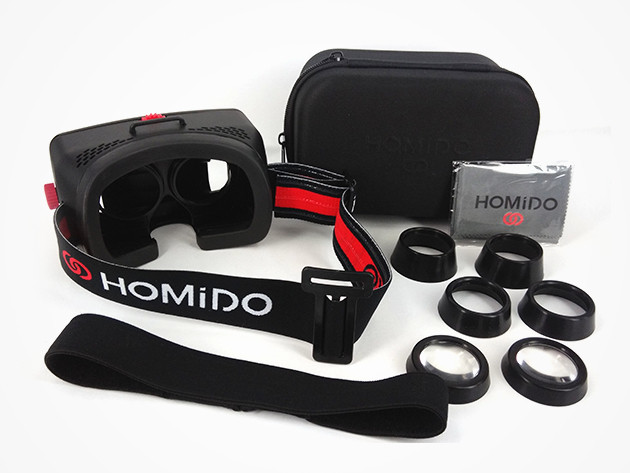
VR headset maker Homido has lifted the lid on the newest version of its VR viewer, which offers up new and improved features to improve the user experience.
Homido’s first VR headset (seen above) proved to be a popular choice for Android gamers that wanted a comfortable time exploring the world of mobile VR, but the group says that V2 takes things to the next level.
The smartphone VR company first shared a glimpse of its new headset at CES and is now showing off the product at the VRLA winter expo at the LA Convention Center. Speaking to press, the company has said that ‘quality VR experiences’ can still be found for buyers on a budget, with Homido now aiming to reproduce its European success in the United States.
The latest member of the Homido VR family brings new features to the table such as a more comfortable face plate, a capacitive button similar to that seen on Google Cardboard, image adjustments and a frame that places a user’s smartphone in the optimal position. The new gadget also supports bigger smartphones than its predecessor.

Homido co-founder, Raphael Seghier, said:
“When Oculus first made its debut, we realized that most of a VR headset was already in everyone’s pocket. So why make them buy all that equipment again, when all they need are the frame and lenses? Using smartphones for VR just makes sense.”
Late last year, Homido released the Homido Mini, a smaller VR viewer at around $14.99 that could fit in a user’s pocket ‘easier than a pair of car keys’. The original Homido headset dropped in 2014 and currently costs $79.99.
The team over at Homido will be hoping that its new and improved VR headset will convince even more Android smartphone owners to try out VR for themselves. Right now, we’re yet to hear of a release date and price point for the new viewer, but we’ll keep you posted as updates arrive.
Come comment on this article: Homido’s new VR headset is comfier, supports bigger phones
These are the best virtual reality apps to start 2016 with

The world of mobile virtual reality is growing, and with a host of headsets now on the market, there’s no reason not to grab a viewer and experience some adventures of your own.
Today, we’re taking a look at some of the best VR experiences on the Play Store. All of the apps featured function with a variety of headsets, from the budget DIY Google Cardboard to the lavish Samsung Gear VR. The apps we’ve picked all do a top job of demonstrating the power and potential of mobile VR. More importantly, they’re all great fun too.
Read on as we pick out 10 must-play Android VR apps of 2016, featuring the likes of crime-busting game Stitchers: Hack the Case, Cmoar Roller Coaster VR and the spooky horror, Sisters.
Cmoar Roller Coaster VR

In our minds, this is the very best rollercoaster virtual reality experience on Google Play right now. Yes, this is a paid app, but the 4-minute thrill ride won’t leave you disappointed. Riders are treated to some spectacular sights as the rollercoaster travels through mountains, soars past fire-breathing dragons and dives into an underground cave coated in lava.
The game world is unusual in the fact that it combines a western setting with fantasy elements, with the winding track also featuring a couple of jumps along the way. Whereas other virtual reality apps we’ll be spotlighting aren’t really suitable for everybody, Cmoar Roller Coaster VR can be enjoyed by pretty much anyone.
A free version of the app is available to download, although the ride is cut short at just over a minute.
Hidden Temple – VR Adventure

Hidden Temple – VR Adventure invites you to explore a mysterious ancient tomb, solving puzzles and finding hidden chambers as you work your way through the deep jungle environment. We’ve chosen to feature Hidden Temple – VR Adventure on our list not only because of the mesmerizing setting, but also because of the stunning, vibrant graphics on show.
This virtual reality game is a modern take on a classic point-and-click adventure, and players can pick up and combine items to help them navigate through various underground rooms. The aim is to grab as many hidden treasures as possible by exploring and solving riddles scribbled on the walls of the temple. It’s possible to play Hidden Temple – VR Adventure without the use of a headset, but where’s the fun in that?
Google Cardboard

Google’s own Cardboard app is the perfect introduction to the world of virtual reality on your phone, with the title split into various sections that each offer a unique experience of their own. Included are demos for Earth, Tour Guide, My Videos, Exhibit and Photo Sphere.
Earth brings VR-compatibility to Google Earth, which means you can explore places around the world with a newfound level of immersion. Tour Guide allows you to visit Versailles with a local guide, whilst My Videos lets you view clips you’ve recorded on your phone with the VR headset. Instead of making your videos truly 3D, the app instead splits the video down the middle and displays it twice to give the illusion of 3D. Photo Sphere is similar, but instead functions with still images rather than video.
Stitchers: Hack the Case

Stitchers: Hack the Case is an interactive crime-solving experience that is based on the Freeform drama, Stitchers. Players are transported into the memories of victims to relive their final moments and uncover clues as to who is guilty of killing them.
The slightly dark nature of the app means it might not be too child-friendly, but the story is certainly a gripping one. VR mode is optional, but exploring crime scenes and interacting with evidence by actually moving your head and body is great fun. If you think you’ve got what it takes to join the government’s secret Stitchers Program, get your crime-solving glasses on and dive in.
‘Cleanopolis VR’

Cleanopolis VR is an educational title primarily aimed at kids, but that doesn’t stop the experience being fun for folk of all ages. The free-to-download app sees Captain Clean fighting against climate change to rid the city of Cleanopolis of its CO2 cloud. Players are assisted by Toby the dog as they explore the 3D city and have a go at the mini-games in each of four districts.
The graphics on display are impressive and the game does a good job of throwing you straight into the action. Whilst there’s sections of the app that quiz you on your ecological footprint, the topics are genuinely interesting and covered in a way that doesn’t leave you feeling like you’re stuck in a boring school lesson.
House of Terror VR

House of Terror VR is an interactive horror experience that challenges your bravery as you explore a haunted house full of traps, monsters and brain-busting puzzles.
Unlike some of the other virtual reality apps we’ve covered, House of Terror VR requires a joystick so players can walk around the house. As a result, not everybody is going to be able to play this title. If you have the required equipment though, it’s definitely worth downloading the app and taking a look around the dark environments on offer.
Not many other virtual reality horror games nail the unsettling atmosphere as well as House of Terror VR.
VR Roller Coaster Attraction

VR Roller Coaster Attraction arrives courtesy of Fibrum, who we believe to be one of the top names in the mobile VR world. VR Roller Coaster Attraction isn’t as long as the ride on offer in the Cmoar app, although this attraction boasts a far prettier environment, deep in the jungle surrounded by lavish rainforests, rock formations and waterfalls.
Players start the ride by focusing their gaze on a large wooden lever, and before you know it you’re riding the rollercoaster up to the top of a hill, with just a couple of seconds to take in the scenery before you plummet back down to earth. A recent update to the VR Roller Coaster Attraction app adds a freemium system which has annoyed quite a few people over on the Play Store, but this shouldn’t be enough to put you off trying the app out for yourself.
Sisters

The Sisters app for Android devices isn’t about exploring but instead about seeing if you have the guts to keep your eyes open as ghosts and ghouls burst into life around you.
Sisters is set in a spooky room inside a mansion on a stormy night, and as the title suggests, you’ll be introduced to a pair of characters that have a surprise or two up their sleeves. When the lights go out, the pair of wooden dolls go missing from the fireplace. What follows is a tense, immersive VR experience that’s a must-try for fans of horror.
Although the experience is fairly short, it’s great fun to watch friends and family try Sisters out for themselves. We recommend you take on the app equipped with a good pair of headphones.
Lamper VR: Firefly Rescue

Lamper VR is one of the most polished titles on the Play Store at the time of writing, starring Little Lamper, a brave lightning bug in a big, dangerous world.
The game is fully 3D and is the successor to another popular Google Cardboard app, only this latest entry into the series offers more features than ever before. Players are asked to explore lush woods and fiery caverns as they go in search of their lost friends. Powerups such as explosive fireballs can be picked up along the way to help gamers blast past enemies to reach their goals.
There’s no in-app purchases to contend with and the app is perfect for younger audiences.
InMind VR

InMind VR, which we reviewed in 2015,has one of the most interesting settings of the apps we’ve mentioned, taking place entirely inside a human head. Players must travel through the brain of a patient in search of neurons that cause mental disorder. The title is free to download and does a good job of providing an engaging experience exploring the miracles of the human mind.
The game’s makers write: “The future is nigh. The humanity is standing upon the brink of a new era where modern healthcare makes tremendous scientific advancements. With the help of nanotechnologies a surgical prototype bathyscaphe allows its operator to shrink to a microlevel and travel inside the patient’s body.” Technical stuff!
Closing
Here at Talk Android, we’re very excited to see what the future holds for VR gaming on Android. As new major app developers join in on the action, we’re expecting to see even more incredible mobile experiences. Right now, the Play Store already has plenty of thrilling VR adventures to get stuck into, but the number of apps is growing on a daily basis.
The beauty of mobile VR is that there’s something for everyone. Whether you’re a horror fanatic in search of the ultimate scare or a parent on the hunt for educational apps, there’s plenty of options out there. We hope this list keeps you busy.
Come comment on this article: These are the best virtual reality apps to start 2016 with
Facebook iOS App Update Expands 3D Touch Support
Facebook has begun rolling out support for further 3D Touch actions on compatible iPhones in the latest update to its primary iOS app.
The newest iteration in the social media company’s series of weekly app updates allows iPhone 6s and iPhone 6s Plus owners to use “peek” and “pop” gestures directly from within a Facebook timeline. A light press or “peek” on a profile, link, page, group or photo triggers a preview of the content in question, while a harder press or “pop” opens the link, photo, profile or group.
A new “Quick Action” also comes to the Facebook app icon, with a homescreen shortcut that takes users directly to their account’s profile page.
 Original Quick Actions (left); a new Action takes users to their Facebook profile (right).
The introduction of new 3D Touch features follows support for several Quick Actions that Facebook brought to its app back in October. However, unlike the first 3D Touch-equipped update, the company is limiting access to the latest features to “a small group of people,” before rolling them out globally “over the coming months,” reports The Verge.
Despite the potential for frustrating some of its users, Facebook’s gradual rollout strategy is in line with last month’s muted announcement of staggered support for Live Photos, which allows Facebook users to share motion-enabled pictures taken on iPhone 6s and 6s Plus devices with followers running iOS 9.
Increased support for 3D Touch comes on the heels of similar features introduced in other Facebook-owned apps, including Messenger, Instagram and WhatsApp, while other third-party developers continue to implement and deploy their own support for the pressure-sensitive technology following Apple’s own encouragement to do so.
Facebook is free on the App Store for iPhone and iPad. [Direct Link]
Tags: App Store, Facebook, 3D Touch
Buyer’s Guide: iPhone (Neutral)
Discuss this article in our forums
 AIVAnet