AT&T HTC One M9 will receive Lollipop 5.1 update OTA with camera improvements on July 15th

HTC’s vice president Mo Versi has confirmed on Twitter that AT&T HTC One M9 owners will receive the Android Lollipop 5.1 update on July 15th.
The update will be rolled OTA, and will also include camera improvements;
“HTC One (M9) AT&T Owners! We have received technical approval on Lollipop OS 5.1 which includes camera improvements. OTA to start on 7/15!!“
The update has already rolled out to Sprint users, and T-mobile and Verizon variants should be up next on July 20th.
Source: Twitter
Via: Phandroid
Come comment on this article: AT&T HTC One M9 will receive Lollipop 5.1 update OTA with camera improvements on July 15th
Adonit’s Jot Touch and Jot Script 2 make a strong case for the stylus

I’ve never been a big fan of the stylus. Sure, I don’t really have a choice when I’m using Wacom’s Cintiq pen displays, but other than that, I don’t care much for styli. Adonit has a pair of them — the Jot Touch and Jot Script 2 — and they promise a more pen-like feel, so now seemed like as good a time as any to give the stylus another shot. Alas, though, after spending a few weeks getting to know these two gadgets, I can confidently say that I’m not ready to give up the ol’ pen and paper just yet.
Getting either of the two styli up and running is a breeze. For some apps, like Noteshelf, you fire up the mobile software to pair the accessory with your tablet (in my case, an iPad Mini). From the settings menu, you simply choose your brand of stylus from the list, whether or not you want palm rejection enabled and your writing style. That’s not always the method for pairing, though. For software like Evernote’s Penultimate, you tap the stylus menu and press and hold the gadget on screen for a few seconds to pair it. It’s similar to what I saw on Adobe’s Ink and Slide apps, and indeed, it shaves a few seconds off of the setup process. When it comes time to charge either the Jot Touch or Jot Script 2, they both come with a small USB dock. That diminutive charging station has a magnetic base, so when you get the stylus close, it locks into place.

The Jot Touch and Jot Script 2 are easy to tell apart. The Jot Touch is black with a rubber grip and two shortcut buttons. It’s also the bigger of the two, feeling a bit more like a Sharpie in the hand than a pen, and the tip is a bit wider, too. As for the Jot Script 2, its silver metal frame looks and feels more sophisticated, and the thinner body feels more like a real pen. It’s still a little larger than your traditional ballpoint — think of something along the lines of a fine-point Sharpie. In fact, that’s how I would describe the pen tip as well. Due to the smaller overall size and fine point, I found myself gravitating toward the Jot Script 2 most of the time — even if it meant giving up those built-in shortcut buttons. It just felt more comfortable. However, it really just depends on how you intend to use your stylus.
Let me explain what I mean. If you’re more of the note-taking type rather than an artist or illustrator, the Jot Script 2 is probably the choice for you. It’s meant for scribbling notes and marking up documents on a tablet — simple and straightforward. Don’t confuse that with boring, though; as I’ve said, it both looks and feels better in the hand. Just because it doesn’t pack in a ton of bells and whistles doesn’t mean this device is lacking. For example, my wife used the Jot Script 2 at work for a few days and she found it useful for adding notes to PDFs or pointing out key items on construction plans a contractor might overlook.

If you’re using a stylus for drawing or sketching, or if you plan on using design-focused apps, you’ll likely want to consider the Jot Touch. Those shortcut buttons come in handy for erasing and undoing, and the pen works well with Adobe’s Illustrator Line and Photoshop Sketch. It also packs in 2,048 levels of pressure sensitivity (similar to Wacom’s offering), so when it comes to detail work with brushes, you’ll be able to handle that as well. Personally, I’d rather sketch on paper, and during my testing I primarily used a stylus for note taking; hence my preference for the Jot Touch.
The key reason I never cared much for a stylus was the stubby rubber tips. They worked, but most of the time, they didn’t glide across an iPad screen with ease. And when the time came to do some work with fine lines, the nib was thicker than the line on the screen. Far from an ideal situation. Adonit’s Jot Touch and Jot Script 2 employ a more pen-like plastic tip capable of finer lines and more control. It’s a slick plastic, though, so you don’t get the resistance of a pen on paper, but the line quality is much more in keeping with the real thing.

Yes, the resistance issue is a combination of the stylus tip and the glossy iPad screen, but if there were an option for using them with a matte display, they’d probably get higher marks from me. I like that feel of pen on paper, and while the difference may be subtle, it’s important to me. Call me a Luddite, but it’s probably more a product of my art school education than anything else. Carrying around a small sketchbook to jot down notes, create lists and catalog my doodles is a habit formed long ago. More importantly, it allows me to not look at a screen for a few minutes.
The Jot Script 2 is the least expensive of the two, priced at $75. It also comes with six months of Evernote Premium, so if you’ve been eyeing that and haven’t yet splurged, the add-on might be the extra nudge you needed. In fact, the model I tested was optimized for Evernote’s Penultimate. The Jot Touch costs $100 due to its added controls and pressure sensitivity. Perhaps the best part about either of these is that they work with a variety of apps, so you’re not locked into a limited selection due to compatibility. Don’t like Adobe’s drawing apps? Try Forge. Not a big fan of Penultimate? Give Noteshelf a shot. Offering a number of options means you can test-drive a few and find which works best for you. At the end of the day, Adonit has made one of the most compelling cases I’ve seen for going paperless with the Jot Script 2 and Jot Touch. I’m just not ready to take the leap.
Filed under: Peripherals
PlayStation Now is a tech miracle, but it’s no Netflix for games

Sony wants you to want PS Now, its Netflix-like game-streaming service. The problem is, the company doesn’t seem to know how to build that desire. Though the recent app relaunch has seen the service’s user interface improve considerably, the same can’t be said for the user experience. I used PS Now on the PlayStation 4 almost exclusively for a week and by the time my seven-day trial was set to expire, I still couldn’t find a compelling reason to pay for the service — let alone recommend it to a friend. With Netflix, the value is apparent: $8 per month for on-demand access to thousands of movies and TV shows. Sure the visual and audio quality of that streaming library might not be on par with its Blu-ray counterparts, but the convenience outweighs any cons. For PS Now, that same trade-off isn’t quite worth it.
I typically get between 50 Mbps and 80 Mbps download speeds (with 25 – 46 ms ping) through Comcast on my home internet connection. It’s more than enough to stream House of Cards in 4K. But getting a 720p stream of The Last of Us (with a wired connection to the modem) on my 65-inch plasma to look like it didn’t have a film of Vaseline over it? Well, in my week of testing, that just wasn’t possible. And, yes, I realize that even getting the streaming-game tech to function at the level it does now is nothing short of a miracle. It’s just baffling to me that Sony’s charging between $15 and $20 per month for what, in all fairness, is an incredibly long beta test.
As I mentioned before, the new PS Now interface is a lot easier on the eyes, but it hasn’t changed how some key elements of the service function. Both before and after the video-on-demand-service-styled refresh, the split between a game actually launching without a hitch and it erroring out on me was about even.
General maintenance (or nefarious hackers) taking the PlayStation Network offline is one thing, but should that happen, you can at least still play disc-based or downloaded games. It’s an inconvenience, but not a total loss. The same can’t be said for PS Now. For example, one afternoon I went to the PS Store to look for the new subscription app, but since PSN was down for maintenance, I couldn’t. “No biggie,” I thought. “I can still race a few laps in Grid 2 before work.” Nope. PSN being offline naturally meant I couldn’t play any of my previously streamed PS Now games at all.

When I fired up The Last of Us on PS Now the other night, I wasn’t expecting to have to start over from the very beginning. I’d hoped that since my friends list had carried over from my PSN account, so too would my cloud-saved progress from my PS3 play-through of the game. Wrong again. Sure, I could start playing the streamed version on the TV in my living room and then continue playing from my bedroom on another Now-compatible device (even a PS Vita); the saves would carry over. But the same doesn’t apply to anything I’d created before subscribing to Now.
And sure, that stable of over 125 games available to PS Now subscribers sounds great on paper, but it seems that for every overlooked gem like El Shaddai: Ascension of the Metatron or Darksiders 2, there are duds like Dead Island Riptides. By and large, PS Now’s best games are those you’ve likely already played before, own or will be playing on PS4 very soon.
According to Sony, the PlayStation 4 and its 20 million-plus install base is where PS Now thrives at the moment. But remember when President of Worldwide Studios Shuhei Yoshida said that HD remasters were the perfect way to appeal to the half of the PS4 user-base that didn’t own a PS3? Well, it seems that messaging hasn’t carried over to the greater PS Now staff. When I spoke with Jack Buser, PS Now’s senior director, and Robert Stevenson, chief product officer at Gaikai (the company Sony acquired for PS Now’s streaming tech), both repeatedly mentioned first-party titles like The Last of Us, and the Uncharted and God of War series as PS Now’s main attractions. But all three of those franchises share one common characteristic: They’ve either already been remastered for the PlayStation 4, or will be by year’s end. Surely, that HD availability would detract from the appeal of streaming those same games at a lesser quality on PS Now, right?
PS Now’s best games are those you’ve likely already played before, own or will be playing on PS4.
Apparently not. Stevenson said that introducing a new title to Now’s subscription lineup creates conversation around a game that then drives people to check it out. Average play-times for the service are reportedly around 45 minutes — a result of the library of games on offer. That sampling behavior’s also complementary to the forthcoming re-releases. “[Subscribers are] saying, ‘Wow, this is so awesome and I want to play the HD remastered version of it on my PS4,’” said Stevenson. But while PS4 might be the most popular platform for the service, it isn’t Sony’s target audience.
No, the company’s after lapsed gamers playing through a Sony Bravia or Samsung smart TV, not the PS4 console. It’s a demo that’s likely not worried that a streamed version of Batman: Arkham City may not look as good as it did on PS3. Buser said he knows there’s room for improvement in terms of PS Now’s audio and visual fidelity, but added that current customers are “extremely satisfied” with the quality of what’s on tap at the moment.

There’s another plus in going after that demo: People playing through an internet-connected TV don’t see Now as a form of backward compatibility; it’s just on-demand gaming. “We’re servicing a different audience with PlayStation Now,” Stevenson said. “The service is largely designed around making sure that this audience [lapsed gamers] can be satisfied with the experience.” In other words, it’s not necessarily designed as a replacement for people that previously owned PS3s, but sold them off to finance a PS4.
“There is going to be a difference in fidelity, especially to those who play a lot of games,” he said. “There’s probably some point in the future — five years, 10 years away. I don’t know … when it might be exactly the same or very similar [to a disc-based experience], but we’re always going to be dealing with a compressed stream over the wires to you and taking your input back.”
PS Now’s target audience might not see it as a natural addition to Sony’s premium-level online-gaming service, PlayStation Plus, either. But a bundle with the PlayStation-Vue streaming TV service under the Plus umbrella would likely make a lot of sense. The problem is that Vue costs between $50 and $70 per month and Now is a minimum of $15 per month when bought in a three-month subscription block. PlayStation Plus is $18 for three months or $50 for a year. Subscribing to all three of these services separately would be incredibly expensive for the average PlayStation user.
“There is going to be a difference in fidelity, especially to those who play a lot of games,” Stevenson said.
Though it seems logical Sony would bundle PS Now, PS Plus and PS Vue all together for one convenient subscription price, so far the company hasn’t. Buser said PS Now has its own sort of packaged offering that is different from the aforementioned services, and that while there weren’t any current plans to offer all of the subscription services at one rate, that could happen in the future.

But let’s bring it back to the present reality of Now.
See, there was a brief moment when I was testing the streaming version of Uncharted 3 where I thought to myself, “Hey, this is surprisingly pretty solid.” The game-engine cutscene had some compression here and there, sure, but like when it appears in most Netflix movies, the artifacting wasn’t enough to bother me. “It’s actually working,” I thought. Then the action kicked into gear. I had to start syncing button presses with onscreen prompts to defend myself from a crowd of British thugs and the game started to perform poorly. The lag wasn’t so bad as to make the game unplayable, but the experience wasn’t nearly as smooth as it would’ve been with the disc-based game on my PS3. In its PS Now incarnation, Uncharted had been robbed of some of its trademark cinematic flair. The streaming illusion had fallen to pieces. I was reminded that this was very much still a beta — and just when PS Now was starting to win me over.
Filed under: Gaming, Home Entertainment, HD, Sony
‘Metal Gear’ creator’s name deleted from ‘Phantom Pain’ box

Hideo Kojima revolutionized the stealth video game genre in 1987 with the release of the original Metal Gear, published by Konami. Under Kojima’s leadership, the Metal Gear franchise exploded in popularity, and it gained fame as a complex, quirky and endlessly innovative series. However, recent reports suggest that Kojima and Konami will sever ties after the release of Metal Gear Solid V: The Phantom Pain in September. A new series of Phantom Pain box-art images add fuel to this claim: Konami’s initial mock-ups included a credit to Kojima, but new official images show the words “A Hideo Kojima Game” have been removed from the top of the box. Plus, the logo for Kojima’s studio, Kojima Productions (a subsidiary of Konami), is no longer on the front of the box.
Konami has made a few odd moves in recent months, first with the cancelation of Silent Hills, a much-hyped horror game from Kojima and famed filmmaker Guillermo Del Toro. Konami has also delisted itself from the New York Stock Exchange and pledged to focus heavily on mobile game development. And, of course, rumors of Kojima’s departure are a-flying. For a studio that knows stealth, removing Kojima from the Phantom Pain box is a fairly in-your-face move.


Via: NeoGAF
Source: Konami
Google’s hidden data reveals details of ‘right to be forgotten’ requests

The Internet is unforgiving. Web search engines like Google neatly index the most embarrassing moments, traumatic histories and criminal activities. In May last year, the European Court of Justice asked the web giant to remove website links that were no longer relevant to people’s lives. The ruling recognized that archiving people’s lives often took their personal moments out of context, creating “detailed but selective profiles“. Since the sweeping decision did not exclude killers or even terrorists from the “right to be forgotten”, it was largely believed that the requests that poured in were from criminals or public figures looking to erase their pasts. But The Guardian recently discovered data in Google’s transparency report that was never meant to be public. An analysis of the source code reveals that 95 percent of the requests came in from ordinary people looking to delist personal information that is irrelevant or is just plain embarrassing.
So far, Google has received about 281,000 individual requests that add up to over one million links. Only a sliver of those requests came in from people looking to hide their horrid past activities. Most requests concerned social media posts, old dating profiles, health histories, personal tragedies and intimate images. Unsurprisingly, Facebook has had the most links removed, followed closely by YouTube.
The ruling doesn’t state that the source material needs to be erased. But it does empower people with the ability to request that certain snippets of their lives be delisted and de-prioritized on the search engine. Google, though bound by the ruling, chooses to accept or refuse those requests. It also interprets the ruling in a way that the information is removed only from its European sites. The company did not intend to let the public in on the specifics of the requests that have now been revealed. And ever since The Guardian’s accidental discovery, the source code has been modified to cover these details.
Source: The Guardian
Comcast tests streaming games to your cable box

Not happy with simply launching its Stream video service this week, Comcast announced the start of a beta test for Xfinity Games. A partnership with Electronic Arts (confirming Reuters rumor from last year), it’s not going to compete with PlayStation and Xbox, but is closer to what Roku, Amazon and Android are already doing for TV gaming. At least for now, the games offered are older and mobile-versions of games like Plants vs Zombies, Real Racing 2 or FIFA 13. There’s not a connection for a standard gamepad, so players control them with phones and tablets (right now the list appears to cover iOS, and mainly Samsung Galaxy phones/tablets on the Android side). The main requirement? Comcast’s X1 TV platform, so if you have it you can sign up to be a beta tester here. X1 isn’t ready to be a powerhouse gaming platform yet approaching the level of OnLive or PlayStation Now, but with this and home automation add-ons, it’s clear we’re not the only ones thinking of the cable box as a the center of your connected home. Now, let’s see if we can get Yu Suzuki to launch a Sega Channel Kickstarter.

Source: Comcast
A Detailed Look at How the Apple Watch Functions in Water
Apple is cautious with its Apple Watch and doesn’t market the device as waterproof, instead giving it a water resistance rating of IPX7. Apple says it’s fine to wear the watch in the rain or while washing your hands, but the company doesn’t recommend submerging the device.
Many Apple Watch owners have tested Apple’s water resistance claims, coming to the conclusion that the Apple Watch is more water resistant than Apple claims. It’s survived submersion in a bucket, laps in a pool, lengthy swim tests, and even a 10m dive with no damage.
 Image via Craig Hockenberry
iOS developer Craig Hockenberry of Iconfactory has followed up each of those tests with a thorough look at the Apple Watch’s ability to function in water, which he’s compiled into a detailed report that’s well worth a read.
Hockenberry wears his Apple Watch while swimming in both pools and the ocean with no discernible damage. Because other reports have already proven the Apple Watch can function in water, Hockenberry goes deeper and looks at how well the watch works while it’s in water, how it can be used while swimming, how accurate the data tracking is for water-based activities like swimming, and how to keep the Apple Watch in good condition after using it in salt water and chlorine.
The Apple Watch’s capacitive touch screen doesn’t work while the device is under water, nor does Force Touch. This is a problem when using the Workout app, as it can’t be accessed in the water, and occasionally, water can activate a swipe on the display, swapping from the timer to the calorie view. A workout can only be started before getting into the water and ended after getting out, leading to some inaccuracies.
You have to start the workout before getting in the water and stop after you’ve gotten a chance to dry off.
For an ocean swim, this screws up your timing: you don’t really start swimming until after you get beyond the surf break. If there’s heavy surf, this can take several minutes. Workout data is being collected while you’re standing and waiting for waves to clear.
Hockenberry postulates that Apple recommends customers don’t use the Apple Watch in water “because of the erratic behavior it causes” when the screen is wet, rather than out of concern for how well it holds up in water. As he suggests, it’s possible water activity tracking will improve upon the release of WatchOS 2 if native swimming apps are allowed, but it is not clear if Apple will approve swimming apps as they encourage users to wear the Apple Watch in a way that Apple does not support.
Hockenberry’s full, detailed report on how the Apple Watch functions in water can be read over at his site, Furbo.org.

Taylor Swift’s Apple Music Letter Surprised Her Record Label, but Pushed Talks ‘Over the Edge’
Ahead of the launch of Apple Music, Taylor Swift made headlines when she wrote a scathing open letter to Apple, criticizing its decision not to pay artists for their work during its three-month free trial. Her letter, combined with pushback from indie labels, led Apple to reverse course and opt to pay artists during the three months that customers can listen for free.
Record label exec Scott Borchetta, who serves as the head of Big Machine Records and signed Swift when she was 14, recently spoke at Fortune‘s Brainstorm Tech conference and shared some backstory on the negotiations that eventually led Swift to write the letter. According to Borchetta, he’d been in talks with Apple and told the company that his label couldn’t support no compensation during the three-month free trial, but wasn’t making headway.

Borchetta hadn’t spoken to Swift about the negotiations and was caught unawares by her letter, which she didn’t clear with her record label. He wasn’t angry, though, because her post, as we know, caused Apple to change its policy and made negotiations easier.
“She literally texted me and said, ‘Don’t be mad,’ with the link,” Borchetta said. “She was in Europe. I responded and said, ‘You don’t have any idea how good your timing is right now.’”
A day after Swift’s letter, Borchetta had a conference call with Jimmy Iovine and Eddy Cue, where they capitulated and agreed to the demands of both Swift and many other artists who had been resisting signing on with Apple Music due to the free trial.
Scooter Braun, Justin Bieber’s manager, was also at the Fortune event and said that Swift’s letter gave Apple the push the industry needed to secure a better deal. “Everyone was fighting that fight,” he said. “Taylor pushed it over the edge. She made them aware it wasn’t just the executives. Sometimes it’s good to hear the artists saying it.”
Shortly after Apple changed its policy, the company secured a deal with Swift and signed deals with thousands of indie labels a week ahead of Apple Music’s launch. Apple Music became the first and only streaming music service to offer Swift’s most recent album, 1989.

ZTE Axon vs the competition

ZTE has its sights set on third place in the US market and its new Axon phone wants to bring some additional competition to the established brands in the market. So let’s take a look at how the ZTE Axon’s hardware stacks up against the best of 2015’s flagship smartphones.
Beginning with the processing hardware, ZTE has opted for Qualcomm’s top-of-the-line Snapdragon 810 processor, which is built from four ARM Cortex-A57 and four Cortex-A53 cores configured in a big.LITTLE arrangement. This set-up is used throughout the 2015 flagships, even in Samsung’s Exynos chip, with the exception of the LG G4, which uses the cooler running hexa-core Snapdragon 808.
| ZTE Axon | Galaxy S6 | One M9 | Xperia Z3+ | LG G4 | |
|---|---|---|---|---|---|
| Display | 5.5-inch LCD QHD (2560×1440) |
5.1-inch AMOLED QHD (2560×1440) |
5-inch LCD FullHD (1920×1080) |
5.2-inch LCD FullHD (1920×1080) |
5.5-inch LCD QHD (2560×1440) |
| SoC | Snapdragon 810 | Exynos 7420 | Snapdragon 810 | Snapdragon 810 | Snapdragon 808 |
| CPU | 4x 2.0GHz Cortex-A57 4x 1.5GHz Cortex-A53 |
4x 2.1GHz Cortex-A57 4x 1.5GHz Cortex-A53 |
4x 2.0GHz Cortex-A57 4x 1.5GHz Cortex-A53 |
4x 2.0GHz Cortex-A57 4x 1.5GHz Cortex-A53 |
2x 1.8GHz Cortex-A57 4x 1.4GHz Cortex-A53 |
| GPU | Adreno 430 | Mali-T760 MP8 | Adreno 430 | Adreno 430 | Adreno 418 |
| RAM | 4GB | 3GB | 3GB | 3GB | 3GB |
| Storage | 32GB | 32/64/128GB | 32GB | 32GB | 32GB |
| MicroSD | No | No | Yes, up to 128GB | Yes, up to 128GB | Yes, up to 128GB |
On the GPU side we see an Adreno 430 GPU, which should be able to provide some extra graphics grunt to push additional pixels to the QHD display. This should give the handset an edge over the G4’s Adreno 418, but the lower display resolution of the One M9 or Xperia Z3+ will result in better frame rates for gamers.
While we’re on the subject of displays, the ZTE Axon matches the leaders in the field with a huge QHD (2560×1440) display resolution. At 5.5-inches, the G4 is the Axon’s closest competitor in screen size. The display is based on Sharp’s rather good LCD technology, but it probably won’t end up with as wide of a color gamut as Samsung’s AMOLED.

The Axon’s QHD display resolution matches that of the Galaxy S6, Note 4, LG G4 and Nexus 6.
The one area that ZTE has decided to go above any beyond the competition is with an extra GB of RAM, bringing the total up to 4GB compared with 3GB for every other major flagship. Android has become a bit more of a memory hog these days, but you’re not going to see much of a noticeable improvement in performance by moving from 3GB to 4GB. However, very heavily multi-taskers may find that apps open a little quicker, as there’s extra room to keep these in the background on ZTE’s handset.
In terms of internal storage, ZTE’s Axon matches the 32GB of internal memory offered by most 2015 flagships. Sadly there doesn’t appear to be support for a microSD card, which might leave the phone lacking space if you’re a big media consumer. Samsung opted not to include a microSD card slot with the Galaxy S6, but at least there are models with 64 and 128GB of memory available.
In terms of performance, the ZTE Axon looks able to match the very best Android phones on the market right now.
| ZTE Axon | Galaxy S6 | One M9 | Xperia Z3+ | LG G4 | |
|---|---|---|---|---|---|
| Camera | dual rear (13MP, and 2MP) 8MP front |
16MP rear 5MP front |
20MP rear 4MP front |
20.7MP rear 5MP front |
16MP dual rear 8MP front |
| Battery | 3,000mAh | 2,500mAh | 2,840mAh | 2,930mAh | 3,000mAh |
| LTE | Category 6 | Category 6 | Category 6 | Category 6 | Category 6 |
| Fast Charging? | Quick Charge 2.0 | No | Quick Charge 2.0 | Quick Charge 2.0 | Quick Charge 2.0 |
| Wireless Charging? | No | PMA and Qi | No | No | Qi (optional cases) |
| Dimensions | 154 x 75 x 9.3mm | 143.4 x 70.5 x 6.8 mm | 144.6 x 69.7 x 9.6 mm | 146 x 72 x 6.9 mm | 148.9 x 76.1 x 9.8 mm |
| Weight | 175g | 138g | 157g | 144g | 155g |
| Unlocked Price | $499 | $700 | $650 | $650 | $540 |
Moving on to the smartphone’s additional hardware features, we can see a number of high-end features packed in. There’s no support for wireless charging or an infrared port, but the Axon does support NFC, fast LTE data speeds, and Qualcomm’s Quick Charge 2.0 technology. ZTE also touts “Hi-Fi audio” via its AKM 4961 codec, which boasts a 32-bit 192 kHz DAC, but there’s actually only one speaker at the bottom of the phone. We certainly won’t attempt to make any calls about quality without a good listen, but it will be interesting to hear how the phone stacks up with the One M9.
ZTE has also paid a lot of attention to this year’s hotly contested smartphone camera feature list. There’s a dual rear camera setup, which sports a 13 megapixel camera with a secondary 2MP cam, allowing for depth refocusing, a feature that was quite popular last generation.

The Axon’s camera sample images show some impressive low light shots.
Delving a little deeper into the camera specifications we note a BSI sensor which is accompanied by a 6 element lens and f/1.8 aperture, which matches the LG G4. The aperture can also apparently span to f/1.0 for superior image in low-light settings. The Axon has also opted for a higher resolution 8MP front facing camera with 88 degree wide angle lens. Again, we can’t call camera quality without some hands-on time, but the spec sheet suggests that ZTE’s phone will give Samsung, HTC, Sony and LG a run for their money.
The only marginal complaint about the paper specs seems to be that the ZTE Axon is a bit taller than other handsets of a similar size and it also weighs a little bit more. We’re really looking at a phone closer in size to the Galaxy Note 4, which some will love but others may find a little too large.

Overall, an initial look at the hardware suggests that ZTE has doubled down with the Axon and has produced a phone that appears to offer the cutting edge hardware that you would expect from a flagship smartphone at a retail price that substantially undercuts most of the competition. The LG G4 is probably the Axon’s closest rival for value for money. At $500, US consumers might be tempted to overlook ZTE’s past reputation to grab a bargain. (Update: actual price for the Axon is $450 as it turns out, not $500).
Commodore is back, this time as a smartphone company

If you grew up (or were already an adult) in the 80s or 90s, odds are you have at least heard of Commodore. In fact, there’s even a pretty good chance you owned or knew someone who owned one of their computers, very likely a Commodore 64.
The C64 was one of the best-selling computers of all time, and was also one of the best gaming devices of the era. Over time however, the brand fell out of favor and eventually died.
While it was resurrected briefly in 2013 for a new nostalgia-driven Intel Atom machine named the C64x, the device sold poorly and the resurrected “Commodore USA” collapsed shortly thereafter. Now the brand is back once more, this time jumping into the smartphone game.

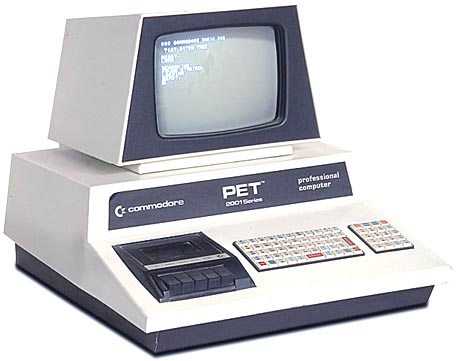
Old Computers The original Commodore PET
Dubbed the Commodore PET, after Commodore’s first computer (also named PET), the new phone offers a 1.7GHz Mediatek 64-bit octa-core processor and a 5.5-inch 1080p display. Depending on if you get the 16GB or 32GB storage option, you’ll end up with 2 or 3GB of RAM. Other specs include a microSD slot, a 3000 mAh battery, a 13MP main cam, and an 8MP front cam.
As you’ve probably already figured out, just because the PET has Commodore’s name and logo on it — doesn’t make it the Commodore of old. The new Commodore is actually officially registered as “Commodore Business Machines Limited” in the UK, founded by Massimo Canigiani and Carlo Scattolini. Just like “Commodore US” in 2013, the new brand shares nothing in common with the original Commodore, save for the branding.
The PET doesn’t look like a horrible device by any means, but nor is it exactly an amazing device. Will nostalgia be enough to sell it? Only time will tell for sure, though we’ll find out soon enough when the device launches across select parts of Europe later this month at $300 for the 16GB model or $365 for the 32GB version. Commodore also says it plans to eventually offer the phone in more markets, including the US.
What do you think, excited by the idea of a Commodore branded phone? Or is this nothing more than a nostalgia driven gimmick that isn’t worth picking up?
 AIVAnet