


Apple’s Fourth Retail Store in Hong Kong Nearing Completion
As construction continues on what will be Apple’s fourth retail store in Hong Kong, located in the upscale shopping area of Canton Road, new pictures of the store’s facade with an Apple logo shared by iMag on Facebook officially confirm that the Cupertino-based company will soon be opening up shop in the area. The store has been planned since at least August 2013 and under renovation for the past several months.

The new Canton Road location is expected to be one of the biggest Apple Stores in Asia and will mark the fourth store in Hong Kong alongside Causeway Bay, Festival Walk and IFC Mall locations. It remains unknown when the new store will open to customers, but Apple appears to be in the final stages of construction and should announce grand opening details on its website in the coming weeks or months.

Samsung is building an 11K mobile display that can mimic 3D

While most people are still trying to wrap their heads around 4K displays (and 8K screens aren’t that far off), Samsung is setting up an even more ambitious milestone: It wants to build an 11K mobile display by 2018, reports Korea’s Electronic Times. Yes, 11K! That’s an eye-melting 2,250 pixels per inch, around four times higher than Samsung’s existing quad-HD mobile displays. Samsung isn’t alone in this crazy experiment either: It’s already teamed up with 13 companies to work on the so-called “EnDK” project, and the South Korean government is investing $26.5 million over five years. So what’s the point of an 11K resolution on mobile, when even 4K seems like overkill? Samsung says that that crazy amount of pixels will give screens a 3D-like effect, likely without the need for wearing glasses. We’ve noticed that the stunning quad-HD displays on Samsung’s Galaxy Tab S slates can sometimes feel three-dimensional with the right content, so there’s a chance Samsung might be onto something by exploring 11K displays.
Filed under: Displays, Mobile, Samsung
Via: PhoneArena
Source: Electronic Times
NASA satellite shows black hole ‘bulls-eye’ eruption

NASA said its Swift satellite has imaged some of “the best dust-scattered X-ray ring images ever seen” from a black hole outburst. The V404 Cygni black hole and its companion star, about 8,000 light years away, are known to eject high-energy particles every 20 years or so. Swift’s X-ray telescope detected the start of a new burst on June 15th, grabbing the attention of scientists at the University of Leicester, UK. On June 30th, they captured an eruption of concentric rings from the system that covered a portion of the sky about half the diameter of the moon.
The rings are actually multiple layers of interstellar dust between 4,000 and 7,000 light years away. Some X-rays from the black hole burst hit Swift’s X-ray detectors directly, while others reflected off the dust, delaying their arrival slightly. That makes the rings appear to “echo” into space, the same way that sound reverberates in a canyon. The echoing is useful to scientists, helping them see the rings evolve over time. “With these observations, we can make a detailed study of the normally invisible interstellar dust in the direction of this black hole,” said lead researcher Andrew Beardmore.

The researchers aren’t totally sure why V404 Cygni’s X-ray bursts happen so sporadically, but they do have a theory. The black hole’s companion star orbits it every 6.5 days at a close distance, meaning it’s likely distorted into an egg shape by the gravity. Material ejected by the star accumulates around the black hole until it reaches critical mass. At that point, “thermonuclear runaway” fusion rapidly burns up the material, creating a bright X-ray flash. Suffice it to say, that’s just one reason you wouldn’t want to live on a planet in that star’s system, as Interstellar showed,
Filed under: Science
Source: NASA
Samsung is building an 11K mobile display that can mimic 3D
While most people are still trying to wrap their heads around 4K displays (and 8K screens aren’t that far off), Samsung is setting up an even more ambitious milestone: It wants to build an 11K mobile display by 2018, reports Korea’s Electronic Times. Yes, 11K! That’s an eye-melting 2,250 pixels per inch, around four times higher than Samsung’s existing quad-HD mobile displays. Samsung isn’t alone in this crazy experiment either: It’s already teamed up with 13 companies to work on the so-called “EnDK” project, and the South Korean government is investing $26.5 million over five years. So what’s the point of an 11K resolution on mobile, when even 4K seems like overkill? Samsung says that that crazy amount of pixels will give screens a 3D-like effect, likely without the need for wearing glasses. We’ve noticed that the stunning quad-HD displays on Samsung’s Galaxy Tab S slates can sometimes feel three-dimensional with the right content, so there’s a chance Samsung might be onto something by exploring 11K displays.
Filed under: Displays, Mobile, Samsung
Via: PhoneArena
Source: Electronic Times
Vine for iOS updated with HD video uploads

We’ve adjusted to watching each other’s lives six-seconds at a time, but Vine’s shareable moments always come across a little …blurry. Thankfully, the short-video service is fixing that: as of today, folks using the Vine app on iOS will have access to a new HD quality option. Love it. Use it. Save all of our eyes.
The new quality setting can be found in the app’s settings menu under “Your Content,” but it’s not the first time Vine has bumped up video quality. In March, the service announced a slow rollout to “high quality” videos, bumping up videos to 720p from 480p. Vine didn’t clarify what was different about the HD videos in this update, but we’ve reached out for specifics. In the meantime, please enjoy this high-quality Vine of one of Engadget’s many cats:
Source: Vine
Microsoft Releases Office 2016 for Mac With Updated Versions of Word, Excel, PowerPoint, and More
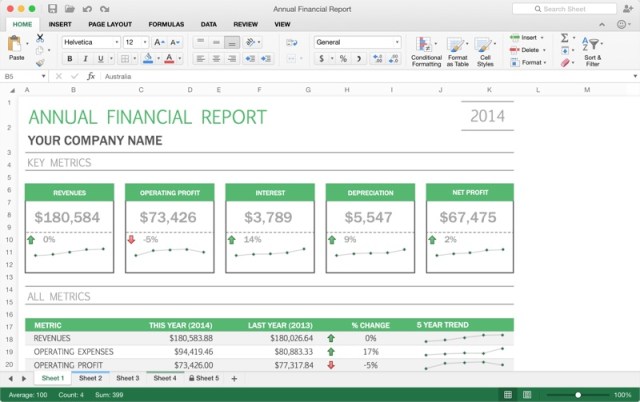
Following a beta testing period that began in March, Microsoft today announced the official launch of its next-generation office software designed for Mac users, Office 2016. The new Office 2016 software is the first major Mac release since Office 2011, and it brings new versions of Word, Excel, and PowerPoint with redesigned, Retina optimized interfaces, new features, and a focus on collaboration and cloud integration.

If you already use Office on a PC or iPad, you will find yourself right at home in Office 2016 for Mac. It works the way you expect, with the familiar Ribbon interface and powerful Task panes. Mac users will appreciate the modernized Office experience and the integration of Mac capabilities like Full Screen view and Multi-Touch gestures. With full Retina display support, your Office documents look sharper and more vibrant than ever.
Office for Mac 2016 has adopted many elements previously found in the Windows version of Office and the mobile Office apps for better cross-platform familiarity. For example, Office for Mac now uses the Ribbon to organize tools and formatting options, plus there’s a task pane for improved graphics customization in all three of the main Office apps, along with new themes and styles.
The software includes a new Yosemite-style design that takes advantage of features like full-screen support, Retina displays, and multi-touch gestures, while cloud integration makes all Microsoft files available across a range of devices.
Word 2016 for Mac includes a new Design tab for quickly customizing layouts, colors, and fonts while working on a document, and the multi-author experience has been improved. There’s a sharing interface at the top right of the app that allows multiple people to work on the same document at once, with threaded comments to communicate.

Excel 2016 for Mac’s chart preview feature suggests the charts that best fit a set of data and it adds deeper data analysis functionality with PivotTable slicers for dealing with large amounts of data to find patterns. Shortcuts within Excel and the other Office apps have been updated to match their Windows counterparts, and there’s improved autocomplete and a better formula builder that makes it easier to create spreadsheets and add data.
PowerPoint 2016 for Mac includes an improved Presenter view that shows current slide, next slide, speaker notes, and a timer, much like the PowerPoint for iOS app. In the top left, the presenter sees exactly what the audience sees, including animations in real time, for a better idea of how a presentation is going. There’s also a new animation pane for designing and tweaking animations, plus new slide transitions.

Outlook for Mac, released last October, is also designed to work with the new Office apps, with push mail support, an improved conversation view, and message previews, as is OneNote for Mac, released in March of 2014.
According to Microsoft, several major changes like improved Mail Merge for Word, Propose New Time in Outlook, and support for External Data Connections in Excel were added based on user feedback during the beta testing program. Microsoft plans to introduce new updates to the software at least once per quarter going forward.
Office 2016 for Mac is available for all Office 365 subscribers users beginning today, and is officially supported on machines running the latest version of OS X, Yosemite. Office for Mac will also be available as a one-time purchase in September.
Office 365 Personal, which includes Office access for 1 computer, 1 phone, and 1 tablet, is priced at $69.99 per year or $6.99 per month. Office 365 Home, with access for 5 computers, 5 tablets, and 5 phones is priced at $99.99 per year or $9.99 per month. There are also Office 365 plans designed for students and businesses at different price points.

‘Trackbuster’ Service Aims to Strip Tracking Information From Incoming Emails
Trackbuster is a new service that’s designed to remove invisible tracking codes from incoming emails, preventing companies and marketers from tracking information like the time an email was opened, IP address of the recipient, which links were clicked, and more.
Many of the popular email marketing tools on the market include tools for tracking various metrics of emails that are sent out, embedding cookies and web beacons, which are tiny tracking images that let the sender know when an email has been opened. Links or attachments that are clicked within an email are also often tracked using tracking codes.
There are often few options for blocking trackers embedded in emails and these involve feature-limiting functions like removing all images, but Trackbuster plans to change that by working in the background to analyze and remove hidden tracking codes from emails to prevent users from unwittingly sharing information.

Trackbuster is currently in beta and limited to Gmail and email accounts managed via Google Apps. The Trackbuster service can be connected to a Gmail account, where it scans for specific tracking strings. According to the team behind Trackbuster, the service only scans for codes within email addresses and it does not store, host, or read the content of emails. No data is shared and no data associated with the email is kept by Trackbuster.
After an email account is connected to Trackbuster, the service will analyze the last 100 emails received and all new emails going forward. Incoming emails with tracking codes are filtered into a [Bustedbox] folder, the code is removed, an [Untracked] label is added to the email and it goes into a dedicated [Untracked] folder.
Because it works by connecting directly to a Gmail or Google Apps account, Trackbuster works in web browsers and with any mail software on any device, from Macs to iOS devices.
Trackbuster will be available today in a closed beta for a limited number of beta testers, who can sign up on the Trackbuster website. The company plans to continue adding additional beta testers throughout the summer.

Apple Launches Public Betas of iOS 9 and OS X El Capitan
Just a day after releasing a new set of developer builds for iOS 9 and OS X El Capitan, Apple today launched its public beta program for both upcoming operating systems. Apple had announced at WWDC last month that it would launch the public betas in July, and a new support document published yesterday regarding changes to two-factor authentication hinted a launch was imminent.
iOS and Mac users interested in trying out the public betas can sign up on Apple’s beta software program page.
We’ll be looking for any changes specific to the public beta versions, but they are almost certainly essentially identical to the developer seeds released yesterday.
iOS 9 is the first major version of Apple’s mobile operating system to see a public beta release, as the company did not initiate the program for iOS until iOS 8.3 earlier this year. OS X users may already be familiar with the public beta process, as a similar program was in place for OS X Yosemite last year.

Apple Adds Five New Videos to ‘Shot on iPhone 6’ Gallery
Apple today updated its “Shot on iPhone 6” site to add five new videos to the film section of the gallery. First added to the site in early June, the gallery showcases videos that were created using the iPhone 6 and 6 Plus, incorporating camera features like Slo-Mo, Time-Lapse, and more.
Shot on iPhone 6 video taken in Papua New Guinea
In addition to featuring these videos on its site, Apple also uploads them to YouTube and shows them on television. At least one of the videos added to the site today was previously used in a television commercial. Videos that Apple uploads come from iPhone users around the world, and today’s videos are from Bolivia, Alaska, Hawaii, and Papua New Guinea, with two videos coming from the last location.
The first video features a car racing across salt flats in Salar de Uyuni, Bolivia, while the second depicts a train in Anchorage, Alaska. All of the videos have music playing in the background, which is listed in the videos description, and they each end with the tagline “Shot on iPhone 6.”
A third video features a massive wave cresting at Sandy Beach in Hawaii, while two videos from Papua New Guinea depict a Time-Lapse sunrise and an underwater shot of a school of fish near a coral reef.
Apple’s Shot on iPhone 6 series has been running since March and has featured photographs and videos from more than 70 photographers in 24 countries. The image have been used in print media, transit posters, billboards, and television commercials around the world.
Just recently, Apple’s Shot on iPhone 6 campaign won an Outdoor Lions Grand Prix award in advertising during the Cannes Lions International Festivity of Creativity, with one of the judges saying, “It’s not just a great idea. It’s a game changer. It’s really opening a new way of doing things and changing behavior.

Apple Sees U.S. Mac Shipments Drop 2.5% in 2Q15 Amid Larger Worldwide PC Shipment Decline
Amid a decline in both U.S. and worldwide PC shipments, Apple has also seen a slight drop in its U.S. PC shipments in 2Q15, according to shipping estimates released today from Gartner. Apple shipped 1.92 million PCs during the second quarter of 2015, down from 1.97 million in 2Q14, marking a 2.5 percent decline.
Overall PC growth in the United States during the quarter was down 5.8 percent, with total estimated shipments at 15.1 million, down from 16 million in the year-ago quarter. With the exception of Lenovo, all of the top U.S. PC vendors saw declines in growth.
In the U.S., PC shipments totaled 15.1 million units in the second quarter of 2015, a 5.8 percent decline from the second quarter of 2014 (see Table 2). The decline was led by a double-digit decline of desk-based shipments, which offset single-digit growth of mobile PCs. Based on preliminary results, the desk-based PC shipment decline was the steepest since 2009 when the market was hit by the economic crisis.
During the quarter, Apple captured 12.7 percent of the market, up from 12.3 percent in 2Q14. Apple was ranked as the fourth largest PC vendor in the United States in 2Q15, based on Gartner’s estimates, trailing behind HP, Dell, and Lenovo.
 Gartner’s Preliminary U.S. PC Vendor Unit Shipment Estimates for 2Q15 (Thousands of Units)
Market leader HP shipped nearly 4 million PCs during the quarter for a 26.2 percent share of the market, while Dell shipped 3.9 million for a 25.6 percent share of the market. Lenovo came in just ahead of Apple with 2 million PC shipments and 13.3 percent of the market, while Asus brought up the rear with shipments of 767,000 and a 5.1 percent share of the market.
 Apple’s U.S. Market Share Trend: 1Q06-2Q15 (Gartner)
IDC has also released its own estimates of Apple’s U.S. PC shipments during 2Q15, which are quite different from Gartner’s estimates. According to IDC, overall U.S. PC shipments totaled 16.4 million, a 3.3 percent decline from 2Q14’s 17 million.
According to IDC, Apple shipped 2.2 million PCs during the quarter, for 13.5 percent market share and 11.9 percent growth year over year. Gartner and IDC often have different numbers because each company counts different products in their PC totals.

Apple does not rank as one of the top five worldwide vendors in Gartner’s data, which ranks Acer and ASUS above Apple, but in IDC’s data, Apple ranks higher than Acer/ASUS and is counted as the number four worldwide PC vendor. IDC’s data suggests that Apple’s worldwide PC marketshare climbed to 7.8 percent in 2Q15 with 5.14 million shipments, while Gartner’s data suggests Acer was the number five worldwide PC vendor with 4.5 million shipments.

According to Gartner, worldwide PC shipments during 2Q15 totaled 68.4 million units, a 9.5 percent decrease from 2Q14. IDC’s estimates, meanwhile, point towards 66.1 million shipments during the quarter, a 11.8 percent drop from the year-ago quarter.
It’s important to note that data from Gartner and IDC is preliminary and that the numbers can shift somewhat, sometimes dramatically. Last year, for example, Gartner predicted Apple shipments of 1.68 million and 10.6 percent market share in 2Q14, a number that was later revised to 1.97 million shipments and 12.3 percent market share.
Update 2:40 PM PT: We’ve updated this post to add data from IDC.

 AIVAnet