


Play Store shake up: devices section renamed to Google Store, Nexus 5 is gone

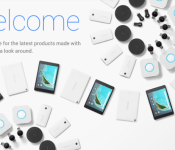
Google just rebranded the devices section of the Play Store, which is now called Google Store.
The new Google Store page features a fresh design with large, bold fonts, lots of white space, and clean imagery. Google calls this landing page the “new home for the latest products made with Google” and it’s subjectively an improvement over the previous layout. All of Google’s current products are present, from the new Chromebook Pixel 2015 (improved specs, cheaper price tag, USB Type-C – more details here), to the Nexus 6 and Nexus 9, all Android Wear devices, Nest, Nexus Player, and Chromecast. There’s also a presentation page for Android, which features the same clean, airy aesthetic, under the “All kinds of screens for all kinds of scenes” tagline.
To celebrate the launch of the new Store, Google is offering free shipping on all devices for a limited time. If you’re wondering whether you need to sign up with your payment info again, the answer is no – your info from the Play Store will be carried over automatically.
Missing from the Store is the Nexus 5, which appears to have reached the inevitable end of life status, and the 2013 version of the Chromebook Pixel.

It’s not clear yet why Google has opted to separate the device section under the new Google Store branding. We could speculate that the move is meant to better delimitate the increasing number of Google-branded hardware products, perhaps in preparation for a bigger effort in this area.
We also don’t know if changes are coming to other sections of the Play Store, though at least a redesign looks likely at this point.
You can judge the new Google Store for yourself here, but be advised that it’s only accessible from the countries where Google actually sells hardware.

Watch NASA test its most powerful booster rocket ever

We know: The progress toward NASA using the SLS (or Space Launch System if you aren’t into the whole brevity thing) has been painfully slow, starting way back in 2011. Today marks a significant step toward it shooting astronauts into the furthest reaches of space, however — testing its booster system. The trial run was two minutes long (the same length as it would be during an actual launch) and in those 120 seconds, the Utah-based booster produced 3.6 million pounds of thrust. NASA says this is one of two tests necessary before the system gets cleared for a trip to Kennedy Space Center in Florida, and the next one takes place in early 2016.
https://www.youtube-nocookie.com/embed/Ts9sFtUSeQE?rel=0
These boosters provide some 75 percent of the thrust needed to escape Earth’s cruel gravity, and the ground-based experiments work to ensure that they won’t conk out (or worse) on the launchpad. We’re still at least a few years away from boldly going where no one’s trekked before, but at least we’re making progress to getting there.
[Image credit: NASA]
Filed under: Transportation, Alt

Apple Again Said to Adopt Intel LTE Chips for iPhones in 2016
Some of Apple’s iPhones produced in 2016 will use wireless modem chips supplied by Intel rather than Qualcomm, reports VentureBeat. iPhones (presumably the iPhone 7) sold in emerging markets in Asia and Latin America will reportedly use an Intel 7360 LTE modem.

Intel has been gunning hard during the past year for a place in the iPhone and now appears to have succeeded, at least partly. The 7360 chip will ship inside a special version of the iPhone that will be marketed to emerging markets in Asia and Latin America, the sources said.
The 7360 LTE modem chip [PDF] from Intel features up to 450Mbps downlink and it supports 29 LTE bands. It will begin shipping out to manufacturers during the second half of 2015. Apple engineers have reportedly been traveling to Munich, Germany to collaborate with Intel engineers on the chip.
Though VentureBeat suggests the Intel chips might only be used in some iPhones in emerging markets, analyst Ben Bajarin believes that Apple would make the switch universal, rather than using separate chips in different versions of the phone.
Today’s report is the second time we’ve heard inklings of an Intel-Apple modem partnership. KGI Securities analyst Ming-Chi Kuo predicted Apple’s switch from Qualcomm to Intel for its baseband chips back in January. The shift from Qualcomm to Intel for even a portion of LTE chips will be a major loss for Qualcomm, as the company has supplied Apple with modem chips for many years now.

Report says Samsung is currently the top smartwatch vendor in the world

Samsung has been in the wearables game since 2013 as we all know. This was a time when the concept hadn’t matured as it has today. The Galaxy Gear as it was known, turned out to be a failure for the company.
But after that, the company launched a series of wearables running the Tizen operating system. All these factors have collectively made Samsung the top smartwatch vendor in the world with 17.65% of the overall wearables marketshare. The data was gathered by Statista.
The Korean manufacturer has reportedly sold 1.2 million smartwatches until the end of 2014. At second place is Pebble, which is believed to have sold 700,000 wearables by the end of 2014. The third, fourth and fifth spot were taken by Fitbit, Sony and Lenovo respectively.
Samsung’s last known wearable, the Gear S was announced back in September and packed cellular connectivity, letting users operate the device independently. The company also has an Android Wear smartwatch called the Gear Live which was unveiled in June, but it hasn’t quite seen the success that the company had hoped for.
Source: Seeking Alpha
Via: GSM Arena
Come comment on this article: Report says Samsung is currently the top smartwatch vendor in the world

Nexus 6 arrives at Verizon starting March 12

After months of waiting, Verizon customers can finally get the Nexus 6 on “the nation’s largest and most reliable 4G LTE network” starting on March 12 online, and March 19 in stores.
There seems to be no indication in Verizon’s announcement as to why there was a wait, other than they say “Thank you for your patience”. However, with Verizon’s push of their new Advanced Calling capabilities, or Voice over LTE (VoLTE), it’s possible they wanted to push their technology on the Nexus 6. However, this ability has only become available with the release of Android 5.1 and its High Definition Voice capability. Still, one wonders why they didn’t just promote it when the software became available for the Nexus 6.
The Nexus 6 will cost $249.99 on a new two-year contract, or $27.08 per month for 24 months on Verizon Edge. Consumers also receive 6 months of free Google Play Music All Access when purchasing a Nexus 6 with Verizon.
Source: Verizon Wireless News Center
The post Nexus 6 arrives at Verizon starting March 12 appeared first on AndroidGuys.
Here are the Android 5.1 OTA update links, and how to use them

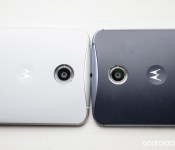
Now that Android 5.1 (still Lollipop) has been officially announced with a few new features and presumably a bunch of bugfixes, it’s time for the updates to begin. As always, that starts with Nexus devices. And that means we can speed the updates along a little bit, if we’re so inclined.
If you’re the kind of nerd who doesn’t mind a little sideloading or factory image action, go ahead and bookmark this page. We’ll update it as the links roll in. Be sure to check your software versions before starting. And if you need help, hit up our Nexus forums!
Teardown Reveals New 13-Inch MacBook Air SSD is Nearly Twice as Fast as SSD in New 11-Inch MacBook Air
Apple on Monday refreshed its MacBook Air lineup, adding Broadwell chips and Intel 6000 graphics. Both models received the same processor updates, but the 13-inch MacBook Air got an extra boost — new PCIe-based flash storage that Apple says is “up to two times faster” than the flash storage used in the previous generation MacBook Air. The 11-inch MacBook Air did not receive the same flash storage update.
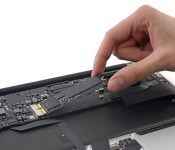
iFixit decided to test Apple’s “two times faster” claim by comparing SSD speeds between a new 11-inch MacBook Air and a new 13-inch MacBook Air, with results that suggest the SSD in the 13-inch MacBook Air is indeed nearly twice as fast as the SSD in the MacBook Air.
Average write speeds for the 11-inch MacBook Air using Black Magic’s Disk Speed Test were 315MB/s, while average read speeds were 668MB/s. The 13-inch MacBook Air saw average write speeds of 629.9MB/s and average read speeds of 1285.4MB/s.

An iFixit teardown of the 13-inch MacBook Air conducted this morning suggests the notebook is using Samsung flash memory with a Samsung controller. A teardown of the 11-inch MacBook Air, which does not feature the faster flash storage, was equipped with SanDisk flash memory and a Marvell controller. In comparison to the Samsung flash storage used in the previous-generation 13-inch MacBook Air, iFixit said “it’s definitely an update.”
The new 13-inch MacBook Air is available from Apple’s online and retail stores with prices that start at $999. The higher-end $1,199 model can be configured with up to 512GB of flash storage.

Huawei Watch price unveiled by several different online retailers

Huawei’s new Android Wear-powered smartwatch may be one of the best looking wearables ever made, though we still don’t have an official price directly from the company. When the Watch was announced, the only detail we heard regarding its availability was that it would launch in more than 20 different countries, whenever that may be. It seems as though we’re getting closer to finding out the official price point, as a number of different online retailers have outed the price for three different color variants of the Huawei Watch.

German online retailer Billiger first unveiled the price for the silver and black variants at €349 (~$370 US), and €399 (~$425 US) for the gold version. If those prices are indeed accurate, we could expect to see the Watch launch for somewhere around the $349-$399 price point. Not only that, but UK retailer Mobile Fun reached out to the folks at TechnoBuffalo and confirmed its pricing is set at £300 for the silver and black models, and £350 for the gold variant.
While these prices seem accurate so far, we still have yet to receive any official word from Huawei. Prices are outed early all of the time, so we need to make sure to remember that anything can change from now until launch date.
If you’d like some more information on the Huawei Watch, you can check out our hands-on and first impressions here. Would you buy the Watch if it cost somewhere between $349-$399? If not, which Android Wear device would you buy instead?

Verizon nabs DreamWorks originals for its upcoming streaming service

Verizon’s internet TV service is coming later this year, and Big Red is locking down OTA content providers. The company ordered over 200 hours of original programming from AwesomenessTV and DreamWorksTV that will debut in 2015, with the former producing series aimed at teens and the latter developing live action and animated content featuring its popular characters. That list would certainly include personalities from Shrek and Madagascar, we’d surmise. If you’re not familiar with AwesomenessTV, it has a sizeable following on YouTube, in addition to films and series on both Nickelodeon and Netflix. And DreamWorksTV is a YouTube channel for the studio’s animated, live action and vlog-based short clips.
Of course, Verizon is looking to offer custom options for its streaming service, so this pair should get cozy with the age-appropriate menu items. There’s still no word on an official launch date, so we’ll have to stick with the “probably late in the first half of 2015″ timeline that CEO Lowell McAdam spilled back in September. Sony will beat Verizon to living rooms, though, as it’ll go live (in a handful of cities) with the PlayStation Vue offering in a matter of days. Of course, Sling TV started equipping cord cutters with an alternate option last month.
[Image credit: DreamWorks]
Filed under: Home Entertainment, Internet, HD
Twitter for Android gives profiles a new look

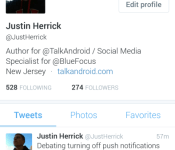
In the coming days, users of Twitter for Android will notice something different about the look of profiles. The app has gotten rid of the various menus and swipes required to view all there is to see on a profile. Everything — tweets, photos, favorites biographies, recommended follows, and profile editing — is on the same screen. When scrolling down on a profile, the user’s header minimizes into a banner with the name and amount of tweets displayed.
The feature was announced just yesterday and all users should notice the changes quite soon.
We’re rolling out new profiles on Twitter for Android: it’s now easier to view bios, Tweets and photos. https://t.co/MMnvuuHaxh
— Twitter (@twitter) March 10, 2015
Users of Twitter for Android on Lollipop devices will notice that the status bar on a profile reverts to black when viewing a profile. Normally, the status bar is blue to match the theme of Twitter.
Source: @Twitter
Come comment on this article: Twitter for Android gives profiles a new look
 AIVAnet