Skip to content

Archive for

10
Mar

Hillary Clinton: ‘I think I went above and beyond’ email requirements


DEM 2016 ClintonThe most contentious work-related email debate of this month (at least) continued today, as likely presidential candidate Hillary Clinton held a press conference at the UN headquarters. The topic? Her use of a self-hosted email address during her time as Secretary of State. She gave a statement, then answered a few questions from the press, saying that her choice to use a personal address was done for convenience. Last month the former First Lady told Re/code that she uses both an iPhone and a Blackberry, and said today that “looking back, think that it might have been smarter to have those two devices from the very beginning.”

Developing…

Filed under:

Comments

Source: Reuters, Bloomberg

10
Mar

4 in 1 Fitness Pushups, Situps, Squats and Pullups is your myAppFree Deal of the Week


4 in 1 Fitness Pushups, Situps, Squats and Pullups is a Windows Phone fitness app that may have one of the longest titles in the genre. It is also a fitness app that will appeal to those just starting out getting into shape as well as those who have already been bitten by the fitness bug.

As you might guess, 4 in 1 Fitness focuses on four exercises, push-ups, sit-ups, squats and pull-ups. It also has a diet plan to help you count those calories. Normally priced at $5.99, 4 in 1 Fitness is also this week’s myAppFree deal where you can pick the Windows Phone app up for free.

10
Mar

Leaked Documents Suggest CIA Work on Hacked Version of Xcode, OS X Installer Exploit


xcodelogoUnited States Central Intelligence Agency researchers have been working for years to crack the security of Apple’s iPhone and iPad, and may have done so through the creation of a modified version of Xcode, Apple’s software development tool designed for developers.

According to secret documents obtained by The Intercept, at a 2012 “Jamboree” that focused on security flaws found in various electronics, CIA researchers outlined both a hacked version of Xcode and a modified OS X updater that could be used to install malicious software like keyloggers.

The modified version of Xcode, the researchers claimed, could enable spies to steal passwords and grab messages on infected devices. Researchers also claimed the modified Xcode could “force all iOS applications to send embedded data to a listening post.” It remains unclear how intelligence agencies would get developers to use the poisoned version of Xcode.

The malicious version of Xcode could potentially be used to extract private data from devices that installed apps built by the hacked Xcode. Some of the things researchers said could be done with Xcode included installing “remote backdoors” in Mac apps, embedding an app developer’s private key into iOS applications (letting the government masquerade as the targeted developer), forcing iOS apps to send data from an iPhone or iPad to a “listening post,” and disabling core security features on iOS devices.

None of the documents detail how the Xcode and OS X installer exploits have been used by the CIA, and they also don’t state whether the efforts have been successful, but as noted by The Intercept, they suggest that the government’s efforts to crack the security technology companies employ is a continually ongoing effort.

Apple and the U.S. government have been at odds over privacy and security issues in recent years. A 2013 document leak suggested that Apple and other tech companies were working with the government on a secret project called PRISM, which allegedly provided the government with direct access to customer data on company servers.

Apple and multiple other technology companies like Google vehemently denied their participation in such a program and have since gone to great lengths to ensure the public that they’re not involved in the government’s spying attempts. Apple, Google, Facebook, Microsoft, and other companies banded together to ask for greater surveillance transparency and the ability to share more info on government data requests with consumers, which was ultimately successful.

Apple launched a privacy site in September of 2014 outlining the privacy features of its products and services and offering detailed information on government information requests. Across 2014, Apple CEO Tim Cook began putting a heavy emphasis on the importance of privacy, and with iOS 8, Apple significantly increased the encryption protection on iOS devices. Prior to iOS 8, Apple had the ability to access data on iOS devices with a company-held encryption key, and now, that no longer exists. Google has made similar changes.

The FBI has strongly opposed Apple’s efforts to increase the security of its iOS devices, with FBI Director James Comey insisting that government access to electronic devices is necessary in some cases. Apple has reportedly been in talks with FBI officials over its security changes, but Apple CEO Tim Cook has maintained Apple’s commitment to privacy and security.

At the White House Cyber Security Summit in February, Cook said customer trust means everything to Apple. “When it comes to the rights of customers and citizens, we’re all talking about the same people,” he said. “People have entrusted us with their most personal and precious information and we owe them nothing less than the best protections we can possibly provide by harnessing the technology at our disposal.”

Note: Due to the political nature of the discussion regarding this topic, the discussion thread is located in our Politics, Religion, Social Issues forum. All forum members and site visitors are welcome to read and follow the thread, but posting is limited to forum members with at least 100 posts.


10
Mar

Samsung’s latest Edge UX added to the Look SDK


edgeux

Samsung has opened new opportunities for the developers with the new Look SDK. The company has now added the Edge UX to this SDK, which essentially deals with the functionality on the curved edges of the Samsung Galaxy Note Edge as well as the recently announced Galaxy S6 Edge.

This new UX for the Galaxy S6 Edge gives developers the ability to add a new Feeds Panel, which can offer data like notifications, sports scores, stocks etc. To enable this feature, users will have to perform a swipe gesture (upwards and downwards) on the edge of the display.

Samsung recommends developers to use a black background since only the edges of the display are supposed to show the notification while the rest of the display panel will be off. This will also ensure that the battery life of the device doesn’t take a hit when notifications arrive.

It’s good to see that Samsung has some neat plans for displaying notifications on the uniquely shaped ‘Edge’ smartphones.

Source: Samsung
Via: Sam Mobile

Come comment on this article: Samsung’s latest Edge UX added to the Look SDK

10
Mar

Cricket Wireless nabs Moto E (2015) for $130


AT&T’s prepaid brand, Cricket Wireless, today confirmed intentions to offer the Motorola Moto E (2015). Arriving on Friday, March 13, the handset will cost $129 and will not require a service contract.

Powered by Android 5.0 Lollipop, the phone features a 4.5-inch display, 5-megapixel rear camera, and 4G LTE connectivity. Under the hood you’ll find a quad-core 1.2GHz processor, 1GB RAM, 8GB storage with microSD expansion, and 2390mAh battery.

moto_e_2015_large

Cricket Wireless rate plans start at $35 per month (with Auto Pay credit) and include unlimited calling and messaging. For a limited time, customers who switch from carriers such as T-Mobile, Metro-PCS, Sprint and Boost can receive one free month of service. The requirement, however, is they sign up for Smart, Pro or Advanced plan and complete two months of service.

Cricket


The post Cricket Wireless nabs Moto E (2015) for $130 appeared first on AndroidGuys.

10
Mar

Moto 360 gets Moto Maker tool


Motorola on Tuesday introduced its Moto Maker tool for its Android Wear-powered smartwatch, the Moto 360. Head to the Motorola website today and you’ll find you can pick and choose the exact design you want for your wearable. Pricing shakes out to be the same as before with the predesigned models; there are no new… Read more »

The post Moto 360 gets Moto Maker tool appeared first on SmarterWatching.

Source: SmarterWatching


The post Moto 360 gets Moto Maker tool appeared first on AndroidGuys.

10
Mar

Could this be our first look at the LG G4?


It seems that amongst all the excitement of the Galaxy S6 being launched, LG may have felt a little left out, as today we see what could be the first leak of the LG G4.

Coming courtesy of a Twitter account called @onleaks – managed by the editor of NowhereElse.Fr – is an image that claims to be the LG G4 in all its glory.

The leak was stressed as a ‘non-final’ build – take that as you will – but what we see here is a curved device with a display size of somewhere in between 5.2 and 5.5 inches.

So it seems the G and G Flex line of LG might have been combined to give the G4? What do you guys think of the design? Drop us a comment below.

SOURCE


The post Could this be our first look at the LG G4? appeared first on AndroidGuys.

10
Mar

The Patent and Trademark office is finally being run by someone willing to reform the patent system


USPatentTrademarkOffice WeHint

Yesterday, the U.S. Senate confirmed former Google executive Michelle Lee to head the U.S. Patent and Trademark Office, a position that has been vacant for two years.

Lee is the former deputy general counsel and former head of patents and patent strategy at Google. She will now head an agency whose main role is to determine which inventions deserve a patent. Since her new position has been empty for two years (even though she was interim head until being confirmed), she will face a massive backlog in examining patents. The unexamined backlog in December 2011 was almost 722,000 patents while today it currently stands at 602,265.

As Ars Technica notes, Lee’s appointment marks the first time someone with a background from an Internet-focused company will take the helm at USPTO. Lee is also a popular pick due to her belief that there needs to be significant patent reforms. While she was at Google, Lee became one of the most outspoken lawyer on the issue of “patent trolls.”

PatentTrollsSuits TechHive

How out of control has patent litigation gotten recently? Before 1990, there had been just one patent damage award of over $100 million. Since 1990, there have been at least 15, with at least five topping $500 million.

Then there are people patenting general ideas and demanding millions for anyone who tries to use such a thought.

While at Google, Lee wrote a blog explaining her views of patent reform.
The current system too easily allows damages to be assessed based on the value of the whole product often containing many features — not just the value of the innovation of the allegedly infringed patent — which means the threat of potentially massive awards forces defendants to settle. Balance should be restored by requiring damages to be based on the value of the innovation’s contribution to the product…Passage of patent reform is long overdue. – Michelle Lee, Google

As TechDirt noted after Lee gave a speech about patent reform last year, this may be the first time that the patent system will be run by someone who isn’t of the belief that more patents somehow mean a better system.

I can’t recall ever seeing a head of the patent office open to even recognizing that patents are not the be-all and end-all of innovation. I can’t recall ever seeing a head of the patent office even willing to admit that there could be costs to the patent system that need to be weighed against the benefits. For the most part, they’ve tended to just want to expand the patent system on the assumptions that “patent = good; more patents = better.” So this kind of speech was actually both surprising and refreshing. – TechDirt

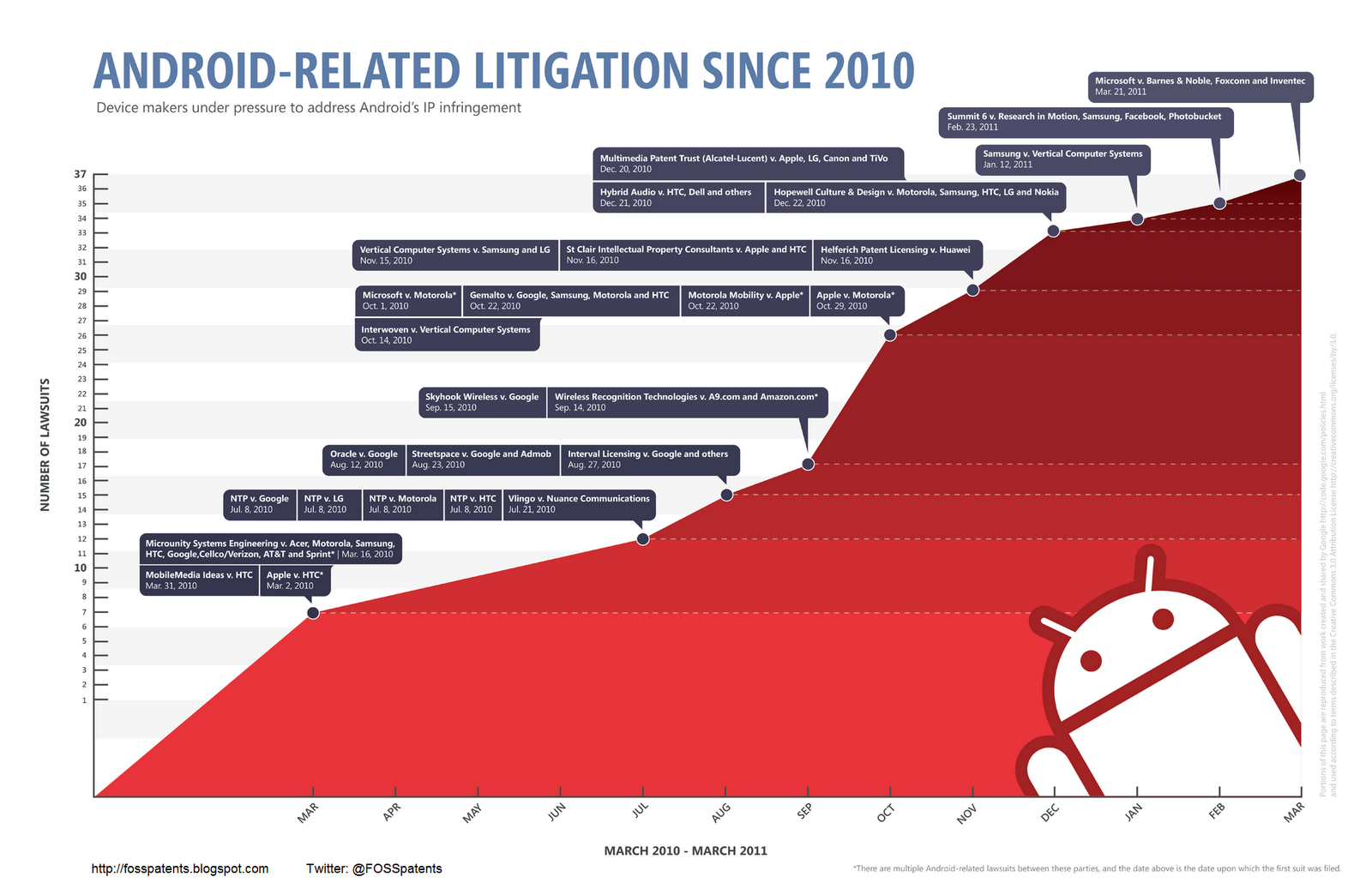
AndroidPatentTroll FOSSPatents

Lee almost didn’t get to this position. Last year, the White House came close to nominating a pharma lawyer as the USPTO head at a time when big pharma companies were pushing millions into lobbying against patent reform. Thankfully, the White House heard the backlash from both the public and tech industry and stepped away from that candidate and onto Lee.


10
Mar

JXE Streams: Sex, violence and ‘DmC: Devil May Cry’ on PS4


Devil May Cry, in addition to sounding like a scrubbed Pablo Neruda poem, was an evolutionary leap from the clunky 3D action games of the ’90s when it hit the PS2 back in 2001. Capcom’s game delivered a heady blend of The Evil Dead and anime flash, while redefining how free-flowing action felt in a video game. Oh, and it looked cool as hell. When it was announced that 2013’s DmC: Devil May Cry would both reboot the series and come from the drastically different creative culture of the UK rather than Japan, fans balked. How could it possibly live up to the legacy? Now DmC is getting another shot with a PS4 and Xbox One definitive edition which we’re playing on JXE Streams.

Starting at 3PM ET on Engadget.com/gaming, Twitch.tv/Joystiq, and right here in this post, we’re playing a solid two hours of DmC: Devil May Cry Definitive Edition on PlayStation 4. Dig on the improved visuals, faster speed, and the wholly bad ass brawling and platforming that made the game great the first time around. Most of the JXE Streams crew will be hanging out as well so come by and ask questions!

Enjoy the streams? Follow us on Twitch to know whenever we go live and bookmark Engadget.com/gaming to check out our upcoming schedule.

[We’re playing a digital copy of DmC: Devil May Cry on PlayStation 4 streamed through an Elgato Capture HD via OBS at 720p.]

Filed under: , , ,

Comments

10
Mar

What is an Xposed Framework/Module and how does it help you?


xposedframework

The Android platform is known for its innumerable amount of functions and the users’ ability to further customize it according to his/her liking. The first thing that comes to mind when we think of customizing our Android device is custom ROMs. The likes of CyanogenMod, Paranoid Android etc are some of the prominent ROM development teams out there that offer all the features that stock Android doesn’t.

But what if you don’t want to go through the hoops of installing a custom ROM and could get some of the features from it simply by rooting your device? Well, that’s where Xposed Framework comes into play. Rooting is a simple procedure and smartphones can be rooted these days with a single click. Doing this doesn’t change the appearance of your device, but merely makes system level tweaks which allows the installation of certain apps which are otherwise blocked.

So what exactly can you get with an Xposed Framework? Once you have the framework installed on your device, you can then search for Xposed Modules, which are basically features that you can bring to your device. These modules can access core Android features, which allows for better functionality and deeper customization options. Usually, enabling such features requires users to flash full ROMs, but that’s no longer the case with Xposed.

A vast majority of developers already work on Xposed Modules day in and day out to bring you the latest in the Xposed arena. Think of the framework as a foundation for the modules to run on your device.

We’ll walk you through the entire process of installing the Xposed Framework and the Module below:

First things first, make sure you have a rooted smartphone. You can find a large number of easy root options for your smartphone. If you use a Nexus handset like myself, it’s as easy as installing the Nexus Root Toolkit on your desktop and letting the app do the rest on its own.

xposedframework-1

  • Assuming you have a rooted device already, download the Xposed framework installer app from here. This is an apk file which you will need to side load onto your rooted device and install it there. Make sure you allow app installation from third party sources before going forward.
  • Once Xposed Installer has finished installing, head over to the app and tap Framework. From here, you will have to tap the Install/Update button.
  • In a while (mostly close to 5 seconds), you will see a Superuser request asking your permission to grant access to the app. Make sure you grant permission.
  • Once finished, you will have to reboot the device. It’s ideal to do this using the toggle shown in the Framework settings. After your device is rebooted, you will successfully have Xposed Framework installed on your smartphone.

Installing the Xposed Modules:

xposedframework-3

  • This is as easy as sideloading an apk file of your choice either online or through the XDA forums. The downloads section of the Xposed app will also offer suggestions for some of the popular modules for your device, which is worth considering as well.
  • Once you pick a module of your choice, it’s as simple as downloading by scrolling down the list.
  • Downloading the module alone won’t give you access to these modules though, as you will need to manually install them. This can be done by tapping the notification that shortly pops up on your device or by heading over to the Modules section within the Xposed app.
  • From the modules section, you can also customize and tweak your modules according to your liking.

That’s pretty much it and everything you need to know about the Xposed Framework and Modules. This should finally let you install custom features on your device which would otherwise require the installation of a fresh ROM.

Screens courtesy of Addictive Tips.

Come comment on this article: What is an Xposed Framework/Module and how does it help you?