


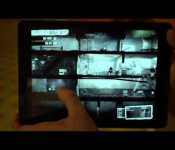
GDC 2015: We have your first look at This War of Mine on iPad
Critically acclaimed survival strategy game This War of Mine is making its way from your Mac to iPad soon and we’ve got your first look at it from GDC 2015.
Unlike most games that revolve around a war, This War of Mine focuses on the civilians that are affected by it. Made by 11bit Studios, This War of Mine has you scavenging and trading supplies as you make sure your group is well fed, happy, and healthy in their makeshift shelter. The game features a night and day cycle that add different gameplay elements. For example, during the night you are forced to protect your civilians as they are always being attacked by hostile snipers.
The game is set to come out in about two months with no plans of it being on iPhone due to the lack of screen real estate. If you are interested in his game perhaps reading Peter’s review will make you want it even more as he says it’s a game you shouldn’t miss.
Keep an eye out for more GDC news as we are here for a couple more days.
The iOS 8 animation curve
Following the introduction of iOS 7 back in June of 2013, a common complaint from developers and designers was that the system animations took to long to complete, making the interface feel slow.
Apple sped up the animations before release, but for some they still felt too slow. Since iOS 8 didn’t fundamentally change the animations curves, that perception has lingered. Recently, to highlight the difference between pre-iOS 7 and post-iOS 7 animations, Omni developer William Van Hecke made a video:
Did a crappy iOS 8 vs. iOS 3 vidja https://t.co/SWmRdURSGq
— William Van Hecke (@fet) March 3, 2015
Van Hecke attributes the difference to a change in interruptibility — Springboard previously allowing you to act before an animation finishes versus now making you wait until the animation finishes before you can act.
It’s my understanding, however, that iOS animations have never been interruptible. They simply ended quickly pre-iOS 7 and now, post-iOS7, they ease out.
Whether shorting the animation tails or making the animations interruptible is the best way to reverse the feeling and the perception of slowness Hecke refers to, I don’t know enough to say. Either way, and to his credit, Van Hecke filed the issue with Apple’s bug reporter:
@reneritchie 19318009 (Behaves Correctly) and 19377939 (Duplicate)
— William Van Hecke (@fet) March 4, 2015
More information on the animations from former UIKit engineer Andy Matuschak:
@fet (except the Springboard unlock animation—that one really was interruptible before). In short: “it’s too hard!” Womp womp.
— Andy Matuschak (@andy_matuschak) March 3, 2015

Tetra Lockscreen app gets unpublished from the Windows Phone Store

Tetra Lockscreen, one of many apps in the Microsoft Garage project, has evidently been removed from the Windows Phone Store. The app infamously did not work on the Lumia 1520, due to an incompatibility bug that was being worked on, but for other phones like the Lumia 830 it worked just fine.
Reports started coming in early February that the app had gone missing, but some of it appeared to be regional or specific phone related. However, now it seems that for all Windows Phones, the app is indeed gone.

NVIDIA enters the streaming box market with the Android TV-powered Shield
 The set-top streaming box market is already pretty crowded, with nearly every manufacturer offering some kind of streaming dongle or device. NVIDIA has been a holdout, but now they’ve announced a new Shield device designed specifically for streaming content to your television. The company already utilizes streaming technology with their portable Shield devices, so this move makes perfect sense.
The new Shield box is obviously purposed for playing games on your television screen and packs very capable specs for an Android TV box. You’ll get NVIDIA’s latest Tegra X1 CPU paired with a speedy Maxwell GPU and 3 GB of RAM, which can output 4k at 60 FPS. That hardware combination should have no problem pushing any available Android game. The device has 16 GB of internal storage with support for up to 128 GB microSD cards, and it’s bundled with a Shield controller for playing games.
Since it’s a Shield device, you’ll be able to use NVIDIA’s Grid technology to stream controller optimized PC games to the device, which makes for a very easy way to play games from a powerful Windows computer on your television. NVIDIA GameStream should also work, but you’ll need an NVIDIA GPU in that computer, obviously, but if you’re buying the Shield, that’s likely not an issue.
NVIDIA is launching the Shield at multiple markets, trying to tackle smart TVs, streaming boxes, game consoles, and Steam boxes all in one. It’s bold, but it looks like NVIDIA is offering a fantastic product to pull it off.
Expect the Shield to launch in May for $199. It comes with the Shield, a controller, an HDMI cable, a micro USB cable, and a power cable.
Come comment on this article: NVIDIA enters the streaming box market with the Android TV-powered Shield

NVIDIA’s Grid service will require a paid subscription in June
 NVIDIA’s Grid service allows gamers to stream PC games to a Shield device from anywhere. It differs from GameStream in that NVIDIA provides the host computer, so you don’t actually need a gaming computer to handle the processing. Up until now, that service has been free for anyone, but that looks like it’ll change in the coming months.
This June, one month after the launch of the set-top Shield, NVIDIA will begin charging a subscription fee for Grid. There’s no word on how much that sub will cost, and it doesn’t look like it’ll make its way out of the Shield family, but if you were thinking about buying into NVIDIA’s ecosystem, here’s a heads up.
source: SlashGear
Come comment on this article: NVIDIA’s Grid service will require a paid subscription in June
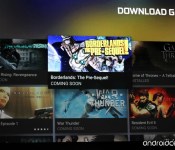
Borderlands: The Pre-Sequel, Crysis 3 and Doom 3 are coming to Android later this year

After hitting the Xbox One, PlayStation 4 and PC, Gearbox Software’s Borderlands: The Pre-Sequel will be launching on NVIDIA’s Shield Android TV, which also doubles as a game console thanks to the presence of the latest Tegra X1 mobile chip. NVIDIA is making a content-curated GRID store that features the “best of the best” games tailored for Shield. Other titles that are set to launch on the console include Doom 3 BFG Edition, Crysis 3, Resident Evil 5, War Thunder and Metal Gear Rising: Revengenance.
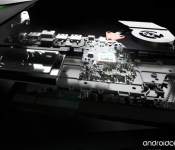
NVIDIA Shield Android TV console specs
Boasting a 256-core Maxwell GPU, the NVIDIA Shield offers console-level visuals in a $199 package.


Moto E (2015) with LTE now available for purchase in the U.S.

Motorola’s latest affordable smartphone — the Moto E (2015) — is now up for sale in the U.S. Available in white and black color variants, the 3G-only model is retailing for $119, while the LTE-enabled version is listed at $149.

You can unlock this smartphone with the blood vessels in your eyes

Tired of punching in numbers or swiping strange patterns to unlock your smartphone? Fingerprint and facial recognition have been tried before with varying levels of success, and now ZTE thinks it can offer something better. The company’s Grand S3 smartphone in China is getting a feature called “Sky Eye,” which lets you swap Android’s traditional lockscreen methods with your eyeballs. It uses a biometric authentication called “Eyeprint ID” and of course, we had to check it out and see if it was more than just a gimmick.
The setup is fairly simple. A green line bounces up and down the screen, requiring that you follow it with your peepers for about eight seconds. Meanwhile, the front-facing camera records the blood vessels in the whites of your eyes and creates a secure ID. The process could be faster, but once you’ve done it once you should, in theory, never have to do it again. Unless you swap your eyeballs Minority Report-style, of course. Only one Eyeprint can be registered at a time though, so Apple’s Touch ID is superior in that regard.
Once the Grand S3 is locked, you’ll first need to tap the power button and swipe down from the top of the screen. There’s definitely a sweet spot for the eye recognition — I found that about 15cm from the handset was ideal — but you’ll receive a prompt on screen if you need to move closer or further away. When you’re in range, the system takes about a half second to identify your eyes’ unique characteristics and give you access to the rest of Android.
We tried it a handful of times and it worked as promised on every occasion. It’s not quite as fast as using Touch ID, but a huge advantage for smartphone makers is that it doesn’t require extra hardware. Provided the phone has a decent front-facing camera, there’s no reason why Eyeprint ID couldn’t be implemented in other handsets. ZTE says the feature will be included in its future Grand smartphones and will later be expanded to mobile payments. If the entire experience can be made just a little more seamless, we wouldn’t be surprised if other Android OEMs begin experimenting with this feature too.
Filed under: Cellphones, Mobile
Source: ZTE
NVIDIA announces 4K Android TV gaming machine, SHIELD, with Tegra X1 and 3GB of RAM for $199
The set-top box races just got a whole lot more interesting. NVIDIA has announced a new one that is likely to drain your bank accounts. The new NVIDIA Shield set-box brings all the benefits of the Shield portable and Shield tablet to your big screen TV. The box runs on Android, Android TV to be […]
The post NVIDIA announces 4K Android TV gaming machine, SHIELD, with Tegra X1 and 3GB of RAM for $199 appeared first on AndroidSPIN.
 AIVAnet