


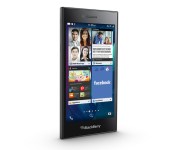
CrackBerry Asks: What do you think of the BlackBerry Leap name?

Although the name slipped out a bit early giving everyone some time to form some opinions on it, it wasn’t 100% confirmed until BlackBerry officially announced it at Mobile World Congress. Now though, the BlackBerry Leap is here and as Ron Louks, President, Devices and Emerging Solutions noted, ‘the BlackBerry Leap was built specifically for mobile professionals who see their smartphone device as a powerful and durable productivity tool that also safeguards sensitive communications at all times.’
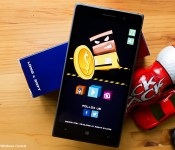
Escape Fast! is our Windows Phone myAppFree Deal of the Week

Escape Fast! is a Windows Phone game that has you getting shafted by your partner in crime after a bank robbery and have to fend for yourself in escaping the reach of the long arm of the law. The multi-level platformer game is full of narrow roadways, obstacles and cop cars ready to take you down.
Available for low-memory Windows Phones, Escape Fast! has been well received over on iOS and Android platforms. After playing Escape First! for a short while, the game should have similar success on the Windows Phone platform. Escape Fast! normally runs $1.49 in the Windows Phone Store but through the myAppFree campaign, you can pick up Escape Fast! free.

GDC 2015: Divide by Sheep is a quirky (and brutal) math puzzle game
Divide by Sheep is a wacky math puzzler from Tiny Build Games that starts off cute and ends up quite deadly. We got a chance to try an early build at the Game Developers Conference 2015. The objective of the game is to save sheep by getting them to the raft. However, only a certain amount of sheep can fit onto the raft.


Sometimes a level presents you with more sheep than you need so the game offers different ways to ‘sacrifice’ your fluffy friends. You can either do this by causing them to drown, sliced by lasers, or taken by the grim reaper himself.
Divide by Sheep somehow manages to make a dark game remarkably cute and equally fun. It’s slated to release sometime in May of this year with a premium price point which hasn’t yet been established. So keep an eye out for future information if this game is now on your anticipated games list because it is definitely on ours.
While Simon and I are here at GDC, you can expect more news from us and our sister sites, Android Central and Windows Central.

Sunset Overdrive’s ‘Dawn of the Rise of the Fallen Machines’ DLC lands on April 1
Insomniac Games has announced that the next DLC pack for the Xbox One exclusive Sunset Overdrive, titled “Dawn of the Rise of the Fallen Machines,” will land on April 1, bringing a new area, weapons, story missions, and more.

Microsoft reveals a ton of upcoming ID@Xbox games coming to the Xbox One
Microsoft unveiled a long list of upcoming ID@Xbox games today that will be released for the Xbox One console in the coming months. Many of those games are being demoed this week as part of the 2015 Game Developer Conference in San Francisco.
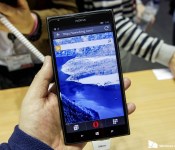
First look: What’s coming to Opera Mini for Windows Phone

Here at MWC 2015, Opera is showing a preview of an update coming soon to their Windows Phone app. It’s not finished yet, but we took a look at what they had so far. Watch our hands-on video to see it in action.
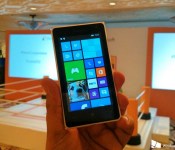
First Impressions of the Microsoft Lumia 532

Last week, Microsoft announced the launch of the Lumia 532 in India. Another budget device, the Lumia 532 fares well on the specifications sheet and costs less than Lumia 535, the other latest phone on the shelves right now.
The phone promises an uncompromised Windows Phone experience with an excellent Lumia design and always dependable build quality to compete in a crowded market of budget Android smartphones.
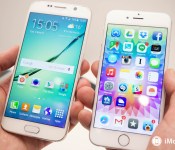
iPhone 6 versus Galaxy S6: first-glance similarities aren’t a bad thing

Let’s get this out of the way: there are some similarities between the recently announced Galaxy S6 and iPhone 6. A lot of ink has been spilled over Samsung copying Apple’s designs, but it’s not as bad as you might think.

The Samsung Galaxy S6 and Apple iPhone 6 both have glass fronts, a physical home button below the screen and metal around the sides. They have LTE radios and are technically smartphones. And if you happen to look at them from below, they look a little similar from that one angle.
Yes, from below, the Galaxy S6 and iPhone 6 share some serious visual similarities. In that, they’re machined out of aluminum and have machined holes for the 3.5mm headphone jack, a center-mounted USB or lightning port, and holes for speaker grilles drilled into the right side. There are even the Apple-style plastic-filled stripes that break it up into visual segments and a color-matched chrome-ringed home button. From the bottom you might think that the Galaxy S6 is another version of the iPhone.

But it’s only from that angle. Every other look at the Galaxy S6 reveals a phone that is markedly different from the iPhone 6. And some of the similarities are thanks to those being the most optimal ways to manage this sort of construction. You want a phone that’s made out of metal? Well, your speaker grille is going to be a series of circular holes. Want to use that metal frame as an antenna? Alright, you’ll need to divide it up with some plastic strips so you can properly manage Wi-Fi, Bluetooth, GPS, and LTE.
Sure, Apple did some of these things before Samsung, and there are some visual comparisons that can be drawn. But there’s nothing wrong with admitting that the Galaxy S6 draws some design inspiration from the iPhone 6; the iPhone 6 is an attractively-designed phone and Apple’s going to sell well over 100 million of them once all is said and done. That Samsung’s new flagship smartphone also looks smartly-designed isn’t the worst thing in the world. Because that means it also looks like a nice phone.
That was a lot of words about the bottom half-inch of these two phones. From every other angle, they’re different. The back of the Galaxy S6 is glass — and before you say “iPhone 4!”, know that it’s flush with the metal frame (which on the 4 was stainless steel, for what it’s worth). The center-aligned camera is traditional for Samsung, and sure, like the iPhone 6 it juts out thanks to the phone’s thin profile, though in this case it juts out more, and the Galaxy S4 was doing that first anyway.


Internals-wise we’re looking at very different phones. Whereas the iPhone 6 has a dual-core 64-bit Apple A8 processor, the Galaxy S6 is powered by Samsung’s octacore Exynos processor (also 64-bit, though with four cores running at 2.1GHz and another four at a milder 1.5GHz). The iPhone 6’s 4.7-inch 750×1334 LCD display is utterly shamed by the 5.1-inch 2560×1440 Super AMOLED panel on the Galaxy S6. Yes, the Galaxy S6 is pushing more than 3.6 times the pixels as the iPhone 6, and yet in our time with it we never saw it stutter or otherwise balk at whatever we threw at it. There’s an argument to be made that the 326ppi resolution of the iPhone 6 is enough, but there’s just something about the 577ppi that the Galaxy S6 sports that is simply stunning.
On the camera front, the iPhone 6 sports an upgraded 8-megapixel shooter with an ƒ/2.2 lens, while the Galaxy S6’s sensor counts up to 16MP behind a wider ƒ/1.9 lens, meaning that it lets in significantly more light. There are still some details about the Galaxy S6 camera that we don’t know, but the broad strokes are there: this is a very serious contender to the iPhone’s mobile camera dominance. Considering that we weren’t able to take the Galaxy S6 out of controlled space and lighting area of the Samsung booth inside Fira Barcelona.


Battery-wise, Samsung’s jumped onto the sealed battery bandwagon. Going with the glass back kind of necessitated that — you don’t want for that to be removable. Samsung did do away with the previous Galaxy’s phone’s waterproofing, but built in two standards for wireless charging (thus the glass back — a full metal back would block inductive charging transmission). The Galaxy S6’s battery has also seen a reduction in size, and we’ve yet to get a good feel for what kind of battery life we can expect from it in real life.
Then there’s the matter of software: the Galaxy S6 runs the very latest Android 5.0.2 Lollipop, while the iPhone runs iOS 8. Naturally, this means that there are serious differences in the way that the software works and the development philosophies behind them.


Apple’s software is highly integrated from the start with the hardware and the App Store is tightly controlled, while Samsung’s had to make their own integrations from Android to their hardware, and the Google Play Store is comparatively the wild west. There are, of course, apps that slip through the App Store’s famously rigorous review process, and Google Play has some restrictions on what can be published and Google works hard to block malicious apps from getting in the store in the first place, and reacts swiftly and prudently when something bad does get through.
We’ve gone over the software differences here time and time again, and Samsung’s latest implementation of their TouchWiz design language on top of Android is leaner and cleaner than ever before. No longer does it weigh on the processor and cause noticeable lag throughout the device, and Samsung’s customizations on top of Google’s highly-regarded Material Design language for Android have led to a Samsung interface that’s finally actually visually-pleasing. In terms of user interface design language, Apple, Samsung, and Google have never been closer, and yet they’re still notably different.
There is one software feature that Samsung could be accused of lifting from Apple, and that would be Samsung Pay. In short, we’re talking about a contactless payments system that uses stored-on-device credit card numbers, tokenization for secure one-time-use numbers, NFC transmission, and fingerprint authentication (the Galaxy S6’s fingerprint scanner is larger this time around for an Apple-style “lay your thumb on it” approach instead of the previous frustrating swiping authentication).
But Samsung does Apple one better by integrating Magnetic Secure Transmission technology (acquired wholly with the acquisition of LoopPay) that makes the phone compatible with hundreds of millions of magnetic swipe card readers around the world. At least in theory — there are always complications, including store clerks that will think you’re working some sort of voodoo by paying with your phone. Even if we want to accuse Samsung of copying the simplicity of Apple’s mobile payments system (Apple was far from the first to implement contactless mobile payments, but their implementation was as elegant and straightforward as we would expect from them). In the end, in this sort of emerging technology system, the more adoption and push behind it, the merrier — any NFC-capable payment terminal should be fully compatible with both Apple Pay, Samsung Pay, Google Wallet, and whatever else gets out there.

There are comparisons to be drawn between the Apple iPhone 6 and the Samsung Galaxy S6. There are good reasons to make those comparisons, and there are good reasons why the similarities that have prompted these comparisons make sense. Of course, we won’t be able to draw any definitive judgements until we’ve been able to have the Galaxy S6 for an extended period and really been able to get our hands and heads around it.
After a mildly disappointing generation in the Galaxy S5, Samsung has taken practically every criticism of their marketing, their software, their hardware, and even their presentation to heart. They’ve turned around and made a phone that’s technically impressive (which the Galaxy line has always been) as well as a real crowd-pleaser on the design front. They’ve produced a phone here that stands toe-to-toe with the iPhone, and that’s not a bad thing at all.
<!–*/
.halfwide width: 49%; height: auto; padding-left: 1%
/*–>*/

Kyocera’s launch into Europe is last year’s rugged flagship
We were a tad bit confused when Kyocera announced a phone called the Torque for Europe considering that a phone by that name had been released back at the begging of 2013. Well it turns out this is simply a confusion of naming rather than re-releasing an old phone — the Kyocera Torque for Europe is simply the recently-announced Kyocera Brigadier available on Verizon.

The Witcher Twos-days: Read our episode 4 recap and watch the new episode

The Witcher 3 is set to be one of the year’s biggest role-playing games when it arrives on Xbox One, Windows and PlayStation 4 this May. The third game in the Witcher series differentiates itself from other open-world action-RPGs with its dark and mature storyline filled with meaningful player choices and memorable side quests.
 AIVAnet


