


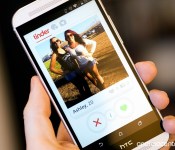
Tinder Plus goes official; lets you take back that swipe for a price

Popular dating app Tinder has officially launched its premium service called Tinder Plus today after a potential March launch was first hinted at early last month. The premium subscription adds an option to undo previous swipes, as well as a new way for users to meet matches in other parts of the world.

Apple Launches Worldwide ‘Shot on iPhone 6’ Ad Campaign Spanning Magazines, Billboards and More
Apple has launched a worldwide “Shot on iPhone 6″ advertising campaign involving 77 photographers, 70 cities and 24 countries, with iPhone 6 photography to be featured in magazines, newspapers, billboards, transit posters and more. The large-scale marketing initiative has started rolling out in several countries across the world this week, including the United States, Canada, United Kingdom, Thailand, Malaysia, Tokyo and United Arab Emirates.
 “Shot on iPhone 6″ photo on billboard in Los Angeles (via Twitter)
A number of “Shot on iPhone 6″ advertisements have begun surfacing on Twitter and Instagram over the past few days, with spots appearing on the back cover of The New Yorker magazine, horizontal posters in London’s Euston Square subway station and in the Malaysian city of Bangsar, billboards in Los Angeles and Toronto, the side of a tall skyscraper in Dubai and more.
 “Shot on iPhone 6″ photo on back cover of The New Yorker (via Twitter)
The photography campaign began with Apple promoting a world gallery of photos taken with the iPhone 6 on its homepage over the weekend, including photo apps such as Instagram, Snapseed, VSCO Cam, Filterstorm Neue, Camera+ and Adobe Photoshop Express used for editing and filtering. The majority of photos shown provide scenic views of the outdoors, ranging from mountains and deserts to lakes and waterfalls.

President of Sony Mobile declines recent rumors of division’s sale

Just over a week ago, Sony revealed its plans to bring back profits to the company over the next few years. A big part of the report was regarding the company’s mobile division, the section of the company which has seen a major decline over the past years. Specifically, Sony mentioned in the report that cutting costs would be a must, and that they may even consider potential “partnerships or spinoffs”.
This isn’t the first time the company’s CEO has explained this, though. Back in January, CEO Kazuo Hirai was quoted saying, “Without drastic reforms such as joint ventures or alliances, [Sony’s mobile and TV businesses] will be in the red three years from now.” But just because the CEO voiced his opinion to the media, doesn’t mean there aren’t differences in opinion within the company. Now, it seems as though a sale of the mobile division may not be true, because Hiroki Totoki, head of Sony’s mobile division, has now denied rumors about a potential sale of the company’s mobile division.
Totoki told French newspaper Le Figaro:
At the beginning of February there was speculation about a sale of Sony Mobile. It’s completely untrue.
However, while the potential of a merger or partnership is now seemingly off the table, Totoki also admitted that the company’s mobile portfolio is too diverse and needs to be refocused. He also mentions that, since consumers are keeping their mobile devices for a longer period of time, Sony would begin slowing down their product launches.
Google Play Services 7.0 brings Nearby Connections and new Places APIs
Google has announced today that it is rolling out Google Play services version 7.0 which brings developers some new tools for leveraging place information, fitness data, the recently-announced Nearby Connections API, and more.

We’re live at the 2015 Game Developers Conference in San Francisco!

Every year, in late winter, covering the game industry gives me a chance to leave New York City at its most miserable. It’s with great pleasure that I tell you, yes, we’re here in San Francisco — where its 60 degrees and not 34 — to bring all the news, hands-ons, interviews, videos, and combinations thereof, straight from the 2015 Game Developers Conference. From here on out, we’re gonna make that name a bit simpler: GDC 2015. We’ve even got a page right here where you can keep up to date on all the aforementioned coverage. Head below for a brief rundown of the week to come.
What’s happening this year, besides developers talking to each other about the art and business of making games? We’ve already seen a taste, all the way from Barcelona, care of Mobile World Congress.

HTC and Valve are teaming on a virtual reality headset named HTC Vive. Or HTC ReVive. Or maybe just Vive? Or maybe just Revive? It’s a bit puzzling, honestly.
We’re getting a hands-on in the coming days, and we’ve already got some gorgeous detail shots right here featuring British raconteur James Trew.
Additionally, Samsung and Oculus are continuing their partnership on Gear VR with a new, smaller version intended for use with Samsung’s new Galaxy S6 and S6 edge phones. Don’t expect to be blown away: it’s largely the same as the first Gear VR which launched late last year, albeit with a smaller screen. We’ve got more info right here, and beauty shots below.
And today, just before GDC 2015 officially kicks off, Epic Games announced that its widely used game engine, Unreal Engine 4, is now free for all to use on a commercial (or non-commercial) basis. It’s a major move for an engine maker, and it means one more great tool is more widely available to the folks who make the games we love.
As for what the rest of the week holds, only two things are certain: both Sony and NVIDIA are hosting press events. The former is focusing on PlayStation 4’s virtual reality headset, “Project Morpheus”, while the latter is teased as “more than 5 years in the making” and will apparently “redefine the future of gaming”. I expect nothing less than a picante gouda in a holodeck.
Don’t miss out on all the latest from GDC 2015! Follow along at our events page right here.
Filed under: Gaming, Wearables, Software, HD, Sony, Microsoft, Nintendo
Google kicks off $0.10 Play Store promotion and other great deals to celebrate Google Play’s 3rd birthday

To celebrate the Play Store’s third birthday, Google has 33 hot deals going on right now.
Runtastic Running Pro, Runtastic Sit-Ups Pro and Facetune are available to purchase for $0.10. Racing Rivals is now Free, and there are also a number of other items from books, albums, and movies. There are 33 hot deals in all and you can check them all out by clicking here.
Come comment on this article: Google kicks off $0.10 Play Store promotion and other great deals to celebrate Google Play’s 3rd birthday
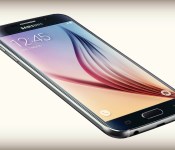
When and where to buy: Samsung Galaxy S6

Samsung’s latest flagship smartphone, the Galaxy S6, was announced at Mobile World Congress on March 1. According to the hardware maker, the handset will roll out to some 20+ countries on April 10.
We’ve gathered up links and details for the various U.S. wireless providers; these will help if you’re interested in signing up for additional information or want to pre-register for your own device.
Pricing has yet to be announced by any party however we’ll update this page over time. Note that all parties listed below have been confirmed by Samsung.
Carriers
- Verizon
- AT&T
- Sprint
- T-Mobile
- U.S. Cellular
- Boost Mobile
- Cricket Wireless
- MetroPCS
Retailers
- Best Buy
- Amazon
- Costco
- Sam’s Club
- Target
- Walmart
The post When and where to buy: Samsung Galaxy S6 appeared first on AndroidGuys.
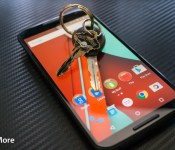
iPhone vs. Android and hardware encryption

iPhones have supported hardware encryption for over 5 years. Android phones… well, it’s complicated.
When Google announced Android Lollipop, one of the most important features for customers in the post-Edward Snowden era was hardware encryption enabled by default. Put simply, on first-boot your personal data would be kept far safer on your personal device. Unfortunately, it looks like default hardware encryption in Lollipop is a nice-to-have, not a must-have, and many Android phone vendors have simply decided to keep it off. From Ars Technica:
A little over three months after Lollipop’s release, we’re finally beginning to see new devices from third parties. One is the second-generation Moto E. Its userdata partition is not encrypted by default. Ars Reviews Editor Ron Amadeo tells me that new Galaxy S6 demo units at Mobile World Congress aren’t encrypted by default either.
We asked both Motorola and Google about this, and we eventually discovered what was going on. The latest version of the Android Compatibility Definition document (PDF), the guidelines OEMs must follow to create Google-approved Lollipop devices, includes a subtle change in policy.
The reason seems to be architectural:
Google wisely no longer mandates full disk encryption for new Android 5.0 devices. Many devices do not have hardware-accelerated crypto.
— Canalys (@Canalys) March 2, 2015
In other words, hardware encryption was wreaking havoc with Android read/write performance on those phones, so it was turned off. Jerry Hildrenbrand, writing for Android Central:
Interestingly, Google is not using the Qualcomm hardware cryptographic engine in AOSP or for the Nexus 6. This is inefficient as it forces CPU-based encryption and decryption during disk I/O (likely at every 512 byte interval) versus using Qualcomm’s hardware-based performance features. We’re not going to second guess why this is done, but know that OEMs are free to implement it as they like. We hope they will.
That’s what, apparently, led to complaints about the Nexus 6 performance as well. Hardware encryption can still be turned on for all Android phones running Lollipop — now estimated to be 3.3% of devices — but absent hardware acceleration or manufacturers upgrading to faster media to make up for the encryption overhead, doing so will likewise negatively affect performance. It’s also arguable whether or not everyone who could benefit from it will know they can turn it on.
By contrast, Apple has supported hardware encryption in every iPhone since the iPhone 3GS. What’s more, the iPhone has supported hardware acceleration for AES encryption and SHA1 hashing since iPhone 5s.
It’s especially notable that the hardware acceleration comes courtesy of the 64-bit ARMv8 Apple A7 “Cyclone” chipset, which caught the rest of the mobile processor industry flat footed and led some to claim Apple was advancing needlessly fast.
Suffice it to say, iPhone owners enjoying full, accelerated hardware encryption going on two years likely disagree. And it’s just one of the many security and privacy benefits of switching to iPhone.
Whether you need hardware encryption — or full disk encryption as it’s sometimes called — is a matter of some debate. For iPhone owners, you have it whether you need it or not. And make no mistake, that’s a good thing.
For Android owners, I’ll again point you to Jerry’s excellent explainer on Android Central:
Plenty of us will find full disk encryption useful. If you have sensitive information that you never, ever want to fall into the wrong hands on your phone, FDE is a godsend. For someone to get into your data, they must know your device password. No amount of fiddling over a wire is going to let them break in, and provided you used a strong password, your data is safe because after a handful of wrong guesses, everything goes on lockdown.
For others, just the standard lock screen security will enough. If we lose a phone, we can remotely wipe it via Android Device Manager or another utility, and if someone is able to go offline before we can wipe, then get lucky enough to bypass our lock screen password (it can happen), all they get is a few pictures and Google account access that we can quickly change a password on.
There also is the whole government snooping issue to think about. While most of us don’t have a reason to fear any consequences for what we have stored on our phones, we still deserve a bit of privacy and protection when our personal data is concerned. Full disk encryption gets us closer to keeping our data secure from government agencies who think they need to see it.
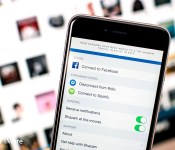
How to instantly turn your Shazam tags into an Rdio or Spotify playlist

If you subscribe to either Rdio or Spotify, you can instantly turn all the music you tag through Shazam into a playlist.
Tying your Rdio or Spotify account to Shazam not only creates that playlist for you, it lets you to listen to entire songs right inside the Shazam app as well! You have to have a paid subscription to either Spotify or Rdio in order for this to work. You won’t be able to play full songs or listen on-demand if you don’t. If you aren’t sure about a subscription to either service, both offer free trials you can take advantage of first.
How to turn Shazam tags into Rdio and Spotify playlists instantly
- Download Shazam or Shazam Encore if you don’t have them already — Encore is a paid version but ad free.
- Launch the Shazam app.
- Tap on the My Shazam tab in the bottom navigation.
- Tap on the Settings icon on the top right corner.
- Tap on either Connect to Rdio or Connect to Spotify.
- Tap on Play Full Tracks.
- Sign into either Rdio or Spotify on the next screen.
- You’ll receive a confirmation at the top of the screen that a Shazam playlist has been added to either Spotify or Rdio.
- You’ll find the playlist in the Playlists section of either the Rdio or Spotify app.


