


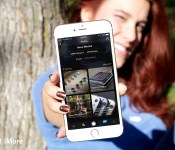
Switch to iPhone: For better apps

When people switch from Android to iPhone, one of the reasons they cite the most is — quality of apps.
That’s just why there’s never been a better time to switch to iPhone. Whether you’re tempted for yourself or looking to help the Android user in your life, the all-new, all-better iPhone 6 and iPhone-6-plus make the move more compelling than ever — especially for the high quality apps.
Quality vs. quantity

Both the App Store and the Google Play Store are now home to upwards of a million apps. The sheer number is almost impossible to comprehend, let alone experience. Many of the most popular apps exist on both platforms. Facebook, Facebook Messenger, Instagram, YouTube, Candy Crush, Clash of Clans, Microsoft Office, Netflix, Evernote, etc.
Even then, iMore readers like x32589 notice a big difference when it comes to quality of those apps:
Biggest issue with Android is, and always has been, the quality of the apps. So many BIG apps are still not as well developed on Android.
While MOST apps are available on both platforms, let’s face it, iOS apps are available first, are far better designed, and offer new features faster (looking at you Starbucks…).
Examples of even major apps from major companies being iPhone-first include Facebook’s Paper experience and Instagram’s amazing Hyperlapse app.
Most of the apps I love and use every day, however, aren’t just better on the iPhone, they’re only on iPhone.
There’s Overcast, with Smart Speed that’s saved me 11 hours of my life while still presenting the podcasts I want to listen to in a way that makes them a joy to listen to. There’s Tweetbot and Twitterrific that takes the insanity that is Twitter’s current experience and makes it both elegant and coherent again. There’s Vesper that lets me collect my thoughts and find them again quickly and cleanly without getting in my way. There’s Fantastical that lets me enter and find appointments so fast It’s hard to hate meetings any more. There’s Screens for VNC, Editorial for writing and scripting, Workflow for automation, Drafts for text time shifting, Storehouse for visual story-telling, Capo Touch for song learning, Transmit for FTP, Letterpress for wordplay, PCalc for calculations, Deliveries for package tracking, OmniFocus for task management, Launch Center Pro for fast actions, and the list goes on and on.
iMore reader Goofball Jones:
Yes yes yes, Android has the big, major apps that iOS has. But it there are a ton of apps that are iOS only that I just missed too much. Things like Downcast (and now Overcast), and Dark Sky and all the apps from Omni Group.
That’s not even counting the incredible apps Apple makes, from the built-in ones like iMessage and FaceTime to App Store exclusives like GarageBand and iMovie. Plenty of phones can shoot good video and record good audio. Few have tools as powerful as Apple’s for turning them into finished songs, podcasts, shows, or movies.
Part of this is cultural. Many of the early iPhone developers came from Mac, where the community was habituated to putting user experience first. Developers who started afterwards saw those first iPhone demos and wanted to make apps like the original Photos and Safari — like magic.
The other part is Apple’s iOS SDK and Cocoa Touch frameworks, which also provide significant advantage. Chris Liscio of SuperMegaUltraGroovy:
When Apple shipped iOS, they made the smart move of carrying their pro-quality audio and media frameworks to [mobile]. These are the same frameworks that power iTunes, Logic Pro, and Final Cut Pro. Apple has more media muscle out of the box compared with the other platforms I’ve researched. You can read and manipulate most media formats and have low-latency access to the hardware using the same APIs you’d use on the Mac.
Don’t even get me started on the Accelerate framework, which has taken most of the painstaking optimization work off of my plate! Every time a new CPU drops, Accelerate is there with the absolute fastest and most power-efficient use of the hardware. If developers tried to maintain something like this on their own, it would be an absolute nightmare.
They make easy what might otherwise be time consuming, expensive, and perhaps impossible.
Extensibility and Continuity

While many Android owners used to complain about the limitations of iOS apps, Apple has recently added one feature that makes most of those differences disappear, and another that simply can’t be matched.
Extensibility allows iOS apps to integrate with the system and other iOS apps while maintaining both security and privacy. This includes everything from sharing, action, and photo extensions, to widgets, to custom keyboards including Android favorites like SwiftKey and Swype
Continuity also means that, if you also have an iPad or Mac, your apps can seamlessly handoff from one device to another. That’s not just traditional data sync — with handoff you can pick up right where you left off without having to find the app and your place in it first. It’s a remarkable advantage.
The best of Apple… and Google

Aside from Beats Music, which they bought and now maintain, Apple doesn’t make mobile apps for any other platform. You can argue whether that’s good or bad and for whom, but it’s the reality. That means apps like GarageBand and iMovie aren’t available for Android. It also means apps that can play iTunes videos aren’t available for Android. Since iTunes has one of the best international footprints in the business, that matters to a lot of people in a lot of countries.
Conversely, Google makes most of their services, and the apps that wrap them, available for the iPhone. It’s long been rumored Google’s services on iPhone make a lot more money for them than those same services on Android. Whether that was or is true doesn’t really matter — Google values Apple’s customers and wants Apple eyeballs badly.
iMore reader Mike Darratta:
At this point I finally got the bigger iPhone I have been wanting, apple pay has been awesome, the camera is superior and almost all those Google apps I use are available on iOS.
That includes YouTube, Google Maps, Gmail, Hangouts, Google+, Google Authenticator, Chrome, Google Search, Google Drive, Google Play Music, and more.
iMore reader Tracey Teague:
The 6+ runs all the google apps I love smoother and better than my android device and I can now use both multimedia environments.
Some might argue Google services are better integrated on Android than they are on iPhone, and that’s certainly true. But it’s also not necessarily a good thing. You can use Google Maps, YouTube, Chrome, and other non-account based services on the iPhone without logging into — and sharing your private data with — Google. The company makes it annoying, but at least it’s possible. With Android it’s tough not to be logged into Google, even if you’d rather not link what videos you’re watching or what places you’re going with your account.
For me, that makes the iPhone, while not a better Google experience, certainly a better option for me.
The apps that aren’t

Android, unfortunately, does lead iPhone in one major category of apps — bloatware. The iPhone did the previously unimaginable and wrested almost all control away from the carriers… until Google made Android and gave most of it back. Because Android is truly only “open” to manufacturers and carriers, those companies are free to pollute it with crap.
iMore reader GGIBS:
My S5 was also 16gb (never saw a 32 gb in the wild) and that was without the bloatware. Samsung phones on ATT come with lots of bloatware apps I can’t uninstall without a jailbreak which honestly I didn’t want to do
iMore reader Matt Johnson78:
I was a longtime Android user, mainly the Samsung Note 1, 2, and 3 and other Samsung phones, but as the the phones became filled with Bloatware I spent more time rooting them and installing more ROMs to get rid of the Samsung UI and all the Bloatware installed.
Moving from Android to iPhone was a great decision, now I spend no time rooting and flashing ROMs and don’t have to worry about Bloatware, I get to use a phone with a clean UI.
I never want to feel like I care more about the phone I’m buying than the company that makes it, and thanks to Apple’s current priorities, I never do.
Time to switch!
If the lack of a high-quality apps has been frustrating you or someone you know, here’s the good news: The iPhone 6 and iPhone 6 Plus offer not only the best apps you can find on a phone, but almost all the Android apps you’ve already been using. It’s just one of the benefits you get by switching to iPhone.
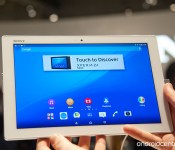
Sony Xperia Z4 Tablet hands-on
Sony brings Lollipop, Snapdragon 810 and a 2K display to its latest Xperia tablet.


Although Sony’s tablet line hasn’t seen massive widespread success, the Japanese manufacturer has arguably offered some of the most compelling Android slates around. Last year saw the arrival of the Xperia Tablet Z2 and Xperia Z3 Tablet Compact which, in spite of their wonky branding, offered high-end specs and some unique hardware tricks. In addition to being super thin, Sony’s tablets were waterproof, extremely lightweight and well-built.
So what’s next for Sony? At Mobile World Congress in Barcelona Sony’s showing the latest large form factor tablet in its Xperia line — the Xperia Z4 Tablet is a 64-bit, Snadragon 810-powered slate with a 2K display; read on for our first impressions.

Hands-on with Microsoft’s Android-compatible Universal Foldable Keyboard
Microsoft has announced a new foldable Bluetooth keyboard that works on cross-platform devices. Dubbed the Universal Foldable Keyboard, Microsoft’s latest accessory works with iPads, iPhones, Android smartphones and tablets as well as Windows tablets. Also announced is compatibility with Windows Phone, starting with Windows 10 for phones, which is scheduled to launch later this year.
Imagination introduces the PowerVR G6020, a tiny GPU for sub-$100 smartphones and IoT
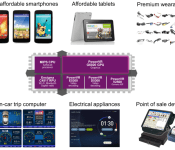
 While high-end devices like the Samsung Galaxy S6 and the HTC One M9 have been getting their fair share of the news cycle, there have also been some interesting developments related to the low-end smartphone market. Imagination, the makers of PowerVR GPUs and various MIPS processors, has introduced a new OpenGL ES 3.0 capable GPU that is designed specifically for sub-$100 smartphones, as well as other markets like the Internet of Things (IoT).
Imagination’s existing GPU for wearables and low-end smartphones is the PowerVR GX5300, a chip based on Imagination’s PowerVR Series5 family of GPUs. The new GPU, the PowerVR G6020, is the smallest graphics processor from Imagination’s Series6XE family. It offers up to twice the performance while also improving battery life. While the PowerVR GX5300 supported OpenGL ES 2.0, the PowerVR G6020 supports OpenGL ES 3.0 and can power 720p displays at 60 fps.
OpenGL ES is a subset of the full OpenGL graphics API that is aimed specifically at Embedded Systems (hence the “ES”). It can be used for rendering 2D and 3D computer graphics, typically via a GPU. Android has fully supported OpenGL ES 3.0 since Android 4.3. OpenGL ES 3.0 is also supported by Android Wear and Linux.
The silicon for the GPU takes up just 2.2 mm2 on a 28nm manufacturing process, and can deliver 400-500 Mpixels/second or 12.8-16 FP16 GFLOPS at 400-500 MHz.

Since the GPU is designed specifically for low-end smartphones, as well as embedded and IoT applications (e.g. high-end wearables, smart appliances inside the home, multi-purpose printers and scanners, in fact anything that needs a screen) then Imagination has focused on implementing FP16 ALU pipes that deliver high-quality image processing, rather than giving silicon space over to FP32 precision. However, since the G6020 delivers a sustained pixel fillrate to match its GFLOPS performance the GPU can still handle entry-level applications like fluid 3D user interfaces or casual gaming.
PowerVR Series5 video encoders
Also at MWC 2015, Imagination has unveiled three new PowerVR Series5 video encoders for multiple applications from wearable devices to professional broadcasting. For the latter the PowerVR Series5 video encoders can encode 4K video at 60 fps with 10-bit support.
“The PowerVR Series5 video family benefits from a comprehensive driver package that includes RTOS support and multiple rate control options under Android. This will equip smartphone cameras with better options for video recording leading to a more consumer-friendly experience,” wrote Alexandru Voica from Imagination.
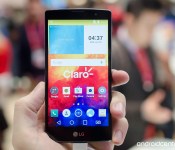
Hands-on with the LG Magna, Spirit, Leon and Joy

LG pre-announced its new mid-range smartphone lineup ahead of MWC 2015, and now that we’re at the show we’ve had a chance to put our hands on the four new devices from the manufacturer. The LG Magna, Spirit, Leon and Joy (from highest- to lowest-end) have interesting names, and while they cover a wide range of specs and features they all have a very similar design that’s aspirational to the likes of the G3 and G Flex 2.
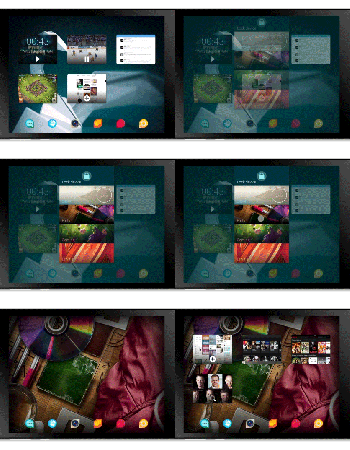
Jolla’s Sailfish OS 2.0 wants to be everything Android allegedly isn’t

In an amazing few short years, Android OS has gone from “that thing from Google” to the industry leader. You can imagine how proud the crew over at Mountain View must feel, and indeed they’re earned it. Still, whenever a leader emerges, there will always be those who seek to challenge the dominance. This cycle ensures the given setting is competitive and competent, be it politics of smartphones.
Thanks to the efforts of an ambitious Finnish company named Jolla, the mobile OS wars are on the verge of intensifying, assuming things go well. For those unaware, the company was formed back in 2011 when several Nokia staff members wanted to continue developing the MeeGo platform and broke off to found their own enterprise.

Having already released a €249.00 smartphone last year, Jolla’s Indiegogo crowd-sourced follow up, the Jolla Tablet, has been a relative success since the funding campaign began. The company brought the new device along to Mobile World Congress to showcase its new Sailfish OS 2.0. To say the tablet is a formidable beast might be selling it a bit tall, but it’s a darn good effort that can carry its weight.
Inside you’ll find a quad-core Intel Atom processor, 2GB RAM, 32 or 64GB storage with microSD for expansion, a 5MP rear cam, 2MP front cam, a 7.85-inch display with a resolution of 2048 x 1536, and a 4450 mAh battery. You’d be forgiven it these seemed like the specs you’d find on a newer Android tablet, and in some regard you would be right given that Sailfish OS can run many Android apps (although obviously access to the Google Play Store isn’t an option).
The latest version of the OS will also usher in various improvements over the first build, namely a refined UI, improved notifications, event views, and more swipe-based functionality. Reportedly, the new software will eliminate the need for any power or on-screen buttons with gestures now doing everything. Intel hardware support will be included (which is a good thing considering the Tablet’s CPU) and Jolla promises to have a commitment to protecting user privacy and increased security.

Privacy was a big issue during the company’s press event, with Head of Software Marc Dillon, quoted as saying Android is “designed to collect data from its users.” In an effort to address the resale of such data to partner companies, he proclaimed that, “We are not going to sell user data.” With respect to security, the company is working with SSH Communications Security in order to create an iron-clad, safe environment that governments and companies alike will be able to use with confidence.
Jolla is actively seeking to court interested parties in Russia, Japan, India, and China. The goal is similar to Android: to ultimately get the Sailfish OS platform running on OEM hardware from various companies around the world. While the fledgling OS may be just another fish in the sea along side Firefox OS, Ubuntu OS, Tizen, and even more established players like Google, Apple, Microsoft, and even Blackberry, at the very least the company has some keen ambitions and darn good hardware to showcase them.

Google confirms “Android Pay” API in the works

At the end of last week, we heard rumors suggesting that Google is planning a new payment API named Android Pay, which has now been confirmed today at MWC by Google’s own Sundai Pichar. With Samsung also entering the mobile payment game, the pressure is on Google to finally make its mobile payment system universally useful.
Google intends for Android Pay to become its standard for mobile payments, with the API allowing for other parties to take Android Pay and integrate it into their own services and apps. Essentially, Android Pay will be the backbone behind transactions and software, meaning that it can continue to work with Google Wallet too.
As you may expect, Android Pay makes use of your phone’s NFC connection to transfer payments and will eventually support biometric security measures to act as confirmation as well. Speaking about security, Android Pay also implements tokenized card numbers, to prevent stolen data from causing a problem, and card data is stored locally on your device, meaning that you can use it without a network connection and there’s little risk of someone intercepting vital data over the air.
Android Pay doesn’t have a scheduled rollout plan just yet, but the latest report suggests that Google will be unveiling additional details at its I/O conference in May.

LG breaks down its event into a 3 1/2 minute highlight reel
LG’s big moment in the sun was actually back in January, where they unveiled the G Flex 2 and quickly became the big talk of the show. But what about MWC? While LG didn’t have any flagship level devices to show off, the Korean device maker did formally show off plenty of newly released products including its new “affordable premium” phone lineup, the Watch Urbane and the Watch Urbane LTE. Looking for a breakdown of all their announcements? LG has your back.
The video above gives the big highlights of their 20 minute press event, going through all the devices mentioned above and even giving some love to CES’ darling, the G Flex 2. For those that would rather watch the press event in its entirety, you can do so through the video directly below:
What do you think of LG’s latest watches and low-end handsets? Were you hoping to see more from them at MWC this year?
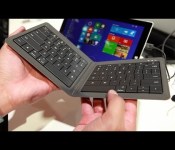
Hands-on with Microsoft’s iOS-compatible Universal Foldable Keyboard
Microsoft has announced a new foldable Bluetooth keyboard that works on cross-platform devices. Dubbed the Universal Foldable Keyboard, Microsoft’s latest accessory works with iPads, iPhones, Android smartphones and tablets as well as Windows tablets. Also announced is compatibility with Windows Phone, starting with Windows 10 for phones, which is scheduled to launch later this year.
The keyboard is portable, and connects to two devices simultaneously, with buttons available for toggling between the two. We’ll be bringing you details on availability and pricing as soon as they’re announced. What are your thoughts on the latest keyboard accessory from Microsoft?
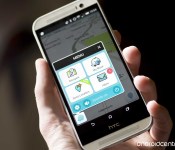
Waze may already be installed on your next smartphone

Google today announced that Waze will be an option as pre-installed software on Android smartphones. The move will provide OEM partners (and carriers) the opportunity to have the service already installed and ready to go for when consumers first switch on their new handsets.
 AIVAnet