


AT&T confirms its intent to sell the HTC One M9 and Grip

Customers of AT&T will be happy to know that their carrier will sell the HTC One M9 and the HTC Grip this spring. The pricing and release date were not provided; however, AT&T did not waist the opportunity to boast that it “currently offers the broadest selection of HTC devices for consumers.”
The following is what Jeff Bradley, AT&T Mobility Senior Vice President of Marketing and Developer Services, had to say about the products:
“The HTC One M9 is the latest in a family of smartphones renowned for its design. This is a premium smartphone in every possible way, and you will enjoy a top-of-the-line experience as you use it to watch videos, communicate with loved ones, and stay connected with work. Additionally, the Grip offers users a similarly high end experience while working out. It collects information about your daily workout so that you can monitor your pogress and set new goals for yourself. Both of these devices were designed to enhance your daily routine.”
Unlike Sprint, AT&T did place its logo on the rear of the HTC One M9.
Click here to view the embedded video.
Click here for our MWC 2015 coverage.
Source: AT&T
Come comment on this article: AT&T confirms its intent to sell the HTC One M9 and Grip
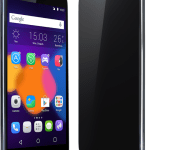
Alcatel’s OneTouch Idol 3 comes with 4.7-inch or 5.5-inch display, can take calls upside down

It’s the opening day at Mobile World Congress, and straight after the HTC event we have Alcatel OneTouch announcing the Idol 3 that will be available with either a 4.7-inch or 5.5-inch display. The Idol 3′s main claim to fame is that it can be used upside down. So if you often pick up your smartphone upside down when answering a call, with the Idol 3 it won’t matter because there are microphones and speakers at both ends of the phone. How nifty is that? We have specifications for both variants after the break.
Both variants share a number of components, although the 5.5-inch Idol 3 does sport a more powerful processor as well as double the RAM as the smaller phone. Both variants have dual speakers using JBL Audio’s Clari-Fi technology. Both the cameras have large apertures to aid low-light photography. And both models run Android 5.0 Lollipop out of the box. Details about pricing and availability are unknown at the moment. Remember, you can catch up with the rest of our MWC coverage here.
Alcatel OneTouch 4.7 Specifications
- 4.7-inch IPS LCD with a 720 x 1280 resolution and 312ppi
- Qualcomm Snapdragon 410 1.2GHz Quad-Core processor
- Adreno 306 GPU
- 1GB of RAM
- 16GB internal storage
- MicroSD support
- 13MP Rear camera with LED flash, HDR and Auto-Focus
- 5MP Front-facing camera
- Dimensions: 134.6 x 65.9 7.55mm
- 2,000mAh battery
Alcatel OneTouch Idol 3 5.5-inch specifications
- 5.5-inch IPS LCD with 1080 x 1920 resolution and 401ppi
- Qualcomm Snapdragon 615 1.5GHz Octa-Core processor
- Adreno 405 GPU
- 2GB of RAM
- 16GB internal storage
- MicroSD support
- 13MP Rear camera with LED flash, HDR and Auto-Focus
- 8MP Front-facing camera
- Dimensions: 152.7 x 75.14 x 7.4mm
- 2,910mAh battery
Come comment on this article: Alcatel’s OneTouch Idol 3 comes with 4.7-inch or 5.5-inch display, can take calls upside down
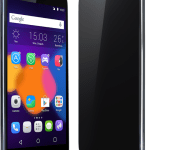
Alcatel’s OneTouch Idol 3 comes with 4.7-inch or 5.5-inch display, can take calls upside down
It’s the opening day at Mobile World Congress, and straight after the HTC event we have Alcatel OneTouch announcing the Idol 3 that will be available with either a 4.7-inch or 5.5-inch display. The Idol 3′s main claim to fame is that it can be used upside down. So if you often pick up your smartphone upside down when answering a call, with the Idol 3 it won’t matter because there are microphones and speakers at both ends of the phone. How nifty is that? We have specifications for both variants after the break.
Both variants share a number of components, although the 5.5-inch Idol 3 does sport a more powerful processor as well as double the RAM as the smaller phone. Both variants have dual speakers using JBL Audio’s Clari-Fi technology. Both the cameras have large apertures to aid low-light photography. And both models run Android 5.0 Lollipop out of the box. Details about pricing and availability are unknown at the moment. Remember, you can catch up with the rest of our MWC coverage here.
Alcatel OneTouch 4.7 Specifications
- 4.7-inch IPS LCD with a 720 x 1280 resolution and 312ppi
- Qualcomm Snapdragon 410 1.2GHz Quad-Core processor
- Adreno 306 GPU
- 1GB of RAM
- 16GB internal storage
- MicroSD support
- 13MP Rear camera with LED flash, HDR and Auto-Focus
- 5MP Front-facing camera
- Dimensions: 134.6 x 65.9 7.55mm
- 2,000mAh battery
Alcatel OneTouch Idol 3 5.5-inch specifications
- 5.5-inch IPS LCD with 1080 x 1920 resolution and 401ppi
- Qualcomm Snapdragon 615 1.5GHz Octa-Core processor
- Adreno 405 GPU
- 2GB of RAM
- 16GB internal storage
- MicroSD support
- 13MP Rear camera with LED flash, HDR and Auto-Focus
- 8MP Front-facing camera
- Dimensions: 152.7 x 75.14 x 7.4mm
- 2,910mAh battery
Come comment on this article: Alcatel’s OneTouch Idol 3 comes with 4.7-inch or 5.5-inch display, can take calls upside down
HTC Sense 7 to make its way to HTC One M8

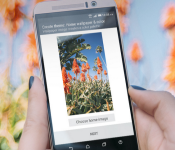
When HTC officially unveiled the HTC One M9 a little while ago, one thing that comes with the new hardware is a new user interface. HTC’s newest iteration of their custom skin is Sense 7 and comes with some included features like themes that many users get from third party launchers.
If you happen to own last year’s flagship from the manufacturer, the HTC One M8, you will be glad to know that HTC indicated during their event today that Sense 7 will be coming to that device as well. No timeline was provided for the rollout of Sense 7, so we will just have to watch for the update to surface on the HTC or carrier web sites.
Be sure to keep checking TalkAndroid for more news from MWC 2015.
Come comment on this article: HTC Sense 7 to make its way to HTC One M8

Samsung officially unveils the Galaxy S 6

Samsung just took the wraps off of the Galaxy S 6, the big thing.
Key Specs
- 5.1-inch Quad HD (2560 x 1440) Super AMOLED display with 577 ppi
- Exynos octa-core processor (2.1 GHz quad-c0re + 1.56 GHz quad-core)
- 3 GB of RAM
- 32/64/128 GB RAM
- 2,550 mAh battery
- LTE Cat 6 (300/50Mbps)
- 143.4 x 70.5 x 6.8 mm
- 138 grams
Developing….
Come comment on this article: Samsung officially unveils the Galaxy S 6
Unlocked HTC One M9 will be sold through company site

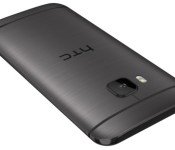
All of the carriers confirmed that they would sell the HTC One M9. What about an unlocked version of the HTC flagship for 2015? We have great news. The company confirmed that it will sell an unlocked version of the One M9 directly through its online store. This version is likely going to be dubbed HTC One M9 Developer Edition, and that means no carrier touches or slow software updates. Everything will come straight from HTC at its own pace.
Click here for our MWC 2015 coverage.
Come comment on this article: Unlocked HTC One M9 will be sold through company site
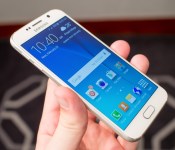
Samsung Galaxy S6 and S6 edge hands-on preview

 The Galaxy S5 was hardly a flop. Tens of millions have sold since its introduction last year and you’d be hard-pressed not to see one in use on the street in any populous city around the world. But despite its success relative to other devices in the market, the prevailing feeling about the GS5 is that it didn’t live up to the expectations of a flagship smartphone in 2014. Those shoes were instead filled by the Note 4 launched later in the year, with its superior materials, more refined design and improved camera performance.
Samsung, naturally, is hoping to put the Galaxy S series back on people’s radar as a top device, and it’s doing so by starting afresh with the Galaxy S6 and S6 edge. Though it numerically follows the GS5, the Galaxy S6 bears little resemblance to the previous model, and marks a pretty significant change in the way Samsung designs phones. At the same time, the S6 edge picks up the fun parts of the Galaxy Note Edge and leaves behind the poor software experience.
There’s a brand new design philosophy in play with the Galaxy S6 and S6 edge, starting with the radical hardware change and flowing into a more considered software experience. These are the phones that Samsung’s hoping will change the perception of its devices in 2015 — let us show you what they’re all about.

Apple Watch to Feature Time-Only ‘Power Reserve’ Mode, Prototypes Disguised as Samsung Watches
 With Apple’s media event just a week away and the company expected to offer final details there on the Apple Watch ahead of its April debut, The New York Times has a new report out sharing a few new tidbits on the device.
Among the interesting details is the existence of an unannounced “Power Reserve” mode for the watch that will display only the time and cut off all other functions as the battery begins to run critically low, preserving the most basic functionality of the watch. The report also notes that while the Apple Watch has been widely tested by Apple employees, the company did work to conceal many of those prototypes by disguising them to resemble Samsung smartwatches.
Sources have also provided more context to a Wall Street Journal article from last month that discussed how many of the originally planned health features for Apple Watch were dropped due to consistency issues. According to The New York Times‘ sources, the decision to drop many of those features came more than 18 months ago, refuting off-target reports in recent weeks claiming the cuts have come at the last minute.
Nearly two years ago, the company experimented with advanced health monitoring sensors that tracked blood pressure and stress, among other variables. Many of those experiments were abandoned more than 18 months ago after the sensors proved unreliable and cumbersome, these people said.
Apple long ago decided that for the first version of the product, it would include a heart rate sensor and a sensor for tracking movement, to market the device as a fitness-tracking companion to the iPhone.
Previous reports have indicated Apple is still working on those technologies, and they could appear in future versions of the Apple Watch.
Today’s report reveals some additional insight into the development process, noting that the Apple Watch is coming a bit later than originally hoped due to technical challenges that were likely exacerbated by the loss of several engineers working on the project. Google’s Nest Labs, headed by iPod pioneer Tony Fadell, was responsible for poaching several of the key Apple Watch employees.
Apple’s media event will take place at 10:00 AM Pacific Time on Monday, March 8 at the Yerba Buena Center for the Arts in San Francisco. The company will offer a live video stream of the event, and MacRumors will provide full coverage of the event.

HTC and Valve have teamed up to create their own VR headset, the HTC Vive

HTC has just announced their new VR headset at MWC 2015, built in conjunction with American video game development company Valve. The Vive will launch for consumers around the holidays this year, and a developer edition will be available this Spring. The headset boasts a 90Hz refresh rate and offers 360 degree views to its users.
Unlike most other VR headsets we’ve seen so far, the Vive isn’t powered by your smartphone. It’s made to offer the most high-end VR headset around, and will function by plugging it into your PC. This lightweight virtual reality headset supports full room-scale environments, and aims to let you get up, walk around, and interact with objects in the virtual space from every angle.
HTC explains:
Vive offers the most immersive experience of any VR package, plunging people into other worlds at a moment’s notice. HTC and Valve have introduced a Full Room Scale 360 Degree Solution with Tracked Controllers, letting you get up, walk around and explore your virtual space, inspect objects from every angle and truly interact with your surroundings. Setting a new benchmark for performance, the headset features high-quality graphics, 90-frames-per-second video and incredible audio fidelity
Controlling the headset is done by using a pair of HTC-made controllers that the company says are so versatile that the controllers will work with a wide range of VR experiences. Although, HTC didn’t exactly say what the controllers would look like, so we’ll have to wait until the Spring to get some more information on that. The headset itself is unfortunately not wireless, so you’ll need to be plugged in to experience VR with this headset.
The Vive will also offer virtual reality content from partners such as HBO, Google, Lionsgate, and a handful of others. The two companies will show off the Vive at the Game Developers Conference next week, so perhaps we’ll get some more info on this headset around that time. We’ll be sure to update you as more details emerge regarding the headset. Make sure to stay tuned to Android Authority this week, as we’re bringing you the best mobile coverage from MWC 2015.
HTC unveils strategic partnership with Valve; announces VR developer edition available in Spring and consumer edition available by end of 2015 Barcelona, Spain, March 1, 2015 – HTC, a pioneer in innovative, smart technologies, today announced plans to bring mass-market virtual reality (VR) one step closer. Through a strategic partnership with Valve, HTC promises to transform the way in which consumers interact with technology and the world around them with the debut of HTC Vive. HTC Vive Developer Edition will be launched this Spring, with the consumer edition available by the end of 2015. Vive combines Valve’s Steam VR tracking and input technologies with HTC’s worldrenowned design and engineering talent, setting a new gold standard for an industry that has, until now, struggled to move beyond concept stage. Cher Wang, Chairwoman of HTC commented, “It’s rare that a company has an opportunity to forever transform the ways in which people interact with the world and communicate with each other, but that is exactly what we plan to do with Valve.” “We achieved this once before with our development of smartphone technology,” Peter Chou, CEO of HTC added, “And, through our partnership with Valve, we’ll now be doing this for a second time with VR technology of which consumers could only previously dream.” Mesmerizing quality, fully immersive experience Vive offers the most immersive experience of any VR package, plunging people into other worlds at a moment’s notice. HTC and Valve have introduced a Full Room Scale 360 Degree Solution with Tracked Controllers, letting you get up, walk around and explore your virtual space, inspect objects from every angle and truly interact with your surroundings. Setting a new benchmark for performance, the headset features high-quality graphics, 90-frames-per-second video and incredible audio fidelity.HTC is also introducing new wireless VR controllers that will make you feel one with your virtual environment. The new HTC VR Controllers come in a pair and are designed to be so versatile that they will work with a wide range of VR experiences. Unlike typical game controllers, the HTC VR Controllers are simple and intuitive to use, helping everyone make the most of their experience. Gaming and beyond Beta versions of the Vive Developer Edition have already generated rich entertainment content from some of the world’s top game developers including Vertigo Games, Bossa, Barry–Fireproof, Dovetail Games, Wemo Labs, Google, Steel Wool Games and Owlchemy. “Our collaboration with HTC is driven by the companies’ shared desire to produce the most compelling and complete VR experience,” said Ken Birdwell of Valve. “Delivering content creators with the Vive Developer Edition is an incredibly important milestone in our efforts to achieve that goal.” While amazing gaming experiences are a staple in the VR universe, the potential beyond gaming is limitless. HTC and Valve are committed to realizing a broader vision for VR and see a real opportunity in transforming everyday experiences. Travel, attending a game, meeting friends or even shopping will never be the same again, and the companies are working with leading content creators, including Google, HBO, Lionsgate and the National Palace Museum in Taiwan in order to make that vision a reality. “Vive creates an exciting opportunity for all developers and content creators, to help us bring virtual reality into the mainstream with an end-to-end solution that completely redefines how we entertain ourselves, communicate with each other, learn and, eventually, how we become more productive,” Cher Wang concluded. “HTC Vive is real, it’s here and it’ll be ready to go before the start of 2016.” – Ends – Notes to Editors Visit http://www.HTCVR.com to learn more about the HTC Vive.Later this week, Valve and HTC will be showcasing Vive to developers attending the Game Developer’s Conference in San Francisco, CA About HTC HTC Corporation aims to bring brilliance to life. As a global innovator in smart mobile devices and technology, HTC has produced award-winning products and industry firsts since its inception in 1997, including the critically acclaimed HTC One and HTC Desire lines of smartphones. The pursuit of brilliance is at the heart of everything we do, inspiring best-inclass design and game-changing mobile experiences for consumers around the world. HTC is listed on the Taiwan Stock Exchange (TWSE: 2498). http://www.htc.com About Valve Valve is an entertainment software technology company founded in 1996. In addition to creating several of the world’s most award-winning games, Valve is also a developer of leading-edge technologies including the Source game engine and Steam, the premier ogling gaming platform. http://www.valvesoftware.com
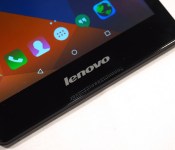
Lenovo rolls out new sub-$200 tablets, two with Dolby Atmos
 Lenovo might still be a little sore from the Superfish scandal that recently rocked its PC division, but thankfully the company’s mobile arm has remained unharmed. And that’s a good thing, because it’s kicking off Mobile World Congress with the announcement of not one, not two, but three new tablets, in both Android and Windows flavors. The Lenovo Tab 2 A10 and the Lenovo Tab 2 A8 are from the budget-friendly Android A series, while the affordable Lenovo MIIX 300 is for those who prefer the operating system from Redmond. The overarching theme of all three of these is simple: Value.

But just because they’re affordable doesn’t mean these tablets are shy on features. The highest end of the lot is the Lenovo Tab 2 A10, which is also the one that’s most focused on entertainment. Not only does it has a nice 10.1-inch full HD IPS display for watching movies, but it’s also equipped with Dolby Atmos technology and a multi-speaker soundbar to really give you that theatre experience. In a brief demo of the tablet, I thought the surround sound was remarkably good considering its compact size — it’s not too hefty at 509 grams and it’s about 8.9mm thin. The speaker soundbar sounded far richer than most tablet speakers, though using headphones would still result in better audio quality. It ships with Android 4.4 KitKat (it’ll be upgradeable to Lollipop later this year), runs on a quad-core MediaTek processor, has dual-band WiFi and a 8-megapixel camera. Markets outside the US will get a LTE version of the tablet as well. As for the battery life, Lenovo is promising up to ten hours of charge thanks to the 7,200 mAh battery.

Next on the list is the Tab 2 A8, which is very similar to the A10 except it’s, well, smaller. It has an 8-inch HD IPS display instead of 10 and is of course lighter at 360 grams. The Tab 2 A8 also comes with Dolby Atmos, but it would be better to experience it through headphones since the A8 lacks the A10’s powerful speakers. Other features of the A8 include a MediaTek quad-core processor, a microSD card slot that accepts up to 32GB cards, a 5-megapixel rear camera and dual-band WiFi. Interestingly, the international variant of the Tab 2 A8 comes with a dual SIM card slot for those who like to hop between carriers and it supports both voice and LTE. Yes, that means you could potentially use the 8-inch A8 as a phone. Holding it in my hand, I don’t think I could imagine hoisting this next to the side of my face, but I imagine you’d only make calls with this thing with a headset. It has quite a bit of bezel surrounding the display which I’m not a huge fan of, but the sharp and colorful high-def screen makes up for it. Another great feature of the A8 is that it ships with a pure version of Android 5.0 Lollipop, which could be why performance was relatively zippy when I played around with it.

Last but not least is the MIIX 300, which almost seems like the last kid picked for teamsports in this particular grouping — it’s not just quite as cool as the other two. Then again, the MIIX 300 is intended to be the most budget-friendly Windows tablet (a lower end version of the MIIX 2) from Lenovo yet and its humdrum design reflects that. Still, it has a decent 300-nit 8-inch HD IPS display, an Intel Atom quad core processor, a 5-megapixel rear camera, 64 GB of internal storage, a microSD card slot and, of course, WiFi. You also get a free one-year subscription to Microsoft Office 365 as part of the package. It ships with Windows 8.1, and a Lenovo spokesperson tells us that it should be upgradeable to Windows 10 when that rolls around later in the year.
The Tab 2 A10 will be available in Pearl White and Midnight Blue and will ship for $199 starting in April. As for the Tab 2 A8, that comes in Pearl White, Ebony, Midnight Blue and Neon Pink and will be available in June for a starting price of $129. International models with the dual SIM card slots will cost roughly $179. Finally, the MIIX 300 lives up to its affordability promise with a low low price of $149, which makes it the cheapest Windows tablet in Lenovo’s lineup. The MIIX 300 will be available in July.
 AIVAnet