


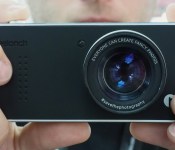
Relonch camera case brings an APS-C sensor, f/2 lens to your iPhone
 “It would be really hard to make a trashy photo.” That’s the actual tagline for a company called Relonch, which just launched (correct spelling) a camera case for iPhone 5 and iPhone 6 at Photokina today. Normally we’d dismiss such a product as vaporware, but this could end up being a pretty nifty gadget, if it ever makes it to market. Once you slide your iPhone into the $499 jacket, you’ll have access (via the Lightning port) to an APS-C sensor and a permanently affixed f/2 (or better) lens. The version above is just a mock-up — we did see a working prototype (it performed very well), which is simply a hodgepodge of “parts from different cameras.” The final version will also serve as an external battery for your smartphone, enabling more than four hours of use.
That all sounds great, but there are two major challenges here. First, the company is targeting “late 2015″ for orders to ship, which means your iPhone 6 will probably be a year old by the time you get this case. Given that each version is designed to fit only one phone, you’ll need to buy a new case whenever you upgrade your phone, unless the next iPhone has an identical footprint to the current model. Additionally, Relonch will charge your credit card for $499 as soon as you place an order, and given that you’re sending funds to a company with no track record of delivering products, handing over half a grand is risky at best.
Fortunately, there are other solutions on the market. Sony’s lens cameras, which, while not quite as seamless and elegant, work with just about any smartphone, and they’re available today. The QX1, which ships in November, even includes an APS-C sensor, which should get you comparable results depending on which lens you attach. You could also consider Panasonic’s CM1 smartphone, which includes an integrated one-inch sensor and an f/2.8 lens.
Photos by Edgar Alvarez.
Filed under: Cellphones, Cameras
Source: Relonch
.CPlase_panel display:none;

iPhone 6 and 6 Plus Shown Off in Early Hands-On Videos
Apple’s iPhone 6 and iPhone 6 Plus won’t be available to consumers until Friday, September 19, but some devices have been trickling out early ahead of the phone’s launch. Korean site UNDERkg has managed to get both an iPhone 6 and an iPhone 6 Plus, sharing hands-on videos and photos.
The first video focuses on the 4.7-inch gold iPhone 6, walking through all of the features including the display, the Touch ID home button, the protruding lens, and the power button, which has been relocated to the right side of the device for easier one-handed access.
In the video, the iPhone 6 is also compared to earlier models of the iPhone, like the iPhone 5s and the iPhone 3G, as well as Samsung devices like the Galaxy S5 and Alpha. The device is shown running iOS 8, with several of the apps demonstrated in the video. Authenticity is of the iPhone 6 in the video is confirmed via a FaceTime call.
UNDERkg‘s second video shows off the larger 5.5-inch iPhone 6 Plus, again running through all of the newly introduced design features, including the wraparound screen, relocated power button, and redesigned pill-shaped volume buttons.
As with the iPhone 6, the 6 Plus is shown powered on, with the reviewer showing off a few apps on the phone as well as the larger available home screen space. The iPad-style landscape mode is also demonstrated, showing how the device uses its additional real estate.
Apple’s iPhone 6 and 6 Plus will be available to consumers beginning on Friday, September 19. The devices will be available in stores on that date, and that is also the date that early pre-orders will begin arriving. Official iPhone 6 and 6 Plus reviews should be available tonight.
.CPlase_panel display:none;

iCloud.com Now Utilizing Two-Factor Authentication
Apple’s two-factor authentication system is now enabled for iCloud.com, with the site asking for a verification code before allowing users with two-factor authentication enabled to access various iCloud.com apps.
Access to iCloud.com apps like Mail, Contacts, Calendar, Reminders, Pages, Numbers, and Keynote is restricted until the verification code is entered on the website, but Find My iPhone remains accessible.

Users also receive an email when their Apple ID is used to sign into iCloud via the web browser, a feature that was implemented following the recent hacking of celebrity iCloud accounts that led to hundreds of photos being shared on the Internet.

Following the hacking incident, Apple CEO Tim Cook pledged to improve iCloud security by expanding two-factor authentication to iCloud and sending out security emails when a device is restored, iCloud is accessed, or a password change is attempted. Cook also said that Apple will aim to increase awareness about two-factor verification.
Originally implemented back in March of 2013, two-factor verification is an opt-in system designed to increase Apple ID account security by requiring identity verification before allowing users to make account changes or purchase content on new devices. It replaces standard security questions with a security code delivered to a trusted device.
Apple first tested two-factor authentication for iCloud.com back in June, well ahead of the iCloud breach, but the feature was not implemented until today.
.CPlase_panel display:none;
Official iPhone 6 and 6 Plus Cases Arriving Ahead of Friday’s iPhone Launch
While shipping vendors have been instructed to hold deliveries of the iPhone 6 and 6 Plus until Friday’s official launch date, there is no such restriction on the official Apple cases designed for the new devices. As a result, several MacRumors readers and others who placed orders for cases when iPhone pre-orders went live last Friday have already begun receiving their case orders.
iLounge has shared some good photos of the brown leather iPhone 6 Plus case. The cases are very similar to the leather iPhone 5s cases with a microfiber interior to protect the iPhone itself, although the iPhone 6 and 6 Plus cases have an open bottom edge where as the iPhone 5s cases are enclosed with distinct holes for the various physical features.

At least one MacRumors reader has received his black leather case for the iPhone 6 Plus, while others are receiving iPhone 6 cases as well.

A Reddit poster has received one of each size of case, allowing for a comparison between the two sizes. The poster has also shared some photos showing how the two cases fit in the hand.

Apple’s leather cases are priced at $45 for the iPhone 6 and $49 for the iPhone 6 Plus, while silicone cases are also available priced at $35 for the iPhone 6 and $39 for the iPhone 6 Plus. The leather cases are currently shipping with delays of a few business days, while silicone cases are listed as shipping in October.
.CPlase_panel display:none;

Sprint adds HTC Desire 510; Virgin and Boost to carry handset, too

Sprint on Tuesday announced the upcoming arrival of the entry-level HTC Desire 510. Priced $199 outright, qualified Easy Pay can spread the cost out over 24 equal payments of $8.34 each.
Key specifications include Android 4.4 KitKat, HTC Sense, a 4.7-inch display, a 5-megapixel rear camera, front-facing 2-megapixel shooter, and 8GB internal storage. Additionally you’ll find a quad-core 1.2GHz Qualcomm Snapdragon 400 processor, 1GB RAM, and the standard fare of connectivity.
Sprint will carry the HTC Desire 510 as soon as September 19. Both of its prepaid channels, Boost Mobile and Virgin Mobile, are also expected to offer the phone. Arriving on the 22nd and 23rd, respectively, each will tap the phone with a $100 price tag.
Deals, Discounts, Freebies, and More! Click here to save today!
The post Sprint adds HTC Desire 510; Virgin and Boost to carry handset, too appeared first on AndroidGuys.
.CPlase_panel display:none;
Ice Wear Watchface: Give your round smartwatch a colorful watch face [‘Watch’ This App]
If you’re lucky enough to own a Motorola 360 but hate the fact that there aren’t many choices of watch faces available on the market yet for round smartwatches, then get excited because the Ice Wear Watchface might just be your solution. The app allows you to pick from very simple watch faces that only… Read more »
The post Ice Wear Watchface: Give your round smartwatch a colorful watch face [‘Watch’ This App] appeared first on SmarterWatching.
Deals, Discounts, Freebies, and More! Click here to save today!
Read the rest at SmarterWatching.com!
The post Ice Wear Watchface: Give your round smartwatch a colorful watch face ['Watch' This App] appeared first on AndroidGuys.
.CPlase_panel display:none;
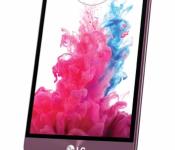
Sprint dials up LG G3 Vigor for September 19

Sprint on Monday announced the forthcoming arrival of the LG G3 Vigor, an affordable 5-inch take on the flagship experience. Due on Friday, September 19, the handset will carry as full retail price of $299; Easy Pay breaks out to 24 payments of $12.50 per month.
Powered by Android 4.4.2 KitKat, the LG G3 Vigor packs a quad-core 1.2GHz Snapdragon 400 processor, 8-megapixel rear camera, and front-facing 1.3-megapixel camera. In terms of apps, LG has loaded its suite of custom features: Knock Code, Knock On, QSlide Apps, Quick Memo, and Smart Keyboard.
Deals, Discounts, Freebies, and More! Click here to save today!
The post Sprint dials up LG G3 Vigor for September 19 appeared first on AndroidGuys.
.CPlase_panel display:none;

Leica’s medium-format S shoots 4K video, 37.5-megapixel stills
 Leica’s ready to jump on the professional video bandwagon, releasing its 4K-capable S here at Photokina in Cologne, Germany. The 37.5-megapixel camera sports a medium-format sensor that’s just a hair larger than full-frame, giving you a crop factor of 0.8x. It can snap 3.5 frames per second in a continuous-shooting mode, 1080/30p video and 4K clips at 24 fps. You can capture 42MB RAW files or 37.5, 9.3 or 2.3-megapixel JPGs, but if you’re spending €20,230 ($25,400 in the US) on a camera (body only), you better be shooting RAW.
The bundled battery lets you snap up to 1,000 stills, so while many pros will be tethered to an external pack or an outlet, you can also use the cam away from another power source if you’d like. There’s clean HDMI output, of course, for pushing 4K video to an external recorder, which you’ll need to purchase separately. You’ll also need to add on a lens, such as the €6,450 ($7,995 in the US) 100mm f/2 Summicron-S we were shooting with in the hands-on photos above. While most of us don’t have nearly $35,000 to spend on a camera and one lens, there’s no doubt that the latest S will make its way onto at least a few magazine cover/billboard/motion picture shoots in the months and years to come.
Photos by Edgar Alvarez.
Filed under: Cameras
.CPlase_panel display:none;

Boeing is expected to build most of NASA’s space taxis

NASA may have been even-handed when it started doling out money to contractors for its space taxi program, but there are hints that it’s about to play favorites. The Wall Street Journal hears from anonymous officials that Boeing is now the odds-on favorite to get the majority of NASA’s astronaut transportation business. SpaceX, once thought to be the frontrunner, would be relegated to a “second source” alongside Sierra Nevada. Reportedly, the agency sees Boeing’s CST-100 capsule as the easy choice — it carries relatively few risks, and is more likely to be ready for business in three years than SpaceX’s Dragon V2.
NASA isn’t confirming anything just yet, although an announcement is possible very shortly. However, Boeing could have an ace up its sleeve — the WSJ claims that Jeff Bezos’ Blue Origin has been working with Boeing on its space taxi bid. While it’s not apparent just how intertwined the two companies are, Blue Origin is supposedly near revealing its cooperation with Boeing and Lockheed Martin on new, more affordable rockets that would boost the CST-100 (among other vehicles) into orbit. A Boeing win wouldn’t please anyone rooting for the underdogs, but look at it this way: even if SpaceX and Sierra Nevada lose the main deal, they’d still be around to give Boeing some competition.
Filed under: Transportation
Source: Wall Street Journal (1), (2)
.CPlase_panel display:none;
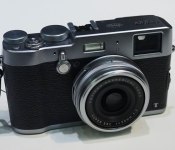
Fujifilm’s hybrid viewfinder makes the X100T compact camera even better

Both Fujifilm’s X-T1 mirrorless and X100 compact cameras were widely lauded, so how could the company improve them without messing up a good thing? We’ll talk about the X-T1 Graphite Silver Edition shortly, but in the case of the new X100T, Fujifilm’s answer was to address its lone Achilles heel: the viewfinder. As we saw earlier, the basics of the camera, like the 16.3-megapixel X-Trans II APS-C sized sensor and 23mm f/2.0 lens remain the same. Though the lack of a zoom might dissuade some, the fast, fixed lens delivers high quality images and works great with the optical viewfinder (OVF). Though purists love OVFs, they bring certain problems — namely, parallax issues on close-up shots and problems checking focus. Fujifilm has now addressed those problems with a new toy we’ve not seen on any other camera: a hybrid viewfinder.

We saw it previewed earlier this year, but here’s a reminder on how it works: you can shift between three viewfinder modes using a toggle at the front of camera. In the first mode, you have a 92 percent coverage optical viewfinder (OVF) with an overlay showing shutter, f/stop and other info. When you’re shooting up close, where parallax can be a problem, the system automatically adjusts the frame border in real time so that you don’t have to adjust after focusing — normally a huge issue with OVFs. In pure EVF mode, there’s a low-lag, 2,360K dot electronic viewfinder that shifts quickly from optical mode. Finally, the hybrid, or “electronic rangefinder” mode shows an optical view with an EVF inset into the lower right corner, allowing you to digitally judge exposure and focus. The parallax correction also works in this mode.
In practice, it works rapidly and seamlessly, and switching between modes is easy with the front toggle. Though the quality of the EVF is good, switching to the OVF is jarring as you can instantly see how artificial an EVF actually is compared to a true rangefinder. But having the digital view in the corner is comforting, eliminating the nagging feeling that you’ve botched the exposure. Other tweaks include a “classic chrome” film simulation mode, easier-to-grip dials, new programmable functions, finer f/stop and exposure compensation dials, and 1080p/60fps video with manual focus. All of that should make the excellent X100T even better, especially if you like tweaking settings yourself — as long as you can live without a zoom lens and don’t mind paying $1,300 when it arrives in November.

As for the X-T1 Graphite Silver Edition, the mirrorless camera has undergone more minor changes. Along with the new silver color, the shutter now deploys electronically and silently at up to 1/32,000 of a second, which could freeze even a jittery hummingbird. A fast shutter also means you won’t need an NDF on a super-bright day, as long as you don’t mind your subject having zero trace of motion blur. It’s also got a new EVF that Fujifilm claims is more natural, and which we found to be relatively clear and free of lag. The X-T1 will arrive in November starting at $1,500 (body only) or $1,900 with an 18-135mm f/3.5-5.6 kit lens.
Daniel Cooper contributed to this report.
Filed under: Cameras
.CPlase_panel display:none;
 AIVAnet