



Fleksy’s Speed-Focused Gesture Keyboard for iOS 8 Launching Today [iOS Blog]
With today’s release of iOS 8, a number of new systemwide alternative keyboards will also be debuting in the App Store. Yesterday, we covered SwiftKey, and today sees the introduction of another major entrant: Fleksy.
Fleksy’s primary claim to fame is speed, having been recognized as the fastest keyboard in the world. The keyboard relies on advanced autocorrect features to interpret input and includes extensive gesture support to make it easy for users to delete, add punctuation and spaces, or select an alternate autocorrect suggestion by swiping anywhere on the keyboard.

Fleksy also includes built-in support for hundreds of emoji, as well as a resizable keyboard and support for 40 languages at launch. And as with some other popular alternative keyboards, Fleksy learns from the user’s typing patterns, improving its performance with time.

Fleksy arrives today as a free download with several colorful themes to allow users to personalize their keyboards, with additional premium themes available for purchase. It is compatible with iPad, iPhone, and iPod touch.
.CPlase_panel display:none;

Diane Von Furstenberg’s designer Google Glass frames come to the UK

When Google Glass went on sale in the UK in June, deep-pocketed early adopters could choose between the basic frame or one of the more stylish options from Google’s Titanium collection for some extra cash. Well-heeled fashionistas that weren’t exactly enamoured with Google’s range have some new options today, courtesy of designer Diane Von Furstenberg. The “DVF” collection, which dropped stateside a few months ago, is now available to Brits exclusively at online fashion outlet NET-A-PORTER. There’s only one style for the ladies, and it comes in five different colors with matching sunglass lens replacements. These retail for £1,250 a piece, whereas the range for gents is slightly cheaper at £1,120. Men have a wider choice of three frame designs, which also include bonus sunglass lenses. They’re certainly prettier than the raw frames, and perhaps a little less conspicuous, too. Because you wouldn’t want to draw attention to yourself now, would you?
Filed under: Wearables, Google
Source: NET-A-PORTER, Google (Twitter)
.CPlase_panel display:none;
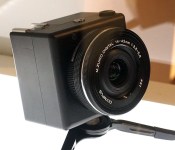
Olympus is working on a Sony-style remote lens camera, too

It’s been a year since Sony launched its range of lens cameras, WiFi-enabled zoom lenses that connect to your smartphone and offer far better pictures than your built-in snapper. For its second generation hardware, the company went one further and built the QX1, which enabled you to swap in any E-mount optic. I say all of this because Olympus has, perhaps belatedly, cottoned on to the idea that there might be something in this type of technology, which is why the company is showing off its Open Platform prototype here at Photokina.
If you’re already familiar with the QX1, then you’re already up to speed on what the Open Platform is designed to do. Broadly speaking, the hardware has a Micro Four Thirds sensor, digital signal processor, WiFi module, battery and, erm, that’s it. It’s designed to connect wirelessly to an Android or iOS smartphone, with the boxy hardware capable of taking any compatible lens from the company’s range and, presumably, Panasonic’s MFT lenses as well. The prototype was designed with MIT’s Media Lab, and is part of a project to “expand the field of application for a huge variety of hardware.” We’d take that to mean that the whole point of Open Platform is to democratize and open up the various uses of digital imaging in ways that go beyond just pointing a DSLR at things.

As we said before, the boxy unit has no screen of its own, and instead relies upon your phone to play the part of the viewfinder. You can, of course, shoot blindly without it, simply by pushing the silver shutter release button on the top of the device. The only other technical feature worth mentioning is the hot-shoe mount in the top corner, opening the device up to add even more accessories like flashes.
As a prototype, and one that was kept behind glass, there’s more than a few uncertainties about the hows, whens and whys surrounding the Open Platform hardware. For instance, there’s no word on a megapixel count, battery life or if we’re likely to see Olympus come out with a consumer version of the device. As for the future, the company is going to be taking Open Platform on the road, asking the crowd at various idea, make and hack-a-thons to come up with innovative ways that a remote lens could be used — and, presumably ignoring anyone who just whips out a QX1.
Steve Dent contributed to this report.
Filed under: Cameras
Source: Olympus Open Platform
.CPlase_panel display:none;

Dixons Carphone gives hundreds of stricken Phones4u employees new jobs

When Phones4u announced its surprise decision to call in the administrators, its 5,600 employees were left facing a very uncertain future. While the retailer is busy figuring out its options, one of it’s biggest rivals, Dixons Carphone, has swooped in and offered a lifeline to some Phones4u staff. In a statement today, Dixons Carphone said it has reached an agreement with Phones4u to hire all 800 employees who had worked in a partnership between their stores.
If it sounds confusing, it kind of is. You see, before Dixons and Carphone Warehouse agreed to merge, Phones4u operated small stores-within-a-store in some Currys and PC World branches. That agreement was ongoing at the time of Phones4u’s closure, which put Dixons Carphone in a position to bring those 800 Phones4u staff under its own roof. While the majority of employees are still left wondering they’ll ever have a job to go back to, there’s at least some happy news from what has been a very messy breakup.
Pleased to confirm we have secured agreement to offer all Phones4U colleagues (circa 800) in our@curryspcworld stores roles
– Dixons Carphone plc (@DixonsCarphone) September 17, 2014
Filed under: Cellphones, Wireless
Source: Dixons Carphone (Twitter)
.CPlase_panel display:none;
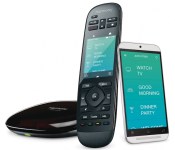
Logitech extends Harmony line to control more of your home

Logitech’s got a new Harmony remote and it’s an even bigger push into home automation over the current Harmony Smart Control home theater remote lineup. Shipping this month, the new Harmony Home Control devices start at $99 for the Home Hub (which turns your smartphone or tablet into a home automation controller). Then there’s the Home Control for $149, which adds a simple, button-only remote. At the top of the line is the $349 Harmony Ultimate Home, which swaps out the simple remote for a 2.4 inch touch screen model (seen above). Available in either black or white, Harmony Home can control both your home theater and other devices from partners via IR, Bluetooth or WiFi. There’s a lengthy list of support, too: August, Honeywell, Kwikset, Lutron, Nest, PEQ, Philips, Schlage, SmartThings, Sylvania, Yale and Zuli.
Alongside the new devices, Logitech is also introducing the Harmony Developer Program, and promises to keep an up-to-date list of compatible devices on its site. If your current home automation solution includes ZigBee or Z-Wave devices, then the Harmony Hub Extender for $129 loops in those prevalent protocols to your Harmony Home Hub. We have full faith that the Harmony Home will be easy to program, but are less sure how well Harmony’s success in the home theater remote space will translate to controlling the entire home — compromises are sure to have been made — but we are certainly excited to see how it might.
Filed under: Home Entertainment, Peripherals, HD
.CPlase_panel display:none;

MediaTek’s new chips save your precious time and money with built-in compression

While Opera Max is slowly making official launches around the world, this cloud-based data-compression service has just nabbed another partner — and it’s a pretty big one, too. Today, the Norwegian company announced that MediaTek will be embedding its app in two of its LTE-enabled 64-bit chipsets: the octa-core MT6752 and the quad-core MT6732. What this means is that should manufacturers want to integrate Opera Max into their MediaTek-powered devices (our understanding is that this feature is optional), they wouldn’t have to spend time on testing the app, ergo shorter time to market. And of course, the end user gets to load pages, music and video clips faster anywhere on the device (unlike how the Opera browser only compresses data that are loaded within it), while also saving “up to 50 percent” of bandwidth, courtesy of Opera’s cloud servers. That said, the service doesn’t process encrypted links, for obvious reasons. For those who aren’t familiar with Opera Max, feel free to check out the new video after the break.
Source: Opera
.CPlase_panel display:none;

Instragram ads are coming to UK feeds very soon

While Instagram has been monetising its app for nearly a year, UK users have enjoyed scrolling through their timelines completely free of ads. Until today, that is. The company has taken to the service to share the very first sponsored post with UK users (shown above), letting them know that “over the coming weeks” it will begin displaying paid content their streams, whether they like it or not. Users are invited to tap the “Sponsored” label to learn more about a specific campaign, but the majority are likely to become acquainted with “…” button, which quickly hides them from view. The dream might be over but Instagram says it’s starting out with only a “few” businesses, meaning you shouldn’t be bombarded with ads when they begin rolling out.
Via: The Next Web
Source: Charlotte Williams
.CPlase_panel display:none;

Amazon listing details new smaller, high-res ‘Voyage’ Kindles

You don’t need supernatural powers to realize that it’s been 12 months since a Kindle Paperwhite refresh, ergo we could be due a new one. It also kinda helps when Amazon’s own web-store lets slip a little bit of info. Some eager searchers spotted a listing for Kindle “Voyage” on Amazon’s German and Japanese stores. The listings don’t have too much information, but do mention a 300 ppi display on the 6-inch device that comes in the usual WiFi and 3G versions. The 112 x 116 mm dimensions suggest the Voyage will be smaller and at 8mm deep, the “thinnest Kindle up to now” (thanks Google translate). The (now-pulled) product page was even kind enough to give us details on price — $190 or $250 with 3G — all set for a November 4th launch date. It could be that the Paperwhite name is on the way out, too, with the with the Spanish version of this support page replacing “Paperwhite” with the new “Voyage” name.


[Image credit: Caschy’s blog]
Filed under: Amazon
Via: Stadt Bremerhaven
Source: Amazon (cached)
.CPlase_panel display:none;

Fujifilm packs a ton of power in the X30 point-and-shoot
 The highlight for Fujifilm at this year’s Photokina is undoubtedly the X100T and its brilliant hybrid viewfinder, but the X30 point-and-shoot is also not to be missed. Internally, the $599 compact is nearly identical to its predecessor, the X20, with the same 12-megapixel, 2/3-inch CMOS sensor and f/2.0-2.8, 28-112mm lens, but it features a few improvements that might make an upgrade worthwhile for at least a few select Fuji fans. The most significant boost is a new 2.36M-dot electronic viewfinder, which provides a full 100-percent view, along with a new tilting 3-inch high-res LCD.
The X30 also includes dual control rings around the lens, letting you zoom with one and adjust settings, such as aperture or shutter speed, with the other. A new processor enables faster SD card write times while an improved battery gets you 470 shots on a full charge, compared to just 270 frames with the X20. You also get integrated WiFi, with full control of the camera via a smartphone app, including touch focusing, shutter speed, aperture, self timer, flash and white balance adjustments. The camera performed very well during our test, with speedy focus and a fast EVF response time. And it looks fantastic to boot. The Fujifilm X30 ships next month for $599.
Edgar Alvarez contributed to this report.
Filed under: Cameras
.CPlase_panel display:none;
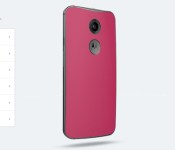
Create your own Moto X: Moto Maker now available in the UK

Motorola’s new Moto X might not be sale in the UK yet, but that isn’t stopping the company from letting customers create their own designs ahead of its release. Today, for the first time, Brits can get to grips with Moto Maker, Motorola’s web-based customisation tool, allowing them to choose the finish, colours, cases, storage and even engraving options for their Moto X before putting down (at least) £419.99 to buy one. Moto Maker comes to the UK with a number of additional customisations in tow, including a new leather finish (that’ll cost £20 extra and adds to the traditional plastic and wooden options) and a choice to include metal accents on the power and volume buttons, speaker grilles and that big Motorola logo on the back. On the subject of storage, you’ll be forced to pay an extra £40 if you want the 32GB model, as the Moto X doesn’t come with a microSD slot. Currently, you can only use Moto Maker to create your bespoke design and email it to yourself, allowing you to pick it back up and apply it when the Moto X eventually goes on sale later this month.
Filed under: Cellphones, Internet, Mobile
Via: Pocket-lint
Source: Moto Maker
.CPlase_panel display:none;
 AIVAnet