


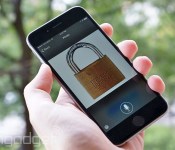
Your iPhone trusts the security of many sites, including the government’s

As a matter of course, virtually all the internet-capable hardware you use supports trusted certificates, or proofs that secure data connections (such as those for apps and websites) should be legitimate. Have you ever wondered exactly how much faith your gadgets place in others, however? Thanks to Karl Kornel, we now have a good sense of how iOS 8 devices fare — and apparently, they trust a lot of organizations. Apple’s latest mobile software has no less than 222 certificates that greenlight data sharing. Most of these are from companies you’d expect to oversee security on iPads and iPhones, including Symantec’s various brands (35 certificates) and Apple itself (five). However, there are also quite a few governments that also get iOS’ all-clear in certain circumstances, including China, Japan, the Netherlands, Taiwan, Turkey and the US.
This level of trust isn’t necessarily bad; you’re going to need at least some of these certificates to get things done, such as checking your email or logging into a social networking app. With that said, Kornel is concerned that you can’t turn off any of the certificates if you’re concerned about the potential for abuse. Governments could theoretically use their credentials to spoof other websites and break into your phone for surveillance purposes, as an example. Whether or not that actually happens, Kornel is quick to note that Apple is at least being transparent by disclosing this info in a support page. You can easily find this info on Android devices, but it’s harder to know what level of security you’ll get in advance. Whichever platform you run, it’s reasonable to suggest that you should be cautious — don’t take promises of security at face value.
Filed under: Cellphones, Tablets, Mobile, Apple
Source: Karl Kornel, Apple
.CPlase_panel display:none;
Security: Android vs iOS and does it matter?

Security on our personal devices has never been a bigger issue. From the NSA, to malware, users have never been more aware of security concerns. Today, we’re going to look to see if there is a better option between Android and iOS.
Now, before everyone gets up in arms and calling their fellow fanboys, I want to assure that I’m not going to provide an exact answer. Instead, we’re going to take a look at the discussions, reports, articles, and other various things that provide the data. Discuss what threats are out there, and then how you can best avoid them. Whether iOS or Android is truly better than the other in terms of security will probably never be given an answer. Until it does, we’re hoping we can provide some thoughts and preventative measures you can take.
First and foremost, lets put something to rest: Everyone is at risk. Do not think because you have iOS or Android, and the latest gadget with the latest software that you are invincible. BGR.com ran an article a few months ago that details a report from Marble Security, stating that neither iOS or Android is better than the other. Even outside the OS, all mobile users are at risk of attacks from SMS scams, websites, and Wi-Fi hotspots.
Another thing that needs to be addressed is Android fragmentation. There’s no other way to slice it: yes, Android fragmentation causes security problems. We can talk all day about what that is or why that is, but plain and simple it does. This article discusses when Eric Schmidt last year declared Android more secure than iOS. In it there a few good sources (below) discussing this, but one of them is the Android Developer Dashboards. This shows the current numbers on Android fragmentation, and while things have certainly gotten better, they’re still not great. Schmidt points out that only ” a very tiny percentage of malicious apps can penetrate the latest, most security-hardened version of Android.” The problem here is at the time of this writing, 24.5% of Android devices have the latest software. See the issue?
Along with fragmentation, number of devices needs to be considered. IDC.com shows a report that as of Q2 of 2014, almost 85% of the smartphone market is dominated by Android, followed by 11.7% is iOS. So it follows that because a large majority of smartphones runs Android, that is the most targeted platform.
The good news is with the release of Android L, it seems that encryption will be turned on out of the box, leading to an overall safer experience on Android
Now just because Android is targeted more and overall is more vulnerable, doesn’t mean iOS isn’t. Although clearly biased, ZDNet.com has an article that discusses an experiment done by a team from Georgia Tech last year, showing that they were able to publish an app that bypasses Apple’s thorough app screening, and yet was capable of taking control of another device when the app was downloaded. We also all recall the recent leak of celebrity photos from iCloud, and this past February it was discovered iOS had a huge security flaw. Sorry iPhone lovers, iOS isn’t perfect.
Along with OSes as a whole, a large player in the mobile security world is where you get your apps. Translation, the App Store and the Play Store. Those who prefer iOS always claim victory here, as without a doubt Apple has a much more thorough screening process of their apps. But as I just pointed out, it’s not perfect. Google’s Play Store has gotten much better, especially since it changed from the “Android Market” to the “Play Store.” Every year at Google I/O, it seems they announce new plans for a safer Play Store, and they’re constantly taking steps to make it better, providing tools for developers to make better apps. Who knows, it may not be long before we can’t see a difference between the two app stores.
Be proactive
Now that we’ve gotten through all of that, how do we avoid all of this? The best answer is to be prepared. For starters, download Apple’s Find My iPhone app for iOS, and download Google’s Android Device Manager for Android. While not security apps per se, if your device is ever compromised by a virus, you can completely wipe your phone remotely from these apps. Let’s try to avoid even that, though.
iPhone users will need to Google some good security apps for iOS, as being an Android site we will provide Android apps (that and I don’t have an iPhone).
A quick search in the Play Store for “security” will give you many results, along with many options, of apps to choose from. One thing you may want to consider is what software company you have security on your computer from, as your registration could lead to some free mobile software as well. After that, I highly recommend Clean Master Phone Boost. Not only does it do regular maintenance and scans of apps, but it scans every app you download for any security concerns, as well as the capability to scan websites as you browse to keep you safe from malicious websites. It all comes down to your choice and preference here, but please find one and download it.
Another precaution you need to take is making sure your apps are always up to date. In the Play Store, you can go to Settings > Auto-update apps, and select one of those options to make sure you’re always up to date.
Also, be sure you’re on the latest software for your device. If you’re not sure what you need to be on, do a quick Google search or contact your mobile carrier for info on your specific device.
The only other thing to suggest is to upgrade your phone. If you still have an iPhone 3GS, or the original Samsung Galaxy S phone, or any other phone not running iOS 8 or Android 4.4, it’s time to spend a little money and get a new phone. If money is a concern, it’s very much worth looking at the new Moto G, or the even cheaper Moto E, both praised for their functionality despite their price tags. My mom and brother have the first gen Moto G, and they both love them.
Security is a big concern these days, as it should be. But there’s no need to lose sleep about it, as long as you take the proper precautions.
So, what’s better: Android, or iOS? I’d argue that when you consider all the factors, one isn’t necessarily better than the other. Disagree? Give me your thoughts below.
Sources: USATODAY, virusbtn, f-secure, symantec
Deals, Discounts, Freebies, and More! Click here to save today!
The post Security: Android vs iOS and does it matter? appeared first on AndroidGuys.
.CPlase_panel display:none;

New Nexus devices will be announced mid October, Android L to be released on November 1st
 We know that new Nexus devices and Android L are just around the corner, but we haven’t really had any indication yet when exactly they will be releasing – until today. Android Authority has gotten some tips that suggest that the Nexus 9 tablet, with the possibility of a Nexus smartphone, will be announced on either October 15th or 16th. That Nexus smartphone is likely to be the Motorola-manufactured device, allegedly called the Nexus 6 or Nexus X, that we’ve heard so much about, but its screen size appears to still be a matter of contention – either 5.2 or 6-inches.
Along with the news of these devices releasing, the tip also points towards a November 1st release date for the new build of Android, Android L. Initial estimates pegged a Halloween release, so that wasn’t a bad guess at all. Of course, Android L will feature on the devices announced in mid October, but whether this means the devices won’t be shipped until November 1st looks to be the main discussion point among the press.
What do you think about a mid October announcement for the Nexus devices and November 1st release of Android L? Let us know your thoughts in the comments below.
Source: Android Authority via TalkAndroid
//<![CDATA[
ord = window.ord || Math.floor(Math.random()*1E16);
document.write('‘);
//]]>
The post New Nexus devices will be announced mid October, Android L to be released on November 1st appeared first on AndroidSPIN.
.CPlase_panel display:none;
Engadget Daily: Blackberry’s $2,000 smartphone, Microsoft’s new streaming adapter and more!

Does your love for exotic sports cars bleed over into every aspect of your life? If so, you might like Blackberry’s new $2,000 Porsche-designed smartphone. That’s not all we have on deck, though. Read on for the rest of our news highlights from the last 24 hour.
.CPlase_panel display:none;

Contour’s first new action camera in years can survive 30 feet underwater

Contour came back from the dead this spring, but the first action cameras it sold upon its revival were simply old models from 2012 — that’s not much help if you’re a loyal fan looking to upgrade. As of today, though, there’s finally a brand new Contour cam to buy: meet the ROAM3. It’s not a huge break from the ROAM2 at first glance, as it can still record 1080p video at 30fps (720p video at 60fps) with its 270-degree rotating lens. However, it’s much more resilient than its ancestor; it can survive 30 feet underwater without using a waterproof case, which could make it a good match for your next surfing movie. It’s hard to say if the ROAM3 can lure you away from GoPro’s offerings, but its $200 price (which includes an 8GB memory card and two mounts) is low enough that it won’t hurt too much to give Contour another try.
Filed under: Cameras
Source: Contour
.CPlase_panel display:none;

Cirque du Soleil turns drones into dancing lampshades

Before quadrocopters become the four-winged horsemen of the robopocalypse, we’re quite happy making ‘em dance for our entertainment. A new artistic collaboration between the ETH Zurich university and Cirque du Soleil isn’t your standard swarm show, though, imagining a more intimate relationship between man and machine. “Sparked” is the short film born out of this partnership, featuring the talents of several pre-programmed quadrocopters, one human performer and zero special effects. Rather than a technical demonstration, it’s a story of a lonely lamp-maker and the (seemingly) inanimate creations that fill his workshop. We won’t spoil any more of it for you, so head past the break for the full film, as well as an explanation from the creative and technical minds behind the project about how it came to pass.
Source: Sparked
.CPlase_panel display:none;

Karma’s new hotspot gives you free LTE data when you share your WiFi

Karma’s concept of a shareable mobile hotspot is clever — you not only get data wherever you go, but you get some of it for free if you’re kind enough to share with others. The service wasn’t very alluring when it was using Sprint’s pokey old WiMAX network, however, which is why the company has just unveiled a much-needed LTE hotspot, the Karma Go. You can now hop online (or invite others to do the same) at a far quicker 6-8Mbps typical speed, with much better coverage to boot.
The Go won’t be available until December, and it’ll start at $149; paid data starts at just under $10 for every gigabyte you need. That initial hardware cost is much higher than the original hotspot’s $69, but Karma thinks that the improved connection speed and a few hardware tweaks (such as a standby mode) are worth the outlay. It won’t be hard to get a discount, either. You can already get the hotspot for a more reasonable $99 if you pre-order now; existing customers can shell out $75. So long as you don’t mind sharing your internet access with others, this is potentially a very affordable way to stay connected when you’re away from home.
Filed under: Peripherals, Wireless, Networking, Sprint
Source: Karma
.CPlase_panel display:none;

ARM’s new processor should add oomph to smart appliances and drones

If you have any smart device — be it a phone, tablet, router, wearable or otherwise — there’s a good chance ARM’s Cortex lineup is responsible for the brains behind the scenes. The company just announced the latest processor in its M-series, which is a set of low-power processors capable of handling embedded devices like smart home appliances, drones, automotive and wearables, which is focused on making said devices even more powerful. The M7, as it’s called, comes with a 400MHz processor, packing more than twice the punch as the 168MHz M4 that came before it (and will continue to be available to manufacturers). It comes with support for more displays, motors, voice controls, connectivity, audio performance and improved GPS accuracy. In other words, the infamous Internet of Things should become even stronger and more powerful. ARM says that manufacturers are already building devices with the chip embedded, so it won’t be long before we get to see if the extra power actually makes a difference in our everyday lives.
Filed under: Wearables, Wireless, Mobile
.CPlase_panel display:none;

How EE’s helping Wembley to become the most connected stadium in the world

With 90,000 seats, Wembley Stadium is the largest stadium in the UK and second biggest in Europe. Demolished in 2003, rebuilt and then re-opened in 2007, the £798 million arena has played home to domestic and European cup finals in various sports, England football qualifiers and numerous open air concerts. Its owners, the Football Association (FA), have strived to “deliver the best experience as possible,” and for a time, that mainly involved providing hospitality to various types of visitors at the stadium. However, as smartphone use has boomed, visitor needs have changed, and the stadium has been forced to evolve to match their requirements. That isn’t to say its owners have resisted change, as we found out when we visited the sporting amphitheatre earlier this week.
Supplying Britain’s biggest stadium with 3G and 4G connectivity requires significant investment in infrastructure. Perhaps it should come as no surprise that the UK’s largest carrier, EE, is helping it do just that. As part of their six-year partnership announced earlier in the year, the operator has been included in the arena’s official name (currently known as Wembley Stadium connected by EE), and you’ll see its familiar aqua and yellow branding on nearly every screen and concourse.

When we popped by, Wembley was preparing for the annual return of the NFL. The National Football League, if you didn’t know, is a rule unto itself: it comes with a massive entourage of engineers and organisers that have enough clout to force UK regulators to lift restrictions on radio frequencies. Teams need that one specific band to communicate with their quarterbacks after all. With a sellout crowd expected to descend upon the stadium this weekend, EE will get the chance to flex its network muscle, helping Wembley engage with the fans that come through its doors (or should we say turnstiles).
Taking a page from the NFL’s biggest teams, Wembley’s goal is to become the “best and most connected stadium in the world,” says Managing Director Roger Maslin. Unlike Manchester United, which has outlawed the use of tablets and laptops inside Old Trafford, the stadium has embraced mobile, enabling sport lovers and music fans to post tweets, share selfies and ultimately say “I’m here, and you’re not.”
Hard Data
Of course, being connected is not just about downloading from EE’s network. The rise of services like Twitter and Instagram mean it’s now just as important to get things up. During just seven major events at Wembley, EE’s network handled 1.65TB (terabytes) of downloaded data — the equivalent to 400,000 “goal downloads.” During the same period, over 900GB of data was uploaded, which EE says is equal to 800,000 selfies.
The sheer scale of the stadium and the number of people who turn up to see events means Wembley is the perfect location for EE to perform rigorous trials on its network. That’s why it’s now become the company’s “Mothership,” a place where it can deploy and test new technologies before they roll out to the wider public.
“Stadium events are the most difficult things to supply, because everyone wants to do the same thing at the same time, says EE’s Development Director Mansoor Hanif. “It’s the biggest challenge in the world of networks. Do we build one pipe for just 1 percent of the peak traffic in a week or find intelligent ways to manage it?”

EE has invested in the latter option, choosing to double the transmission capacity of its 3G networks. It’s in the unusual position of operating on four 3G frequencies, a result of the merger of Orange and T-Mobile, meaning that Wembley is the only stadium in the world that has a total 20MHz allocation of 3G spectrum. Because it’s not just Brits entering the stadium, EE has invested in its WiFi infrastructure too, ensuring visitors can connect in the concourse, bar and press office without having to switch on roaming.
However, as EE is predominantly a 4G-focused operator, there are bigger plans for its LTE networks. Next year, the company will launch its 300Mbps LTE-Advanced network at Wembley, after a successful trial in London’s Tech City, putting it on par with Asian carriers and far ahead of its US counterparts. Once that’s in place, it will begin trialing speeds of up to 400Mbps, making Wembley the world’s fastest stadium with network capacity others can only dream of. The only problem is that there might not be any CAT-9 devices on sale that could actually use it, but the company says it’s already speaking to chipset manufacturers to embed it inside future devices.
Contactless Payments
Like Transport for London, Wembley believes in a world of contactless payments and ticketing. All of the stadium’s barriers are NFC-enabled, so it’s just a simple matter of convincing visitors to use its mobile apps (iOS/Android) instead of paper tickets (when they’re updated in the coming weeks). Contactless payments began rolling out in August for the Rugby League Challenge Cup Final, but the stadium’s owners don’t expect it to be fully available until the fourth quarter, perfect for when the Rugby Union World Cup comes to town in 2015.

“Mobile is about fans engaging and connecting back with us. That’s why we’re letting people pay with their phones, but also use them to enter the stadium,” EE CTO Fotis Karonis told us today. “We welcome two to three million guests every year, but only know a fraction of them. Mobile ticketing means we’ll know many more.”
If that wasn’t enough, Wembley and EE today launched a new lighting system on the stadium’s iconic arch. Similar to smart lighting systems like Philips’ Hue, the arch has been equipped with the fastest interactive LED lighting system in the world (comprising of 228 LED floodlights that can create millions of colour combinations) to react to goals or crowd noise levels during a concert. Although it was switched on today, Wembley expects the arch to light up properly in early 2015.

Filed under: Cellphones, Wireless
.CPlase_panel display:none;

That bendable iPhone 6 screen isn’t a feature

Not sure if you want to hide your shiny new iPhone’s newfangled design in a bulky case? Maybe you should — apparently, it’s quite pliable. iPhone 6 and 6 Plus users on Twitter seem to be finding small, but noticeable bends just south of the handsets’ volume controls. Front-pocket storage is all it takes to give the handset a gentle slope, according to some users, but it can be bent other ways too. Back pockets and malicious YouTube users (video from Unbox Therapy after the break) can both bend the device to their will.
Some say that extra-tight jeans are to blame, but it’s really an issue of building materials — the iPhone 6 and 6+ feature an aluminum chassis spread over a wider area than any previous iPhone. Aluminum is a naturally soft metal; with enough pressure and leverage, it’s going to bend, and some owners reported similar issues with the iPhone 5. Metallurgy aside, though, it’s still a potential drawback for Apple users thinking of upgrading.
Oups, l’iPhone 6 se déforme dans la poche ! http://t.co/szFfovaHB7 pic.twitter.com/Zru9uozhMU
– Florian Paulmier (@FlorianP123) September 23, 2014
I don’t think Wall Street has heard about #bentgate yet. Stock is holding steady: http://t.co/dkRsisB3QF $AAPL
– Boris VvZ (@Boris) September 23, 2014
For the record, you can’t bend a @oneplus. Or, I’m weak. Or, I didn’t really want to try to anyway. #BendGate pic.twitter.com/asLkDrc1Bm
– John Colucci (@johncolucci) September 23, 2014
#bentgate jQuery19105771696190349758_1411511316677? #GFlex pic.twitter.com/cj5R49Rlkq
– LG Electronics UK (@LGUK) September 22, 2014
[Image credit: Unbox Therapy]
Filed under: Cellphones, Mobile, Apple
Via: Gizmodo
Source: Unbox Therapy (YouTube)
.CPlase_panel display:none;
 AIVAnet