


Apple to Live Stream September 9 iPhone Event
Apple today updated its website to announce that it will indeed be streaming the September 9 iPhone event. A new Live page includes a countdown to the event and a note that it will host the event stream next Tuesday.
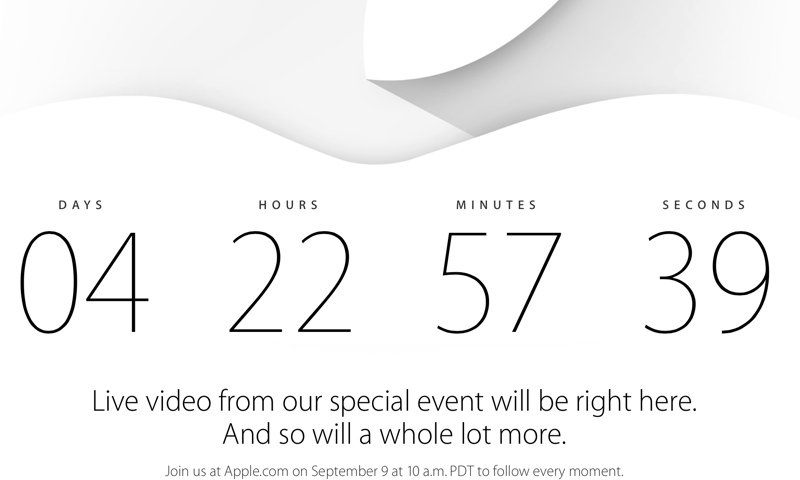
Apple will also likely stream the event to the Apple TV with a dedicated channel, as it has done for past events. MacRumors will be providing live coverage of the event as well, both on MacRumors.com and on the MacRumorsLive Twitter account for those unable to watch Apple’s live stream.
The September 9 event, which kicks off at 10 a.m. Pacific Time, will be held at the Flint Center at De Anza College in Cupertino, where Apple first unveiled the original Mac 30 years ago. Apple is expected to introduce the iPhone 6 in two separate sizes, its upcoming wearable device, and its payments initiative at the event.
.CPlase_panel display:none;

Apple Negotiates Lower Transaction Fees With Credit Card Issuers for Mobile Payments Initiative
 As part of its upcoming payments initiative, Apple has reportedly negotiated deals for lower credit card transaction fees with several credit card issuers. According to Bank Innovation, Apple has entered into agreements with American Express, JP Morgan Chase, Citigroup, Capital One, and Bank of America.
The banks have agreed to allow all of Apple’s transactions to be conducted as “card present,” a set fee charged when a customer uses a card in a physical retail location. Typically, there’s also a higher “card not present” fee that’s charged when a card is used online, due to security issues. Apple’s also managed to secure a lower “card present” fee on top of that, cutting its costs further.
Beyond that, Apple has also managed to bump down the actual “card present” rate by 15 to 25 basis points, according to people with knowledge of the talks. Normal “card present” discount rates, which are shared by issuers and networks but determined by the network, are about 1.5%, which means that Apple appears as though it will get around a 10% discount on the processing rate it will pay. Last quarter, Apple generated $4.5 billion of iTunes revenue — this implies that Apple will save at least $27 million as a result of these deals with the banks. Of course, more revenue volume is expected upon launch of Apple’s payments venture.
Apple has reportedly been able to negotiate this lower rate by ensuring banks that transactions will be secure, both through the use of the NFC chip which reports location, and through Touch ID, which will be used to authenticate transactions.
In addition to signing deals with several financial institutions, Apple has also managed to secure deals with major credit card companies Visa, MasterCard, and American Express, and it’s also been speaking with various retailers about its upcoming payments service.
Rumors have suggested that Apple’s payment service will allow iPhone owners to use their devices to make payments both online and in retail stores, possibly linking credit cards to existing iTunes accounts. Apple is expected to announce its mobile payments initiative during its September 9 media event.
.CPlase_panel display:none;
iPhone 6 to Support ‘One-Handed Mode’ to Address Usability on Larger Screens
In a lengthy article covering Apple’s iWatch and iPhone 6 plans for next Tuesday’s media event, The New York Times reports the iPhone 6 will support an optional “one-handed mode” to make it easier for users on the larger-screened devices.
To deal with concerns that a bigger phone will make typing with one hand difficult (the current iPhone has a 4-inch screen), some changes to the design of the iPhones’ software interface will allow people to type or use apps with just one hand — there will be a one-handed mode that can be switched on and off, two employees said.
The report reiterates rumors that the iPhone 6 will come in 4.7-inch and 5.5-inch sizes, considerably larger than the 4-inch screen included on recent iPhone models. Apple has touted the ease of one-handed use on its current lineup as competitors have moved to even larger displays, and this new one-handed mode will clearly serve as an answer to Apple’s own previous criticism of large-screen phones. Exactly how this mode will work is unclear, however.
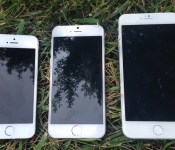
 iPhone 5s next to physical mockups of 4.7-inch and 5.5-inch iPhone 6
The New York Times also reiterates circulating rumors that the 5.5-inch iPhone 6 will be priced higher than the 4.7-inch model, with both devices also including near field communications (NFC) to support a new mobile payments initiative.
Apple’s media event kicks off at 10:00 AM Pacific Time next Tuesday, and Apple will be providing a live video stream of the event. MacRumors will also be providing coverage of the event with a liveblog and Twitter updates.
.CPlase_panel display:none;
Why Dyson’s robot vacuum took 16 years, and why it’s headed to Japan first

Dyson almost launched a robot vacuum. Back in 2001, after three years in development. Its first effort, shown to the British public in London looked nothing (and we mean nothing) like the eventual Eye 360 unveiled today. Sixteen years is a long time in tech. The DC06, as it was called, never made it past home-trial stages in 2012 — apparently too pricey and heavy. Between then and now, technology got better. A lot better. At the Tokyo launch of its new robot vacuum, Sir James Dyson himself, told us how it all came together, and why it’s not his native UK, but Japan, that’ll get to buy it first.
At the start of its 16-year development, Dyson’s early robot vacuum model was powered by old, heavy Ni-Cad batteries and “old motion-detection technology sensors.” Dyson explained: “We ended up with 85 different sensors and big, old motors. We got very close — spent a lot of money on it — but then we decided it just wasn’t good enough.”

“And we had better ideas,” he added. “Engineers are dreadful — they always have better ideas. I don’t mind that — I think it’s quite a good habit.” The point being, he continues, that his company spent a lot of money in 16 years “to make the right product.”
“We got very close — spent a lot of money on it — but then we decided it just wasn’t good enough.”
Dyson added that the team soon realized that vision sensors geared to measure a room, to triangulate location were the way forward. “This technology has a lot of mileage in it — and we’re just at the beginning,” he said. The team paired it with its existing, but still very recent, digital motor (the same one used in Dyson’s stick vacuums) — a motor that balanced suction power with a small footprint and weight.

If you’re basing your impressions of Dyson’s new vacuum on those press images, we have some very good news: It might look huge in the renders, but it’s pleasingly petite in real life. Notably taller, but not like the rice-cooker-on-wheels we feared from those shots. Dyson being Dyson, there’s a reasoning:
“If you think about chairs, [large-diameter vacuums] can’t get between those, between wardrobe and door gaps,” Dyson said. “Other robot vacuums may look bigger, but you need to consider [Dyson’s] full-width brush bar.” The smaller-sized bot’s brush covers the width of the machine, but it’s also handily contained by a plastic barrier. From Dyson: “If you make a really big brush bar, you lose the suction to pull it in. This size is optimal for the power we’ve got … and it can go into [smaller] spaces. You don’t sacrifice anything.”

The second (and it’s the almost literal jewel) of Dyson’s robot vacuum is that eye: a panoramic lens that aims itself at a 45-degree angle, getting a view of the room, of your house, and taking what it sees into the center and reflecting it downward. “It’s interpreting what it’s seeing and calculating triangulations at 30 times a second,” Dyson said. And it’s been designed to ensure it can find its way back home easier. “The first thing it does is turn around to view the dock, all while filming the room,” he explained. “In those seconds, it knows the room and where the dock is.”
Dyson adds that it isn’t specifically geared for hard flooring or carpet– it’s designed for everything, thus the tank-styled caterpillar treads. And that’s coupled with that Dyson suction: “We have 100 times the suction power of the Roomba model.” That’s almost exactly the numbers shown from the company’s tests comparing its model to one of iRobot’s latest. Granted, it’s Dyson doing the testing, but:

The ‘bot can climb up to 15mm with those treads, but the combination of high-level suction and nylon bristles also makes it well-suited to Japan’s tatami (rice straw) mats — lots of nooks, but also relatively delicate fibers. Which is convenient, as the Eye 360 will be coming to Japan first, in the spring of 2015. And barring Dyson’s love of launching things in (and having an excuse to visit) Japan, there’s some solid reasoning for it. “The country adopts to new technology faster than anyone else,” he said. “We’re also ‘Big in Japan’ — the largest vacuum brand in Japan, and this country is the largest market for robots.” No arguments there.
Filed under: Household, Robots
.CPlase_panel display:none;

Apple’s ‘iWatch’ to Feature Flexible Display, Wireless Charging
 Adding to this morning’s report from The Wall Street Journal pointing towards a curved OLED screen for Apple’s upcoming “iWatch”, The New York Times has released several details about the wearable device, suggesting it will have a flexible display and wireless charging capabilities.
Echoing past rumors, The New York Times says the iWatch will come in two separate sizes, focusing on health/fitness and mobile computing tasks, and that it will allow people to make purchases with included NFC support. Its flexible display is described as “unique,” and Apple is said to have settled on wireless charging after a failed experiment with solar charging.
It has a flexible display panel that is protected by a cover composed of sapphire, a type of tougher glass, they said. The device’s circuit board, which includes its sensors and chips, was described as tiny, about the size of a postage stamp.
For replenishing the battery, the smartwatch will rely on a wireless charging method. Apple had at one point tested solar charging for the watch, but that experiment failed.
According to unnamed employees who spoke to The New York Times, Apple’s iWatch is “one of Apple’s most ambitious projects to date,” with an “enormous” amount of time and money put into the health and fitness sensors in the device, which will be “much more” accurate than existing fitness devices. Rumors have suggested the iWatch will measure an array of different health-related metrics, from steps taken and sleep quality to blood pressure.
The iWatch is said to take advantage of HealthKit, a set of APIs Apple introduced alongside iOS 8 that will integrate into existing health devices and apps, reporting data to a central location. It’s also going to rely on Handoff, a Continuity feature that lets users seamlessly transition tasks from one iOS or Mac device to another.
The report also echoes a litany of rumors that have suggested Apple’s wearable device will not be available for purchase until 2015, despite Apple’s plans to unveil the iWatch at its September 9 media event. The gap between the introduction of the iWatch and its debut will give Apple time to finish work on the device as well as provide an opportunity for developers to create new apps suited to the smaller form factor.
(Image: 2.5-inch iWatch concept by SET Solutions)
.CPlase_panel display:none;

High-tech fabric can take a beating and lead to tough smart clothing

To be able to make smart clothing like Ralph Lauren’s shirt for athletes, you need fabric embedded with sensors and circuitry. Engineers from the Hong Kong Polytechnic University have designed one such type of fabric, and based on its test results, it has the potential to evolve into material superhero costumes are made of. According to the paper published in Proceedings of the Royal Society, the researchers tested the fabric’s durability not only by folding and wrinkling it, but also by washing it, repeatedly stretching it to its limits and even shooting bullets at it. They found that the cloth, knitted with wiring as you can see above, could withstand extreme abuse before it even begins to break down.
Its circuits apparently continued to work even after a million cycles of washing and stretching, and only 6 out of 30 samples were affected after being washed 30 times in a washing machine. The fabric even remained intact beneath Kevlar when sewn into a bulletproof vest. While it obviously has huge potential in the development of military equipment, other kinds of smart clothing could certainly benefit from a fabric this tough.
Filed under: Misc
Via: Wired
Source: The Hong Kong Polytechnic University
.CPlase_panel display:none;

Apple Store App Gets Redesigned Look, Improved Navigation
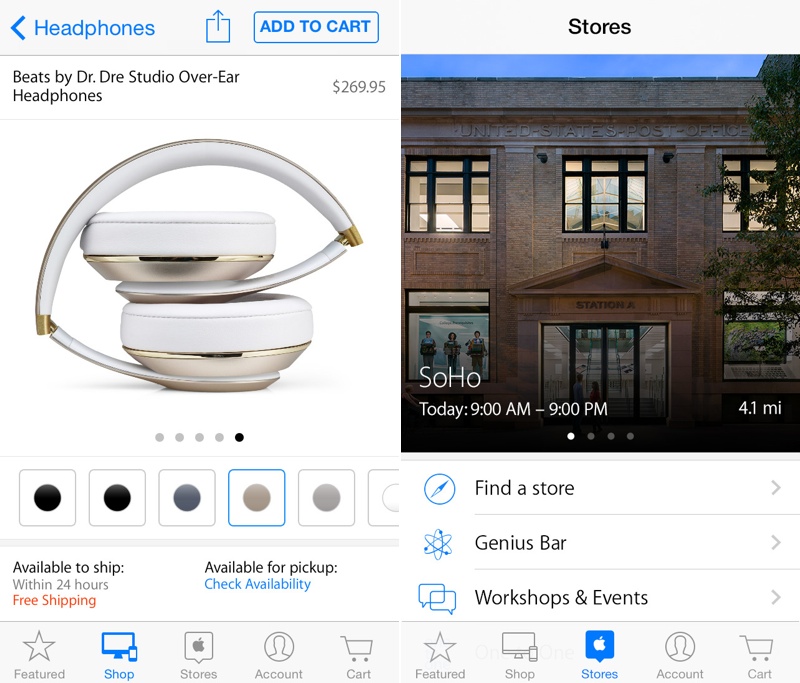
 Apple today updated its Apple Store app to version 3.0, adding several new improvements and design updates. The app now features new icons along the bottom bar, with the “Products” section renamed to “Shop” to make it easier for users to make purchases within the app. The overall app icon has shifted from a cart to a bag.
There’s also a new icon for “Stores,” and an “Account” tab that replaces the previous “More” tab. Several other UI elements have been redesigned as well, giving the iPhone app a cleaner feel that’s more in-line with the iPad version.
According to Apple’s release notes, it’s now possible to start shopping on one device and seamlessly switch to another device, including a Mac or PC. That means that a user who puts an item in the cart in the app will see the same item in the cart on Apple’s website if logged in, allowing for easy transitions between devices.
Along with purchasing improvements, the “Stores” tab has been updated to display information about upcoming events at a user’s local retail location, and the app, which is now universal, has been updated with the ability to create One to One reservations on the iPad.
What’s New in Version 3.0
– Now start shopping on one device and finish on another, or even on your Mac or PC.
– Find out about upcoming events and workshops at nearby Apple Retail Stores using the new Stores tab on your iPhone.
– On iPhone and iPod touch, there’s an all-new design with more refined navigation and imagery.
– On iPad, you can now make One to One reservations.
The update to the Apple Store app comes just days before Apple’s upcoming iPhone 6 event and a few weeks before the iPhone 6 is expected to go on sale. Prior to this update, the Apple Store app was last given a minor update in March to add notification improvements. The app’s last major update came in late 2013, when the company released a version of the app for the iPad.
Apple’s newly updated Apple Store app can be downloaded from the App Store for free. [Direct Link]
Update: As the iPhone version of the Apple Store app is now universal, replacing the original Apple Store app for the iPad, users in countries outside of the U.S. are now able to install the app on their iPads. Previously, the Apple Store app for the iPad was limited to U.S. customers.
.CPlase_panel display:none;
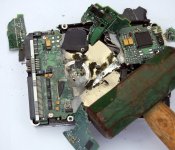
IBM wants to kill the hard drive it invented

Saving files to memory is something that’s supposed to be mostly invisible for the end user. We don’t need to think about it; it just has to work. But whether it’s a solid-state or hard disk drive, conventional storage solutions have their limitations — namely, speed, rewritability and durability. A team at IBM Research’s Almaden facility in California has a cure for all of that and it’s called “racetrack memory.”
Stuart Parkin, an IBM fellow heading up research into the field of magnetoelectronics and spintronics, is the man overseeing the creation of this new storage solution that’s poised to kill your hard drive. Which is ironic because IBM invented the HDD back in the mid-1950s. So what exactly is racetrack memory? Imagine a series of tiny magnets, all built one atomic layer at a time by Parkin’s team, that can be moved up and down along a (figurative) racetrack “in a highly coherent fashion” with the application of a simple current. That arrangement not only guarantees increased read/write speeds, but it’s also cheaper to produce, is incredibly resilient due to the lack of moving parts and boosts storage capacity significantly.
Already, Parkin’s team has been able to demonstrate the advantages of this new storage solution by applying it to existing flash memory chips. His team was able to generate about “250 of these magnetic domain walls in one racetrack” which, when applied to flash, could increase storage capacity by a factor of 100. And, what’s more, it won’t ever wear out, meaning it’d be infinitely rewritable. That’s something flash memory simply cannot do in its current state.
Watch as Parkin explains how racetrack memory could pave the way for more efficient, more compact computing devices.
Stay tuned for part two of our inside look at IBM’s Almaden research facility.
[Image credit: Jacob Haskew/Getty]
.CPlase_panel display:none;
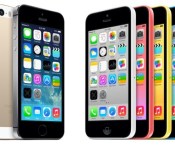
Get an Inside Look at Apple’s Early Field Failure Analysis Program Ahead of the iPhone 6 Launch [iOS Blog]
Ahead of the iPhone 6′s launch, Adam Satariano of BloombergBusinessweek has shared some details on Apple’s early field failure analysis (EFFA) program, designed to solve potential iPhone issues quickly and efficiently. The EFFA Program, which is run by Apple’s AppleCare team, has been in place since the late 1990s.
As outlined by Satariano, shortly after any iPhone release, the EFFA program sees couriers shuttling defective units received from returns to a testing room in Cupertino, where they are inspected by iPhone engineers in an attempt to fix problems in a timely manner. As soon as a fix is in place, it’s deployed across the company’s global supply chain.

“They take them apart to diagnose what’s happening right then and there,” says Mark Wilhelm, who helped lead Apple’s returns program. […]
Often, they jury-rig a hardware fix, then coordinate a solution across Apple’s global supply chain. Sometimes the problems can’t be solved quickly–remember Apple Maps leading people astray. “Every day they don’t recognize a problem, they are potentially manufacturing more bad products,” says Michael Fawkes, the former head of supply chain for Hewlett-Packard (HPQ).
With the EFFA program, engineers in Cupertino learn of a potential problem as soon as a return is made in a retail store, and the serial numbers of each device allow the company to track defective devices down to “individual workers on an assembly line.”
An example of EFFA in action came in 2007, with the release of the original iPhone. Several devices returned with a faulty touchscreen caused by an earpiece flaw that let in a user’s sweat. Apple engineers fixed the problem with a new coating, which rolled out to assembly lines shortly after and prevented a more widespread issue.
According to former employees, EFFA testing is most crucial during the weeks after a device first launches, but the team remains active for many months, and publishes a weekly report highlighting common issues reported by customers. Apple’s EFFA team will be called to action in just a few short weeks, as Apple is expected to introduce the iPhone 6 at a media event on September 9, with a launch coming shortly after.
For additional details on EFFA, make sure to check out Satarino’s full piece over at BloombergBusinessweek.
.CPlase_panel display:none;

Twitter CFO hints at big changes to how your timeline works

Twitter has already started to look more like Facebook, and it might soon start acting more like it too. You see, company CFO Anthony Noto hinted yesterday that the reverse-chronological firehose of tweets that some users hold so dear may give way to a more curated collection of messages cast into the digital ether. To hear him tell it, the Twitter experience as we know it “isn’t the most relevant” to the people who actually use the service (a notion that some people would definitely disagree with). That tidbit was lodged inside a broader conversation (which the Wall Street Journal captured) about improving Twitter’s search functionality — Noto pointed out the need for “an algorithm that delivers the depth and breadth of the content we have on a specific topic and then eventually as it relates to people.” Those last few words seem crucial — it sounds like he wants the Twitter experience to become one where content is tailored and presented differently depending on how relevant it is to the user. In the end, it might wind up getting Twitter a bunch of new users (which is exactly what all those antsy shareholders want to see), but would it really be worth alienating the service’s hardcore fans?
What do you think about Twitter’s possible shift to a “filtered” feed?
Filed under: Internet
Via: Gigaom
Source: Wall Street Journal
.CPlase_panel display:none;
 AIVAnet