


Verizon announced pre-orders for a steel band version of the Moto 360 smartwatch and then removed that statement
Motorola announced their beautiful Android Wear-powered Moto 360 smartwatch at a Chicago event recently. New Moto X and Moto G smartphones were announced as well, as were the Moto Hint bluetooth headset. You can order your Moto 360 right now (if you live in the US) directly from Motorola or via Google Play Store, though… Read more »
The post Verizon announced pre-orders for a steel band version of the Moto 360 smartwatch and then removed that statement appeared first on SmarterWatching.
Read the rest at SmarterWatching.com!
The post Verizon announced pre-orders for a steel band version of the Moto 360 smartwatch and then removed that statement appeared first on AndroidGuys.
.CPlase_panel display:none;

GameStop to sell Cricket Wireless starting in October

GameStop and Cricket Wireless have announced that the gaming-centric retail chain will begin selling no-contract wireless service starting next month. Expected to roll out in phases with completion by the end of October, it’s one more place for customers to pick up a smartphone.
“Cricket Wireless’ collaboration with GameStop accelerates our retail footprint across the U.S., solidifying our position as a national player… We are proud to join forces with GameStop and serve even more customers across the country…”
Cricket’s rate plans start as low as $40 per month; customers can save $5 per month if enrolled in AutoPay.
The post GameStop to sell Cricket Wireless starting in October appeared first on AndroidGuys.
.CPlase_panel display:none;

Android 5.0 “Lion” leaked on alledged new Nexus

The launch of a new Nexus and refreshed version of Android is coming up next month, and now is the time rumors and leaks start to trickle in. EMT Leaks has apparently leaked a spec list of what is assumed to be the next Nexus phone… The Nexus 5 (2014). The screenshot below shows info on a phone not called the Nexus 6 or Nexus X, but the Nexus 5 (2014).

The biggest news shown here is the version of Android being called “Lion”. This contradicts rumors of it being called “Lemon Meringue Pie” or “Lollipop”. Lion is a chocolate candy bar by Nestle, so it isn’t too crazy they would partner with Nestle again like they did with KitKat.
The rest of the specs on this info sheet are what we’ve been seeing before, with a 5.2″ 2560×1440 QHD resolution screen, Snapdragon 805 processor with Adreno 420 GPU, 3GB RAM and a 12 megapixel back shooter.
Only to be taken as a grain of salt, this info sheet is in the first group of many rumors to come. We’ll keep you posted on all rumors and info in the days to come.
source: EMT Leaks
The post Android 5.0 “Lion” leaked on alledged new Nexus appeared first on AndroidGuys.
.CPlase_panel display:none;

Purported Motorola Nexus X specs found on benchmark

The Nexus X will be manufactured by Motorola and will feature a 5.2-inch display with 2560 x 1440 display, reports AndroidWorld. According to benchmarks discovered by the blog, the device will pack a 2.7GHz Qualcomm Snapdragon 805 CPU with 3GB RAM, 32GB internal storage, and Android L. Additionally, the handset will feature a 12-megapixel rear camera, 2-megapixel front-facing camera, NFC, and a host of other sensors. Expected to launch in October, the Nexus X is also rumored in a 5.9-inch variant.
The post Purported Motorola Nexus X specs found on benchmark appeared first on AndroidGuys.
.CPlase_panel display:none;
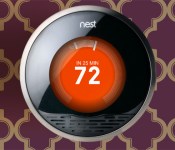
Nest devices now talk to the rest of your automated home

Nest’s thermostat and Protect smoke detector may help automate your home, but they haven’t actually talked directly to home automation systems so far — a bit of a discrepancy, don’t you think? All should be well now, though, since the Works with Nest program has just expanded to support the whole-home automation gear from Control4, Crestron, RTI and URC. If you’re fortunate enough to have one of those systems, you can now integrate Nest equipment with home theaters, lighting and anything else that talks to one of the supported control hubs.
To top it off, Nest is also tying into Google’s other big household technology acquisition, Dropcam. Its internet-savvy security cameras can now react to whatever your Nest equipment is doing. If your thermostat says you’re away, Dropcam can turn on motion sensing. The smoke protector, meanwhile, can tell Dropcam to record a brief video to prove that there’s a real fire. It’ll be very expensive to try out any these improvements if you don’t already have the necessary setup, but they promise to alleviate a lot of the headaches that come with managing a technology-rich household.
Filed under: Home Entertainment, Household, HD, Google
Source: Nest
.CPlase_panel display:none;

Cops using controversial database to identify search and seizure targets

The Washington Post has reported that a network called “Black Asphalt” is used by police officers as a (possibly illegal) aid in seizing drugs and cash during roadside stops. The site was created by a counterterrorism firm called Desert Snow, and has been tapped by as many as 25,000 police officers, DEA officials, customs agents and others to share information. Some of that data includes reports about US drivers never charged with a crime, including personal data like Social Security numbers. It is also frequently used to share “Be On the Lookout” or BOLO reports, which often target drivers based only on a cop’s hunch. Officers using the site and various Desert Snow training methods reportedly seized $427 million in five years, drastically increasing the take in the Justice Department’s contentious “asset forfeiture” fund.
To drive home the point, the site encouraged members to post pictures of seized cash and contraband. It even hosted a contest to crown the “Royal Knight,” an officer who managed to seize the most cash and property for the year. Though run with no government oversight, Black Asphalt was used and even funded by federal agencies like the DEA, which once housed the site on its own computers. A spokesman said agents “would go in there to grab information,” but added that it no longer uses the site over concerns that cases may be thrown out of court. Others have warned that use of the site may violate civil rights and jeopardize cases, but several officers told the Post that when they used it, they didn’t bother telling prosecutors anyway.
The site is no longer being run by Desert Snow and is now in the hands of an Illinois Sherrif’s office, to avoid the perception of a conflict of interest. Ironically, the point of contact there is a deputy who ghost-wrote a book called In Roads: A Working Solution to America’s War on Drugs — which happens to be Desert Snow’s handbook of asset seizure techniques. To take a deeper dive, check the full, fascinating story on the Washington Post.
[Image credit: Flickr/Highway Patrol]
Filed under: Internet
Source: Washington Poist
.CPlase_panel display:none;

Bungie’s leap forward with ‘Destiny’ isn’t gameplay: it’s social

“Waffles. Waffles with Swedish fish in them!” Destiny developer Bungie’s community manager Eric Osborne is telling me about his crew’s Halo LAN-party ritual. Lugging bulky CRT TVs everywhere (“You didn’t have a 36-inch [Sony] Trinitron Wega?” he asks), snaking ethernet cable around a possible stranger’s house, sipping Mountain Dew in the kitchen between games of capture the flag, eating lots of cheap pizza. Or, in Osborne’s case, breakfast food sprinkled with candy. “That was my experience!” It’s easy for him to chuckle at how ridiculous his go-to game fuel sounds in retrospect.
Back then, host advantage wasn’t having non-lagging bullets – it was knowing where the bathroom was and not having parents home. Times were a lot simpler.
When Halo 2 released in 2004, though, that all stopped. Mostly because Bungie more or less made LAN parties obsolete by taking them online with a sort of “virtual couch” that let you keep playing with the same buddies all night long in a, err, party. Fast forward ten years and much of the groundwork that the team laid for Halo 2 is boilerplate for any successful online game regardless of genre. Hell, much of Bungie’s conventions for online play (party chat, ranking systems, game invites) are baked directly into the online infrastructure of modern consoles.
Our interview with Destiny publisher Activision’s CEO Eric Hirschberg
The leap in social interactions between Halo: Combat Evolved and its sequel was nothing short of a paradigm shift, but where does Osborne see the change between its last game, Halo: Reach and its latest, the just released Destiny?
“I don’t know if you call it community or social play; I’ve heard some people call it ‘mingleplayer.’ I’m in a world, it’s my story, it’s my character. All the gear is mine; I’ve earned it in a bunch of different story missions,” he says. “I encounter some random people and we do a lot of stuff together and it’s super fun. But, I’m not bound to them in any way. I don’t need to lug a TV or even send them a friend request.”
He’s speaking of course about Destiny‘s unique take on traditional single-player campaigns in shooters. Though Bungie hasn’t quite come out and said the game is a massively multiplayer online title (MMO) like World of Warcraft, at its core that’s what the game is. When you start a new character, you drop into a world, quickly find an assault rifle and start shooting at aliens. In pretty short order, it becomes apparent that you aren’t alone. There are hundreds (if not thousands or even millions if pre-order numbers are to be believed) doing the same thing as you, and some are even doing it right alongside you. Should you desire, you can jump into their pick-up group – or, as they’re called in Destiny – a fire-team, and fight through scads of aliens together without much effort.

“In previous games, sending a friend request took you out of the flow of gameplay,” Bungie’s server software engineering lead Roger Wolfson says. He describes meeting someone online, then backing out of the actual game and wading through layers of menus and a massive list of recent players, just to interact with someone that you just met. It’s a hassle.
“And then you find out they’re a racist later,” Osborne says. He’s joking, but unfortunately that situation is’t far from the truth.
It’s why I, and most people I know, choose to not play online with anyone but a carefully curated group of friends. For me it helps preserve a shred of that LAN experience.
“A lot of times, you want to have a multiplayer experience where you don’t want to have to send a friend request,” Osborne says. “It can take a lot even in person to say, ‘Oh, I’ll give that person my phone number.’ Or, ‘I’ll give that person my email address.’ We’re cognizant that these types of things need to be lightweight and positive – that’s where the term ‘mingleplayer’ comes from.”
This, more than anything, is what Bungie thinks sets Destiny apart from any of its previous games: it’s taking all of the knowledge of how people interact online and how people want to interact online, that its gleaned even since launching Minotaur on the Mac in 1992, and putting it into motion. It’s what the team refers to as “lightweight social connections” that make the difference in Destiny. Stuff like walking up to a warlock with bad-ass armor and emoting a salute at him or her. Or, just kicking a ball around in The Tower, the in-game social plaza, with another player while she waits for her fire-team member to grab a new rifle or armor piece.

“You can choose to have positive interactions and you can choose to have negative interactions,” Wolfson says. “The most pestering a person can be is just running up to you and emoting a lot.”
That’s a far cry from tea-bagging the corpse of the flag carrier you just pistol-whipped from behind. What the team is trying to do at its core is eliminate a lot of the barriers that make it hard for people to have fun together.
“It’s so important to remember that what we’re doing is making a game, and a game is just a rule-based system that allows people to have fun and challenge themselves, share victory and social connections,” he says. “I think we’re celebrating that with Destiny.”
We’ll fire up the waffles.
Filed under: Gaming, Home Entertainment, Software, HD, Sony, Microsoft
.CPlase_panel display:none;

Bitcoin’s elusive creator allegedly found… again

Because Bitcoin creator Satoshi Nakamoto has chosen to remain anonymous, the whole world is obsessed with unmasking him, her or them. This obsession has gotten to the point where reporters have harassed an elderly Californian with the same name on a multi-car chase through LA. Now, however, an anonymous hacker (oh, the irony) claims to have gained access to Nakamoto’s public email address – promising to reveal all if they receive a bounty of 25 Bitcoin, or $11,600 at current rates. According to the hacker’s missive on the P2P Foundation website, Nakamoto had failed to configure Tor properly back in 2010, leaving him open to an attack. We just wonder how the anonymous hacker would feel if someone turned the tables on them.
Filed under: Internet
Via: Wired
Source: Pastebin, P2P Foundation
.CPlase_panel display:none;

UN study shows atmospheric CO2 increases reach 30 year high

Aside from paying someone to scream “this is a problem” into everyone’s faces, there’s not much more that the UN can do to tell us that we’re heading towards an environmental catastrophe. The United Nations’ World Meteorological Organization has found more proof of our forthcoming doom, showing that atmospheric carbon dioxide levels rose faster between 2012-2013 than any other year since 1984. If the rate doesn’t slow down, then the levels will reach 400 parts per million in the next two years – a figure well in excess of the 350ppm that most climate scientists believe is “safe.”
For the first time, the WMO has also looked into the acidification of the oceans, and how this is hampering their ability to absorb carbon. Historically, the oceans would have been able to shoulder some of the burden, but acidification prevents it from doing so, which means atmospheric carbon will increase at an even faster rate. The advice at the end of the report is the same as ever: unless we cut CO2 emissions and generally clean up after ourselves, we’re going to be in big trouble. UNESCO’s Wendy Watson-Wright probably says it best in her closing remarks, bluntly stating that “we are running out of time.”
Via: Washington Post
Source: WMO
.CPlase_panel display:none;

Tesco shelves its smartphone plans to focus on Hudl 2 tablet

Tesco makes its own affordable range of everyday products for penny-conscious consumers, and last year the supermarket extended this concept to tablets. The Hudl slate wasn’t just cheap, but also the perfect vehicle for showcasing Tesco’s various streaming services. Despite a few hardware teething problems, the Hudl has gone on to sell over half a million units, prompting the commission of a sequel earlier this year. Alongside the Hudl 2, Tesco also said it would launch an affordable Android smartphone, but now the chain’s announced those plans have been shelved while it focuses on the new tablet, which is due out “in the next few weeks.” As Robin Terrell, Group Multi-Channel Director at Tesco explains, since the plan was revealed “the mobile market has become even more competitive,” leading the supermarket to “put the phone on hold.”
Where Tesco previously saw space for “an affordable, quality 4G handset,” it’s clearly no longer confident it can deliver a competitive product. Since it announced the phone, of course, we’ve seen the arrival of several budget handsets that fit that description, like the Moto G with 4G and Lumia 635. Perhaps it’s also a case of Tesco being too ambitious with its hardware. Former CEO Philip Clarke said the Hudl phone would be comparable to Samsung’s Galaxy S5, which makes us wonder whether hitting the right price point was simply unachievable. Clarke was all but sacked recently, leaving new head Dave Lewis with the task of clawing back lost market share. While Terrell states he decided to put the phone on hiatus in early July (before the new CEO stepped up), the move fits nicely with Lewis’ plan to refocus on being the best supermarket around. We doubt money-hungry projects like creating a own-brand smartphone fit with this policy, and it could mean the team at Tesco Labs might have to spend less time on fun stuff, and more stacking shelves.
The Hudl tablet line is surviving for now, however, and the next one is launching imminently. Terrell has spilled a bean or two on the upcoming device, saying it’s “improved on just about every area of its predecessor, from screen size to speed, design and accessories.” He also said the sequel has the potential to “take its place as customer’s primary tablet,” but regardless of how much more powerful it ends up being, we expect the price will remain the slate’s most important spec, and its biggest selling point.
Filed under: Cellphones, Tablets, Mobile
Via: Marketing Week
Source: Tesco
.CPlase_panel display:none;
 AIVAnet