


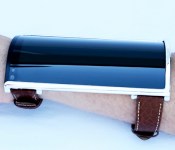
Is this wrist-worn smartphone on Indiegogo a hoax or a fever dream?

One downside of Indiegogo’s lax attitude to projects is that there’s no requirement for a prototype or any proof that the device being pitched could even exist. In fact, the site is so laissez-faire, that a creator could probably promise a hoverboard powered by unicorn tears, and the only limit to its success would be human credulity. In unrelated news, Arubixs has taken to Indiegogo to ask for $300,000 of funding for Portal, a flexible, bendable smartphone that can be worn on your forearm like Leela’s Wristlojackimator – with a watch strap holding it in place at either end.
The company’s reticent to talk about specifications, saying that its suppliers have wrapped it up in “more legal documents than you can imagine,” and accusing the “big guys” of printing money to put small companies down. What it will claim, however, is that he Portal will be just 4.8mm thick, 0.7mm thinner than the Gionnee Elife S5.5, a device with huge battery life and heat dissipation issues thanks to its small size.

Arubixs also won’t be drawn on what CPU the Portal will come with, but will claim that it’ll be paired with 2GB RAM, 64GB storage and a quartet of cameras (with at least one 8-megapixel lens). We’re also told that the device will come with a staggering 3,200mAh battery that uses “proprietary flexible battery” technology that’s probably not fictional, at all. Oh, and it’s water resistant to 10 meters. By comparison, the Samsung Galaxy S5 Active and CAT’s S50, two real rugged phones that actually exist, will only survive depths of up to one meter.
We don’t want to be cynical, here, and nothing would be better than if this company can achieve something that’d put Samsung and LG’s engineers to shame. That said, there’s nothing in the company’s executive biographies that makes us think that it’s a possibility. For instance, CEO Brandon Mairs has some expertise in composite materials after running a firm that made carbon fiber auto parts for sports cars. Engineering VP Adam Eastman, meanwhile, is still taking his Bachelor of Science degree at UC Berkeley, and while he may be a materials genius, there’s nothing in his record to suggest he’s developed the next big leap in flexible technology. Still, if you want to take a gamble on this device, we won’t stop you, and Arubixs wants $400 of your hard-earned for a finished Portal Sport with an arm cradle and wireless charger.

[Thanks, Bradley]
Filed under: Cellphones, Wearables, Mobile
Source: Indiegogo
.CPlase_panel display:none;
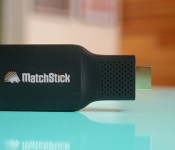
Matchstick’s Firefox OS adapter sends media to your TV for $25

Looking for a streaming media stick that’s more accessible than Google’s Chromecast? You might have found it. After a few teasers, Matchstick has revealed the first Firefox OS-based media sharing adapter. The self-titled gadget lets you “fling” video, websites and other content from Firefox (naturally), Chrome and supporting apps to your TV. While the hardware should be a bit more powerful than Chromecast, the real allure is a completely open platform — you can tinker with the software and even build your own hardware if you’re the entreprenurial sort. A low price will help, too. Matchstick hopes to sell its stick for $25 this February, and that’s assuming you don’t back the upcoming Kickstarter project — get in early and it will cost $18. Even if Matchstick doesn’t get as much app support as Google’s device, it may be worth a look.
Filed under: Home Entertainment, Peripherals, HD
Via: CNET
Source: Kickstarter, Matchstick
.CPlase_panel display:none;

Accessory of the Day: Spigen Slim Armor Case for LG G2 $19.99

Made of a premium polycarbonate anti-stretch TPU, the Spigen Slim Armor case is crafted with precision to perfectly fit your LG G2. Its dual layered housing protects your phone against shock and drops without adding the bulk of some of the larger cases on the market. With 5-star reviews and priced at just $19.99 (Prime eligible), LG G2 owners should be ordering, today.
Deals, Discounts, Freebies, and More! Click here to save today!
The post Accessory of the Day: Spigen Slim Armor Case for LG G2 $19.99 appeared first on AndroidGuys.
.CPlase_panel display:none;

Microsoft needs your help to predict the future accurately

Apparently, Microsoft Research is working on a forecasting methodology based on data and not on the fevered dreams of precogs or Nostradamus-wannabes. In the past few months, the project’s researchers have been relying on the data they’ve collected (such as outcomes from past events) to accurately predict several political races and game matches. But now Redmond wants the help of humans to improve its predictive powers, so it has launched a new website called Prediction Lab, where anyone can register and vote on various topics such as who’d win a congressional seat or an NFL match. Unlike ordinary polls, users can vote repeatedly, though they’d have to back up their choices by betting virtual points. This apparently leads to more accurate votes, since people have something at stake, and that could improve the accuracy of Microsoft’s algorithms.
Microsoft researcher David Rothschild (who predicted the 2012 Presidental Elections) put the new website to the test during the recent Scotland independence referendum. The morning when the result was slated to come out, Rothschild went on record to say there’s an 84 percent chance that majority of the votes will be a “No.”
He said:
Not only did we match the accuracy of major polling companies, but we also provided a lot of insight that they weren’t able to get, through the fact that we had people coming back again and again.
Since the project was meant to collect data and improve Microsoft’s technology, though, users will have to give the company some personal info such as their age and address. Also, some of the questions were apparently quite personal: PC World saw ones that asked the length of users’ commute, as well as their stance on abortion. If that doesn’t bother you in the least, or if you just really want to place some bets without losing your life savings in the process, head over to Microsoft’s Prediction Lab website .
Via: PC World
Source: Microsoft Research, Prediction Labs
.CPlase_panel display:none;
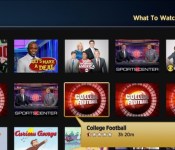
TiVo’s Android app now supports streaming

It was nearly a year ago that TiVo brought streaming to its iOS apps, enabling you to watch recorded shows anywhere with a WiFi signal. Eleven months later, and the company has finally added the same functionality for TiVo’s Android app. The feature will work on most devices running Android 4.1 or above, but there are a few caveats, like the fact that it won’t work on devices with Intel’s mobile chips, and you’re still at the mercy of whatever copy protection restrictions is placed upon the shows. On the upside, the app will also access content from Hulu Plus, Netflix and Amazon Instant Video – the latter being another service that’s belatedly gotten around to adding Android support for its users.
Filed under: Cellphones, Tablets, HD
Source: TiVo Blog, Google Play
.CPlase_panel display:none;

Zero Motorcycles’ new e-bikes can last 185 miles on a single charge

With the bad memories of 2012 product recalls firmly banished to the past, Zero Motorcycles is today unveiling its 2015 lineup of e-motorbikes. Changes from the 2014 models include improved seats, a slight increase in price, and larger batteries that extend the bikes’ range to a maximum of 185 miles with the $2,495 Power Tank accessory (a 14-mile boost from last year). The base Zero FX model now clocks in at $9,845, while the top-of-the-line Zero SR will set you back $17,345. You won’t be able to buy any of the new bikes until December (February in Europe), but you can whet your appetite with a selection of videos below.
Filed under: Transportation
Via: Autoblog
Source: Zero Motorcycles (PDF)
.CPlase_panel display:none;
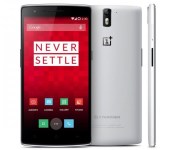
OnePlus 2 confirmed to be coming in Q2 or Q3 2015 during Reddit AMA
 Given the success of the OnePlus One, we always expected OnePlus would have been working on a successor to that device. Sure enough, Carl Pei of OnePlus today confirmed during their Reddit AMA (Ask Me Anything) that they are indeed already working on a follow-up, called the OnePlus 2, and expects it to be released sometime in Q2 or Q3 2015. Pei also suggests that the device will be running Android L as he thinks “Android L would be standard” by then. Perhaps the most interesting thing that was said during the AMA was that they are at least considering different sizes for their next device. While they obviously stopped short of saying they wouldn’t go for a phablet again, at least we know they are listening.
The OnePlus One is probably one of the best value phones of 2014, challenging even the aging Nexus 5 for that crown, bettering it with a Snapdragon 801 procesoor as well as other specs that put the device on par with many of the best devices at the time. If there was only downfall of the device, it was the invite system that OnePlus instituted to limit wasted inventory on their end, but created some pretty unsightly supply issues for desperate customers who wanted a piece of their wonderful hardware. We hope they’ve learned their lesson on their maiden device and we can’t wait to see what’s next in store.
What do you think about the OnePlus 2 being on its way? Let us know your thoughts.
//<![CDATA[
ord = window.ord || Math.floor(Math.random()*1E16);
document.write('‘);
//]]>
The post OnePlus 2 confirmed to be coming in Q2 or Q3 2015 during Reddit AMA appeared first on AndroidSPIN.
.CPlase_panel display:none;
Five day old Android L build LRW87D shows up with crash log and short video
 We already know Android L is coming, and we have a pretty good idea of what it’s going to be called, but we can’t help but feel excited when we see more evidence of its existence pop up. This latest news comes to us courtesy of the Chromium issue tracker once again, which has spotted Android L build LRW87D, this time due to a crash log being posted, even being accompanied by a video of the app in question crashing. Check it out:
It’s not particularly long, or particularly special, but in the 20 seconds or so, you get to see a nice window transition and those now iconic soft keys at the bottom of the screen.
 The build in question is said to have been running on a Hammerhead device, know to us as the Nexus 5, and the build number (LRW87D) suggests that the build is from the 25th of September, though it should be noted that dates of these builds can be notoriously inaccurate, though we’re sure to be looking at a pretty recent build here. We’re expecting Android L to make an appearance when Google announces its new Nexus devices, the Nexus 9 and Nexus 6, though when exactly that will happen is anybody’s guess.
What do you think about this latest Android L build? Are you excited for Android L? Let us know your thoughts in the comments below.
Source: myce.com
//<![CDATA[
ord = window.ord || Math.floor(Math.random()*1E16);
document.write('‘);
//]]>
The post Five day old Android L build LRW87D shows up with crash log and short video appeared first on AndroidSPIN.
.CPlase_panel display:none;
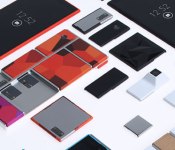
Project Ara to run a modified version of Android L

Phonebloks began as a college project. It was an idea more than it ever was a business. It was an idea Phonebloks hoped would spread across the internet and someone would grab it and run with it. In the last year or so, the idea has spread, and now multiple companies are using this idea to drive their business. One of those companies is Google.
Project Ara took shape with the acquisition of Motorola. Motorola and Google took the idea of Phonebloks, a modular phone with swappable parts, from idea to concept. And even though Google is in the process of selling Motorola to Lenovo, they are keeping Project Ara in house.
We’ve already seen a glimpse of the future when Google showed off a concept phone at Google I/O earlier this year. It was rough around the edges, and was little more than a boot sequence, but it gave us a glimpse of the future. In that device, we saw a way to own one phone that we could upgrade and change with new modules. This reduces waste, and increases the functionality of our phones.
The latest news from Project Ara is that,
Project Ara will use a modified version of Android L, developed in collaboration with Linaro. Thanks to this version, the modules, except the CPU and the display, will be hot swappable. This means you can change them without turning the phone off. The modules will be available on a new online store, like Play store.
Yes, Google will monetize the crap out of Project Ara and make a ton of money by doing so. But, we are all used to that kind of thing. The main point here is the vision of this modular device becoming a reality; something we can buy, and use, in our daily life.
Check out the video below that shows how far Phonebloks has come in the last year. Don’t you just love videos of people’s dreams coming true?
via [Phonebloks]
Deals, Discounts, Freebies, and More! Click here to save today!
The post Project Ara to run a modified version of Android L appeared first on AndroidGuys.
.CPlase_panel display:none;
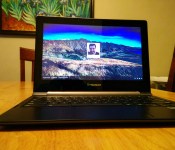
Lenovo N20P Chromebook Review

Tablets and laptops are getting closer with many notebooks now having touchscreens. Lenovo’s new 11.6-inch N20P Chromebook is no exception. The Chromebook offers the best that Google has to offer in a sleek body and allows you to use just touch if that’s what you desire. If you want to find out if the new touchscreen Chromebook from Lenovo is a contender, then read on. First let me say that I won’t be focusing on Chrome OS too much in this review since if you’ve used Chrome OS before or even the Chrome browser on your desktop or mobile device, you’ll know how it works. Moving on to the hardware…
Hardware
The Chromebook sports an 11.6-inch LED backlit display that comes in at 1366×768 resolution, which isn’t bad, but not the best. I noticed that the display looked fairly nice in use, but it did pick up some reflections if there was too much sunlight. One nice thing about the device is the 10-point touchscreen display that you don’t see on too many Chromebooks except for the Pixel and Acer’s C720P. Although Chrome OS isn’t as optimized for a touchscreen as say Android is on a tablet or smartphone, it still works very well and is both intuitive and easy to use. We’ll get to the hinge on the device later in the review, but if you have it rotated to the point where you can’t use the keyboard, there is an on-screen keyboard that’s just as easy to use as the Android keyboard. It almost makes me really want a Chrome OS tablet, but who knows if we’ll ever see one. Moving on to the other specs, one of the downfalls is the processor and it sports a 2.16GHz Intel Celeron N2830 with 2GB of DDR3L/1333 RAM. As you would expect, this dual-core processor isn’t the speediest, but provides more than enough to allow you to do some simple web browsing and running your Chrome OS apps. The Chromebook starts in under 10 seconds and has very fast browser tab/app switching, which could just be because of the OS. I noticed that after a while, the laptop starts to slow down and my solution was to restart, which again was only about 20 seconds total of my time. I still found the Chromebook to be too slow to be a full computer replacement and coming from a Core i7 Macbook Pro, the decreased speed is highly noticeable. The N20P sports a 34.8-watt-hour battery, which brings an impressive 8 hours of battery life. While it gets about 8 hours, depending on your settings you will get at least 6 or more hours and if you only use it slightly as a second computer while on the go, expect it to last a long time in standby mode. I found that in standby mode, it could last a few weeks on a single charge, especially since I would only use it for an hour or two at a time while on the go. One of the most unique features of the N20P besides the touchscreen is the ability to rotate the screen 300 degrees. If you’re familiar with Lenovo’s Yoga laptops, this is no different. Rotating the display to 300 degrees or even a little less, it gives you almost a tablet with a stand. Having never used such a device before, it was a bit awkward at first, but then you get used to it. It makes the browsing experience all the better. It also has 16 GB eMMC storage, a USB 3.0 port, USB 2.0 port, HDMI-out and a 2-in-1 (SD / MMC) card reader. Lastly, as far as the hardware, the Chromebook is fairly thin and starting at 3.08 pounds, it’s easy to carry around with you.
Software
As with all Chromebooks, the N20P is running the latest and greatest version of Chrome OS and updates automatically. It’s the same OS as on all other Chrome OS devices and you should be familiar how to use it if you ever used a Chrome browser. As I mentioned above, one noticeable difference is that it has a touchscreen and therefore an onscreen keyboard, which works extremely well. One of the latest additions to Chrome OS, not specific to the N20P is that it the OS can now run Android app, although only four at the time of writing this. I got to try Evernote and Vine and both work just as you would expect on an Android device.
Price
One of the other downfalls I see with this Chromebook is that it’s a bit steeper than its competition, starting at $329, when most sell for under $200 and Acer’s touchscreen Chromebook can be had for $279. You’ll have to decide for yourself whether the touchscreen and 300 degree rotating display is enough to justify the price.
Overall
At its latest attempt at a Chrome OS device, Lenovo did an admiral job with the about 3 pound N20P. The viewing angles and display are more than adequate, it offers a great touchscreen experience and enough speed to run all of your Chrome apps, but at $329, it’s a bit expensive. At $50 over the Acer touchscreen Chromebook, I would have expected a bit more speed. You can however get a little bit more speed if you buy the $349 model, which I didn’t have the opportunity to test. The premium model comes with a Intel Celeron N2930 processor clocked at 1.83GHz. If you have the money to spare and really want a Yoga-like Chromebook with a touchscreen display, look no further.


Deals, Discounts, Freebies, and More! Click here to save today!
The post Lenovo N20P Chromebook Review appeared first on AndroidGuys.
.CPlase_panel display:none;
 AIVAnet