



Pantech is putting itself up for sale after six consecutive quarters of losses
 Pantech has the rather uneviable task of competing with mega smartphone companies like Samsung and LG in their home country of Korea, but has still managed to hold onto third place there for some time now. But six consecutive quarters of losses has to hurt, and the manufacturer has decided to put itself up for sale. Interested parties whose names have been swirling around include main competitors, Samsung and LG, as well as other Korean companies like car manufacturer, Hyundai, and telecommunications operator, SK Telecom. Even India’s Micromax and China’s Lenovo, Huawei, and Xiaomi have pricked up their ears, particularly with the knowledge that 90% of the Korean smartphone market only buys Korean products, making buying Pantech an easy way to access the Korean market.
 Interested parties will have until October 7th to lodge their offers, and the selling price is expected to be around $366 million USD. It’s pretty sad that Pantech has fallen on hard times as they have made some particularly beautiful devices in their time, like the Pantech Vega Iron, but you can probably guess how hard it is to compete with Samsung and LG hanging around. Still, we hope whoever buys them keeps the company intact and making those spiffy smartphones.
What do you think about Pantech going under the hammer? Let us know your thoughts.
Source: ZDNet Korea via Phone Arena
//<![CDATA[
ord = window.ord || Math.floor(Math.random()*1E16);
document.write('‘);
//]]>
The post Pantech is putting itself up for sale after six consecutive quarters of losses appeared first on AndroidSPIN.
.CPlase_panel display:none;
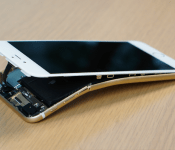
Consumer Reports: iPhone 6 and iPhone 6 Plus Not As Bendable As Believed
Just a day after Apple issued its first statement regarding the ongoing complaints that the iPhone 6 Plus bends in user pockets, Consumer Reports has released its test results for how “bendable” Apple’s new phones are. In summary, the results show that the new phones are far stronger than what some testimonies have suggested in the past few days.
brightcove.createExperiences();
To test the phones, Consumer Reports put them through the “three-point flexural test”, which has the phone supported at two ends and has pressure applied at a third point, alongside competitors like the HTC One (m8), Samsung Galaxy Note 3, LG G3 and iPhone 5.
Consumer Reports’ tests pushed the iPhone 6 and 6 Plus much further than [Apple’s test of 55 pounds of force]. We started light, applying 10 pounds of force for 30 seconds, then releasing the force. Then we upped the force in 10-pound increments, noted when the phones first started to deform (that’s what our engineers call it) and stopped the test for each phone when we saw the screen come loose from the case.
The results showed that the 6 Plus was actually stronger than the iPhone 6, starting to deform at 90 pounds of force and having its screen and case separate at 110 pounds of force. The iPhone 6 started to deform at 70 pounds of force and started coming apart at 100 pounds of force. The HTC One (m8) performed the worst in Consumer Reports’ test, deforming at 70 pounds of force and coming apart at 90 pounds of force.
 iPhone 6 Plus after Consumer Reports’ test
The LG G3 started to deform and come apart at 130 pounds of force while the iPhone 5 deformed at 130 pounds of force and came apart at 150 pounds of force. The Galaxy Note 3, on the other hand, deformed and came apart at 150 pounds of force. Consumer Reports notes that while other phones, like the iPhone 6 and HTC One, were still functioning after deforming and coming apart, the Note 3 stopped working right away.
Overall, the magazine notes that while none of the phones they tested were indestructible, all devices tested should hold up fine under everyday use
.CPlase_panel display:none;

What is Weirded? This is Weirded.

How does one introduce an original web series like #Weirded?
For one, it’s not tech news — at least, not in the way you’re used to seeing. So scrub that notion from your brain. It’s more like a constant channel change; like pressing the seek button on a car radio and catching tidbits of the noise filling the tech industry’s airwaves. It’s light, but biting in a way we hope’ll make you ask for “more, please!” It’ll skewer and shine a light on the more outrageous news and comments of the week. But it will always be in good fun (and in very bad taste). It’s a guilty pleasure; our tongue-in-cheek gift to you.
This week’s inaugural episode is pretty fruity: It’s nearly all about Apple, with some Blackberry crumble on the side. The full episode’s just after the break. Enjoy the feast!
[Image credit: Denelson83, Wikipedia]
Filed under: Cellphones, Apple, Blackberry
.CPlase_panel display:none;
Motorola Shamu gets spotted again, this time hiding in the dark but showing us its software details

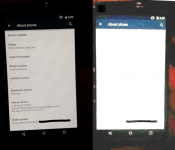
The Motorola Shamu – original image (left), enhanced image (right)
We’ve had some very good looks at what is allegedly the next Nexus device, the Motorola Shamu, or Nexus 6, of Nexus X, or whatever else you want to call it. We’ve had photos which compare the Shamu’s size versus the equally large LG G3 as well as what looks like press renders of the device. Today, we have another leak to share which allegedly comes from someone in possession of a Shamu and has taken a photo of it while presumably in the dark. The details on the screen tell quite a story – apart from the distinctive Android L soft keys at the bottom of the screen, the details confirm the Shamu is running Android L and the build it is running is from late August.
Unfortunately for the original poster, when the image is enhanced, it reveals the Motorola logo with a SnapTag arrangement, which is presumably unique for testers of the device and may have compromised their identity (it’s been blurred out where the black box is in the above image). Oversight aside, it’s seeming increasingly likely that this Motorola Shamu is definitely a Nexus device that will see its release in the next month or so, rumoured to be around October 15th or 16th.
What do you make of this latest leak? Is the Shamu a device you’re looking forward to? Let us know your opinion.
Source: Droid-life via Android Police
//<![CDATA[
ord = window.ord || Math.floor(Math.random()*1E16);
document.write('‘);
//]]>
The post Motorola Shamu gets spotted again, this time hiding in the dark but showing us its software details appeared first on AndroidSPIN.
.CPlase_panel display:none;

Belgian brewery to reduce truck use with underground beer pipeline

In order to cut down on the number of trucks it puts on the streets, Brouwerij De Halve Maan is working with the city of Bruges to construct an underground beer pipeline. While the brewing still happens at its original site, filtration, bottling and shipping operations were moved outside of town in 2010. To get the tasty beverages from point A to point B, dozens of trucks go back and forth each day, but not for much longer. Folks familiar with the Cleveland, Ohio-based Great Lakes Brewing Company may recall that it uses an underground system to send its suds from a production facility to a taproom/pub across the street. The effort in Belgium will be much more elaborate though, replacing the 3-mile tanker route with 1.8 miles of polyethylene pipe, and cutting transit time to between 15 and 20 minutes. De Halve Maan claims the system can send out 6,000 liters per hour — on top of cutting traffic and reducing emissions. What’s more, the brewery (er, brouwerij) will foot the bill for installation and road repairs, reducing the financial burden on the city.
[Photo credit: Bernt Rostad/Flickr]
Filed under: Transportation
Source: Het Nieuwsbladsaid (Dutch)
.CPlase_panel display:none;

Uber driver allegedly bashed passenger in the head with a hammer

Uber rides just got a lot more dangerous. Patrick Karajah, a 26-year-old Uber X driver, has been accused of attacking a passenger with a hammer and leaving him by the side of the road in San Francisco’s Bernal Heights district. SF Gate reports that the victim and a couple of friends were picked up at a bar around 2 a.m., and along the way they got into a fight over the route Karajah was taking. Karajah then allegedly kicked them out of the car and proceeded to repeatedly bash the victim in the head with a hammer. The victim is currently in recovery but is suffering serious injuries and head trauma. Karajah pled not guilty to the charge of assault and is currently free on $125,000 bail.
There’ve been past incidents with Uber drivers as well — one was accused of kidnapping a club-goer in Los Angeles, while another in San Francisco was apparently physically and verbally abusive. All of this adds credence to the recent report by San Francisco and Los Angeles district attorneys that alleges Uber, Lyft and other ridesharing services have not been compliant about driver background checks. It looks like that $1 Safe Rides Fee isn’t worth it at all.
[Image: Bloomberg via Getty Images]
Filed under: Misc
Source: SF Gate
.CPlase_panel display:none;
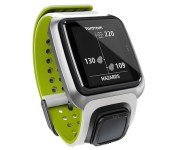
TomTom has a new watch designed specifically for golfers

In perfect conjunction with the start of the Ryder Cup, TomTom couldn’t have found a better time to introduce its new GPS-powered wearable. The watch, simply, and fittingly, named TomTom Golfer, is similar to Garmin’s Approach line, featuring data for more than 34,000 courses. In addition to that, TomTom’s Golfer is waterproof and can keep track of distance, score and time for every whole — so long as the course you’re playing at is supported. It can also send detailed information from the green areas right to your wrist, which could potentially lessen the chances of you taking a bad swing. It’s available now on pre-order for £200 (around $325), with shipping on both models (black or white strap) expected to begin “within 30 days.”
Filed under: Misc, Peripherals, Wearables
Source: TomTom
.CPlase_panel display:none;

Playdate: We’re livestreaming ‘Forza Horizon 2’ on Xbox One!

Welcome, ladygeeks and gentlenerds, to the new era of gaming. The one where you get to watch, and comment, as other people livestream gameplay from next-gen consoles. Because games! They’re fun!
What do you do when there’s many hundreds of horsepower under your foot? Bounce on the pedal and put the devil to the floor, naturally. And that’s just what Microsoft’s latest racer allows you to do. We’re talking about Forza Horizon 2 on Xbox One, of course. The game that lets you live out nearly any auto-fantasy you might have, so long as it includes picturesque European landscapes, pristine cliff sides and electronic dance music. We’re just kidding on the last part — you can totally turn the radio off. Join us right here at 7:00 p.m. Eastern / 4:00 p.m. Pacific as we bring you a taste of what you can expect from the open-world arcade racer when it hits store shelves (or your console) next week.
Watch live video from Engadget on www.twitch.tv
Filed under: Gaming, Home Entertainment, Transportation, HD, Microsoft
Source: Twitch
.CPlase_panel display:none;
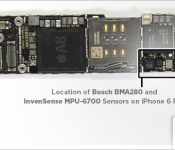
iPhone 6 and 6 Plus Equipped With Two Accelerometers for Power Management, Improved User Experience
Apple has opted to equip the iPhone 6 and 6 Plus with two separate accelerometers, as discovered in Chipworks’ comprehensive iPhone 6 and 6 Plus teardown. There’s a three-axis Bosch BMA280 accelerometer and what Chipworks believes is a MPU-6700 six-axis accelerometer from InvenSense.
According to Chipworks, Apple may have decided to incorporate two accelerometers into the iPhone 6 and 6 Plus to both minimize power consumption and “improve the overall user experience.”
The InvenSense accelerometer has a range of functions, allowing it to operate in several different modes, but it can draw more power than the Bosch accelerometer due to its higher sensitivity. The maximum sensitivity of the InvenSense is at 16684 LSB/g, much higher than the Bosch’s 4096.

The InvenSense device can operate as a six axis inertial sensor, or as either a three-axis gyroscope or a three-axis accelerometer. It is rated to consume 3.4 mA in the six-axis mode, 3.2 mA in the gyroscope mode and 450 µA in the accelerometer normal mode. By contrast, the Bosch device operates as a 3-axis accelerometer only and it consumes 130 µA of current in the accelerometer normal mode. Both devices offer two low power levels of operation for the accelerometer function. The InvenSense device actually consumes less current in its lowest power mode, with a 1 Hz update rate.
The main benefit of the InvenSense is full six-axis integration of the data by the on-chip digital motion processor (DMP). This will provide a direct benefit for gaming and other applications that need sophisticated inertial sensing capabilities. In addition the InvenSense provides significantly higher sensitivity than the Bosch device. The price however, is higher power consumption.
The Bosch accelerometer is able to operate at a lower power than the InvenSense and it has a “much faster” cold start up time, at 3ms compared to 30ms, allowing it to be used when complete six-axis integration is unnecessary. Chipworks speculates that it may be used for tasks where higher sensitivity is unneeded, perhaps for rotating the screen from landscape to portrait mode or for pedometer functionality.

According to Chipworks, the inclusion of two accelerometers in the iPhone 6 and 6 Plus is an example of Apple’s “elegant engineering.” A single InvenSense accelerometer would have enabled the device to work perfectly well, but the addition of the Bosch accelerometer allows for lower power consumption in the appropriate situations.
.CPlase_panel display:none;

iOS 8’s WiFi location privacy isn’t as powerful as you might think

If you were hoping that iOS 8’s ability to hide your device ID from nearby WiFi networks would render you invisible to nosy hotspot operators, you’ll want to dial back your expectations a bit. AirTight Networks’ Bhupinder Misra has found that Apple’s hardware address randomization only kicks in under a very narrow set of circumstances. You not only have to put your device to sleep and turn off location services, you have to turn off cellular data as well — in short, your iPhone has to become a paperweight. Even then, the masking only appears to work with iOS devices using at least an A7 processor, like the iPhone 5s.
As such, it’s business as usual for institutions and stores that want to track your phone for the sake of stats and marketing. The only way to avoid giving out your hardware’s real ID is to… well, stop using your hardware. The risk of revealing anything truly personal is relatively slim, but you’re not going to be happy if you were hoping to go incognito around public WiFi access points. Not that companies would necessarily be deterred even if the location privacy feature was more useful. As AirTight’s Hemant Chaskar notes to The Verge, it’s possible for those monitoring WiFi data to toss out fake device info. Although they won’t get a complete view of the people wandering near their networks, they can still make use of whatever data is left.
Filed under: Cellphones, Tablets, Software, Mobile, Apple
Via: The Verge
Source: AirTight Networks Blog (1), (2)
.CPlase_panel display:none;
 AIVAnet
