


Adobe buys Aviary to bring photo editing to more mobile apps

The world of image editing has changed a lot in the past few years — you’re now about as likely to tweak a photo on your phone or tablet as you are on your PC. Adobe is clearly aware of this shift, as it just bought Aviary and its cloud-savvy image editing platform for an unspecified amount. The two firms will work together on bringing Adobe’s editing tools and Creative Cloud services to more mobile apps. That photography app you just downloaded on your phone could create Photoshop-friendly pictures, for example. There’s no set timetable for integrating Aviary into Adobe’s software platforms, but the quick turnaround from the Behance acquisition suggests that you’ll see more powerful mobile editing suites within a matter of months.
Filed under: Cellphones, Tablets, Internet, Software, Mobile
.CPlase_panel display:none;
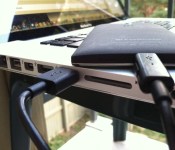
Bench 2X Faster Charger Cable Review

Have you been in need of a way to charge your Android device quickly but don’t have access to a wall outlet? If so, then Pyramid Distribution may just have the cable you’ve been looking for. With regular USB cables, if you plug it into your computer to charge, you never know how long it’s going to take to charge your device since it’s also setup to transfer data. Pyramid may have solved this issue and if you want to find out, please read on. According to the company, since a regular USB cable is made to communicate or transfer data and to act as a power supply between your USB port and your device, it is the reason why charging is so slow when connected to your computer. Pyramid Distribution has solved this issue with it’s Bench 2X Faster Charger Cable that essentially that can be turned on or off and allows your device to charge faster when plugged into your computer or the USB port in your car. One other thing that they note is that if you’re one who is worried about accidental data transfers, the “DouBBleTime mode” will prevent accidental data exchange when plugged into a foreign charge source since it blocks all data communication between your phone and the USB port.
Testing
By switching the cable into “DouBBleTime mode” it basically stops all data transfer and improve the electric current up to about 2,000mA. In practice, the cable while a very simple thing, works extremely well. When I tested it, I charged my device for an hour each, the first time doing it with “DouBBleTime mode” on and the second time with it off. My results were that when in “DouBBleTime mode” the charger gave me about 10 percent more power. I went from 45 percent to 70 percent in an hour then when I had it plugged in with data transfer enabled, it only went up to about 85 percent. It may not seem like a lot more power, but I was impressed none the less. Pyramid Distribution also notes that when using a normal USB in the car, it’s almost impossible for it to supply your smartphone some power if you’re using many of the functions at the same time, such as the GPS, music, Bluetooth, etc. Using my normal charger in my car, I always found this to be the case, especially when listening to music and having my smartphone connected to my Pebble smartwatch. I found that the “DouBBleTime mode” also held true in the car and was able to supply that same 10 percent more power while commuting and my device would actually charge instead of continuing to drain slowly.
Overall/Conclusion
The Bench 2X Faster Charger Cable from Pyramid Distribution is an accessory that works exactly as advertised. It allows you to have the charging capabilities that you would when plugged into a wall outlet and to get the most out of your electrical current. Selling for only $14.99, I think it’s fairly cheap and is worth every penny, especially if you’re always plugged into a computer USB port at work or while on the go. I would have liked to see it charge my device faster, but it seems that all depends on your specific device. I tested this out with two different devices, first the LG Nexus 4 then the OnePlus One and I found that while both charged faster in “DouBBleTime mode” the OnePlus was the winner as far as who was able to charge more. So, it all depends on how fast your device is able to charge. If you do pick up this charger, please note that you should not use it with a USB hub since the max current is 500mA. Although I didn’t get to test it since I don’t own any Apple iOS devices, the cable will work with either iOS or Android. Pyramid notes that the included a chipset in the cable to check for Android or iOS and there is a different charging algorithm depending on the device. You can pick up your Bench 2X faster Charger Cable from Pyramid Distribution here now.


Deals, Discounts, Freebies, and More! Click here to save today!
The post Bench 2X Faster Charger Cable Review appeared first on AndroidGuys.
.CPlase_panel display:none;

Plex to increase Plex Pass subscription fees on September 29th
The sum of Plex can’t really be put into just a few words. In its simplest form Plex is a media server service with companion applications for all your various devices, Android included. If you just want default access to things you can simply install the server on your computer and then buy the app from the Play Store for $4.99, it sometimes goes on sale in the Play Store and Amazon. There is another side to Plex that I know many people have enjoyed, and that is the subscription side, better known as Plex Pass.

Plex Pass gives users a wide variety of additional features and functions that you just don’t get with the one time charge paid app. With a Plex Pass subscription you gain things like being able to wireless sync your phone’s camera photos to your server, Plex sync, cloud sync, movie trailers and features and multi-user controls. I can’t forget to mention the Plex Pass app that is free versus the regular $4.99 paid app. This becomes a particular benefit since Plex Pass subscribers also get early access to new features and function in the app prior to it ever making its way to the normal paid app.
All of this is semi trivial if you have looked into Plex and Plex Pass in the past. What is really important is the news that the Plex Pass subscription prices are about to go up. Starting September 29th all NEW subscribers will pay a bit more. It is important to see the NEW aspect. All current Plex Pass subscribers will stay on the current price points on their monthly or yearly subscriptions. You won’t have to worry about anything if you bought a lifetime subscription of course. So, how much of an increase are we talking about?
- Monthly goes from $3.99 to $4.99
- Yearly goes from $29.99 to $39.99
- Lifetime goes from $74.99 to $149.99
If you have been considering a lifetime account, now would be your best opportunity to pick it up before the price increase. Feel free to poke around the Plex website to get a deeper understanding of how things work.
Via Plex Blog
//<![CDATA[
ord = window.ord || Math.floor(Math.random()*1E16);
document.write('‘);
//]]>
The post Plex to increase Plex Pass subscription fees on September 29th appeared first on AndroidSPIN.
.CPlase_panel display:none;

iPad Air 2 Rumored to Launch in October, Updated Retina iPad Mini May Come Later
Apple has plans to introduce the next-generation iPad Air in October, according to Taiwan’s Commercial Times [Google Translate]. The site says the updated tablet will enter production in September, shipping next month.
Commercial Times also suggests that the next-generation Retina iPad mini might not launch alongside the iPad Air, coming instead in early 2015, with the 12.9-inch iPad Pro to follow in the second quarter of 2015.
 Physical mockup of the second-generation iPad Air
While the rumor suggesting the 12.9-inch iPad Pro will be coming in the second quarter of 2015 is in line with previous rumors, there has been no prior indication that second-generation iPad Air and the next-generation Retina iPad mini will see separate launch timelines.
Previous rumors have indicated that both the Retina iPad mini and the iPad Air 2 will be introduced simultaneously at an event in October. Recently, a rumor suggested the two tablets could be introduced at an October 21 media event, but that prediction was quickly shot down by The Loop‘s Jim Dalrymple. Dalrymple did not, however, rule out an event at another date in October, so an October unveil of the two tablets remains likely. According to recent report from Bloomberg, the iPad Air 2 is in production and the Retina iPad mini 2 is entering production soon.
Both the next-generation iPad Air and Retina iPad mini are expected to gain updated A8 processors, camera improvements, and the Touch ID fingerprint sensor first introduced with the iPhone 5s. Apple’s iPad Air 2 may also gain an anti-reflective screen coating and it may also ship in gold, silver, and space gray, much like the iPhone.
.CPlase_panel display:none;

Japanese company plans to have working space elevator by 2050

Who does want to go to space? No less, in an elevator. While NASA’s been working hard for years trying to find the necessary tools to do just that, other firms are doing the same across different parts of the world. Japanese construction company Obayashi, for instance, is one of those, and today it revealed its plans to have a fully functional space elevator by the year 2050. As Australian Broadcasting Corporation reports, Obayashi says it is working to build a space elevator that can reach 96,000 kilometers (roughly 60,000 miles) into space, capable of transporting people and cargo at a much lower cost than the rockets traditionally launched from Earth. The trip on Obayashi’s space elevator is said to take a total of seven days one-way, with the destination being a space station that would be built specifically for this scenario.
Obayashi knows the road to build a space elevator won’t be easy, particularly because some of the materials required aren’t available in this day and age. That said, the Japan-based outfit believes that things like the current development carbon nanotechnology will be of huge help in turning the project into reality. According to Obayashi’s Research and Development Manager, Yoji Ishikawa, “The tensile strength is almost a hundred times stronger than steel cable so it’s possible.” “Right now we can’t make the cable long enough. We can only make 3-centimetre-long nanotubes but we need much more… we think by 2030 we’ll be able to do it,” he told ABC.
Via: CNBC
Source: Australian Broadcasting Corporation
.CPlase_panel display:none;

Engadget Daily: Hands-on with the new Oculus Rift, the deal with agricultural robots, and more

What’s the latest in VR? Oculus Rift’s new Crescent Bay prototype, that’s what. Read on as we take said headset for a spin, investigate the reality of agricultural robots, ogle at a chart of all our favorite fictional spacecraft, and take a look at all our news highlights from the last 24 hours.
.CPlase_panel display:none;

Valve makes finding your next Steam game easier

When Valve debuted game-recommendation tags not long ago, it was apparently a precursor to something much bigger. Today the PC game-sales juggernaut has revealed a new look for its store that aims to put games in front of you that you didn’t even know you wanted. By utilizing the tags, your gaming history and a few other aspects, Valve has redesigned the homepage so that it’ll apparently make finding games you’re interested in a lot easier. The Discovery Queue gives you a chance to browse through suggested releases, wishlist them or skip updates on titles completely. Valve says that the list will refresh daily, giving you a chance to possibly find the next killer indie before anyone else.
Presumably these ratings, as well as the ability to follow “curators” that act as tastemakers for gaming, will go to further establish a taste profile (similar to what Netflix does). Oh, and as you can see in the image above, the app now sports a blue color scheme. Almost makes you want to buy something, no?
All Store changes on one handy page. Lots of stuff! http://t.co/bDpGnL370A
– Steam Database (@SteamDB) September 22, 2014
The new Steam Store is here. And yes, it’s blue. Told you so. http://t.co/4YniHgR7Hh
– Steam Database (@SteamDB) September 22, 2014
Filed under: Desktops, Gaming, Home Entertainment, Internet, HD
Source: Valve
.CPlase_panel display:none;
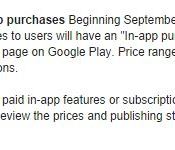
In-App Purchase apps will display price ranges in the Play Store starting September 30th
The in-app purchase business model is one that has taken a pretty strong hold on the mobile ecosystem. It really isn’t surprising that many developers, both large and small, are starting to use this model to deliver their apps and add additional functions, features and perks to your life. It is one that is certainly here to stay and one that is here to dominate our mobile app world. In a recent announcement on the Play Store’s developers console Google announced that price ranges for all in-app purchases will soon be making their appearance on the details page of apps.

As you can see in the announcement screenshot I took, the price range details will begin to take effect on the Play Store starting September 30th. Developers will need to update their apps details with the given information which includes in-app purchases and subscription based options. In simpler terms, if you have an app that offers IAP’s ranging from $0.99 to $99.00 that information will now reside on the apps details page before you download it.
I think it is a pretty good move on Google’s part. Keeping apps open and honest on the front end should help alleviate some frustrations before and after downloading. Anything that can be done to help people understand what they are about to get themselves into is always a step in the right direction. I wonder how it will play-out for the developers though. If you see an app that offers a in-app price range of say $1.99 to $9.99, will you be less likely to install the title and give it a shot, or will you be more apt to see why they feel the price tags are a good fit?
//<![CDATA[
ord = window.ord || Math.floor(Math.random()*1E16);
document.write('‘);
//]]>
The post In-App Purchase apps will display price ranges in the Play Store starting September 30th appeared first on AndroidSPIN.
.CPlase_panel display:none;

AT&T to launch the LG G3 Vigor on Sept. 26th with additional promotional perks
So, another LG G3 variant is headed to another carrier in the US. The LG G3 Vigor, which was launched on Sprint’s network on September 19th, will also be finding its way to AT&T on the 26th. By all accounts the Vigor is a less expensive version of the flagship LG G3 with a number of parts swapped out to bring the price down considerably.

The LG G3 Vigor is composed of a Qualcomm Snapdragon 400 quad-core processor at 1.2Ghz, 1GB of RAM, 5-inch 720p display, 8GB of internal storage (with micro SD slot), a 8MP rear shooter, a 1.3MP front shooter and sports Android 4.4.2 KitKat. Powering the device you find a ,540 mAh battery with a rating of 18.5 hours of talk time and 26 days and 11 hours of standby time. . The G3 Vigor brings along many of the same software that the flagship offers like Knock Code, Smart Keyboard and so on.
Where AT&T is shining with the device are the promotions they are running with it. If you snag one on the Next program with a new line of service you get the device for $0 down and get a $100 bill credit. Full price of the device is just $349.99 and that puts the Next 12 at $49.99 a month of the Next 18 at $16.50 a month. If that isn’t enough to get you in the door, they are also bundling the LG G3 Vigor with the LG G Pad 7.0 LTE. Grab the Vigor and you get the G Pad for $0.99 with a new contract and data plan.
Via PR Newswire
//<![CDATA[
ord = window.ord || Math.floor(Math.random()*1E16);
document.write('‘);
//]]>
The post AT&T to launch the LG G3 Vigor on Sept. 26th with additional promotional perks appeared first on AndroidSPIN.
.CPlase_panel display:none;
Google chose HTC for the Nexus 9 to stop any one manufacturer gaining a monopoly
 We’ve suspected its been coming for the longest time, but it’s always nice to find out a bit of back story. The Wall Street Journal has yesterday reported on the relationship between Google and HTC and how the Nexus 9 tablet apparently has come to be. According to WSJ, Google chose HTC for the Nexus 9 to stop “any one manufacturer gaining a monopoly”, something Google has been constantly wary of with Android’s biggest manufacturer, Samsung. Of course, this fits right in with Google’s behaviour in changing up hardware partners and ironically, despite not having a tablet of their own, HTC might just be the best for a tablet in 2014.
HTC exited the tablet market in 2012 with the HTC Flyer, a somewhat uninspiring device, so the Taiwanese company might seem like an unusual choice to produce what is probably going to be one of the most popular devices of 2014. However, HTC is widely accepted to have made two of the best Android smartphones over the past two years, and while they struggle to compete with the volumes of larger manufacturers like LG and Samsung, their hallmark has become quality over quantity, something which could make a HTC Nexus device amazing. Of course, Google and HTC have declined to comment on any speculation of a partnership, but it seems almost a done deal that a Nexus 9 tablet is going to appear within the next month or two.
What do you think about Google choosing HTC for the Nexus 9? Let us know your opinion.
Source: WSJ via Phone Arena
//<![CDATA[
ord = window.ord || Math.floor(Math.random()*1E16);
document.write('‘);
//]]>
The post Google chose HTC for the Nexus 9 to stop any one manufacturer gaining a monopoly appeared first on AndroidSPIN.
.CPlase_panel display:none;
 AIVAnet