



HTC will mark its return to tablets with Google’s Nexus 9

Rumors of an HTC-made Nexus device have swirled for some time, but only recently have details of a possible next-generation tablet started to become apparent. Not long after NVIDIA inadvertently leaked that the Taiwanese company is linking up with Google to launch the Nexus 9, the Wall Street Journal has added even more credibility to reports by stating that HTC engineers have been regularly flying to Google’s Mountain View HQ in order to finalize the 9-inch device. As part of a patent lawsuit against Qualcomm and Samsung earlier this month, NVIDIA revealed that it would be providing the muscle for the Android L-powered slate, which is expected to feature its Tegra K1 processor and launch within the third quarter. However, we’re now just over a week away from the end of September, so it looks increasingly likely that we’ll see something official next month. Remember, Google has a history of scheduling events in October.
Filed under: Tablets, Software, Mobile, HTC, Google
Via: The Verge
Source: Wall Street Journal
.CPlase_panel display:none;

Almost all the sci-fi spaceships you know are on this massive chart

If you regularly follow geek culture, you’ve probably seen early versions of Dirk Loechel’s spaceship comparison chart, which shows the relative sizes of vehicles from science fiction games, movies and TV shows. Well, it’s finished — and it’s even more authoritative than the last time around. Get the full-size version and you’ll see Babylon 5‘s Vorlon Planet Killer, Mass Effect‘s Normandy and seemingly everything in between. The chart even includes a real vessel, the International Space Station — at 328 feet long, it seems downright puny next to its make-believe counterparts. Some story franchises have better representation than others (EVE is full of colossal ships), and you won’t see moon-sized spacecraft like Star Wars‘ Death Star, but it’s otherwise hard to imagine a more complete view of sci-fi transportation.
Filed under: Gaming, Home Entertainment, Internet, HD, Alt
Via: Kotaku, Geekologie
Source: Dirk Loechel (Deviantart)
.CPlase_panel display:none;
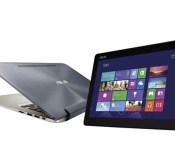
How would you change ASUS’ Transformer Book TX300?

Dana Wollman is so well known as Engadget’s in-house laptop expert that, during Q&A sessions on the Engadget Podcast, people would call her “Laptop Lady.” Points off for not learning her name, but the honorific still stands to this day, and her opinion on all things portable is one of the most revered in the business. When we placed ASUS’ Transformer Book TX300 on her desk (before running away to a safe distance), she found that there wasn’t much point to owning one. For a start, a 13-inch slate-plus-keyboard combo isn’t really better than a transforming laptop like the Yoga 13 or XPS 12. The lack of a Wacom digitizer means that pen input was a no-go and launching just before Haswell seemed like bad timing. Still, the question we’d like to put to you is simple: if you bought one, what would you change about it?
Source: Engadget Product Forums
.CPlase_panel display:none;

The Samsung Galaxy S5 sales reach a million units in Germany
The Galaxy S5 went out of limelight since the announcement of the Galaxy Note 4 and the Galaxy Note Edge but Samsung has decided to bring it back to consumers attention by revealing the sales figure of the Galaxy S5. According to Samsung, the their flagship device is still doing pretty great as the Galaxy S5 sales have reached over a million units in Germany alone. These numbers do not belong to the units shipped to stores but the actual number of units which have been sold to consumers.

This should be a great news to Samsung, especially when Apple has announced the iPhone 6 and the iPhone 6 plus with 4.7-inch and 5.5-inch screens respectively. The Galaxy S5 got off to a good start after its release, though not as great as the Galaxy S3 and the Galaxy S4. Within 10 days of its release, Samsung had managed to ship over 10 million units throughout the globe, especially due to good carrier tie-ups and availability in more countries. We’ll have to see how the Galaxy Note 4 and the Galaxy Note Edge fare against the iPhone 6 and the iPhone 6 Plus when they become available later this month.
Source: AllAboutSamsung | Via: SamMobile
//<![CDATA[
ord = window.ord || Math.floor(Math.random()*1E16);
document.write('‘);
//]]>
The post The Samsung Galaxy S5 sales reach a million units in Germany appeared first on AndroidSPIN.
.CPlase_panel display:none;

PlayStation Now’s creator explains how game streaming came to Sony

With the PlayStation Now beta just opening to a larger chunk of the gaming population, you might be wondering how the streaming service came to Sony in the first place. Why did Gaikai drop its entire PC audience to join a console maker? Thankfully for you, Gaikai chief David Perry has just shed light on that transition in an interview with GameInformer. Simply put, streaming on computers was becoming a nightmare for Perry’s team before the 2012 acquisition. The sheer number of compatibility problems was “massively reducing” the number of titles Gaikai could support, and the software required increasingly elaborate tricks (such as image recognition) just to run at all. The company wanted to escape these headaches by going to a platform with standardized elements like controllers and copy protection. When Sony came knocking, it quickly became clear that the PlayStation was a good match — it solved many challenges in one fell swoop.
Perry is more than willing to talk about game streaming’s present and future as well. He notes that the PlayStation Now test run has been going smoothly, and that it exists primarily to give his crew freedom to experiment with new techniques before Now is ready for primetime. It won’t just be a matter of refinement in the future, though. Besides introducing social features like Share Play, Perry is hoping to expand device and game support; he has already promised streaming for older PlayStation releases. He’d ideally support “every game ever,” so long as the technology allowed it. In the long run, he also sees the cloud enabling software that isn’t possible when you’re limited by the processing power of a box in your living room. “You could just completely let [developers] go wild and free,” he says. That’s not likely to happen soon, but it’s good to know that streaming could improve the quality of the games you play, not just how you play them.
Source: GameInformer
.CPlase_panel display:none;

Adobe Echosign releases for Android

Adobe, the company behind .pdf files and Acrobat, is bringing its e-signature solution to android devices. Adobe Echosign can now be used on all of your android devices to allow businesses to collect and track signatures across many devices in a business. Instead of getting the signatures with a pen and paper, you can just send the document and they can legally sign it and send it back to you all in a matter of minutes with Echosign.
Tablets are becoming very popular in many different types of businesses. With this new solution, they can safely get legally binding signatures effortlessly; which adds more value and productivity to the tablets for the businesses.
Source: Adobe
Deals, Discounts, Freebies, and More! Click here to save today!
The post Adobe Echosign releases for Android appeared first on AndroidGuys.
.CPlase_panel display:none;

Feedback Loop: Kickstarter refunds, Sony A7 impressions, and more!

Get ready for your weekly dose of community goodness from the Engadget forums. The latest edition of Feedback Loop is here. We talk about failed Kickstarter projects and discuss whether or not there should be refunds, dish on Sony’s full-frame shooter, share our favorite features of iOS 8, and try to find the best console to play Destiny with our friends. Head past the break to talk about all this and more with your fellow Engadget readers.
Should failed Kickstarter projects offer refunds?
Neal Stephenson’s eagerly anticipated sword fighting game, Clang, recently met an untimely demise. It originally started as a Kickstarter project – and while there’s no obligation to return backers’ hard earned cash, Stephenson said that refunds will be offered to those who ask. Kris wonders whether failed Kickstarter projects should be obligated to provide refunds. Have you been particularly burned by a project that you backed? Would a refund have made things better? Share your own experiences in the Engadget forums.
Quick Impressions of the Sony A7
The Sony A7 is one impressive camera, stuffing a full frame sensor into a fairly lightweight and portable body. Sadly, it’s hard to justify the cost to mere mortals who may only have a passing interest of photography. That said, I was lucky enough to take the A7 for a stroll through Southeast Asia. Check out my impressions and let me know if you have any questions about this awesome full frame shooter.
Favorite features of iOS 8
Apple’s newest operating system (and phones) are finally here. Have you updated your devices with the latest and greatest? Share you thoughts on the latest addition to the iOS family right here – and make sure you leave a review, too.
Which console is best to play Destiny?
Met wants to spend some quality time with Bungie’s recent blockbuster game but needs some advice on which console he should get. Does the Xbox One have any advantage over the PS4? Or should he just get the same console that all his friends have? Head over to the discussion and help him decide.
That’s all this week! Want to talk about your favorite gadget or have a burning question about technology? Register for an Engadget account today, visit the Engadget forums and start a new discussion!
.CPlase_panel display:none;

The Risks Of Cloud Computing For Government Use
Much of the population has switched to cloud computing orders, and few can dispute the benefits that are brought with them. Whether you are for or against the practice of cloud computing means little, when compared to its qualities, as the program is increasing in popularity at a tremendous rate annually. Not only do local businesses and the public use it, as local and federal governments have now shifted their attention to cloud computing modules. While the benefits may seem large in number, there are several risks that should be discussed before any government chooses a cloud computing developer.
 Cloud computing is not nearly as complex as it sounds, in fact cloud computing is a relatively easy concept to grasp. In simplistic terms, cloud computing is the use of the internet, or the Internets applications, where the data found on the internet, is stored on a remote server. The server is tied to the computer, but the computer has no powers to change the settings or fix the “cloud” programs. The servers are owned by a third party developer, who delivers the service once a contract is established with the customer.
Risks Associated With Government Cloud Computing Use
The Price Can Be A Huge Factor- Most businesses and companies are out to make some sort of a profit, and the local and federal governments are in the same playing field in this aspect. While a singular CPU (central processing unit), tied to a bevy of computers sounds ideal and simple, the fine print might drive some governments away. The price of cloud computing can be quite drastic in some cases, as there are several fees and payments necessary outside of basic subscription costs. These fees are typically maintenance fees, upfront deposits, and renewal fees, to name just a few examples.
The Security Might Not Be At The Highest Standard– Other common risk with governments that choose cloud computing, the security of cloud computing coverage, or simply dubbed “the cloud”, might seem lackluster at best to interested governments. Keep in mind, chances are the governments are presiding over a part of the public, so their files are probably of the utmost importance. While most cloud developers are trustworthy, some developers put little into maintenance of the “cloud” and their security is not one of its strongest features. This could be devastating for both the government’s and the people’s reputation, in the case that files are leaked or are hacked by a hacker. An interview with Brigadier General Touhill of the Department of Homeland Security, covering cyber security from publicly available tools to future threats.
Disaster Recovery– Things happen, so disaster recoveries are a common action within computing business. Whether there is a devastating power out, or the blame is tied to a natural disaster, most businesses have a disaster recovery plan tied to their computers and files. That being said, there are risks involved in government association with cloud computing developers. While most developers are trustworthy, and the vendors are quality at their job, governments need to know what to do in the case of a disaster. Several files could be wiped clean, or hindered in any way, making the once important files useless. Knowing the developers plan to dispute these causes, can allow the government to reinstate these important files and documents in no time.
.CPlase_panel display:none;
 AIVAnet