


iPhone 6 and iPhone 6 Plus Get Cracked in First Drop Test
With the launch of the iPhone 6 and iPhone 6 Plus already underway in several countries, many companies have begun performing tests and benchmarks on the device. PhoneBuff has taken the two devices and put them through a drop test, dropping each on its back, side and front.
The iPhone 6 did well when dropped on the side and back, but unsurprisingly suffered when dropped on its face. The 6 Plus, on the other hand, cracked when it landed on the side. However, it sustained little further damage when falling on its face.
Based on this one test, both phones may have performed worse than the iPhone 5 design which was described as “very durable” and survived similar drops in a previous drop tests. Without standardized testing, it’s hard to draw definitive conclusions.
.CPlase_panel display:none;

Not all of Samsung’s curved displays are gigantic

Want a curved display from Samsung but don’t quite have the scratch to bring one of its gigantic models home? Maybe try the 27-inch S27D590C monitor on for size when it releases at some ambiguous point in the future. The firm seems to be targeting gamers specifically with the monitor, saying that the curve creates a wider field of view (178 degrees horizontally and vertically, if you’re curious) and gives the screen a “3D-like” effect when you’re playing shooters and racing games, among other genres. There’s even a one-button game mode that makes a few adjustments to compensate for motion blur, color and contrast too. Unlike Dell’s not-flat display, however, this one’s limited to a paltry 1,920 x 1,080 lines of resolution and a 16:9 aspect ratio. This’ll probably be fine for us commoners, sure, but it might not be enough for the PC Master Race.
Filed under: Desktops, Gaming, Home Entertainment, HD, Samsung
.CPlase_panel display:none;

You got served … on Facebook :(

It’s made you distrustful and toyed with your emotions and now a Staten Island Support Magistrate has deemed Facebook an acceptable vehicle for your legal woes. According to the New York Post,
Gregory Gliedman ruled that Noel Biscocho could use the social network to serve his ex, Anna Maria Antigua, with a legal notice that he no longer wishes to pay child support for their 21-year-old son. The ruling reportedly came after Biscocho attempted to reach Antigua multiple times in the real world. And here we thought breaking up via text message was bad.
[Image credit: Peter Dazeley / Getty]
Filed under: Internet, Facebook
Via: Gothamist
Source: New York Post
.CPlase_panel display:none;

NVIDIA’s latest GPU crams 4K images on 1080p displays

Back in February, NVIDIA trotted out the very first desktop GPUs to feature its new Maxwell architecture: the GeForce GTX 750 and 750i. These entry level cards were paragons of efficiency, but they were hardly strong examples of what the company’s latest graphics technology was truly capable of. No, NVIDIA revealed those graphics cards today — the GeForce GTX 980 and 970 desktop GPUs. The new flagship GPUs still benefit from the efficiency gains made by the first generation Maxwell cards, but lean far more heavily on performance. If you’re a PC gamer with a GTX 680 or 560 in your tower, these are the cards NVIDIA wants you to upgrade to.
On paper, there’s reason enough to appreciate these cards’ power: the $549 GTX 980 boasts a 1.1Ghz base clock speed (1.2 with boost), 2048 CUDA cores and 4GB of GDDR5 video memory. The $329 GTX 970 sheds a few of those CUDA cores (totaling 1664) and clocks down to 1Ghz (1.1 with boost), but it consumes a little less power for the downsizing: 145W to the 980’s 165W. In NVIDIA’s tests (viewable in the gallery above), these stats reportedly outperformed AMD’s kit with almost half the power draw. Still, even NVIDIA knows stats and core count mean bupkis to the general consumer — gamers want to know what all these specifications are going to do for them. We met up with Scott Herkelman, NVIDIA’s general manager of GeForce, to learn about Maxwell’s new tricks.

“One of the things that we thought about when we wanted to launch Maxwell is this dichotomy that gamers are running into today,” Herkelman told Engadget. NVIDIA found that gamers either wanted to increase visuals past a game’s prescribed performance settings or maximize framerate without sacrificing image quality. Surprise, surprise: Maxwell’s second generation GPUs introduce two new technologies that can help.
Dynamic Super Resolution, for instance, lies to your game to make it output a higher resolution than your display expects. “We render a 4K image in the background and then put it through a 13 gaussian filter,” he explained. “Then we bring that down to a 1080p monitor.” As far as the game is concerned, its piping out a ultra high resolution image to a 4K monitor, but Maxwell is forcing it to run on you 1080p display. This feature is designed to improve picture quality on a game that is already tuned to its best visual settings. Basically, it makes downsampling easy. It looks pretty good in action too, but it isn’t perfect: some 4K UI elements don’t scale well on smaller monitors. Herkelman says NVIDIA is continuing to improve and tweak the feature.

“The other new technology we have is called MFAA, or Multi-Frame Sample Anti-Aliasing,” Herkelman said. “This is for those games where you already have great image quality but you want more performance.” Like traditional anti-aliasing, it can sample a pixel multiple times, but MFAA splits the work up over multiple frames. Herkleman says this can improve performance by as much as 30-percent.
Finally, high-end maxwell cards will be able to take advantage of games that use Voxel Global Illumination, a new dynamic lighting technology that promises to promises to enable destructive environments with active, realistic lighting. How realistic is it? Realistic enough to debunk moon-landing conspiracy theories, actually. NVIDIA says the new lighting solution will be available for UE4 and other major engines later this year.
Not the bells and whistles you’re looking for? Fine — Maxwell has a few more features hidden away, but you won’t be able to use them until the consumer virtual reality market takes off. NVIDIA’s VR Direct program is working to bring low latency graphics to consumer VR headsets like the Oculus Rift. Herkleman showed off a Maxwell-powered Eve: Valkyrie demo as an example. Indeed, the demo was smooth, but VR Direct’s future impact on GeForce Experience really caught our attention. In addition to supporting SLI, DSR and MFAA, NVIDIA’s VR Direct promises “auto stereo,” a feature designed to bend a game not intended for virtual reality into the Oculus Rift’s stereoscopic perspective. Herkleman told us that the feature would probably have a whitelist of compatible games, not unlike how the company implements NVIDIA 3D Vision.

So, when can consumers get their hands on the new Maxwell? Soon. NVIDIA CEO Jen-Hsun Huang officially announced the new GeForce GTX cards at Game24 this evening, and they should be available for sale tomorrow morning from NVIDIA’s usual hardware partners: EVGA, ASUS, Gigabyte, MSI and PNY, among others. Are you planning to upgrade, or will you wait to see what AMD cooks up in competition? Let us know what you think in the comments section below.
.CPlase_panel display:none;
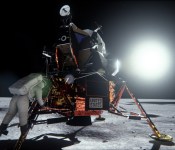
NVIDIA’s new GPU proves moon landing truthers wrong

Despite overwhelming evidence to the contrary, there still exist some people on planet Earth who believe it’s the only celestial body humanity has ever walked upon. You’ve heard it before — the moon landing was a hoax, a mere TV drama produced by Stanley Kubrick presented as fact to dupe the Soviet Union into giving up the space race. This deliciously ludicrous conspiracy theory has been debunked countless times, but now its advocates have one more refutation to deny: NVIDIA’s Voxel Global Illumination tech demo. It’s a GPU-powered recreation of the Apollo 11 landing site that uses dynamic lighting technology to address common claims of moon-deniers, and it’s pretty neat.
Mark Daly, NVIDIA’s senior director of content development told Engadget its Apollo 11 demo was created as an answer to Sponza — a popular global illumination model frequently used in by the academic crowd. It’s a good model, he says, but it’s not very interesting to watch. “Jen-Hsun [Huang], our CEO, looked at it and said ‘Isn’t there something better?’ Anyway, one of our research engineers happened to put this slide up of Buzz Aldrin on the moon in a meeting and said ‘this speaks global illumination to me because of all the hoaxers and deniers of the moon landing.” Conspiracy theorists say that Aldrin simply couldn’t have been lit up the way he is in the picture. NVIDIA took it as a challenge.

NVIDIA chose to create a 3D rendition of a photograph showing Buzz Aldrin descending a ladder to the moon’s surface. Folks that insist the landing was a hoax claim that without the light-diffusing effect of an atmosphere, the shadow of the lander should cast Aldrin in almost complete darkness. “You can explain it,” Daly says, “and say light bounces around even on the moon… or you can show it. We decided to take the approach to show it, but it turns out that it’s not that easy — there isn’t a lot of light on [Aldrin].” Daly’s challenge was not in placing lights around a computer simulated scene of the Apollo 11 landing, but in using NVIDA’s Voxel Global Illumination to make a single light source, the simulated sun, correctly reflect off of every material in the scene. To do this, he had to research the materials of NASA’s lander, the brightness of our local star and even the reflectivity of the moon’s surface.
“It turns out there is a lot of information about the astronomical bodies floating out there in space,” he explains. “Starting with the sun. The sun itself is 128,500 lux — that’s lumens per square meter – but it turns out the moon is a crappy reflector of light.” Daly discovered that the moon is only 12-percent reflective, and absorbs most of the sunlight hitting it. On the other hand, 12-percent of 128,500 lux is quite a lot. “It’s the equivalent to ten 100-watt lightbulbs per square meter of light bouncing off the moon.” More than enough make Aldrin visible under the lander’s shadow.
While this exercise showed that the moon was reflective enough to highlight Aldrin, something was still wrong. Daly noticed that the astronaut’s side wasn’t lit the same in NVIDIA’s simulation as it was in NASA’s photograph, but he wasn’t sure why. “A couple of people really into the moon landing told me, ‘by the way, you should take into account Neil Armstrong and the light coming off of him.’ At first I was like, yeah, whatever — the sun is doing all the work — something the size of a guy in a space suit isn’t going to contribute much light.” He quickly learned his assumption was wrong: the material on the outside of the astronaut’s suits is 85-percent reflective. “Sure enough, we put him in there, adjusted the reflectivity of his suit, put him in the position where the camera would be… and it contributed another 10% or so of light to the side of Buzz Aldrin.”

Daly found that his own doubt mirrored the claims of some landing-deniers. Some claim that because Aldrin is in shadow, there would need to be some sort of auxiliary lighting behind the camera; supposed proof that the image was taken in a studio. “As it turns out, yes! They’re right — there was a light there, it was the sun reflecting off of Neil Armstrong’s suit. I really didn’t believe it would contribute that much.”
It’s the dynamic nature of Voxel Global Illumination that allows NVIDIA to poke fun at these hoax claims: the entire scene renders light reflection on the fly, based solely on the illumination provided by the simulated sun. “We learned a heck of a lot about how all these materials reflect light and put them into the material descriptions, the BRDF (bidirectional reflectance distribution function),” Daly said, explaining how developers create a VXGI lighting environment. “The VXGI we’ve integrated into Unreal Engine 4 reads all those materials you’ve given it and, based on the reflectivity of those materials, constructs a lighting module.” It’s a lot of work to set up, but it makes adjusting the light easy after the fact. NVIDIA is able to drag the sun to new positions, add new elements to the scene or even remove the moon’s natural reflectivity to create the false conditions moon-truthers think represent the lunar surface.

This versatility allowed NVIDIA to address one more hoax-claim before our demo ended: the stars. If NASA really landed on the moon, why can’t we see the stars in any of the Apollo 11 photographs? Well, that’s more of a matter of film exposure than lighting trickery. Because the unfiltered sun is so ridiculously bright (128,500 lux, remember?), the astronauts’ cameras were set to use a small aperture, letting in only a fraction of the available light in order to keep the picture from blowing out. NVIDIA was able to simulate this too, and widened the virtual camera’s aperture to reveal the demo’s simulated stars. It worked, but at the expense of the camera’s true subject matter: Aldrin’s descent to the lunar surface became a blown out, over-exposed mess.
Science has been able to debunk these moon hoax theories for decades, but it’s nice to see a real-time simulation that can help illustrate those explanations in real time. Better still, Daly says NVIDIA is currently building a consumer UI for the demo, and will release it to the public sometime in the next several weeks. It’s also a project that has become important to him. “Because I got to see a lot of this live when I was a kid, it has a special meaning to me. I know in Apollo 1 two men died, and other men risked their lives to get into these crazy contraptions to actually do this. It’s kind of offensive to me when people say this didn’t happen,” he explains. “I want to show that it really happened and these people risked their lives. They actually did go to the moon.”
(function(d, s, id) var js, fjs = d.getElementsByTagName(s)[0]; if (d.getElementById(id)) return; js = d.createElement(s); js.id = id; js.src = “//connect.facebook.net/en_US/all.js#xfbml=1”; fjs.parentNode.insertBefore(js, fjs); (document, ‘script’, ‘facebook-jssdk’));
.CPlase_panel display:none;
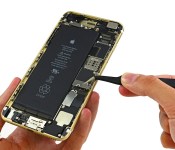
iPhone 6 Plus Teardown: Twice as Big a Battery as iPhone 5s
iFixIt is in the process of taking apart the new iPhone 6 Plus, currently on sale in Australia. Surprisingly, the team points out that the internal layout of the device is extremely similar to that of the iPhone 5s, except at a larger scale and with a bigger battery. The teardown’s findings reveal the battery capacity of the device and some internal reorganization.

In removing the front panel from the rest of the device, the iFixIt team notes that there are “no noticeable booby traps”, referring to the iPhone 5s’ cable that ran from the Touch ID sensor to the Lightning port. The battery in the device is listed at 2915mAh at 3.82 volts, in line with the previously leaked battery prototype for the device and giving the 6 Plus double the battery capacity of the iPhone 5s’ 1560mAh and much larger than the iPhone 6’s 1810mAh battery.
The teardown also revealed that the vibrator is now located under the logic board and to the right of the battery.
iFixIt’s teardown is still in progress and this post will be updated if anything significant is revealed.
.CPlase_panel display:none;

Android L to offer default encryption on data, working towards making a more secure Android

Android has always suffered from a big security problem: all Android devices offer data encryption, but most users don’t know how to turn it on, or even what it is. That’s why Google is turning on data encryption automatically with the new release of Android L. The automatic data encryption aims to help eliminate sensitive case issues by keeping law enforcement out of your devices.
The Washington Post received word from Google today that they’re shifting towards a more secure operating system, mostly after government involvement in the popular Edward Snowden case. Niki Christoff, a spokeswoman for Google, explains
For over three years Android has offered encryption, and keys are not stored off of the device, so they cannot be shared with law enforcement… As part of our next Android release, encryption will be enabled by default out of the box, so you won’t even have to think about turning it on.
If the data is encrypted, law enforcement will be less-inclined to go snooping, simple as that. The data, however, will still be available to the police by means of a search warrant or court order. That being said, this is a great step forward in privacy for Google and Android as a whole. Only time will tell if this will actually help keep people from snooping.
How do you feel about your data being encrypted automatically? Do you welcome the security changes to Android L or do you think the change may be a bit too drastic?
Via: Android Police, Source: The Washington Post
Deals, Discounts, Freebies, and More! Click here to save today!
The post Android L to offer default encryption on data, working towards making a more secure Android appeared first on AndroidGuys.
.CPlase_panel display:none;
Jawbone makes UP system available to all
Jawbone, the manufacture of advanced bluetooth headsets, the UP Band and the Jambox, is releasing their “UP system” to developers. This should make their fitness tracking app available to anyone with a smartphone or compatible smartwatch. Jawbone calls the UP system, “a rich, highly personalized coaching system,” that lets users track their steps, sleep and… Read more »
The post Jawbone makes UP system available to all appeared first on SmarterWatching.
Deals, Discounts, Freebies, and More! Click here to save today!
Read the rest at SmarterWatching.com!
The post Jawbone makes UP system available to all appeared first on AndroidGuys.
.CPlase_panel display:none;
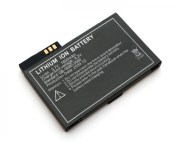
Lithium-sulfur batteries could be a reality soon, pack in 5 to 8 times more capacity
 The humble lithium-ion battery has become an extremely familiar fixture in our daily lives. Essentially all our portable devices are powered by them – smartphones, tablets, smartwatches – however we’ve pretty much reached the technological limit of what they are capable of within the laws of physics. Luckily, some clever fellows have been working on producing lithium-sulfur batteries which theoretically can have 5-8 times more capacity than lithium-ion batteries and their work has recently been featured in the scientific publication, Nano Letters.
The work centres around replacing the metal oxide in batteries with the much lighter sulfur, which would enable bigger battery capacities. In fact, in a recent test, the scientists involved (Xingcheng Xiao, Weidong Zhou, Mei Cai, et al) were able to produce stable lithium-sulfur batteries with 630mAh per gram, as opposed to lithium-ion which is only able to achieve 200mAh per gram, and lasted over 600 cycles of charging. This study is notable as the scientists were able to overcome lithium-sulfur’s tendency to escape, which would otherwise manifest as losing charge quickly. We’re certainly living in a world of technological enlightenment with this and many other studies going on to improve the performance of our devices – we can’t wait to see the results.
What do you think about the work being done on lithium-sulfur batteries?
Source: American Chemical Society via Overclockers Club
//<![CDATA[
ord = window.ord || Math.floor(Math.random()*1E16);
document.write('‘);
//]]>
The post Lithium-sulfur batteries could be a reality soon, pack in 5 to 8 times more capacity appeared first on AndroidSPIN.
.CPlase_panel display:none;

Health Record Providers Cerner and Athenahealth Developing HealthKit Apps [iOS Blog]
 Cerner and Athenahealth, two of the leading electronic health record providers in the United States, will be developing apps that work with Apple’s Health app, according to Reuters.
Cerner and Athenahealth representatives said they are building integrations with HealthKit and working with Apple. Previously, Apple announced a partnership with rival electronic health record company Epic Systems. Apple did not respond to a request for comment.
The new apps are likely to be similar to Epic’s MyChart [Direct Link] app, which gives users access to lab results, appointment information, medication and more. The MyChart app also uses Apple’s HealthKit as a traffic controller to send some information about a patient, like weight, in the opposite direction, Epic told VentureBeat.
Yesterday, Apple found a last-minute bug in HealthKit that forced the company to pull compatible apps from the App Store. Apple is currently working on a fix, which it promises will arrive by the end of September.
.CPlase_panel display:none;
 AIVAnet