


What you need to know about the future of paying for stuff

We’ve virtualized much of the rest of the modern life — why not payments? Plane tickets, banking and many other aspects of our lives now live on our phones. Payments still exist in the world of paper and plastic.
Google has Google Wallet; Visa has payWave; MasterCard has PayPass; and American Express has ExpressPay. Apple just announced its own, with Apple Pay. If you’ve heard of any of these credit card services other than Apple’s recently announced system and maybe Google’s long-running program, we’re impressed. You’re in the minority; heck, one quarter of US citizens don’t even own a standard credit card, nonetheless a virtualized one. But virtual payments are more prevalent by the year, and Apple Pay is giving the concept a much-needed publicity boost. So, all that said, let’s talk about the future of payment.
Don’t throw away your wallet just yet.
WHAT IS IT?

When it comes to virtualized payment systems, we’re not talking about paying with your credit card number online, or even services like PayPal. We’re talking about the act of paying at a physical store with virtual means: your phone, for instance, or some forms of credit card. Perhaps you’ve got a special key for use at the gas pump, where you wave it near a part of the pump and you’re good to go? Same concept, except this is all payment scenarios (at major retail chains, anyway).
Google and Apple are using NFC — “Near-Field Communication” — to make this work. That means exactly what it sounds like: You put your phone or card near a reader and the reader accepts payment. We’ve got a video of Apple Pay in action right here!
http://www.engadget.com/embed-5min/?sid=577&playList=518408292&responsive=false
Pretty simple, right? What’s actually going on behind the scenes is a bit more complex, of course, but the implementation is meant to be painless. Ideally, even more painless than pulling out your credit card. And more secure, too.
HOW DOES IT WORK?
Here’s where things get technical, so bear with us for a moment. There are two main standards being used: NFC and ISO/IEC 14443. We already know that NFC stands for “near-field communication,” but it’s worth also knowing that NFC devices produce a very weak radio frequency. This radio frequency is what allows them to communicate with payment systems, and it’s that same radio frequency that the ISO/IEC 14443 uses: 13.56 MHz.
Technical junk aside, what matters here is that both systems play nice with each other. And that’s good, because a variety of credit card companies use the non-NFC system. Since those companies already outfitted retailers with their systems, no major change needs to be made for NFC-enabled phones to simply work as payment all over the USA. The list of vendors signed up for Apple Pay thus far is testament to that: Bloomingdale’s, Disney Store and Walt Disney World Resort, Duane Reade, Macy’s, McDonald’s, Sephora, Staples, Subway, Walgreens and Whole Foods Market.

Google Wallet similarly offers a stand-in for credit and debit cards; enter debit/credit information to the app, then use the phone as your payment device at participating retailers. And all those retailers where Apple Pay works? Google Wallet nows works there too, thanks to the fact that there are established standards for how these payment systems work, and those standards aren’t governed by a single company.
IS IT SECURE?

As you likely expect, this is a sticky situation. Let’s break it down, piece-by-piece:
- Do Google and Apple keep my credit card information? The short answer is no. The longer answer still starts with no, but also points out that your debit/credit information is probably on file with both companies anyway through Google Play and iTunes. There’s no reason to believe that either company can’t be trusted with keeping that data safe, but Target customers and PlayStation Network users may feel differently.
- Could my phone be stolen and used as payment? Also no, at least not easily. In the case of Apple Pay, you need a fingerprint ID to use it. In the case of Google Pay, a PIN is required.
- Could my phone be stolen and debit/credit card info removed? Still no. Part of NFC’s standardization is an aspect called the “secure element.” This is the chip where personal information is stored, securely and encrypted.
The question that really matters here is one of comparative security. Is virtualized payment more secure than traditional means? We’d argue yes, it is. Retailers in the US rarely check identification for debit/credit card use, and matching signatures is a remnant of the past. There are inconveniences that come with the new method — the inability to lend a family member a credit card, for instance — but those issues will assuredly work out in time.
WHAT ARE THE ALTERNATIVES?

Much of the world outside of the US has adopted a newer form of credit card which uses a built-in microchip and a PIN (sometimes called “Chip and PIN technology”). This “smartcard” has vastly reduced card fraud, but it never caught on in the US. It’s certainly an alternative, but not one that’s very effective if you don’t live in Europe. Smartphones, however, are worldwide.
A similar concept exists in the US, though it uses technology similar to NFC. It’s this technology, in fact, that led the charge for virtualized payment in retail stores. It’s no surprise that Visa, Mastercard, American Express and a mess of major US banks are on board with the new NFC tech from the likes of Apple and Google — it’s an evolution of technology they’re already using.
WANT EVEN MORE?
If statistics are your kinda thing, a great resource for this piece was the CreditCards.com. Perhaps you think this whole virtualized payment thing is a solution to a non-existent problem? The New York Times‘ Upshot section agrees. For the standards built into NFC tech, the Smart Card Alliance has you covered. Maybe you just want to watch Tim Cook excitedly introduce Apple Pay? CNET‘s got that.
[Image credit: Google (Google Wallet), AP Photo/Marcio Jose Sanchez (Apple Pay), Alamy (Chip and PIN card)]
Filed under: Cellphones, Wearables, Internet, Software, Mobile, Apple, Google
.CPlase_panel display:none;

Accessory of the Day: Samsung Galaxy S4 Wallet Case $39.99

Combine the your wallet, S4, and leather case into one portable solution with this Wallet Case. Easily fitting 3 credit cards or ID’s along with cash, this case features a soft-touch finish to help you comfortably retrieve it from your pocket. Plus, your screen is protected by the built-in Lay-flat Screen Guard. The reviews for this case are phenomenal and can be yours for $39.99 (Prime eligible).
Deals, Discounts, Freebies, and More! Click here to save today!
The post Accessory of the Day: Samsung Galaxy S4 Wallet Case $39.99 appeared first on AndroidGuys.
.CPlase_panel display:none;
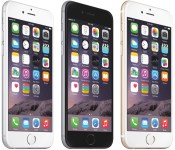
Foxconn Facing Display Shortages as it Struggles to Meet iPhone 6 and 6 Plus Demand
Apple’s iPhone 6 and 6 Plus supplies may continue to be constrained as Foxconn reportedly is struggling to keep up with demand for the handsets, reports the Wall Street Journal. Unlike previous years that saw Foxconn handling the launch of one flagship handset, the manufacturer is now tasked with producing two iPhone models that are in high demand.
The Taiwan-based manufacturer, which has more than one million workers in China, is operating about 100 production lines around the clock in Zhengzhou. The challenge is to manufacture two complicated new iPhones on a large scale at the same time because Foxconn is the sole assembler of the 5.5-inch iPhone 6 Plus. It also makes the majority of the iPhone 6 that comes with a 4.7-inch display, the people said.
Foxconn reportedly has hired more than 200,000 workers at its Zhengzhou site to work on Apple’s new iPhone. Even with this large labor force and daily output volumes of 140,000 iPhone 6 Plus units and 400,000 iPhone 6 units, the company is still not able to meet pre-order demand.

One issue reportedly facing the manufacturer is a shortage of 5.5-inch displays, which are still only at being produced at a 50-60 percent output rate, leading suppliers to reject almost half of the display units that come off the production line.
Apple has faced similar shortages with previous iPhone models and has been able to gradually ramp up supply to meet demand. Apple will begin selling its new iPhone 6 and iPhone 6 Plus starting Friday, September 19th in a handful of launch countries. A larger global rollout is planned the following week with sales beginning on September 26th.
.CPlase_panel display:none;
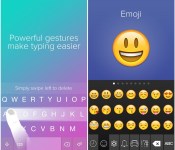
Fleksy’s Speed-Focused Gesture Keyboard for iOS 8 Launching Today [iOS Blog]
With today’s release of iOS 8, a number of new systemwide alternative keyboards will also be debuting in the App Store. Yesterday, we covered SwiftKey, and today sees the introduction of another major entrant: Fleksy.
Fleksy’s primary claim to fame is speed, having been recognized as the fastest keyboard in the world. The keyboard relies on advanced autocorrect features to interpret input and includes extensive gesture support to make it easy for users to delete, add punctuation and spaces, or select an alternate autocorrect suggestion by swiping anywhere on the keyboard.

Fleksy also includes built-in support for hundreds of emoji, as well as a resizable keyboard and support for 40 languages at launch. And as with some other popular alternative keyboards, Fleksy learns from the user’s typing patterns, improving its performance with time.

Fleksy arrives today as a free download with several colorful themes to allow users to personalize their keyboards, with additional premium themes available for purchase. It is compatible with iPad, iPhone, and iPod touch.
.CPlase_panel display:none;

Diane Von Furstenberg’s designer Google Glass frames come to the UK

When Google Glass went on sale in the UK in June, deep-pocketed early adopters could choose between the basic frame or one of the more stylish options from Google’s Titanium collection for some extra cash. Well-heeled fashionistas that weren’t exactly enamoured with Google’s range have some new options today, courtesy of designer Diane Von Furstenberg. The “DVF” collection, which dropped stateside a few months ago, is now available to Brits exclusively at online fashion outlet NET-A-PORTER. There’s only one style for the ladies, and it comes in five different colors with matching sunglass lens replacements. These retail for £1,250 a piece, whereas the range for gents is slightly cheaper at £1,120. Men have a wider choice of three frame designs, which also include bonus sunglass lenses. They’re certainly prettier than the raw frames, and perhaps a little less conspicuous, too. Because you wouldn’t want to draw attention to yourself now, would you?
Filed under: Wearables, Google
Source: NET-A-PORTER, Google (Twitter)
.CPlase_panel display:none;

Olympus is working on a Sony-style remote lens camera, too

It’s been a year since Sony launched its range of lens cameras, WiFi-enabled zoom lenses that connect to your smartphone and offer far better pictures than your built-in snapper. For its second generation hardware, the company went one further and built the QX1, which enabled you to swap in any E-mount optic. I say all of this because Olympus has, perhaps belatedly, cottoned on to the idea that there might be something in this type of technology, which is why the company is showing off its Open Platform prototype here at Photokina.
If you’re already familiar with the QX1, then you’re already up to speed on what the Open Platform is designed to do. Broadly speaking, the hardware has a Micro Four Thirds sensor, digital signal processor, WiFi module, battery and, erm, that’s it. It’s designed to connect wirelessly to an Android or iOS smartphone, with the boxy hardware capable of taking any compatible lens from the company’s range and, presumably, Panasonic’s MFT lenses as well. The prototype was designed with MIT’s Media Lab, and is part of a project to “expand the field of application for a huge variety of hardware.” We’d take that to mean that the whole point of Open Platform is to democratize and open up the various uses of digital imaging in ways that go beyond just pointing a DSLR at things.

As we said before, the boxy unit has no screen of its own, and instead relies upon your phone to play the part of the viewfinder. You can, of course, shoot blindly without it, simply by pushing the silver shutter release button on the top of the device. The only other technical feature worth mentioning is the hot-shoe mount in the top corner, opening the device up to add even more accessories like flashes.
As a prototype, and one that was kept behind glass, there’s more than a few uncertainties about the hows, whens and whys surrounding the Open Platform hardware. For instance, there’s no word on a megapixel count, battery life or if we’re likely to see Olympus come out with a consumer version of the device. As for the future, the company is going to be taking Open Platform on the road, asking the crowd at various idea, make and hack-a-thons to come up with innovative ways that a remote lens could be used — and, presumably ignoring anyone who just whips out a QX1.
Steve Dent contributed to this report.
Filed under: Cameras
Source: Olympus Open Platform
.CPlase_panel display:none;

Dixons Carphone gives hundreds of stricken Phones4u employees new jobs

When Phones4u announced its surprise decision to call in the administrators, its 5,600 employees were left facing a very uncertain future. While the retailer is busy figuring out its options, one of it’s biggest rivals, Dixons Carphone, has swooped in and offered a lifeline to some Phones4u staff. In a statement today, Dixons Carphone said it has reached an agreement with Phones4u to hire all 800 employees who had worked in a partnership between their stores.
If it sounds confusing, it kind of is. You see, before Dixons and Carphone Warehouse agreed to merge, Phones4u operated small stores-within-a-store in some Currys and PC World branches. That agreement was ongoing at the time of Phones4u’s closure, which put Dixons Carphone in a position to bring those 800 Phones4u staff under its own roof. While the majority of employees are still left wondering they’ll ever have a job to go back to, there’s at least some happy news from what has been a very messy breakup.
Pleased to confirm we have secured agreement to offer all Phones4U colleagues (circa 800) in our@curryspcworld stores roles
– Dixons Carphone plc (@DixonsCarphone) September 17, 2014
Filed under: Cellphones, Wireless
Source: Dixons Carphone (Twitter)
.CPlase_panel display:none;
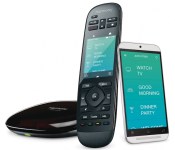
Logitech extends Harmony line to control more of your home

Logitech’s got a new Harmony remote and it’s an even bigger push into home automation over the current Harmony Smart Control home theater remote lineup. Shipping this month, the new Harmony Home Control devices start at $99 for the Home Hub (which turns your smartphone or tablet into a home automation controller). Then there’s the Home Control for $149, which adds a simple, button-only remote. At the top of the line is the $349 Harmony Ultimate Home, which swaps out the simple remote for a 2.4 inch touch screen model (seen above). Available in either black or white, Harmony Home can control both your home theater and other devices from partners via IR, Bluetooth or WiFi. There’s a lengthy list of support, too: August, Honeywell, Kwikset, Lutron, Nest, PEQ, Philips, Schlage, SmartThings, Sylvania, Yale and Zuli.
Alongside the new devices, Logitech is also introducing the Harmony Developer Program, and promises to keep an up-to-date list of compatible devices on its site. If your current home automation solution includes ZigBee or Z-Wave devices, then the Harmony Hub Extender for $129 loops in those prevalent protocols to your Harmony Home Hub. We have full faith that the Harmony Home will be easy to program, but are less sure how well Harmony’s success in the home theater remote space will translate to controlling the entire home — compromises are sure to have been made — but we are certainly excited to see how it might.
Filed under: Home Entertainment, Peripherals, HD
.CPlase_panel display:none;

MediaTek’s new chips save your precious time and money with built-in compression

While Opera Max is slowly making official launches around the world, this cloud-based data-compression service has just nabbed another partner — and it’s a pretty big one, too. Today, the Norwegian company announced that MediaTek will be embedding its app in two of its LTE-enabled 64-bit chipsets: the octa-core MT6752 and the quad-core MT6732. What this means is that should manufacturers want to integrate Opera Max into their MediaTek-powered devices (our understanding is that this feature is optional), they wouldn’t have to spend time on testing the app, ergo shorter time to market. And of course, the end user gets to load pages, music and video clips faster anywhere on the device (unlike how the Opera browser only compresses data that are loaded within it), while also saving “up to 50 percent” of bandwidth, courtesy of Opera’s cloud servers. That said, the service doesn’t process encrypted links, for obvious reasons. For those who aren’t familiar with Opera Max, feel free to check out the new video after the break.
Source: Opera
.CPlase_panel display:none;

Instragram ads are coming to UK feeds very soon

While Instagram has been monetising its app for nearly a year, UK users have enjoyed scrolling through their timelines completely free of ads. Until today, that is. The company has taken to the service to share the very first sponsored post with UK users (shown above), letting them know that “over the coming weeks” it will begin displaying paid content their streams, whether they like it or not. Users are invited to tap the “Sponsored” label to learn more about a specific campaign, but the majority are likely to become acquainted with “…” button, which quickly hides them from view. The dream might be over but Instagram says it’s starting out with only a “few” businesses, meaning you shouldn’t be bombarded with ads when they begin rolling out.
Via: The Next Web
Source: Charlotte Williams
.CPlase_panel display:none;
 AIVAnet