


Tim Cook Speaks on Privacy in New Interview: ‘We Try Not to Collect Data’
Apple CEO Tim Cook spoke with Charlie Rose in a two part-interview, and the second segment of the show is airing tonight. In the second half of the interview, Cook focuses on the driving force behind Apple, his own personal values, and the company’s thoughts on privacy.
Cook’s first comments are on Apple’s privacy views, and he says that the company tries to collect as little data about its users as possible and that he believes that people “have a right to privacy.”
Our view is that when we design a new service we try not to collect data. So we’re not reading your email. We’re not reading your iMessage. If the government laid a subpoena on us to get your iMessages, we can’t provide it. It’s encrypted and we don’t have a key.
Our business is based on selling [products]. Our business is not based on having information about you. You are not our product.
As he has stated previously, Cook says that no one has backdoor access to Apple’s servers. “We would never allow that to happen,” he says, repeating his prior statement on the issue. “They would have to cart us out in a box before we would do that.”
On his values, Tim Cook says that he believes in treating all people with dignity, regardless of color, religion sexual orientation, and gender. “Everyone deserves respect.” Cook goes on to say that Apple is driven by a goal to enrich people’s lives and change the world, not to be the largest company.
You know, I was at — I was at Compaq at a time where the objective was to become a $40 billion company. Well, employees don’t get excited about that. This isn’t something you wake up and you go, “I’m going to take the hill today to do 40″ — I mean, you know? It’s just not that. But changing the world? These are the things that people work for. And this pushes people. And so, this is who we are as people. And it’s the values of our company. It’s been the values of our company forever. And it’s to Steve’s credit. He put these values in the company… I know I probably said it too many times, but it’s a privilege of a lifetime to be there, because I think there’s no place like it on earth.”
The first part of the Charlie Rose interview aired on Friday, with Tim Cook speaking about Steve Jobs’ continued influence on Apple Products, the company’s thoughts on the Apple TV, and the decision to buy Beats Electronics.
During the first half of the interview, Tim Cook also said that Apple is working on products that “no one knows about” and that “haven’t been rumored about yet,” noting that some of the products may go on to be released while others will be shelved.
Tim Cook’s full commentary on Apple and privacy issues will be available when the complete second part of the interview airs later tonight on PBS.
.CPlase_panel display:none;

InfoSonics verykool s505 Spark is a dual-sim wielding phone for $200 that is worth a look [Review]
Over the years I have seen and used some pretty interesting devices. The first few years of Android was a pretty wonderful time. As the base Android OS improved, so did the hardware. It wasn’t easy and many companies tried and failed when attempting to implement a device that was low-cost and subsequently offered lower specs. Now that Android as an OS has matured, it is possible to take a step backwards in hardware and still make a product that functions. When I first heard about the InfoSonics verykool s505 Spark, I was intrigued by it. Mostly because the specs weren’t terrible, the price was attractive and the images showed a stock experience. After a series of mishaps with my more illustrious and expensive devices, I have become reliant on the verykool s505 as my daily device. As such, this review is more so of an experience over the last month than a traditional 2-weeks in hand and not a full-blown daily used device.

InfoSonics verykool s505 Spark Specs
Technology
3G HSPA+ 21 Mbps DL, 5.76 Mbps UL
Band
3G Triple Band (850/1900/2100)
Dual SIM Card Support (1 x 2FF mini SIM, 1 x 3FF micro SIM)
Operating System
Android 4.2 Jelly Bean
CPU
1.3 GHz Quadcore – Powered by MediaTek
Battery
2,000 mAh Li-ion
Talk time up to 7 hours / Standby time up to 240 hours
Size
143.50 x 71.60 x 8.25 mm
Weight
154 grams
Screen
5.0” HD IPS-LCD Capacitive Touch
720 x 1280 Pixels, 293 ppi with full lamination
Connectivity
Wi-Fi, Wi-Fi Hotspots, Bluetooth 4.0, USB Tethering
Camera
12 Megapixel rear camera
2 Megapixel front camera
Memory
1GB RAM
4GB ROM, 2GB internal storage, external (T-Flash) up to 32GB
Extras
GPS with A-GPS, G-sensor, loudspeaker, 3.5mm audio jack, Dual SIM optional.
Ambient light sensor, Gravity and Proximity sensors, LED Torch
The spec sheet outlines a pretty low powered phone with specs that would make a high-end Android users cringe at the thought of having it in their house let alone using it. I feel your pain, but it hasn’t quite turned out as terrible as I thought it was going to be. That is a good thing actually.
Whats in the box
In the box you find the traditional necessities. A wall plug, a micro USB cable, the verykool s505 Spark, a set of ear bud (which no one seems to offer up anymore) and a spare screen protector. The device comes with one screen protector pre-installed for you.

The Looks and the Physical Goods
The external look of the s505 Spark is fairly reminiscent of the Galaxy S4. At least at first glance. It obviously losses the physical home button and capacitive keys. In the front you find your ear pierce, your sensors and your front facing camera.

On the rear you will find a 12MP camera with LED flash along with the speaker grill.

Along the right side is where you will find your power and volume buttons. On the rear is the micro USB charging port that sits off to the right side next to the mic hole. When you remove the plastic back plate you are greeted by the 2,000 mAh battery that power the device. Above it is where you find your micro SD slot, micro SIM card slot and full size SIM card slot.

In a world of 2K ultra HD displays, the Sparks 720 x 1280 resolution screen doesn’t sound spectacular. As with anything that is 720p, if you look hard enough you can find pixels. That doesn’t detract from its vibrant colors though. When looking at the screen from a variety of angles you can see a slight darkness come over the screen. Not to the degree that it makes it impossible to see the screen clearly though, it looks quite sharp from all angles.
As for how it feels, well, it fits well in my tiny little girl hands and is easy enough to use one-handed for basic operations. While the actual weight is 154 grams, it oddly feels lighter than the Galaxy S4. Just a mind trick I suppose. It does feel like $200 though. However, one can argue that the Galaxy line from Samsung feels the same and they clearly aren’t.

The Software
We know the Spark s505 runs Android 4.2 as the base. InfoSonics left it well enough alone and kept it stock Android. That is something that we just don’t see from companies all that often and probably one of the reasons the lower specs work just fine with the software.


 They did add a few little changes in that were needed such as a SIM management setting so that you can easily manage both SIMs. They also added in some audio profile settings and the ability to schedule power on and off times.


 The pre-installed apps are all pretty basic. InfoSonics didn’t load it up with a bunch of garbage that you can’t remove. Most everything is stock Google with Google apps. There are a few additions though, like a File Manager, WhatsApp, Skype, Wireless Input Control and SafeTREC. SafeTREC is their main selling point app for the device. I will simply let them tell you about it.


“provides a family of next-generation mobile safety technology and services. According to MobileTREC, their system is the only true platform that allows users to text to 911, offering a quick emergency response method in case of danger. In addition to one-touch response, there’s a single help button to push in case of a crisis. Other features include a family locator with GPS tracking capabilities, mobile intelligence indicating danger and safe zones before you enter and personalized safety network alerts for friends and family. Customers who purchase the s505 Spark can enjoy a free 30-day trial of MobileTREC’s safety platform to experience firsthand the many features of these important Personal Safety Services.”
While the device only sports Android 4.2 currently, InfoSonics has noted that it will be updated to Android 4.4 at some point. With much of the software being a fairly stock Android experience, there aren’t a ton of things to look at or worry about. It just works.
The Camera
The Spark features a 12MP camera that packs in HDR mode, Panorama and other feature sets you would expect from a device. Here are a few sample images for you to look over taken with the standard camera app that is provided on the device.


They look pretty good. I didn’t mess with settings at all, nor were any of those taken using HDR mode. One would expect them to be a little better since it is a 12MP camera. I didn’t edit or shop any of the above photos, but they were the best ones taken out of the bunch that I took. Many seemed a little washed out or overexposed. Again, changing some settings could help with that, but end users like to point and shoot and not think.


If you get things set up and are careful about your shots, they look pretty good. If you are going to add effects and share them on social media channels, they should be just fine. Something is just not completely right with the camera sensor though. Whether it be the sensor its self or just some software issue.
The s505 Experience
Hardware and software specs written out on paper, or the web, don’t do a product justice anymore. I recently read an article, I can’t remember from where, that talked about moving beyond data points on devices and getting back to the experience. Putting the physical data points aside and strictly going off of my experience using the device as my primary daily driver for the last month, I am very pleased. There are a few things that stand out on my overall experience.
- The battery life of the s505 is rated for 7 hours of talk time with 240 hours of standby. On a day of regular usage during the week I routinely made it through from 6:30 a.m to around 11 p.m. without needing to put t on the charger. I usually hit the hay about 11, sometimes later, but during the month of use, I never had to put it on the charger in the middle of the afternoon like I have had to do with other higher-end devices.


- While the internal storage only offers 4GB, 2GB user available, the micro SD card slot alleviates the strain. In the setting menu under storage, you can set the default install location to the SD card. You would be pretty lost without that setting. Without it, you would find yourself out of usable storage for apps rather quickly.
- Moving between screens, apps and settings on the device is pretty quick. There are no doubt some times where you will run into some lag. There were also a few times where typing on the keyboard would lag behind and take a second or two to catch up. It is a tricky thing to blame on the device its self though. I have experienced the same lag on the Xperia Z1s, HTC One M8 and on the Galaxy S4 in various apps and with various keyboards. Maybe I am just to fast for the devices. HA.
- Call quality and sound were above average. The speaker phone was extremely loud and clear. Watching videos, listening to music and other things came through loud enough to be heard without needing to bring your phone to your face to catch some words. It is considerably better than I have experienced on other similarly priced devices out there.
- Since the device is unlocked, carrier free and dual-sim, there is no need to worry about anything with T-Mobile or AT&T. Same thing goes for any carrier that uses a SIM card locally or internationally. I used a miro SIM from T-Mobile in slot 2 with no sim in slot 1. Remember, slot 1 is a full-sized SIM. It auto configured and I was online and making calls in seconds.
This particular model is a 3G device with HSPA+ access. I didn’t run speed tests on the data simply because where I live has less than stellar T-Mobile speeds even on top-tier handsets. I did use the device a lot outside of my house and surfed the web just fine, communicated on G+, Hangouts and streamed music from Google Play Music without a hitch.
Overall Thoughts
It is easy to dismiss a device from a company you may have not heard of that is offering a device that isn’t a top-tier $600+ phone. My experience with the InfoSonics verykool s505 Spark has been a very pleasant one. It came to my rescue after some a series of unfortunate situations. The s505 offers up enough give and take in areas to justify the price tag with the screen size, processor, camera (when tuned in good conditions) and battery. If you aren’t all about the ‘extras’ from the high-end devices and just need something to surf the web, watch some videos and listen to music all while being able to sport two SIM cards, a SD card and not be tied to a contract or one carrier, this might just be one to check out. You certainly can’t expect a Galaxy S5 out of the verykool s505, but at $200, it does its job quite nicely. Heck, if you have PayPal credit you can even make 6 monthly installments of 33.99 to buy it.
Check it out at the verykool website. Which, I am also happy to say, is here in the states in San Francisco.
//<![CDATA[
ord = window.ord || Math.floor(Math.random()*1E16);
document.write('‘);
//]]>
The post InfoSonics verykool s505 Spark is a dual-sim wielding phone for $200 that is worth a look [Review] appeared first on AndroidSPIN.
.CPlase_panel display:none;

The Big Picture: Scientists pick a landing site for their historic comet probe

You’re not just looking at an unassuming piece of rock — if anything, it’s a piece of history. That’s Site J, the European Space Agency’s long-awaited choice of landing spot for Philae, the first probe built to reach a comet’s surface. Scientists chose the seemingly uneventful location because it should offer the best chances of studying the comet’s nucleus and other material without worrying about impurities. It should also guarantee that Philae both stays in touch with its Rosetta mothership and maintains just enough power to get its job done. You’ll likely have to wait until touchdown on November 11th to get a closer look, but this at least serves as a good preview.
[Image credit: ESA/Rosetta/MPS for OSIRIS Team MPS/UPD/LAM/IAA/SSO/INTA/UPM/DASP/IDA]
Filed under: Science
Via: Space.com
Source: ESA
.CPlase_panel display:none;
Play 3DS games on Oculus Rift (some assembly required)

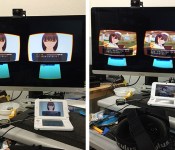
Got a little too much money and an abundance of gaming gadgetry on your hands? Here’s a weekend project that may be right up your alley. As demonstrated by KatsuKity, the makers of a 3DS capture card, you can rig up a way to play your favorite games on an Oculus Rift complete with those rad stereoscopic 3D effects (assuming the game in question actually has them). It’s actually pretty simple once everything’s hooked up — KatsuKity’s viewer software has been updated with support for the DK2, so once your tiny console is sending 3D video to your PC, you shouldn’t have much trouble running that into your Rift. As for how you get that capture card up and running in the first place… well, that’s another story entirely. You can either buy a a capture board and shoehorn it into your 3DS yourself, or take the easy way out and purchase a pre-modded unit. It’s a pretty proposition either way, but it may just be a small price to pay to catch a few glimpses of Super Smash Brothers in three dimensions.
Via: TinyCartridge
Source: +KatsuKity
.CPlase_panel display:none;

Invisibility suits are coming thanks to squid-like displays

It’s not as hard to make an invisibility cloak as you might think, but making one that’s truly sophisticated is another matter; metamaterials (substances that change the behavior of light) are hard to build. Rice University appears to have solved part of the problem, however. It just developed a squid-like color display (shown below) that should eventually lead to smart camouflage. The new technology uses grids of nanoscopic aluminum rods to both create vivid, finely-tuned colors as well as polarize light. By its lonesome, the invention could lead to very sharp, long-lasting screens. The pixels are about 40 times smaller than those in LCDs, and they won’t fade after sustained light exposure.
That’s just the start, though. Rice eventually hopes to combine its invention with light-sensing tech that changes the colors to match the surroundings. If that happens, you could easily see combat uniforms and vehicles draped in displays that render them almost invisible. That’s not going to happen in the near future, but the discovery suggests that the disguises you see in Harry Potter and Predator aren’t all that far-fetched.

Filed under: Displays, Science
Source: Rice University
.CPlase_panel display:none;
Eat24: An app for hungry people with smartwatches [‘Watch’ This App]
If you’re a person that loves your food delivery apps and your smartwatch, then you’re in luck because the Eat24 app is compatible with Android Wear devices. For those who are not familiar with Eat24 it is an app that allows users to order food from various local restaurants from their phones (now smartwatches) for… Read more »
The post Eat24: An app for hungry people with smartwatches [‘Watch’ This App] appeared first on SmarterWatching.
Deals, Discounts, Freebies, and More! Click here to save today!
Read the rest at SmarterWatching.com!
The post Eat24: An app for hungry people with smartwatches ['Watch' This App] appeared first on AndroidGuys.
.CPlase_panel display:none;

Amazon shutting down little-used person-to-person payment service

On October 13th, you’ll have one less option for sending cash to individuals online. Amazon’s WebPay, a feature of the company’s broader Payments platform, will be shuttered. According to a FAQ posted on its site, the service is being closed down because it’s “not addressing a customer pain point particularly better than anyone else.” Users have until the 13th to initiate any transactions, then there will be a 30-day grace period in which customers can claim their funds before WebPay disappears completely. Axing the unpopular service will allow Amazon to use its resources elsewhere — perhaps by turning Payments into a more full-fledged mobile wallet service à la Google Wallet or Apple Pay. Of course, there are no shortage of options out there if you want to send money to friends and family electronically. Apparently there’s a company called PayPal, or something, that’s been doing it for a long time.
Via: The Next Web
Source: Amazon
.CPlase_panel display:none;

Kickstarter is now accepting projects from Ireland and Scandinavia

Folks looking for crowdfunding in Norway, Denmark, Sweden and Ireland just got a lucky break: Kickstarter is expanding its international reach. Starting today, creators in Ireland and Scandinavia will be able to submit projects to the crowdfunding site. An FAQ on the company’s blog lays out the details: The new projects won’t go live until October 21st, but they’ll be visible to the worldwide Kickstarter community when they do. Like all international projects, pledge amounts will be listed in local currency — kroners and euros, specifically. Scandinavian and Irish creators can check out the official announcement at the source link below.
Filed under: Misc
Source: Kickstarter
.CPlase_panel display:none;

Over 3 million comments on net neutrality registered with the FCC
It looks like a lot more of you have strong opinions on net neutrality than initially thought. The FCC has just announced that it’s received more than 3 million comments on the topic, which blows away the previous estimate of 1.48 million and is more than twice that of the hubbub caused by Janet Jackson’s “Nipplegate” back in 2004. Of course, seeing as net neutrality has gained quite a bit of coverage thanks to John Oliver and the recent “Day of Action” campaign, it’s not exactly surprising that citizens everywhere are up in arms about the issue. If you want to chime in as well, you had better do so soon — comments on the topic end in just a few hours.
[Image credit: Washington Post/Getty Images]
We have passed the 3 million mark for #OpenInternet comments received. We are still receiving & processing comments. More updates to come.
– Kim Hart (@khart) September 15, 2014
Source: Twitter (Kim Hart)
.CPlase_panel display:none;

How to get the new U2 album ‘Songs of Innocence’ out of your iTunes

Apple capped its iPhone 6 & Apple Watch launch event last week by announcing it would give away copies of a brand-new U2 album to all iTunes users — but some people aren’t happy about it. In apparently shocking news to the folks from Cupertino, not every single person in the world is a fan of the Irish rock band. Many were upset when the album suddenly appeared in their iTunes library, and, depending on a user’s settings, sometimes downloaded itself onto mobile devices. There is a way to hide albums from view in iTunes, but if you just can’t live with Songs of Innocence being tied to your account, Apple has pushed out a tool to eradicate it from your account forever. Go to this webpage, click remove album, enter your account info and poof — it’s gone, although you may still need to delete any downloaded copies. We hope next time Apple will ask before shoving a new LP into our libraries — unless it’s Detox.
Source: Remove ‘Songs of Innocence’, iTunes Support FAQ
.CPlase_panel display:none;
 AIVAnet