



Nothing says you’re a Sony fanboy like a pair of PS4-themed Air Jordans

There’s nothing like a set of fresh kicks to add the finishing touch to your get-up, but then there’s the problem of tracking down the perfect pair. We know that’s exactly why you haven’t been cracking out your PS4-themed outfits recently, but luckily there’s now a shoe for that[TM]. Custom kick designer Jonny Barry from FreakerSNEAKS has seen this gaping hole in the market, and intends to fill it with the “JRDN X PS4,” a remix of the Air Jordan 4 that takes inspiration from Sony’s latest console. They’re actually one of his less-extensive mods, with the PS4/PlayStation logos replacing the normal dunking graphics on the back of the sneakers, and an image of the mischievous robots from Playroom on the tongue. What’s more, there’s a (completely non-functional) HDMI port built into the sole, and a Jordan-branded cable for plugging them into, well, each other. As Barry tells DualShockers, he intends to produce a limited run of ten pairs, and sell them at around $950 each. Finally there’s something that just works with that PS4 jumpsuit you’ve been dying bust out, and what a bargain at more than double the price of the actual console!

Via: The Verge
Source: DualShockers
.CPlase_panel display:none;

Hands-on with Leica’s super-rare $19,400 M Edition 60

As of this writing, 15,000 Euro is the equivalent of $19,400 — a very reasonable exchange rate indeed, and a fair price to pay for a mid-range car or a year of college. Only a select few can justify handing over that sum for a digital camera, however, regardless of the exclusivity that comes in tow. Leica’s counting on at least a few die-hard fans to fork over the cash, though, for the M Edition 60, a very special model created to celebrate the M system’s 60th anniversary. Only 600 have been made, and each is numbered between 001 and 600. Most peculiar is what this camera doesn’t include — a display, menu system, electronic viewfinder or any indicators at all, besides a tiny red light that flashes when the SD card is in use.
Instead, the only way to review your shoot is to pop the SD card into a computer. There’s no USB port to speak of, or an HDMI output. Not even a monochrome LCD readout. A large ISO dial (from 200-6400) occupies the area where you’d normally find a display. You set the aperture directly on the bundled Summilux-M 35 mm f/1.4 ASPH lens, and the shutter speed using a dedicated dial beside the shutter release. The M Edition 60, which is based on the 24-megapixel Leica M-P and includes a stainless steel build, shoots RAW image files (but not JPEGs). You can only adjust focus manually, using the rangefinder system. Expect to find it in very select stores beginning next month.
Photos by Edgar Alvarez.
Filed under: Cameras
Source: Leica
.CPlase_panel display:none;

Apple Restricting Use of NFC Antenna in iPhone 6 and 6 Plus to Apple Pay
The NFC antenna found on Apple’s iPhone 6 and iPhone 6 Plus will only be used with the company’s “Apple Pay” mobile payment solution and will not be available to developers for use in third-party apps, reports Cult of Mac. The confirmation comes by way of an Apple spokeswoman, who also declined to comment on future plans for the technology’s use in other instances.

The move is similar to the Touch ID sensor’s debut on the iPhone 5s last year, as Apple restricted its use to iTunes purchases and device unlocking. However, Apple announced at this year’s Worldwide Developers Conference that developers would be able to integrate Touch ID into their iOS 8 apps. It is possible that Apple will allow NFC to be used with third-party apps at some point in the future, however it appears that the company is focused on polishing the technology for use with its own services.
Apple Pay will first launch in the United States next month as an update to iOS 8, and will be featured in the iPhone 6 and iPhone 6 Plus as well as the Apple Watch when it launches next year. The service will be compatible with American Express, Mastercard and Visa credit/debit cards, with 220,000 U.S. retail stores listed as partners. Apple will also be launching an Apple Pay API for developers to integrate the service into their apps.
.CPlase_panel display:none;

Lockheed Martin’s 360-degree laser turret gets cleared for take-off

Lockheed Martin has an affinity for lasers — that much is apparent. Not satisfied with simply having ground-based energy weapons, though, the outfit has recently tested its airplane-mounted death ray over the skies of America’s High Five, Michigan. The Aero-optic Beam Control (or ABC, as its friends are fond of saying) was recently run through its paces to prove airworthiness, among other things. The kicker here is that the laser can rotate 360 degrees and eliminate targets from basically any direction. Yeah. Lockheed says that the turret’s been designed to engage bogies at basically any position and there’s tech in place to counterbalance any turbulence caused by the protruding sphere (pictured above). The trials aren’t done just yet however, and they’ll only increase in complexity to further prove the system’s military-aircraft mettle as time wears on. So, you know, enjoy hiding out in your secret lair while it lasts.
Filed under: Transportation, Science
Source: Lockheed Martin
.CPlase_panel display:none;
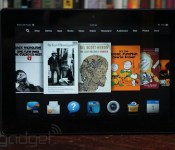
Kindle security flaw can be exploited by hidden codes in e-books

Next time you come across a Kindle e-book link somewhere other than Amazon itself, you may want to make sure it’s not some dubious website before you hit download or “Send to Kindle.” A security researcher by the name of Benjamin Daniel Musser has discovered that the “Manage Your Kindle” page contains a security hole — one that hackers can take advantage of with the help of e-books hiding malicious lines of code. Once you load the Kindle Library with a corrupted e-book (typically with a subject that includes <script src=”https://www.example.org/script.js”></script>), a hacker gets access to your cookies, and, hence, your Amazon account credentials.
Based on the updates Musser wrote at the bottom of the report’s web page, he first discovered the flaw in October last year. Amazon patched it up shortly after he reported it, but it made its way back after a “Manage Your Kindle” overhaul. Still, he believes the issue should be easy to avoid, so long as you don’t download e-books (pirated or otherwise) from websites you don’t know. Aside from Kindle, another Amazon-owned service was also thrust into the spotlight earlier for exhibiting a security flaw. Audible, the company’s audiobooks service, apparently allowed users to use fake emails and credit card numbers in order to download as many files as they want. An Audible spokesperson stressed, however, that transactions made using fake credit cards were “closed quickly” and that the service takes credit card fraud seriously.
Via: The Digital Reader
Source: B.FL7.DE
.CPlase_panel display:none;
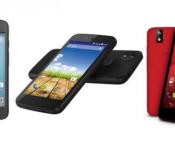
Google’s Android One project kickstarts in India with three new ultra-budget smartphones

As speculated earlier, first Android One smartphones have been launched in an event which was held in India yesterday. Google has launched the first set of smartphones under its Android One project in India at a starting price of INR 6,299 ($103). The first Android One devices which will be up for grabs in India are- Micromax Canvas A1, Karbonn Sparkle V and the Spice Dream Uno.
These dual-SIM smartphones have identical specs, a 4.5-inch IPS LCD display, 5-megapixel rear camera, 1700mAh battery, 1GB RAM and run Android 4.4 operating system. They are all are powered by a 1.3GHz quad-core MediaTek (MT6582) Cortex A7 processor. Flipkart and Snapdeal are exclusively selling Android One smartphones from Spice and Karbonn, respectively, while Amazon is selling the Micromax Canvas A1 exclusively.
Karbonn Sparkle V, Micromax Canvas A1 & Spice Dream UNO Specifications
- 4.5-inch IPS LCD display, 854 x 480 pixels, capacitive multitouch
- Android 4.4 KitKat, upgradeable to Android L soon
- 1.3 GHz quad-core processor, MediaTek MT6582, 1GB RAM
- 4GB storage (further expandable up to 32GB)
- 5-megapixel rear camera and 2-megapixel front camera, 1080p video recording
- dual-SIM, Wi-Fi b/g/n, Wi-Fi Hotspot, Bluetooth v4.0, GLONASS A-GPS, microUSB v2.0 port and 3.5mm headphone jack
- Accelerometer, G-Sensor, Ambient Light Sensor, Compass, Proximity Sensor
- 1700mAh battery
Through Android One, Google is attempting to mark its spots on the budget segment of the world’s fastest growing smartphone market. The Android One smartphones will come with a two-year software support from Google, which affirms that Android One phone users will definitely receive updates to the newer versions of the Android operating system.
Google has also made tied up with Airtel, a leading mobile carrier, to offer free of charge data usage for software upgrades. Also Airtel users can freely download from the Google Play Store without any charge being made for their data usage (up to 200MB per month).

In June, Google had announced the launch of the Android One project, which aims to increase the demand for low-end Android smartphones by improving their performance and reliability with consistent software upgrades. Presently, many affordable smartphones run different and kind of customized versions of the Android operating system, which along with the many differences in hardware make apps on those phones malfunction.
India is being projected as a lucrative market for low-cost smartphones because many people are buying these smart devices for the first time. Only 10 percent of the India’s population currently uses smartphone and according to researches, the figure is most likely to go up by twice in the next four years.
Google, however, is not the only company fighting for a share in the Indian smartphone market. There are at least 80 smartphone brands in India and analysts say the Android One phones should offer customers more than just feasibility if it wants to compete with likewise priced devices made by Samsung, Motorola and China’s Xiaomi.
It is not the first time that device makers have partnered with e-commerce firms for exclusively launching their devices. Motorola and Xiaomi have successfully launched their smartphones on Flipkart, while Spice, Micromax and Intex have launched their devices on Snapdeal. Apart from apparels, mobile phones are one of the highest selling items on e-commerce sites.
According to research firm IDC, smartphone sales in the country grew almost three-fold to over 44 million in 2013, buoyed by affordable devices made by local firms such as Micromax and Karbonn. In the second quarter of 2014, 18.42 million smartphones were shipped in India. Though Samsung is the leader with a 29 per cent market share, Micromax (18 per cent), Karbonn (8 per cent) and LAVA (6 per cent) are close competitors.
While Android is the most popular operating system globally, other operating systems such as Windows and iOS are also gaining momentum. Also, latest platforms like Firefox and Tizen may emerge as strong competitors to Google’s platform. Recently, Firefox (in partnership with Spice and Intex) launched two new smartphones, priced below INR 2,300 ($38), aimed at those looking to upgrade from feature phones to smartphones.
//<![CDATA[
ord = window.ord || Math.floor(Math.random()*1E16);
document.write('‘);
//]]>
The post Google’s Android One project kickstarts in India with three new ultra-budget smartphones appeared first on AndroidSPIN.
.CPlase_panel display:none;
Android One expanding to six new countries by the end of 2014
Google successfully launched the Android One platform in India, with the first set of low-budget smartphones now up for purchase. While India is the first country to get the experience of Android One, Google has also affirmed to expand the program to other nations including- Indonesia, Philippines and South Asia (Bangladesh, Nepal, Pakistan, and Sri Lanka) by the end of 2014, with more countries set to be added in 2015.
Along with the global expansion, Google is also adding more manufacturers to the platter, which includes companies like Acer, Alcatel OneTouch, ASUS, HTC, Intex, Lava, Lenovo, Panasonic and Xolo launching Android One smartphones soon. Google has also roped in Qualcomm, increasing the possibility of a Snapdragon-enabled Android One handset, which may even be the LTE-enabled Snapdragon 210, witnessing as to how Google is targeting the $100 segment with its Android One program.
Sundar Pichai, head of Android and Chrome, said “This is just the beginning of the Android One journey. The first phones, from our hardware partners Micromax, Karbonn, Spice and chipmaker MediaTek, are available starting today in India from leading retailers starting at Rs 6,399. We’re also excited to welcome more partners to the program, including phone manufacturers Acer, Alcatel OneTouch, ASUS, HTC, Intex, Lava, Lenovo, Panasonic, Xolo, and chipmaker Qualcomm. We expect to see even more high-quality, affordable devices with different screen sizes, colors, hardware configurations and customized software experiences. Finally, we plan to expand the Android One program to Indonesia, the Philippines and South Asia (Bangladesh, Nepal, Pakistan, and Sri Lanka) by the end of the year, with more countries to follow in 2015.”

With Android One, Google is trying to make it cheaper for hardware vendors to launch a smartphone in the budget category by providing standardised hardware that vendors can take use, saving research and development costs in the process. While vendors can choose from the list of hardware designs, Google will also control the software department, and it has mentioned that it will be rolling out updates directly. Android One devices will also receive the much touted Android L update as soon as it comes out, with Google mentioning that these devices will be the first among the few to receive the update to the next version of Android.
What’s your take on Android One expanding to other nations? Let us know through your comments.
Source: Google Blog | Via: TelecomTalk
//<![CDATA[
ord = window.ord || Math.floor(Math.random()*1E16);
document.write('‘);
//]]>
The post Android One expanding to six new countries by the end of 2014 appeared first on AndroidSPIN.
.CPlase_panel display:none;
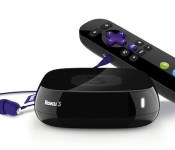
Roku has sold over 10 million players, but is that enough?

Tonight Roku is announcing that over 10 million of its tiny media streamers have sold, dating back to when they were first introduced in 2008. That’s good news, and shows sales are continuing to pick up after it crossed 5 million just last spring and eight million at the beginning of the year. Just as ever, the company has a solid product that we like at a reasonable price, and a library of smart TV apps that’s second to none. The only bad news? The competition is getting stronger too. Sales of the Apple TV have exploded along with the iPad and it was up to 20 million at last count, while Google is readying another Android TV attack and Amazon is pushing its own Fire TV media box. In response, Roku is expanding by putting its software directly into Smart TVs and using its partnership with Sky TV in the UK to get cheaper hardware on the shelves. Roku’s infographic (here) cites stats suggesting customers like it better, and use it more, than the competition, and claims it has more than 1,000 more channels than options like the Chromecast.

According to CEO Anthony Wood, NPD data shows the Roku accounts for some 37 million streaming hours per week, followed by the Apple TV at 15 million, Chromecast at 12 million and Fire TV at six million. Roku’s difference is that it’s a company that only sells streaming media players and isn’t trying to fit it into an entire ecosystem like the rest. The danger is that this approach could cut it off from apps as developers and services choose sides. While it’s true, the Roku doesn’t have all of the AirPlay/Cast features others like Apple, Google and Amazon have been able to tie together, that hasn’t hurt it yet in picking up new services, and what looks like a weakness could actually be a strength — as long as these sales numbers keep rising. If you somehow don’t have one yet, the company is running a giveaway over the next ten days to celebrate.
Filed under: Home Entertainment, HD
Source: Roku Blog
.CPlase_panel display:none;

Security app automatically encrypts your shared files so you don’t have to

In this post-PRISM world, basically everyone is worried about privacy (and rightly so!) — especially when it comes to cloud-based storage. Offloading your files to the likes of Dropbox doesn’t come without a share of caveats regarding security, so that’s where Places comes in. What sets the startup’s service apart from its peers, according to TechCrunch, is local, automatic, end-to-end encryption for your documents and media. There apparently isn’t another step you need to take between uploading the video of your toddler’s first steps and it being securely locked away. What’s more, Places uses your local machine to host offloaded content, relying on its centralized servers only when your PC is otherwise unavailable. And because your digital life is encrypted on the client side, Places claims it doesn’t have the key to unlock anything stored on its end should the government or anyone else come knocking. That, of course, is reserved for the intended recipient and no one else.
More than just file sharing and storage, Places offers a secure instant messaging system, too, with voice over IP in the works for a forthcoming update. Intrigued? You can check out the alpha or throw a few ducats toward the project when it hits Indiegogo sometime later this year.
Filed under: Cellphones, Desktops, Internet, Mobile
Source: TechCrunch
.CPlase_panel display:none;
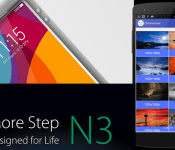
Oppo N3 Announcement Coming! Chromecast Wallpapers Hit the Play Store! – ManDroid Daily

Monday is done for, so let’s talk a little Android news. The Oppo N3 will be announced next month, and there is a render that is circulating that shows a unique design. I kind of dig the render, but we will have to see if that is the official design for the next Oppo flagship. Enjoy the Daily!
Android News
Oppo teases N3 announcement
HTC may be producing water-proof camera
China testing mobile-only sidewalk
Chromecast wallpapers
//<![CDATA[
ord = window.ord || Math.floor(Math.random()*1E16);
document.write('‘);
//]]>
The post Oppo N3 Announcement Coming! Chromecast Wallpapers Hit the Play Store! – ManDroid Daily appeared first on AndroidSPIN.
.CPlase_panel display:none;
 AIVAnet