



You have one day left to enter our Back to School 2014 sweepstakes!

We have 15 Timbuk2 messenger bags stuffed with a Sony RX100 III camera, the LG G3 from AT&T, a Lenovo IdeaPad Yoga 2 13 laptop and a ton of other gear. One of these awesome prizes could soon be yours — provided you’ve entered our the raffles on the 15 posts listed here. If you haven’t done so yet, do it now! Entries close at 11:59AM ET tomorrow, September 13th, and we wouldn’t want you to miss out.
Filed under: Announcements
.CPlase_panel display:none;

Sony, the catch-up king

Sony’s not making PCs any more. It recently announced it wouldn’t be making new e-readers, either. The company’s also taking a long hard look at the TV business that it dominated for decades. In the ’90s, its TVs stood up alongside the Discman, Walkman and even that new games console that could play CDs. Sony was cool; it had cachet. But a narrow focus on proprietary technology and its slowness to adapt to the dizzying speed of consumer tech in the last two decades have taken their toll. While it’s created a new department solely dedicated to making the next big thing, it remains to be seen if the company can bounce back from decades of failures.
The Walkman, the PlayStation, all those TVs, countless radios in increasingly smaller sizes, studio cameras and equipment, the compact disc and (possibly) AIBO, the robot dog. These are old success stories.
For decades, Sony practically defined high-end TVs, and they were everywhere. The Trinitron series even won an Emmy in the ’70s. But success didn’t last. Flat-screen TVs killed chunky CRT sets. Around 1992, companies like NEC and Hitachi, both Japanese rivals, became some of the earliest companies to manufacture bigger LCD displays with decent viewing quality. By 1996, Samsung had also figured out its own techniques for flat-screen TVs and by the end of 2007, LCD TVs were outselling CRTs globally.

Sony was slow to adopt, confident in its then-popular Trinitron TVs. But by 1996, its patents on the design ran out, and cheaper competition emerged. Instead of moving into LCDs like other companies, Sony revealed its slightly flatter FD Trinitron series, which was unable to recoup the popularity of the original. In 2002, it finally launched its debut WEGA LCD TV, but by Christmas of 2004, despite a 5 percent increase in TV sales, it suffered a 75 percent plunge in profits. It’s been an increasingly tough market ever since. In the last decade, Sony’s TV arm has bled nearly $8 billion. The company, in its entirety, has also had a few rough years. Make that several rough years. Losses in 2013 totaled 128 billion yen, roughly $1.2 billion.
In 2007, Sony developed the first OLED TV: a tiny, (beautiful) 11-inch TV on an articulated arm, but the company ceased production in 2010 when it decided 3DTV was the next big thing. Not soon after, Korean rivals like LG and Samsung introduced 55-inch, actual TV-sized OLED screens that were deemed the future of television. And it happened again more recently with curved TV sets: LG and Samsung got there first and Sony came after.
Was the company unlucky? Nearsighted? Arrogant? Take its Blu-ray disc business. According to Sony’s own news alert earlier this year: “Demand for physical media contracting faster than anticipated” led to the company reducing its estimates even further. The alert later states, “The fair value of the entire disc manufacturing business also has decreased.” Sony totaled this loss at an incredible 25 billion yen. Blu-ray is a Sony invention — the latest, though not the last, proprietary technology it’s tried to sell. The idea was to keep us, its dear customers, close to where we were spending our money — on media, on content, on software. This myopic aim is partly to blame for why it’s been slow to deliver on new trends: It’s been trying to get value for money from its physical media inventions.
Tech’s history books paint an unflattering picture in that regard: Sony’s Memory Stick was beaten by USB and SD card storage; Betamax was bested by VHS; and while Blu-ray won the battle with HD-DVD, it looks like it’s losing the real war with downloadable, streamable content. We don’t need discs so much — something that also hit the MiniDisc. Remember ATRAC? Sony’s heavy-handed DRM music format? The other options won out. Sony likes control and relinquishing it — or changing with the times — has been a big problem. (Interestingly, after the failure of Betamax, Sony turned its knowledge there into crafting smaller videocassette recorders, adding cameras and ushering in the age of camcorders.)
Maybe the recent lack of a hit, and weak business performance has been due to arrogance. The company’s latest CFO, Kenichiro Yoshida, put it surprisingly bluntly earlier this year: Sony has been very slow to respond to consumer trends. But thanks to previously strong movie and financial arms (Sony sells health insurance in Japan), the poor performance of its electronics company had been buffered. That was until its movie business suddenly turned sour last year and a very harsh spotlight was thrust upon its electronics arm. Yoshida added that to strengthen the company, it was cutting down on pricey (prime) Tokyo real estate, likely to be seen as another dent to Sony’s battered pride.

Another sell-off, its VAIO PC business, was an “agonizing decision,” according to CEO Kaz Hirai. The machines even caught Steve Jobs’ eye at one point. Both its laptops and desktop PCs commanded premium prices, but underneath those classy exteriors were the same components you’d find in far cheaper machines. In the last few years, however, it hasn’t even been a price issue: PCs simply aren’t selling as well as they did 15 years ago. They’ve been taken over by the smartphone, by the tablet — and unfortunately for Sony, these now-ubiquitous gadgets aren’t Xperias. They’re iPads; they’re Galaxy S devices. While it was the fourth largest mobile phone maker in 2009, by 2010 it had dropped to sixth, and its smartphone sales dropped last quarter.
Many believe Sony should be right up there, battling for smartphone dominance with Samsung and Apple, but it isn’t. It may have defined big-screen TVs and the personal music player pre-iPod, but it’s struggled to grab another product category and dominate it like it did before.

Sony was an e-reader pioneer, however. The company launched the first e-ink reader, the LIBRIe (above), in 2004, but hamstrung it with an e-book rental system. The Sony Reader series followed in 2006, but a year later, Kindle arrived and Sony’s limited book selection (along with Amazon’s sales strength) decided the rest. It helped that Amazon continued to refine (and discount) its e-readers. Backlit displays arrived inside Kindles in the second half of 2012, but Sony’s latest (and last) e-reader — announced a year after — still didn’t have one. Sony was slow. Again. Kindle now dominates e-readers. According to the Codex Group, in the US it’s responsible for around 64 percent of all e-book sales.

And now, Project Morpheus, a VR headset, arguably the coolest Sony hardware we know about isn’t coming from its electronics arm, but from Sony Computer Entertainment. SCE has somehow managed to hold onto that Sony magic: The PS4 is off to a very good start, after the messy launch of its predecessor. Perhaps SCE maintains enough distance from the rest of the Sony corporation that it can react and develop faster — whatever it’s doing, it’s working.
Sony’s huge successes in the preceding decades have thrown the weight of expectations onto whatever it does. “The difficulty Sony faced was that we could not forget the success of the past,” Sony’s former CEO Nobuyuki Idei explained in Sea-Jin Chang’s Sony Vs. Samsung. “Sony’s success was based on the tape format, CD format and transistor TV.” In recent shareholder meetings, investors cried out for another hit and complained that it’s another Japanese company, SoftBank, that’s making headlines by selling humanoid robots, not Sony.
Can it get back on track? The company wants to show that it’s at least trying. Earlier this year, Sony announced a new business-development department, aimed at tapping into the creativity and ideas of its youngest employees and people with ideas for The Next Big Thing. Its head, who apparently has a degree of autonomy outside Sony’s chain of command, insists there are still a lot of passionate people inside the once-dominant Japanese multinational. However, the onus will be on delivering new businesses and products that people want — definitive ideas that beat the competition — if it’s to ever return to its influential peak. Then, it’ll have to keep doing it.
Filed under: Cellphones, Portable Audio/Video, Tablets, Wearables, Software, HD, Mobile, Sony
.CPlase_panel display:none;
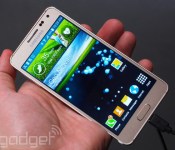
Where to buy Samsung’s Galaxy Alpha

Samsung usually keeps its design team busy with the Galaxy S and Note ranges, but clearly they had some extra time to kill this year. One side project turned out to be the Galaxy Alpha, a sleek 4.7-inch number with the kind of premium build quality Samsung reserves for only its top handsets. It even gives the flagship Galaxy S5 something to worry about, with a slim profile, aluminium frame and some of the more notable specs including a 2.5GHz quad-core Snapdragon 801 processor and 12MP camera. If the compact and classy device is something you’ve been keeping an eye out for, then you’ll be pleased to hear it launches in the UK today (on iPhone preorder day, no less), and we’ve got the skinny on where you can snag one.
| O2 | EE | Carphone Warehouse | Phones 4U | buymobiles.net | |
|---|---|---|---|---|---|
| Cheapest contract (with upfront) | £13 (£530) | £31 (£110) | £25 on EE (£200) | £31 on EE (£100) | £24 on Orange 3G (£210) |
| Cheapest contract (no upfront) | £43 | – | £33 on O2 | £39.50 on Voda 3G | £39 on EE |
| Pay-as-you-go | £530 | – | – | – | – |
| Unlocked (SIM-free) | – | – | £530 | – | – |
Of the usual suspects, Three and Vodafone didn’t feel they needed to range the Alpha on day one, but both have previously announced it will be coming to their networks eventually. Surprisingly, EE has no tariffs without an upfront payment, though that can be as little as £20 (affordablemobiles.co.uk also has a £36 per month plan on EE for just £10 upfront). Carphone Warehouse seems to have the best-looking deal price-wise with the Alpha free at £33 per month with O2.
A couple of MVNOs are on the ball, with giffgaff offering the Alpha on pay-as-you-go for just £514, or on contract from £31.25 per month with a £60 upfront payment. Tesco Mobile, on the other hand, will give you a handset free in exchange for £32.50 per month, or charge you £529 for a pay-as-you-go device. TalkTalk has the Alpha free from only £30 per month, but you have to be an existing customer to take advantage of that tariff.
If you want to go down the SIM-free, unlocked route, avoid buying a Galaxy Alpha from Samsung directly, as a few well-known e-tailers can give you a much better deal. Expansys isn’t doing too bad with a £515 price point, but Unlocked Mobiles and Clove are winning currently, with both selling the Alpha at a hair under £500.
Filed under: Cellphones, Mobile, Samsung
.CPlase_panel display:none;

MLS aims to be first soccer league to tackle video replay

While goal-line technology debuted for both World Cup and English Premier League action this year, Major League Soccer is looking to take video assistance one step further. MLS commissioner Don Garber told Sports Illustrated that the league wants to be the first to test a replay system that would allow officials to review calls on the pitch after a coach’s challenge. FIFA’s president Sepp Blatter, the head of soccer’s international governing body, has already called for testing next year in league action and during the Under-20 World Cup in New Zealand. It’s worth noting that MLS has yet to employ the goal-line systems due to cost, but the instant replay kit could be less expensive to adopt. However, due to its status as an up-and-comer when compared to other professional soccer leagues, MLS could be a prime candidate for the trials. In the US, NFL and MLB already use a similar video system allowing coaches’ challenges to help correct errors in officiating. Of course, it comes at the expense of slowing down the action for replays that can sometimes take several minutes to sort.
[Photo credit: Otto Greule Jr/Getty Images]
Filed under: Misc
Source: Sports Illustrated
.CPlase_panel display:none;
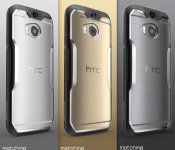
Accessory of the Day: HTC One M8 hybrid case $17.98

I can’t tell you how many times I’ve dropped my device outside, or on my balcony, this Summer only to kick myself for not having put a case on sooner. One of the nicer offerings I’ve come across in some time is this thermoplastic polyurethane and hard polycarbonate hybrid protective case (say that 5 times, fast) for the HTC One M8. Offered in seven color variations, it’s sure to match your device or stylistic preference. With incredible customer feedback ratings and priced under $20 (shipped), you’ll be hard pressed to find a reason to pass on this deal.
We're Hiring! Click here to learn more!
The post Accessory of the Day: HTC One M8 hybrid case $17.98 appeared first on AndroidGuys.
.CPlase_panel display:none;

Small update for Google Play Music brings back public playlist search for All Access [APK Download]

Google has let loose a small update to Google Play Music this morning that adds back the ability to search for playlists in All Access. The file size for the app also shrunk just a touch, with the previous version weighing in at 8.49MBs and the latest update coming in at 8.47MBs. Not a huge difference, but I am sure it cleaned up some bugs and issues along with search returning.
As always, we have the latest APK for Google Play Music available for you to sideload if you have zero patience for waiting on the update from the play store. Hit the link below and have at it.
Google Play Music v5.6.1623P APK download
//<![CDATA[
ord = window.ord || Math.floor(Math.random()*1E16);
document.write('‘);
//]]>
The post Small update for Google Play Music brings back public playlist search for All Access [APK Download] appeared first on AndroidSPIN.
.CPlase_panel display:none;
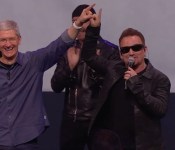
U2 Manager Discusses $100M ‘Songs of Innocence’ Marketing Deal and Future Plans With Apple
As part of its iPhone 6 and Apple Watch announcement, Apple featured U2’s latest “Songs of Innocence” album, making it the company’s biggest album release ever by providing the title to 500 million iTunes customers for free. The album and its lead single “The Miracle (Of Joey Ramone)” are the cornerstone of an upcoming marketing campaign by Apple that is worth an estimated $100 million, although the deal has received some criticism from users who do not wish to have the album added to their iTunes accounts and in some cases automatically downloaded to their devices.
But the deal is a significant one by any measure, and Billboard Magazine sat down with U2’s new manager Guy Oseary to talk about the deal and the band’s future plans with the Cupertino company.

In the Billboard interview, Oseary shot down criticism that the deal was disruptive to the music industry and detrimental to other artists, arguing that the release is a “big concept” and should serve to inspire other musicians to innovate in their own way.
Well first of all, when music becomes a piece of the conversation at an Apple event, that’s always a good thing. Two is, the power of music and the fact that it can actually be shared with 7 percent of the planet in one push of a button. That’s a pretty big concept. Any sort of innovation may inspire other people to do things that are innovative. We may see someone sitting with another manager, or another band going, “Hey, what can we do that’s interesting maybe with our lyrics or our videos or something interactive with the ticketing to our shows?”
Oseary also confirmed that the Apple-U2 deal is a “long-term relationship”, with the parties working together to promote innovation in music.
We’re working on other things as well with Apple that have to do with how music is heard and innovation, with [iTunes VP of content] Robert Kondrk leading that charge. There’s a lot of things still to come that are really interesting. The band really wants people to engage with albums, they want them to support the art form of artwork and lyrics and video content and just get into their music in a much different way than an MP3 file.
Focusing on the deal itself, Oseary stopped short of confirming that Jimmy Iovine played a role in negotiating the deal, saying only that the Beats co-founder and now Apple employee has long been “a source of support and guidance” for the band. Given Apple’s long-standing interest in music and its dominant position that has been threatened in recent years by subscription services, Iovine has been viewed as a key reason for the Apple-Beats deal for his extensive relationships within the music industry.
.CPlase_panel display:none;
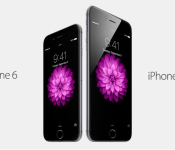
‘Incredible’ Response to iPhone 6 and 6 Plus as Apple Sets Overnight Pre-Order Sales Record
Despite some significant hurdles that saw the U.S. Apple Online store remaining down until almost 3 AM Pacific Time and issues with ordering in the Apple Store app, it appears that Apple has set a new record for iPhone orders with last night’s iPhone 6 and 6 Plus pre-orders.
An Apple representative who spoke to Re/code mentioned that a new record had been set, but did not comment on the number of devices that were sold.
An Apple representative said that the overnight sales of the new iPhones set a record, though Apple did not say how many have been sold.
“Response to iPhone 6 and iPhone 6 Plus has been incredible with a record number of preorders overnight,” Apple told Re/code.
Apple’s statement follows a similar comment from AT&T executive Ralph de la Vega, who said “It’s amazing to see the volume” in reference to iPhone 6 and 6 Plus orders. De la Vega went on to say that demand for the phones is “better” than last year and the year prior.

At the beginning of the pre-order period last night, users were having trouble getting devices ordered due to continual errors in the Apple Store app and issues with carrier websites. Apple’s own online store didn’t come up until after 2:45 AM Pacific Time, nearly three hours after pre-orders were available in the Apple Store.
Apple’s iPhone 6 Plus was in short supply and shipping estimates slipped to 7 to 10 days for all models before the online store was even up, shortly after slipping further to 3 to 4 weeks. The company does, however, appear to have ample supply of the iPhone 6 as many models continue to be available for delivery on 9/19.
Prospective buyers iPhone 6 Plus buyers who missed preorders can still potentially pick up a device on September 19 by waiting in line at an Apple Store.
.CPlase_panel display:none;
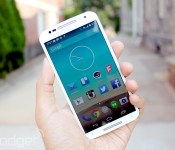
Motorola will launch an unlocked bloatware-free Moto X this month

When it comes to Android crapware, AT&T’s light-touch policy means that the new Moto X is already offering a close-to-stock experience. If, however, you want to be doubly sure that you’re only getting what God Motorola intended, then the Pure Edition is likely to be the device for you. According to The Verge, the phone company will offer its homegrown equivalent to a Google Play Edition device on its store towards the second half of this month. Is it true? Probably, but that doesn’t mean that we haven’t reached out to the company for more information, and will update this to let you know what we find out.
Filed under: Cellphones, Mobile
Source: The Verge
.CPlase_panel display:none;

A look at Amazon’s new East London HQ

Earlier this week, Amazon announced that it’s going to open a brand new HQ in the trendiest part of East London. Located in Shoreditch, the new 15-storey Principal Place offices will allow the company to almost triple its workforce from 1,700 to 5,000 employees when they open in 2017. Like it’s futuristic new Seattle HQ, Principal Place will try to introduce a little nature back into the urban jungle. There’s tennis and basketball courts hidden among a roof garden, while floor-to-ceiling office windows will welcome in the sun. Unlike Google, which is currently working out exactly what it wants from its new Kings Cross HQ, Amazon’s plans are already set in stone, and thanks to renders from property developer Brookfield Property Partners, we can take a virtual tour what Amazon employees will enjoy in a couple of years.
Filed under: Amazon
Via: Principal Place
.CPlase_panel display:none;
 AIVAnet