


Twitter thinks it’s a good fit for the Apple Watch and other small screens

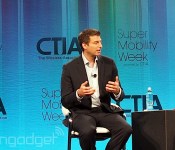
Moments after Apple announced its latest devices to the world, Twitter’s President of Global Revenue, Adam Bain, came on stage at CTIA to give his thoughts on the integration of Twitter with that much talked about Apple Watch. Twitter was one of the apps given early access to Apple’s WatchKit, and was prominently featured in today’s keynote in Cupertino. Not only can you read tweets on your wrist, but tweeted images fill up the entirety of the tiny screen.
In conversation with CNBC’s Julia Boorstin, Bain says he finds the whole wearables field very interesting, and says it’s good to be on platforms both large and small. “Promoted videos [for example] look better on a larger screen,” he said. Yet he also thinks the mobile nature of Twitter fits very nicely with a watch. In the physical world, you glance at your wrist multiple times a day, he says, and a lot of people do the same with Twitter. Marrying the two together makes sense and having Twitter available on wearable devices like the Apple Watch would make the service more accessible than ever. Further, he highlighted the personal nature of getting tweets on your watch, stating that connections and emotions could be “more dramatic” than before.
But wait, does that mean we’ll see Twitter ads on the Apple Watch? While Bain was hesitant to answer that question, he didn’t rule it out. “Every new device sets new rules,” he said, saying that it was far too early to talk about anything of the sort just yet.
Bain was also asked about Apple Pay and if that hinders or helps Twitter’s recent mobile commerce efforts. Essentially, no, it wouldn’t hurt them. “Anything that reduces friction of payment on mobile devices is a good thing,” he said, even hinting that an integration with Apple Pay was possible in the future.
Filed under: Wearables, Mobile, Apple
.CPlase_panel display:none;

Apple Debuts Two New iPhone 6 Ads Starring Jimmy Fallon and Justin Timberlake [iOS Blog]
Today at its special event, Apple debuted two brand new ads for the newly announced iPhone 6 and iPhone 6 Plus. The ads, titled “Health” and “Duo”, featuring Tonight Show host Jimmy Fallon alongside musician Justin Timberlake as they show off the new phones.
The first ad, “Duo”, features the two of them humming the opening of Richard Strauss’ “Thus Spoke Zarathustra” as they swipe and tap through new apps and features from both iOS 8 and the new iPhones, like 240 fps video, landscape mode, the Health app and more.
The second ad, “Health”, has Fallon and Timberlake introducing the Health app on the iPhone 6 and comparing their health achievements throughout the day.
Both the iPhone 6 and iPhone 6 Plus will be available for pre-order starting Friday, September 12 and will release one week later on September 19. The iPhone 6 starts at $199 on a two year contract for 16 GB while the iPhone 6 Plus starts at $299 on a two year contract with with the same amount of storage.
.CPlase_panel display:none;

Apple Posts Full-Length iPhone 6 and Apple Watch Media Event Video
Apple has posted the full video of today’s special media event on its website. The video should also be made avaliable later today on the Apple Keynotes podcast, which can found on the iTunes Store. [Podcast links: Keynotes, Keynotes in HD, Keynotes in 1080p HD]
Apple has also uploaded its “Perspective” video seen at the beginning of the event.
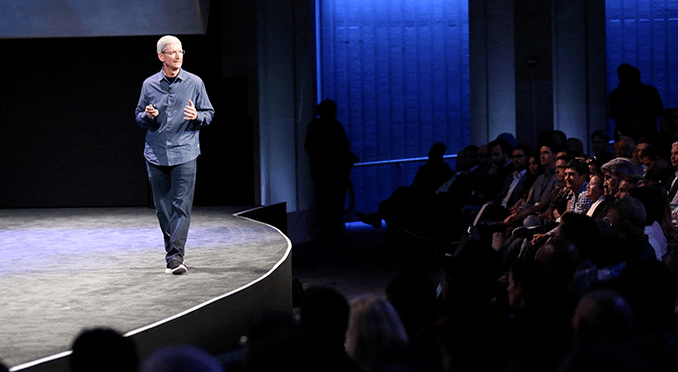
Media Event Highlights:
– Apple Announces Apple Watch, Available in Early 2015 for $349
– Apple Announces 4.7-Inch iPhone 6 and 5.5-Inch iPhone 6 Plus, Launching September 19
– Apple Announces ‘Apple Pay’ Mobile Payment Solution, Enabled at Over 220,000 U.S. Merchants
– iOS 8 Launching on September 17
– Apple Seeds iOS 8 Golden Master to Developers Ahead of September 17 Public Launch
.CPlase_panel display:none;
Apple Watch Will Allow Left-Handed Users to Choose Interface Orientation
At its special media event today, Apple unveiled its Apple Watch, showing off a variety of ways to use the device and its apps. However, Apple’s presentation and videos did not directly address how the device would work for left-handed users.
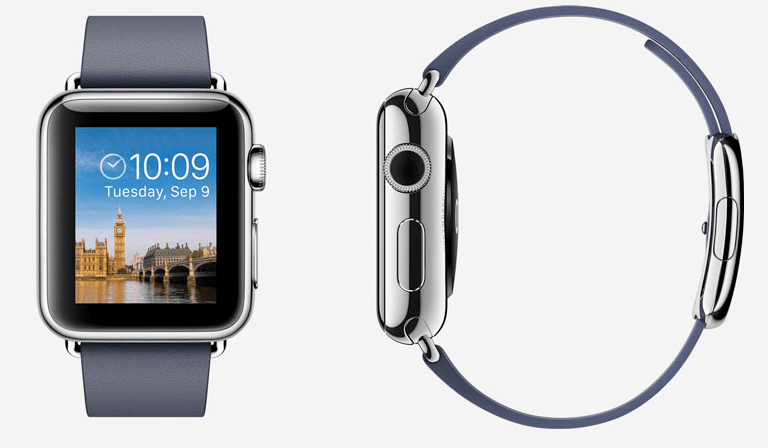
Now, Slashgear has new information on how the device will work for left-handed individuals. According to Apple, users will be able to choose what way the watch’s interface orients upon starting up the device for the first time. The bands for the Apple Watch are also swappable, enabling users to ensure the the device is not facing the opposite direction. However, left-handed users will still be required to adapt to the Digital Crown input on the Apple Watch, which is on the bottom left side when the device is worn on the correct wrist.
The Apple Watch will launch in early 2015 at a starting price of $349, and will be available two separate screen sizes of 38mm and 42mm. Apple will also ship 18 different watch straps that are easily interchangeable alongside its different color and material choices.
.CPlase_panel display:none;
Hands-On First Impressions of Apple’s New Payment Initiative, Apple Pay
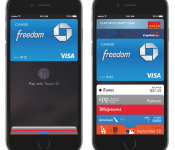
Alongside the Apple Watch and iPhone 6, Apple today unveiled Apple Pay, its mobile payments initiative that allows users to pay for items either by waving their iPhone or Apple Watch at a checkout counter or by using Touch ID after clicking the Apple Pay button in an app like Uber. Following that event, Apple invited members of the press to try out the new payment service with the iPhone 6 and iPhone 6 Plus.
According to The Verge, the system worked “remarkably smooth” and was the “smoothest payment system” they’ve seen. They note that Touch ID adds a “real sense of security” and that the entire process is cohesive. However, they do wonder whether it’ll work the same in the opening months of the service when retailers are adjusting to the process and the software is in early days.
The phone was loaded up with a handful of credit cards, and holding the top of the phone about an inch from the card reader with my thumb on the TouchID home button triggered a payment from the default card in about five to 10 seconds. If you want to use a different card, just leave your finger off the home button and you’ll see a Passbook-style card stack at the bottom of the screen, which you can tap on to bring up the full list and pick the card you want. Then you just put your finger on the reader and you’re good to go.
Slashgear agrees that the process is “pretty darn easy”, noting that using the iPhone to pay for something is far more of a swift experience than pulling out a credit card, swiping it, and typing in a pin or signing a receipt. Users can add credit cards to Apple Pay by taking a photo of their card.
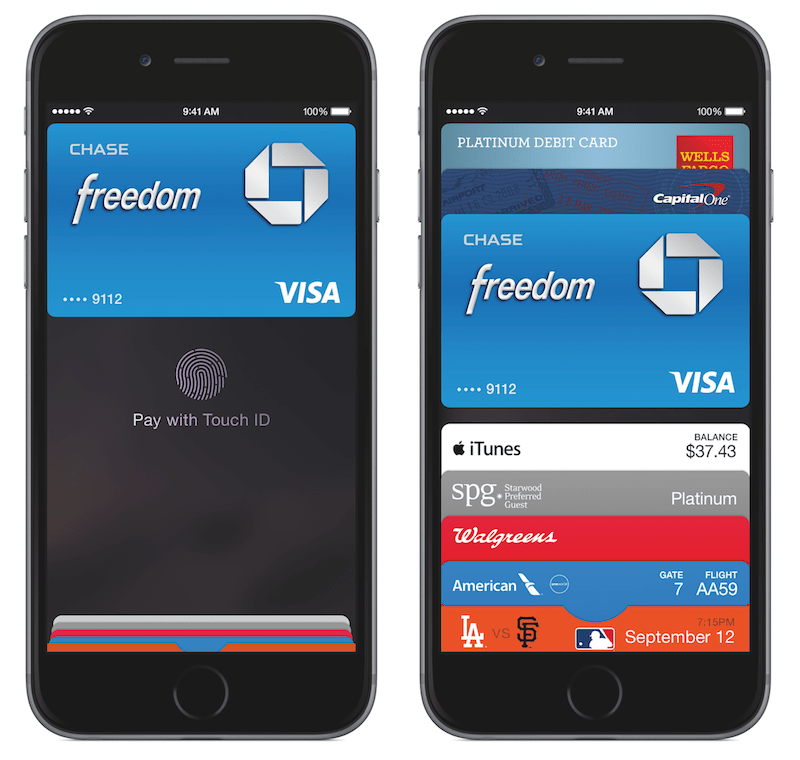
Setup involves either granting Apple Pay access to whatever existing credit card you have on file with iTunes or adding a second card: you can do that by taking a photo of the card itself. We’ve seen the same system used in Uber’s app, among others, and generally it does a solid job of recognizing characters.
In an interview with ABC’s David Muir, Tim Cook commented that Apple Pay is “incredibly safe” and that Apple is setting a high bar with Apple Pay. Cook went on to say that “it’s the most secure thing out there” when told by Muir that some people’s confidence in the company’s security might be shaken after celebrities iCloud accounts were hacked.
Muir also asked Cook whether he thought Apple killed the credit card with the announcement of Apple Pay. Smiling, Cook replied that Apple “stuck a dagger in it”. The Apple CEO finished his interview by noting that components from either the iPhone 6 or Apple Watch were built in 22 of the 50 states in America.
Apple Pay will roll out to 222,000 retail locations across the country. The service will launch next month as a part of iOS 8.
.CPlase_panel display:none;
Apple Watch: Much ado about nothing

I don’t get it. Based on my demographic standing; by sheer dint of my position within the tech press; as someone who grew up with the first Macintosh in his house and a subscription to Macworld, I should be standing and applauding and ferociously tweeting my awe and amazement at the unveiling of Apple Watch. Yet, I am not. Apple did not save wearables, as many thought it would. Apple caved to the incredibly high bar of expectations set by the public. Apple unveiled something, at best, lukewarm. At most, it’s prettier than the smartwatches that’ve come before, and that’s likely its greatest innovation.
My stance on the smartwatch as a viable mobile accessory is unambiguous; I’ve argued my case before. As a category, it needs to replace — needs to completely replace our need for a cellphone. Otherwise, it’s just one more thing to remember to charge throughout our busy days. To date, there’s nothing any of these thinly veiled, proof-of-concept, wrist-worn devices can do that the smartphone already in your hand can’t. Apple, I once thought, would prove me wrong. It would be the one to come along and actually make the strongest argument for wearables by analyzing the use cases and delivering that missing core functionality intuitively. Apple’s perfectionism would be the hallelujah wearables so desperately needed.

Gamers communicate using hand-drawn images on Nintendo’s DS portable.
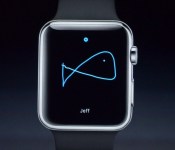
Instead, at today’s Cupertino, California, event, we — the press, the world at large — were treated to a beautifully designed smartwatch (e.g., those interchangeable straps) laden with an embarrassing slew of useless gimmicks. With Apple Watch, you can view the phases of the moon or the positions of the planets; you can draw crude pictures with your finger and send them to friends (a feature eerily reminiscent of Nintendo’s PictoChat for the DS) or even send them your heartbeat. Cheap tricks that consumers will tire of after a few weeks. But let’s not forget the saddest part: Apple Watch will also tell you when you’ve been sitting too long and need to stand up. Hang your collective head, humanity — it’s a poor reflection on us all.
To date, there’s nothing any of these thinly veiled, proof-of-concept, wrist-worn devices can do that the smartphone already in your hand can’t.
Then there’s the Digital Crown (once simply known as the “crown”), a hardware feature Apple spent several minutes of its slickly produced intro video praising the genius of, as part of its effort to redefine the smartwatch UI. The extensive engineering self-congratulations almost had me fooled: “What was this new UI that obliterated the need for a touchscreen?” I wondered. And then Kevin Lynch, the Apple VP overseeing Watch, came out on stage to demo this revolutionary feature… and wound up mostly using his finger to touch the screen. That app cloud, though — now, that deserves a nod. Rather than lazily recreate the app grid from iOS, Apple reimagined it as a dynamically expanding mosaic for the stuffy confines of a watch face. And it did so beautifully.
Don’t get me wrong: Apple Watch does appear to have some actually useful features, but the bulk of them come from third-party apps. Starwood Hotels, the hotel group that counts bougie faves like the W amongst its portfolio, has an app to let you open your hotel room door with a wave of your wrist. And American Airlines has an app that’ll push all your flight info to your Watch for easy boarding. Even BMW’s making a play for the Watch space: Its haute clientele will be able to check on the status of their car’s charge and location. All of which is very interesting and yet Apple covered each with nary more than a blip of time within its presentation.
To Apple’s credit, I do very much want a Taptic mapping experience (read: a much more marketable name for haptic feedback) that’ll guide me along my designated route solely with vibrations. (I’d mention Apple Pay, but that distinction really belongs to the new iPhones and Touch ID, not this Watch.) Fitness tracking is in there, too, but that’s so old hat by now; it’s just expected. If you don’t mind, I’ll hold my applause.
Will Apple Watch fail? Doubtful. There’s too much of a persistent, lingering Jobsian-halo surrounding the Apple brand to let that product fall on its (watch) face. It’ll get better with time; most things/people/products inevitably do. It could even make wearables slightly more palatable for the mainstream. But it’s not a revolution and it’s not what any of us really expected. It’s lipstick on a smartwatch. It’s an accessory and nothing more.
[Image credit: Kaptain Kobold/Flickr]
.CPlase_panel display:none;

Microsoft is reportedly buying ‘Minecraft’ developer Mojang for $2 billion

Well, this is rather surprising: Microsoft is in talks to buy Minecraft‘s developer, Mojang, according to a few different sources. The Wall Street Journal says that the ever loose-lipped “person familiar with the matter” has noted the deal is valued at over $2 billion, while reps for both Redmond and the Swedish developer remain mum on the subject.
Developing…
Filed under: Gaming, Home Entertainment, HD, Microsoft
Source: Wall Street Journal, CNBC
.CPlase_panel display:none;
LG’s G Watch just got a $50 price cut in the Google Play Store

A handful of new smartwatches unveiled at IFA and beyond (we’re looking at you, Moto 360 and Apple Watch) are already making some still newish models look a little long in the tooth. Take LG’s poor G Watch for instance – it’s only been on the market for about two months and it’s already got a rounder, handsomer big brother with a slightly better screen to boot. That may just be why the OG G Watch has just gone on sale in ye olde Google Play store, where you can now lay claim to your own for $179 (or $50 off the original price tag). You’ve only got until September 23 to snag one at the reduced price, but hey – we wouldn’t be surprised to see that sale price stick around a little longer just to help move more hardware.
Source: Google Play Store
.CPlase_panel display:none;

The FCC wants tougher net neutrality rules for mobile devices

When the FCC crafted its first set of net neutrality rules, it treated the mobile internet as a young space that needed less regulation to thrive; it only asked that carriers disclose what they were doing and avoid blocking apps. That directive may have been fine in 2010, when high-speed LTE barely even existed, but FCC Chairman Tom Wheeler is concerned that this light-touch approach is no longer enough. He’s now arguing that cellular internet access should be subject to the same rules as landlines. As Wheeler puts it, a lot has changed in four years. We’re now in a “mobile first” world where the data on your phone is at least as important as what you get at home.
It’s not totally surprising that the Chairman would make that declaration. He has already criticized providers for throttling customers, which he sees as both deceptive and violating the basics of net neutrality — how is it reasonable to sell unlimited service and promptly throttle it? Whether or not Wheeler succeeds in toughening up mobile internet rules is another matter. An appeals court has already struck down key parts of the FCC’s existing net neutrality order, and telecoms are already fiercely opposed to regulating internet access — it’s hard to imagine them accepting more rules. Nonetheless, it’s heartening to know that the FCC’s leader at least supports the idea of treating all mobile data equally.
[Image credit: AP Photo/Susan Walsh]
Filed under: Cellphones, Wireless, Mobile
Source: New York Times
.CPlase_panel display:none;
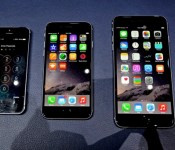
Hands-On First Impressions of the New iPhone 6 and iPhone 6 Plus
After today’s media event saw the introduction of two new iPhones and Apple’s first wearable device, members of the press were invited to go hands-on with all of Apple’s new products. Several sites are now posting hands-on first impressions of both the new iPhone 6 and iPhone 6 Plus, which we’ve gathered up below to give users an overall picture of the look and feel of the larger-screened phones.
Jared Nelson from our sister site TouchArcade took a look at both the iPhone 6 and the iPhone 6 Plus. According to Nelson, the 5.5-inch iPhone 6 Plus is actually “manageably large” and the screen is “amazing” for tasks like watching videos, reading texts, and gaming. He says the new Retina Display HD screens look “absolutely incredible” in person.
The Verge says the screen of the 4.7-inch iPhone 6 “looks great” and that the device feels like a “hybrid of iPhone and iPod touch.” Though it’s bigger, it “doesn’t really feel big,” and it’s “remarkably light and incredibly thin.” Sentiments are similar for the larger 5.5-inch iPhone 6 Plus, but the site noted that even the larger version is “much smaller in the hand” than expected, with the rounded edges making it “somewhat easier to hold.”

The protruding camera is a indeed a bit strange; I can’t help but wish Apple would ease up on its relentless pursuit of thinness in favor of a slightly thicker phone with longer battery life, but like I said, the thinness is what makes the large size manageable.
And that large size is pretty key; this is the phone that’s going to force Apple to turn the iPad into a true laptop competitor. I have an iPad mini that will never come out again once I get this phone; I have an iPad Air that will need a better reason to come out than simply the size of its screen.
Engadget has similar thoughts about the 5.5-inch iPhone 6 Plus, also noting that the phone’s curved edges are “easier to grip” than originally expected.” Though the 5.5-inch iPhone 6 has a resolution of 1920×1080, Engadget says there wasn’t much difference between the displays of the 4.7 and 5.5-inch iPhones. The site also points out a few of the differences between the two phones, including the 0.2mm difference in thickness (4.7 is 6.9mm, 5.5 is 7.1mm) and the increased battery life of the larger phone.
With it being a brief hands-on, I wasn’t able to notice a large enough difference between the two; both looked sharp, clean and had great viewing angles. I’ll be able to go into more detail when review units grace my desk, but for now, I’m satisfied enough with the visual quality, and I doubt the difference in pixel density will be a critical factor when choosing between the two sizes.
Gizmodo‘s first note on the 4.7-inch iPhone 6 is that it “feels like an iPhone.” The site was not a fan of the antenna bands on the back, which it says are “not all that pretty,” but it did like the Retina HD screen on the device, saying its “brilliant.” As for the larger iPhone 6 Plus, Gizmodo called it “HUGE!”

It’s amazingly thin, and incredibly solid, but it barely fits into my hand at all. Just see how those fingers struggle to grasp the new iPhone in the picture above.
Combined with those slick, beautifully machined metal edges, now rounded like an iPod touch or iPad mini instead of chamfered, I was honestly scared I would drop and break the giant handset right there in the Apple tent.
Gizmodo also delves into Apple’s one-handed mode, which shrinks anything on the phone’s screen into thumb’s reach with a double tap on the Touch ID home button.

But if you do want to use it one-handed, then boy does Apple have a smart solution for that. Double-tap the Touch ID sensor (don’t press it, I learned the hard way) from LITERALLY ANYWHERE in the entire iPhone interface, including the homescreen, and everything on the top half of the phone’s screen, every icon, will shrink down to put itself within your thumb’s easy reach.
Apple’s iPhone 6 and iPhone 6 Plus have nearly identical specifications. Aside from the difference in screen size, the larger iPhone has a longer battery life and optical image stabilization to differentiate it. It also comes with a $100 price premium.
Apple’s two iPhones will be available beginning on Friday, September 19, with pre-orders for the devices starting this Friday, September 12. Prices for the 4.7-inch version start at $199, while prices for the 5.5-inch version start at $299.
.CPlase_panel display:none;
 AIVAnet